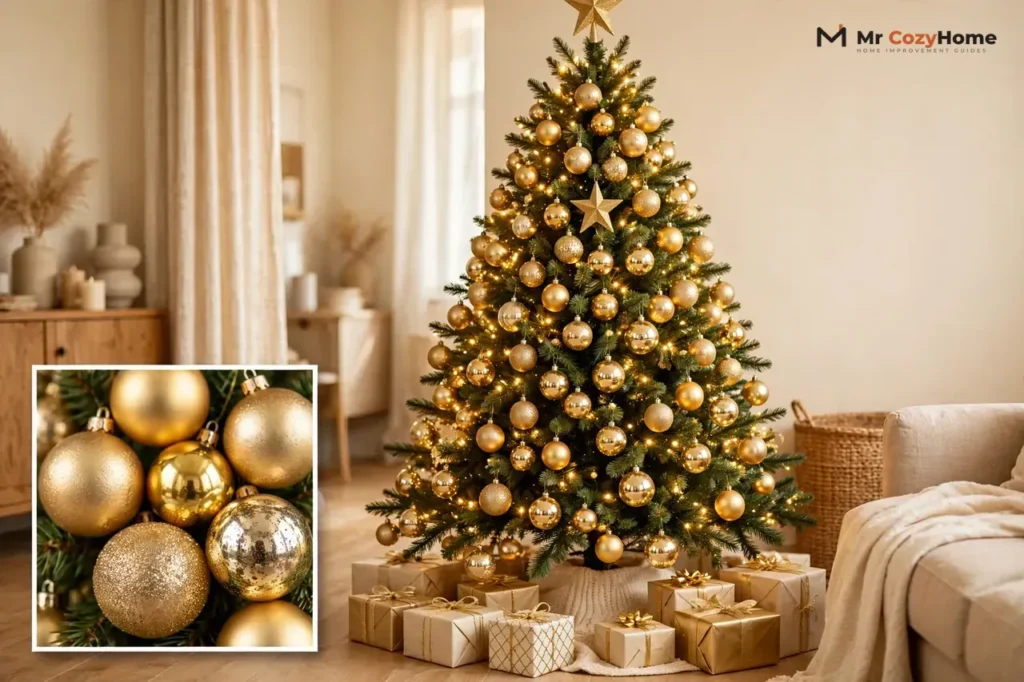
Gold Christmas tree decorations turn an ordinary tree into a warm, glowing centerpiece. You start with warm white lights, pick one gold palette, and layer ornaments in different sizes and finishes. Then you add ribbon, a gold topper, and a simple base that matches. That is the whole look, and this guide walks you through each step so your tree glows instead of glaring.
A gold tree works because gold reflects light. Every bulb, candle, and lamp in the room bounces off the ornaments and warms the whole space. However, gold also shows mistakes fast. Too many shiny pieces in one shade can look flat, and cool white lights can make gold look dull or greenish. The fixes are simple, and you will find them all below.
What Makes Gold Christmas Tree Decorations Work
A great gold tree rests on three choices: the shade of gold, the mix of finishes, and the warmth of the light. Get those three right, and almost any ornament style looks good. Get one wrong, and the tree can look busy even when you spent good money on it.
First, pick one lead shade of gold and let the rest support it. Champagne gold feels soft and calm. Antique gold feels rich and old-world. Bright, yellow gold feels bold and festive. Mix two or three tones for depth, but keep one tone in charge so the tree reads as one look instead of a pile of leftovers. Layering three tones of gold, champagne, antique, and burnished, is a widely shared stylist tip for depth that reads luxurious rather than flat (CayWind gold tree styling guide).
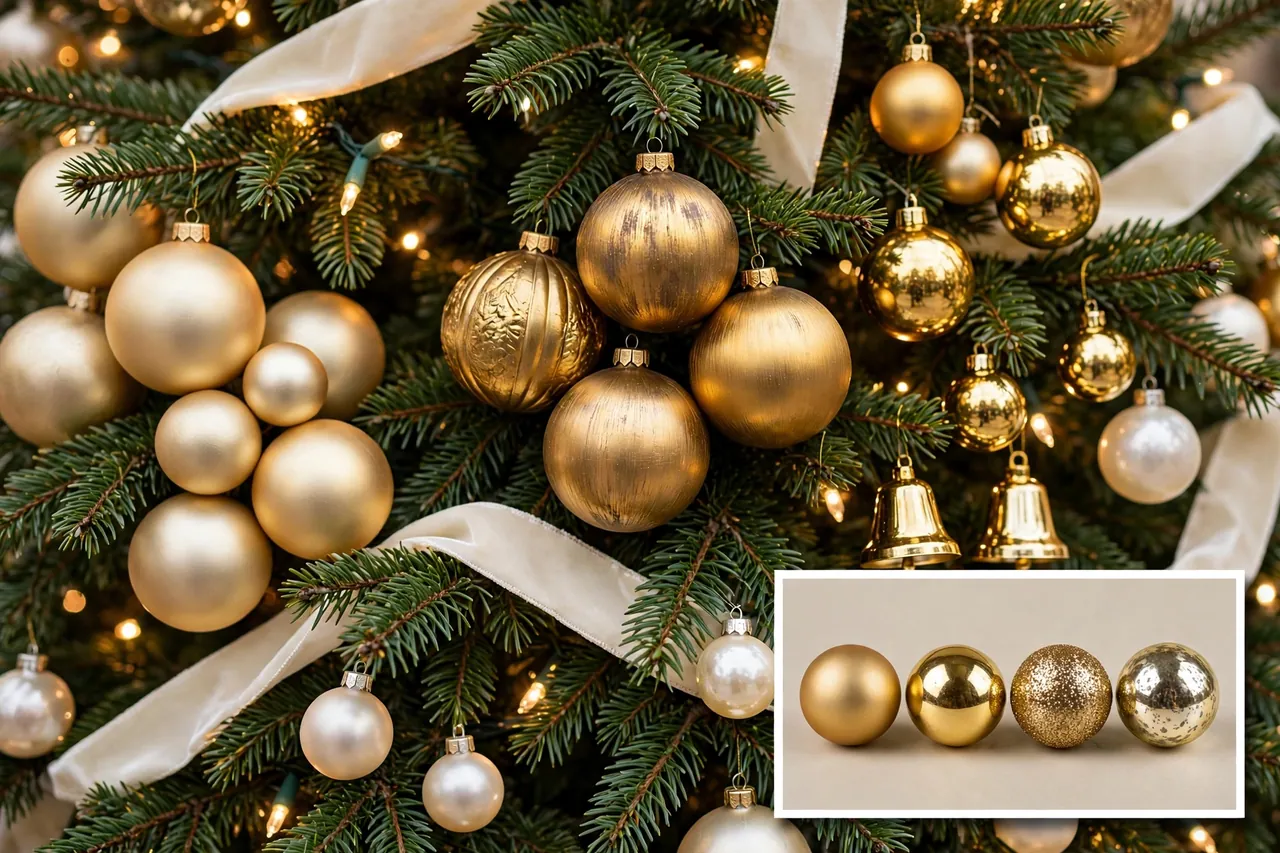
Second, mix finishes instead of buying thirty identical shiny balls. Pair matte gold balls with glossy ones, then add glitter, mercury glass, and brushed metal. The mix catches light at different angles, so the tree looks full and layered even from across the room.
Third, choose warm white lights. Warm light makes gold glow like candlelight. Cool white or blue-toned light fights the gold and can make it look muddy. If your tree already has built-in lights, check their color before you buy ornaments, because the light sets the tone for everything else.
Pick Your Gold Palette First
Do not buy ornaments first and hope a palette appears. Pick the palette first, then shop inside it. These four palettes cover almost every home, and each one suits a different mood.
Champagne Gold for a Soft, Calm Glow
Champagne gold is pale, soft, and slightly muted. It suits neutral rooms, beige walls, light wood, and small spaces because it glows without shouting. Pair champagne ornaments with ivory ribbon, pearl-finish balls, and cream wrapping paper under the tree.
Keep the rest of the palette warm too. Ivory and cream beat bright, blue-white here, because warm neutrals share champagne gold’s soft undertone. Add clear glass ornaments for sparkle without adding a new color, and skip heavy glitter garland, which can overpower the gentle look.
Antique Gold for a Rich, Old-World Feel
Antique gold runs deeper and darker, with a brushed, aged finish. It suits traditional rooms, dark wood furniture, and homes that lean classic. Pair it with deep green branches, velvet ribbon, and ornaments shaped like pinecones, stars, and angels.
Antique gold also hides small flaws well. A scuffed ornament or a slightly uneven branch disappears into the deeper tone, so this palette forgives a busy family tree. Add a few mercury glass pieces for shine, and let the darker gold do the heavy work.
Gold and White for a Clean Winter Look
Gold and white is the crispest gold palette, and it suits modern rooms and white or flocked trees. White baubles, pearl garlands, and faux snow soften the metallic shine, so the tree feels elegant instead of flashy. This is the palette to pick when you want a tree that photographs beautifully.
Watch one trap here: all-smooth, all-shiny surfaces can feel cold. Add texture with velvet ribbon, knitted stockings nearby, or matte white ornaments next to the glossy gold ones. Warm white lights tie the whole look together and keep the white from feeling icy.
Gold and Silver for a Sparkling Mixed-Metal Tree
Silver and gold Christmas tree decorations work beautifully together, but they need a lead metal. Pick one metal to lead, roughly seventy percent of the tree, and let the other play a supporting role at about thirty percent. A perfect fifty-fifty split can look like a checkerboard, so the lead-metal rule keeps the tree calm.
Let your room decide the lead. If your room has gray walls, cool tones, or silver fixtures, let silver lead. If your room has wood furniture and warm lighting, let gold lead. Champagne gold bridges the two metals well, so use it as the middle tone that stops the mix from feeling split in half.
Choose the Right Tree for Gold
Gold suits almost any tree, but each tree type changes the look. Match the tree to the palette you picked, not the other way around.
Green Trees Make Gold Pop
A classic green tree gives gold its strongest contrast. Deep green branches make champagne and antique gold stand out, and the look feels traditional and rich. Green also forgives gaps, because bare spots read as shadow instead of empty space.
Fluff green branches well before you hang anything. Pull the tips outward, spread the branches into layers, and step back to check for holes. Gold ornaments reflect light into those gaps, so a well-fluffed green tree glows from the inside out.
White Trees Turn Gold Into Jewelry
A white tree makes gold look like jewelry on snow. The pale branches push every gold ornament forward, so you need fewer ornaments to make an impact. This tree suits the gold and white palette best, and it suits small rooms, because the light color keeps the space feeling open.
Go lighter on a white tree than you would on a green one. Too many ornaments can crowd the pale branches and hide their shape. Hang larger gold pieces deeper inside, keep smaller ones near the tips, and let some white branches show through.
Flocked Trees Add Snow and Softness
A flocked tree, with its powdery snow-like coating, softens gold and adds instant winter magic. The white flocking acts like a built-in backdrop, so gold ornaments pop while the whole tree still feels cozy. Flocked trees suit both champagne gold and antique gold palettes.
Handle flocked branches gently, because heavy ornaments can shake the flocking loose. Hang heavier pieces close to the trunk, where branches hold more weight, and keep delicate glitter ornaments near the tips. If you want the full story on snowy trees, read our guide to flocked Christmas trees before you buy.
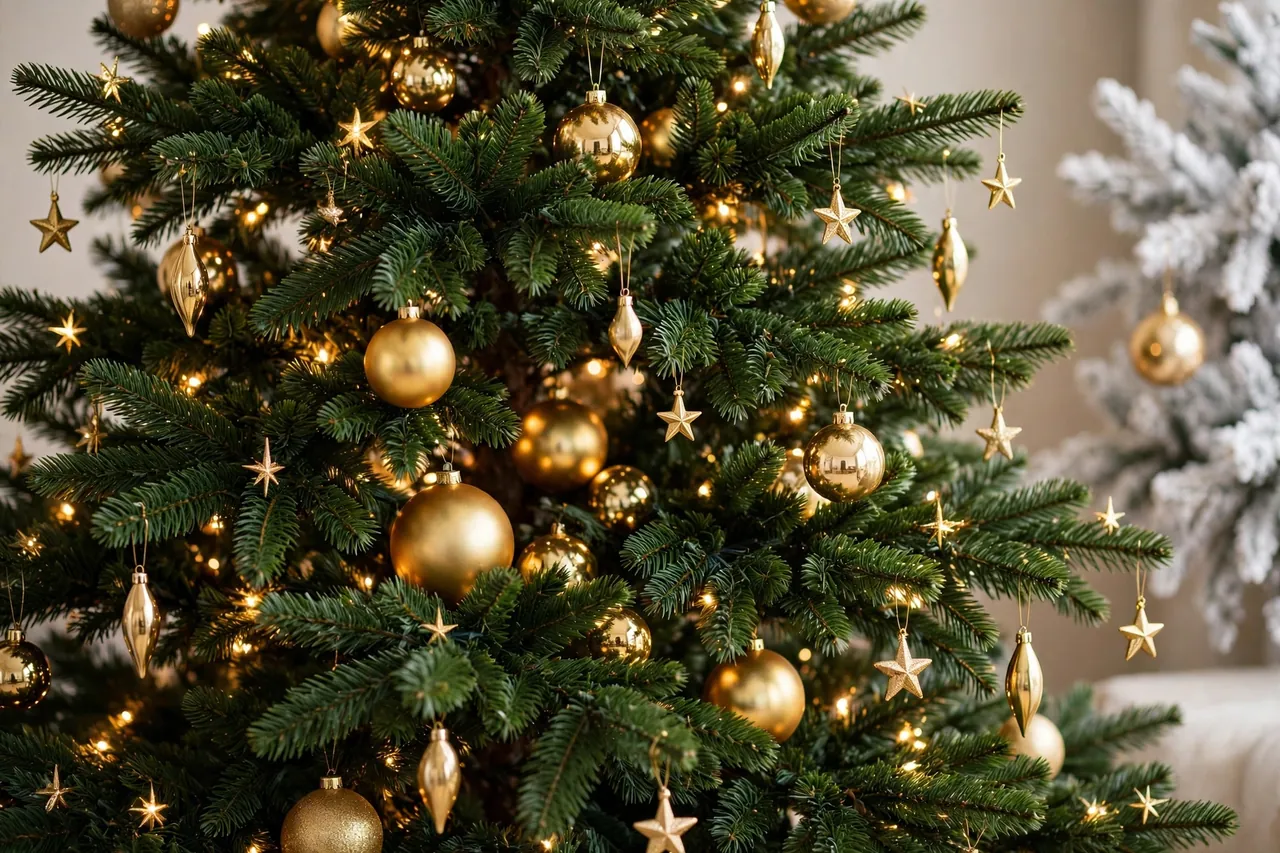
Gold Ornaments That Carry the Look
Ornaments do most of the work on a gold tree, so choose them in groups, not one by one. Start with the big pieces, then fill in with medium and small ones.
Large gold balls, about four to six inches across, set the structure. Hang them deep inside the branches, near the trunk, where they add depth and catch light from the inner lights. Medium balls go in the middle of the branches, and small balls and shaped ornaments go near the tips.
Shape matters as much as size. Mix round balls with stars, snowflakes, teardrops, pinecones, and finials. A tree of only round balls looks flat, even in gold. Styling guides likewise recommend mixing matte, glossy, glitter, and metallic finishes and clustering ornaments in threes for dimension (A Beautiful Space gold tree styling tips). Add a few statement pieces too, such as a gold deer, a gilded bird with a clip, or a jeweled snowflake, and space them evenly so the eye travels around the whole tree.
Cluster ornaments in odd-numbered groups of three or five for a styled look. Hang a cluster in one area, then leave a little breathing room before the next one. Step back often while you work, because a tree always looks different from six feet away than it does from six inches away.
Think about safety while you shop. Shatterproof plastic ornaments give you the gold glass look with far less risk, and they suit homes with kids or pets. Save real glass for the upper branches, out of reach, and hang heavier pieces on strong inner branches so nothing slips off overnight.
Add Ribbon the Easy Way
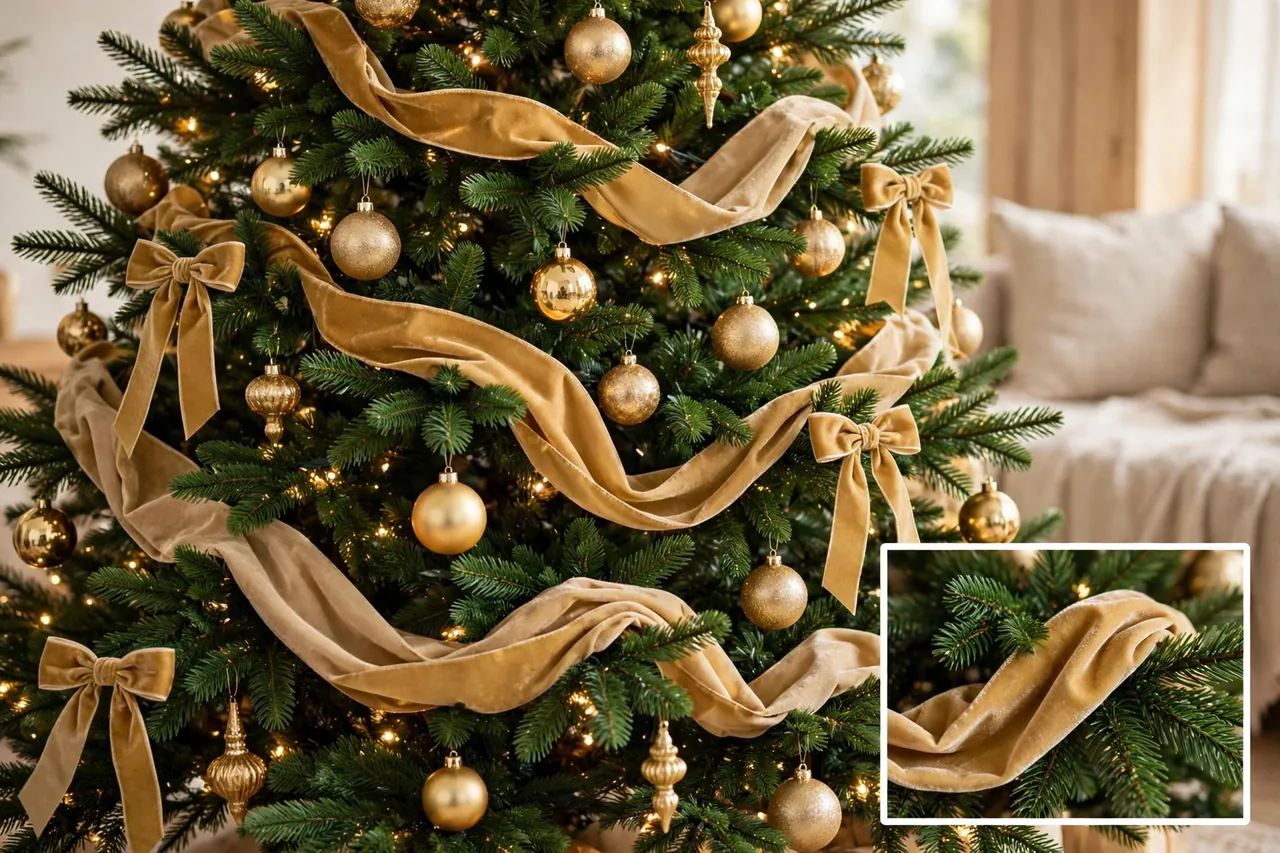
Ribbon turns a good gold tree into a finished one. It adds softness, covers thin spots, and ties the ornaments together into one look. Gold ribbon works in satin, velvet, sheer, or mesh, and each texture changes the mood.
Velvet ribbon feels rich and traditional, so it suits antique gold. Satin ribbon feels smooth and dressy, so it suits champagne gold. Sheer or mesh ribbon feels light and airy, so it suits white and flocked trees. Pick one ribbon style for the whole tree, and repeat it in bows or loops.
Weave ribbon loosely through the branches in long, gentle waves instead of wrapping it tight like a spiral. Start near the top, tuck the ribbon into the branches every foot or so, and let it billow out between tucks. Add a few matching bows at the branch tips for extra polish. For the full technique, see our step-by-step guide on how to put ribbon on a Christmas tree.
Beaded garland offers a second option if ribbon feels fussy. Gold bead garland drapes in loops from the top down, and it catches light beautifully. Use one garland style, not ribbon and garland and tinsel all at once, because too many linear decorations compete and hide the ornaments.
Pick Lighting That Makes Gold Glow
Lights make or break a gold tree, so treat them as the first decoration, not the last. String lights before ornaments, and tuck some strands deep near the trunk so the glow comes from inside the tree. That inner glow makes gold ornaments shine instead of sitting flat on the surface.
Choose warm white lights for every gold palette. Warm white flatters champagne gold, deepens antique gold, and softens silver in a mixed-metal tree. Cool white lights, by contrast, can make gold look dull and can push silver toward a harsh, icy tone. If you mix gold and silver, warm white still wins, because it gives silver a candlelit shimmer instead of a cold glare.
Count lights by tree height rather than guessing. A good rule is about one hundred lights per foot of tree, so a six-foot tree needs roughly six hundred lights. Add more if your tree is wide or dense, and fewer only if you prefer a dimmer, moodier glow. Test the lights in a dark room before you hang ornaments, because a dead section is easy to fix now and annoying to fix later.
Put your tree lights on a timer so the glow greets you each evening without a daily chore. A simple plug timer handles the job, and our guide on how to use a timer plug walks through the setup. For more glow ideas beyond the tree, browse our Christmas light ideas for the whole home.
Finish With a Topper and a Base That Match
The topper and the base frame the tree, so they deserve the same care as the ornaments. A gold star topper is the classic finish, and it suits every gold palette. A gold angel adds a traditional touch, while a large gold bow feels modern and soft on a white or flocked tree.
Size the topper to the tree. A small star disappears on a tall tree, and a giant topper overwhelms a tabletop tree. The topper should sit straight and secure, so anchor it to the top branch with wire or a clip if it wobbles. Check it from the doorway, because that is the angle your guests will see.
For the base, pick a tree skirt or collar in cream, ivory, champagne, or gold. A cream skirt keeps a gold and white tree calm. A gold collar adds polish to an antique gold tree. Match your wrapping paper to the same family, because gifts under the tree act as extra decorations all season.
Carry the gold theme one step past the tree. Repeat the palette on the mantel, the entryway, or the dining table with a few gold candles, a garland, or matching gift wrap. Our guide to decorated Xmas houses shows how to spread one theme through the whole home without overdoing it.
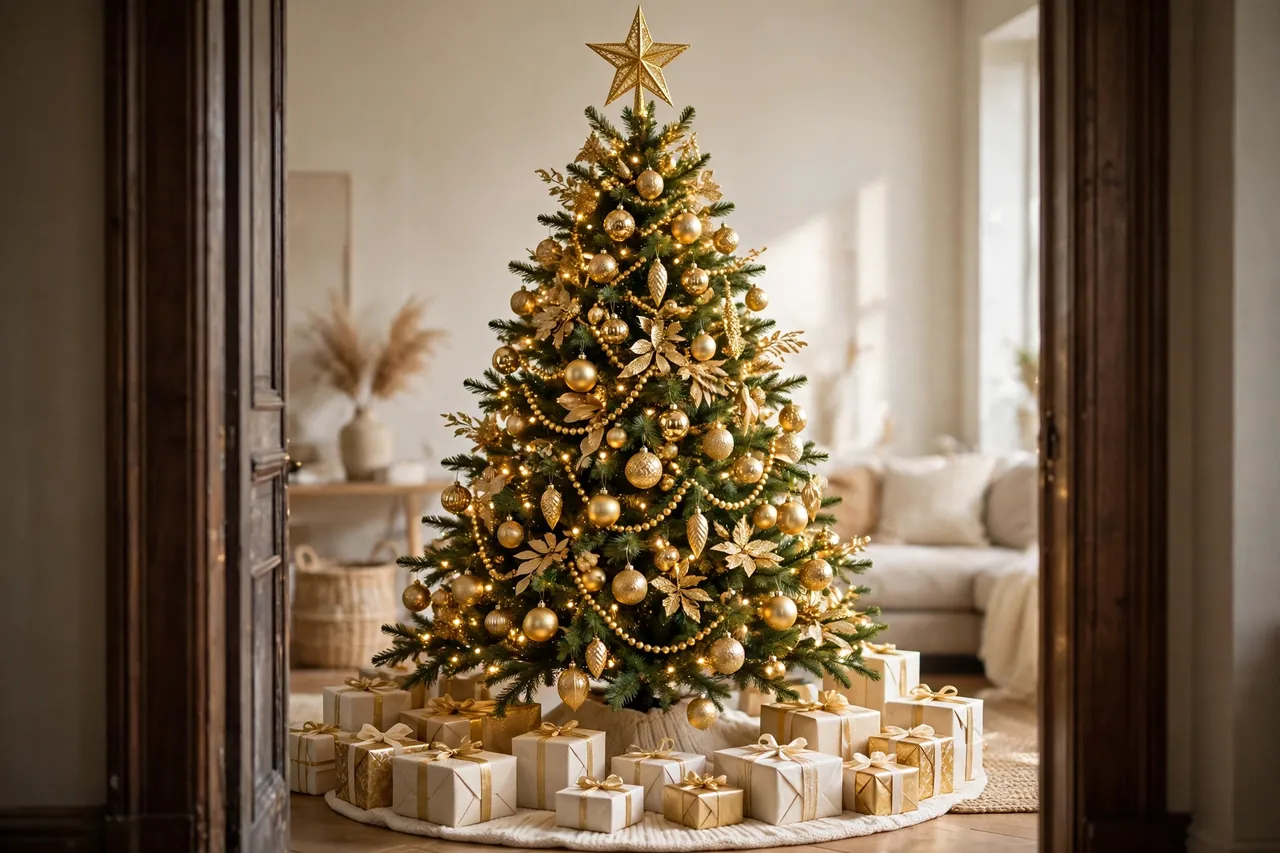
Decorate in the Right Order
Order matters more than talent here. Follow these steps, and you avoid the classic mistake of hanging ornaments first and then fighting the lights around them.
- Fluff and shape the tree, and place it in its stand before you add anything.
- String warm white lights from the top down, tucking some strands deep near the trunk.
- Weave in ribbon or garland, working from the top down in loose waves.
- Hang large ornaments deep inside the branches, spacing them evenly around the tree.
- Add medium and small ornaments, clustering them in groups of three or five.
- Tuck in picks, sprays, and statement pieces to fill thin spots.
- Set the topper, straighten it, and anchor it so it stays put.
- Add the tree skirt or collar, step back, and fill any bare spots you spot from across the room.
Step back after every two steps. Fresh eyes catch gaps, clumps, and leaning toppers that you miss up close. Ask someone else to look too, because a second person always spots the side of the tree you never see.
Mistakes That Make Gold Look Cheap
Gold forgives a lot, but these five mistakes turn elegant into gaudy fast. Check your tree against this list before you call it done.
- Using only one shade of bright, yellow gold, which can read harsh under artificial light.
- Mixing rose gold with yellow gold, because their competing undertones clash instead of blending.
- Hanging only shiny ornaments with no matte, brushed, or textured pieces for contrast.
- Adding cool white lights that dull the gold and push silver toward an icy glare.
- Piling on ribbon, garland, tinsel, and picks all at once until the ornaments disappear.
When in doubt, take one thing off the tree instead of adding another. Gold looks most expensive when a little branch shows through, because the breathing room lets each ornament shine. If the tree still feels busy, remove the smallest ornaments first and keep the large, structured pieces.
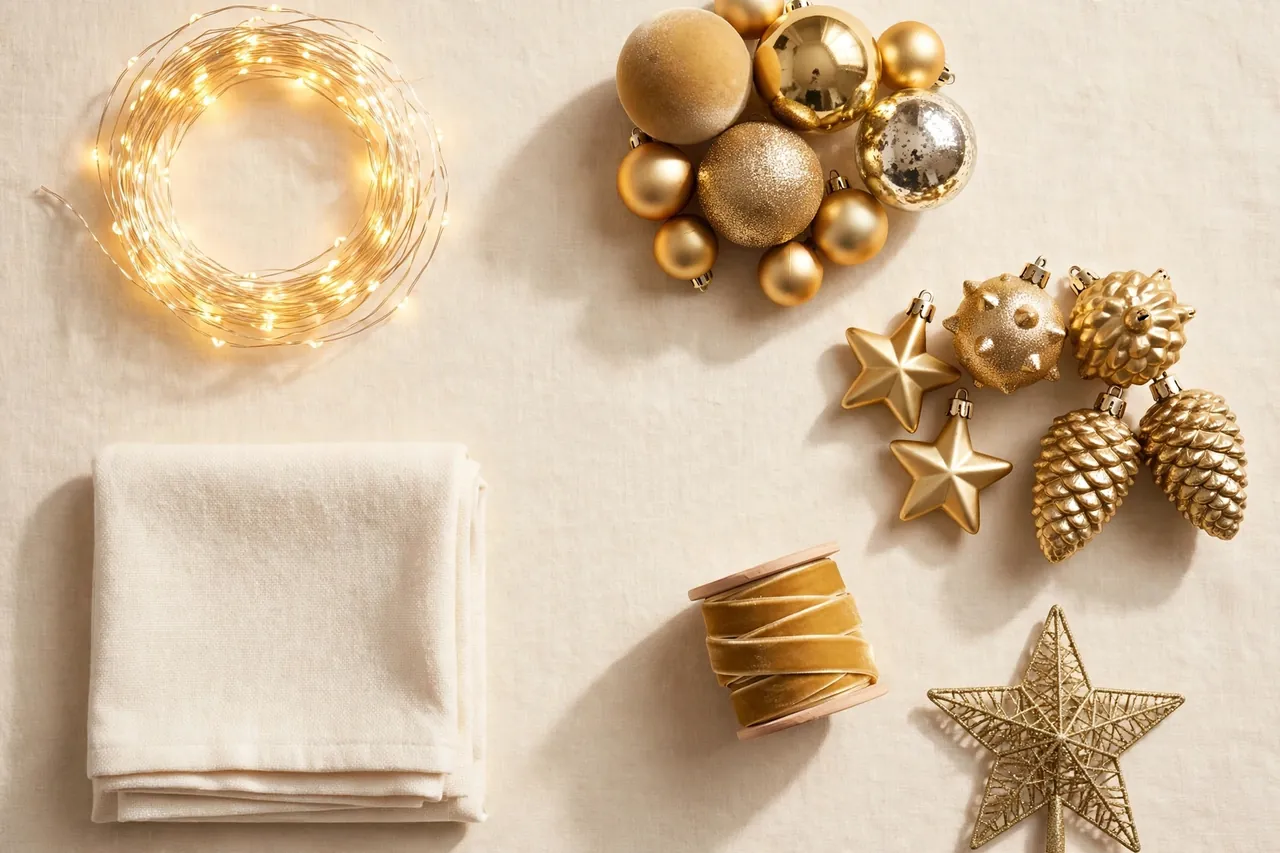
Gold Tree Shopping Checklist
Use this checklist before you shop so you buy once and buy right.
| Item | What to pick | Why it matters |
|---|---|---|
| Warm white lights | About 100 per foot of tree | Warm light makes gold glow |
| Large gold balls | Matte and glossy mix | They build depth inside branches |
| Medium and small balls | Glitter and mercury glass | They add sparkle at the tips |
| Shaped ornaments | Stars, pinecones, finials | Shapes stop the tree looking flat |
| Ribbon or garland | One style, one texture | It ties the look together |
| Topper | Gold star, angel, or bow | It finishes the tree cleanly |
| Tree skirt or collar | Cream, ivory, or gold | It hides the stand and frames gifts |
Shop your own storage first. Many gold trees come together from ornaments you already own, plus one new ribbon and a few fresh statement pieces. That approach saves money and keeps the tree personal, because older ornaments carry memories that new ones cannot buy.
Related Guides
Classic Christmas Tree Decorations: A Timeless Red, Green, and Gold Guide · Christmas Hanging Decorations: Ideas and Damage-Free Ways to Hang Them · Holiday Table Centerpiece Ideas for Christmas
- Themes for Christmas Decoration: 10 Whole-Home Looks That Actually Work
- Christmas Trees With Frost: How to Style a Snowy Tree That Glows
- Tree Decorating Ideas for Christmas
- Christmas Table Decoration: A Warm, Welcoming Table Without the Stress
Frequently Asked Questions
How do you decorate a gold Christmas tree?
Start with warm white lights tucked deep into the branches, then pick one gold palette and hang large ornaments inside the branches first. Add medium and small ornaments in mixed finishes, weave in one ribbon style, and finish with a gold topper and a matching tree skirt.
Does silver and gold go together on a Christmas tree?
Yes, silver and gold go together well on a Christmas tree when one metal leads. Let gold lead in a warm room and silver lead in a cool-toned room, roughly seventy percent to thirty percent, and use champagne gold as the bridge tone between them.
How do you decorate a white and gold Christmas tree?
Use gold ornaments with warm white lights on a white or flocked tree, and add white baubles, pearl garlands, and velvet ribbon for softness. Keep ornaments lighter than on a green tree, add texture so the smooth surfaces do not feel cold, and finish with a gold star topper.
What is the best color combination for a Christmas tree?
For a gold tree, the safest combinations are gold and white for a clean look, gold and silver for sparkle, and champagne gold with ivory for softness. Red and gold stays the classic choice, but this guide keeps the focus on gold palettes so the tree reads as one elegant style.
What is the correct order to decorate a Christmas tree?
Shape and fluff the tree first, then add lights, then ribbon or garland, then large ornaments, then medium and small ones. Finish with picks and sprays, the topper, and the tree skirt, and step back after every few steps to check for gaps and clumps.
A Simple, Glowing Finish
Gold Christmas tree decorations reward a simple plan: one palette, mixed finishes, warm light, and a calm hand with ribbon. You do not need the most expensive ornaments or a designer budget. You need a lead shade of gold, ornaments in different sizes, and the patience to step back and look.
Start with the palette that matches your room, shop inside it, and decorate in order. When the lights go on and the gold glows back at you, you will know the plan worked. Happy decorating, and enjoy the glow all season long.