Here is the short answer: the best door locks for home use are single-cylinder deadbolts with the highest strength rating you can afford, ideally a BHMA AAA rating or ANSI Grade 1. For most front doors, that means the Schlage B60 deadbolt. If you want keyless entry, the Schlage Encode Plus is the strongest smart pick, and if money is tight, a basic Kwikset combo can secure a side door for under $40. The lock itself is only half the job, though. A strong bolt in a weak door frame still fails fast, so this guide first shows you how to judge any lock in about a minute, then gives you six verified picks by budget and door type.
Our top picks at a glance:
- Best overall: Schlage B60 Single Cylinder Deadbolt — $58.92
- Best smart lock: Schlage Encode Plus Smart WiFi Deadbolt — $329.00
- Best keypad, no app needed: Schlage Camelot Keypad Deadbolt (BE365) — $129.00
- Best high-security: Medeco Maxum Single Cylinder Deadbolt — from $254.45 (list price)
- Best for renters: August Wi-Fi Smart Lock (4th Generation) — $199.00
- Best budget: Kwikset Tylo Knob and Deadbolt Combo — $34.53
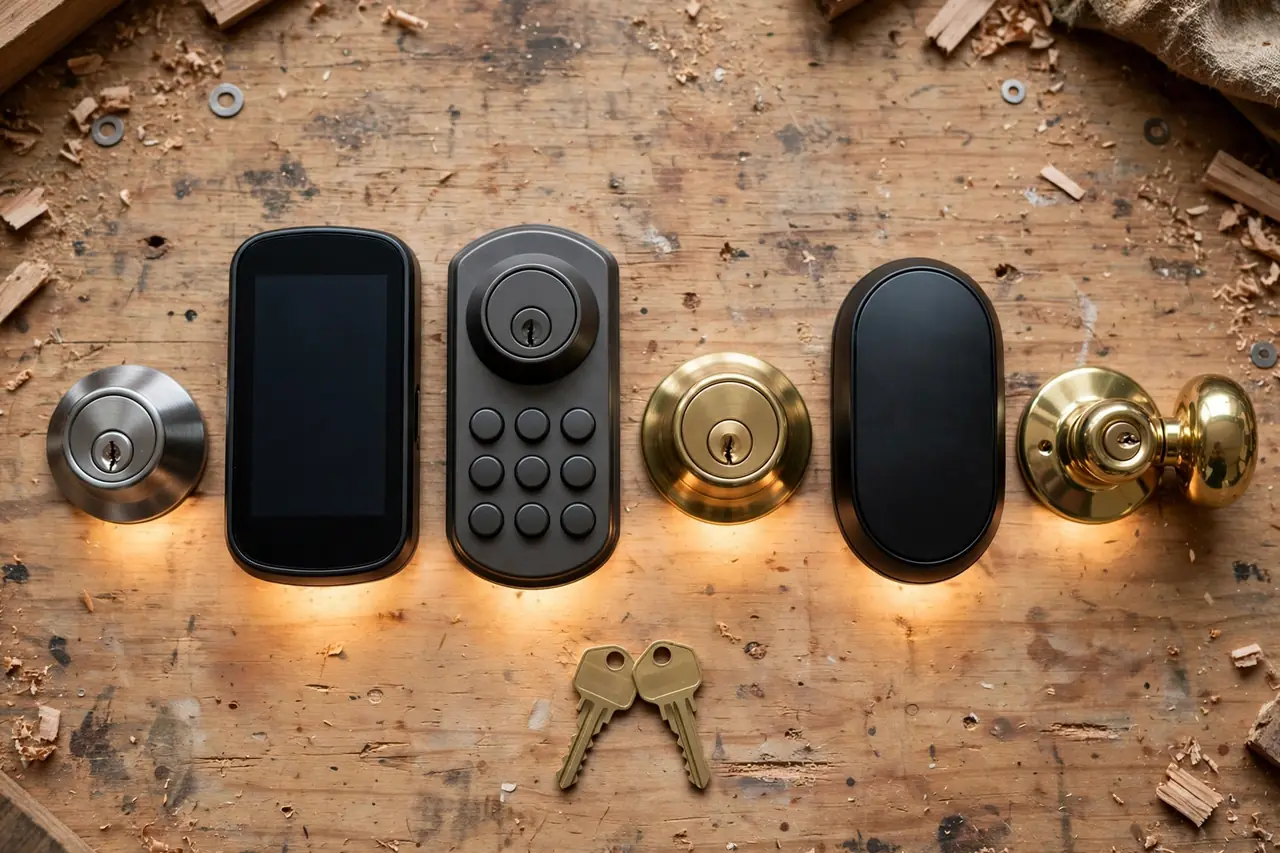
The Best Door Locks for Home at a Glance
All six picks compared: type, strength rating, and price checked on October 19, 2026
| Product | Type | Strength rating | Price | Best for |
|---|---|---|---|---|
| Schlage B60 Single Cylinder Deadbolt | Keyed deadbolt | BHMA AAA / ANSI Grade 1 | $58.92 at Target | Most front doors |
| Schlage Encode Plus (BE499) | Smart WiFi deadbolt | BHMA AAA / ANSI Grade 1 | $329.00 at Schlage | Keyless entry and phone control |
| Schlage Camelot Keypad (BE365) | Keypad deadbolt | Grade 2 / AAA | $129.00 at Home Depot | Codes for family and guests, no app |
| Medeco Maxum (11C60X) | High-security keyed deadbolt | ANSI Grade 1, UL 437 listed | From $254.45 list at Medeco | Maximum pick, drill, and key-copy protection |
| August Wi-Fi Smart Lock (4th Gen) | Retrofit smart lock | Works with your existing deadbolt | $199.00 at GoKeyless | Renters and keeping your current key |
| Kwikset Tylo Combo Pack | Keyed knob + deadbolt | ANSI/BHMA Grade 3 | $34.53 at Target | Side doors and tight budgets |
Every price in this guide is the product price only, checked on the seller’s own page on October 19, 2026. Installation is separate, and for most of these locks it costs nothing, because a like-for-like swap needs only a screwdriver. We cover real installation costs further down.
How to Judge a Door Lock Before You Buy
Lock shopping feels confusing because brands shout about features. In truth, five simple checks separate a strong lock from a weak one. Learn these once, and you can judge any lock on any shelf, including every pick in this guide.
Start with the deadbolt, not the knob
The knob or lever on your door is mostly a latch. It keeps the door shut against wind, and its small spring bolt can be pushed back with a thin card or a hard shoulder. Real security comes from the deadbolt above it. A deadbolt slides a solid metal bolt a full inch into the door frame, and it only moves when you turn a key, a thumbturn, or a motor. So the first rule is simple: every outside door needs a deadbolt, and the grade of that deadbolt matters far more than the style of the knob below it. If a door has only a locking knob today, adding a deadbolt is the single biggest upgrade you can make.
BHMA grades, explained in plain words
The most useful label on a lock box is the BHMA Certified mark. BHMA (the Builders Hardware Manufacturers Association) is the only group accredited by ANSI to write and maintain the test standards for door hardware. Certified residential locks are tested in three areas:
- Security — how well the lock resists force, like hits, prying, and an intruder trying to break in.
- Durability — how well it still works after years of daily use. The deadbolt standard (ANSI/BHMA A156.40) runs locks through at least 400,000 open-and-close cycles.
- Finish — how well the surface survives sun, humidity, salt air, and hand oils without peeling or corroding.
Each area gets a letter: C means Good, B means Better, and A means Best. A lock rated AAA is the strongest in all three areas. In one security test under the deadbolt standard, the bolt must stand up to 1,350 pounds of force. You can read the full testing details on BHMA’s Secure Home site.
You will also see the older commercial scale, ANSI Grade 1, 2, or 3. Grade 1 is the toughest, Grade 3 is basic builder grade. When a lock shows both systems, match them up this way: Grade 1 sits at the top like AAA, and Grade 3 is the entry level. For a front door, aim for AAA or Grade 1. For a low-traffic side door, Grade 2 is a fair middle ground. Save Grade 3 for doors where budget truly rules.
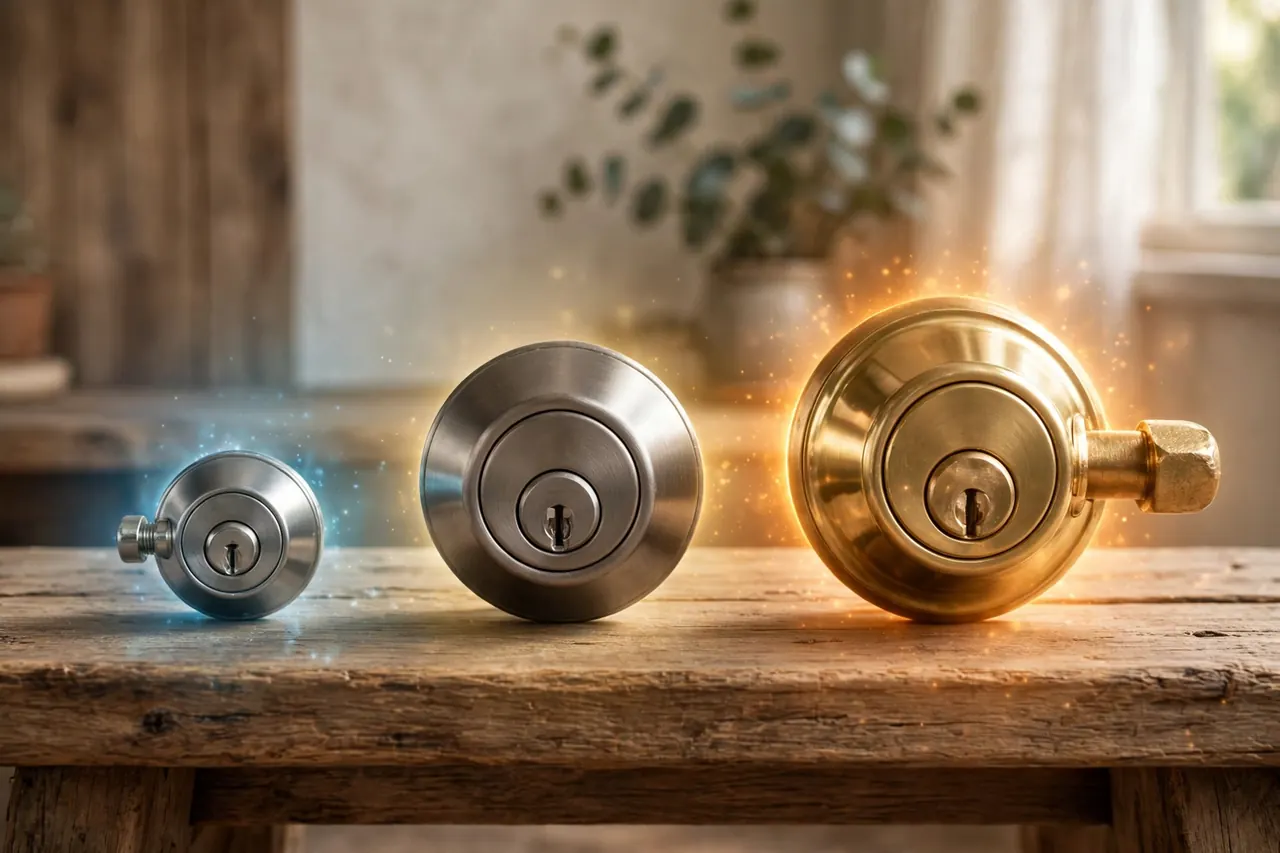
Single-cylinder vs. double-cylinder deadbolts
A single-cylinder deadbolt takes a key outside and a thumbturn inside. A double-cylinder needs a key on both sides. Double-cylinder locks are sometimes suggested for doors with glass panels, so a burglar cannot break the glass and turn the thumbturn. But they carry a real danger: in a fire or emergency, you need a key to get out of your own home. For that reason, most security guides recommend single-cylinder deadbolts for homes, and so do we. If your door has glass, keep the key on a hook near the door but out of reach of the glass, or choose a smart or keypad lock instead.
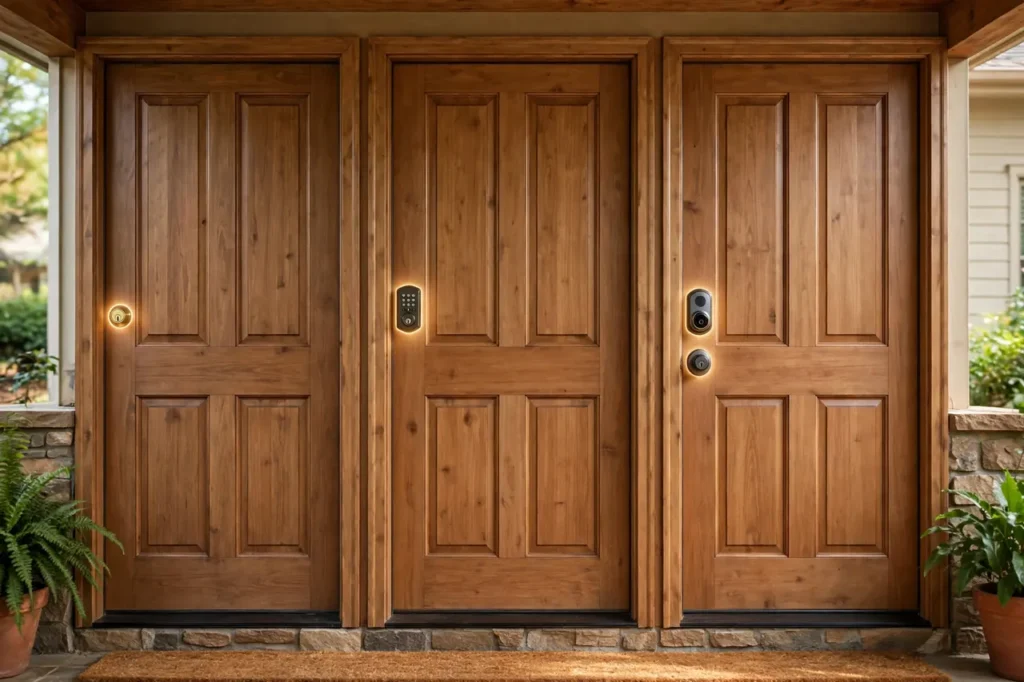
Keyed, keypad, or smart: which fits your life?
All three can be equally strong. The difference is how you get in, and what can go wrong.
- Keyed deadbolts are the simplest and cheapest. Nothing to charge, nothing to hack, and they work in a power cut. The weakness is the key itself: keys get lost, copied, and left under mats.
- Keypad deadbolts replace keys with a code. They are great for kids, guests, dog walkers, and cleaners, because you can add or delete a code instead of copying a key. Most still include a backup key. They run on batteries, usually for a year or more.
- Smart deadbolts add phone control, auto-lock, and a record of who came and went. The good ones carry the same top BHMA ratings as keyed locks. The trade-offs are price, batteries that last months rather than years, and setup time.
Pick by habit, not by hype. If your family loses keys, go keypad or smart. If you want zero upkeep for a decade, go keyed.
The strike plate matters as much as the lock
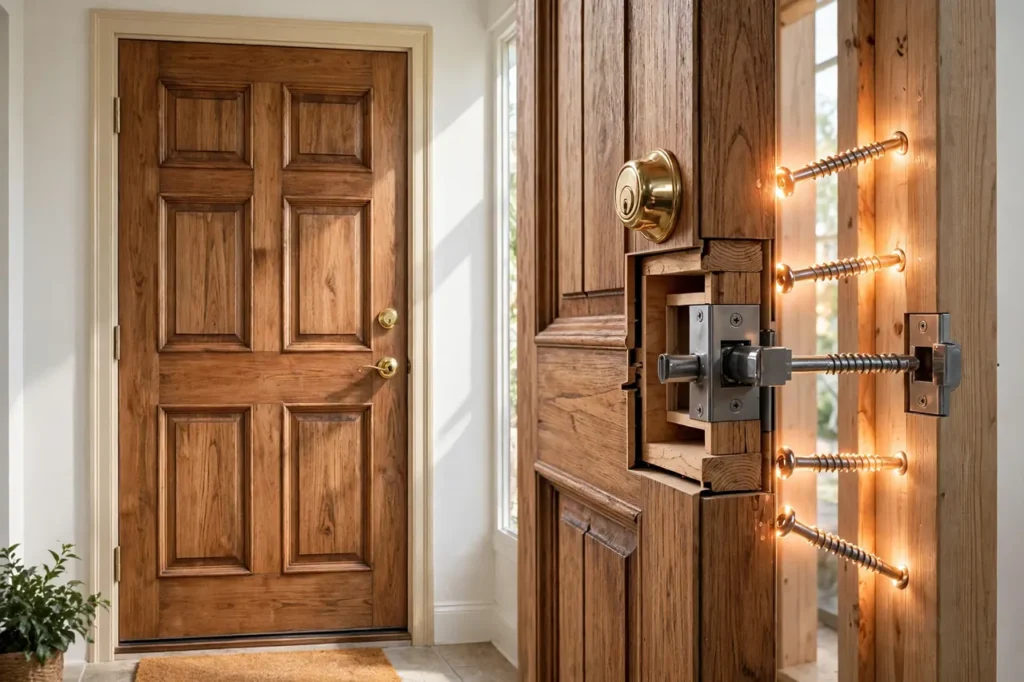
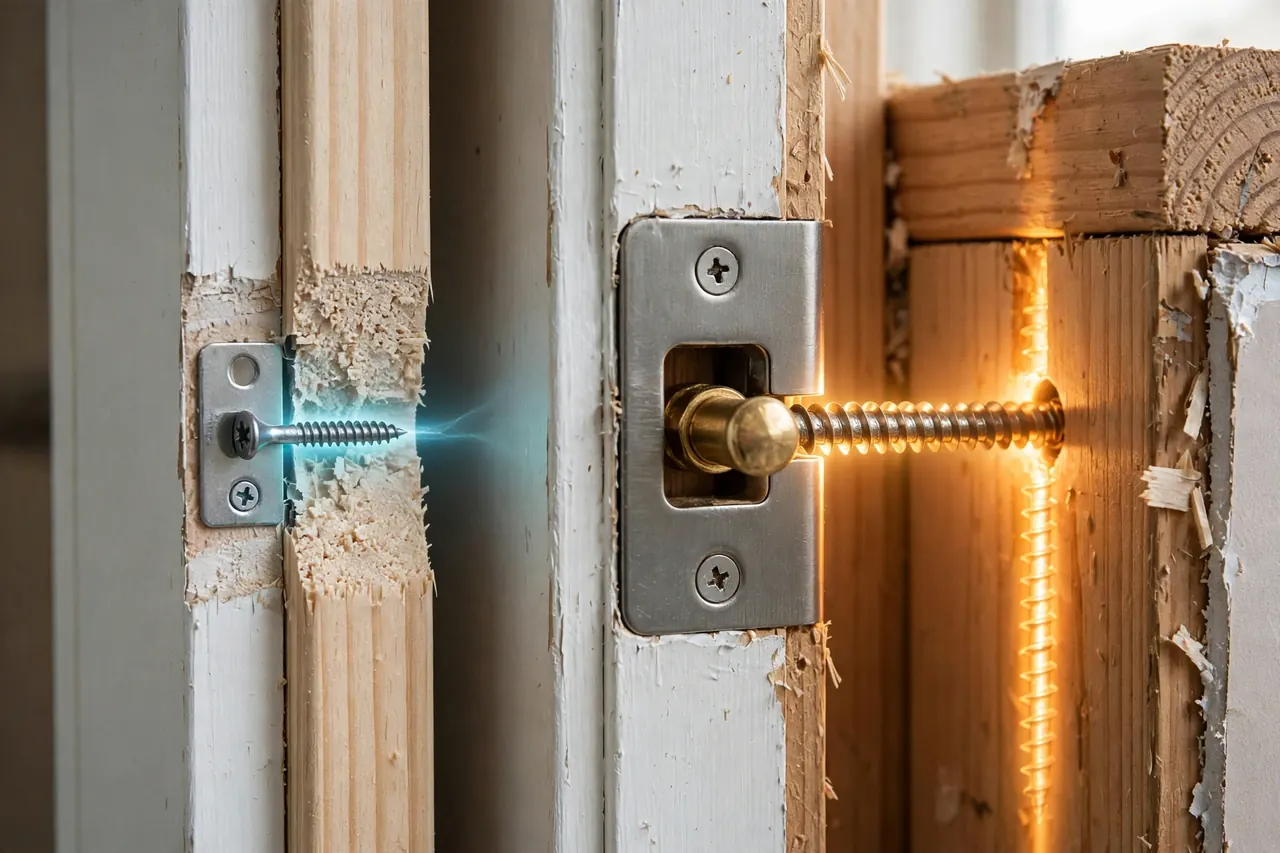
Here is the part most buyers miss. The deadbolt slides into a small metal plate (the strike) screwed into your door frame. Many homes still have the tiny plate fitted at the factory, held by short screws that bite only into the soft frame trim. A hard kick can split that trim in seconds, and then even a Grade 1 bolt has nothing to hold on to. The fix is cheap and fast: fit a heavy strike plate and drive 3-inch screws through the frame and into the wall stud behind it. Now the bolt, plate, frame, and stud act as one piece. Whatever lock you buy from this list, do this ten-minute upgrade alongside it.
💡 Practical Home Tip: Before you buy any new lock, do the 3-inch screw test. Remove one screw from your door’s strike plate. If it is under an inch long, your door is much weaker than its lock suggests. Swapping all the strike screws for 3-inch screws, so they reach the wall stud, is the cheapest real security upgrade in this whole guide — and it makes every lock on this page work harder.
Measure before you buy: backset and door thickness
Most locks fit most doors, but two quick measurements prevent a wasted trip. First, the backset: measure from the edge of the door to the center of the lock hole. US doors are almost always 2-3/8 inches or 2-3/4 inches, and most locks adjust to fit both. Second, door thickness: most home doors are 1-3/8 to 1-3/4 inches thick, which is the range standard locks are built for. While you are checking the door, look at how it hangs. If the bolt scrapes or the door has gaps at the edges, fix the fit first — a sagging, drafty door defeats a good lock, and fresh door weatherstripping and a hinge tune-up make the bolt slide smoothly again.
The Best Door Locks for Home, Pick by Pick
Each pick below is a real product we checked on the maker’s or a retailer’s own page, with the price and ratings as listed there on October 19, 2026. We ordered them by the job they do best, not by price.
Best overall: Schlage B60 Single Cylinder Deadbolt
If you only read one pick, read this one. The Schlage B60 is a plain, heavy, keyed deadbolt with no electronics to fail, and it carries the top ratings a home lock can get: ANSI Grade 1 and a BHMA AAA rating for security, durability, and finish. That means it passed the toughest cycle and force tests in the residential standards, yet it costs about the same as a family pizza night. It has a 1-inch bolt throw, fits standard doors with a 2-3/8 or 2-3/4 inch backset, and installs with a screwdriver in the holes your old deadbolt already uses.
Price: $58.92 at Target for the matte black finish, checked October 19, 2026. Other finishes vary a little by store.
Best for: front and back doors on almost any home. Keep in mind: it is key-only, so if your household needs codes or phone access, look at the next two picks instead.
Best smart lock: Schlage Encode Plus Smart WiFi Deadbolt
The Encode Plus is the rare smart lock that does not ask you to trade strength for features. Schlage lists it with a BHMA AAA rating under the residential deadbolt standard and a commercial Grade 1 rating as well, the strongest combination in this guide. It has built-in WiFi, so there is no extra hub to buy. You can lock and unlock from the Schlage Home app, by voice with Alexa or Google Assistant, or by tapping your iPhone or Apple Watch, since it supports Apple home keys. It stores up to 100 access codes for family and guests, locks itself with auto-lock if you forget, and has a built-in alarm that reacts to forced entry attempts. Four AA batteries are included and typically last up to six months, and one physical key comes in the box as a backup.
Price: $329.00 at Schlage.com, checked October 19, 2026. Full specs are on Schlage’s Encode Plus product page.
Best for: busy families who want keyless entry without giving up top-grade strength. Keep in mind: the WiFi only works on 2.4 GHz home networks, and at this price it makes sense on your main door, not every door. If smart locks are new to you, our smart key lock guide explains the types, features, and setup in plain words before you spend this much.
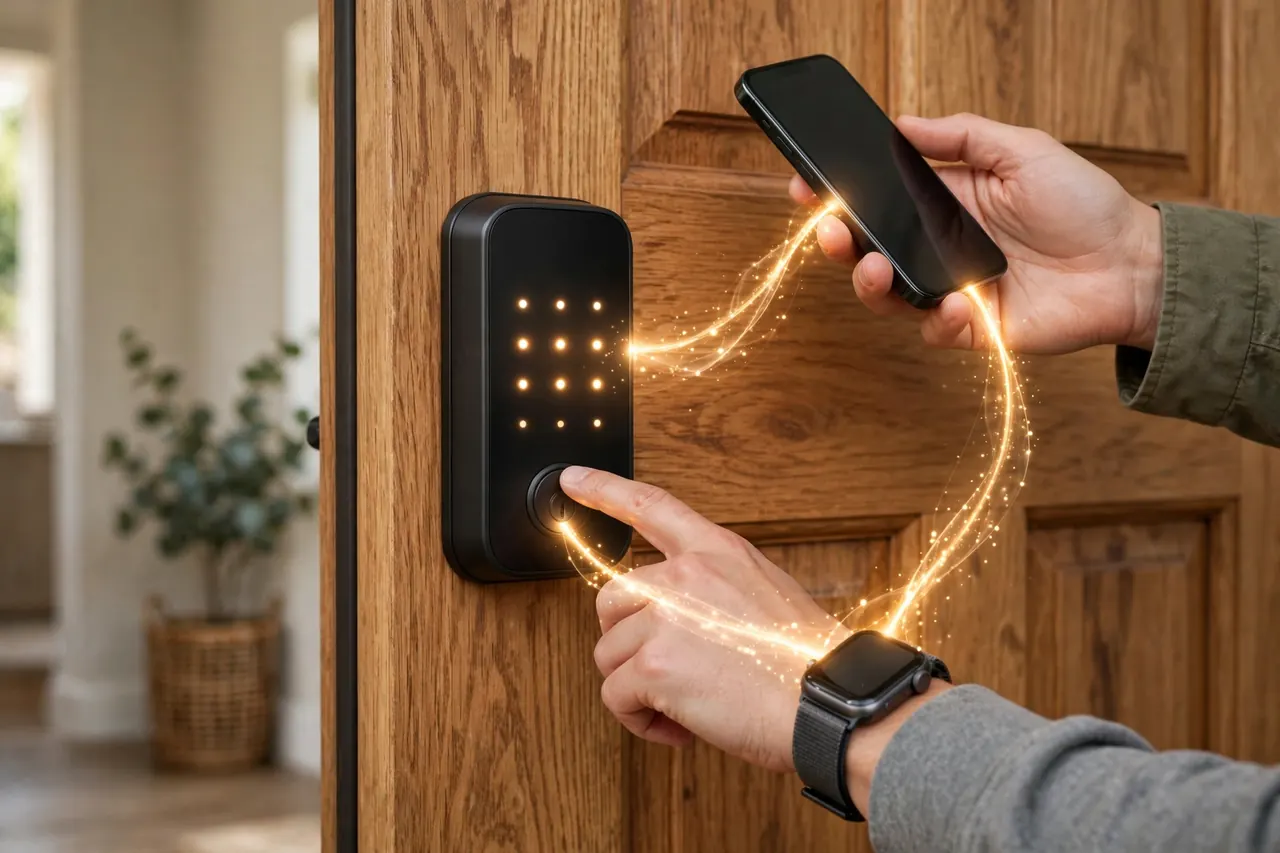
Best keypad, no app needed: Schlage Camelot Keypad Deadbolt (BE365)
Plenty of households want codes without apps, accounts, or WiFi. The BE365 is exactly that: a keypad deadbolt with a Grade 2 / AAA rating from Schlage, up to 19 user codes (two come pre-programmed so you can use it the day you fit it), and a simple key backup. The numbers are backlit and silicone-coated so they do not wear off and give away your code. One 9V battery runs it for up to two years, far longer than most smart locks, and there is nothing to pair or update. It fits standard doors 1-3/8 to 1-3/4 inches thick.
Price: $129.00 at Home Depot, as listed on Schlage’s product page, checked October 19, 2026 (Schlage’s own list price is $169.00).
Best for: families with kids, guests, or helpers who need a code, and anyone who wants keyless entry with near-zero upkeep. Keep in mind: with no app, you cannot see who came home or lock the door from away.
Best high-security: Medeco Maxum Single Cylinder Deadbolt
When the worry is not a kicked door but a skilled attack — picking, bumping, drilling, or a secretly copied key — this is the lock locksmiths reach for. The Maxum is built from solid brass, is listed to UL 437 (the high-security lock standard), and exceeds ANSI Grade 1 under the auxiliary lock standard A156.36. Its cylinder uses side pins and a sidebar design that resists picking and bumping, with hardened protection against drilling and prying. Its biggest edge is key control: Medeco keys are patented, blanks are restricted, and duplicates can only be cut by an authorized dealer with your authorization card. No one can copy your house key at a hardware store kiosk. Medeco sells the Maxum through authorized dealers rather than big-box shelves, so expect a locksmith or security dealer to supply and fit it.
Price: Medeco’s list price for the single-cylinder Maxum (model 11C60X) is $307.00 in the top M4 key system, or $254.45 in M4 BiLevel, from Medeco’s catalog, checked October 19, 2026. Dealer prices and fitting are extra.
Best for: homes that need the strongest cylinder money can buy, rentals where key copies must be controlled, and anyone who has had a security scare. Keep in mind: the lock alone cannot save a weak frame, so pair it with the reinforced strike described above.
Best for renters: August Wi-Fi Smart Lock (4th Generation)
Renters often cannot change the lock at all, because the landlord’s key must keep working. The August lock solves that neatly: it fits over the inside half of your existing single-cylinder deadbolt, so the outside of the door looks untouched and your old key still works. What changes is the inside — you get auto-lock and auto-unlock as you come and go, a phone app with an activity log, guest keys you can send and cancel, and a DoorSense sensor that tells you if the door was left open, not just unlocked. WiFi is built in, so there is no bridge to plug in, and it runs on two CR123 batteries. It works with Apple HomeKit, Google Assistant, and Alexa.
Price: $199.00 at GoKeyless for the matte black finish, checked October 19, 2026.
Best for: renters, and owners who like their current deadbolt but want smart features. Keep in mind: it only adds brains, not strength. Your door keeps the grade of the deadbolt already fitted, and it does not fit mortise, rim-cylinder, or interconnected locks.
Best budget: Kwikset Tylo Entry Knob and Deadbolt Combo
Sometimes the honest job is modest: a garage side door, a back door on a tight budget, or a first lock change after moving in. This Target combo gives you both a keyed entry knob and a single-cylinder deadbolt in one box for less than the cost of most deadbolts alone. The deadbolt has a full 1-inch throw and Kwikset’s SmartKey system, which lets you re-key the lock yourself in seconds when a key goes missing or a tenant moves out — a trick that normally takes a locksmith visit. We are straight about the limit: this set is ANSI/BHMA Grade 3, the basic tier, so it is not the pick for a main front door in a high-risk area. Pair it with the 3-inch strike screws from the tip above and it is a sensible, safe budget setup for a secondary door.
Price: $34.53 at Target for the polished brass combo, checked October 19, 2026.
Best for: side and garage doors, rentals on a budget, and quick re-keying after a move. Keep in mind: when the budget allows, step up to the Schlage B60 for the front door and keep this tier for secondary doors.
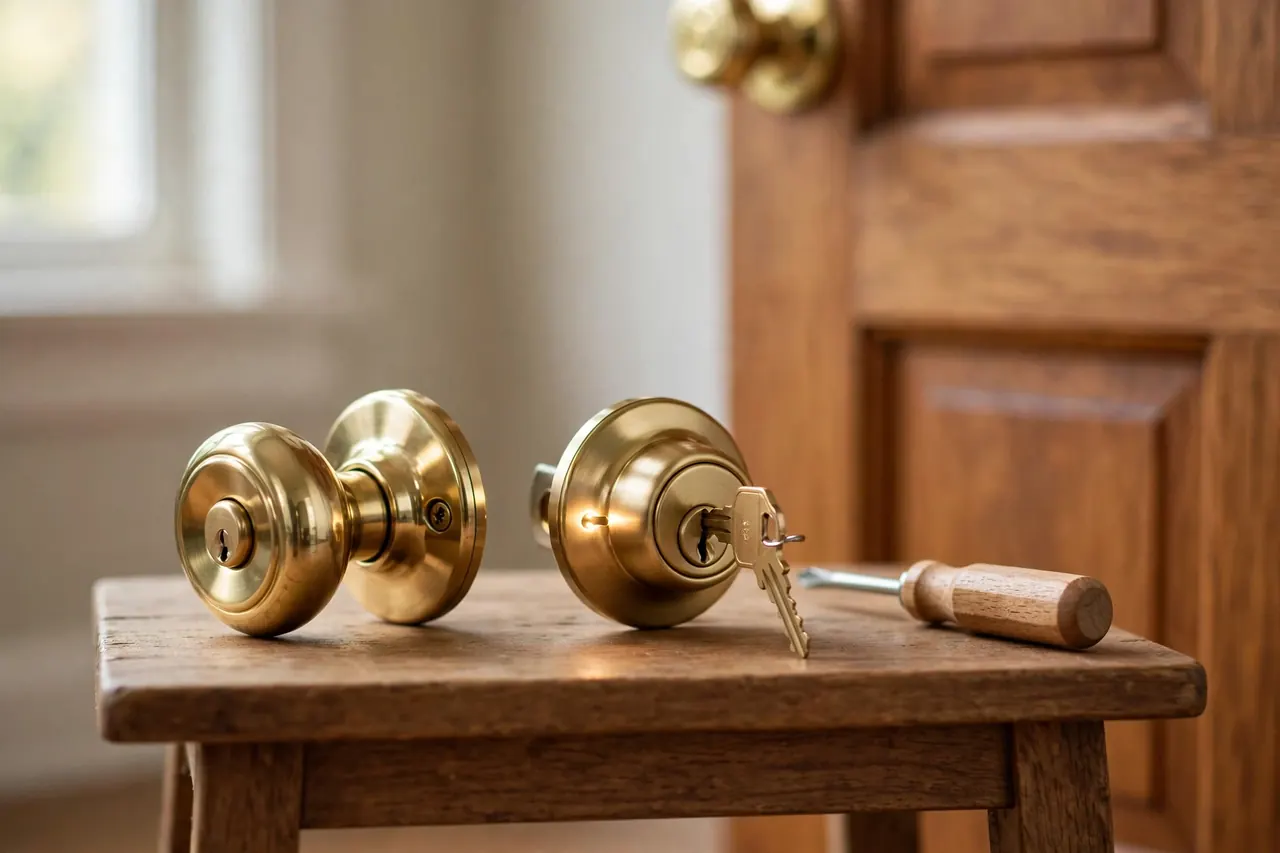
What Installation Really Costs
Every price above is for the lock itself, in the box. Here is what fitting it costs, kept separate on purpose. If you are replacing a deadbolt with another deadbolt in the same door holes, installation is free: the job is two screws out, two screws in, and most beginners finish in 15 to 30 minutes. Keypad and smart locks take a little longer because of batteries and setup, but they use the same holes. You only need a professional when the door needs new holes drilled, the door or frame is damaged, or the lock is a dealer-only model like the Medeco Maxum. As an estimate, Angi’s 2026 cost data puts professional lock replacement at about $60 to $350 per lock, with an average near $150 — that is labor on top of the lock’s price, and local quotes vary. A practical path for most homes: fit the standard picks yourself, and pay a locksmith only for the high-security door.
Mistakes That Weaken a Good Lock
- Buying Grade 3 for the front door. It saves a few dollars and gives up most of the force resistance. Grades exist for a reason.
- Leaving the factory strike screws in. Short screws in soft trim are the weak point in most break-ins by force. Fit 3-inch screws into the stud.
- Choosing a double-cylinder as your only exit. Needing a key to escape a fire is a risk no lock is worth. Use single-cylinder at home.
- Not re-keying after moving in. You do not know who holds copies of the old keys. Re-key, or choose a SmartKey or code lock so old access dies the day you move in.
- Setting up a smart lock on the wrong WiFi. Most smart locks, including the Encode Plus, use 2.4 GHz networks only. Check your router band before you blame the lock.
- Ignoring a sticky bolt. If you have to lift or push the door to lock it, the bolt is wearing and may not throw fully. Fix the door fit instead of forcing it.
Frequently Asked Questions
What do ANSI and BHMA grades mean for door locks?
BHMA is the group accredited by ANSI to test door hardware. Certified locks are scored for security, durability, and finish with letters: C is Good, B is Better, A is Best, so AAA is the top rating. The older ANSI scale runs Grade 1 (strongest) to Grade 3 (basic). For a front door, choose AAA or Grade 1.
How do keyless door locks work?
Keyless locks replace the key with a code, a phone, or a fingerprint. You enter a PIN on a keypad or tap an app, and a small battery-powered motor slides the deadbolt for you. Most keypad and smart locks still include a normal key slot as a backup, so dead batteries never lock you out for long.
Do I need a professional locksmith to install my new door lock?
Usually not. If the new lock matches your door’s existing holes, a standard deadbolt swap needs only a screwdriver and about 15 minutes. Call a locksmith when new holes must be drilled, the frame is damaged, or you choose a dealer-only high-security lock like the Medeco Maxum, which is sold and fitted through authorized dealers.
How do I change a deadbolt?
Open the door and keep it open while you work. Remove the two screws on the inside thumbturn piece, pull both halves of the old lock out, then unscrew the bolt from the door edge. Fit the new bolt, join the two halves, and replace the screws. Test the new lock several times with the door open before closing it. Our step-by-step guide to how to install a door lock walks through the whole job, including drilling fresh holes and fixing a bolt that will not throw.
What is door lock bumping?
Bumping uses a specially cut key and a sharp tap to jump a lock’s pins into line for a split second, opening it quietly with little sign of damage. Defenses are built into the cylinder: high-security locks like the Medeco Maxum use side pins and a sidebar that a bump key cannot defeat, and SmartKey cylinders are designed to resist bumping too.
Do door locks actually prevent break-ins?
A quality deadbolt will not stop a determined intruder forever, but it raises the time, force, and noise needed, which is what sends most burglars elsewhere. Security experts also note that many burglars simply walk through unlocked doors, so a lock you use every time beats a stronger one left open. Pair the lock with a reinforced strike for the full effect.
A quick note on scope: this guide is general information for homeowners, not professional security advice, and it cannot judge your specific door or neighborhood. Prices were checked on October 19, 2026 and can change at any time. For a high-risk home, an unusual door, or a whole-house plan, a licensed local locksmith can assess your doors in person and fit dealer-only hardware correctly.
The Bottom Line
Start with the grade, not the gadget. For most homes, the answer to the best door locks for home question is the Schlage B60: top ratings, no batteries, and a fair price. Add codes with the BE365, full smart control with the Encode Plus, maximum cylinder security with the Medeco Maxum, renter-friendly smarts with August, or a careful budget fix with the Kwikset Tylo. Then spend ten extra minutes on 3-inch strike screws, whichever lock you chose. That combination — a properly rated deadbolt in a reinforced frame — is what actually keeps a door closed.