The best Christmas light ideas follow one simple recipe: one warm base layer across your home, one bright focal point that draws the eye, and a timer or smart plug that turns everything on at dusk and off at bedtime. You do not need the most lights on the street. You need the right lights in the right places, hung safely, and switched on without a nightly chore.
This guide covers the whole house: your tree, your roof and porch, your windows and rooms, and the smart controls that tie it all together. Pick one idea from each section, and you will have a home that glows from the sidewalk to the sofa.
💡 Practical Home Tip: Before you buy a single new strand, walk outside at dusk and look at your house the way a visitor sees it. The dark corners will tell you exactly where light belongs, and you will buy less because you already know what is missing.
Start With a Simple Plan
Great displays start on paper, not on a ladder. Measure the rooflines, window frames, porch railings, and trees you want to light, then sketch a rough map of where each strand will go. That sketch stops the classic mid-project frustration of running out of lights halfway across the eaves.
Count your outdoor outlets next, and note how far each display area sits from the nearest one. Long runs need outdoor-rated extension cords, and every connection should stay off wet ground. Test every strand indoors before you hang it, so a dead section never surprises you from the top of a ladder.
Finally, pick one color story before you shop. A home that mixes warm white, cool white, red, green, blue, and multicolor all at once looks noisy, not festive. Choose one dominant color and one accent, and let everything else follow that choice. Most people put outdoor lights up the weekend after Thanksgiving, which leaves time to replace a faulty strand before the season peaks.
Pick Your Glow: Warm White, Color, or Both?
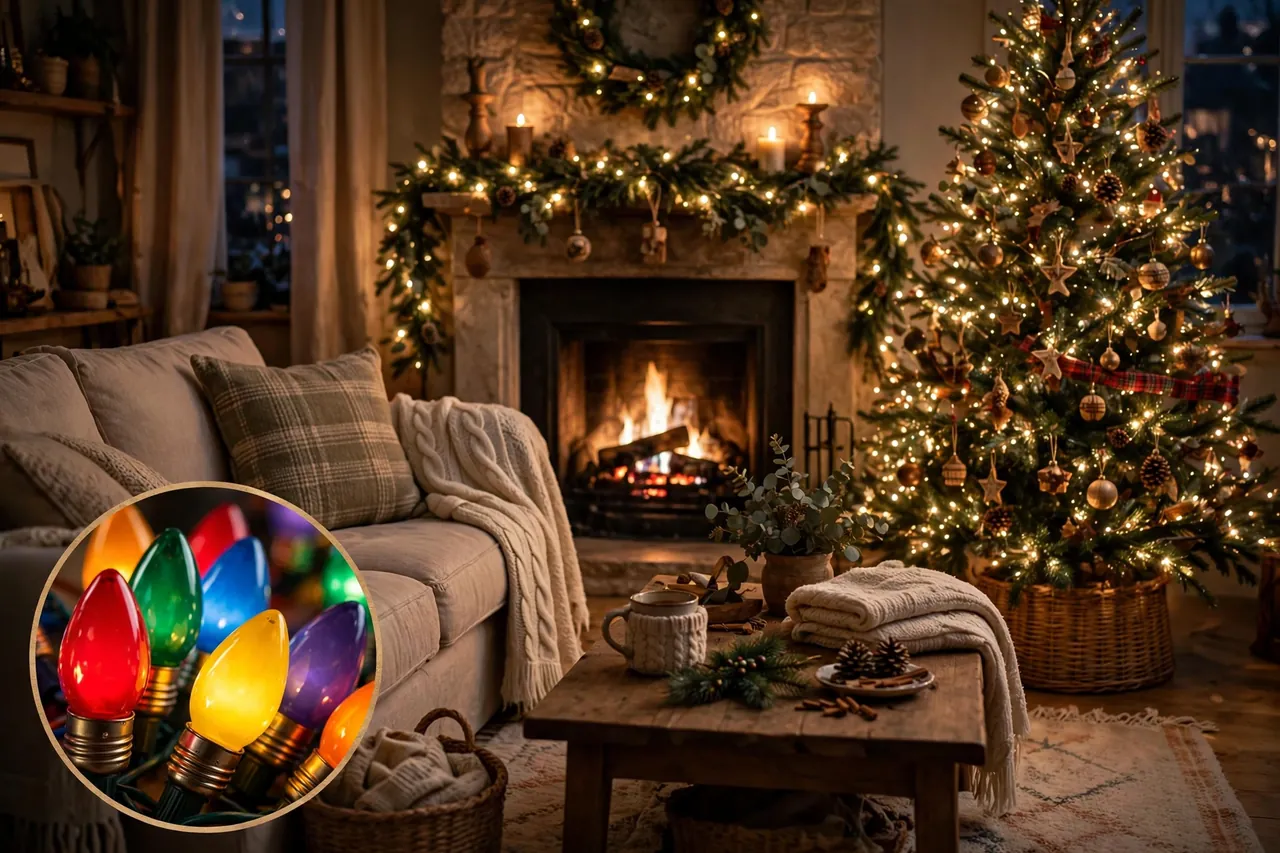
Warm white is the classic Christmas glow. It flatters wood, greenery, and skin tones, and it suits almost any house style. If you want a calm, elegant look, warm white everywhere is the safest choice you can make.
Multicolor lights bring a playful, old-fashioned energy that kids love and that suits a casual, candy-colored display. They work best when you commit to them fully: multicolor on the tree, the roof, and the porch reads as joyful, while one multicolor strand lost in a sea of white reads as a mistake.
For a more refined twist, pair warm white with gold for a rich, candlelit feel, or pair cool white with blue for a crisp winter-night look. Red and green together give the traditional holiday pairing, and they shine when you use red lights to highlight green wreaths and garlands. Whatever you pick, keep the same story inside and outside, so the house feels like one display instead of two.
Christmas Tree Light Ideas
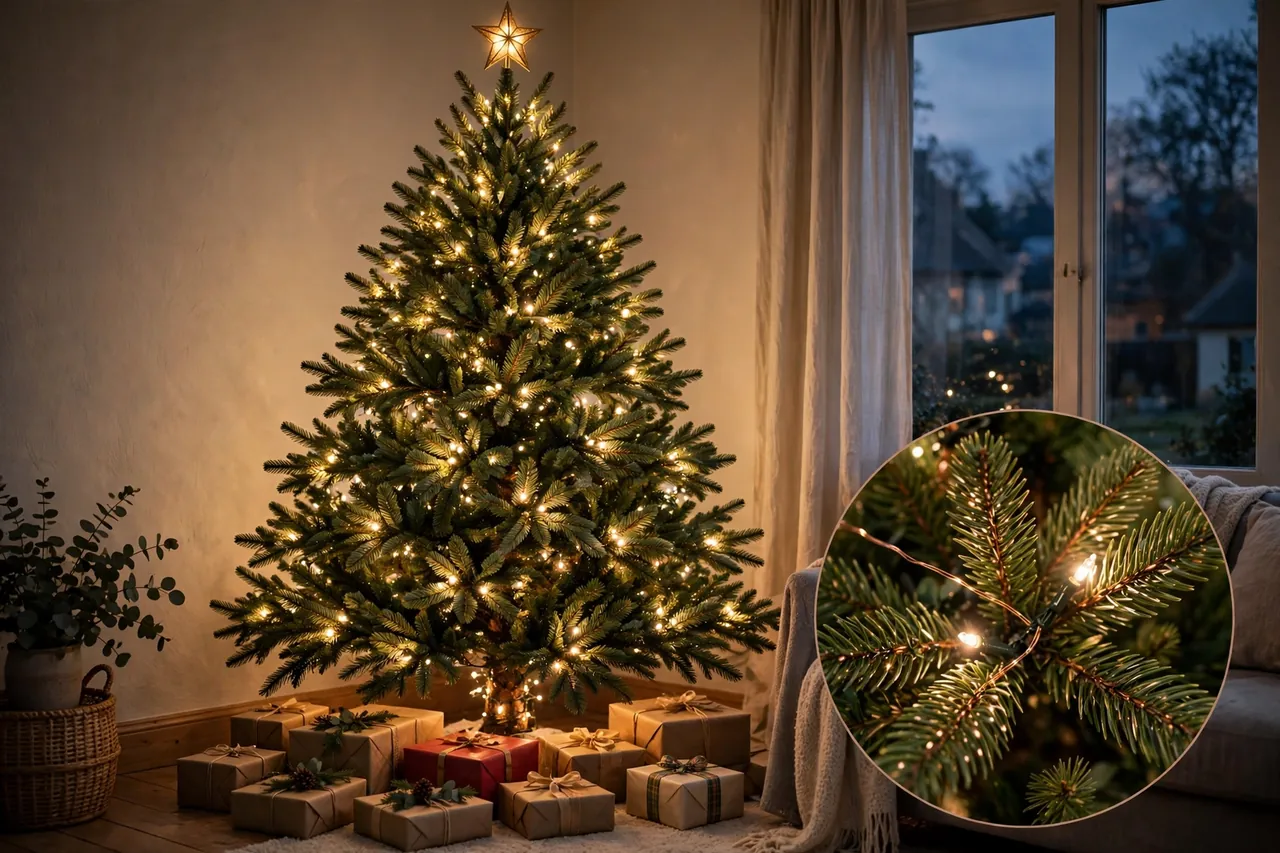
Your tree sets the mood for the whole season, so give it the most attention. Start at the top and work your way down, which keeps the glow even and makes decorating easier. Tuck some strands deep inside the branches first, then add a second layer near the tips, so the tree glows from within instead of looking flat.
For Christmas tree light ideas that look full rather than fussy, use about 100 lights per foot of tree height as your starting point. A 7-foot tree needs roughly 700 lights, and a fuller look takes 1,000 to 1,200. Check the bulb count on the box, because strands vary, and add about 10 percent extra for overlap.
Wrap the trunk lightly too, so the tree does not go dark at its base. Finish with a lit topper or a small cluster of lights near the star, which pulls the eye upward and makes the whole tree feel finished. If your tree is pre-lit and one section looks thin, weave in a single extra strand of matching warm white lights rather than rehanging the whole tree.
Outdoor Christmas Light Ideas: Roof, Porch, Trees, and Paths
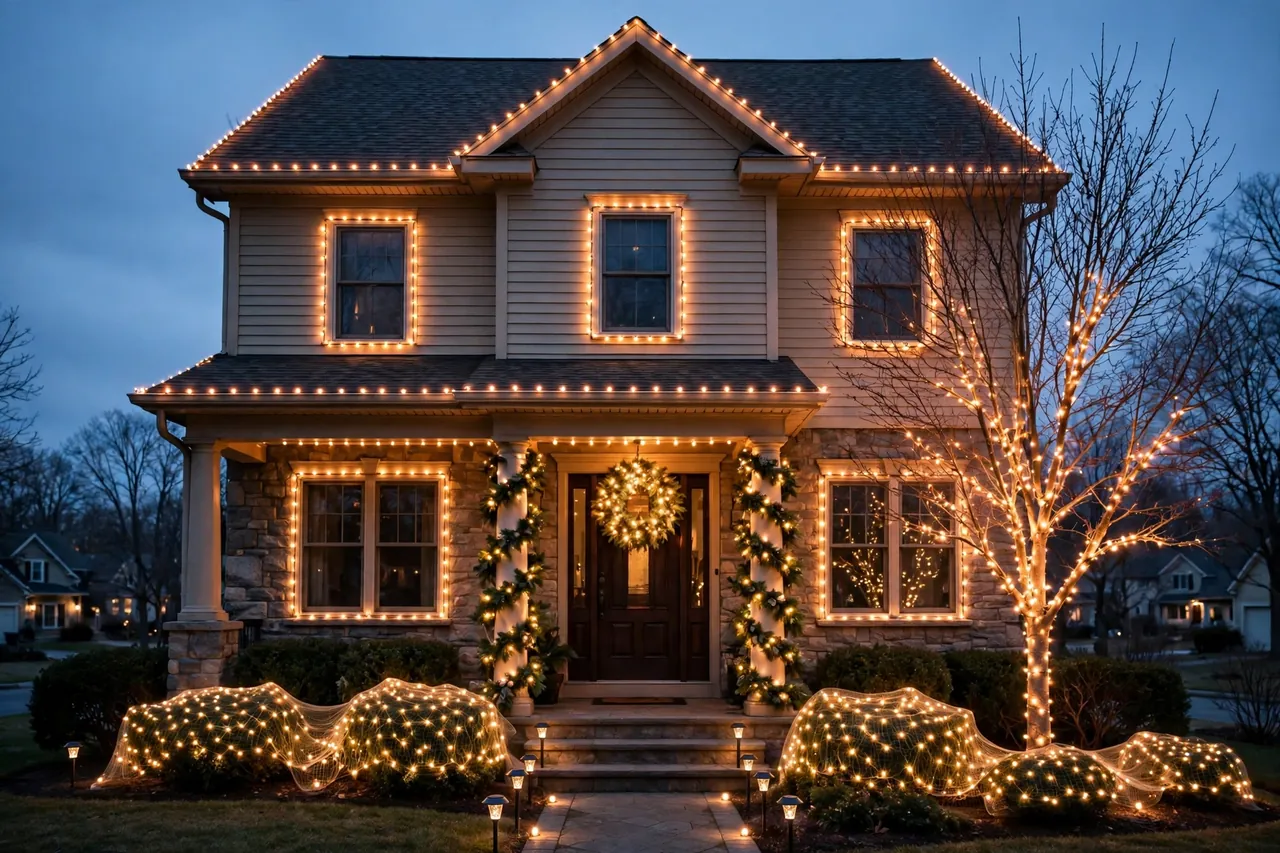
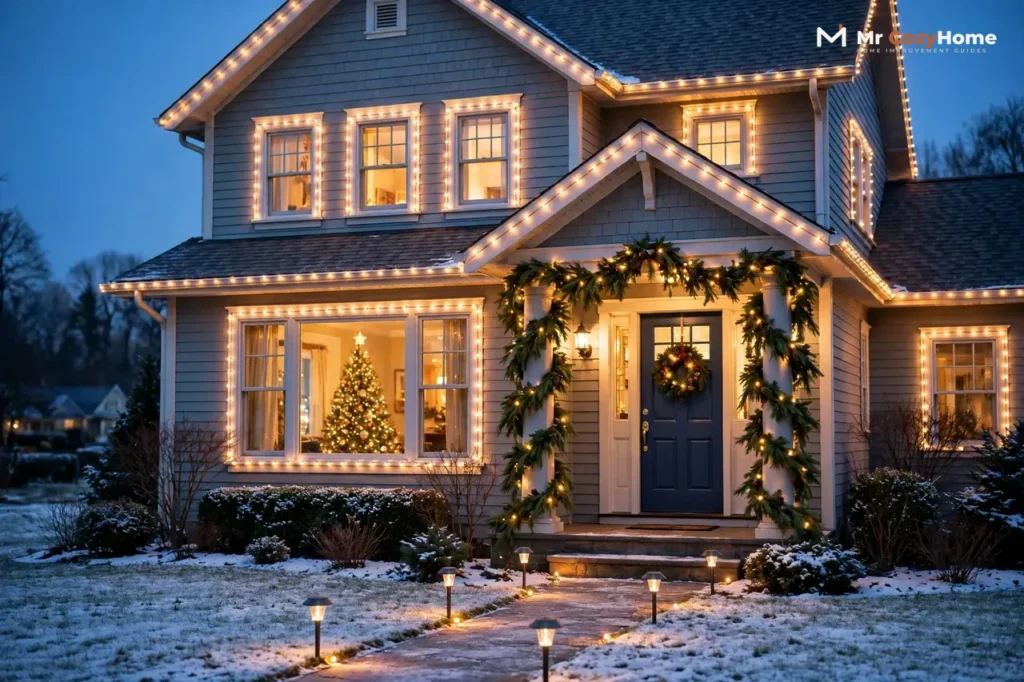
Outside, the front of the house deserves the most love, because that is what neighbors and guests actually see. Outline the roofline and window frames with one steady color for a crisp, professional look. Use clips made for gutters and shingles, never nails or staples, which can damage wires and siding and cause short circuits — the same clip-first method a professional outdoor hanging guide recommends.
Wrap porch columns and railings with garland and lights together, so the entrance feels layered rather than bare. Net lights spread evenly across shrubs and hedges in minutes, while wrapped trunks and branches turn bare trees into glowing sculptures. For paths, stake lights guide visitors to the door and keep steps visible after dark.
Pick one focal point for the yard: a lit wreath over the door, a glowing tree, or a lighted figure. Everything else should support that focal point, not compete with it. If you love the outdoor look so much that you want it every year without the ladder, permanent outdoor Christmas lights are worth a look, since they stay up year-round and switch on for every season.
Indoor Christmas Light Ideas Beyond the Tree
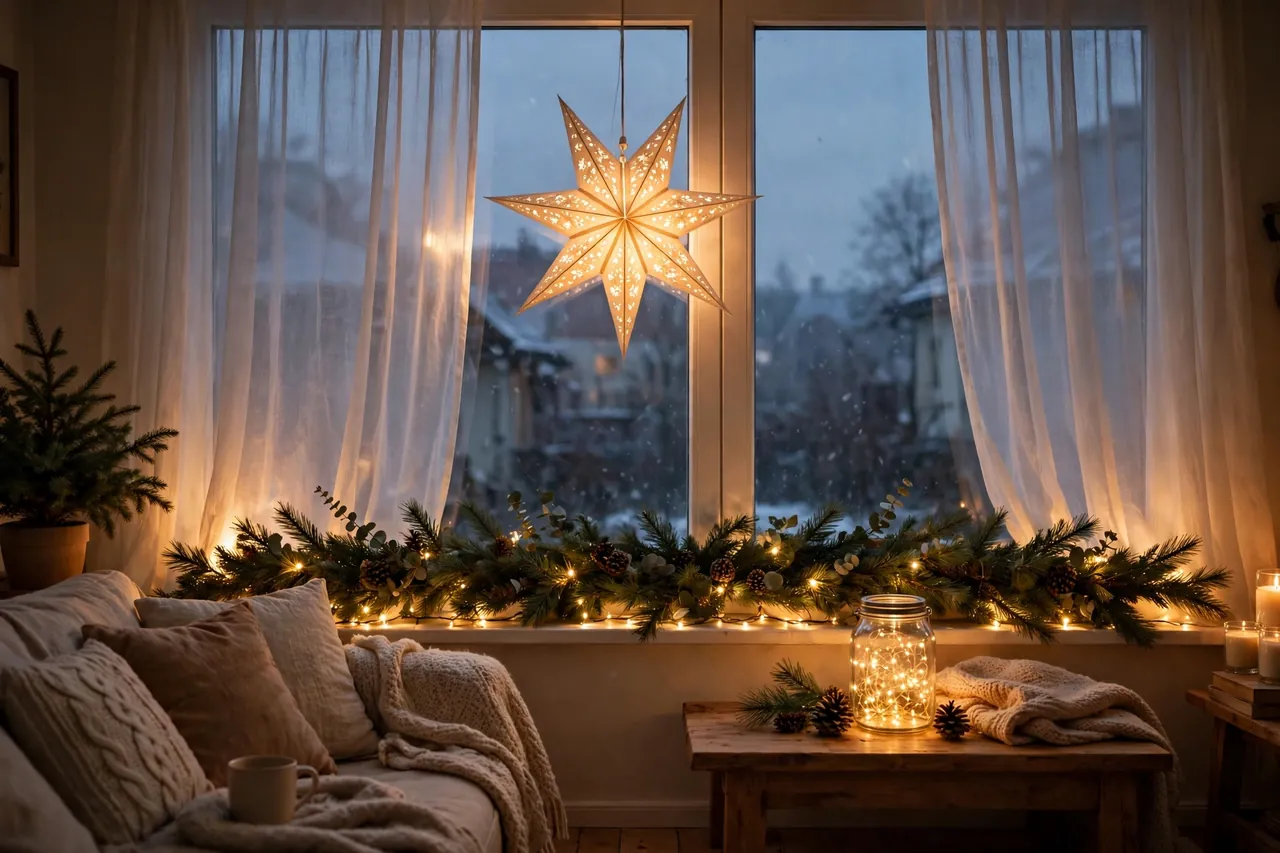
Christmas lights ideas inside the house work best when they feel cozy, not cluttered. Dress a window sill with fairy lights woven through a pine garland, or hang a paper star lantern in the glass for a soft glow that shows from the street — a window-sill idea IKEA’s Christmas lighting guide uses too. Curtain lights behind sheer panels turn a plain window into a gentle wall of light.
Weave micro lights through the garland on your mantel, and let a few strands spill onto the stair banister. Fill a glass jar, vase, or lantern with battery-operated fairy lights for a tabletop glow that needs no outlet. In a bedroom, drape warm white lights behind sheer curtains or around a headboard for a calm evening light that feels special all December.
Simple outdoor Christmas lighting ideas translate indoors too: one warm color, one focal point per room, and no more than two lit features in a small space. A single glowing window beats five competing strands every time.
Christmas Light Ideas for Small Spaces and Rentals
Not every home has a roofline you can reach or a landlord who welcomes clips on the siding. Small-space Christmas lighting ideas still glow beautifully, because windows and balconies do most of the work. Hang curtain lights inside a window with suction hooks, and the glass turns into a display the whole street can enjoy.
Line a balcony rail with battery-operated fairy lights, which need no outlet and no drilling. Fill jars and lanterns with the same battery strands for tables and steps. Adhesive hooks hold lightweight strands on smooth walls and come off cleanly in January, which keeps your deposit safe. One glowing window plus one lit balcony beats a half-finished roofline every time, and you never touch a ladder.
Smart Christmas Lights: Timers, Apps, and Color Scenes
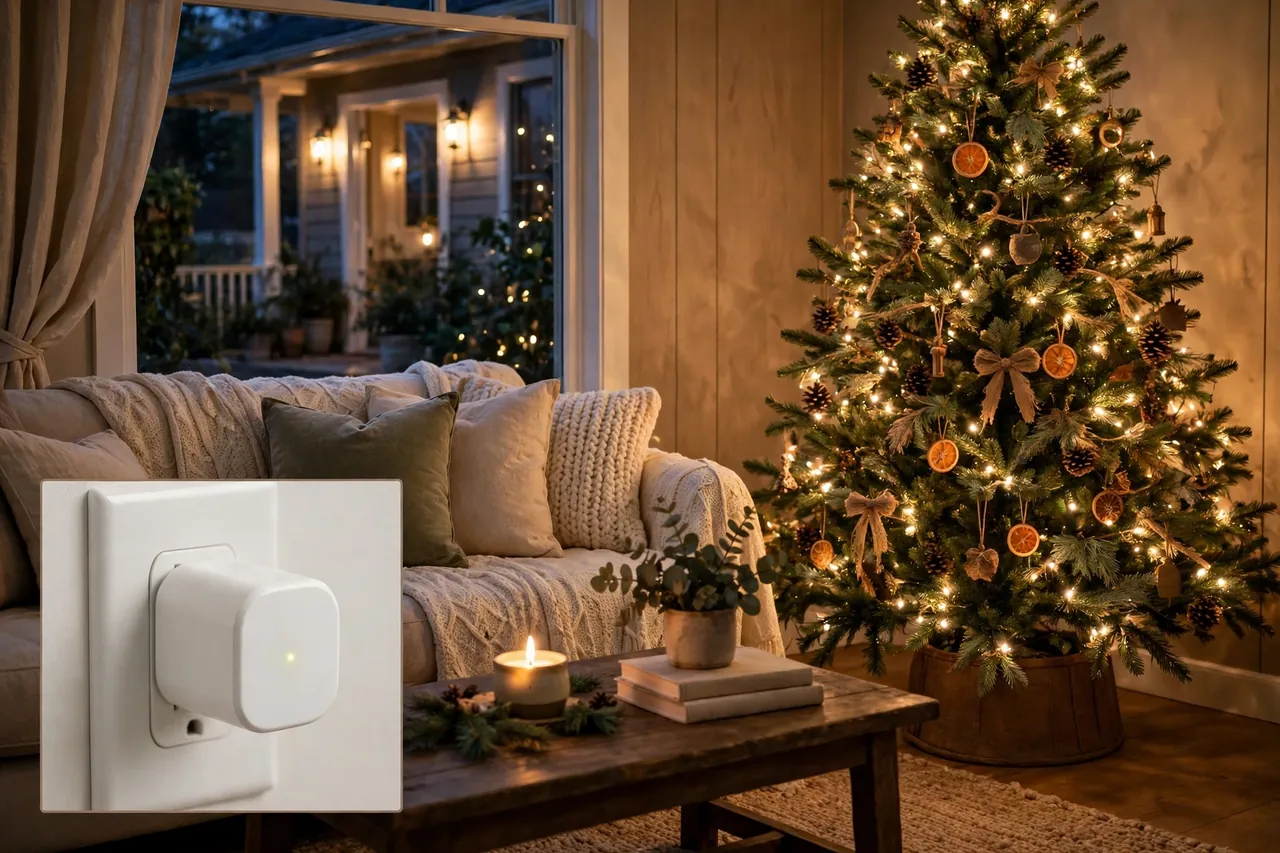
Smart controls are the quiet hero of Christmas lighting ideas for the house. A simple timer plug switches your display on at dusk and off at bedtime, so you never walk the yard in the cold to unplug strands. If you want to learn the setup, how to use a timer plug walks through it step by step.
A Wi-Fi plug goes one step further: you control the lights from your phone, set schedules for different days, and switch everything off from bed. Wi-Fi plugs also let you group several displays together, so the tree, porch, and yard all follow one schedule. For lights wired to a wall switch, an automatic light switch timer gives you the same dusk-to-bedtime routine without touching a plug.
Color-changing smart strands add one more trick: scenes. Set a warm white scene for quiet evenings, a red-and-green scene for parties, and a dim late-night scene for the last hour before bed. Music-sync modes flash lights to a beat, which delights kids and annoys neighbors in equal measure, so save that scene for party nights only.
How Many Lights Do You Actually Need?
Guides disagree on exact numbers, so treat these figures as a planning starting point, then count from the bulb numbers on your boxes. Measure each area, add about 10 percent extra for overlap, and round up to the next full strand.
Table: Planning guide for Christmas lights
| Area | Planning rule | Example |
|---|---|---|
| Christmas tree | About 100 lights per foot of height | 7-foot tree: about 700 lights, or 1,000 to 1,200 for a fuller look |
| Roofline | About 100 lights per 5 feet of eave | 50 feet of eave: about 1,000 lights |
| Shrubs and hedges | One net light set per bush | Three medium shrubs: three net sets |
| Porch railing | One strand per 6 to 8 feet of rail | 16 feet of rail: two to three strands |
| Tree trunk and branches | About 100 lights per foot of trunk height for a wrapped look | 8-foot ornamental tree: about 800 lights |
When strands come in different lengths, buy one spare strand in your main color. A spare strand fixes a shortfall in minutes, while a mid-December shopping trip for one matching strand rarely ends well.
Hang Them Safely
Christmas lights mix electricity with rain, snow, and ladders, so safety comes before sparkle. Inspect every strand before you plug it in, and throw away any strand with cracked sockets, frayed wires, or loose connections. The Electrical Safety Foundation International (ESFI) holiday safety tips urge exactly this check, along with using only lights certified by a recognized testing lab such as UL, CSA, or ETL.
Use outdoor-rated lights outside, and plug them into a GFCI-protected outlet, which cuts power fast if moisture causes a fault. Never use indoor lights outside: indoor strands are not sealed against moisture, and water plus electricity is a serious hazard. Keep decorations at least three feet from heat sources, and keep yourself, your ladder, and your lights at least 10 feet from power lines.
Do not overload an outlet, and never link more strands than the manufacturer allows. Work on a dry, calm day with a partner holding the ladder, and never climb onto the roof to hang lights. Route cords along walls and paths, never across walkways where someone can trip, and never pinch a cord in a window or door, which can tear insulation and cause a shock or fire.
When Lights Go Wrong: Quick Fixes
Half a strand goes dark. Check for a loose bulb first, then look for a small fuse inside the plug, which many LED strands carry. Swap the fuse or reseat the bulb before you blame the whole strand.
A breaker trips when the display switches on. Split the display across two circuits instead of piling every strand onto one outlet. Overloaded outlets overheat, and ESFI lists overload as a top holiday fire cause.
The timer will not run the show. Check that the timer plug sits in a live outlet, that its schedule matches the current time, and that its backup battery still holds a charge. A timer set to the wrong hour looks exactly like a broken timer.
The display looks patchy from the street. Step back to the sidewalk at dusk and look again. Patchy usually means one dark gap, not a failed display: add one strand to the gap, or move a bright focal point closer to it, and the whole display pulls together.
Taking Lights Down and Storing Them
Take outdoor lights down in the first week of January, while the weather is still workable. ESFI reminds homeowners that holiday decorations are meant for temporary use, and months of sun and weather wear wires out and shorten their life. Label indoor and outdoor strands separately as you pack them, so next year starts without a sorting pile.
Wrap each strand around a piece of cardboard or a cord reel instead of stuffing it into a bag. Tangle-free strands go up much faster next year, and you will spot damaged sections while you wrap. Toss any strand that failed this season rather than storing a problem for next December.
Holiday decorations and Christmas trees account for almost 2,000 fires each year, according to ESFI, and most of those fires could have been prevented. A careful takedown is part of the display, not an afterthought: it keeps next year’s lights safe before they ever go up.
Disclaimer: This guide covers decoration only. If an outlet is not GFCI-protected, if a circuit keeps tripping, or if any wiring looks damaged, stop and call a qualified electrician instead of pushing ahead. For steep roofs, tall trees, or any work that feels unsafe from a ladder, hire a professional installer. Homes, wiring, and conditions vary, so follow your products’ own instructions.
Related Guides
Decorating a Christmas Window: Ideas That Glow Inside and Out · Outdoor Christmas Tree Decorations: How to Dress a Tree That Glows All Season · Tree Decorating Ideas for Christmas
Frequently Asked Questions
How many lights do I need for my house?
Start with about 100 lights per foot of tree height and about 100 lights per 5 feet of roofline, then measure each area and add about 10 percent extra for overlap. A 7-foot tree needs roughly 700 lights, or 1,000 to 1,200 for a fuller look. Always check the bulb count on the box, because strands vary.
Can I leave Christmas lights on all night?
You can, if you use UL-listed, outdoor-rated lights on a GFCI-protected circuit with a timer. Still, the safest habit is turning lights off when you go to sleep or leave home unattended. A timer handles this automatically, saves energy, and makes your lights last longer.
Can I use indoor lights outside?
No. Indoor lights are not sealed against moisture, and using them outside creates a serious shock and fire hazard. ESFI states this plainly: use only products approved and marked for outdoor use outdoors. Check the label before any strand goes past the front door.
Is it safe to connect multiple light strands together?
Only within the limit printed on the manufacturer’s label. ESFI advises against connecting more than three strings of incandescent lights together, because extra strands can overheat. Many LED sets allow more, but the label on your exact product is the only number that counts.
Should I use clips or nails to hang lights?
Use clips. Plastic gutter clips, shingle clips, and adhesive hooks hold strands neatly and come off cleanly after the season. Nails and staples can pierce wire insulation, damage siding and roofing, and cause short circuits, so they have no place in a light display.
Are smart Christmas lights worth it?
Yes, if you value scheduling and color control. Smart strands and Wi-Fi plugs let you set dusk-to-bedtime schedules, change colors by scene, and switch everything off from your phone. They cost more upfront, but a smart plug on regular LED strands gives you most of the scheduling benefit for less money.
Start tonight with one room and one outdoor spot. Measure them, pick your color story, and hang one strand well. A home that glows gently in every window beats a house blazing in one corner, and next year you will only need to add one new idea at a time.