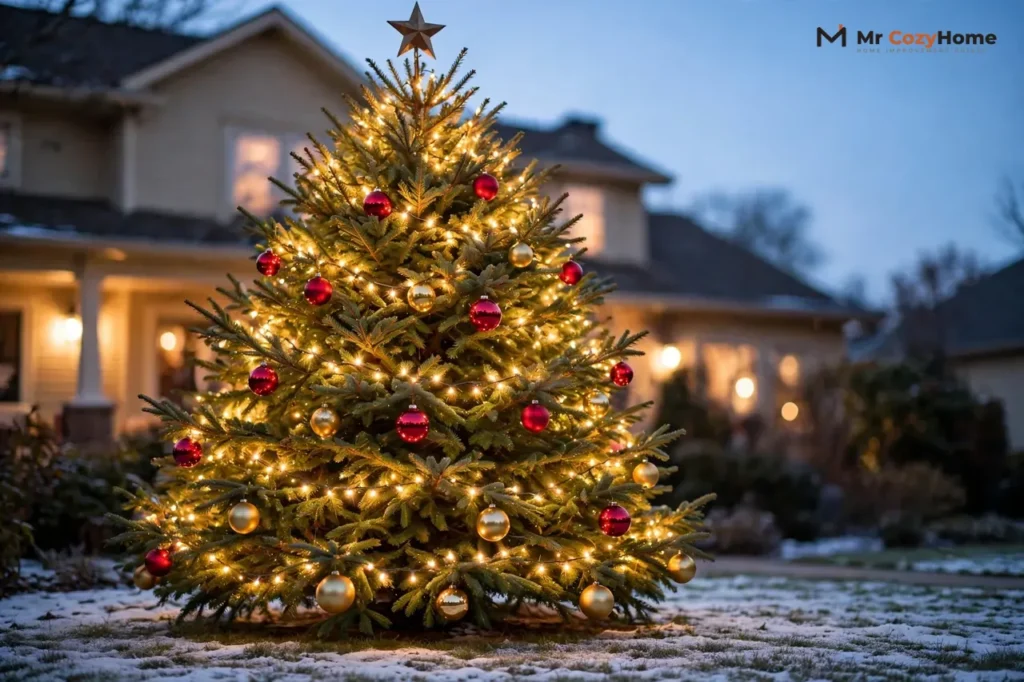
An outdoor Christmas tree looks its best when you treat it like an outdoor project, not an indoor tree that happens to stand outside. Pick a tree that can live outdoors, hang outdoor-rated lights, use ornaments that can take rain and wind, power it through a GFCI outlet, and anchor it well. Get those five things right, and your outdoor decorations for your Christmas tree will glow every night from the first weekend of December right through Christmas Day.
💡 Practical Home Tip: Before you buy a single box of ornaments, step out to the street at dusk and look at your tree the way a neighbor sees it. The dark gaps and the bare side will tell you exactly where the lights need to go, and you will buy less because you already know what is missing.
Pick the Right Tree for Outside
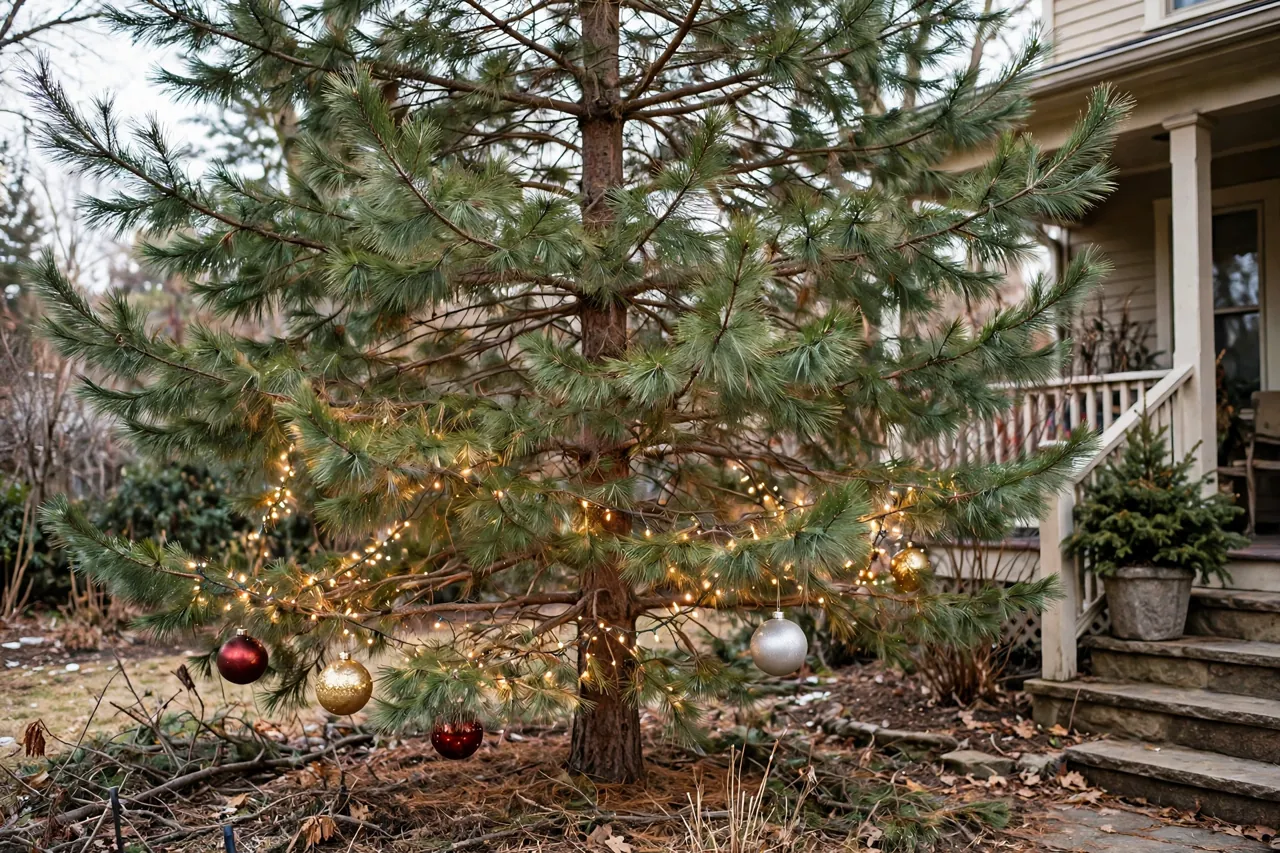
The easiest outdoor Christmas tree is the one already growing in your yard. A living pine, spruce, or fir holds itself up, needs no stand, and costs you nothing but lights and ornaments. Decorate the branches you can reach safely from the ground or a short step ladder, and let the top stay natural. Nobody on the street can tell the top is bare, and you stay off a tall ladder in December.
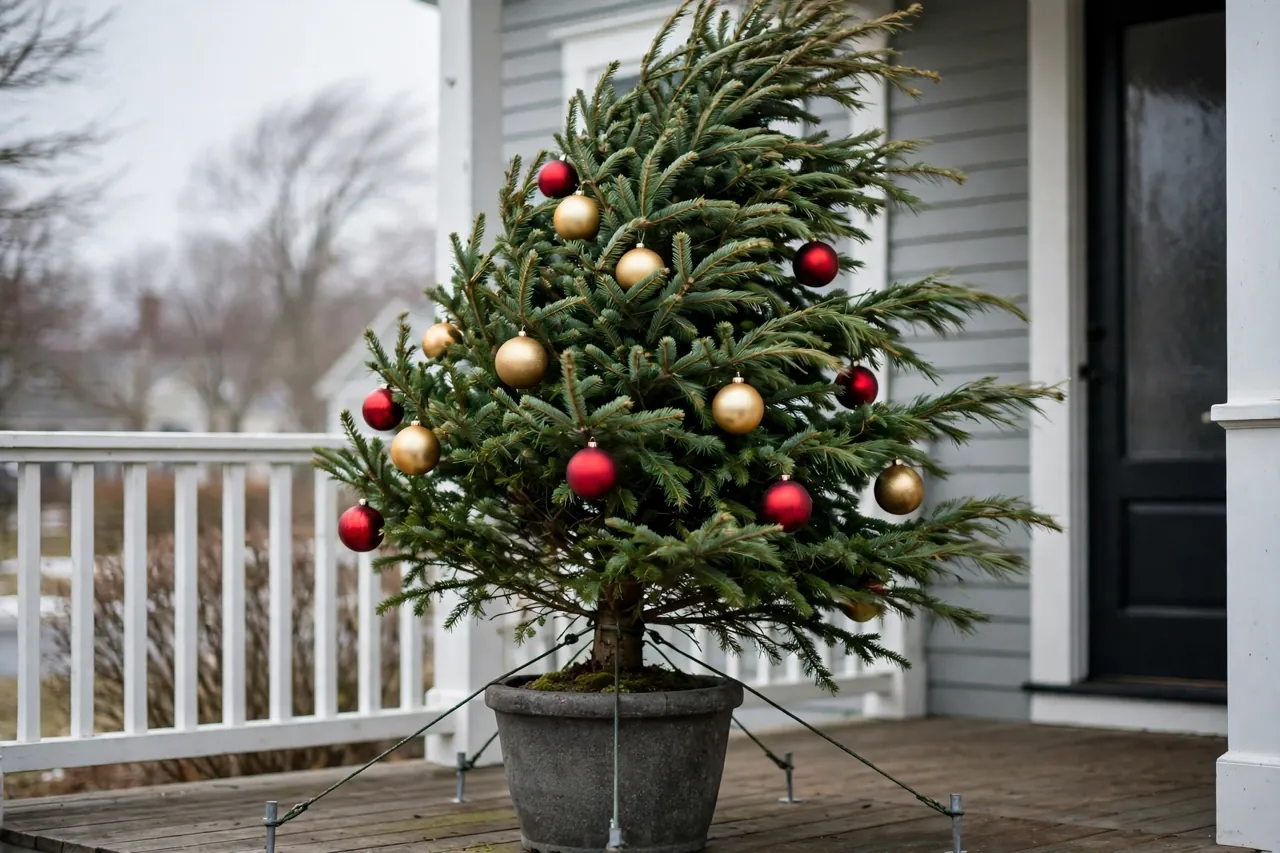
A potted evergreen works beautifully for a porch, patio, or small yard. Keep it watered, because a dry root ball in a pot freezes harder and suffers more than a tree planted in the ground. Tuck it against a wall or railing for a little wind shelter, and give the pot a heavy base so a gust cannot tip it.
An artificial tree can live outside, but only if the maker built it for that job. Look for outdoor-rated, UV-resistant trees; Homestyler’s outdoor tree guide makes the same point, noting that artificial trees only suit long-term outdoor display when they carry a UV-resistant rating, while real trees otherwise tend to last longer outside. An indoor artificial tree fades, cracks, and sheds in sun and frost, so leave those inside.
A cut tree in a stand can work outside for a few weeks, but be honest with yourself about it: wind dries it out fast. Water it every day, keep it out of the strongest wind you can, and expect it to dry out and fade faster than a living tree would. If you love the smell of a real cut tree, put that one inside and let the yard tree be a living or artificial one.
Match the tree to your comfort on a ladder. If you cannot reach a branch without stretching, leaning, or wobbling, that branch stays bare. A well-lit small tree always beats a half-decorated tall one.
Lights First: What Everyone Sees After Dark
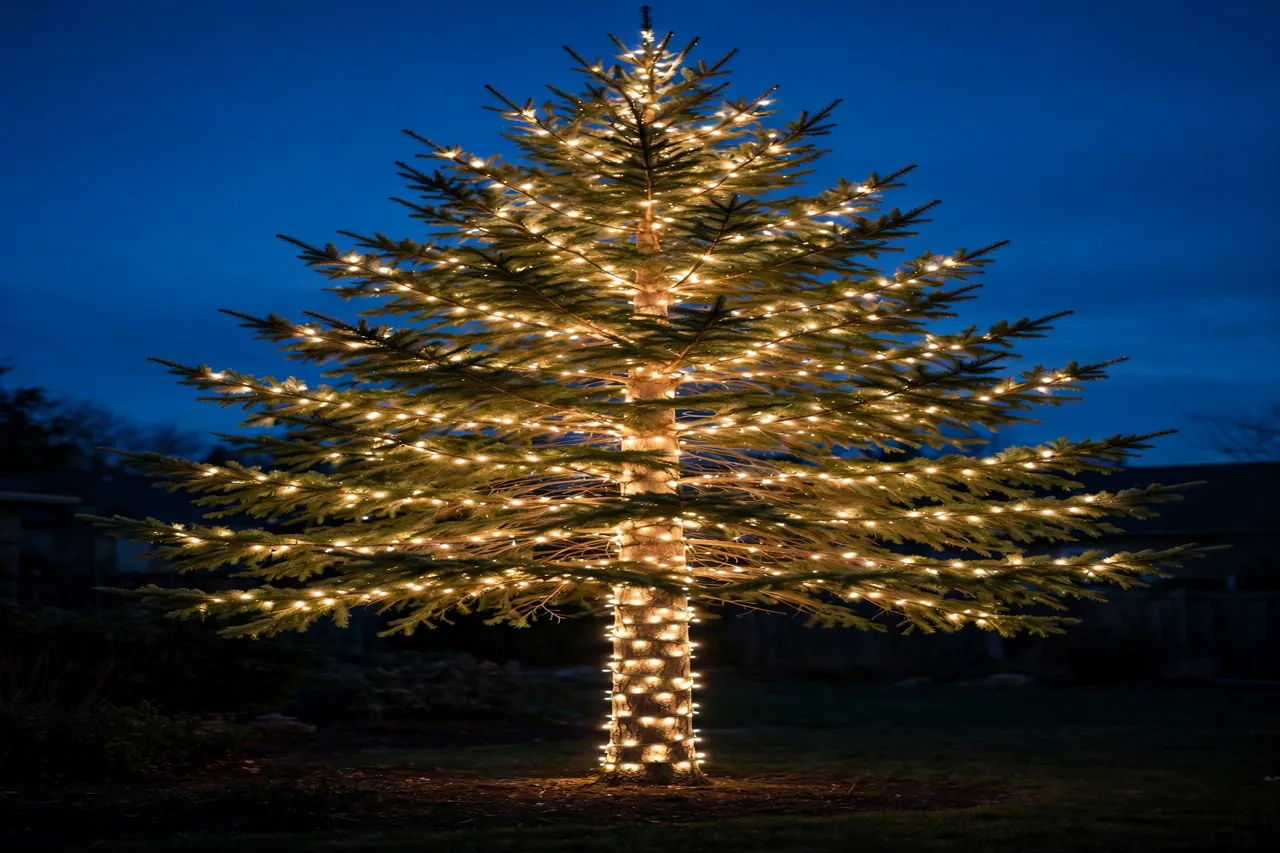
Lights do most of the work on an outdoor tree, because after dark nobody sees your ornaments from the street. They see the glow. So hang lights first, step back at night, and only then add ornaments to the places that still look thin.
Use lights rated for outdoor use, and make them LED. Outdoor-rated LED strings run cooler, use less power, and last longer than old incandescent strings, which matters when they hang in rain and snow for a month. Warm white gives a classic, cozy glow; multicolor feels playful and bright. Pick one and stick with it, because mixing warm white and multicolor on the same tree usually looks messy rather than festive.
Wrap the trunk first, then weave out through the branches, as this guide to dressing an outdoor tree recommends. On a small tree, wind the lights from the base upward so the coverage stays even. On a taller or wider tree, run the lights around the trunk first and then work through the outer branches, so the whole shape reads from the street instead of just the front. Test the whole tree at night before you hang a single ornament, because fixing a dark patch is easy when the branches are still bare.
Buy one extra strand beyond what you think you need. Running short with half a tree left is the most common outdoor decorating frustration, and a spare strand also covers you if one section fails mid-season. Check the box for how many strands you may safely connect end to end, and never exceed the maker’s limit.
Smart lights make the whole job easier. With a WiFi plug, you can switch the tree on from your phone and set a schedule without walking outside in the cold. Solar strings suit small trees and accents, but a full-size outdoor Christmas tree needs mains power; solar alone rarely keeps a big tree glowing all evening through cloudy December weeks.
Ornaments That Can Take Rain, Snow, and Wind
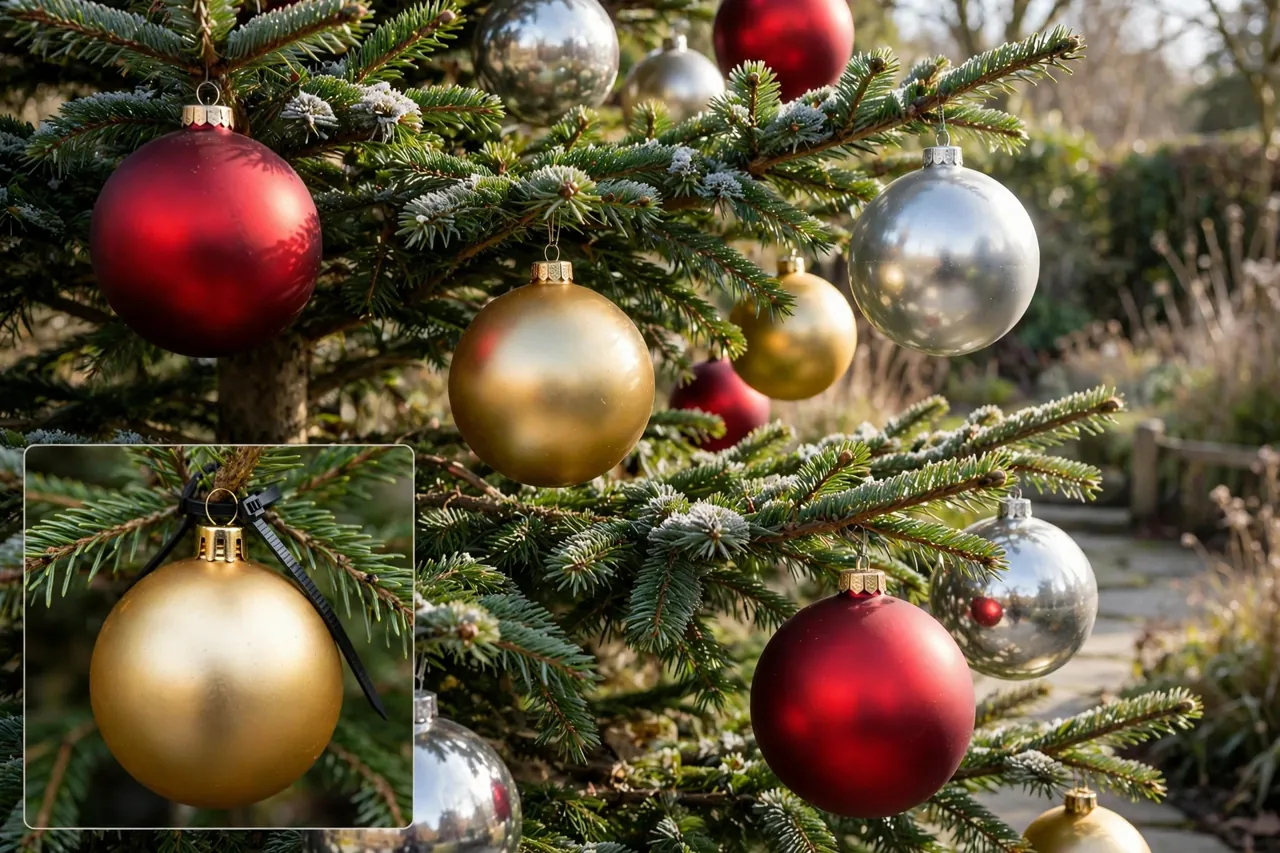
Leave glass, paper, and family keepsakes inside. Outside, every ornament needs to survive rain, frost, and a gust that tries to throw it across the yard. Shatterproof baubles in plastic, foam, or resin are the safe pick, and they come in every color you would want. Go bigger than you would indoors: large baubles read from the street, while tiny ones disappear into the branches.
Hang everything with zip ties, coated wire hooks, or twist ties, not the thin wire hooks that come in the box. Standard ornament hooks straighten out in wind, and then you find your baubles on the lawn in the morning. For heavier pieces, use screw-in eye hooks on a sturdy branch. Tie ribbon and garland tightly too, and choose synthetic ribbon and garland made for outdoor use, such as vinyl or polyester, because fabric and foil versions soak up water, sag, and shred.
Finish with a topper that can hold its own. A metal star or a sturdy woven piece beats a delicate angel outside, and it needs fastening, not just balancing. If your tree is tall, skip the topper entirely rather than climbing high on a ladder in the wind; a well-lit tree with a clean top still looks finished.
A few personal touches still work outside if you protect them. Laminated photos or sealed wooden slices make sweet, weatherproof ornaments, and dried orange slices tied with ribbon add scent and warmth. Just remember the rule: if rain or a fall would ruin it, it stays indoors.
Power It Safely: Outlets, Cords, and Timers
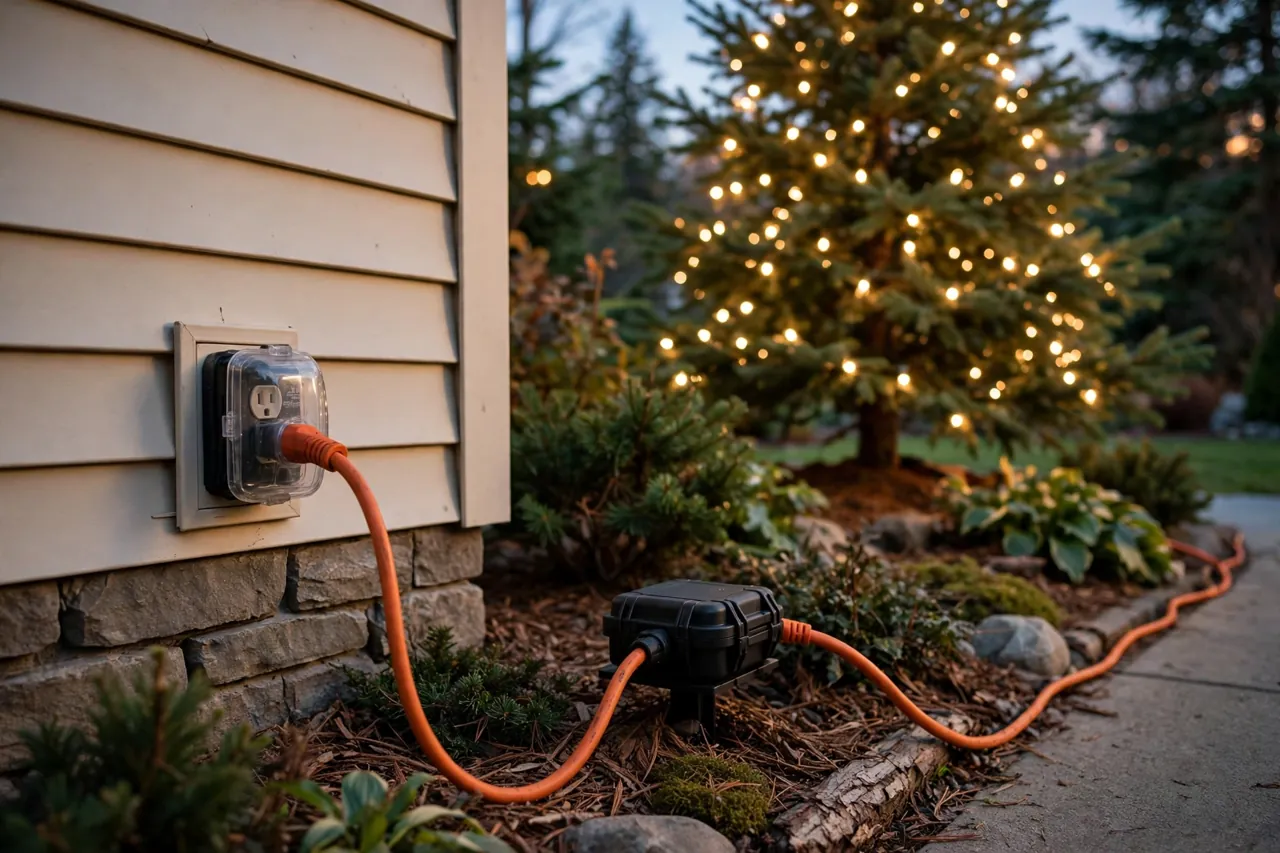
Outdoor power deserves more care than indoor power, because water and electricity share the same space out here. Plug your tree lights into a GFCI outlet, which is the outlet with the little test and reset buttons. A GFCI cuts the power in a fraction of a second if it senses current leaking where it should not go, such as through water. That one device is the difference between a wet plug and a dangerous shock.
Use extension cords rated for outdoor use, and keep every plug and connection off the ground and covered. A simple waterproof connection cover, or even raising plugs onto a brick inside a covered box, keeps rain and melting snow out of the joints. Run cords where feet, shovels, and snow blowers will not catch them, and never run a cord through a doorway or window that pinches it shut.
Do not overload one circuit. If the breaker trips when the tree goes on, you have too much on that circuit, so split the load across two circuits or drop a strand. And check your lights and cords before you hang them: cracks, frayed wires, or corroded plugs mean that strand stays in the box, not on the tree.
Put the schedule on autopilot. A timer plug switches the tree on at dusk and off at bedtime without you remembering anything, and it saves power too. If your outdoor lights run off a wall switch instead, an automatic light switch timer does the same job from the switch. Set it once, and the tree glows every evening on its own.
If your outdoor outlet is not GFCI-protected, if a circuit keeps tripping, or if any wiring looks damaged, stop and call a qualified electrician. Outdoor wiring is not a learn-as-you-go job, and a short visit from a pro costs far less than a fire or an injury.
Keep It Standing Through Wind and Storms
Wind is the real enemy of outdoor Christmas tree decorations. A tree that looks perfect on a calm afternoon can lean, shed ornaments, or topple on the first blustery night. So anchor before you decorate, not after. A potted tree needs a heavy pot or extra weight in the base. A freestanding artificial tree needs its stand staked or weighted, and a tall one benefits from guy lines tied low and out of sight.
Walk the tree after every storm. Tighten loose ties, pick up fallen ornaments before the mower or dog finds them, and check for pooled water around plugs and cords. A five-minute check once a week catches most problems while they are still small, and it keeps the display looking cared for rather than tired.
When a real storm is coming, be ready to stand down. One weatherproofing guide advises that light rain and moderate wind are manageable when decorations are properly secured, but during high-wind warnings, thunderstorms, or freezing rain, you should disconnect the power and, where you can, bring lightweight or tall items inside. Smart plugs and timers help here too, because you can kill the power from your phone without going out in the storm.
One Palette, One Look
The difference between a tree that looks styled and one that looks cluttered is restraint. Pick two or three colors and repeat them across lights, ornaments, and ribbon. Warm white lights with gold and red ornaments feel traditional. All-white lights with silver and clear ornaments feel like a winter wonderland. Burlap ribbon, wooden stars, and warm lights feel rustic and calm. Any of these works; mixing all of them on one tree does not.
Let the tree be the star of the yard. Pathway lights, wreaths, and porch pieces should support it, not compete with it. If every corner of the yard shouts at once, the eye does not know where to land, and the whole display feels smaller. One glowing tree, done well, carries the whole front of the house.
Timing and Storage
Most neighborhoods light up the weekend after Thanksgiving, and that timing works well: the tree gets a full month of evenings without sitting out so long that weather wrecks it. Take everything down within a few weeks after Christmas, while the weather is still forgiving and before January wind and ice do their worst. Lights left up all winter fade, crack, and fail earlier the next year.
Store like you will decorate again next year, because you will. Coil light strings loosely instead of stuffing them in a bag, label ornament boxes by color or section, and keep everything dry. Before you pack a strand away, plug it in once and check it: a dead strand found in December is a problem, but the same strand found in January is a note on next year’s shopping list.
If you love the glow so much that the ladder feels like a chore, consider the long-term option. Permanent outdoor Christmas lights stay up year-round and switch on with a phone, which suits a yard tree you want lit without the annual climb. They cost more up front, but they end the yearly ritual of hanging and hauling lights in the cold.
Table: Outdoor Christmas tree problems and quick fixes
| Problem | Likely cause | Fix |
|---|---|---|
| Half a light strand stays dark | Loose bulb or a damaged section | Reseat the bulbs, check the plug, and replace the strand if a section stays dark. |
| Ornaments end up on the lawn after wind | Thin hooks and light ornaments | Rehang with zip ties or coated wire, and swap the lightest pieces for heavier shatterproof ones. |
| The breaker trips when the tree goes on | Too much load on one circuit | Split the strands across two circuits and respect the box limit for end-to-end connections. |
| The tree leans after a storm | Base too light for the wind | Straighten it, add weight to the base, and add guy lines on tall trees. |
| Colors look faded by New Year | Indoor-rated decor used outside | Replace faded pieces with UV-resistant outdoor-rated ones next season. |
| Plugs sit in a puddle | Cords run along the ground | Raise connections onto a brick or into a covered box, and reroute cords away from low spots. |
Related Guides
Christmas Light Ideas for a Home That Glows All Season · Decorated Xmas Houses: Ideas for a Whole House That Feels Like Christmas · Decorating a Christmas Window: Ideas That Glow Inside and Out
Frequently Asked Questions
What types of lights are best suited for outdoor Christmas trees?
Commercial-grade outdoor-rated LED strings suit outdoor Christmas trees best. They resist weather, run cooler than incandescent strings, use less power, and last longer through a month of rain and snow. Pick warm white for a classic look or multicolor for a playful one, and keep to one palette per tree.
How can I prevent tree decorations from blowing away?
Choose heavier shatterproof ornaments and fasten them with zip ties, coated wire hooks, or twist ties instead of thin ornament hooks. Anchor the tree itself with a weighted base or stakes, tie ribbon and garland tightly, and check the ties after every storm so small loosening never becomes a bare tree.
What is the best method for powering outdoor tree lights safely?
Plug into a GFCI outlet, use outdoor-rated extension cords, and keep every connection elevated and covered with a waterproof cover. Put the lights on a timer or smart plug so they switch off on their own, never overload one circuit, and call an electrician if the outlet is not GFCI-protected or wiring looks damaged.
Can I leave my outdoor Christmas decorations up during a storm?
Light rain and moderate wind are fine when everything is properly secured, but during high-wind warnings, thunderstorms, or freezing rain, disconnect the power and bring lightweight or tall items inside where you can. Smart plugs let you cut power from your phone, so you never need to go out in the storm itself.
Can you leave outdoor Christmas lights on overnight?
That depends on the product, so follow the maker’s instructions for your lights. As a habit, a timer is the sensible choice: it switches the tree off at bedtime, saves power, and means you never have to remember. Never leave damaged, frayed, or indoor-rated lights running overnight outside.
Are artificial trees appropriate for long-term outdoor displays?
Only when they are rated for outdoor use and UV-resistant. An outdoor-rated artificial tree holds its color and shape through sun, frost, and rain. An indoor artificial tree fades and cracks outside, so for a long-term outdoor display, buy outdoor-rated or use a living tree already growing in your yard.
Outdoor power mixes electricity with rain, snow, and foot traffic. If an outlet is not GFCI-protected, if a circuit keeps tripping, or if any wiring looks damaged, stop and call a qualified electrician instead of pushing ahead. Treat this guide as general advice, and always follow your products’ own instructions.
Start with the tree you already have, or the smallest outdoor-rated tree that fits your space. Hang outdoor-rated lights first, test them at night, add big shatterproof ornaments with strong ties, power it all through a GFCI outlet on a timer, and give it a quick check after every storm. Do that, and your outdoor Christmas tree will be the warm glow your whole street looks forward to, all season long.