A house decorated for Christmas feels magical when the whole home tells one story, from the street to the living room to the smallest bedroom. Start outside with warm light and a welcoming door, pick one color palette and one style, then carry that same look room to room in small touches. You do not need a big budget or a house full of new decorations. You need a plan, a little consistency, and a few hours spread over a weekend.
That is the secret behind the xmas houses decorated so well that neighbors slow down to look. They do not have more stuff than everyone else. They have a thread that ties everything together, so the eye travels easily from the porch to the tree to the table. This guide walks you through that thread, room by room, so your whole house feels like Christmas the second someone opens the door.
Start With One Story, Not One Room
Most Christmas decorating goes wrong in one place: the living room gets everything, and the rest of the house gets nothing. Guests walk from a glowing tree into a plain hallway, a bare kitchen, and a bedroom that forgot December exists. The fix is simple. Before you buy or unpack anything, pick one palette and one style, and repeat them everywhere.
Your palette is two or three colors, no more. Your style is the feeling you want, like classic, snowy, or rustic. Once you choose, every room gets a small piece of the same story. A red ribbon on the stair rail echoes the red ribbon on the wreath. A silver ornament bowl on the coffee table echoes the silver star on the tree. That repetition is what makes christmas decorations house-wide feel planned instead of piled up.
Here are three palettes that always work, so you can pick one and stop second-guessing:
| Palette | Colors | Where it shines |
|---|---|---|
| Classic Christmas | Red, green, and gold | Traditional homes, big trees, plaid throws |
| Snowy and calm | White, silver, and soft blue | Modern rooms, flocked trees, frosted windows |
| Rustic and warm | Plaid, natural wood, and cream | Cabins, farmhouses, homes with lots of wood |
Now walk your house with fresh eyes before you decorate. Stand at the front door like a guest would. Notice the dark corners, the bare walls, and the spots where a small touch would land hardest. Write a short list, room by room, of one or two touches each. That list keeps you from buying ten things for the living room and nothing for the hallway.
Start Outside: Curb Appeal That Stops the Street
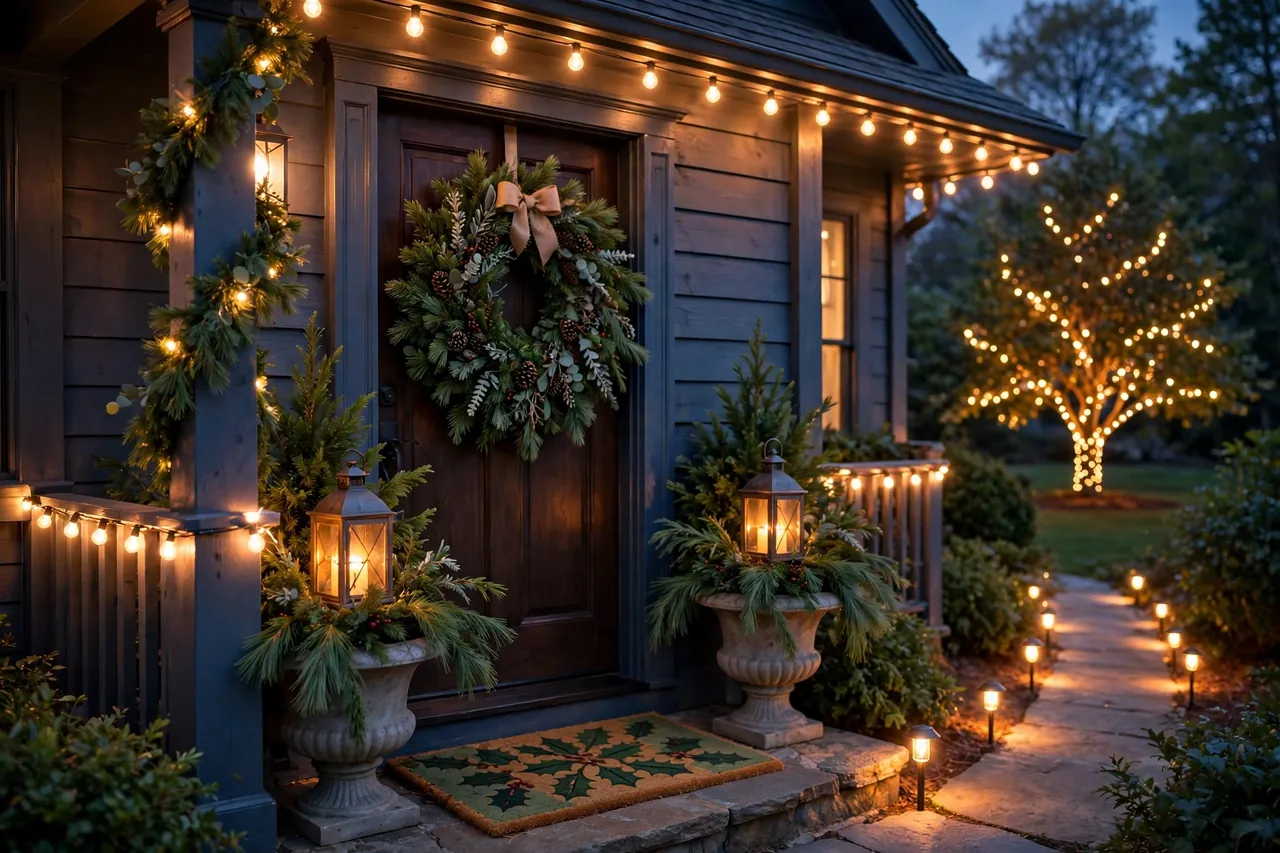
The magic should start before anyone reaches your door. When the outside looks inviting, guests walk in already expecting something wonderful, and neighbors get a little lift every evening. Start with light, because light does more work than any ornament.
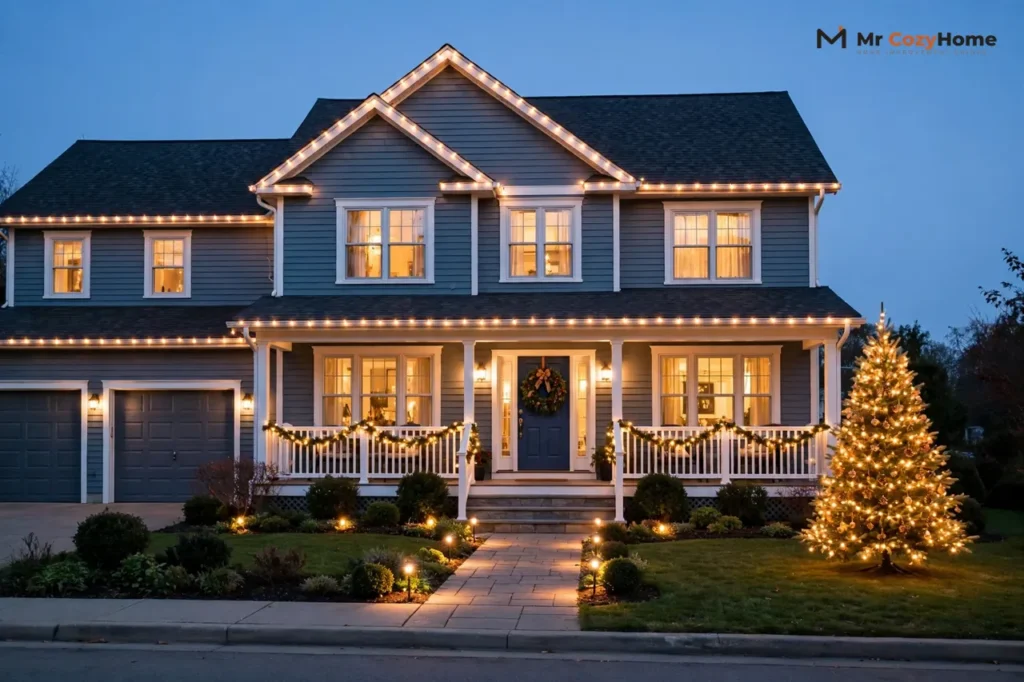
Wrap warm white lights along the roofline, the porch rail, and the walkway. Warm white, around 2700K, flatters brick, siding, and greenery better than harsh blue-white light, and it matches the glow coming from your windows. Add a wreath on the door that is big enough to see from the street, and flank the entry with a pair of lit planters or lanterns. Even a small house looks grand when the path to the door glows.
Then add one focal point in the yard, not ten. A lit tree, a wooden reindeer, or a simple nativity scene gives the eye somewhere to land. Too many yard figures fight each other, and the whole display turns noisy. One strong piece, framed by lights, reads as confident and calm. If you love inflatables or a big display, group them in one bed or one corner so they read as a single scene. For more exterior inspiration, HGTV’s gallery of homes with classic Christmas curb appeal shows how wreaths, garlands, and twinkle lights work together on real houses (HGTV: homes with classic Christmas curb appeal).
Finally, dress the small things people touch and pass. A garland on the mailbox, a bow on the porch post, and a festive doormat cost little and finish the story. Keep cords out of the walkway and use outdoor-rated lights and extension cords only, because rain and snow punish indoor gear fast.
The Entry: Door, Porch, and Hallway
Your front door is the handshake of the whole house. Hang one clear focal point, usually a wreath, at eye level, and let the porch frame it with greenery. Garland along the rail or the door frame, a pair of planters, and a lantern or two turn a plain porch into a welcome. Keep the path clear, because a beautiful porch nobody can walk up to is just a picture.
Inside the door, the hallway sets the tone for everything after it. A garland on the stair rail, a small bowl of ornaments on the entry table, and a candle or two in the window carry the outdoor story indoors without a big effort. If you have stairs, the banister is your best friend: one long garland, tied softly every foot or so, pulls the eye upstairs and makes the whole house feel connected.
Here is a trick designers use: repeat one material from outside to inside. If your porch has fresh evergreen, bring a sprig of the same evergreen to the entry table. If your door wreath has red berries, tuck a berry sprig into the hallway mirror or the stair garland. That tiny echo tells the brain the house was decorated on purpose.
The Living Room: Where the Whole House Gathers
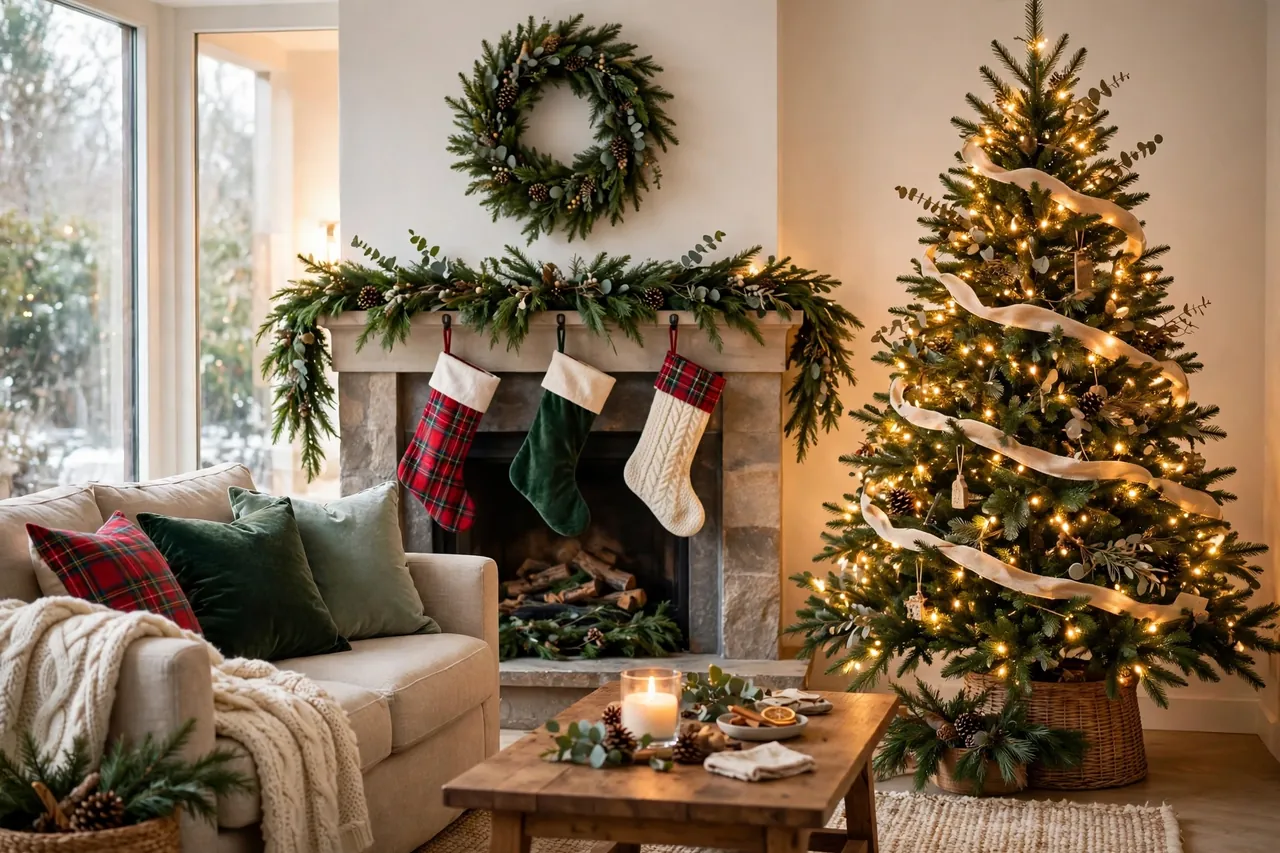
The living room is the heart of Christmas in most homes, and it deserves the biggest share of your attention, just not all of it. Start with the tree, because everything else in the room answers to it. Place the tree where people can walk around it, keep gifts and clutter from swallowing its base, and let one topper and one ribbon style lead the look.
Next, dress the mantel if you have one, even if you never light a fire. A garland base, one focal point like a wreath or mirror above it, and stockings hung with space between them beat a mantel crowded with every decoration you own. Leave breathing room. Empty space makes the pretty things look prettier.
Then soften the seating. Plaid or velvet pillows, a chunky throw over the sofa arm, and a candle on the coffee table turn a decorated room into a room people want to sit in. This is where inside christmas houses win or lose: a room that looks perfect but feels stiff sends guests back to the kitchen. A room with a throw to pull over your knees invites people to stay.
Finally, add scent and sound, the two decorations you cannot see. A pot of cinnamon and orange on the stove, a pine candle, or a bowl of fresh greenery brings Christmas into the air. A quiet playlist in the background finishes the feeling. Together, light, texture, scent, and music do more than any extra ornament could.
Carry the Look Room to Room
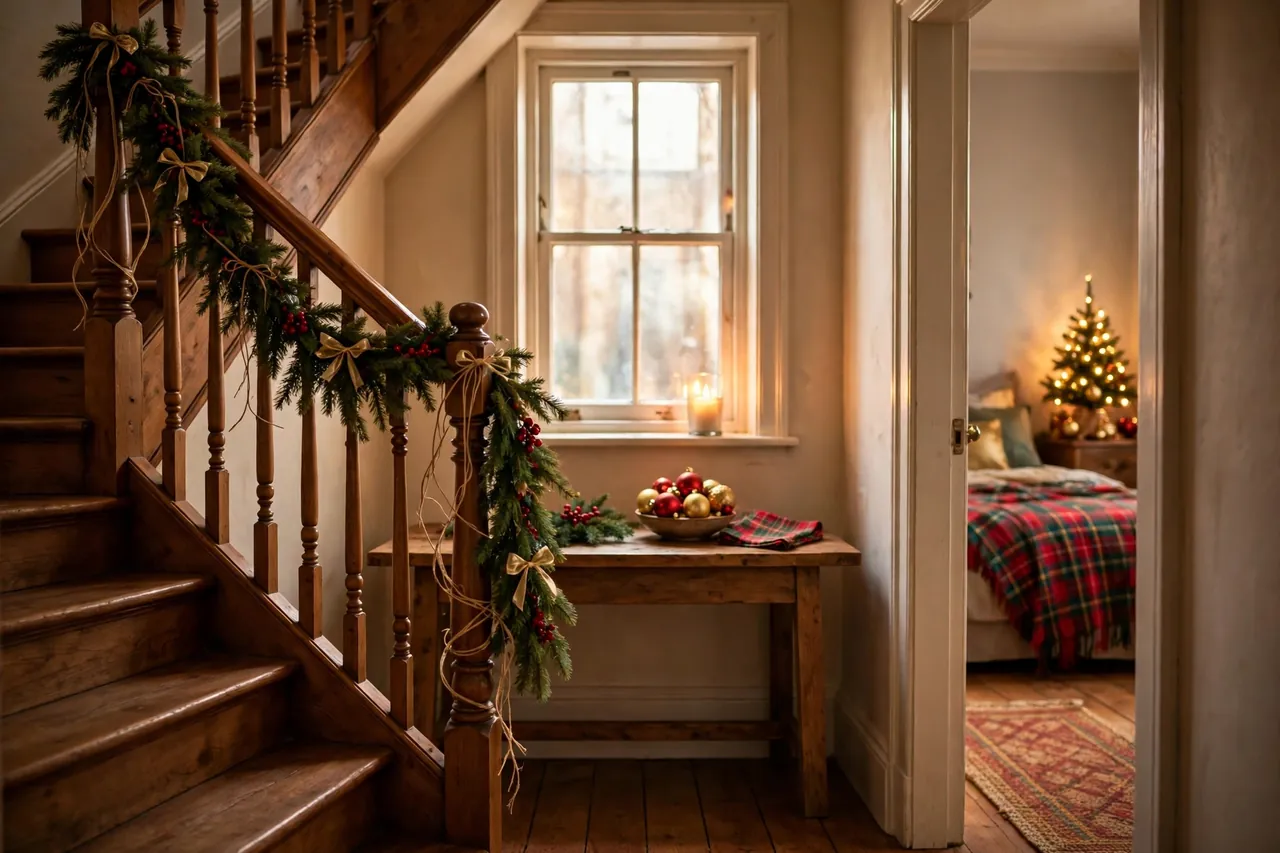
Here is where a decorated house becomes a whole-house story. Give every room one or two small touches in your palette, and no room more than that. The goal is a thread, not a second tree in every room.
- Kitchen: A small wreath on a cabinet door, a bowl of ornaments on the island, and a festive towel or two. Keep counters clear enough to cook, because a kitchen buried in decor helps nobody.
- Bedrooms: A mini tree on a dresser, a plaid throw at the foot of the bed, and one string of lights along a window. Kids’ rooms can hold one small tree of their own, which makes them feel like Christmas lives in their room too.
- Bathrooms: One festive hand towel, a small candle, and a sprig of greenery on the vanity. That is plenty, and guests notice it more than you would think.
- Home office: A tiny tree or a wreath by the desk keeps the workdays of December from feeling gray.
When you decorate inside the house for Christmas this way, the house feels bigger, not busier. Each room offers a small surprise, and the palette ties them together so nothing clashes. If a room feels flat, add light first, because a string of warm lights fixes more rooms than a shopping trip does.
Do not forget the rooms you pass through. Stairs, landings, and short hallways take garland beautifully, and a landing is a perfect spot for a small display, like a village scene or a lantern group. These in-between spaces are the connective tissue of christmas house decorations inside, and they are the difference between a decorated living room and a decorated home.
The Kitchen and Dining Table: Where Christmas Tastes Like Christmas
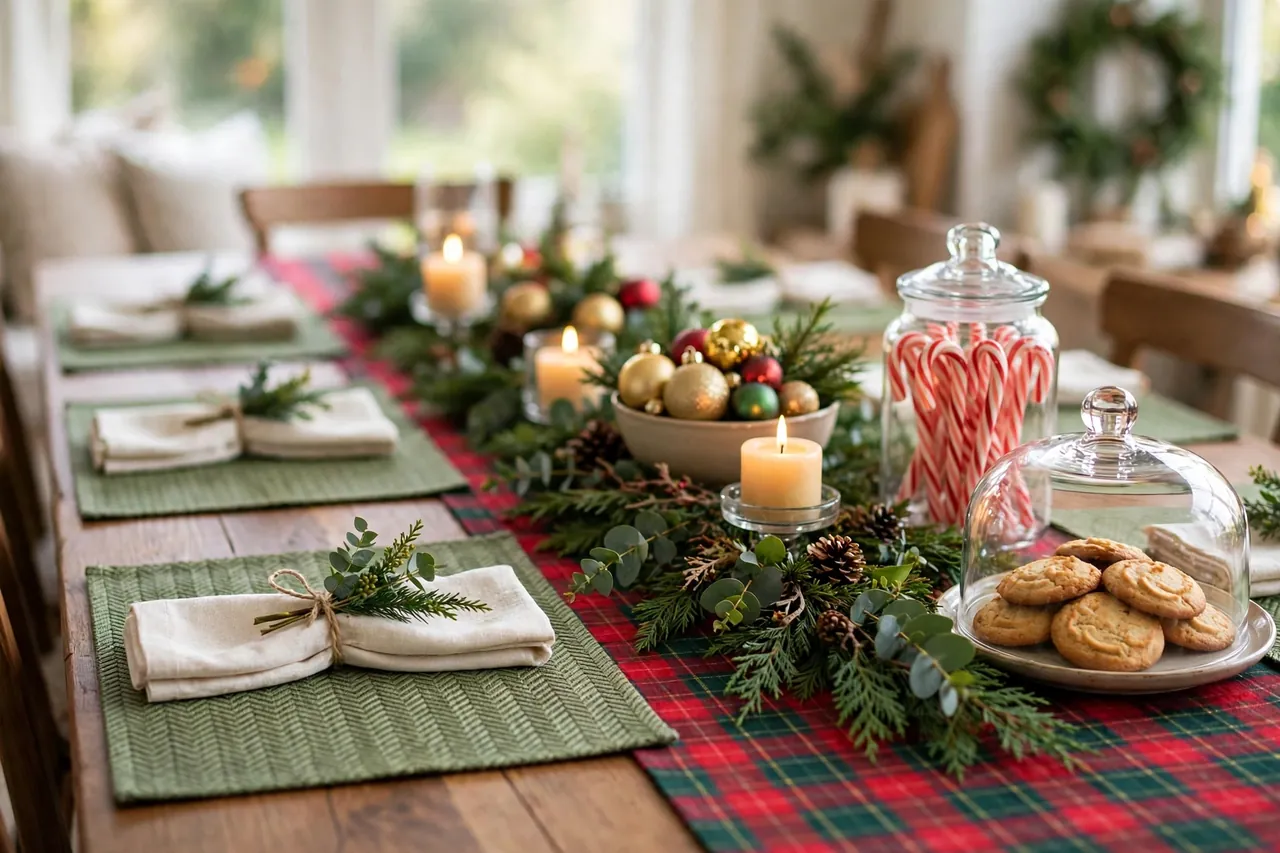
The dining table is where Christmas becomes a meal, and it deserves its own moment. Start with a centerpiece that sits low enough to talk across, like a greenery runner with candles, a bowl of ornaments, or a wooden tray holding pinecones and a lantern. Tall centerpieces look grand in photos and block faces at dinner, so keep the sightlines open.
Then layer the table the way you layered the house: one palette, repeated. Placemats or a table runner in your colors, napkins tied with a sprig of greenery, and one small favor or ornament at each place. You do not need matching china. A plain white plate with a red napkin and a green sprig looks like Christmas dinner already.
In the kitchen, let food do some of the decorating. A jar of candy canes, a plate of cookies under a glass dome, and a bowl of oranges with cloves on the counter smell and look like the season. Keep one stretch of counter completely clear for cooking, and put the edible decor where people gather, not where you chop. Holiday house decorations work best when they help the party instead of getting in its way.
Light It Right: Warm Light, Safe Light
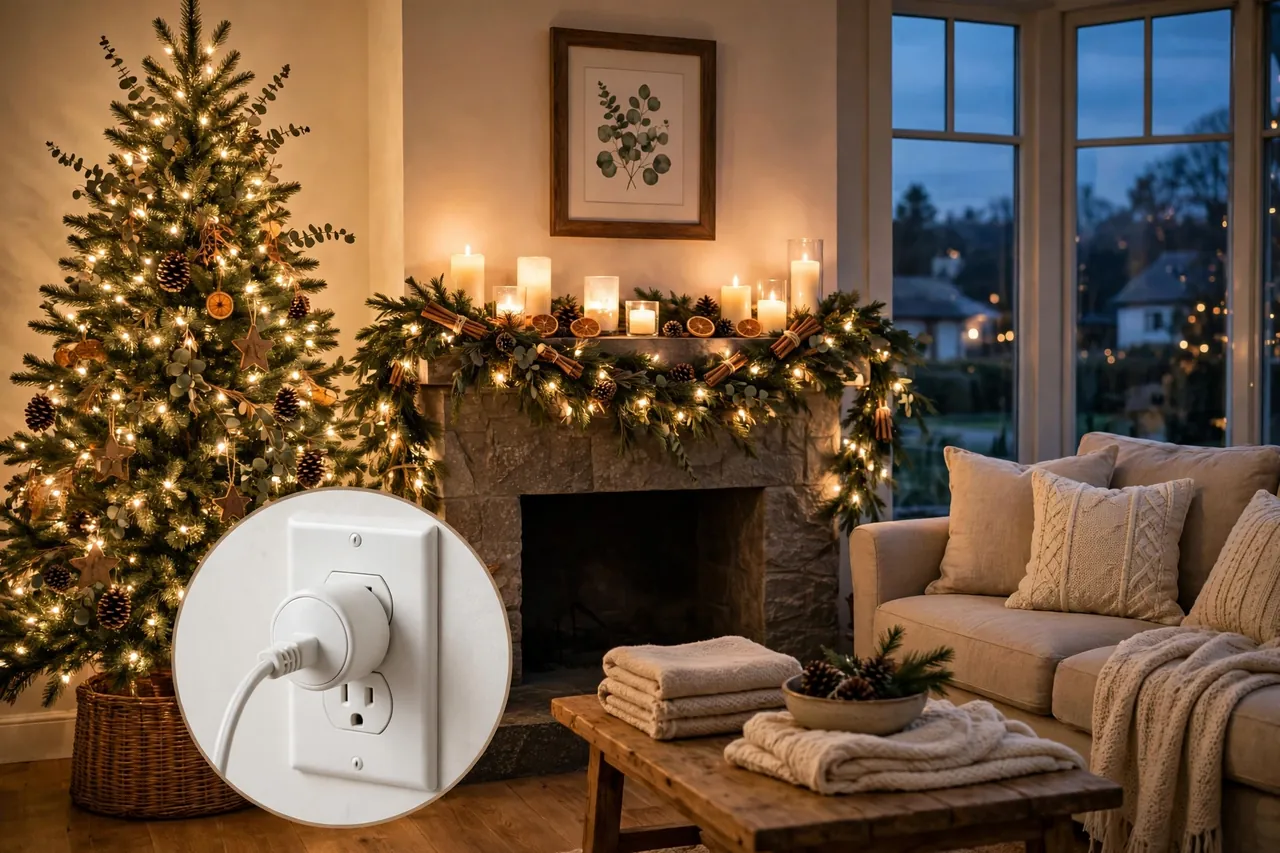
Light is the cheapest way to make a house feel magical, and the easiest way to make it feel wrong. Warm white light flatters skin, wood, and greenery. Cool white light can look crisp on snow, but indoors it often feels like an office. Pick warm white for living spaces and the porch, and save cooler tones for outdoor snow scenes if you love them.
Use timers so your lights come on at dusk and go off at bedtime without you thinking about it. Timers save energy, protect your lights from all-night wear, and keep the house glowing on the nights you forget. Indoors, flameless candles give you the flicker without the fire risk, which matters a lot around garland, stockings, and curious pets.
Outdoors, safety comes first, because Christmas lights mix electricity with rain, snow, and ladders. Use only outdoor-rated lights and cords, plug outdoor displays into GFCI-protected outlets, and never run cords across walkways where feet catch them. Hang roofline lights from the ground with clips and a long pole when you can, and if you do climb a ladder, keep three points of contact and never lean past the rails. A beautiful display is never worth a fall. If an outlet is not GFCI-protected, a circuit keeps tripping, or any wiring looks damaged, stop and call a qualified electrician instead of pushing ahead.
When to Put It Up and Take It Down
Timing is the question every decorated house faces, and the honest answer is that it depends on your household. Many American families decorate the weekend after Thanksgiving, which gives about a month of evenings to enjoy the glow. Others start in early November, especially with artificial trees and outdoor lights, because the longer season lifts dark evenings. Both are normal, and neither makes you early or late in any way that matters.
Real trees ask for a tighter window. A fresh-cut tree usually looks its best for about four to six weeks if you water it daily and keep it away from heat vents and fireplaces, so late November through mid-December is the sweet spot for bringing one home. Artificial trees and winter greenery, on the other hand, let you start earlier and enjoy the season longer without needles on the floor.
For taking things down, tradition points to January 6, Epiphany, which marks the end of the twelve days of Christmas. Many households take everything down between New Year’s Day and January 6, while others keep winter neutrals and warm lights into mid-January. Check your neighborhood rules too, because some homeowners associations set dates for outdoor displays. A recent guide to holiday decorating timing collects these traditions and the practical trade-offs in one place (ReimagineHome: when to put up Christmas decorations).
Whatever dates you pick, take it down in the reverse order you put it up: ornaments first, then lights, then greenery, then the tree. Label each box by room, so next December you decorate in hours instead of days. Future you will be grateful.
Keep It Simple: Budget, Storage, and Sanity
A whole house does not need a whole paycheck. Greenery, ribbon, candles, and warm lights do most of the work, and they cost far less than a house full of figurines. Shop your own home first: last year’s ornaments, a plaid blanket from the closet, and pinecones from the yard already match your palette, because they matched it last year.
Buy one good thing a year instead of ten small things every year. A lush garland, a sturdy wreath, or a set of lights that lasts will serve you for a decade, while bargain ornaments that break in the box cost you every January. And when you love a new style, swap one room to it instead of redoing the whole house, so the change feels fresh without a full reset.
Here is a short checklist to keep the whole project calm:
- Pick one palette and one style before you unpack anything.
- Walk the house and list one or two touches per room.
- Start outside, then the entry, then the living room, then the small rooms.
- Put lights on timers and keep cords out of walkways.
- Label every storage box by room when you pack up.
And watch for the three mistakes that undo good decorating. First, too many focal points: one star per room, not five. Second, lights with no timers, burning all night and tiring everyone out. Third, decorating only the rooms guests see and leaving the family’s own rooms bare, because the people who live in the house deserve Christmas too.
Disclaimer: Christmas decorating mixes electricity, ladders, candles, and real greenery, so treat safety as part of the plan. Use outdoor-rated gear outside, keep real candles and hot lights away from greenery and stockings, never leave candles burning unattended, and call a qualified electrician for any outlet, circuit, or wiring concern. Homes, budgets, and conditions vary, so follow your products’ own instructions and adapt every idea here to your own house.
Related Guides
Decorating a Christmas Window: Ideas That Glow Inside and Out · Christmas Decorating Hallway Ideas for Narrow Spaces · Christmas Light Ideas for a Home That Glows All Season · Outdoor Christmas Tree Decorations: How to Dress a Tree That Glows All Season
Frequently Asked Questions
Should I decorate for Christmas before or after Thanksgiving?
Either works, and it depends on your household and materials. Early November suits artificial trees and outdoor lights, while real trees do best with a post-Thanksgiving start. Many families choose the weekend after Thanksgiving because it gives about a month to enjoy the decorations.
How can I create a cozy and inviting atmosphere in my home during the Christmas season?
Layer textures, warm lighting, and festive scents. Add soft blankets, pillows, and throws to your furniture, use candles, string lights, and table lamps for a warm glow, and bring in cinnamon, pine, or peppermint through candles or greenery. Cozy comes from warmth and softness, not from more decorations.
What are some creative ways to decorate my outdoor space for Christmas?
Use outdoor lights along the roofline and walkway, hang wreaths on the front door and windows, and add festive touches to the porch like garland, lanterns, or a small tree. Natural elements such as pinecones, holly, and evergreen branches make a rustic display, while a lit figure or sleigh adds whimsy.
How long should I keep Christmas decorations up?
Many households keep decor up through New Year’s, and some follow Epiphany on January 6, which traditionally ends the Christmas season. Winter neutrals and warm lighting can stay into mid-January if you enjoy them. Take real greenery down once it dries out, for safety.
How can I involve my family and friends in the process of decorating my home for Christmas?
Host a decorating day where everyone contributes their own ideas and talents, or assign each person a room or a task. Kids can hang their own ornaments on a small tree, one person can own the outdoor lights, and another can set the table. Shared decorating builds the memories that make the house feel like Christmas.
Start this weekend with one walk through your house and one palette choice, and the rest follows easily. Pick your colors, light the porch, dress the door, and let each room get its small piece of the story. By the time the tree goes up, your house will already feel like Christmas, and the people who walk through it will feel it too. That is what a decorated house really is: not more stuff, but one warm story, told in every room.