A theme for Christmas decoration is one color palette, one style, and one feeling carried through every room of your home. Pick two or three colors you love, match them to the style your home already has, and repeat those colors and textures from the front door to the tree to the dinner table. That is the whole secret. When every room speaks the same visual language, your home looks pulled together even if you did not buy a single new box of ornaments.
💡 Practical Home Tip: Before you shop, take one photo of each room in daylight. You will spot your real colors fast — the gray sofa, the warm wood floor, the white kitchen — and you will stop buying decorations that fight your own home.
Most homes do not look messy because they lack decorations. They look messy because every room tells a different story: red and gold in the living room, silver and blue on the porch, and a rainbow explosion on the tree. A theme fixes that without a big budget, because it turns decorating into a series of small, easy choices instead of one giant guessing game.
What a Christmas Decoration Theme Really Is
Think of a theme as a promise you make to yourself before you open a single storage box. You promise that every decoration you put out will fit three tests: it matches your colors, it matches your style, and it matches the feeling you want guests to have when they walk in. If a piece fails two of those tests, it stays in the box this year.
A theme is not a rigid rulebook. It is a filter. You can still hang the handmade ornament your child made in kindergarten, even if it is neon green and your theme is gold and white. You just give it a place of honor — a small side table, a memory corner — instead of letting it set the color scheme for the whole room. Themes make room for sentiment. They just stop sentiment from turning into clutter.
The best part is that a theme saves money over time. When you know your colors, you stop buying random sale items that never quite work. You build one collection slowly, year after year, and each December gets easier. Theme guides that cover whole homes agree on the same point: a clear theme makes shopping easier, cuts decision fatigue, and helps a home feel intentional instead of accidental.
How to Choose Your Theme in 4 Steps
Choosing sounds hard, but it takes about twenty minutes if you work in order. Do not start by shopping. Start by looking at what you already own and what your home already looks like.
- Read your rooms first. Walk through your home and name the colors that are already there: wall paint, sofa fabric, wood tones, kitchen cabinets. A home full of warm wood and cream walls loves rustic, vintage, and gold themes. A home with cool grays and white walls loves winter white, Nordic, and silver themes. Your theme should flatter your home, not fight it.
- Pick the feeling, not just the look. Do you want cozy and nostalgic, calm and clean, or bold and joyful? Cozy points to rustic lodge or vintage. Calm points to Nordic or winter white. Bold points to maximalist or color-pop. When you cannot decide between two themes, the feeling you want usually breaks the tie.
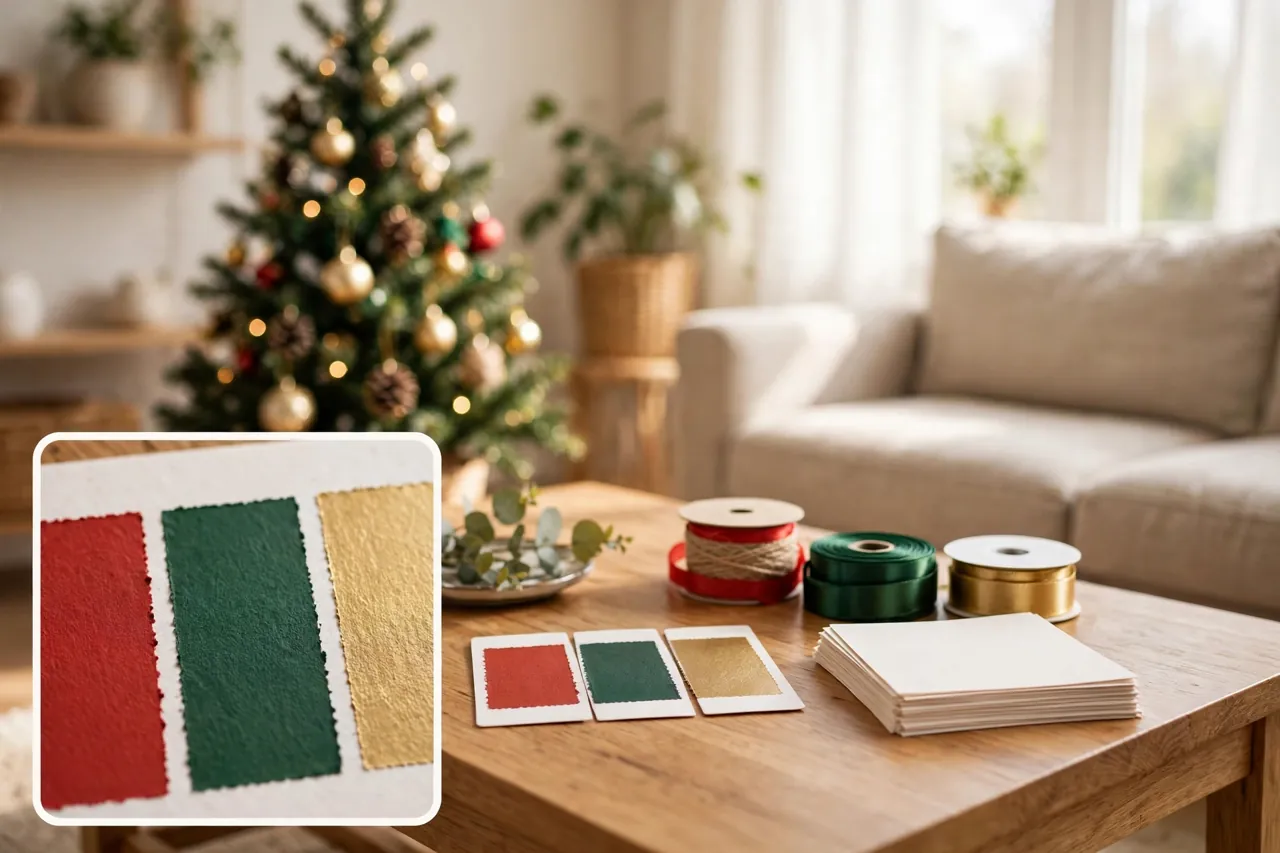
- Lock two or three colors, then stop. Pick one main color, one second color, and one accent metal or sparkle. Red, green, and gold is the classic trio. White, silver, and pale blue is the winter trio. Two to three colors keep a room cohesive; more than that starts to look noisy unless you are deliberately going full multicolor.
- Check real life. Kids and pets in the house? Choose shatterproof ornaments, sturdy garlands, and decorations hung above grabby hands. Small rooms? Lean minimal and light — white-focused designs open a room up, while heavy layers can crowd it. Tight budget? Pick a theme you can build with ribbons, paper, and textiles you already own.
If you still feel stuck, start with one room only — the living room, around the tree. Get that room right, live with it for an evening, and then carry the same colors outward. You do not need the whole house finished in one weekend.
10 Themes for Christmas Decoration
Here are ten themes that work across a whole home, not just on a tree. Each one lists its palette, its signature pieces, and the rooms where it shines brightest. Pick the one that feels like your home on its best day.
1. Classic Red and Gold
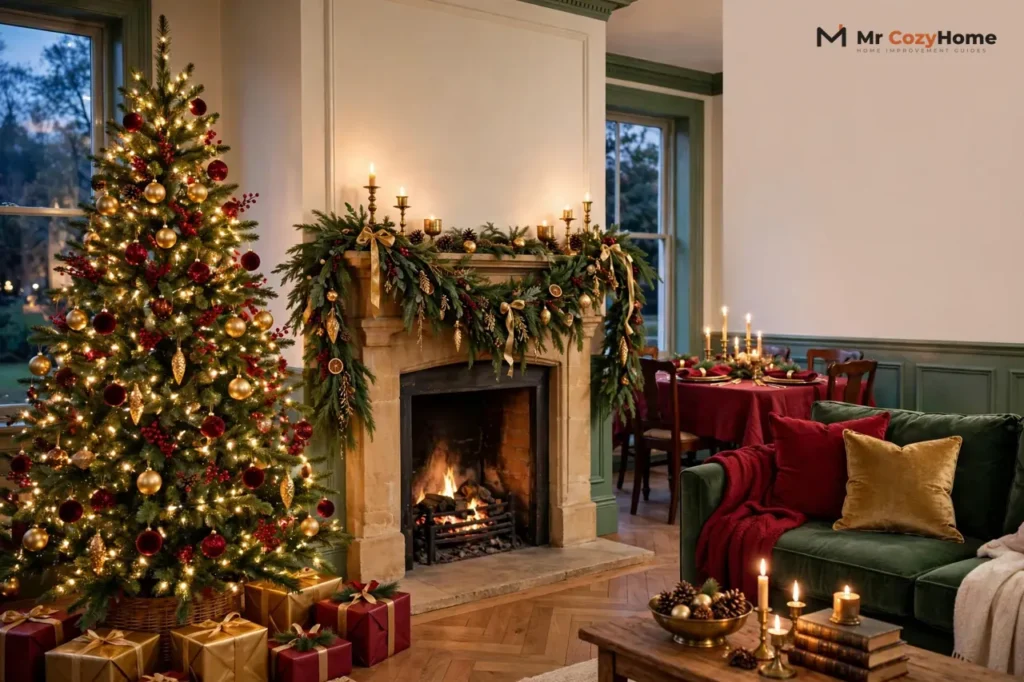
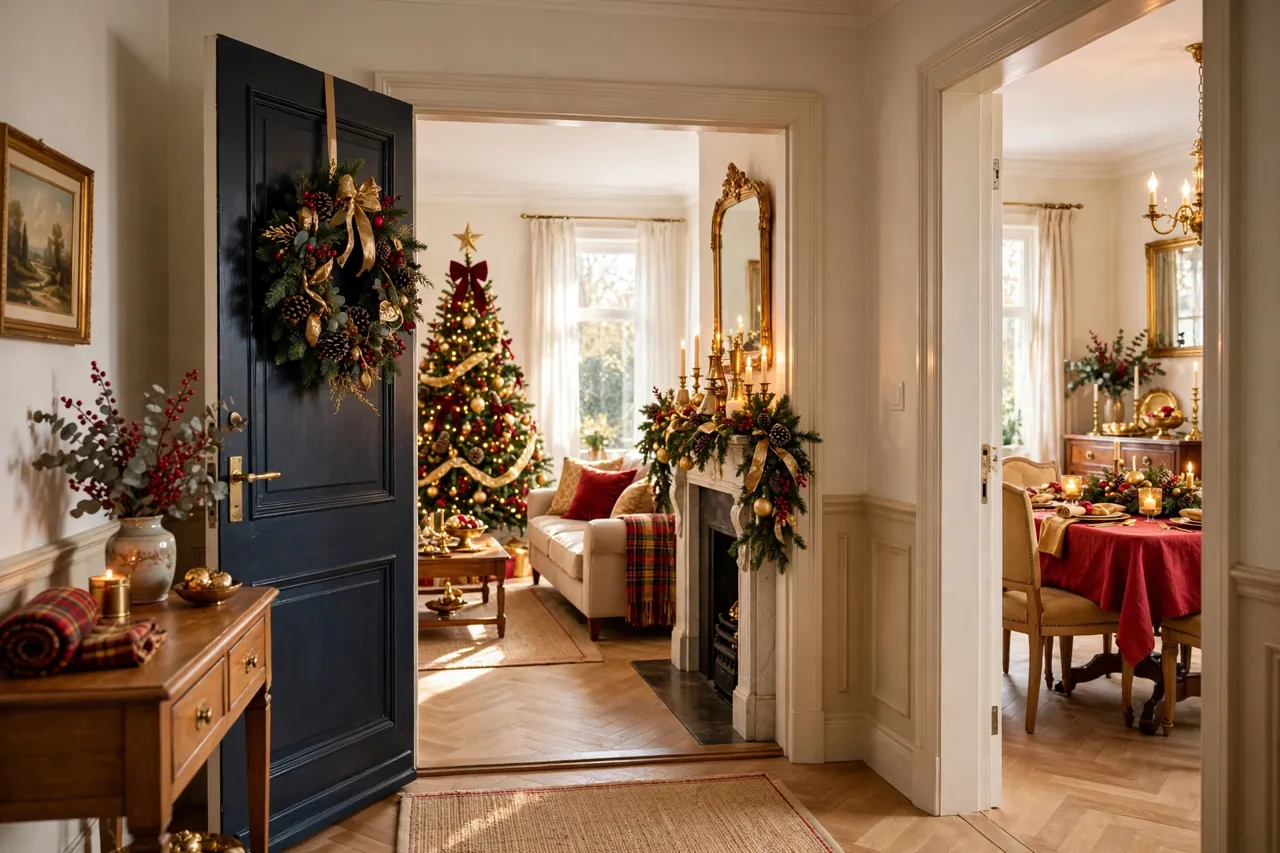
This is the Christmas most of us grew up with: deep red, forest green, and shining gold, with warm candlelight tying it together. It works in almost any home because it is warm, familiar, and forgiving. Hang red and gold ornaments on the tree, drape evergreen garland on the mantel and stairs, and set the table with a red cloth, gold chargers, and a greenery centerpiece. If your home already leans traditional — wood furniture, warm walls, plaid blankets — this theme will feel like it was always there.
2. Winter Wonderland
White, silver, and a touch of pale blue turn a home into a sparkling, quiet retreat. Think frosted branches, clear glass ornaments, snowflake shapes, and soft white faux fur throws. White twinkle lights do most of the work here, and mirror or shiny surfaces bounce the sparkle around the room. This theme suits modern homes and small spaces beautifully, because light colors open a room up instead of closing it in. Keep the palette tight and let texture — frosted glass, glitter, plush fabric — create the depth.
3. Rustic Lodge
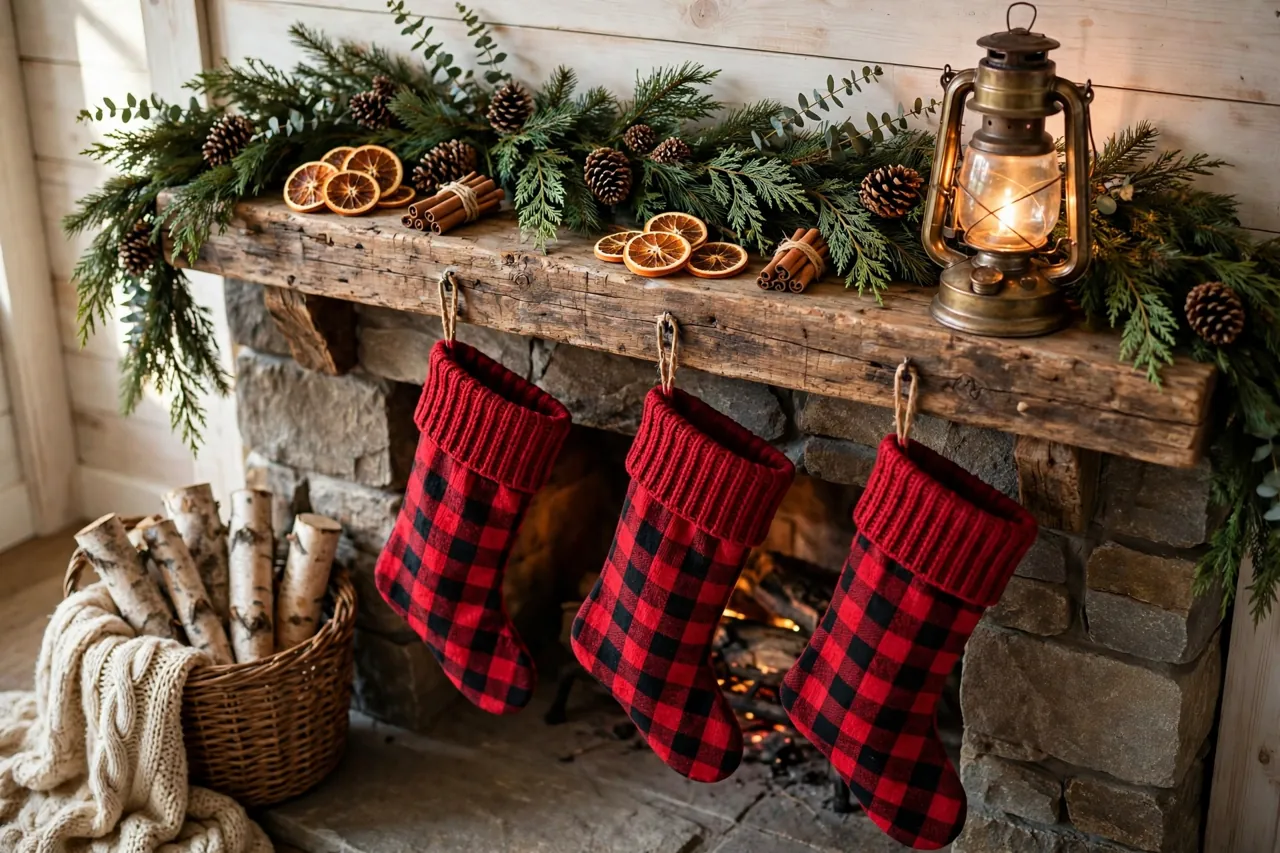
Rustic lodge brings the cabin indoors: natural wood, pinecones, birch logs, buffalo check, and classic red and green. Woodland animals, antiqued lanterns, and chunky knit stockings add charm without fuss. This theme forgives imperfection — a slightly crooked garland or a handmade ornament looks right at home here. It shines in kitchens and living rooms with wood tones, and it pairs naturally with fresh greenery, dried oranges, and cinnamon sticks. If your idea of Christmas smells like pine and woodsmoke, start here. A farmhouse Christmas idea gallery shows how the same rustic touches play across kitchens, mantels, and tables.
4. Vintage Nostalgia
Vintage nostalgia channels the Christmases of the 1950s and 60s: pastel ornaments, mercury glass, glass bead garlands, and old-fashioned Santa figures. Starburst shapes, tinsel details, and a few well-chosen retro pieces — a tin toy, an antique sleigh bell, a classic bottle-brush tree — do more than a whole room of reproductions. This theme works best when you mix a few true vintage finds with new pieces in the same colors. Keep the palette soft and let one or two nostalgic pieces be the stars.
5. Nordic Simplicity
Nordic style, also called Scandinavian, is calm on purpose: a restrained red and white palette, wooden ornaments, straw stars, and simple paper decorations. Nothing shouts. The beauty sits in the restraint — a plain wreath, a few candles, a small tree with a handful of ornaments, and plenty of empty space around them. This theme suits small homes, busy families, and anyone who feels overwhelmed by December clutter. It also photographs beautifully, because every piece has room to breathe.
6. Woodland and Enchanted Forest
Woodland takes rustic one step further into storybook territory: mossy greens, mushrooms, owls, deer, and fairy lights tucked into glass jars and terrariums. Oversized pinecones, branches, and glowing “fairy houses” turn a mantel or a side table into a tiny forest scene. This theme delights kids and charms adults, and it works wonderfully in a single display area — you do not need to turn the whole house into a forest. One enchanted corner, done well, beats a dozen half-finished woodland touches.
7. Metallic Glam
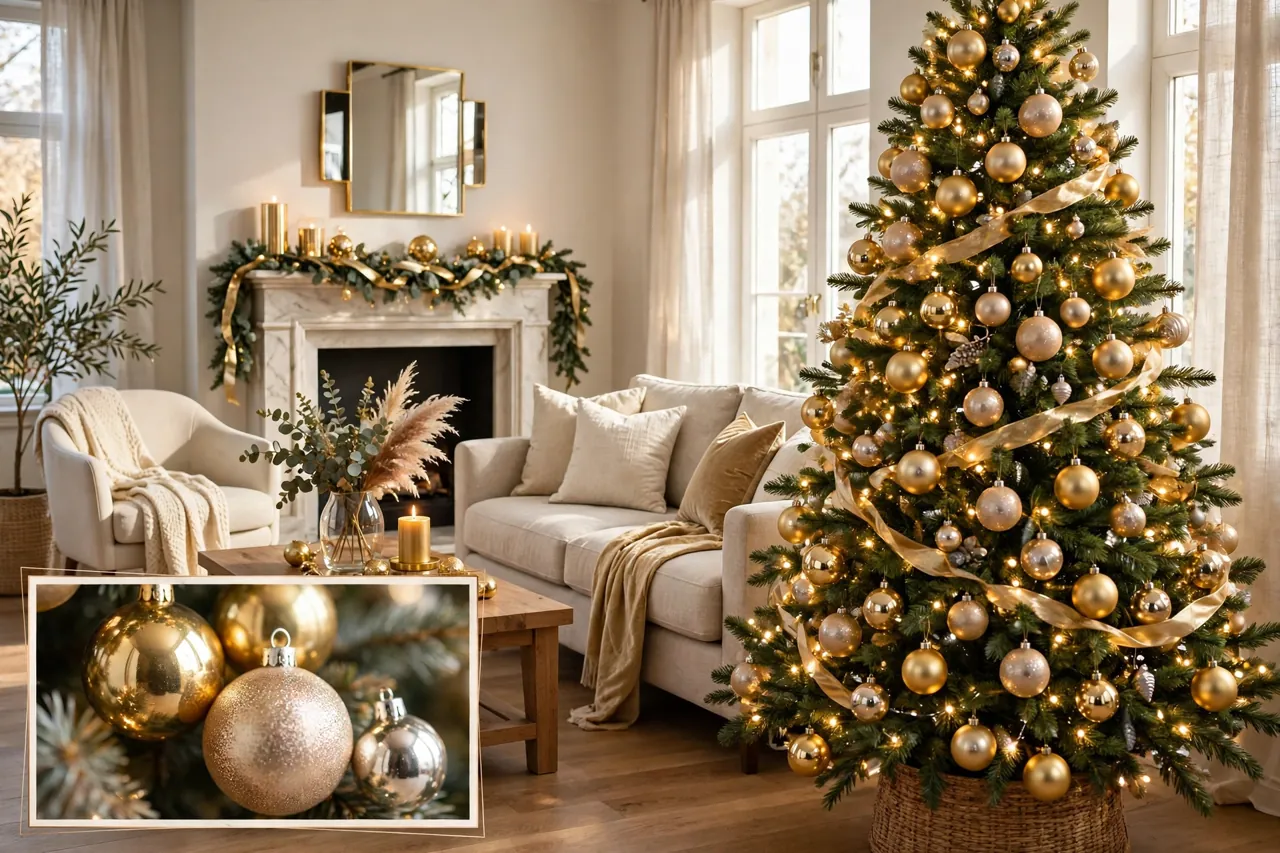
Gold, champagne, copper, and bronze bring instant luxury without a luxury budget. Mix metallic baubles in gloss, matte, and glitter finishes, add velvet ribbon in a deep tone, and let warm white lights give everything a rich glow. Metallic glam suits dining rooms and entryways especially well, because metals catch light and make a small space feel dressed up. The trick is discipline: pick one dominant metal and let the second one play a supporting role, so the room reads elegant rather than busy.
8. Color-Pop and Maximalist
If quiet themes bore you, go bold: jewel tones like emerald, ruby, and sapphire, or playful pastels like pink, lilac, and soft blue. Oversized ornaments, mixed textures — velvet, glitter, metallics — and dense, layered decorating make this theme sing. Maximalism works when it is deliberate: one strong palette, repeated everywhere, with abundance as the point. It suits big rooms and confident decorators, and it is the most fun theme for families who love color. Just keep one anchor — the same lights, the same tree skirt — so the boldness reads joyful, not chaotic.
9. Coastal Christmas
Coastal Christmas trades snow for sand: aqua, coral, sandy beige, and creamy white, with shells, starfish, and driftwood as ornaments. Airy fabrics, light textures, and ocean colors keep the season feeling fresh, even far from the beach. This theme suits bright rooms, white walls, and anyone dreaming of a warm holiday escape. A driftwood garland on the mantel, a bowl of shells beside candles, and a wreath with a few starfish tucked in are enough to set the whole tone.
10. Personalized and Collected
The strongest current trend is not a fixed look at all — it is a home that tells your story. Heirloom ornaments, handmade pieces, travel souvenirs, and decorations collected over years mix into a display no store can sell. This approach, sometimes called collected styling, favors meaning over matching sets. To keep it cohesive, hold one thing steady: the same warm white lights everywhere, one ribbon color, or one metal repeated in every room. Your memories supply the variety, and the steady anchor supplies the calm.
Carry One Theme Through Every Room
A theme only works if it travels. The tree alone cannot carry it. Walk your palette through the house, room by room, and give each space at least one clear touch of the theme. Even a small touch counts — a ribbon, a pillow, a candle color — as long as it repeats.
Table: One theme, every room — where it shows up
| Room | Theme touch | Keep it simple |
|---|---|---|
| Entryway | Wreath and door garland in theme colors | One wreath, one doormat, done |
| Living room | Tree, mantel garland, throw pillows | Repeat the palette in three spots |
| Dining room | Tablecloth, centerpiece, napkin ribbon | One centerpiece, matching napkins |
| Kitchen | Tea towels, a small tree, counter garland | Two or three accents, counters stay usable |
| Bedroom | One pillow, a small wreath, bedside candle | A whisper of theme, not a second tree |
| Porch and yard | Lights and greenery in theme colors | Match light color to indoor lights |
Do not forget the outside. A porch that matches the living room makes the whole home feel designed, not decorated in pieces. If you use permanent outdoor lights, you can set their color to your theme once and enjoy the match all season — see how permanent outdoor Christmas lights work for a whole-home look. Gift wrapping counts too: one wrapping paper and ribbon family, repeated under the tree, quietly reinforces the theme every time someone looks at the presents.
The 2–3 Color Rule and How to Mix Metals
Color is where most themes fall apart, and the fix is simple. Professional decorators repeat the same advice in different words: limit yourself to two or three core colors, and let one metal lead. Christmas Tree World’s 2026 guide (updated October 7, 2026) gives the same rule — stick to a 2–3 color palette for a cohesive finish, match the theme to your home’s interior, and plan your lighting early, because lighting sets the tone before any decoration goes up.
Table: Ten themes at a glance — palette, lighting, and the one thing to skip
| Theme | Palette | Lighting | Skip this |
|---|---|---|---|
| Classic Red and Gold | Red, green, gold | Warm white | Cool blue lights |
| Winter Wonderland | White, silver, pale blue | Cool or warm white | Warm red accents |
| Rustic Lodge | Red, green, wood tones | Warm white | Shiny plastics |
| Vintage Nostalgia | Pastel, silver, soft red | Warm white | Modern neon pieces |
| Nordic Simplicity | Red, white, wood | Warm white candles | Glitter overload |
| Woodland | Greens, browns, gold | Warm fairy lights | Bright synthetic colors |
| Metallic Glam | Gold, champagne, bronze | Warm white | Two equal metals |
| Color-Pop | Jewel or pastel brights | Warm white anchor | Random extra colors |
| Coastal Christmas | Aqua, sand, white | Warm white | Heavy dark greens |
| Personalized | Your anchor color + memories | Warm white everywhere | Matching everything |
One useful version of the color rule is the 60-30-10 split: about 60 percent dominant color (often the green of the tree and garlands), 30 percent secondary color (ornaments, stockings, tablecloth), and 10 percent accent (ribbons, metallic details, candle glow). You do not need to measure it. Just check that one color clearly leads, one supports, and one sparkles.
Mixing metals works the same way. Gold and silver can absolutely live together — the key is intention. Pick one dominant metal, add the second as an accent, and never split them fifty-fifty, or the room looks undecided. The same discipline applies to lights: keep one light color dominant across the house. If you automate your theme lights, a timer plug for Christmas lights or an automatic light switch timer keeps every room glowing on the same schedule without a nightly round of switches.
Theme Mistakes That Break the Look
Most theme failures come from the same few habits. Watch for these, and your theme will hold together even on a small budget.
- Too many colors at once. Five or six colors in one room read as noise. Fix it by removing one color family entirely — usually the room calms down instantly.
- Theme only on the tree. A themed tree in an undecorated room looks stranded. Fix it by repeating one color in the mantel, one pillow, and the table, even in a small way.
- Two metals fighting for attention. Equal gold and silver looks accidental. Fix it by choosing a dominant metal and moving the other metal’s pieces to accent spots only.
- Buying everything new in one trip. A full matching set looks staged and costs a fortune. Fix it by starting with ribbons, paper, and textiles, then adding a few key pieces each year.
- Copying a photo instead of your home. A theme that ignores your wall color, sofa, and lighting will always look slightly wrong. Fix it by starting from your rooms, not from a catalog page.
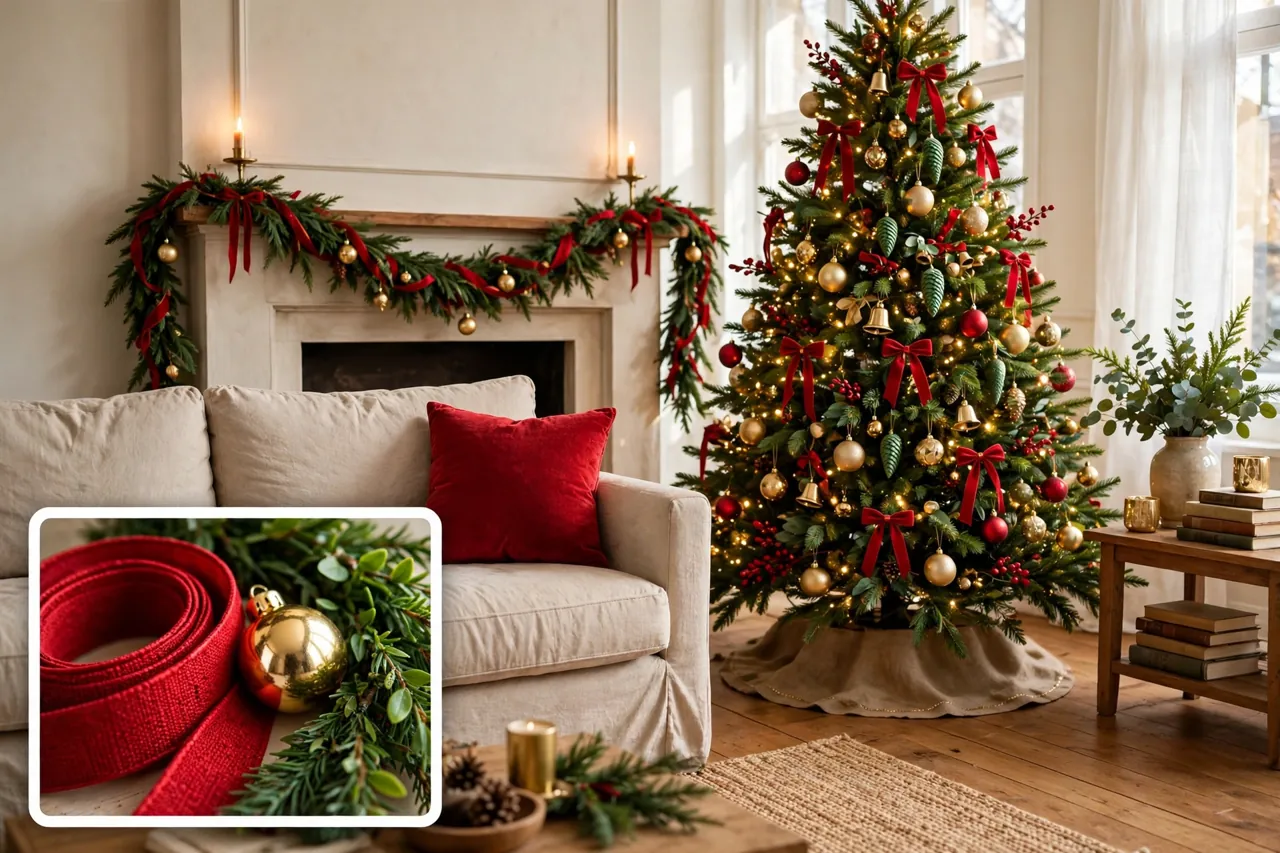
Switch Themes Without Buying Everything New
Want a new theme this year without replacing your whole collection? You can shift the feel of a room with three cheap swaps. Change the ribbons on the tree and wreaths, change the wrapping paper under the tree, and change the textiles — throw pillows, a table runner, a blanket on the sofa arm. Those three swaps touch the most visible spots in the room, and together they can move a home from classic red to winter white, or from rustic to glam, for very little money.
Keep the big pieces steady: the tree, the garland, the stockings, the lights. They carry over between themes easily, especially in neutral greens, whites, and warm metals. Then add one or two new signature pieces in the new palette — a wreath, a centerpiece, a set of ornaments — and let those pieces announce the change. Next year, you can add a few more, and the year after that, a few more. Themes built slowly look collected and personal. Themes bought all at once look like a store display.
If your family loves pieces that clash with the new theme, give them a memory corner: a side table or a small secondary tree where off-theme treasures live with honor. The main rooms stay cohesive, nobody’s favorite ornament gets banished, and everyone wins.
Related Guides
Tree Decorating Ideas for Christmas · Christmas Table Decoration: A Warm, Welcoming Table Without the Stress · Christmas Kitchen Decor: A Warm, Workable Holiday Kitchen
Frequently Asked Questions
What are the most popular Christmas decoration ideas for 2026?
Traditional red and gold, Scandinavian minimalism, natural and sustainable themes, metallic luxury, and personalized decorating lead the way. The biggest shift is toward personal, story-led displays — heirloom ornaments and handmade pieces mixed in — rather than perfectly matched store sets.
How do I choose a Christmas decorating theme?
Start with your home’s existing style, consider your available space, and decide whether you want a bold, minimal, or natural festive look. Then lock two or three colors, check the practical side — kids, pets, budget — and test the theme in one room before carrying it through the house.
What colours are popular for Christmas decorations?
Gold, red, green, white, silver, and champagne lead every year, alongside natural wood tones. Softer pastels and jewel-inspired palettes — emerald, ruby, sapphire, blush pink — have grown popular as accent colors for homes that want a twist on tradition.
What order should you decorate a Christmas tree?
Lights first, followed by ribbons or garlands, then ornaments from largest to smallest, and finally the topper and finishing touches. This order matters for themes too: lights set the glow, ribbons set the color flow, and ornaments fill in around them.
How many colors should I use in my Christmas decor?
Two or three colors is the sweet spot for most homes. One color reads elegant, two give contrast, and three add richness without chaos. The 60-30-10 split helps: roughly 60 percent dominant color, 30 percent secondary, and 10 percent accent.
Can I mix different metals like gold and silver?
Yes, and it looks best when you do it on purpose. Choose one dominant metal and use the second as an accent — for example, a silver and white base with warm gold details. Avoid equal amounts of competing metals, which tend to look disjointed rather than designed.
A Theme You Will Love Living With
Pick the theme that makes you smile when you walk through your front door, not the one that photographs best for someone else. Start with your rooms, lock two or three colors, carry them gently through the house, and let your favorite pieces — old, new, handmade, or inherited — earn their place inside the theme. Your home does not need to look like a magazine. It needs to feel like Christmas to the people who live there.
Begin this weekend with one room and one small swap: a new ribbon color, a different table runner, or a wreath that matches the feeling you want. Then step back, look at the room in the evening light, and notice how quickly a simple theme turns a decorated house into a home that feels finished.