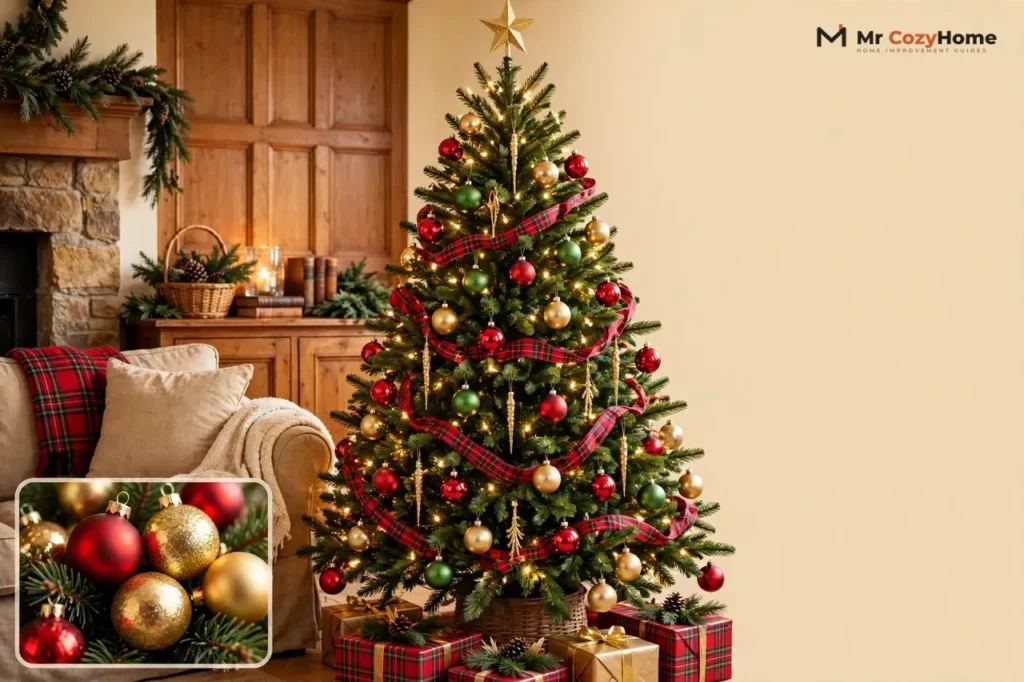
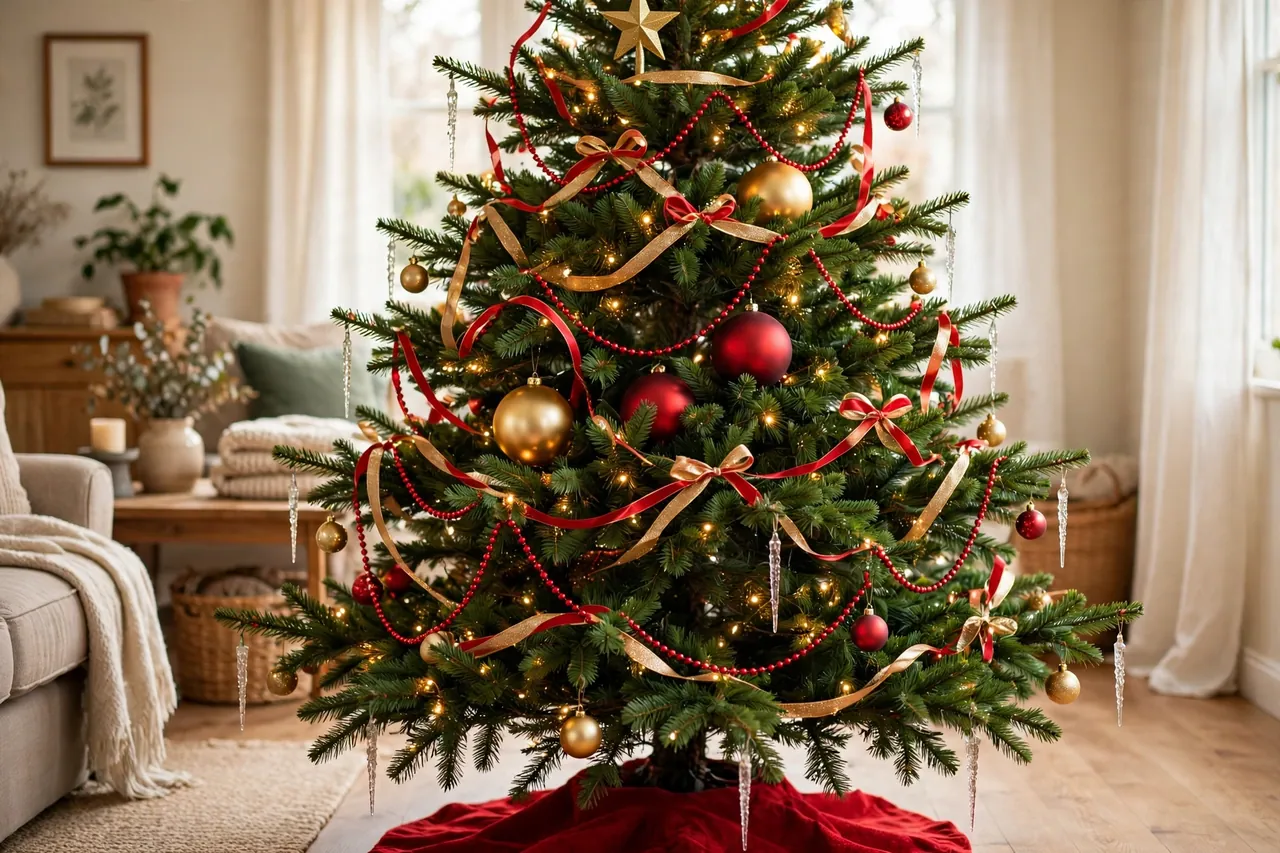
Classic Christmas tree decorations mean a green tree dressed in red, green, and gold, lit with warm white lights, and finished with timeless ornaments such as glass balls, icicles, garlands, and a star or angel on top. You do not need a novelty theme, bright neon colors, or a new style every year. You need a clear palette, a few repeated ornament types, and room for the pieces your family already loves.
A classically decorated Christmas tree works because it feels familiar the moment you walk into the room. It looks like the trees in old holiday photos, yet it still fits a modern living room. This guide shows you what counts as classic, how you balance the colors, which ornaments earn their place, and how you build the whole tree step by step.
What Makes a Christmas Tree Look Classic?
A classic tree follows tradition, not trends. It uses a green tree, warm light, and a small set of colors and shapes that people have loved for generations. It avoids one-off jokes, character overload, and colors that fight each other for attention.
Think of “classic” as a recipe, not a strict rulebook. You can add your own family pieces, and you should. The classic frame simply keeps those pieces from turning into clutter. When every ornament shares the same palette and the same warm glow, even a mixed collection looks calm and intentional.
Three signs tell you a tree reads as classic. First, you spot the red, green, and gold palette before you spot any single ornament. Second, the shapes feel timeless: balls, drops, icicles, bells, stars, and angels. Third, the tree glows warm, not cold or rainbow-bright. If you change one of those three things, you move toward a different style, and that is fine, but it stops being classic.
Classic also differs from other popular looks in one clear way. A gold-only tree leans on metallic shine as its main idea. A frosted or flocked tree leans on a snowy, white-coated branch as its main idea. A classic tree leans on the green tree itself, with red and gold doing the talking. If you want a snowy look, our guide to Christmas trees with frost covers that style on its own, so this guide stays true to the green-tree classic.
The Classic Palette: Red, Green, and Gold
Red, green, and gold form the heart of traditional Christmas tree decorating. Green comes from the tree itself. Red adds warmth and cheer. Gold adds light and a touch of celebration. Together, they feel rich without feeling loud.
Balance matters more than the exact shade. Let green stay the largest color, because the tree supplies it for free. Use red as your main accent, and use gold as your sparkle. When gold takes over, the tree starts to look like a gold-theme tree instead of a classic tree. When red takes over, the tree can feel heavy and flat.
A simple split helps beginners. Aim for roughly half green (the tree), about one-third red, and the rest gold and white. You do not need to count ornaments to hit those numbers. Just step back often and ask one question: does any single color shout louder than the rest? If yes, move a few pieces until the tree calms down.
White plays a quiet supporting role on a classic tree. A few white or cream ornaments, a white berry pick, or a cream ribbon can lift the red and green so they do not turn muddy in a dim room. Silver can also appear in small touches, but keep it light. Too much silver pulls the tree toward a cool, modern look and away from classic warmth.
Use this table when you shop your own ornament box or buy a few new pieces:
Classic palette roles at a glance
| Color | Job on the tree | Best classic use |
|---|---|---|
| Green | The base | The tree itself, plus green balls and garland |
| Red | The warmth | Red balls, bows, berries, and candy canes |
| Gold | The sparkle | Gold balls, icicles, stars, and ribbon trim |
| White or cream | The lift | A few light ornaments, picks, or ribbon accents |
Finish choice matters as much as color. Mix shiny, matte, and glittered balls in the same colors, and the tree gains depth. If every ball shines the same way, light bounces flatly and the tree looks like a store display. A matte red ball next to a shiny gold ball reads as richer, and it costs nothing extra.
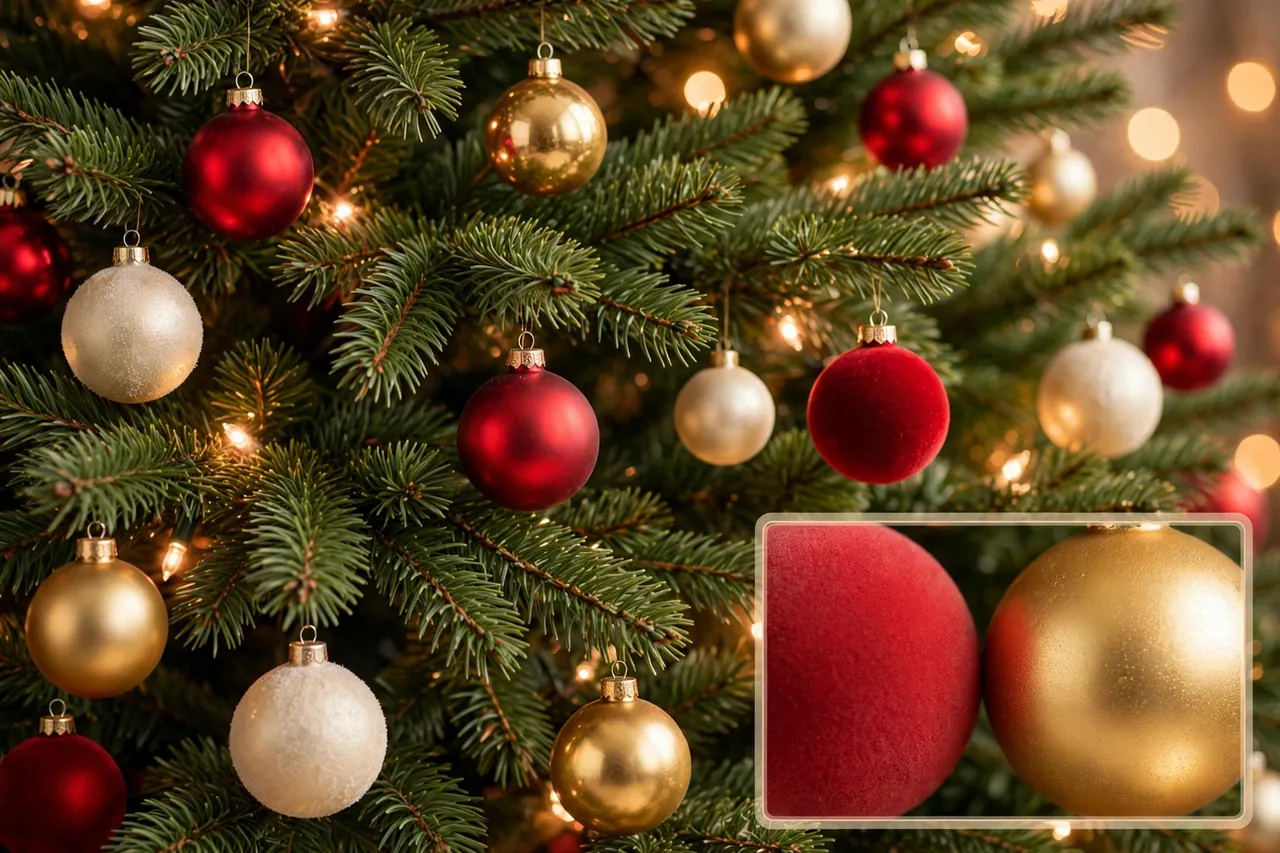
Classic Ornaments That Never Go Out of Style
Classic decorated Christmas trees rely on a short list of ornament types. You do not need fifty styles. You need a few styles, repeated well, in different sizes. Repetition creates the calm, collected look that makes a classic tree feel expensive even when most pieces cost very little.
Start with glass balls, or shatterproof balls if you have small kids or pets. Buy or gather them in red, green, and gold, in large, medium, and small sizes. Hang large balls deeper inside the branches, where they fill gaps and add depth, a layering method professional decorators also recommend for decorating a tree like a pro. Hang medium balls through the middle of the tree. Hang small balls near the branch tips, where they catch light and sparkle.
Next, add icicles. Glass or clear plastic icicles hang straight down and catch warm light beautifully. They also break up the round shapes of the balls, so the tree stops looking like a pile of circles. Hang them near the outer tips, but keep them away from walkways where sleeves and tails can snag them.
Then add garland, and choose one main type for a classic look. Beaded garland in red, gold, or clear beads drapes neatly and feels timeless. Tinsel also belongs to the classic story, and a light hand with tinsel gives a vintage glow. Heavy tinsel, on the other hand, hides ornaments and dates the tree fast, so use it sparingly if you use it at all.
Round out the tree with classic figures and shapes. Bells, stars, angels, candy canes, nutcrackers, and simple wooden ornaments all fit the classic style. You do not need all of them at once. Pick two or three figure types you love, repeat them around the tree, and let the balls and icicles do the rest of the work.
- Glass or shatterproof balls in red, green, and gold, in three sizes
- Clear icicles for sparkle and shape contrast
- One main garland: beads, or light tinsel for a vintage touch
- Bells, stars, or angels as classic figure ornaments
- Candy canes and nutcrackers for a familiar holiday feel
- Wooden ornaments for warmth and a handmade touch
Hang ornaments with short hooks or ribbon loops, and twist each hook closed around the branch. Loose hooks slide off when someone brushes past the tree, and glass balls break fast on a hard floor. For heavy or precious pieces, hang them on strong inner branches, not on thin tips that droop under weight.
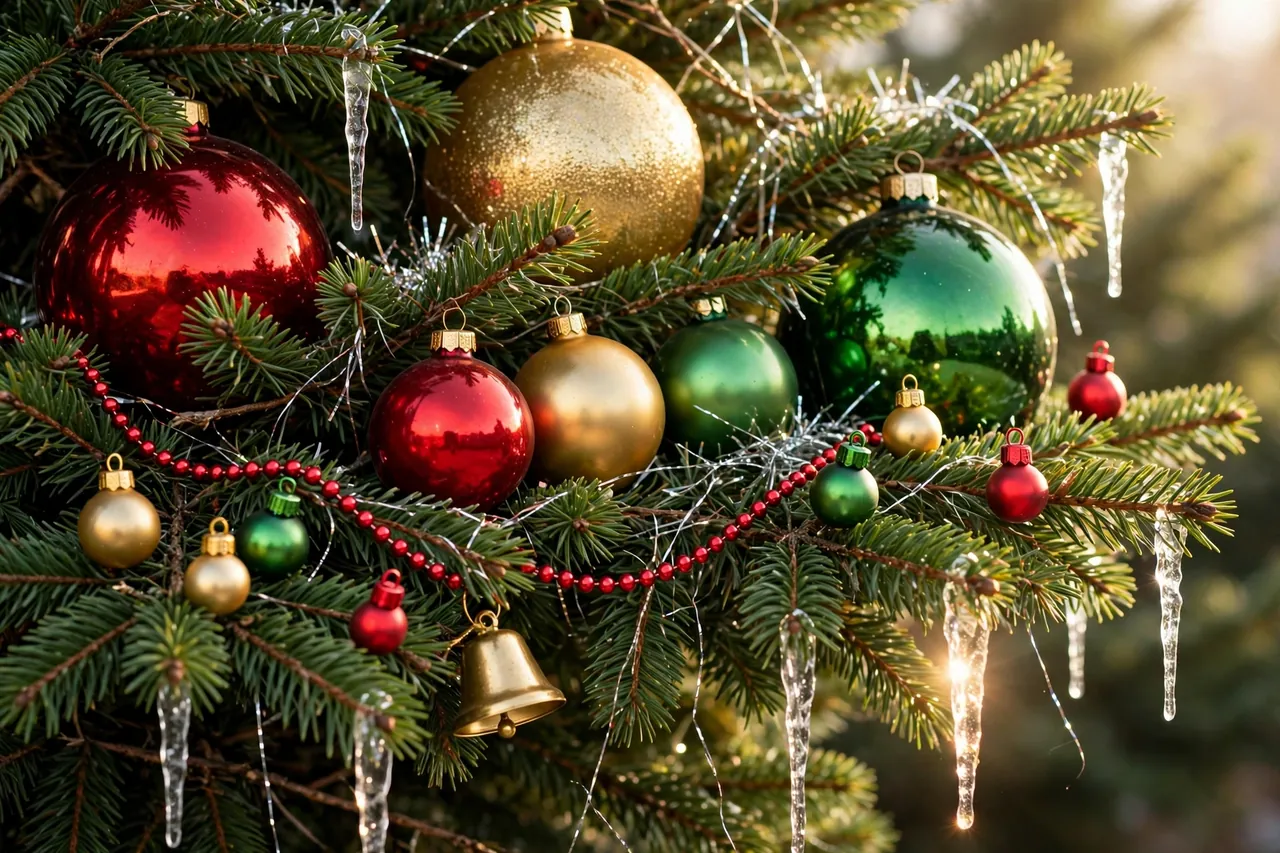
Ribbon and Garland: The Layers That Tie It Together
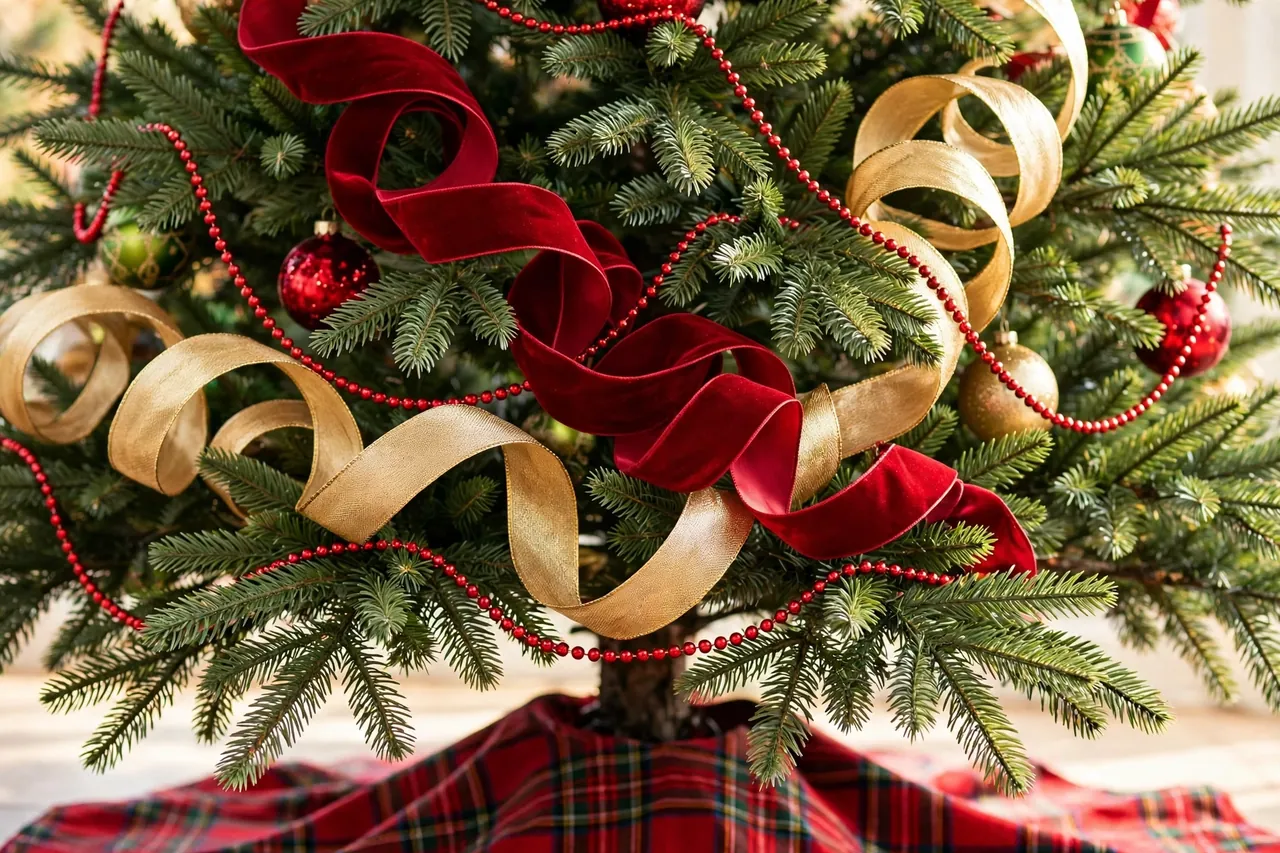
Ribbon turns a good classic tree into a finished one. It adds softness between hard glass shapes, and it guides the eye around the tree instead of letting it jump from ball to ball. For a classic look, choose wired ribbon in red, gold, plaid, or deep green velvet. Wired edges hold their shape, so your loops and bows still look crisp on New Year’s Day.
You can run ribbon in two classic ways. A spiral wrap winds ribbon loosely from top to bottom in a gentle swoop, and it suits a full, traditional tree. A cascade style drops ribbon in vertical loops from the top toward the middle, and it suits a tree with strong ornaments you want to show off. Pick one method for the whole tree. Mixing both methods often looks busy.
Keep ribbon loops loose and full. Pinch the ribbon at intervals, tuck it into the branches, and let it billow out between tucks. Tight ribbon that hugs the branches disappears, and it wastes good ribbon. If you want a step-by-step ribbon method, see our guide on how to put ribbon on a Christmas tree.
Garland needs the same light touch. Drape beaded garland in loose swoops, not tight rings, and let it dip between branches the way a real swag would. Step back after each swoop and check the gaps. Bare patches show up fast once lights go on, and a small shift in garland placement fixes them better than adding ten more ornaments.
Finish the base with a classic tree skirt. A red, plaid, or deep green skirt in velvet or quilted fabric hides the stand and ties the tree to the room. A skirt also catches fallen needles from a real tree, which saves your floor and your vacuum. Pick a skirt wide enough to cover the stand fully, with no bare metal peeking out.
Warm Light for a Classic Glow
Light sets the mood of a classic tree more than any ornament does. Warm white lights give the soft, golden glow people remember from childhood trees. Cool white lights look crisp and modern, and multicolor lights look playful, but neither one reads as classic. If you want the classic feel, choose warm white and stick with it.
Weave lights deep into the branches, not just around the outside edge. Start near the trunk, work outward to the tips, and then move back in as you travel up or down the tree. This inside-out method makes the whole tree glow from within, instead of wearing a shell of light on its surface. Test every strand before you hang it, because one dead strand buried under ornaments wastes a lot of patience.
How many lights do you need? A common decorating guide suggests about 100 small lights per foot of tree height as a starting point, so a 6-foot tree needs roughly 600 lights and a 7.5-foot tree needs roughly 750. Treat that number as a starting point, not a rule. If you also use wide ribbon and heavy garland, you can use fewer lights. If you love a bright tree, you can go higher, but keep the color warm.
Plug lights into a timer if you want an easy evening routine. A timer turns the tree on at dusk and off at bedtime without a daily trip behind the furniture. Our guide to automatic light switch timers explains simple timer options, and our Christmas light ideas guide offers more ways to carry warm light beyond the tree. Always unplug the tree when you leave home or go to bed, and keep the tree away from fireplaces, candles, and heat vents.
Angel or Star: Picking a Classic Tree Topper
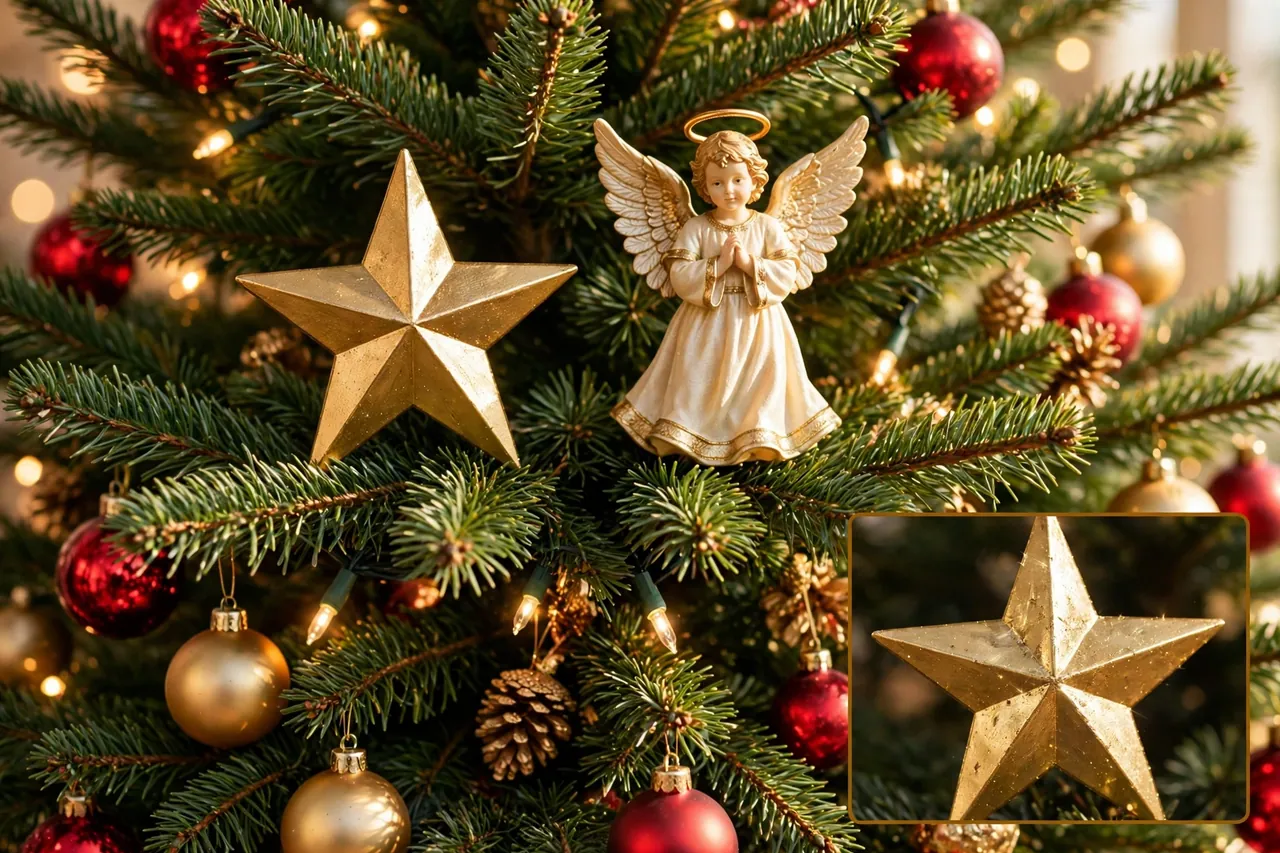
Every classic tree needs a topper, and the two timeless choices are a star and an angel. Both carry deep holiday meaning. The star recalls the Star of Bethlehem, and the angel recalls the angels of the Nativity story, the two most common forms of the tree-topper tradition. Neither choice is wrong, so pick the one that fits your family’s story.
A gold star topper suits a bold, bright classic tree. It echoes the gold in your ornaments, and it reads clearly from across the room. An angel topper suits a softer, more sentimental tree, especially one with heirloom pieces and family ornaments. A porcelain or fabric angel adds a gentle, watchful feel at the crown of the tree.
Size and weight matter more than style. A topper should suit the tree, not overpower it. A huge topper on a small tree looks top-heavy, and a tiny topper on a tall tree disappears. Heavy toppers also tip forward or bend the top branch, so secure the topper to a sturdy central branch or a support rod, and check it from across the room before you call the tree done.
If your family already owns a topper, use it. A classic tree gains its charm from continuity, and the same star or angel returning year after year becomes part of the tradition itself. If you buy new, choose a simple gold star or a classic angel in cream, gold, or soft white, and skip flashing or novelty toppers that fight the warm, timeless mood.
How to Build a Classic Christmas Tree Step by Step
Decorating in the right order saves time and prevents the most common classic-tree problem: lights buried under ornaments, or ribbon trapped behind balls you already hung. Follow this order, and step back after each step to check your work from across the room.
- Set the tree in its final spot, straighten it in a sturdy stand, and fluff every branch from the inside out. For a real tree, give the trunk a fresh cut and water it right away, and keep the stand filled through the season.
- Test your warm white lights, then weave them deep into the branches, starting at the bottom near the trunk and working up. Plug them in and fix any dark spots now, while you can still reach them.
- Add the topper next, while the top branches stay easy to reach and no ornaments sit in your way.
- Drape your garland in loose swoops from top to bottom, and let it dip naturally between branches.
- Run your ribbon in one method only, spiral or cascade, and tuck it loosely into the branches.
- Hang large plain balls deep inside the tree first. These fill gaps and build depth where the eye expects shadow.
- Hang medium ornaments through the middle of the tree, and spread each color around in a loose zigzag, not in rows or clusters.
- Hang small balls, icicles, and figure ornaments near the outer tips, where they catch light and draw the eye.
- Place heirloom and favorite pieces last, at eye level and in safe spots where kids and pets cannot easily reach fragile ones.
- Finish with the tree skirt, tuck in any picks or berry sprigs to fill bare spots, and step back to check the tree from every side.
That final step-back check matters most. Stand across the room and squint. Dark holes jump out at once, and those spots need one more ornament or a small shift in ribbon. Turn the tree slowly if it sits in a corner, because the back still shows in mirrors and photos. A classic tree should look full from every angle you actually see.
Heirloom and Thrifted Touches That Make It Yours
A classic tree without a personal touch looks like a catalog photo. Heirloom and thrifted pieces fix that fast. A box of old glass balls from a grandparent, a handmade ornament from a child’s school years, or a thrifted brass bell carries a story no new set can match. Hang those pieces where you see them daily, at eye level, and let newer balls fill the space around them.
Thrift stores and estate sales offer some of the best classic ornaments, often for a few dollars. Look for glass balls with honest wear, old beaded garland, velvet bows, and wooden figures. Check glass for cracks, test hooks for rust, and skip pieces with flaking paint that could shed onto gifts or floors. Wash dusty pieces gently, and let them dry fully before you hang them.
Mix old and new with care. Pair a fragile heirloom with sturdy new balls in the same color, so the heirloom stands out without carrying the whole section alone. Place very fragile pieces higher up or deeper inside the tree, where hands and tails cannot reach them. Label the ornament box when you pack up, so next year’s decorating starts with your favorites, not a guessing game.
You can also add natural classic touches for very little money. Pinecones, dried orange slices, and cinnamon bundles tied with twine bring scent and texture to a classic tree. Keep natural pieces away from open flames and hot bulbs, and skip popcorn strings if you have pets that chew. Natural touches should support the red, green, and gold palette, not replace it.
Classic Tree Mistakes to Avoid
Most classic trees go wrong in small, fixable ways. Watch for these mistakes, and fix them before you pack the ornament box away for the year.
- Too many colors: a fourth or fifth bold color breaks the classic palette. Return stray colors to another room or another year.
- Lights only on the surface: the tree looks flat and dark inside. Weave lights deep near the trunk next time.
- All ornaments the same size: the tree looks flat and repetitive. Mix large, medium, and small pieces.
- Ornaments clustered by color: red on one side and gold on the other looks striped. Spread each color around the tree.
- Heavy pieces on thin tips: branches droop and ornaments fall. Hang heavy pieces on strong inner branches.
- A topper that fights the tree: a flashing or oversized topper breaks the calm classic mood. Choose a simple star or angel.
- Skipping the step-back check: bare patches hide until guests arrive. Check the tree from across the room before you finish.
If your tree still feels off after those fixes, remove five ornaments instead of adding five more. Classic trees breathe. A little green showing through the decorations proves the tree is real, and it lets each ornament earn attention.
Related Guides
Gold Christmas Tree Decorations: A Warm, Elegant Guide That Actually Works · Christmas Ornament Storage Box: How to Keep Every Ornament Safe Until Next Year
- Tree Decorating Ideas for Christmas
- Themes for Christmas Decoration
- How to Put Ribbon on a Christmas Tree
- Christmas Light Ideas for a Home That Glows All Season
- Christmas Trees With Frost
- What Is a Flocked Christmas Tree?
- Christmas Table Decoration
Frequently Asked Questions
What are some timeless decorations to use on a holiday tree?
Glass balls, velvet bows, wooden ornaments, and soft ribbon never go out of style, and they give your tree a warm, cozy feeling. These pieces work well with both new and old decorations, so your tree feels full of memories and style year after year.
What colors work best for a traditional Christmas tree style?
Rich reds, pine greens, soft whites, and touches of gold create a classic look that feels warm and cozy without turning flashy. These colors blend well with most home styles, and they help tie your ornaments, garlands, and ribbon together naturally.
How do I make a tree look full using older decorations?
Start by placing larger ornaments deep inside the branches to create depth, then layer medium and small ones toward the outside. Fill bare spots with ribbon, floral picks, or pinecones, and your tree will feel fuller without extra store-bought decor.
How can I decorate on a small budget and still keep a classic look?
Use what you already have, such as handmade ornaments, dried orange slices, or old ribbons that still add warmth and texture. Natural pieces like pine branches, berries, and cinnamon sticks also bring charm without costing much, and they make your tree smell wonderful too.
Do I need a theme for a traditional holiday tree to look put together?
You do not need a strict theme. Just stick with cozy materials like wood, fabric, and soft metals to keep everything feeling natural. Repeating textures and colors helps your tree feel pulled together without making it look like a store display.
How many ornaments and lights does a classic tree need?
A useful starting point is about 10 to 15 ornaments per foot of tree height, so a 6-foot tree needs roughly 60 to 90 ornaments, and about 100 small warm white lights per foot. Use fewer ornaments if you also use wide ribbon or heavy garland, and adjust to taste from there.
A classic tree does not ask you to buy a whole new holiday every year. It asks you to pick a palette you love, repeat a few timeless shapes, light the tree warm, and give your favorite pieces a place of honor. Start with the lights, build in layers, and step back often. When the tree glows red, green, and gold from across the room, and one old ornament makes you smile, you have built a classic tree worth coming home to.