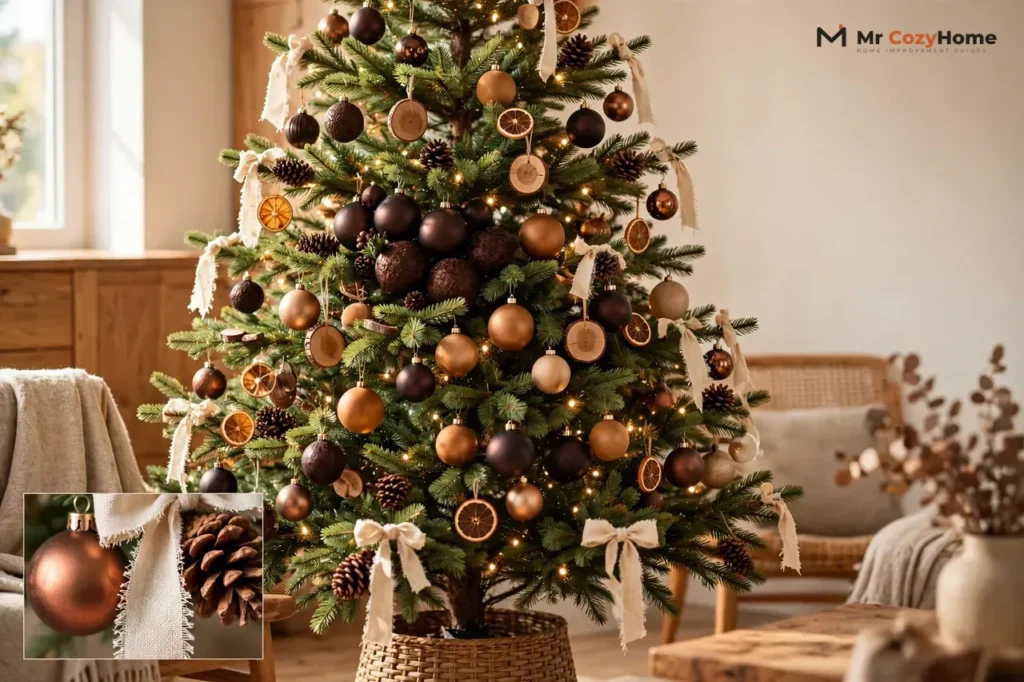
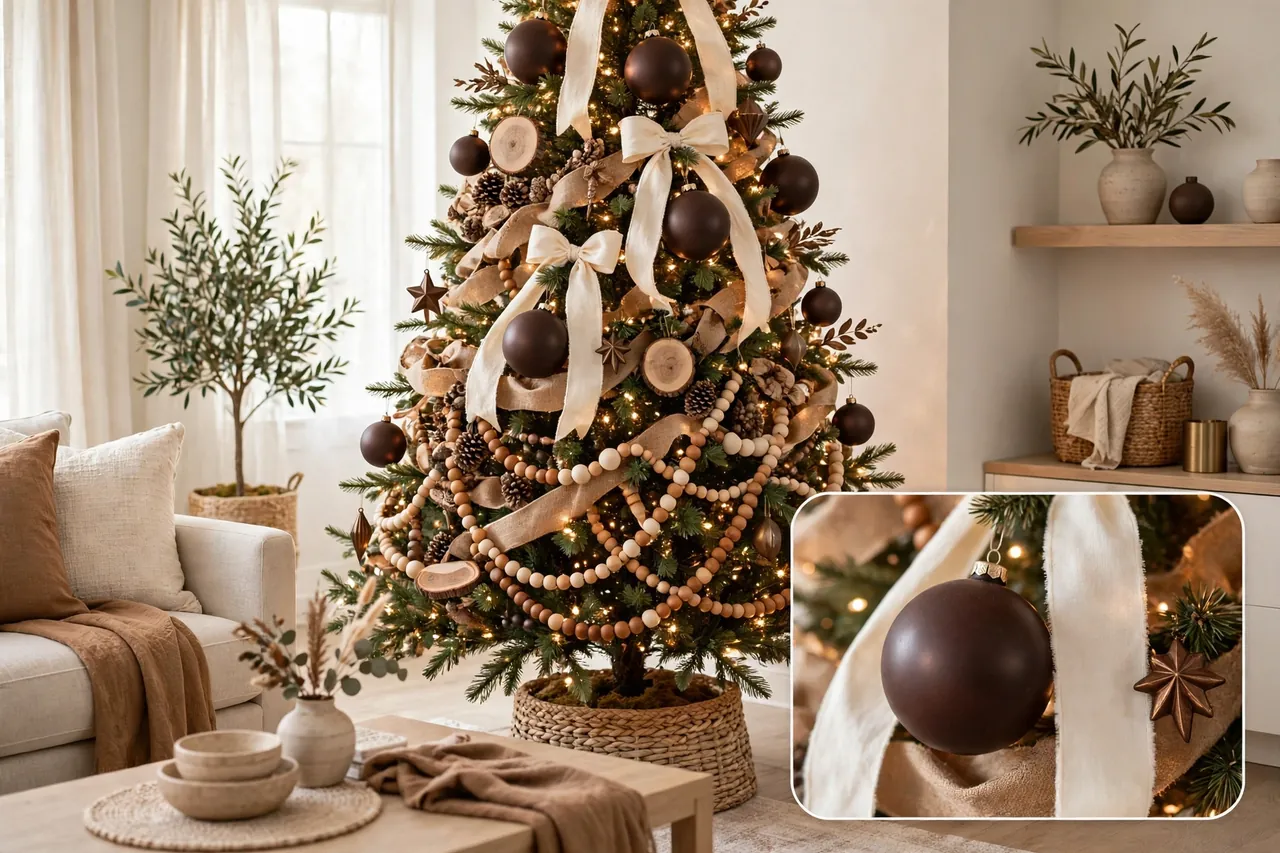
A brown Christmas tree decoration works when you build it around warm shades of brown, mix soft and shiny textures, and light it with warm white lights. Think chocolate baubles deep in the branches, copper and bronze accents on the tips, cream ribbon to lift the whole look, and natural pieces like pinecones, wood slices, and dried oranges. That mix turns a plain green tree into a calm, cozy centerpiece that feels collected, not store-bought.
If brown sounds dull to you, you are not alone. Most of us picture Christmas in bright colors, so brown can feel like a strange first pick. Give it one honest try, though, and you will see why so many homeowners love it. Brown brings the forest indoors. It softens a room, hides the chaos of the season, and pairs beautifully with wood furniture, leather chairs, and warm lamps you already own.
This guide walks you through the whole look, step by step. You will pick your shades, gather the right textures, place lights that actually flatter brown, and finish with a tree that glows instead of looking dark or muddy.
Why Brown Works on a Christmas Tree
Brown is the color of the things we already associate with comfort. Hot cocoa, toasted bread, wooden beams, a worn leather chair, the smell of cinnamon in a warm kitchen. When those tones land on a Christmas tree, the tree stops shouting and starts inviting people in.
Brown also solves a real problem. Bright, mixed-color trees can look busy in a small living room, while a brown palette calms everything down. The tree still looks festive, but it feels like part of the room instead of a separate showpiece.
Here is the honest trade-off. Brown absorbs light, so a brown tree needs more thought about lighting and contrast than a bright tree does. Dark ornaments can vanish against dark green branches if you hang only dark pieces. This guide fixes that problem on purpose, with light shades, reflective metallics, and warm lights placed where they count.
The Brown Palette: Pick Your Shades
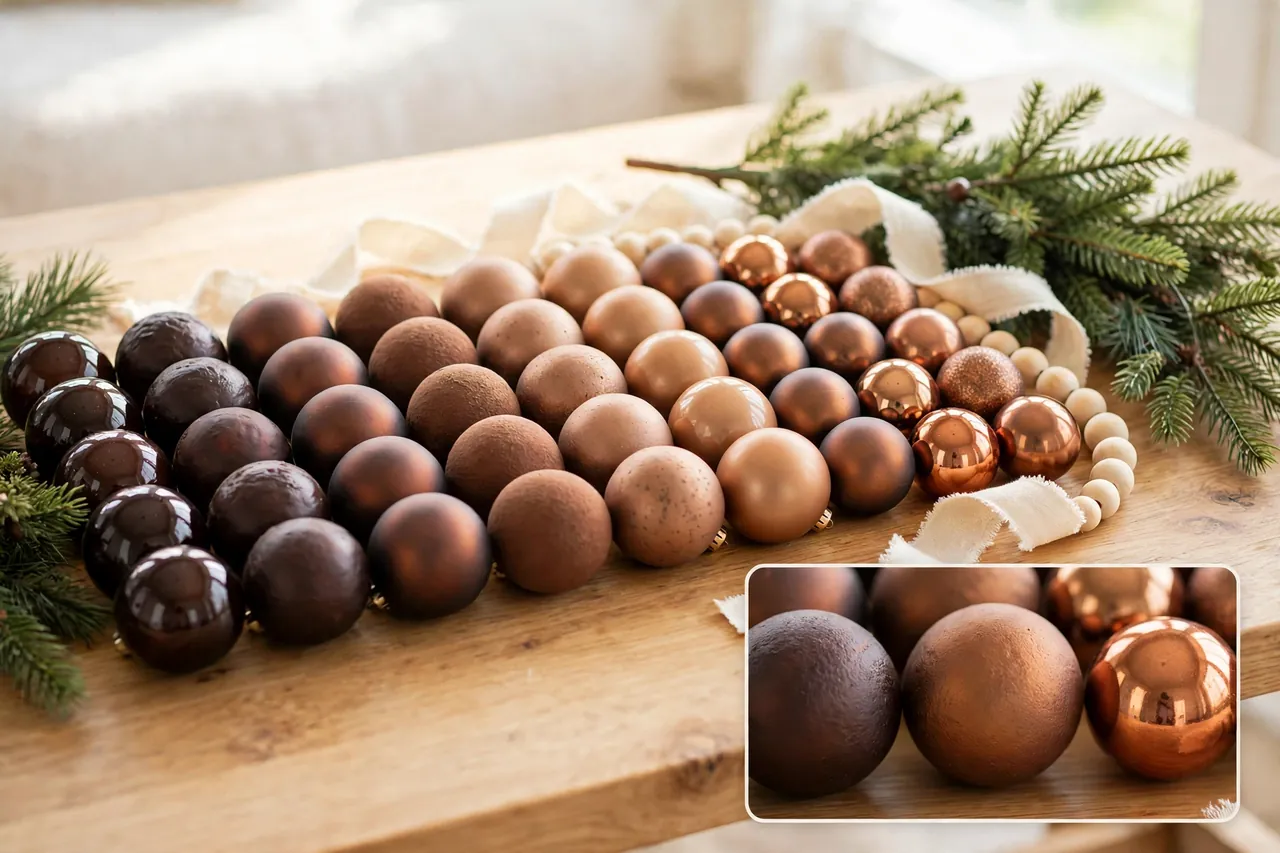
Do not buy one shade of brown and call it done. A tree dressed in a single flat brown looks dull because nothing stands out against anything else. The secret is a range of browns, from pale to deep, so the tree gains depth the way a good photo gains shadows and highlights.
Start with three or four shades. Pick one dark anchor, one or two middle tones, and one light tone that catches the light. That light tone does the heavy lifting. It keeps the dark browns from turning the tree into a shadow.
Table: Brown shades and where each one shines on your tree.
| Shade | Look and Feel | Best Place on the Tree |
|---|---|---|
| Espresso and dark chocolate | Deep, rich, grounding | Tucked deep near the trunk |
| Mocha and cocoa | Soft, warm, easy to live with | Spread through the middle branches |
| Caramel and camel | Light, honeyed, glowing | On the outer branch tips |
| Copper and bronze | Warm shine without glare | On tips and in small clusters |
| Cream and natural wood | Soft contrast that lifts dark tones | As ribbon, beads, and light ornaments |
Notice that copper and bronze sit inside this palette as brown-family metallics. They add shine, but they read as warm earth tones, not as a separate bright color. That distinction matters. It keeps your tree brown at heart while still giving it sparkle.
Before you shop, look at your room. Warm wood floors and beige walls love caramel and cream, a dark leather sofa pairs well with deep chocolate and copper, and a light, airy room can carry a paler mix of camel, cream, and natural wood.
How to Decorate a Brown Christmas Tree, Step by Step
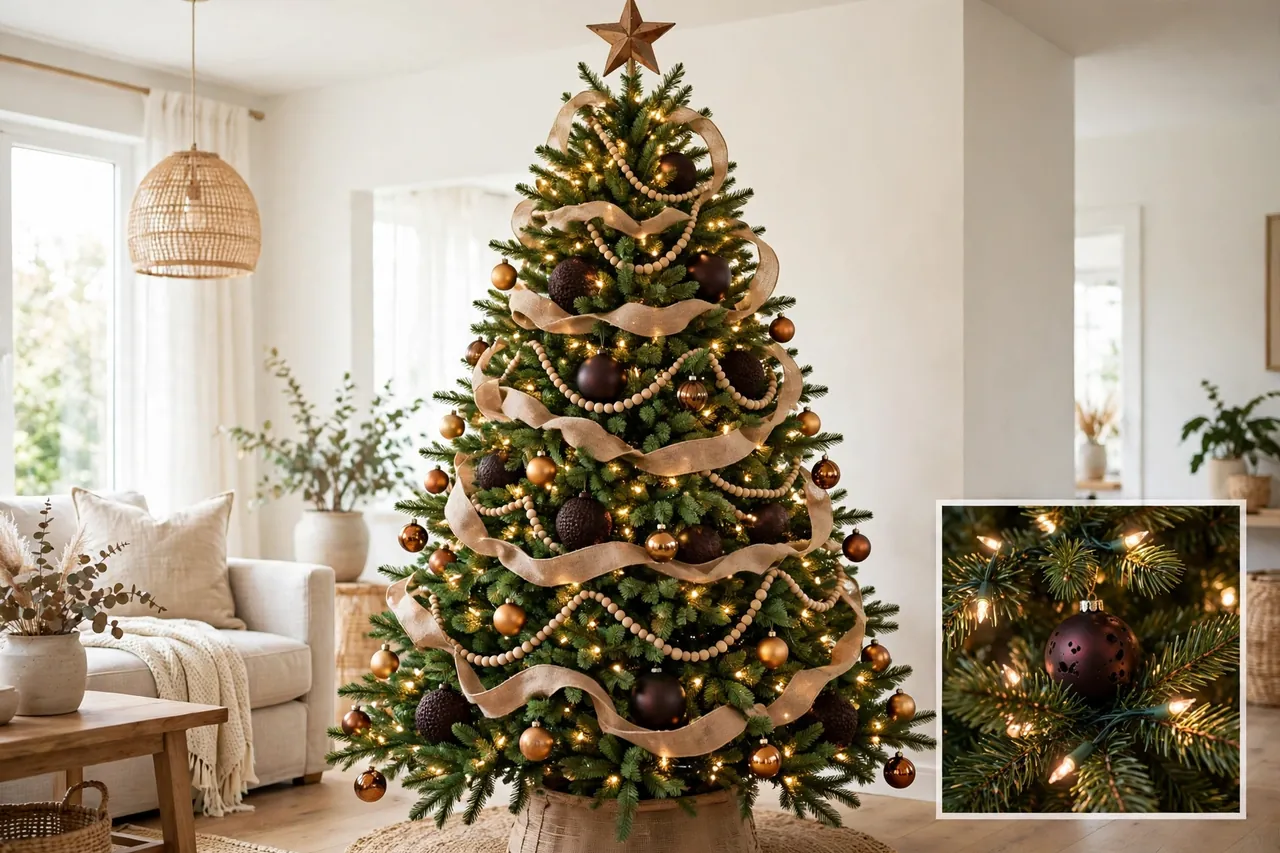
Decorate in layers, and always start with lights. Lights set the glow that every brown ornament depends on. Ornaments hung before lights end up hiding the bulbs, and then the tree looks darker than it should.
- Fluff every branch first. Pull branch tips outward and fill bare gaps, so ornaments have places to sit and lights have places to hide.
- String warm white lights from the trunk outward, working top to bottom. Weave some strands deep inside the tree, not just on the surface, so the tree glows from within.
- Hang your largest dark ornaments deep in the branches. These espresso and chocolate pieces create shadows and make the tree look full and thick.
- Drape or tuck your ribbon next. Run wide burlap, velvet, or linen ribbon in loose loops from top to bottom, and let it dip into the branches instead of sitting flat on the surface.
- Add garlands, such as wood bead strands, over the ribbon layer. Let the beads swag gently between branches rather than pulling them tight.
- Hang medium ornaments in mocha and cocoa through the middle of the tree, mixing matte and shiny finishes as you go.
- Finish with light pieces on the branch tips: caramel baubles, copper and bronze accents, wood slices, and dried oranges. These catch the light and stop the tree from looking heavy.
- Step back often. Walk several feet away and look for bare patches, clumps of one shade, or spots where dark ornaments disappear. Fix those spots before you add anything new.
- Place the topper last. A wooden star, a burlap bow, or a simple bundle of twigs tied with twine suits this palette better than a glittering showpiece.
- Cover the stand with a burlap or woven basket collar, or a cream or natural linen skirt. The base should look as earthy as the rest of the tree.
Work slowly through the middle steps. The beauty of a brown tree sits in the layering, not in any single bold ornament, so if a section looks flat, you usually need a texture change, not a new color.
Natural Materials That Read Brown
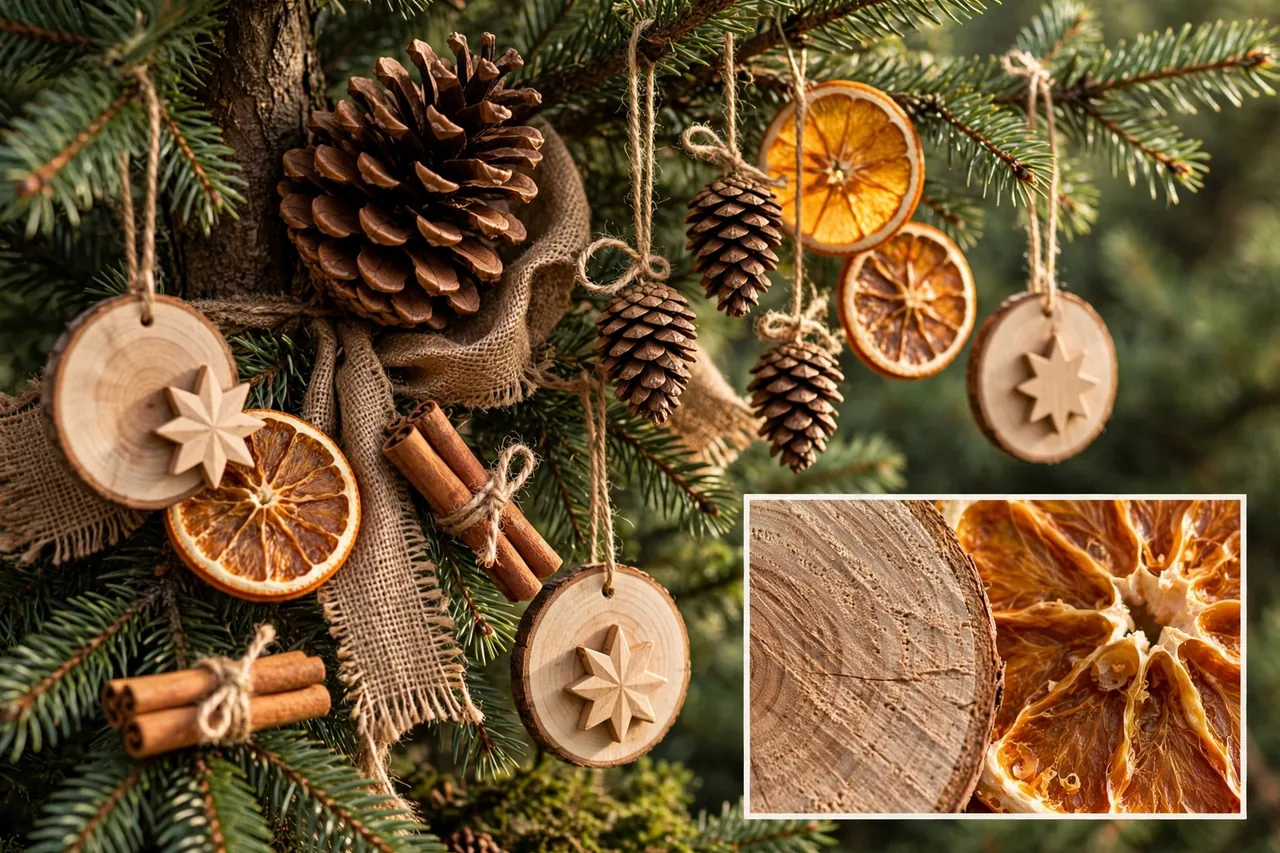
Natural materials are the heart of brown Christmas tree decorations. They bring grain, roughness, and tiny imperfections that plastic cannot copy. They also cost little, which makes this one of the most budget-friendly tree styles you can choose.
Pinecones
Pinecones add instant woodland warmth. Tuck large ones deep near the trunk to fill gaps, and hang smaller ones on the outer branches with wire or twine. Wire heavy pinecones to strong inner branches so they do not sag or slide off. If you gather pinecones outdoors, brush off dirt, let them dry fully, and check for insects before they come near your tree.
Wood Slices and Wooden Ornaments
Small wood slices, carved stars, and simple wooden beads give the tree a handcrafted feel. Light wood tones act as natural highlights, so they balance dark chocolate ornaments beautifully. Hang wood slices with thin wire or clear line so the hanging hardware does not distract from the wood grain.
Dried Oranges
Dried orange slices glow like little lanterns when warm light hits them, and they add a gentle citrus scent to the room. They also tie the whole brown palette together, since their amber-brown edges sit right between caramel and copper.
Caution before you start: drying oranges means using a low oven for several hours, so plan this project for a day when you will stay home. Keep the oven at a low temperature, check the slices often, and never leave the oven running while you sleep or leave the house. Let the slices cool fully before you hang them, and keep paper, fabric, and dried fruit away from hot bulbs and heat sources.
To make them, slice oranges thin, blot them dry, and bake them low and slow until they feel dry and slightly stiff. Flip them halfway through so both sides dry evenly. If a slice still feels damp, give it more time. Damp slices can grow mold in storage, so dry ones last far longer.
Cinnamon Sticks and Burlap
Bundle two or three cinnamon sticks with twine and hang them like tiny ornaments, or tuck them into the branches near pinecones. Their warm brown color and spicy scent fit this palette perfectly. Burlap ribbon does similar work on a bigger scale: its rough weave softens shiny baubles and hides small gaps between branches. If your burlap sheds, trim loose fibers before decorating for a cleaner finish.
Brown Ribbon, Garlands, and Texture
Texture makes or breaks a brown tree. Without it, brown turns flat. With it, brown turns rich. Mix at least three textures: something soft, something rough, and something that shines.
Soft textures include velvet ribbon in chocolate or mocha, felt ornaments, and wool or felt balls in cream. Rough textures include burlap, twine, raw wood, and pinecones. Shiny textures include copper and bronze baubles, glass ornaments in amber-brown tones, and metallic bead strands. When you hold those three groups together, the tree gains depth even before you turn the lights on.
For ribbon, wider works better on a full-size tree. A four-inch wired-edge ribbon holds its loops and folds, which matters because burlap and velvet can flop. Weave ribbon through the branches in sections rather than wrapping it in tight rings around the tree. Loose, deep loops look natural and let ornaments peek through. If you want a simpler finish, tie a few large bows at intervals instead of running long ribbon lines.
Wood bead garlands deserve a special mention. Long strands of natural wood beads break up dark chocolate decorations and add a handcrafted rhythm to the tree. Drape them in even swags from the top down, matching bead size to your tree. For more ribbon technique, see our guide on how to put ribbon on a Christmas tree.
Lighting a Brown Tree So It Glows
Light is the single biggest factor in whether a brown tree looks luxurious or muddy. Brown absorbs light, so you need more of it, and you need the right color of it. This is not the place to cut corners.
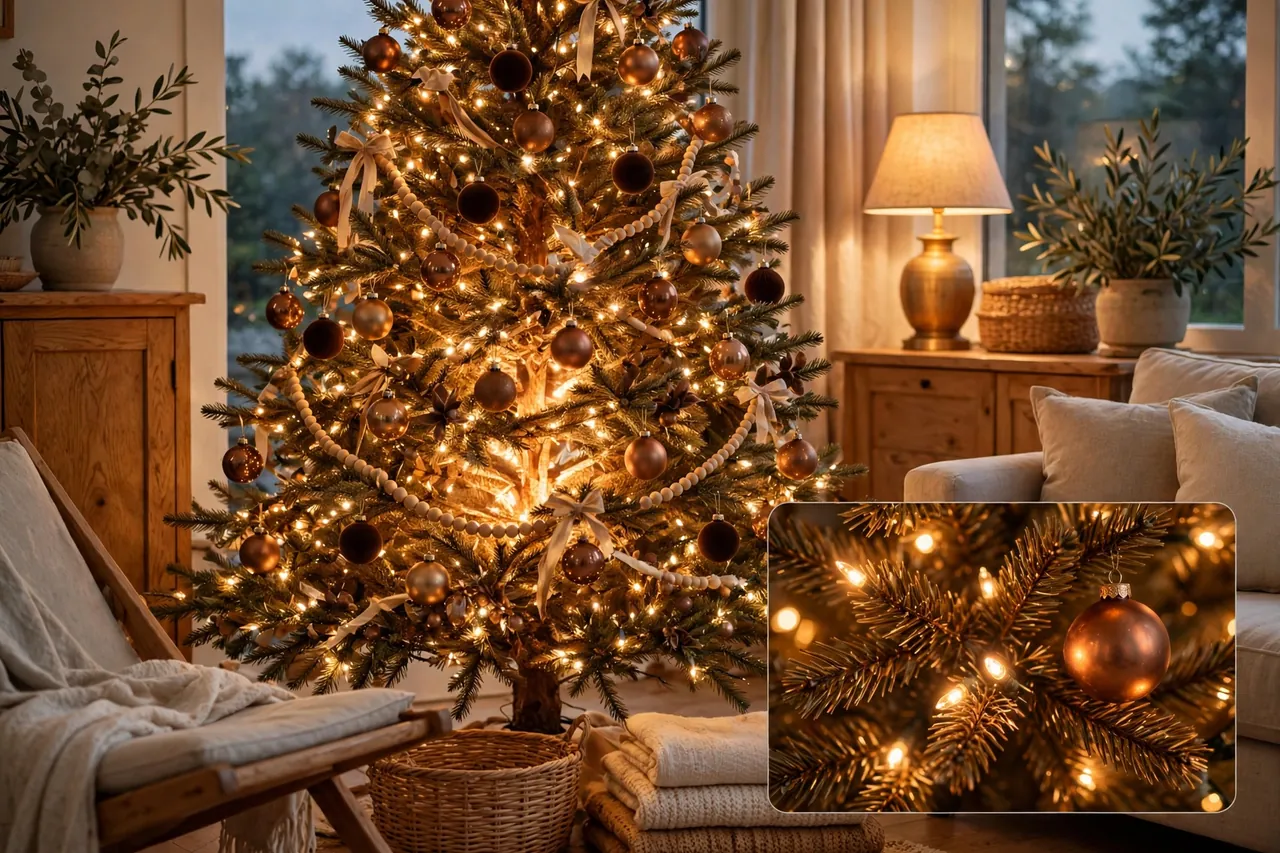
Choose warm white lights, around 2700K, for a candle-like glow that flatters brown, copper, and wood. Cool white or blue-toned lights make brown look gray and tired, so skip them for this palette. If your light box does not list a color temperature, look for the words warm white on the label.
Plan on more lights than you would use for a bright tree: add roughly one extra strand, then step back and judge. Push some lights deep toward the trunk so the tree glows from inside, and let a few bulbs peek out near the tips so copper and caramel pieces catch them.
Check your strands before you hang them. Replace any string with worn cords, broken bulbs, or loose connections, and follow the maker’s instructions on how many strands you can safely connect. For broader lighting ideas, our Christmas light ideas guide covers styles that pair well with warm palettes. A timer plug also helps here, since it turns your tree lights off automatically at bedtime.
Four Brown Tree Looks to Steal
One palette, four moods. Pick the look that fits your room, then borrow its key pieces instead of buying everything in sight.
Deep Chocolate and Cream
This is the most elegant brown tree. Pair oversized dark chocolate baubles with wide cream ribbon and soft cream felt ornaments. The cream gives your eye somewhere to rest, so the dark chocolate reads as rich rather than heavy. Keep lights warm white, and skip stark bright white pieces, which can look cold against chocolate. This look suits a formal living room or a home with cream walls and classic furniture.
Rustic Cabin
This is the cozy, lived-in version. Lean on burlap ribbon, wood slices, pinecones, cinnamon bundles, and twine bows. Keep finishes mostly matte, and let the natural materials lead. A woven basket collar at the base finishes the cabin feel. This look suits family rooms, farmhouse interiors, and anyone who wants the tree to feel gathered over years rather than bought in one trip.
Soft Caramel and Natural Wood
This is the lightest brown tree, and a good pick for small rooms or bedrooms. Build it from caramel, camel, and cream ornaments with light wood bead garlands and pale wood stars. The pale tones reflect more light, so the tree feels airy even in a corner with little daylight. If brown ever feels too dark for your space, start here.
Modern and Minimal
This is brown at its calmest. Use fewer ornaments, but choose them well: matte chocolate spheres in two sizes, a handful of bronze accents, and one simple garland, such as wood beads or a single linen ribbon. Leave breathing room between pieces so each ornament shows. A flocked or frosted tree can suit this look, since pale frosted tips lift brown tones; read what a flocked Christmas tree is before you choose one.
Mistakes That Make a Brown Tree Look Muddy
Most brown trees fail for the same few reasons, and every one of them is easy to fix.
- Only dark ornaments: a tree full of espresso baubles and nothing else disappears into the branches. Add caramel, cream, and copper pieces to create contrast.
- Cool white lights: blue-toned light drains the warmth from brown. Switch to warm white and the same ornaments will look richer.
- One texture everywhere: all-shiny or all-matte trees look flat. Mix velvet, wood, glass, and burlap in every section.
- Too many pinecones: natural pieces add charm, but a tree buried in pinecones looks like a craft project. Use them as accents, not as the whole tree.
- Clumping one shade: a patch of only dark or only light ornaments breaks the flow. Spread each shade around the whole tree.
- Forgetting the back: a tree in a corner still shows its sides. Walk around it and fill gaps before you call it done.
- A mismatched topper and skirt: a glittering topper or a bright skirt can undo an earthy tree. Keep both in the same warm, natural family.
If your tree already looks muddy, do not strip it and start over. Add warm lights first, then tuck in five or six cream or caramel ornaments in the darkest spots. That small change often rescues the whole tree in ten minutes.
Shopping and Storage Checklist
You do not need a huge budget for a brown tree. Natural materials carry much of the look, and you can build the collection over two or three seasons. Start with the pieces that change the tree most: lights, ribbon, and a mix of dark and light ornaments.
- Warm white lights, with one extra strand beyond your usual count
- Dark chocolate and espresso baubles in at least two sizes
- Mocha and caramel ornaments in matte and shiny finishes
- Copper and bronze accents for the branch tips
- Wide ribbon in burlap, velvet, or linen
- Wood bead garland and a few wood slice ornaments
- Pinecones, cinnamon sticks, and twine
- Cream or natural linen tree skirt or basket collar
- A wooden star or burlap bow topper
Shop your own home before you buy anything new. Wooden beads from an old garland, a linen table runner as a tree skirt, and pinecones from the yard all work beautifully here. When you do buy, choose solid wood, glass, and fabric, which age far better than thin plastic.
Store brown decorations with care. Keep fabric pieces in breathable cotton bags so they do not trap moisture, and store shades in labeled boxes so you can rebuild your dark-to-light layers next year without sorting everything twice. Keep dried oranges in a dry, sealed container, and check them before reuse. If they smell musty or feel soft, replace them.
Safety, Care, and a Quick Disclaimer
Brown decorating uses more natural and dried materials than most tree styles, so safety deserves real attention. Dried oranges, paper stars, burlap, and cinnamon sticks all burn more easily than glass or metal ornaments. Treat them with respect, and your tree stays both beautiful and safe.
Keep your tree at least three feet from heat sources such as fireplaces, radiators, candles, and heat vents, and never use lit candles to decorate a tree. The National Fire Protection Association notes that a heat source too close to the tree causes about one in four Christmas tree fires, and that more than one in four tree fires involves electrical problems, so check cords and keep dried materials away from bulbs. The Illinois Office of the State Fire Marshal repeats the same core advice: water a real tree daily, use lights tested by a recognized laboratory, and turn lights off before bed or before leaving home. You can read the full guidance in the Illinois State Fire Marshal Christmas tree safety guide and in Prince William County’s holiday fire safety tips, which cite the National Fire Protection Association.
For a real tree, cut a small slice off the trunk base before you set it in the stand, and check the water level every day. Take the tree down after Christmas or as soon as it dries out, and never leave a dried-out tree in the garage or leaning against the house. For an artificial tree, choose one labeled flame-retardant, and keep the tree clear of exits.
Disclaimer: this guide shares general decorating advice for homeowners, not professional fire-safety or electrical advice. Follow your light maker’s instructions, your local fire guidance, and common sense, and ask a qualified professional if you are unsure about wiring, outlets, or a damaged light strand.
Related Guides
Christmas Garland Ideas: 25+ Styles for Every Room in Your Home · How to Tie a Christmas Ribbon: Bows That Actually Hold Their Shape
- How to Put Ribbon on a Christmas Tree — ribbon techniques that suit burlap, velvet, and linen.
- Christmas Light Ideas — warm lighting styles for a tree that glows all season.
- What Is a Flocked Christmas Tree? — whether a frosted tree suits a pale brown look.
- Tree Decorating Ideas for Christmas — broader tree styles to compare before you commit.
- Themes for Christmas Decoration — whole-home looks that pair with a brown tree.
Frequently Asked Questions
Can brown Christmas decorations look elegant?
Yes, and the trick is texture plus contrast. Combine several brown shades, mix matte and shiny finishes, and add cream ribbon and warm white lights. Matte brown ornaments with velvet ribbon and copper accents look collected and sophisticated, not plain, when the tree also carries lighter pieces to lift the dark tones.
What colors go well with a brown Christmas tree?
Cream, beige, tan, and natural wood are the safest partners, since they soften dark brown without changing the mood. Copper and bronze add warm shine from inside the brown family, and soft sage can add a gentle natural note. Keep any partner color to a supporting role so brown stays the star of the tree.
How can I decorate a brown Christmas tree on a budget?
Use natural materials first. Pinecones, dried oranges, cinnamon sticks, kraft paper stars, and twine cost little and add plenty of texture. Shop your home for wooden beads and linen fabric, then buy only the pieces you cannot make: warm white lights, a few dark baubles, and one wide ribbon.
How do I make a brown Christmas tree look less dark?
Add warm white lights first, and add more than you think you need, since brown absorbs light. Then introduce lighter pieces: cream ribbon, ivory ornaments, caramel baubles, and natural wood beads. You do not need to remove brown. You only need to balance dark pieces with lighter textures that catch the light.
Do brown ornaments work on artificial trees?
Yes, especially on medium-green trees or trees with frosted tips, where brown tones stand out well. Avoid pairing deep brown with very dark foliage unless you add light-reflective accents such as copper, cream ribbon, or extra warm lights. Fluff the branches fully so ornaments sit on the surface instead of sinking into shadows.
How do I prevent brown ornaments from disappearing against the green branches?
Use contrast on purpose. Frame dark pieces with cream ribbon, light wood beads, or copper accents, and mix glossy and glittered finishes with matte ones so some ornaments reflect the tree lights. Place the darkest ornaments deep inside the tree and the lightest ones on the tips, where light reaches them first.
A Tree That Feels Like Home
A brown Christmas tree does not try to impress anyone. It welcomes people, softens the room, and smells faintly of cinnamon and pine. Start with warm lights, layer your browns from dark to light, mix soft and rough textures, and let a few natural pieces tell the story. Then step back, pour something warm, and enjoy the glow. Your tree will look like it belongs there, because it does.