If you want Christmas garland ideas that actually work in a real home, start here: pick one style you love, repeat it in two or three spots, and let the garland do the talking. The best Christmas garland ideas are not the busiest ones. They are the ones that match your tree, your furniture, and the way your family really lives in December.
A garland is simply a long, flexible strand of decoration you drape, lay, or wind through a space. It can be fresh evergreen, faux greenery, beads, paper, fabric, or lights. That flexibility is why it shows up everywhere at Christmas, from the tree to the table, and why one good garland idea can tie a whole house together. If you are hunting for garland ideas for Christmas and feel stuck in a store aisle, this guide gives you the styles, the rooms, and the pairings, so you can choose with confidence.
Before you shop, look at what you already own. Most homes already hold a ribbon color, a set of ornaments, or a wreath that can set the whole garland plan. When your garland echoes those pieces, the house looks planned, not piled up.
Pick Your Garland Style First
Style comes before shopping. A garland that fights your room will never look right, no matter how pretty it looked in the store. A garland that matches your room looks expensive, even when it cost very little.
Start with one question: do you want your home to feel classic, calm, rustic, or playful? Classic homes love deep green evergreen with red and gold. Calm homes love flocked branches, white, and silver. Rustic homes love pinecones, wood, burlap, and dried oranges. Playful homes love bright beads, candy colors, and shiny tinsel. Pick one feeling, then hold it steady from room to room.
Next, pick your base. Your base is the main strand everything else hangs on. A full evergreen base suits most rooms and most themes. A slim cedar or eucalyptus base suits calm, modern rooms. A bead, paper, or fabric base suits a tree, a shelf, or a kids room, where a big evergreen strand would feel too heavy.
Finally, pick one accent and repeat it. Red berries in every room. Gold ribbon in every room. Pinecones in every room. One repeated accent makes separate garlands feel like one design, and it keeps you from buying five unrelated strands that never quite sit together.
Table: Garland styles at a glance
| Style | Best base | Best accent | Best room |
|---|---|---|---|
| Classic | Full evergreen | Red berries, gold ribbon | Living room, mantel |
| Winter white | Flocked evergreen | Silver, clear glass | Modern rooms, entry |
| Rustic | Cedar or pine | Pinecones, burlap | Kitchen, cabin rooms |
| Natural | Eucalyptus, magnolia | Dried oranges, wood beads | Dining room, shelves |
| Playful | Beads, tinsel, paper | Bright ornaments, candy colors | Kids rooms, parties |
| Glam | Full evergreen, pre-lit | Gold, champagne, crystal | Dining room, entry |
Classic Evergreen Christmas Garland Ideas
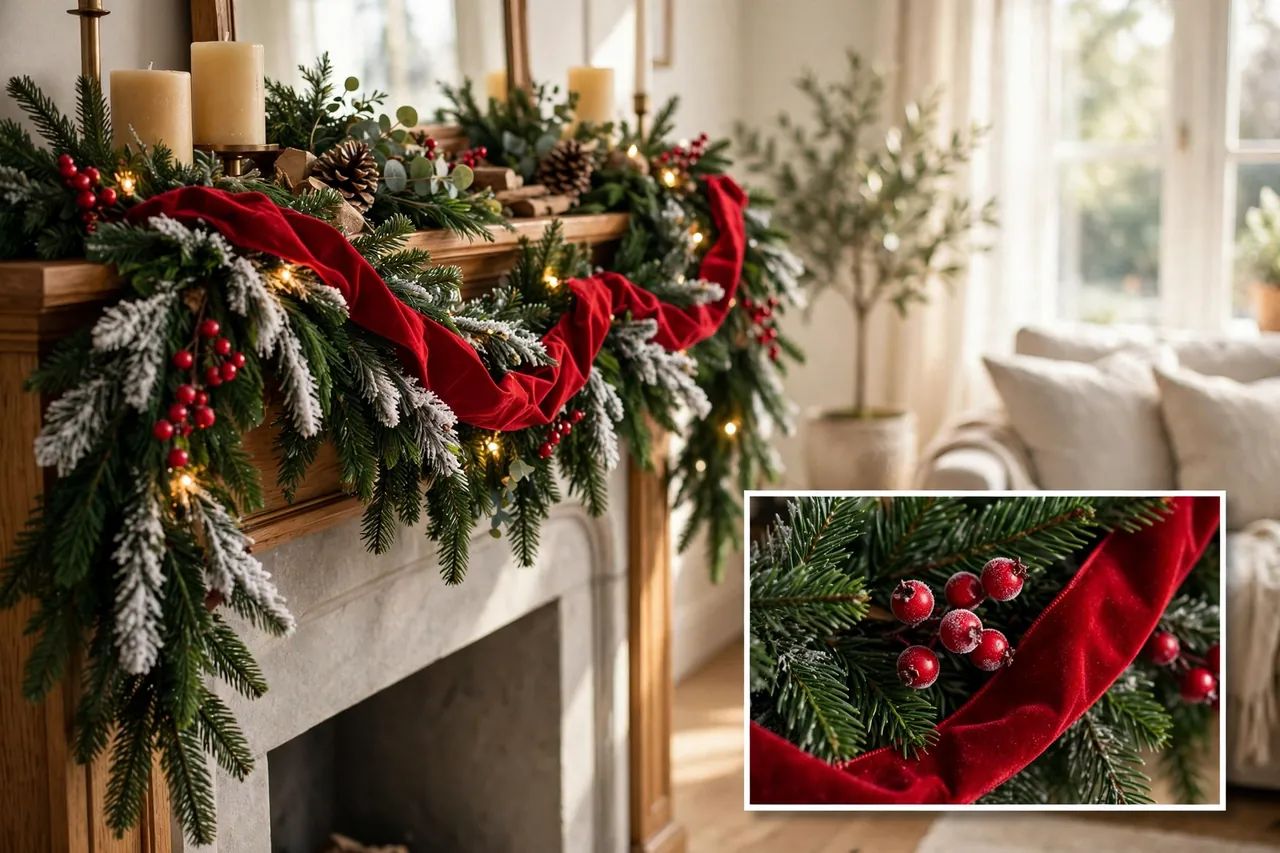
Evergreen garland is the workhorse of Christmas decorating, and for good reason. It looks right in almost any home, it pairs with almost any color, and it gives every other decoration something green and natural to sit against. If you buy only one garland style, make it a full evergreen strand you truly love.
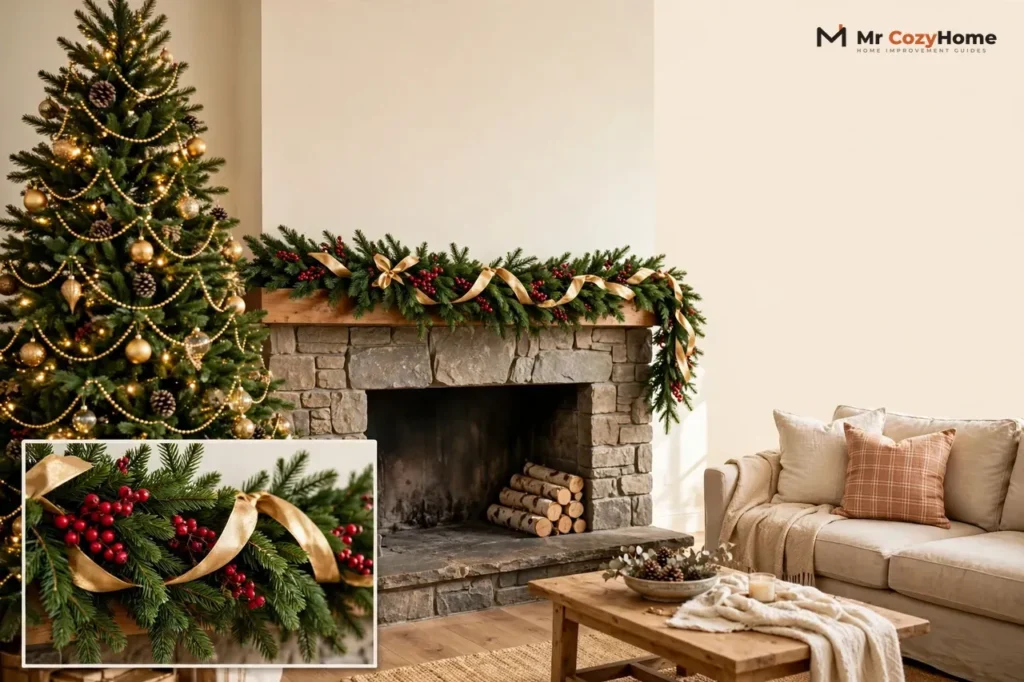
The classic look pairs deep green branches with red berries and a wide ribbon. Red velvet reads warm and traditional. Gold ribbon reads a little dressier. Plaid ribbon reads cozy and farmhouse. All three work on the same green base, so you can change the whole mood next year by swapping the ribbon alone.
A flocked garland gives you the same classic shape with a snowy finish. Flocking is the white, snow-like coating on the branches, and it suits homes that lean calm, modern, or winter-white. Pair flocked garland with silver ornaments, clear glass, and warm white lights, and keep the other colors quiet so the snowy branches stay the star.
Cedar garland looks softer and more feathery than fir or pine, with flat, drooping sprays that move gently. It suits mantels, tables, and doorways where you want a relaxed, natural drape rather than a stiff, formal line. Eucalyptus garland looks even lighter, with round silvery-green leaves that suit modern rooms, neutral homes, and anyone who wants Christmas without the traditional pine look.
For a richer, layered look, pair two evergreens together. A full fir strand underneath and a slim cedar strand on top gives you depth, movement, and a shape that looks gathered rather than store-bought. Keep the colors close, greens with greens, so the layering reads as lush, not messy.
Christmas Garland Ideas for the Tree
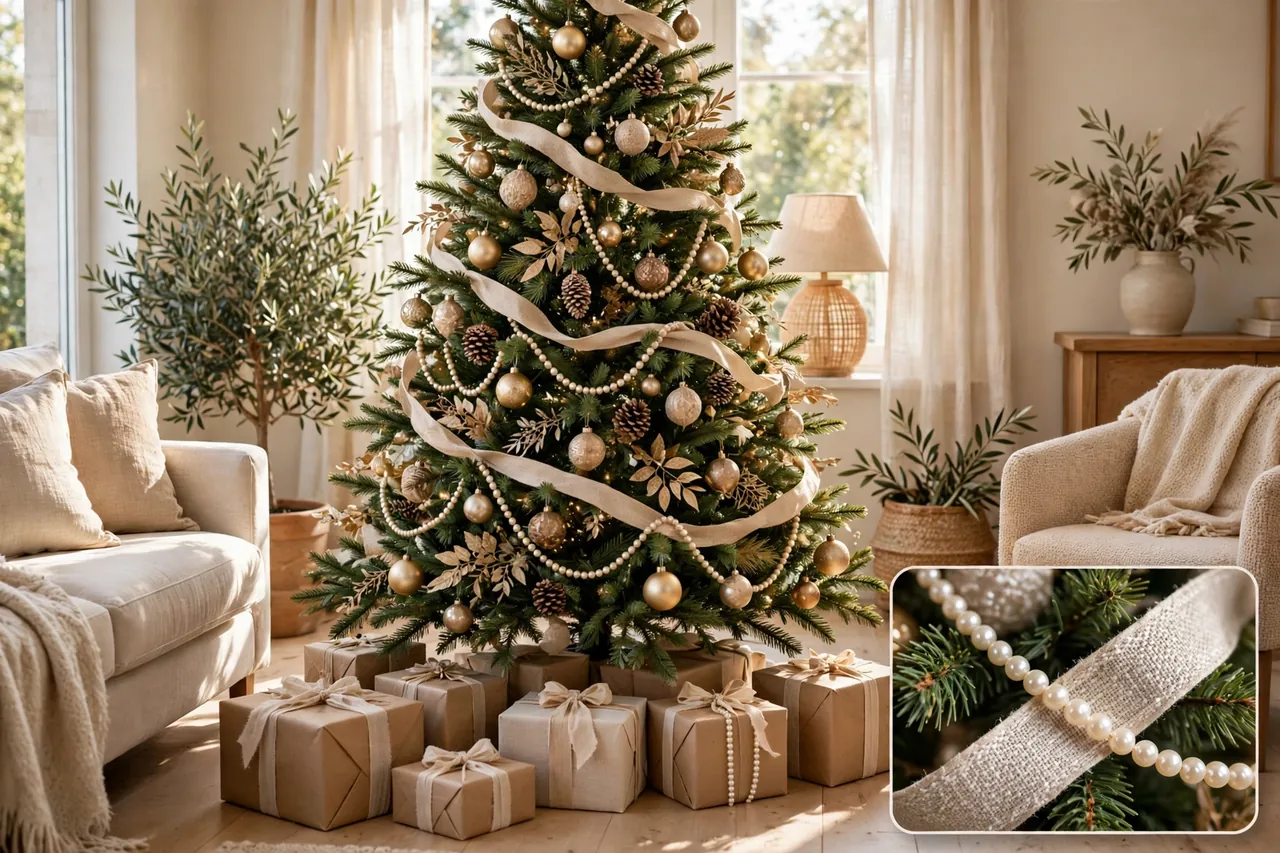
On a tree, garland plays a different role than it plays on a mantel. It draws the eye around the tree, fills thin spots, and links your ornaments into one flowing design. Here are my favorite ideas for garland on a Christmas tree, grouped by the look you want.
For a classic tree, use a bead garland. Wood beads read rustic and warm. Glass beads read dressy and bright. Pearl-style beads read soft and elegant, and they suit a champagne-and-ivory tree beautifully. Bead garland also suits a small tree, because it adds sparkle without hiding the branches.
For a soft, romantic tree, use ribbon garland. Wide wired ribbon holds its shape in loose loops, and it reads as part of the tree rather than a strand laid on top. A mesh ribbon over a solid ribbon adds depth, and one ribbon color repeated on the gifts underneath ties the whole corner together. Our guide to how to put ribbon on a Christmas tree covers widths and patterns in detail.
For a nostalgic tree, use popcorn and cranberry strands, dried orange slices on twine, or paper chains made with the kids. These old-fashioned garlands smell wonderful, cost very little, and turn decorating into a family evening. Keep food-based strands indoors, check them through the season, and take them down with the tree, because dried food does not store like faux greenery.
For a glamorous tree, use tinsel or metallic garland in one metal only. Gold tinsel on a green tree glows in lamplight. Silver tinsel on a flocked tree looks icy and bright. Two metals at once usually fight each other, so pick one metal and let it lead. Tinsel also suits a slim tree, because it adds shine without adding weight.
For a woodland tree, use a natural garland of pinecones on twine, wood slices, or felt shapes in forest colors. Pair it with plain ornaments in cream, rust, and deep green, and let plenty of green show between pieces. Restraint is the whole point here. A woodland tree with breathing room looks far more expensive than one buried under decorations.
One tree tip saves more trees than any other: match the garland weight to the tree. A heavy evergreen strand suits a sturdy, full tree. A slim bead or ribbon strand suits a slim or tabletop tree. When the garland outweighs the branches, the branches droop, the shape sags, and no amount of ornaments fixes it.
Mantel Garland Ideas That Frame the Fireplace
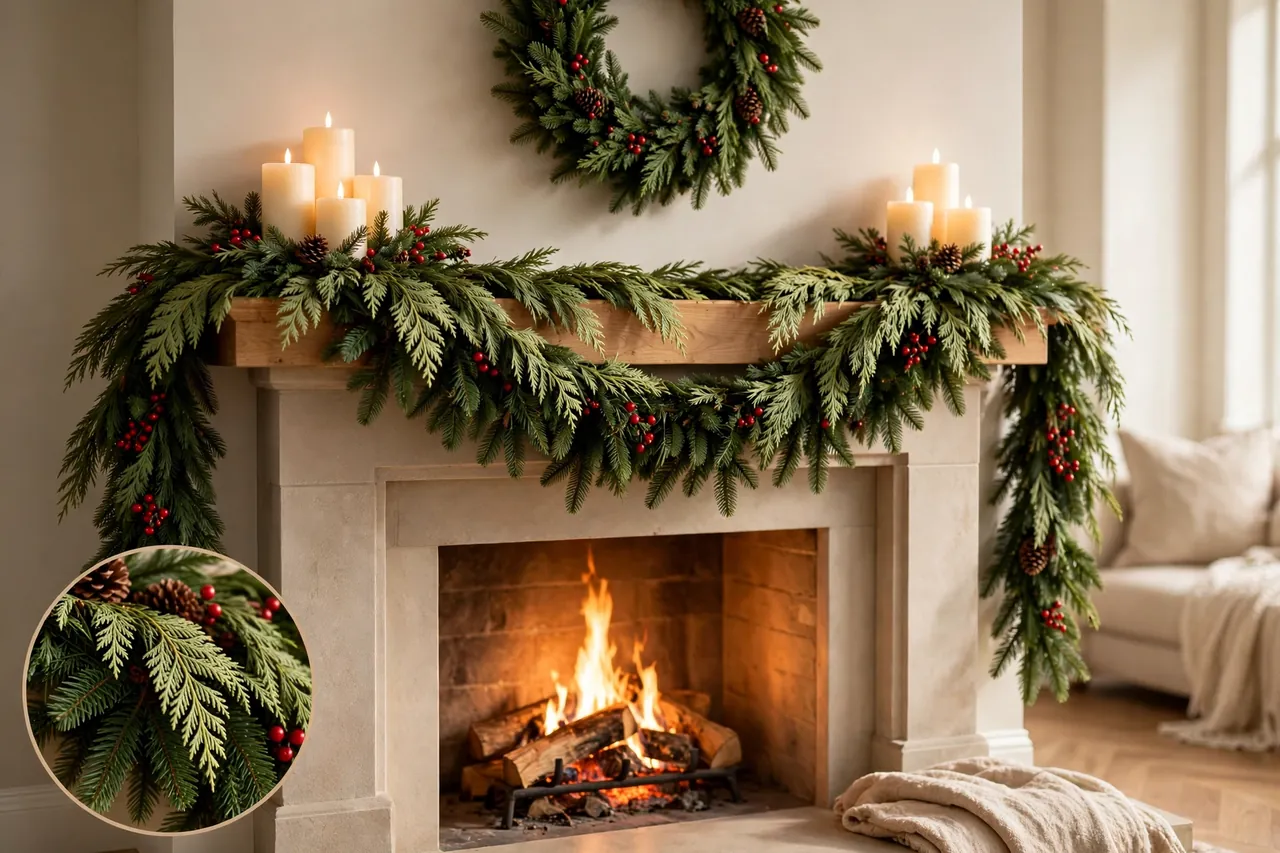
The mantel is the focal point of the room. It is where eyes land first, where stockings wait, and where family photos happen. Your mantel garland idea should frame that moment, not compete with it.
The simplest mantel idea is also one of the best: one full evergreen strand, a pair of matching candle clusters at the ends, and one wreath or mirror above. The symmetry calms the eye, the candles add height, and the garland gives the whole display its green base. Change the ribbon and the stockings, and the same layout serves a classic, rustic, or glam home.
A layered mantel idea suits a wide or stone fireplace. Lay a full evergreen strand as the base, then add a second, lighter strand, cedar or eucalyptus, on top, slightly off-center. Tuck pinecones, berries, or ornaments into the fuller spots only, and leave a few quiet gaps where the green can breathe. The layers give you depth without a single new color.
A minimal mantel idea suits a modern room. Use one slim eucalyptus or olive garland, a few white pillar candles in different heights, and nothing else. The empty space is part of the design here. It lets the fireplace, the art above it, and the candle glow do the work, and it photographs beautifully.
A storybook mantel idea suits a family room. Mix evergreen with dried oranges, cinnamon bundles, small wooden houses, and warm white lights, and let the display feel collected over years rather than bought in one trip. One or two handmade pieces, a child’s ornament or a felt star, make this style feel personal in a way no store set can copy.
Whatever mantel style you pick, keep the fire in mind. Keep garland, ribbon, and paper well away from open flames, and use flameless candles when real flames would sit close to dry greenery. A beautiful mantel is never worth a fire risk, and flameless candles now glow warmly enough that guests rarely notice the difference.
Staircase and Doorway Garland Ideas
A staircase garland turns an everyday walk into a small celebration. The idea matters more than the amount: one clear style, repeated down the whole run, reads as designed, while a different style on every step reads as clutter.
For a classic staircase, pair full evergreen with one ribbon color and one ornament type, repeated at even intervals. Red bows with gold ornaments. White bows with silver ornaments. The repetition gives the eye a rhythm as it climbs, and the staircase feels like one long decoration instead of a pile of pieces.
For a calm staircase, use slim cedar or eucalyptus with warm white lights and no ornaments at all. The greenery and the glow carry the whole look, and the staircase stays light and airy, which matters in a narrow hall. For a festive staircase, add pinecones, berries, and larger bows at the newel posts only, and keep the long runs simple. The posts become the punctuation marks, and the runs stay clean.
Doorway garland works the same way, on a smaller scale. A full evergreen strand across the top of a door frame welcomes guests before they even step inside. Pair it with a matching wreath on the door itself, and the entry reads as one finished idea. On a porch, weather matters: choose a garland rated for outdoor use, and give it a covered spot when you can, because rain, wind, and sun wear any garland out faster than a sheltered hall.
One safety idea belongs in every staircase plan: keep the handrail usable. Garland should decorate the staircase, never block the grip your family needs on the way up and down. If a strand covers the rail, move it to the outer face or the top of the rail, and keep the walking side clear, especially for kids, older guests, and anyone carrying a plate of cookies.
Table, Window, and Porch Garland Ideas
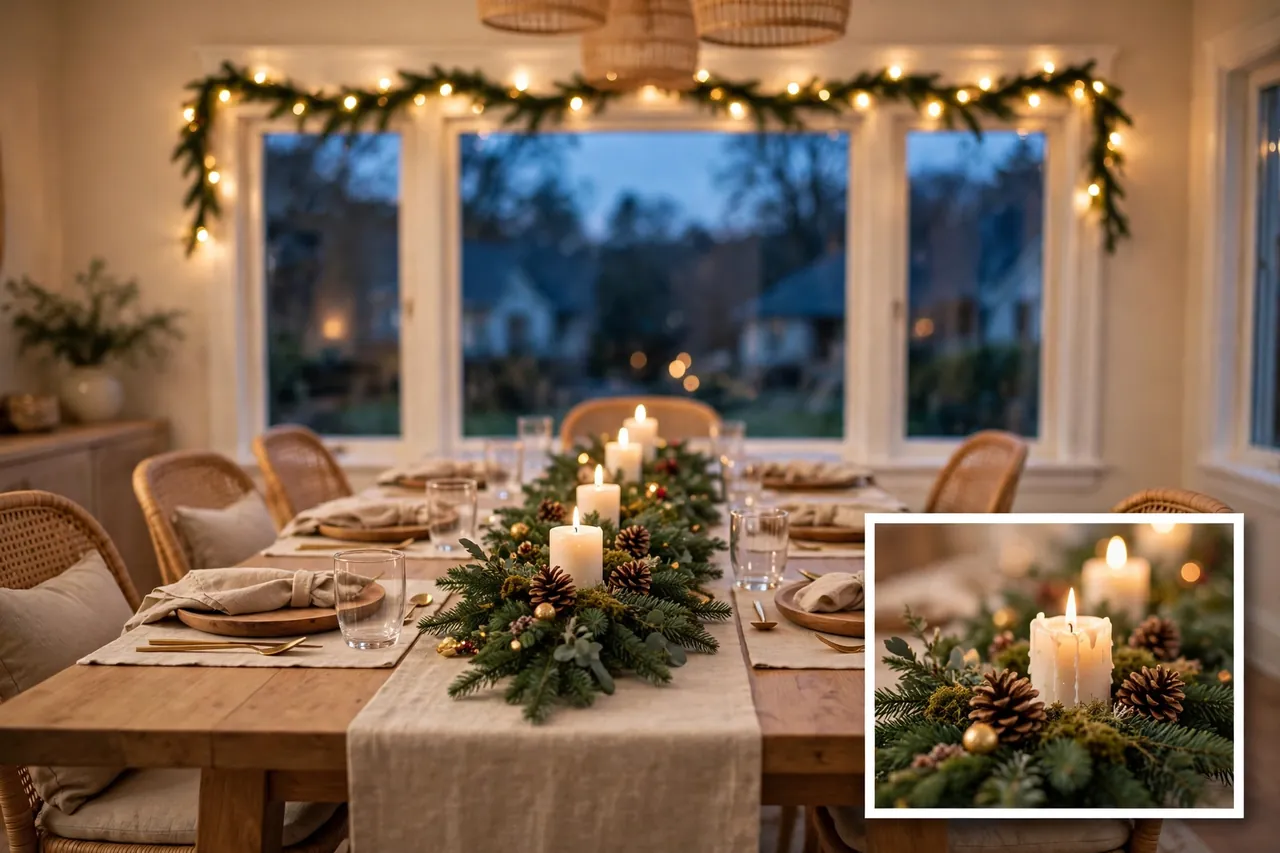
Garland earns its keep far beyond the mantel and the stairs. A short strand on a table, a window, or a porch can change a whole room for very little money, and these smaller spots are the best place to try a style you are not sure about yet.
On a dining table, lay a slim garland down the center as a living runner, then add candles, pinecones, and a few ornaments around it. Keep the arrangement low, so guests can see each other across the table, and keep candles away from dry greenery. Our guide to Christmas table decoration covers centerpiece heights and place settings in full.
On a kitchen island or sideboard, a short garland winding between jars, a lantern, and a bowl of clementines makes an everyday surface feel festive without losing its job. The kitchen still needs room for cooking, so keep the garland to one edge or one corner, and skip anything that sheds needles near food.
On a window, a slim garland along the sill or the top of the frame frames the view and glows beautifully at dusk, especially with warm white lights woven through it. Pair it with a paper star or a simple wreath in the glass, and the window becomes a display the street can enjoy too. On a porch, pair garland on the railings with a matching wreath and one lantern, and the whole entry reads as a welcome, not a warehouse of decorations.
Small spaces deserve garland too, and they suit it best in small doses. A short strand across a mirror, along a shelf, or around a headboard adds Christmas to a bedroom or an apartment without a tree-sized commitment. Battery lights suit these spots well, because they need no outlet and no cord trailing across the room.
DIY Garland Ideas You Can Make in an Afternoon
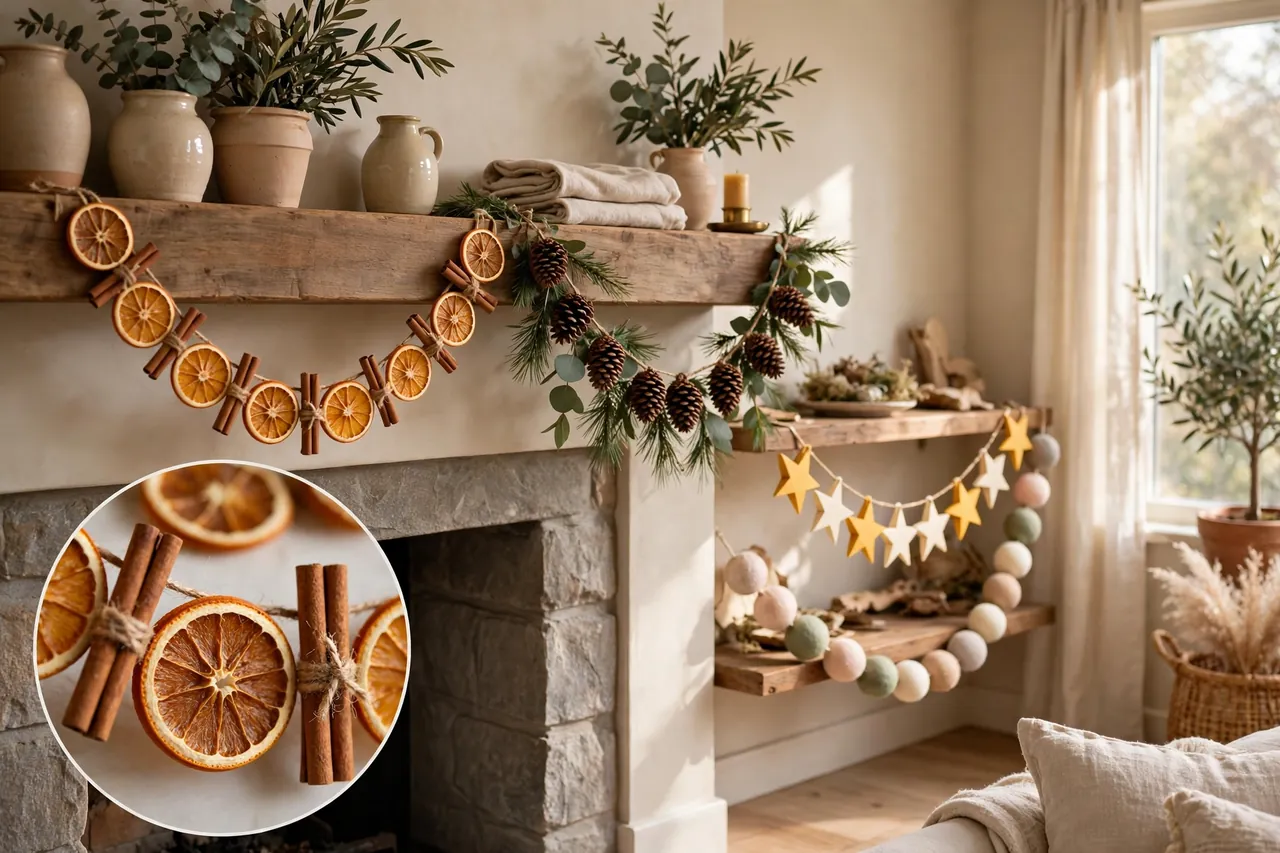
Homemade garland ideas suit anyone who loves a personal touch, a low budget, or a craft evening with family. They also suit a style no store sells, because you pick every color, every material, and every spacing yourself.
Dried orange garland is the easiest place to start. Thin orange slices, dried low and slow until crisp, strung on twine with cinnamon sticks and star anise, look warm, smell wonderful, and suit a rustic or natural home perfectly. They also pair beautifully with a plain evergreen strand, so you can mix one homemade strand with one store strand and get the best of both.
Paper garland suits kids, classrooms, and anyone who wants bright color on a budget. Paper stars, snowflakes, trees, or simple folded fans, strung on ribbon or twine, make a cheerful strand for a playroom, a party wall, or a small tree. Keep paper garland away from candles and heaters, and store it flat in a box so it survives for next year.
Pinecone garland suits a woodland or farmhouse home. Pinecones on twine, with a few wood beads or a burlap bow between them, look gathered rather than bought, and they cost almost nothing if you collect the cones yourself. Clean and dry garden pinecones fully before you bring them inside, and skip any that show mold or insects.
Fabric garland suits a soft, cozy room. Strips of cotton, felt, or old flannel, knotted onto twine, make a strand with texture and movement and no breakable pieces, which suits homes with toddlers and pets. Felt ball garland, in one color family or a rainbow, suits a mantel, a shelf, or a kids room, and it stores flat and lasts for years.
Bead and wood garland suits a calm, modern home. Wood beads on cotton cord, with a tassel at each end, look simple and intentional on a mantel, a mirror, or a small tree. Paint the beads in your theme color, or leave them natural for a Scandinavian feel. Either way, the strand costs little and the look stays quiet and classy.
Before you start any DIY strand, check your time honestly. A paper chain takes an hour. A dried orange strand takes an afternoon, mostly waiting for the oven. A felt ball strand takes an evening in front of a good movie. Pick the project that fits the evening you actually have, not the one that looks best in a photo.
Fresh or Faux: Which Garland Idea Fits Your Home
Fresh garland smells like Christmas itself. Nothing fake quite matches the scent of real fir or cedar on a cold evening, and fresh greenery looks wonderfully alive in photos. Fresh garland also drops needles, dries out in warm rooms, and lasts about two weeks indoors with good care, according to fresh-garland guides. Keep it away from heat vents and fireplaces, mist it lightly if the room is dry, and plan to put it up closer to Christmas than to Thanksgiving.
Faux garland wins on ease. It looks the same on December 26 as it did on December 1, it sheds no needles, it stores in a box for next year, and it suits homes with allergies. Good faux garland now looks remarkably real, especially in PE, the softer, molded plastic that mimics real branch tips, rather than flat PVC. The trade-off is the upfront cost and the lack of scent, which a pine-scented candle or a few real sprigs tucked in can fix.
Many homes land happily in the middle. Use faux garland for the big, hard-to-reach spots, the staircase, the porch, the high mantel, and fresh sprigs for the spots you touch and smell, the table, the entry console, a small wreath. You get the scent where it counts and the durability where you need it, without paying for fresh greenery everywhere.
Table: Fresh or faux garland, side by side
| Question | Fresh garland | Faux garland |
|---|---|---|
| Scent | Real pine scent | No scent, add candles |
| Lifespan | About two weeks indoors | Many seasons |
| Mess | Drops needles as it dries | Almost none |
| Allergies | Can bother sensitive noses | Usually kinder |
| Best spot | Table, entry, low mantel | Stairs, porch, high spots |
How Much Garland Do You Need
Running out halfway down a staircase is the most common garland frustration, and it is easy to avoid. Measure first, then buy, and always add a little extra for the drape. A strand that looks full in the store often looks thin once it curves, swags, and wraps around a real room.
For a mantel, plan on the mantel width plus extra for the drop at each end. Guides commonly suggest about 6 to 9 feet for a standard mantel, and more for a wide or stone fireplace. For a doorway, 5 to 7 feet usually covers the top and a short drop on each side. For a staircase, measure the rail itself, then add extra for swags and turns, since staircases commonly need 12 to 20 feet depending on the rail length.
For a tree, plan on about 9 feet of garland for every foot of tree height as a starting point, a rule many tree guides repeat. A 6-foot tree wants roughly 54 feet. A 7-foot tree wants roughly 63 feet. Buy one spare strand in your main style, because a spare fixes a thin spot in minutes, while a mid-December hunt for a matching strand rarely ends well.
Table: Garland length planning guide
| Spot | Planning length | Tip |
|---|---|---|
| Mantel | 6 to 9 feet | Add extra for end drops |
| Doorway | 5 to 7 feet | Match the wreath style |
| Staircase | 12 to 20 feet | Measure the rail, add for swags |
| Table runner | Table length, plus a little | Keep it low, guests must see over it |
| Tree, 6 feet tall | About 54 feet | About 9 feet per foot of height |
| Tree, 7 feet tall | About 63 feet | Buy one spare strand |
Make a Thin Garland Look Expensive
Thin garland is the number one complaint in December, and the fix costs far less than a new strand. Layering, lights, and a few well-chosen accents turn a flat strand into a full one, and the tricks below work on fresh and faux garland alike.
First, fluff the strand. Spread every branch tip outward, pull some tips forward and some to the sides, and fill the bare patches before you add anything else. A fluffed strand can look twice as full as the same strand straight from the box, and it costs nothing but ten patient minutes.
Second, layer two strands. A full strand underneath and a slim strand on top, in a close green, gives you depth and shadow that one strand cannot. If you own only one strand, layer it with ribbon instead: a wide ribbon woven through the greenery reads as fullness, and it adds your theme color at the same time.
Third, add lights before ornaments. Warm white lights tucked deep among the branches make the whole strand glow from within, while lights only on the surface look thin. If your garland is pre-lit, check for dark sections before you decorate, and add one spare strand to any gap rather than moving the whole display.
Fourth, tuck accents into the full spots, not the thin ones. Pinecones, berries, and ornaments look intentional when they sit in lush clusters, and they look lost when they sit alone on a bare wire. Cluster three small accents together, leave a quiet gap of green, then cluster again. The rhythm reads as designed, and the eye forgives the gaps.
Finally, step back. Garland looks different from across the room than it does from six inches away. Check the whole display from the doorway, from the sofa, and at night with the lights on. One step back catches the bare patch, the clump, and the crooked bow that close-up work always hides.
Garland Ideas on a Budget
A beautiful garland display does not need a big budget. It needs one good idea, repeated well, and a little patience with what you already own. Start by shopping your own storage boxes before you shop a store. Last year’s ribbon, ornaments, and lights often hide the theme you need.
For price guidance, recent October 2026 store roundups give a useful sense of the range. A 6-foot pre-lit garland with berry accents at Walmart was reported at $18.99 in October 2026, and Target’s 2026 Studio McGee holiday collection listed a 72-inch sugared fruit garland at $35, a 96-inch extra-full mixed green garland with red berries at $45, and a 72-inch faux orange garland at $25. Prices change with stock and sales, so treat these as October 2026 guide prices, not a promise, and check the store before you buy.
Budget ideas that actually look good include a plain evergreen strand dressed with ribbon you already own, a paper or fabric strand made with the kids, dried oranges and pinecones gathered at home, and one pre-lit strand reused in a new spot each year. One new ribbon in your theme color can make a whole box of old ornaments look brand new, and one strand moved from the mantel to the table gives a familiar piece a second life.
Shop after Christmas for next year only when you have storage space and a theme you will keep. A bargain strand in a color you will never use is not a bargain. It is a box you will move, unopened, for three Decembers.
Pick One Theme and Carry It Through the House
The homes that feel most festive at Christmas rarely own the most decorations. They own one clear idea, carried through every room. When the tree, the mantel, the stairs, and the table share a palette, the whole house feels designed, even if each room holds only a few pieces.
Our guide to themes for Christmas decoration lists ten whole-home looks, from classic red and gold to Nordic simplicity, and the same rule runs through all of them: two or three colors, one metal, one light color, repeated everywhere. Apply that rule to your garland, and your garland plan almost writes itself. Red and gold on the tree means red and gold on the mantel. Winter white on the mantel means winter white on the stairs.
Light color matters as much as garland color. Warm white lights flatter almost every theme, while cool white can look harsh on a traditional green tree. Keep one light color dominant across the house, and your separate garlands will glow like one display. Our guide to Christmas light ideas covers color choices and smart controls in detail.
Finally, give each room at least one garland touch, even a small one. A short strand on a bedroom mirror, a shelf in the hall, or a kitchen window ties the far rooms into the celebration. Small touches count, because they tell guests the whole house joined in, not just the living room.
Garland Safety, Care, and Storage
Garland safety is simple, and it protects the whole season. Keep garland, ribbon, paper, and dried decorations away from open flames, candles, heaters, and stove tops. Use flameless candles near dry greenery, and never leave a burning candle unattended in a room full of decorations. Keep cords off walkways, where they trip guests, and keep heavy ornaments and glass pieces above the reach of small hands and pets.
For outdoor garland, use strands rated for outdoor use, and keep electrical connections dry and off wet ground. For pre-lit garland, check every strand before you plug it in, and retire any strand with frayed wires, cracked sockets, or loose connections. If a strand feels warm, smells strange, or trips a breaker, unplug it and replace it rather than pushing ahead.
Storage decides whether next December starts happily or with a tangled pile. Wrap faux garland loosely around a large piece of cardboard or a cord reel, rather than stuffing it into a bag, and store it in a dry box with its ribbon and ornaments in a separate bag. Label the box with the room and the length, so next year starts with a plan instead of a guessing game. Fresh garland and food-based strands do not store: compost or discard them when the season ends, and keep the faux and fabric strands for next year.
Disclaimer: this guide covers decoration ideas only. Homes, products, and conditions vary, so follow your own garland and light instructions, and call a qualified electrician for any wiring, outlet, or circuit problem. For high, steep, or hard-to-reach spots, hire a professional rather than climbing into an unsafe position.
Related Guides
Tree decorating ideas for Christmas · Themes for Christmas decoration · Christmas table decoration · How to put ribbon on a Christmas tree · Christmas light ideas
Frequently Asked Questions
How do I make my garlands look fuller and more high-end?
Layer different textures, like greenery with ribbon, berries, pinecones, or ornaments. Fluff every branch tip outward first, then add lights deep among the branches, and double the strand or layer a slim strand over a full one. Cluster accents in groups of three, and step back to check the whole display from across the room.
What’s the best way to hang garlands without damaging walls or furniture?
This ideas guide skips hanging tutorials on purpose, but the gentle options decorators use most are removable hooks, clear clips, and tying the strand with twine to a rail or mantel edge. Choose the option that suits the surface and the weight, test it on a small spot first, and check the weight rating before you load a heavy strand onto it.
Can I reuse my DIY garlands next year?
Yes, for most kinds. Felt, paper, fabric, faux greenery, wood bead, and ornament garlands store well in a dry box and come back year after year. Dried fruit and fresh greenery garlands do not last, so compost or discard those when the season ends and make fresh ones next December.
What materials are easiest for beginners?
Paper, felt, ribbon, cotton, wooden beads, and faux greenery are the easiest materials for beginners. They are forgiving, lightweight, and look good even with little crafting experience. Start with one material, one color family, and a short strand, and add a second material only when the first one feels easy.
How long should a garland be for different rooms?
Mantels usually need around 6 to 9 feet, doorways look good with 5 to 7 feet, and staircases may need 12 to 20 feet depending on the rail length. Trees need about 9 feet per foot of height. Always measure your own space first, then add a little extra for drape, swags, and overlap.
What greenery is best for a Christmas garland?
Evergreen foliage holds its shape and brings festive fragrance into your home. Popular choices include fir, pine, cedar, and eucalyptus, with berries, dried fruit, and pinecones added for color. Fir and pine suit a classic look, cedar suits a soft drape, and eucalyptus suits a calm, modern room.
How long does a fresh Christmas garland last?
A fresh Christmas garland lasts around two weeks or longer indoors when you use long-lasting foliage and care for it well. Keep it away from direct heat, mist it lightly in a dry room, and remove any fading foliage promptly. For a display that must last all season, choose faux garland or mix fresh sprigs into a faux base.
Now pick your favorite idea from this guide, measure one spot, and start there. One garland, done well, changes a room. Two or three, in the same style, change a whole house. Happy decorating, and may your December glow exactly the way you pictured it.