To win a Christmas door decorating contest, pick one clear idea, build it big enough to read from down the hall, add depth and warm light, and finish the edges cleanly. Judges and voters decide fast, so your door must tell its story in about two seconds. A single strong theme beats five small ideas crowded onto one door every time.
This guide shows you how to choose a contest-winning theme, score well on the criteria judges really use, and present your door so it photographs beautifully for voting. You will also learn the rules that can disqualify a great door, plus simple team and family plans that keep the work fun instead of frantic.
What Judges Actually Score in a Christmas Door Decorating Contest
Most contests score the same handful of qualities, even when they word them differently. Creativity, visual impact, craftsmanship, theme, and holiday spirit show up again and again in published contest rules and judging guides. Some contests add team effort, humor, or use of recycled materials. Ask your organizer for the scorecard first, because that sheet tells you exactly where to spend your time.
If no scorecard exists, use this typical breakdown as your working plan. It reflects the criteria most often listed by schools, offices, and community contests, and it keeps you from overinvesting in one flashy detail while you neglect the basics.
| Judging area | What it means | How you score high |
|---|---|---|
| Creativity | An original idea, not a copy of last year’s winner | Twist a familiar theme with a local or personal detail |
| Visual impact | A door that stops people in the hallway | One bold focal point, strong color contrast, and depth |
| Craftsmanship | Neat, sturdy, finished work | Clean edges, hidden tape, and nothing drooping or peeling |
| Theme | Every piece supports the same story | Cut anything that does not fit, even if you like it |
| Holiday spirit | Warmth, humor, or joy a stranger can feel | A friendly message or a detail that makes people smile |
| Team effort | Everyone took part, where the contest rewards it | Give every person a visible job or a named detail |
For a real published example, one city contest scores decorated doors on three criteria alone: visual impact, creativity, and craftsmanship, as shown in the City of Hampton holiday door decorating contest rules. Notice what the table leaves out: price. Judges rarely reward the most expensive door. They reward the clearest idea, executed neatly. That is good news for a classroom, a small office team, or a family working with paper, ribbon, and lights they already own.
Contest-Winning Themes for a Christmas Door
Start with the feeling you want judges to have when they stop at your door. Do you want them to laugh, sigh at something beautiful, or lean in to study a clever scene? Pick one feeling, then pick a theme that delivers it. The themes below win again and again because each one reads fast, photographs well, and leaves room for one memorable detail.
Funny Door Decorating Ideas for Christmas That Still Look Finished
Funny doors win votes because people photograph them and share them. The trick is a joke everyone gets in two seconds. Santa’s legs dangling from the top of the frame, a giant out-of-office reply from Santa, a sleeping Santa with a do-not-disturb sign, and a reindeer parking sign with hoofprints all work for the same reason: the punchline lands before anyone reads a paragraph.
Keep jokes about things, not people. A naughty list that names the office printer, the coffee machine, or the slowest elevator gets laughs without embarrassing anyone. Skip jokes about coworkers, students, or neighbors, and skip anything that could read as mean in a photo taken out of context. For a school or office, that simple rule protects both your score and your relationships.
Finish a funny door like a serious one. Stuff the legs so they hold their shape, tape edges on the back of the door, and keep the lettering large and straight. Sloppy execution turns a funny idea into a messy one, and judges mark craftsmanship even when they laugh.
Elegant and Classic Doors That Stand Out by Staying Calm
In a hallway full of loud doors, a calm door can win on contrast alone. An all-white winter scene, with silver and one whisper of ice blue, reads as elegant rather than unfinished when you commit to it fully. Grade paper snowflakes from large at the top to small at the bottom, add a soft batting drift around the frame, and let empty space do some of the work.
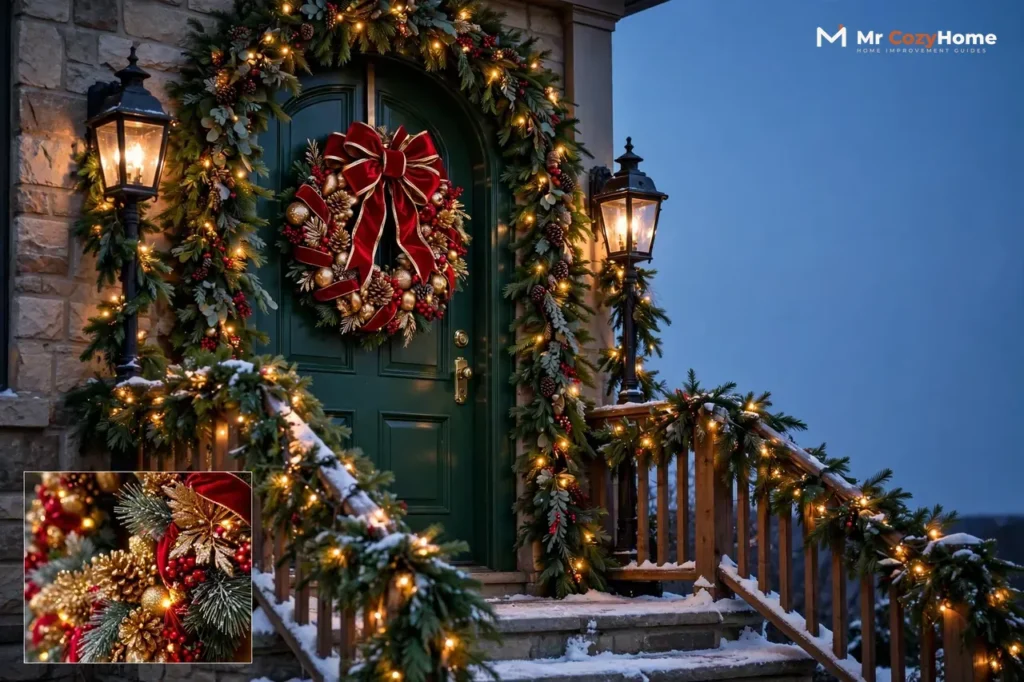
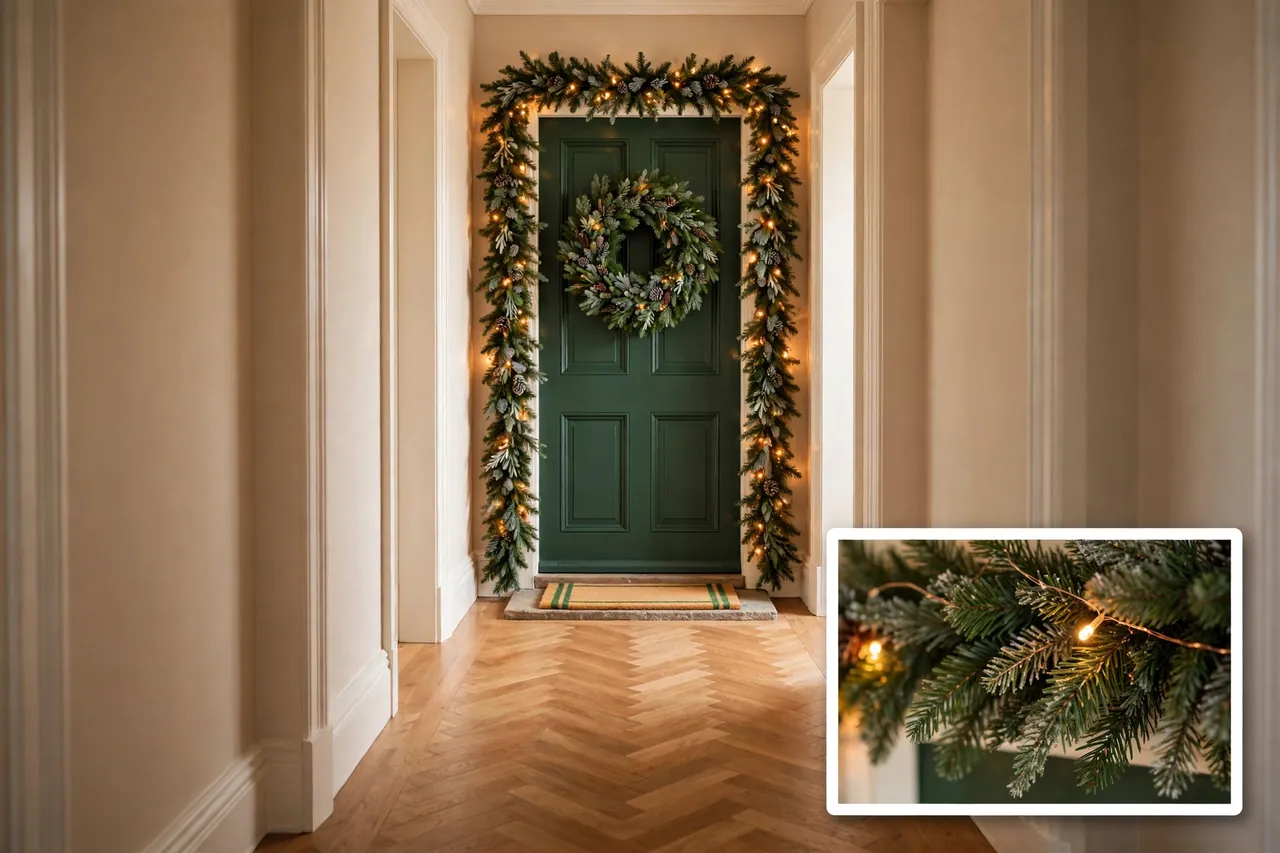
Classic themes also win when you execute them with unusual care. A deep green wreath with a single oversized bow, a door wrapped like a gift with crisp folds and a real ribbon, or a traditional red-and-gold scheme with matched ornaments all signal craft. For a front door at home, this restrained approach also ages well: it still looks beautiful in photos after the contest ends, and it pairs naturally with the rest of your porch.
To keep an elegant door from looking plain, add one rich texture. Felt, velvet ribbon, real greenery where rules allow it, or warm fairy lights give the eye something to linger on. One texture, used generously, beats five textures fighting for attention.
Character Scenes That Break Out of the Frame
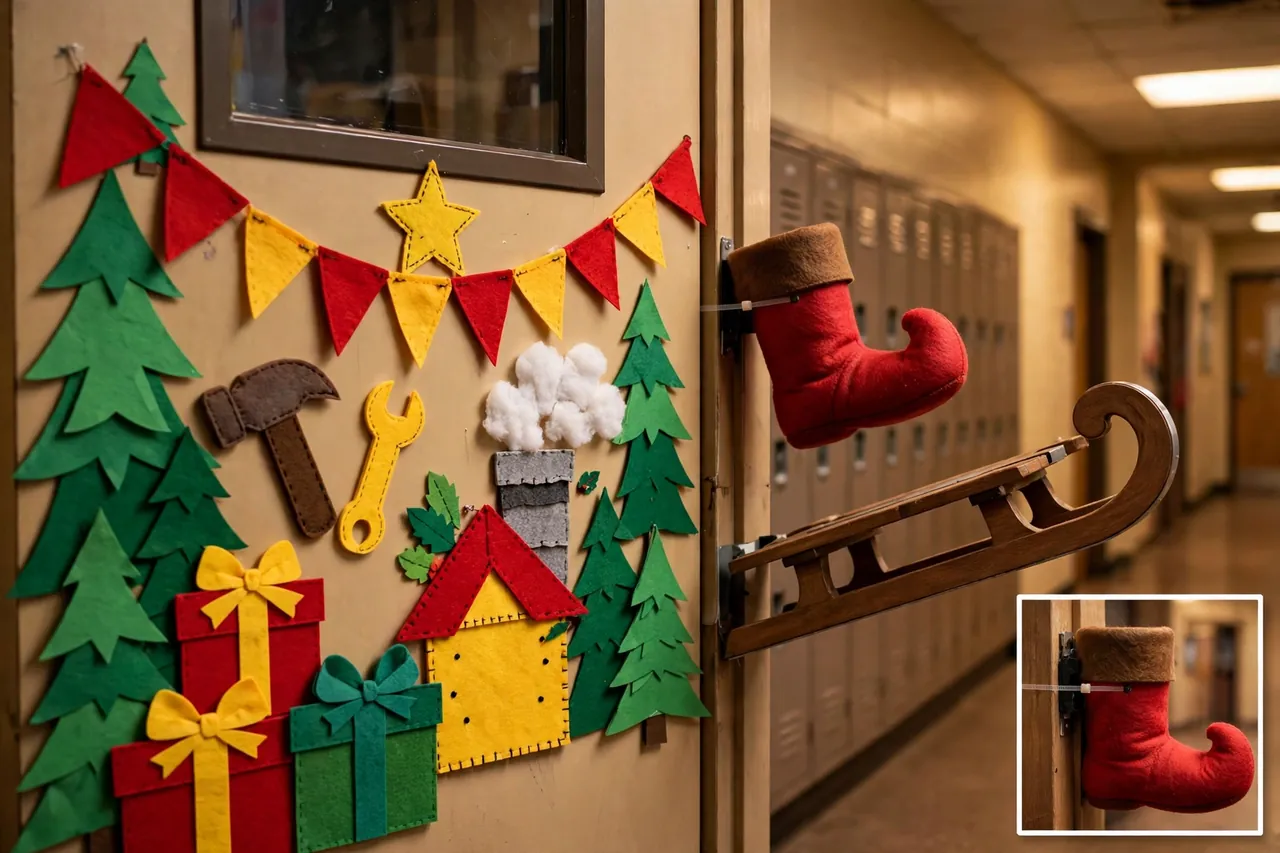
A flat picture on a door almost always loses to a scene that breaks the plane. When a hand, a boot, a sleigh runner, or a prop pushes past the frame, the door stops being a poster and starts being a moment. A green grump stealing a string of lights, a reindeer peeking around the edge, or an elf workshop spilling out of the doorway all use this trick.
You do not need licensed character art to pull this off. Build the pose from simple shapes: stuffed felt hands, construction-paper scenery, and a clear silhouette carry the joke. Judges reward the idea and the dimension, not a perfect copy of a movie character, and simple shapes also keep you clear of copyright worries at school or work.
Anchor every 3D piece well. A dangling boot that falls off during judging hurts more than a flat door ever would. Test each piece by opening and closing the door slowly, then by giving the frame a gentle shake. If anything wobbles, add a second anchor before judging day.
How to Plan a Winning Door Before You Buy Anything
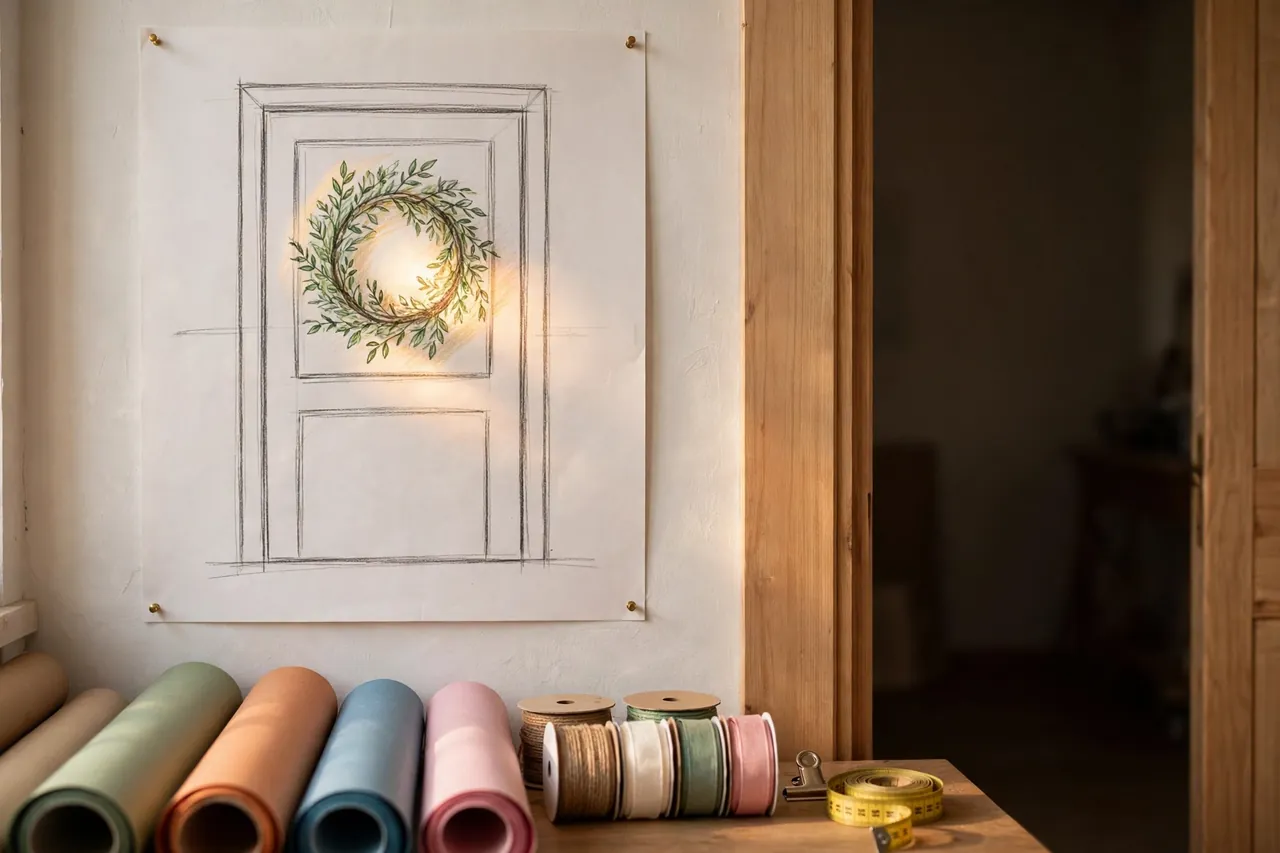
Winning doors start on paper, not in a craft store. Sketch your door as a rectangle, mark the handle, hinges, and any sign that must stay visible, and place your focal point at eye level or slightly above it. Judges view a door from several feet away, so details below knee height or above the frame rarely earn points.
Next, write one sentence that explains your door. Try this test: “Our door shows Santa’s workshop on the night the toy machine breaks down.” If you cannot finish that sentence, your idea is still too vague. If you can, every decoration either proves that sentence or leaves the project.
Set a simple timeline and work backward from judging day. Aim to finish a full day early so you have time for a photo test and a repair pass. Rushed doors show it: tape peels, letters tilt, and lights go dark at the worst moment.
- Read the rules and ask for the scorecard, the deadline, and the photo rules.
- Sketch the door, choose one theme, and list the materials you already own.
- Build the big shapes first, then add details, then lights, then lettering.
- Photograph the door from the hallway, fix what the photo reveals, and rest.
- Do a final check on judging morning: edges, lights, handle, and signs.
Materials That Photograph Well and Hold Up All Week
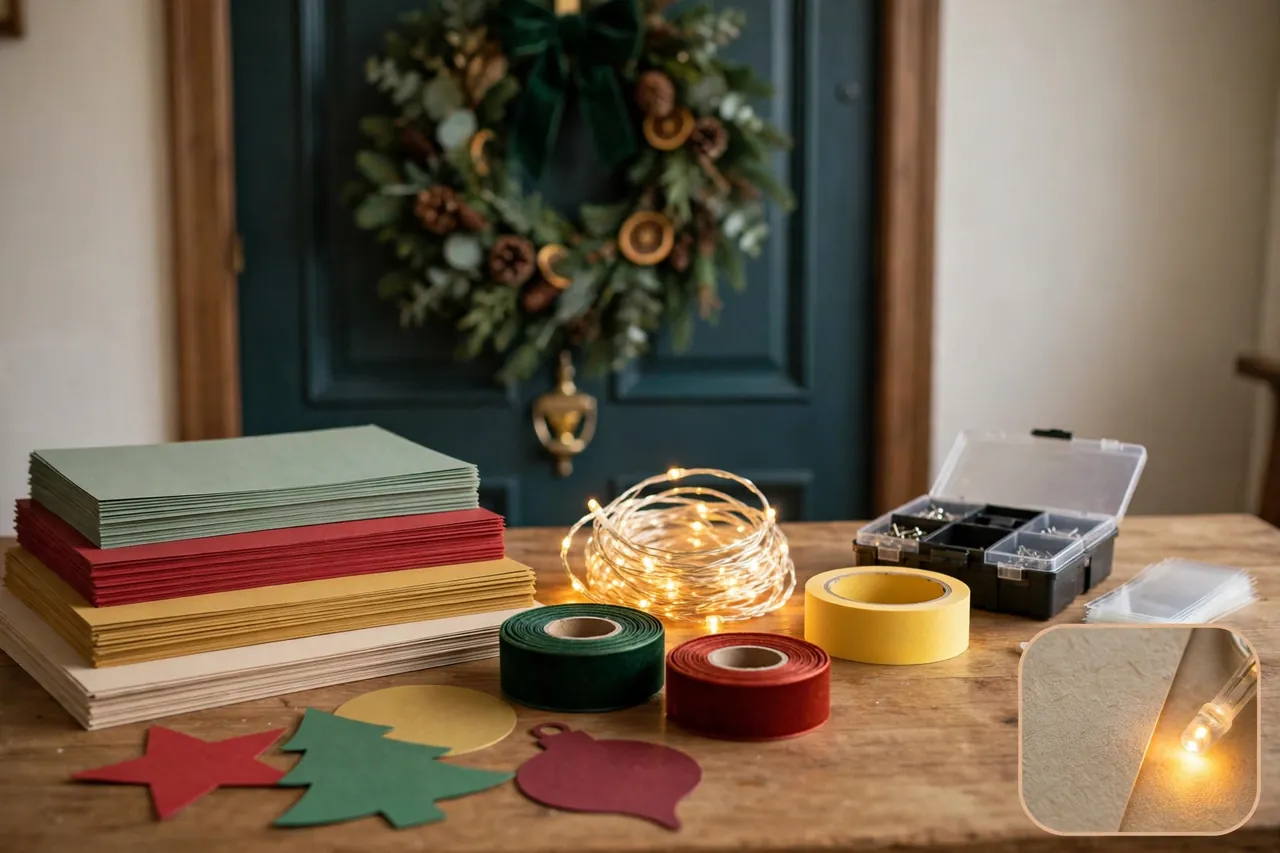
Contest doors live under hallway lights and phone cameras, so choose materials for how they look in a photo, not just up close. Matte paper photographs better than shiny wrapping paper, which glares under bright lights. Bold, simple shapes read better than tiny patterns that turn to mush in a photo. Battery-powered fairy lights add warmth and depth without cords snaking across a walkway.
Use painter’s tape or removable adhesive strips on office and school doors, and test a small patch first on painted or laminate surfaces. Many contests ban nails, screws, and permanent glue, and some ban anything that damages a fire-rated door. A door that leaves marks behind can lose points even after it wins applause.
Bring a small repair kit on judging day: extra tape, a few spare paper shapes, a marker that matches your lettering, and spare batteries. A five-minute fix before the judges arrive can save a door that shifted overnight. For a home contest, the same kit helps after wind, rain, or curious pets do their work.
How to Stand Out Without Breaking the Rules
Rules differ by setting, so read yours before you fall in love with an idea. Schools and offices commonly require door handles and closers to stay uncovered, exit signs to stay visible, and flame-retardant materials only. Some buildings also require approval for electrical decorations, and facilities staff may review entries before judging starts.
At home, the rules usually come from a homeowners association, a neighborhood contest sheet, or simple safety sense. Keep walkways clear, keep lights out of door jambs where cords can pinch, and never block a handle, a lock, or an exit path. A beautiful door that traps someone inside a room is not a winner; it is a hazard.
Standing out inside the rules takes more creativity, not less. If you cannot nail anything to the door, build a frame that hangs over the top. If you cannot use plug-in lights, cluster battery lights behind translucent paper for a glow. If your door must stay propped open, decorate the frame and the surrounding wall too, so your design stays visible while the door swings.
Check inclusivity as carefully as you check safety. In a shared school or workplace, secular winter themes, humor about shared routines, and scenes built around generosity travel well across a diverse group. If a theme could exclude or embarrass part of your audience, choose a warmer one. Judges notice doors that welcome everyone in.
School, Office, and Home Contests Play Differently
A school contest rewards student participation and classroom spirit. Let students make ornaments, write the door’s message, or claim one part of the scene each. Judges love a door where many hands show, and teachers love a project that fits into class time without chaos. Keep pieces large, sturdy, and easy to repair between classes.
An office contest rewards team identity and shared jokes. Put every teammate on the door, including remote teammates, with a name tag, a small photo, or a role in the scene. A sleigh roster, a workshop crew list, or a gift tag addressed from the whole team turns a decoration into evidence of teamwork, which many office scorecards reward directly.
A home or neighborhood contest rewards curb appeal and photography. Your door competes with porches, windows, and whole-house displays, so treat the doorway as one scene: door, frame, steps, and a mat that matches. Coordinate colors with your porch rather than competing with it, and test the look at dusk, when most neighbors and voters actually see it.
Team and Family Execution Tips That Keep It Fun
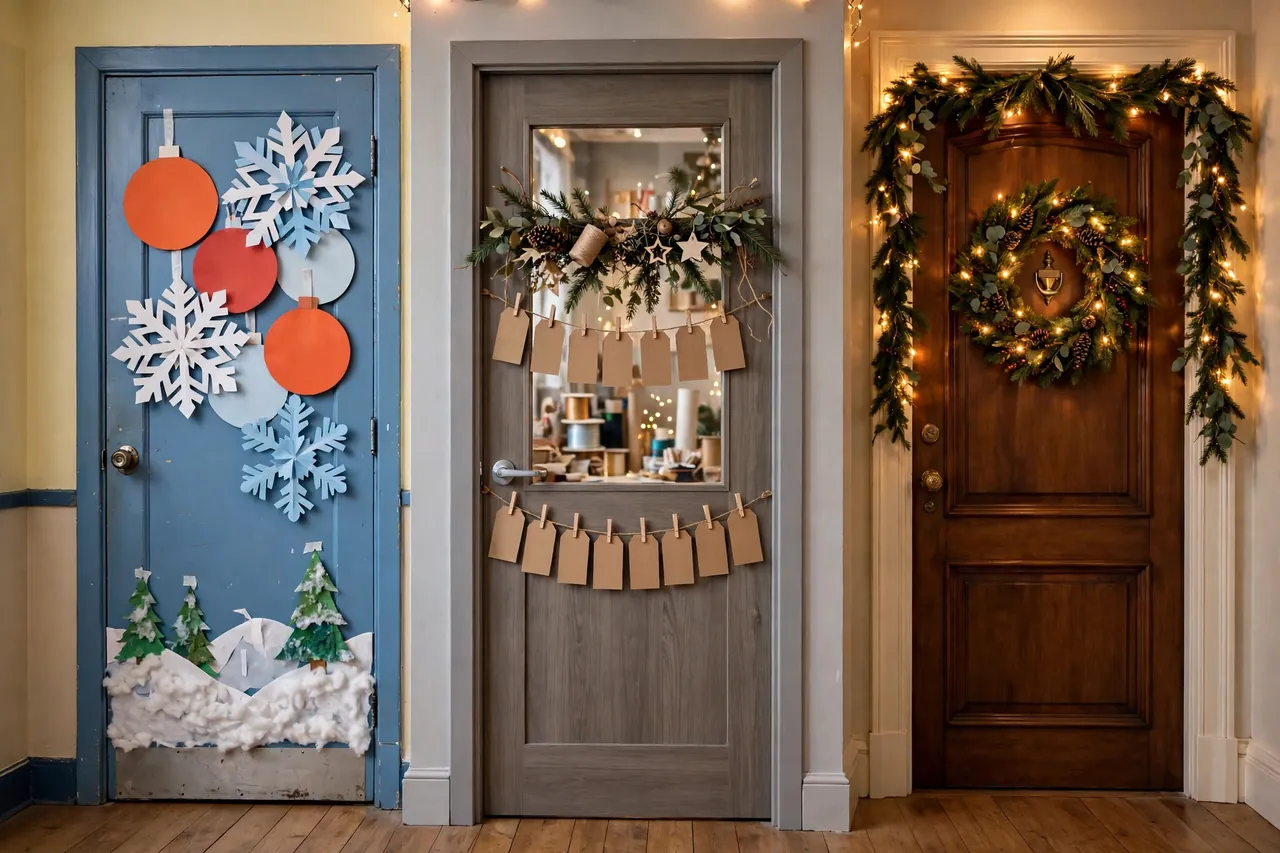
Assign roles before anyone picks up scissors. One person owns the big shapes, one owns lettering, one owns lights and finishing, and one owns the photo test. Small teams can double up roles, but no role should sit empty, because finishing and photography are where contests are actually won or lost.
Work in short blocks rather than one marathon session. Two focused hours beat a tired afternoon of crooked cuts and fraying tempers, especially with children or a busy office team. Stop while the energy is good, label pieces that still need work, and store fragile shapes flat so they survive until install day.
For families, give children a real job with a visible result: a snowflake row, a row of ornaments, or the welcome sign. A door children helped build photographs with pride behind it, and voters can feel that warmth even in a still photo. Keep sharp tools and hot glue with adults, and let children own the safe, creative steps.
Presentation and Photo Tips for Voting Contests
Many modern contests are won or lost in photos. Voters scroll quickly, so your photo must work at thumbnail size. Step back into the hallway, center the whole door in the frame, and shoot straight on rather than at an angle. Crooked angles make even a great door look careless.
Photograph in the light judges will actually use. If judging happens indoors, shoot under those hallway lights. If voting happens online in the evening, shoot at dusk with your lights on. Take one straight-on shot, one closer shot of your best detail, and one wider shot that shows the door in its hallway or porch setting.
Clean the frame before you shoot. Move trash cans, bags, and stray cords out of the shot, wipe fingerprints near the handle, and straighten anything that drooped. Then look at the photo on a phone screen, not just on a camera. If the theme reads on a small screen, it will read for voters too.
Contest guides echo the same advice: one idea done big, readable in two seconds, with depth and light, as summarized in KraftyLab’s Christmas contest ideas guide. If the contest allows a caption, write one sentence that names the idea and invites a smile, not a paragraph that explains the joke. For example, “Santa parked here, but the reindeer refused to wait in the cold.” A caption should spark curiosity, then let the photo do the rest.
Past-Winner Patterns and Mistakes That Lose Contests
Past winners share a pattern, and it has little to do with budget. They commit to one idea, they build it larger than expected, they add depth or light, and they finish cleanly. They also photograph well, because organizers and voters remember the doors they can picture later. When you study decorating a Christmas window, you see the same lesson: a glowing focal point and a tidy frame beat a scattered display.
Losing doors share a pattern too. Too many themes compete on one door. Lettering is too small to read from the hallway. Tape shows, corners peel, or a 3D piece sags. Lights die before judging, or a cord crosses a walkway and the entry faces a safety question. Each of these is fixable, and each is easier to fix the day before judging than on judging morning.
Do a hallway test before you declare the door done. Walk past it at normal speed, as a judge would, and note what you notice first, second, and third. If the first thing you notice is a flaw, fix that flaw first. If the first thing you notice is your focal point, you are ready.
Finally, plan the doorway as a whole, not just the door slab. A matching mat, a simple garland on the frame, and lights timed to switch on at dusk all lift a contest door without adding clutter. If you use plug-in lights outdoors, run them on a timer so they glow reliably each evening. A guide to automatic light switch timers can help you set that routine once and forget it, and a timer plug offers a simple option for a porch display.
Related Guides
Keep building your holiday display with these MrCozyHome guides. Themes for Christmas decoration will help you carry your winning door theme through the whole house, while Christmas decorating hallway ideas show how to make a narrow hallway work for your door instead of against it. For the outside view, decorated Xmas houses and Christmas light ideas offer porch and lighting plans that pair well with a contest door.
Frequently Asked Questions
How do you win an office Christmas door decorating contest?
Pick one idea and build it big so it reads from down the hall, add something three-dimensional and a few battery lights, and keep the edges clean. Put every teammate on the door where team effort counts, and photograph the finished door from the hallway before judging day.
What are good Christmas door decorating contest ideas for the office?
Funny doors like Santa stuck in the door or reindeer parking only get the most attention, classic doors like an ornament wreath win on craft, and team doors like a sleigh roster with everyone’s name win on team effort. Choose the style that fits your office culture and your scorecard.
What are funny Christmas door decorating ideas for work?
Try Santa’s legs dangling from the top of the frame, a giant out-of-office reply from Santa, a sleeping Santa with a do-not-disturb sign, or a naughty list starring the office printer. Keep jokes about things, not people, so the humor lands for everyone who sees the photo.
What materials can I use for an office door Christmas decorating contest?
Most contests stick to paper, ribbon, tape, and battery-powered lights, since office doors are often fire rated and cannot be nailed or drilled into. Always check your building’s specific list before you buy anything, and test removable tape on a small patch first.
Are there rules for office door decorating contests?
Yes, most buildings require door handles and closers to stay uncovered, exit signage to stay visible, flame-retardant materials only, and no electrical decorations without approval. Facilities staff usually review entries before judging starts, so ask early if your idea needs an exception.
Your Next Step Toward a Winning Door
Choose your one idea tonight, sketch it on paper, and check it against the rules and the scorecard. Then build big, finish clean, and photograph it from the hallway. A door decorating Christmas contest rewards clarity, craft, and joy, and you now have a plan for all three. Go make a door people stop for, photograph, and remember.