
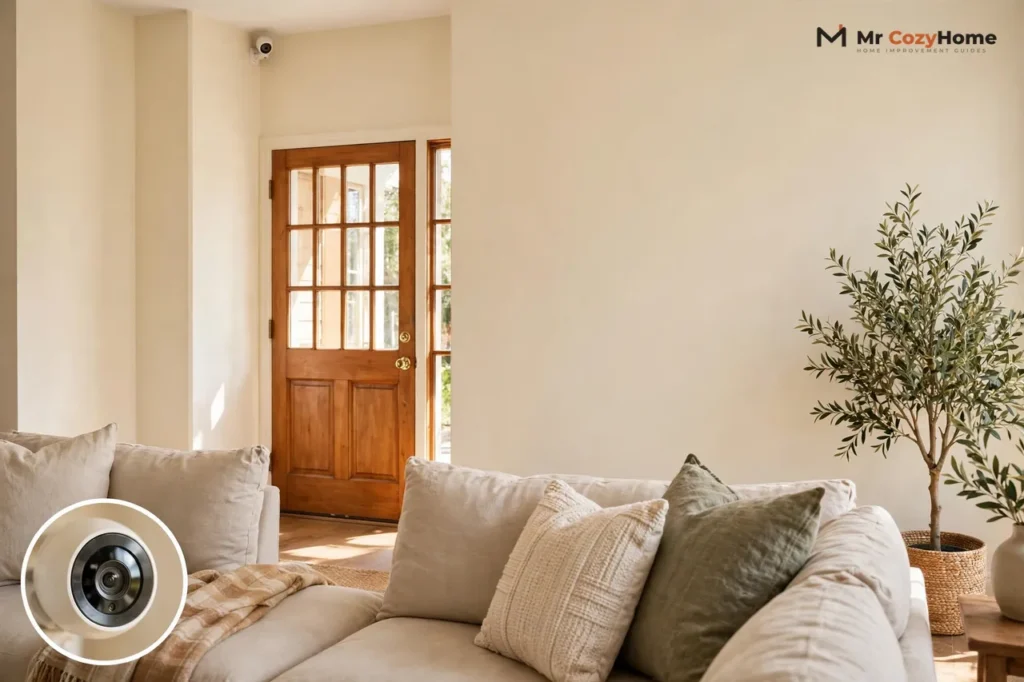
Yes, you can hide a security camera and still get clear, useful video. Pick a small camera, place it where it blends into the room or yard, and keep the lens, the motion sensor, and the night-vision lights fully clear. Hiding a security camera works best when the camera looks like it belongs in the spot, not when you bury it behind clutter.
This guide shows you how to hide a camera indoors and outdoors, how to blend it in plain sight, which cameras hide best, and where the law draws a hard line. You will also learn the small mistakes that give a hidden camera away, so you can avoid them on the first try.
Why Hide a Security Camera?
A visible camera can stop trouble before it starts. A person who sees a camera may turn around and leave. That is a real benefit, and it is one reason many homes show at least one camera in plain view.
A hidden camera plays a different role. It keeps watch when someone tries to avoid, cover, or break a visible camera, and it keeps your home looking like a home, not a shop full of black domes and wires. Many owners use both: one camera in plain view at the front door, and one discreet camera that covers the same spot from a second angle. Hidden cameras also help renters, since a small battery camera needs no drilling and leaves no holes in the wall.
But hiding a camera has a cost if you do it badly. A lens half-covered by a leaf gives you a blurry video of a leaf, and a camera tucked too deep inside a box may miss the door entirely. So the goal is never to hide the camera at any cost. The goal is to hide the body while the lens keeps a clear view.
The Golden Rule: Hide the Body, Never Block the Lens
Before you mount anything, test the view. Hold the camera in the spot you plan to use, open the live view on your phone, and walk through the scene the way a visitor would. Check the door, the path, and the driveway, then fix the camera in place and check the view again.
Keep three things clear at all times. First, the lens needs an open line of sight, with no fabric, mesh, glass, or leaf right in front of it. Second, the motion sensor needs the same open view, or it will miss movement. Third, the night-vision lights need space, because anything close to the lens can bounce the light back and wash out the picture. Test at night too, since a spot that looks perfect in daylight can fail after dark.
Think about height as well. Many guides suggest mounting outdoor cameras about 8 to 10 feet off the ground. That height keeps the camera out of easy reach, gives a wide view of faces and paths, and still sits low enough to catch detail. Indoors, a high shelf or the top of a bookcase often works the same way.
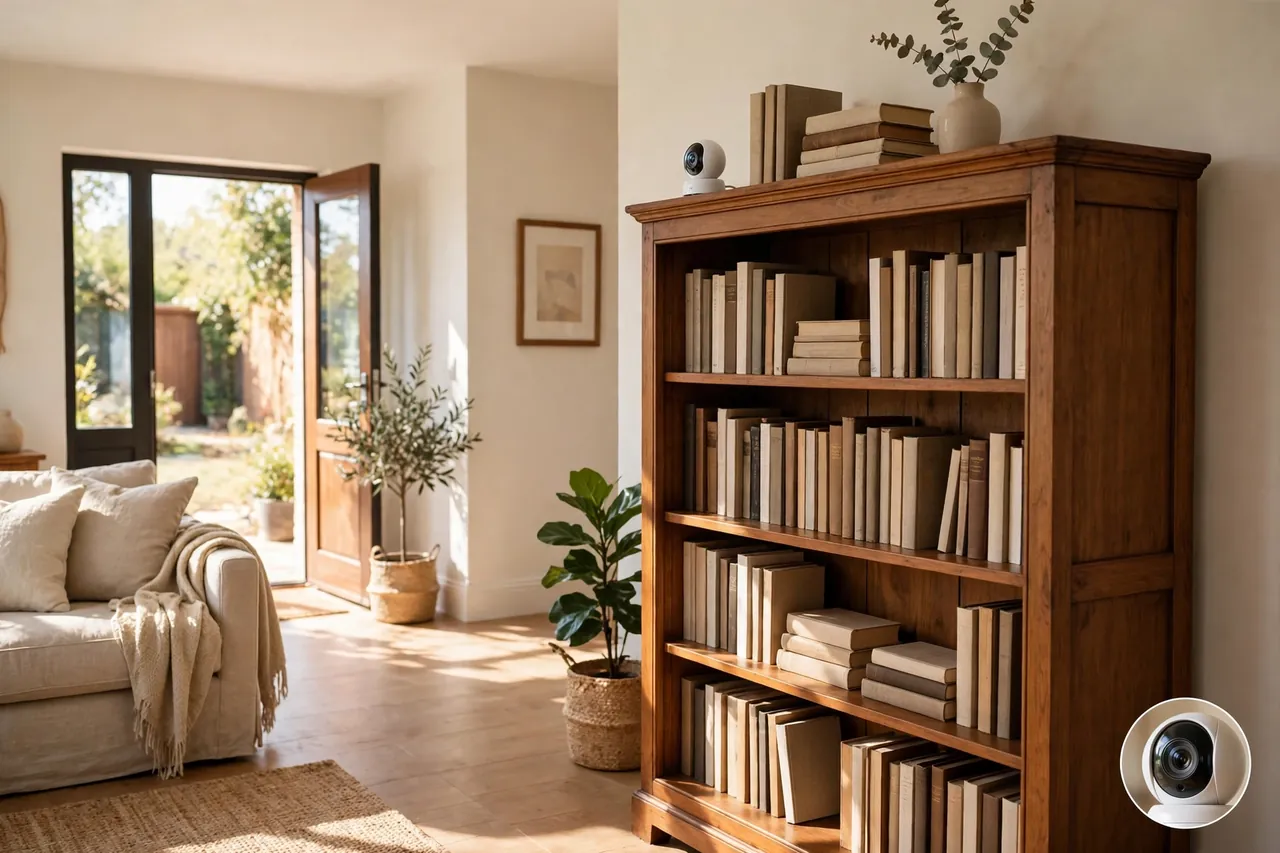
How to Hide a Security Camera Indoors
Indoor hiding works because our brains skip past familiar objects. A clock, a plant, or a row of books looks normal in a living room, so a camera body tucked into one of them does not draw a second look, as long as the lens has a clear hole or gap to see through. Stick to common rooms: the living room, the entryway, the kitchen, and the hallway. Never hide a camera in a bathroom, a guest bedroom, or any place where someone changes clothes or sleeps.
Hide a Camera Inside Everyday Objects
Everyday objects make the best indoor hiding spots because they already belong in the room. A small camera can sit inside a tissue box with a small hole cut for the lens, behind a row of books with the lens peeking through a gap, or inside a desk clock, a picture frame, or a lamp base. Pick an object that faces the room the way you need: a clock on a side table faces forward, while a picture frame on a shelf faces the room at a slight angle.
Do not use a working smoke detector as a hiding spot. A real smoke detector must stay clear and working, and some fire codes limit what you can do with one. If you like the high ceiling angle, use a small camera mounted near the ceiling corner instead, or a purpose-built disguised camera housing made for that job. Keep the object stable, too, so the camera cannot slide until the lens points at a wall.
Hide a Camera Behind Plants and on Shelves
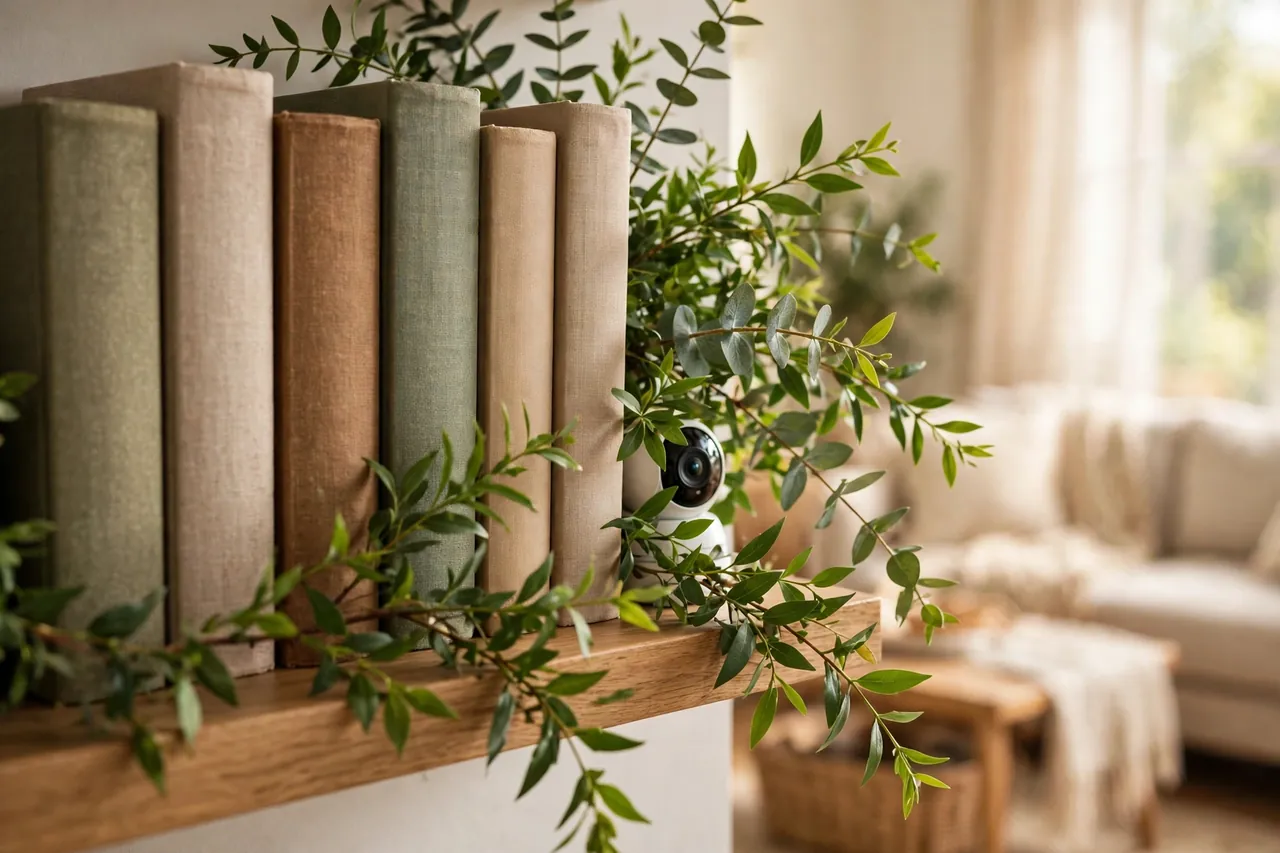
A plant with thick leaves can hide a small camera on a shelf, a side table, or a windowsill. Set the camera behind the leaves, then part two leaves just enough for the lens to see through. Step back and check the view on your phone, and if you see green edges in the frame, pull the leaves a little wider.
Plants grow and move, so a leaf that sits clear today may droop over the lens next week. Check the view once a week at first, and trim any leaf that creeps in front of the lens. Shelves give you the same trick with less upkeep: place the camera behind books, a vase, or a stack of boxes, and leave a narrow gap for the lens. High shelves work well because people rarely look up at them closely.
Watch out for glass. A camera behind a window or a glass cabinet door may look hidden, but glass can cause glare in daylight and block night vision at night, when infrared light bounces off the glass and turns the picture white. If you must shoot through glass, turn off night vision and use a light in the room instead.
Use High, Quiet Spots Indoors
High spots hide cameras well. The top of a tall bookcase, the corner where the ceiling meets the wall, and the underside of a high shelf all sit above normal eye level, and people look at eye level when they walk into a room. A high spot also gives a better view, since the camera can see the whole room, the door, and the path people walk.
Keep the mount simple. A small camera with a magnetic base can stick to a metal shelf bracket, and a camera with an adhesive mount can sit on the underside of a shelf with no drilling. Test the hold before you walk away: give the camera a gentle tug and make sure it stays put.
How to Hide a Security Camera Outdoors
Outdoor hiding is harder than indoor hiding. Rain, sun, wind, and cold all test the camera, and leaves grow over the lens. So every outdoor hiding spot must pass two tests: does the camera stay dry and safe, and does the lens stay clear? Use a weatherproof camera outdoors, or put the camera inside a weatherproof housing, and keep the charging port pointing down so rain cannot run into it.
Mount Under Eaves, Soffits, and Porch Ceilings
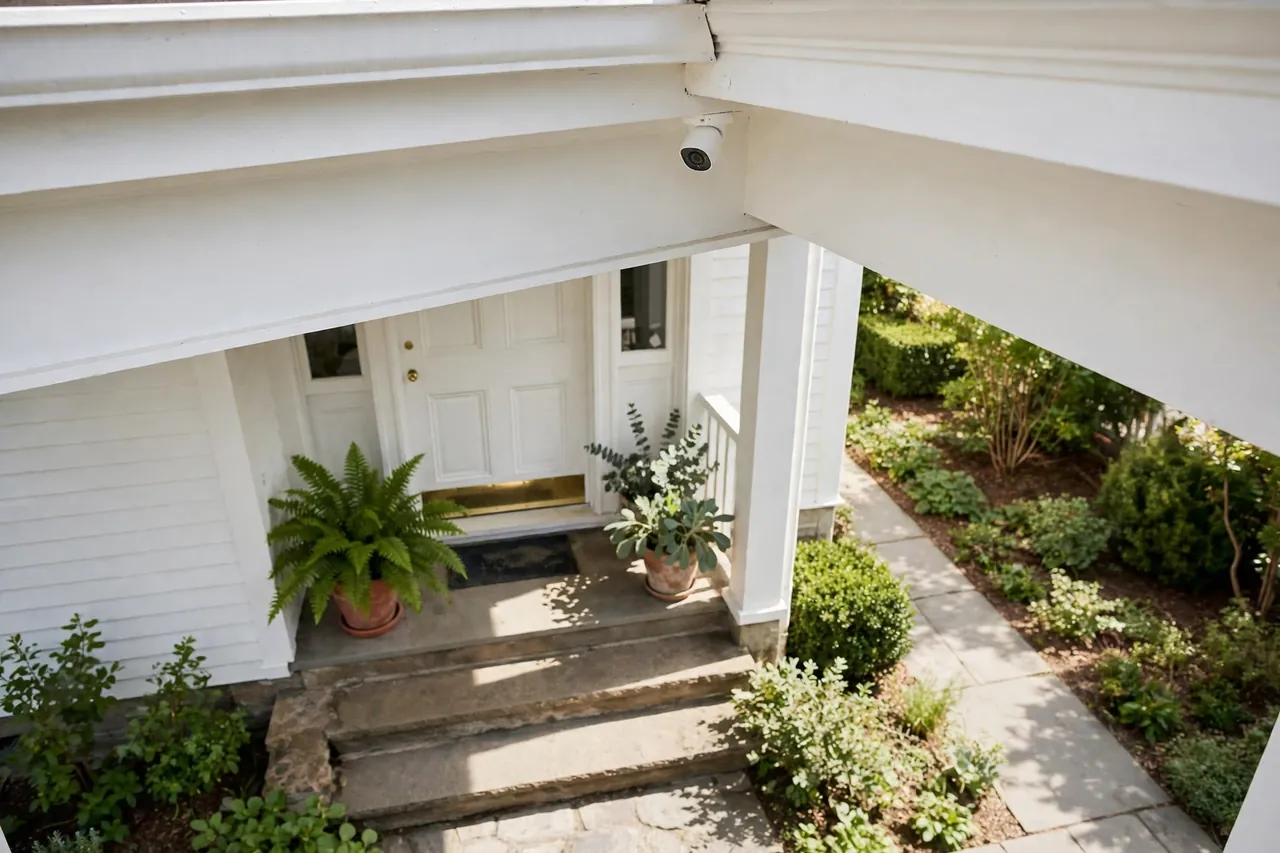
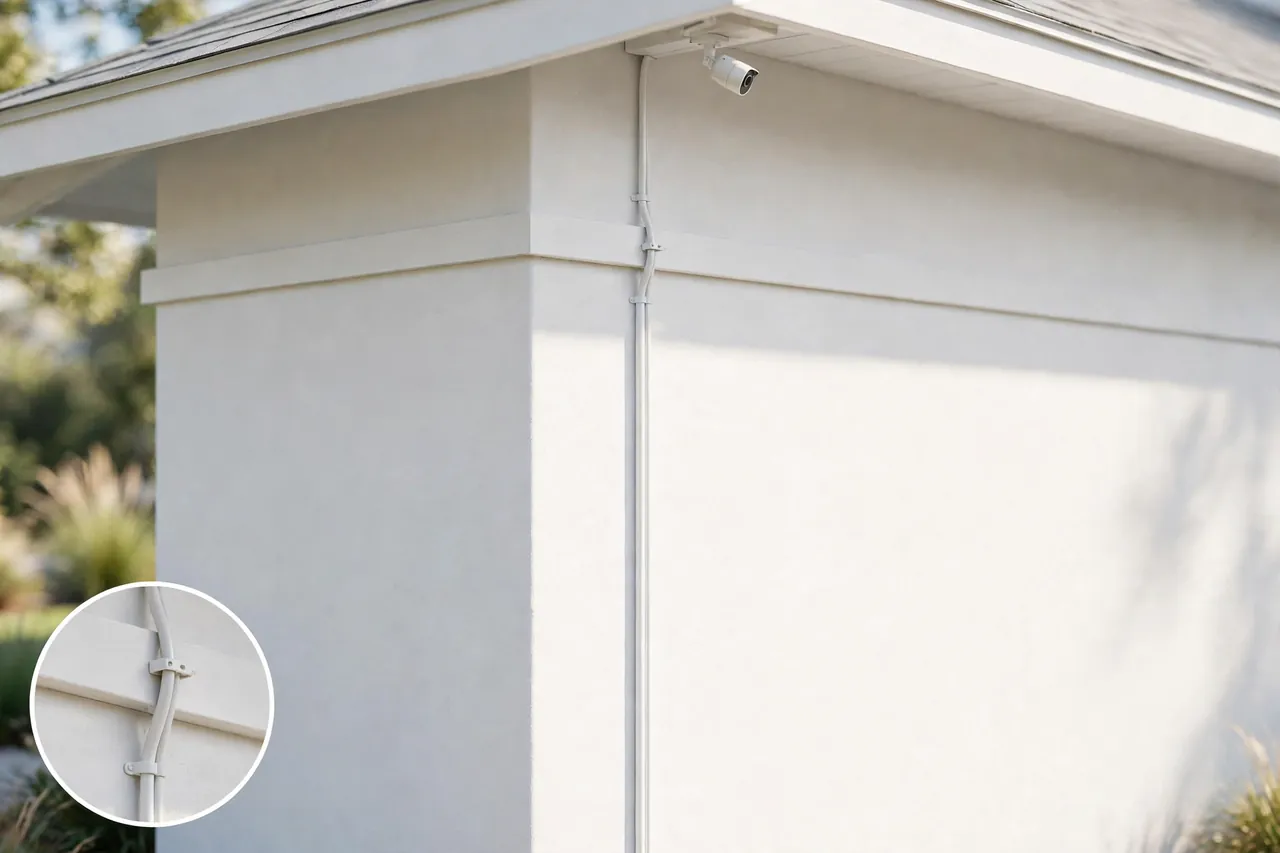
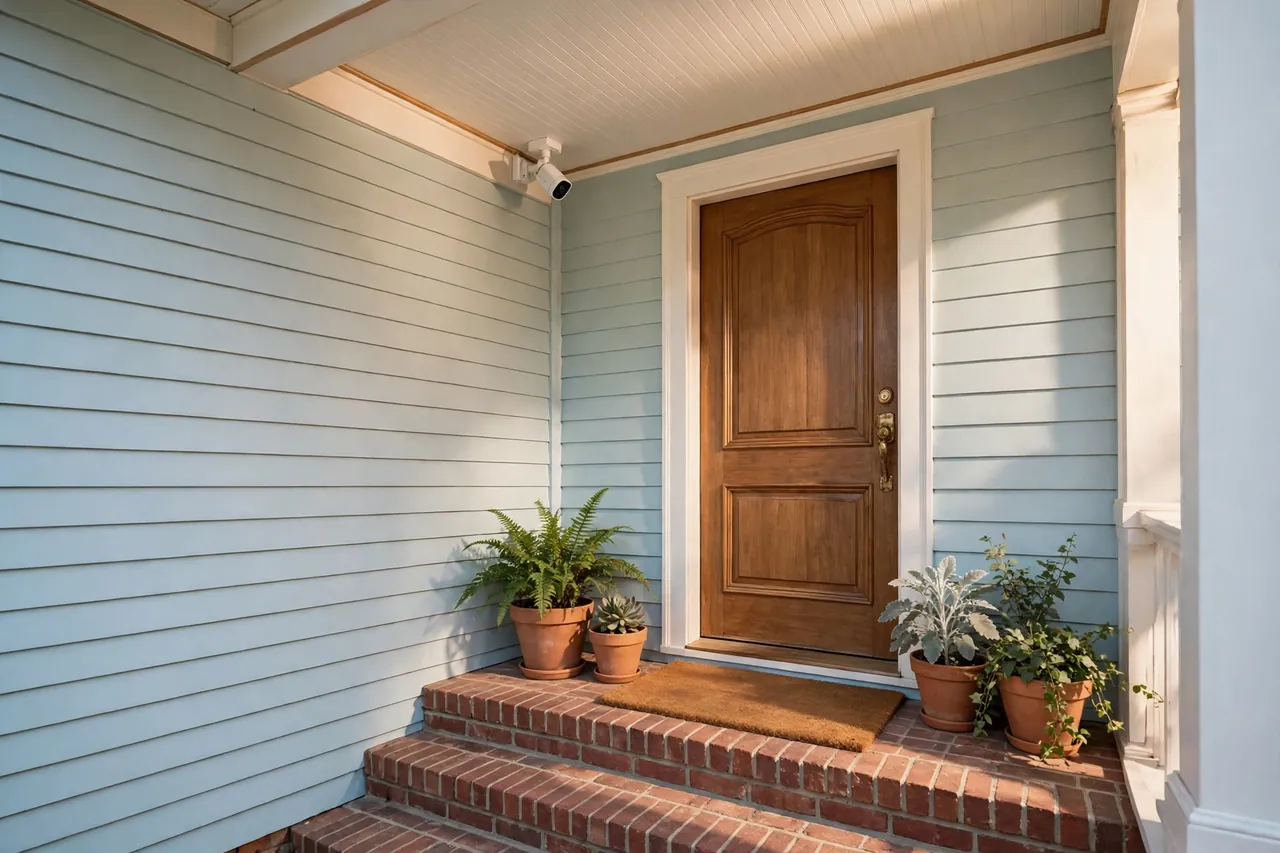
The eave, the soffit, and the porch ceiling are the easiest outdoor hiding spots. They sit high, they sit in shadow, and they already hold lights, vents, and trim that draw the eye away from a small camera. A white camera under a white eave almost disappears from the ground.
Mount the camera tight against the surface so it does not hang down and catch the eye, and run the cable along the trim or through the wall if you can. A loose cable hanging down the wall tells everyone exactly where the camera sits. From under the eave, the camera also looks down at the door, the steps, and the path, which catches faces as people walk up.
Hide a Camera in a Birdhouse
A birdhouse is a classic outdoor hiding spot because it looks like it belongs in a yard. Use a birdhouse with an enclosed front and a small round hole, place the camera inside, and let the lens look out through the entrance hole or a small hole cut in the side.
Pick a birdhouse big enough for the camera and its battery, with room for air to move so the camera does not overheat in summer sun. Mount it on a post, a tree, or the side of the house, facing the driveway, the gate, or the front path. Check the hole each month in spring and summer, when branches grow fast and can block the view. You can also buy a birdhouse made to hold a camera, with a ready-made lens opening and a mount inside.
Hide a Camera Behind Plants, Rocks, and Garden Decor
Thick shrubs, potted plants, and hanging plants can hide an outdoor camera the same way indoor plants do. Set the camera behind the leaves, part a small gap for the lens, and check the view on your phone. Prune any branch that drifts into the frame, and check again after storms and strong wind.
A faux rock made for garden use can hold a small camera at ground level. These rocks are hollow, weatherproof, and shaped to blend into a garden bed or lawn. Place one near a path or a gate, with the lens facing the spot you want to watch. Garden decor works too: a lantern, a large flowerpot, or a decorative post can hold a small camera without looking odd. Do not hide a camera inside a real light fixture that gets hot, since heat can damage the camera and its battery.
How to Blend a Camera in Plain Sight
Sometimes the best hiding spot is no hiding spot at all. A camera that matches its background can sit in plain sight and still go unnoticed, which works well on porches, fences, and walls where a full disguise would look odd.
Paint the camera housing to match the wall, trim, or fence behind it. Use a flat, non-glossy paint that matches the color and texture of the surface, and cover the lens and the sensors with tape before you paint. Remove the tape only when the paint is fully dry, and never paint the lens itself or the infrared lights.
Check the warranty first, since some makers void the warranty if you paint the camera. If that matters to you, use a removable camouflage skin or a silicone cover instead. These come in white, black, brown, and camo patterns, and you can peel them off when you move the camera. Match the mount and the screws too: a bright metal bracket on a dark wall draws the eye, while a bracket painted the same color as the wall fades into it.
Which Cameras Are Easiest to Hide?
Not every camera hides well. A big camera with a bright light and a thick cable will stand out wherever you put it, while a small camera with no wires and no bright lights can slip into a dozen spots. Use the table below to compare the main types before you buy.
Camera types at a glance
| Camera type | Why it hides well | Watch out for |
|---|---|---|
| Small battery camera | No wires, small body, easy to move | Needs charging, battery dies in cold weather |
| Mini or pinhole camera | Tiny body fits in books, boxes, and decor | Short range, weaker night vision, needs power |
| Disguised camera | Built into a clock, charger, or detector housing | Lower video quality on cheap models, fixed angle |
| Standard wireless camera | Good video, night vision, and motion alerts | Bigger body, needs a clear mount spot |
| Wired camera with monitor | Steady power, steady video, no Wi-Fi drops | Cables are hard to hide, mount is fixed |
A small battery-powered camera is the easiest starting point for most homes. It has no cable to hide, it moves in seconds, and it fits in a birdhouse, behind a plant, or under an eave. If you want a camera that records all day without charging, a wired camera suits you better, but plan the cable route first, because the cable is the hardest part to hide.
Look for at least 1080p video, so faces stay readable, plus night vision that works without a bright white light and motion alerts that tell you when something moves. A wide viewing angle helps too, because a hidden camera cannot always sit in the perfect spot. If you plan to hide a camera indoors, a wireless indoor security camera is often the simplest choice, since it needs no cable run through the room. For night use, check our guide to night-vision security cameras before you pick a model, because night vision is where many hidden cameras fail. And if your camera will sit far from your router, a security camera without WiFi may suit the spot better than a Wi-Fi model that drops its signal.
How to Hide Security Camera Cables and Lights
A hidden camera with a visible cable is not hidden. The cable draws the eye straight to the camera, and it gives a thief something to pull, so plan the cable route before you mount the camera. Go wireless first when you can: a battery camera has no power cable at all, which removes the biggest giveaway.
If you use a wired camera, run the cable through the wall, the attic, or a conduit that matches the trim. Outside, run cables behind trim, under eaves, or along gutter downspouts, and clip them tight so they do not sag. Paint the conduit the same color as the wall, since a white conduit on a white wall fades away while a black cable on a white wall stands out from across the yard.
Lights give cameras away at night. Many cameras use infrared lights for night vision, and those lights can glow faint red in the dark. That glow is normal, but it can reveal the camera’s spot, so look for a camera with hidden infrared lights, or place the camera so the glow faces away from the street. Turn off the camera’s status light too, if the settings allow it: a small blinking light is easy to spot in a dark room.
Keep the footage safe as well. A hidden camera that gets stolen takes its footage with it unless the video is stored somewhere else. A cloud camera stores video online, so the footage stays safe even if someone takes the camera. A camera with a monitor and local storage can do the same job at home; see our guide to a security camera with a monitor if you want to watch and store video without a monthly cloud fee.
Where You Must Never Hide a Camera: Legal and Ethical Lines
Hiding a camera is legal in many cases, but only within clear limits. The key test in the United States is called reasonable expectation of privacy. If a person can reasonably expect to be alone and unseen, you cannot record them there. This section gives general guidance, not legal advice. Laws vary by state, and a few states have stricter rules than the rest, so check your state law or talk to a local attorney if you are unsure.
Never Record in Bathrooms or Bedrooms
Never place a camera in a bathroom, a shower room, a changing area, or a bedroom used by a guest. These are places where people expect full privacy, and recording there can be a crime. SafeHome.org states the rule plainly: a camera in a bathroom is an invasion of privacy, even in your own house.
The same rule covers a bedroom where a guest, a babysitter, or a worker sleeps or changes clothes. Your own bedroom is different if only you use it, but the moment someone else sleeps there, treat it as off-limits. A baby monitor in an infant’s room is fine for watching your own child, but warn any caregiver who spends time in that room that a camera is running.
Do not hide a camera in a rental unit you own and rent out. A landlord cannot place cameras inside a tenant’s home, in a shared bathroom, or in any spot that looks into a tenant’s rooms. Airbnb also bans all indoor security cameras in listings worldwide, whether they are disclosed or not, so if you host guests, follow the platform’s rules and your local law, and never hide a camera in a space guests use.
Respect Your Neighbors’ Privacy Outdoors
Your yard is your space, but your neighbor’s windows are not. You can aim a camera at your own driveway, porch, gate, and yard, and you can catch a small bit of a neighbor’s yard or the street at the edge of the frame, which is normal for a wide-angle camera.
You cannot aim a camera into a neighbor’s bedroom, bathroom, or kitchen window, and you cannot point a camera at a neighbor’s yard just to watch them. If your camera’s view covers a neighbor’s private space, angle it down, narrow the view, or use a privacy zone in the camera’s app to block that part of the frame. Talk to your neighbor if your camera covers part of their property: a short, honest chat often prevents a complaint later.
If you want a camera that only records when something moves, so it does not film the street all day, read our guide to an outdoor motion-activated camera. Motion recording cuts down on footage of neighbors passing by and saves battery and storage too.
Audio Recording Has Stricter Rules Than Video
Video and audio follow different laws. Video-only recording in a common area of your own home is legal in most states, but audio recording is far stricter. Federal wiretapping law bars intercepting a conversation you are not part of, and about a dozen states require every person in the conversation to agree before you record sound, as LegalClarity explains in its guide to home surveillance law.
That means a hidden camera with its microphone on can break the law even when the video alone would be fine. The safest choice is to turn the microphone off unless you know your state’s audio rules and you have the consent you need. Our guide to security cameras with audio covers the audio-consent rules in full, including the list of all-party consent states. Read it before you switch a microphone on, and do not rely on this article for audio law.
Tell People When It Is the Right Thing to Do
In most states, you do not have to tell guests about a video-only camera in a common area of your own home. But telling them is still the smarter choice in many cases. A guest who finds a hidden camera feels spied on, even if the camera was legal, while a guest who was told about the camera feels respected.
Tell babysitters, cleaners, and workers that cameras are running in common areas. It protects them, and it protects you if a dispute ever comes up. A short note at the door or a quick word when they arrive is enough. Never use a hidden camera to spy on someone, and never share or post footage of other people without a good reason. SafeHome.org warns that sharing footage beyond the police can land you in trouble, even when the recording itself was legal.
Mistakes That Give a Hidden Camera Away
Most hidden cameras fail for small, fixable reasons. Run through this list before you call the job done.
- A blocked lens. A leaf, a curtain, or a box edge sits in front of the lens. Check the live view and clear the frame.
- A glowing light. A status light blinks, or infrared lights glow red at night. Turn the status light off and test the view after dark.
- A loose cable. A cable hangs down the wall or across a shelf. Clip it tight, run it behind trim, or switch to a battery camera.
- A camera that is too low. A camera at eye level sits right where people look. Move it higher, to a shelf or a ceiling corner.
- A new object that does not belong. A birdhouse appears in a yard with no birds, or a tissue box appears in a room with no tissues. Pick hiding spots that already fit the room.
- A camera that moves. Wind, a pet, or a bump shifts the camera until it films a wall. Fix the camera firmly and check it after storms.
- Dead batteries. A battery camera dies quietly and stops recording. Set a charging routine, or use a camera with a solar panel outdoors.
- Weak Wi-Fi. A camera far from the router drops its signal and misses events. Test the signal in the spot, or use a camera that stores video locally without Wi-Fi.
Fix one mistake at a time, then test the view again. A camera that passes this list is ready to stay in place.
Related Guides
If you are building a full home camera setup, these guides walk you through the next steps. Start with a wireless indoor security camera for rooms inside the house, then add an outdoor motion-activated camera for the yard and driveway. If you want video without a monthly fee, our guide to a security camera without a subscription shows how local storage works, and a smart key lock adds a second layer of protection at the door itself.
Frequently Asked Questions
Is it legal to hide a CCTV camera in my home?
Yes, in most places, as long as you record only in areas where people do not have a reasonable expectation of privacy, like living rooms or entryways. Bathrooms and bedrooms are off-limits. Audio recording has stricter rules, so check your state law before you turn a microphone on.
What is the best camera to hide indoors?
Pinhole cameras and disguised cameras, like those built into clocks or smoke detector housings, are the top picks for indoor concealment. They are small, functional, and easy to blend in. For most homes, though, a small battery camera is simpler, since it needs no wires and moves in seconds.
Can I hide a security camera outside my house?
Absolutely. Birdhouses, outdoor light fixtures, eaves, and thick plants are all great outdoor hiding spots. Just make sure the camera is weatherproof and the lens stays clear. Check the view after rain and wind, and prune any branch that grows into the frame.
Will hiding a camera affect video quality?
It can, if the lens is partly blocked. Always test the camera’s view before you fix it in place. Avoid putting fabric, mesh, or glass too close to the lens, and test at night too, because infrared light can bounce off nearby objects and wash out the picture.
How do I stop someone from finding my hidden camera?
Use natural or architectural hiding spots, match the camera color to its surroundings, keep wiring hidden, and avoid spots that people usually scan, like eye level on walls. Turn off the status light, fix the camera firmly, and check the view often so a shifted camera does not give itself away.
Disclaimer: This guide gives general information about hiding security cameras, not legal advice. Homes, state laws, and camera models vary, so check your local law before you install a camera, and ask a qualified professional or attorney if you are unsure. Never place a camera where someone expects privacy.
Start with one camera and one spot. Pick the door or room that matters most, hide the camera well, test the view in daylight and at night, and check the legal rules for your state. Once that first camera works, add the next one the same way, and your home will stay protected without looking like a security post.


