
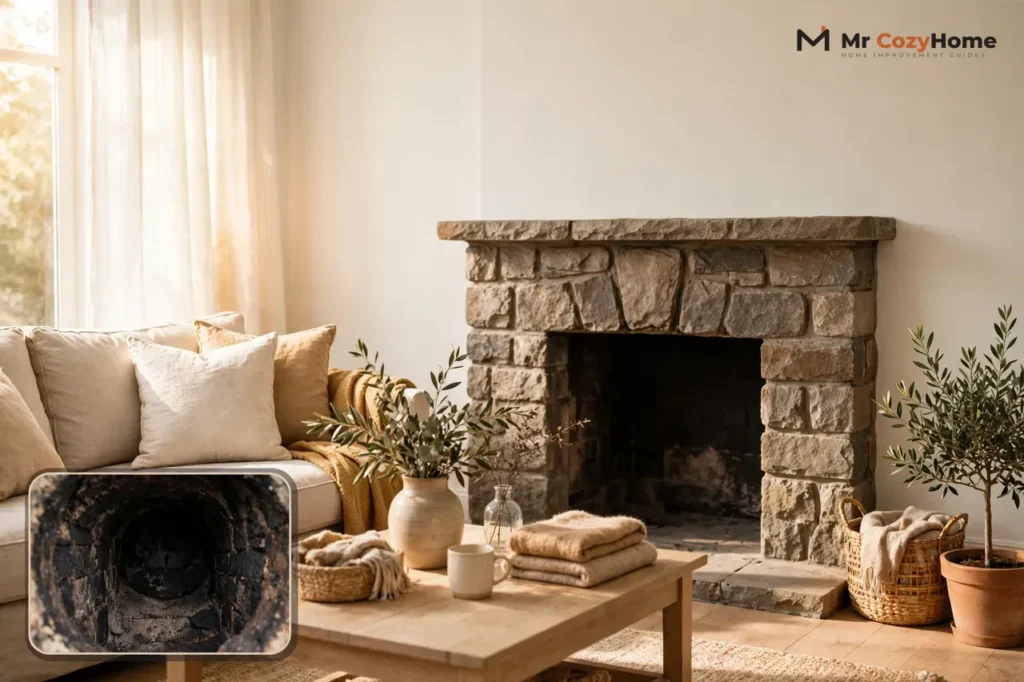
A smell from your chimney is almost always creosote and soot in the flue, and the Chimney Safety Institute of America (CSIA) says a good sweeping helps but rarely fixes it alone — because the real problem is usually air being pulled down the chimney into your home.
One smell breaks that rule completely. If you smell rotten eggs or sulfur near a gas fireplace or furnace, leave the house at once and call your gas company or 911 from outside. That smell is added to natural gas on purpose so a leak can be found fast, and it is the only chimney-area smell that means get out now.
The rest of the smells — smoky, musty, rotten — each point to a different cause, and the fix only works when it matches the cause. One item on the list below needs no repair at all, just a change in how your house breathes. This guide walks through every cause, a 15-minute diagnosis, and the fix for each one.
What Causes a Smell From Your Chimney?
A smell from your chimney comes from one of six sources: creosote and soot, moisture, animals or debris, air flowing down the flue, a gas leak, or a blocked flue pushing smoke back inside. The smell itself is the clue — smoky means deposits, musty means water, rotten means something dead or decaying, and sulfur means gas.
| What it smells like | Likely cause | When it is strongest |
|---|---|---|
| Smoky, campfire, or hot asphalt | Creosote and soot in the flue | Hot, humid days and summer |
| Musty or wet ash | Rain or moisture inside the chimney | After rain or a storm |
| Rotten or decaying | Animal, nest, or rotting leaves | Gets worse day by day |
| Sulfur or rotten eggs | Natural gas leak | Any time, near a gas appliance |
| Smoke while a fire is burning | Cold flue, blockage, or negative pressure | First fire of the season |
More than one cause can be at work at the same time. A chimney with heavy creosote and a cracked cap, for example, will smell smoky on a dry day and musty after rain. Match the fix to the smell, not to the first guess. That is why the diagnosis section below comes before the fixes.
Creosote and Soot: The Smoky, Campfire Smell
Creosote is the sticky, tar-like residue left on the flue walls when wood smoke cools before it leaves the chimney. It smells like a stale campfire or hot asphalt, and the smell grows stronger on hot, humid days, when moisture wakes up the compounds trapped in the residue.
Slow, cool fires make the most creosote, because the smoke cools and condenses on the flue walls instead of escaping. Wet or unseasoned wood makes it worse for the same reason — the fire spends its heat boiling water out of the wood instead of burning clean. The Chimney Safety Institute of America (CSIA) says the smell is usually worst in summer, when the humidity is high and the air conditioner is running, and calls that combination the perfect storm for bringing out the smell.
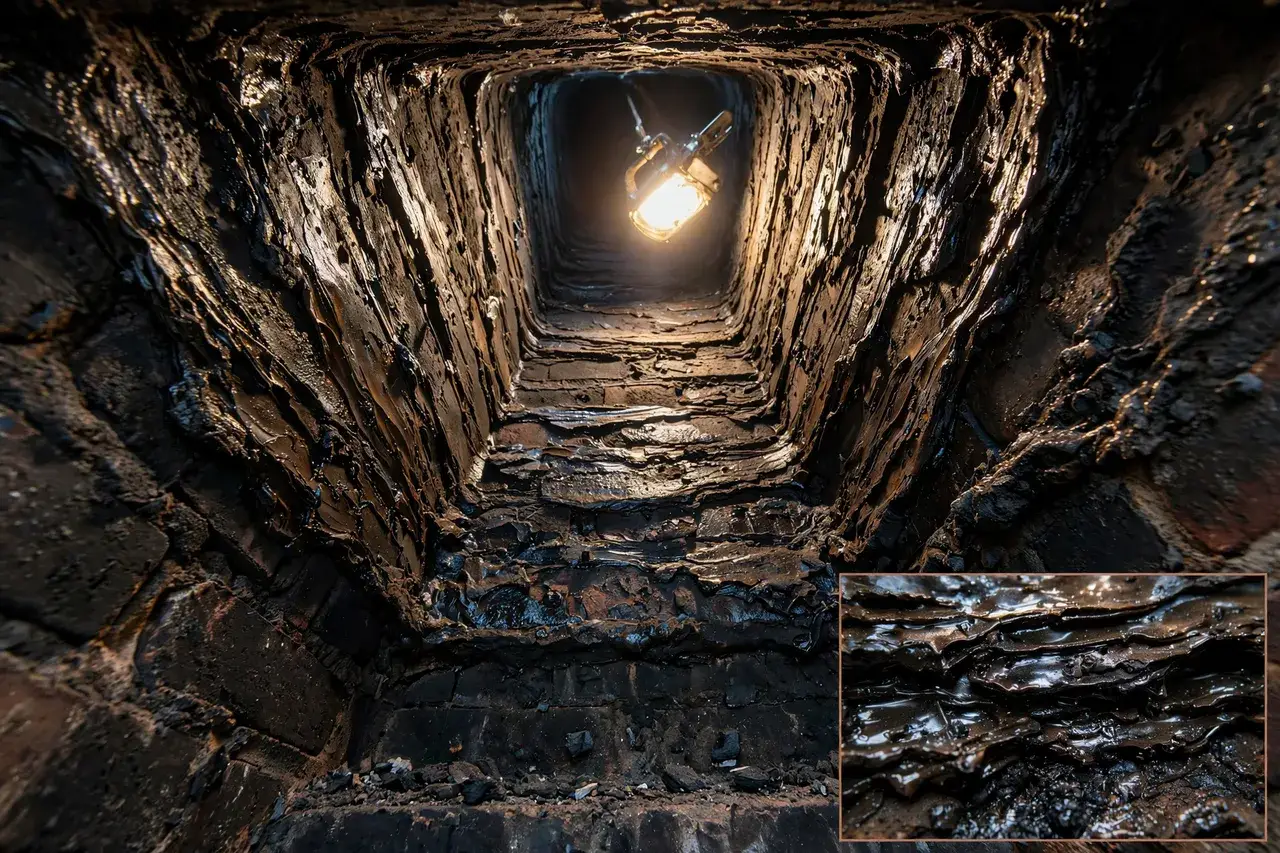
Creosote is more than a smell problem. It is highly flammable, and a thick layer can catch fire inside the chimney. The CSIA follows NFPA 211, the national standard, which says masonry fireplaces should be swept when soot buildup reaches 1/8 inch, and sooner if there is glazed creosote. Sweep at 1/8 inch of soot buildup, sooner if the creosote looks glazed or shiny.
A sweep removes the bulk of the smell’s fuel, and our chimney sweep cost guide shows what a cleaning costs and how to book it cheaper. But the CSIA is honest about the limit: a good sweeping will help, but it will not usually solve the problem completely, because the smell also needs air moving down the flue to reach your room. If the smell stays strong after a sweep, the next section to check is the airflow one. That is where the real fix usually lives.
Moisture and Rain: The Musty, Wet-Ash Smell
A musty or wet-ash smell after rain means water is getting into the chimney and mixing with soot. Rain enters through a missing or cracked cap, a cracked crown, worn flashing, or open mortar joints, and wet soot smells far stronger than dry soot.
Water does more than make a smell. It rusts the metal damper, softens mortar, and feeds mold and mildew on damp soot and masonry. Look for the signs that come with it: water stains on the brick around the firebox, a rusty damper that sticks, or damp patches on the wall near the chimney. If you see any of those, the water entry is real, and it is getting worse with every storm.
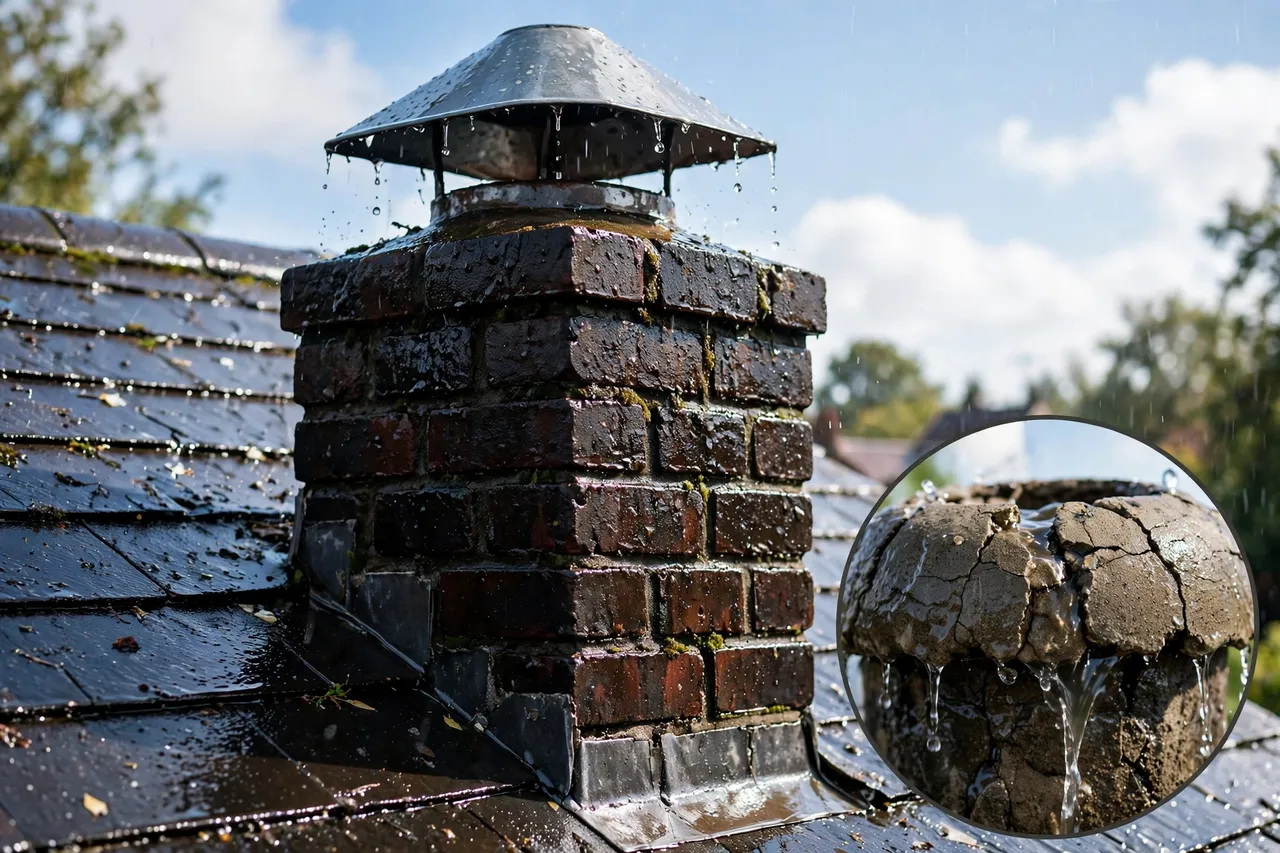
The fix is to stop the water, not to cover the smell. A sound cap keeps rain out of the flue itself, and our chimney cap replacement guide shows what a new cap costs and when a repair is enough. For a cracked crown or worn flashing, read our chimney cap repair guide, and if you want to know what sits on top of the flue, see our chimney topper guide. Fix the water entry first, or the musty smell will come back after every rain.
Animals, Leaves, and Debris: The Rotten Smell
A rotten or decaying smell that gets worse day by day usually means something is in the flue: a bird nest, a pile of rotting leaves, or an animal that got in and died. Birds, squirrels, and raccoons treat an open chimney as a safe shelter, especially in spring.
Nests and debris do two kinds of damage at once. They block the airflow, so smoke cannot leave properly when you light a fire, and they rot in place, releasing a strong smell that travels straight down the open flue into your living room. You may also hear scratching or chirping, or see twigs and nesting material in the firebox.
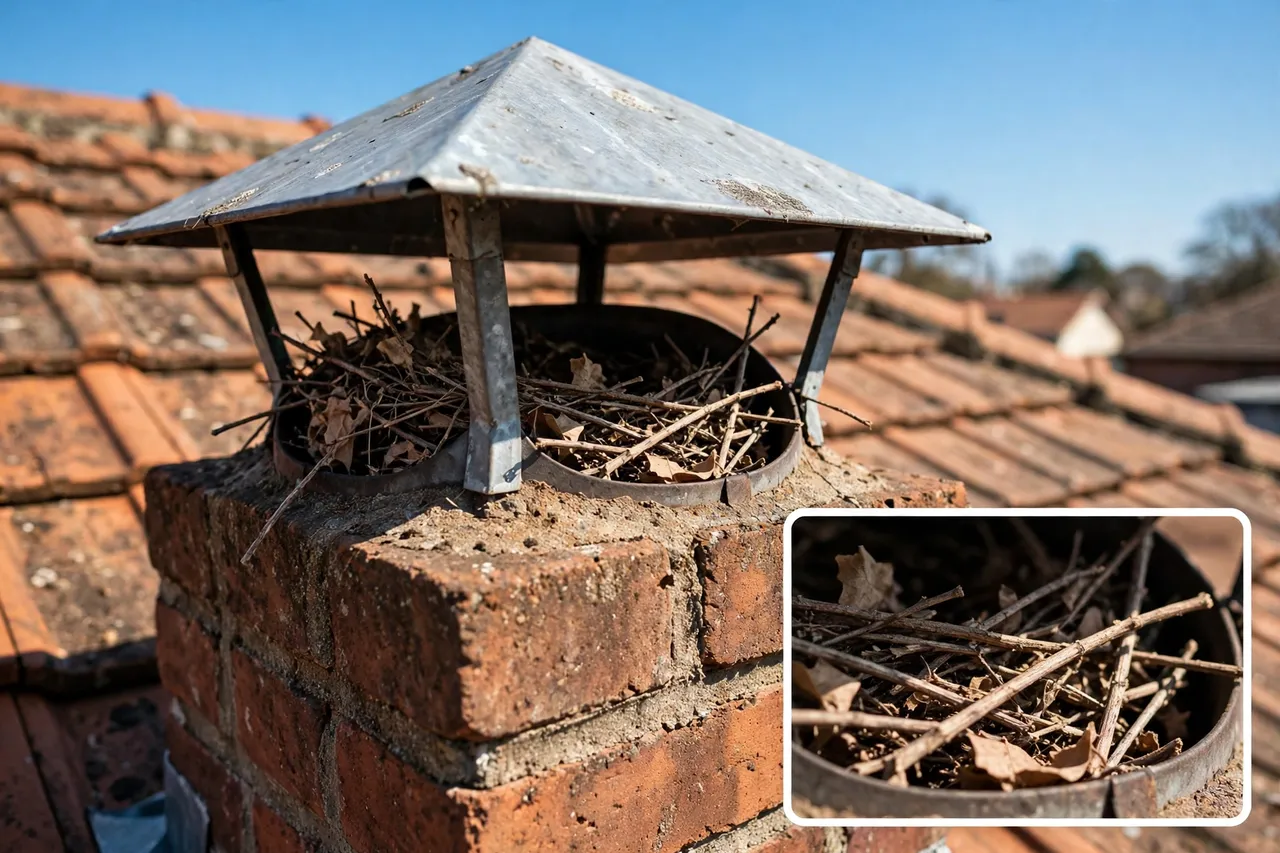
Do not try to remove a wild animal yourself. A trapped animal can bite, and a dead one needs careful removal and cleaning so the smell and the germs go with it. Never try to remove a wild animal from your chimney yourself — call a chimney sweep or a pest-control professional. Once the flue is clear, a cap with a mesh screen keeps animals and leaves out for good.
Negative Pressure and Downdrafts: Why the Smell Comes Inside
Negative pressure means your house is pulling air in faster than it can replace it, and the chimney becomes the easiest way in. Exhaust fans, a range hood, a clothes dryer, and a tight, well-sealed house can all pull air down the flue, carrying the smell of creosote with it.
This is the stack effect at work. Warm air rises and escapes through the upper levels of the house, and the lower levels pull in replacement air from wherever they can. In summer the effect flips in a way that makes the smell worse: warm, humid air sinks down the cold flue, picks up the creosote smell, and drops it into the living room. The CSIA says the smell is worst when the humidity is high and the air conditioner is on, because the AC pulls even more air through the house.
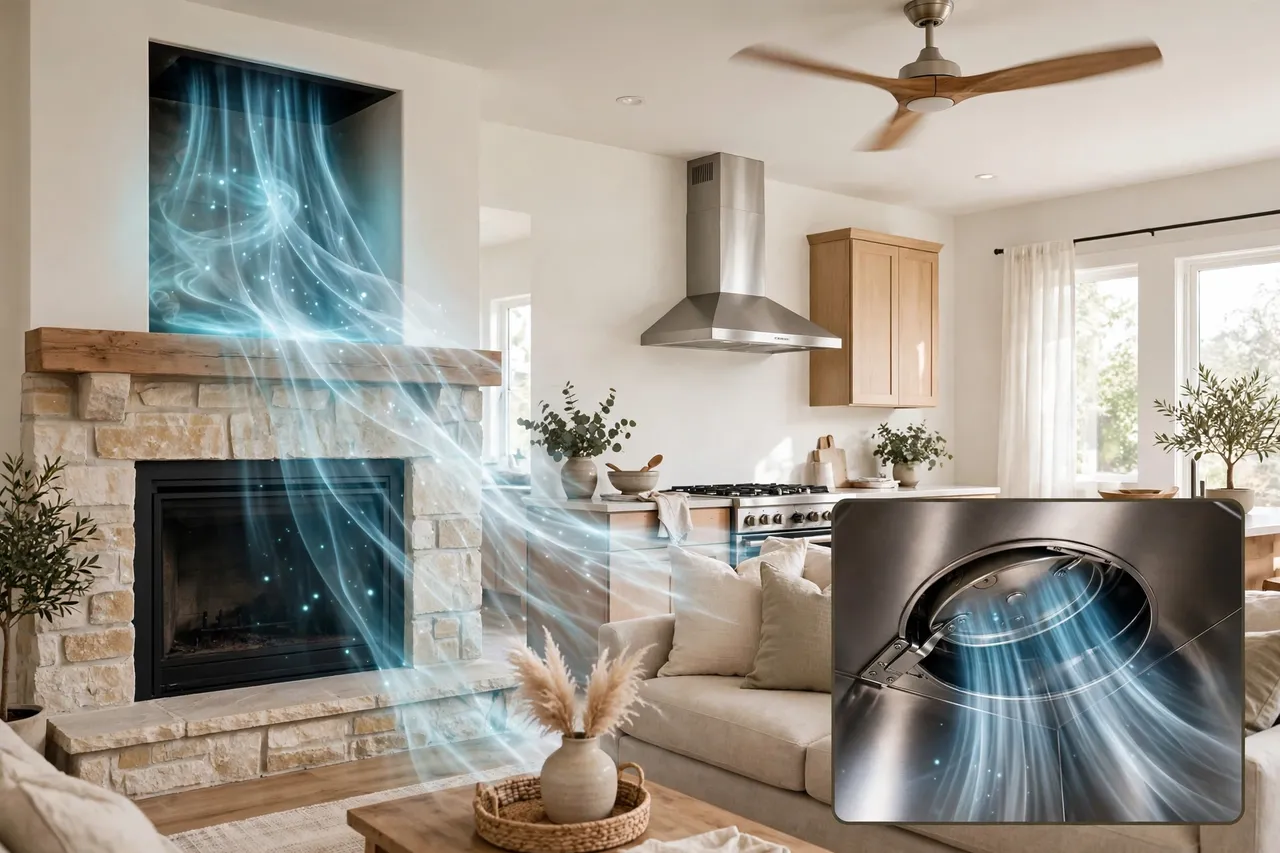
A damper left open makes the path easy. When the fireplace is not in use, close the damper so the flue is sealed. If the damper is warped or rusted and will not seal, air will keep coming down anyway. The CSIA notes that a tight-sealing top-mounted damper can reduce the airflow coming down the chimney, and that bringing make-up air into the house somewhere else takes the pull off the flue. Close the damper when the fireplace is not in use — an open flue is an open door for smells.
If smoke spills into the room while a fire is burning, the cause may be the same pressure problem, a cold flue, or a blockage. Our repair fireplace guide walks through the common smoke, crack, and pilot-light fixes. The smell will keep coming back until the pressure problem is fixed, so this section is the one to get right.
Gas Smell vs. Chimney Smell: The One You Must Never Ignore
A gas smell is not a chimney smell, and treating it like one is dangerous. Natural gas has a rotten-egg or sulfur smell added to it on purpose, so a leak can be found fast. Carbon monoxide, the other gas a bad chimney can produce, has no smell at all.
The U.S. Environmental Protection Agency (EPA) states that carbon monoxide is an odorless, colorless, and toxic gas, and that it can kill before you are aware it is in your home. The EPA lists leaking chimneys and back-drafting fireplaces among the sources of carbon monoxide in a home. A smoky or musty smell is never carbon monoxide itself — but a blocked or back-drafting chimney can push carbon monoxide into the room alongside the smell you can notice.
If you smell rotten eggs or sulfur near a gas fireplace, furnace, or stove, leave the house at once. Do not flip light switches, do not use your phone inside, and call your gas company or 911 from outside. If you smell gas, leave the house at once and call your gas company or 911 from outside. If a carbon monoxide alarm sounds, get everyone to fresh air at once and call 911. Our what to do if your carbon monoxide alarm goes off guide covers the exact steps, and our best carbon monoxide detector guide shows which alarms to buy. The EPA is clear that a CO alarm is a back-up, not a replacement for proper use and maintenance. Carbon monoxide has no smell at all — only a working alarm can warn you.
How to Find the Cause in 15 Minutes
You can narrow the cause to one or two suspects in about 15 minutes with no tools except your nose, a flashlight, and the weather. Work through the checks in order, and write down what you find — the pattern matters more than any single clue.
- Name the smell. Smoky, musty, rotten, or sulfur? Write down the exact word and when it is strongest.
- Check the damper. Shine a flashlight up the flue. Is the damper open, closed, or stuck halfway? A damper left open on an unused fireplace lets flue air straight into the room.
- Check the weather link. Did the smell start or get worse after rain? That points to water entry. Hot and humid? That points to creosote.
- Turn off the exhaust fans, the range hood, and the dryer for ten minutes. If the smell fades, negative pressure is pulling it down the flue.
- Look for water stains on the brick, rust on the damper, or debris and nesting material in the firebox.
- Listen for scratching or chirping, and check when the chimney was last swept. If it has been over a year, creosote is a strong suspect.
- Check your carbon monoxide alarm. If it has sounded, or anyone has a headache, dizziness, or nausea near the fireplace, get to fresh air and call 911.
If you smell sulfur at any point, skip the rest of this list. Gas smell means leave first and diagnose later. For every other smell, the notes from these seven checks tell a sweep exactly where to look, and that saves you a second visit.
How to Get Rid of the Smell From Your Chimney
The fix must match the cause — a sweep will not stop a leak, and a new cap will not remove creosote. Start with the cheapest fix that matches your diagnosis, and give it a few days before you judge it, because deposits release their smell slowly.
For Creosote and Soot
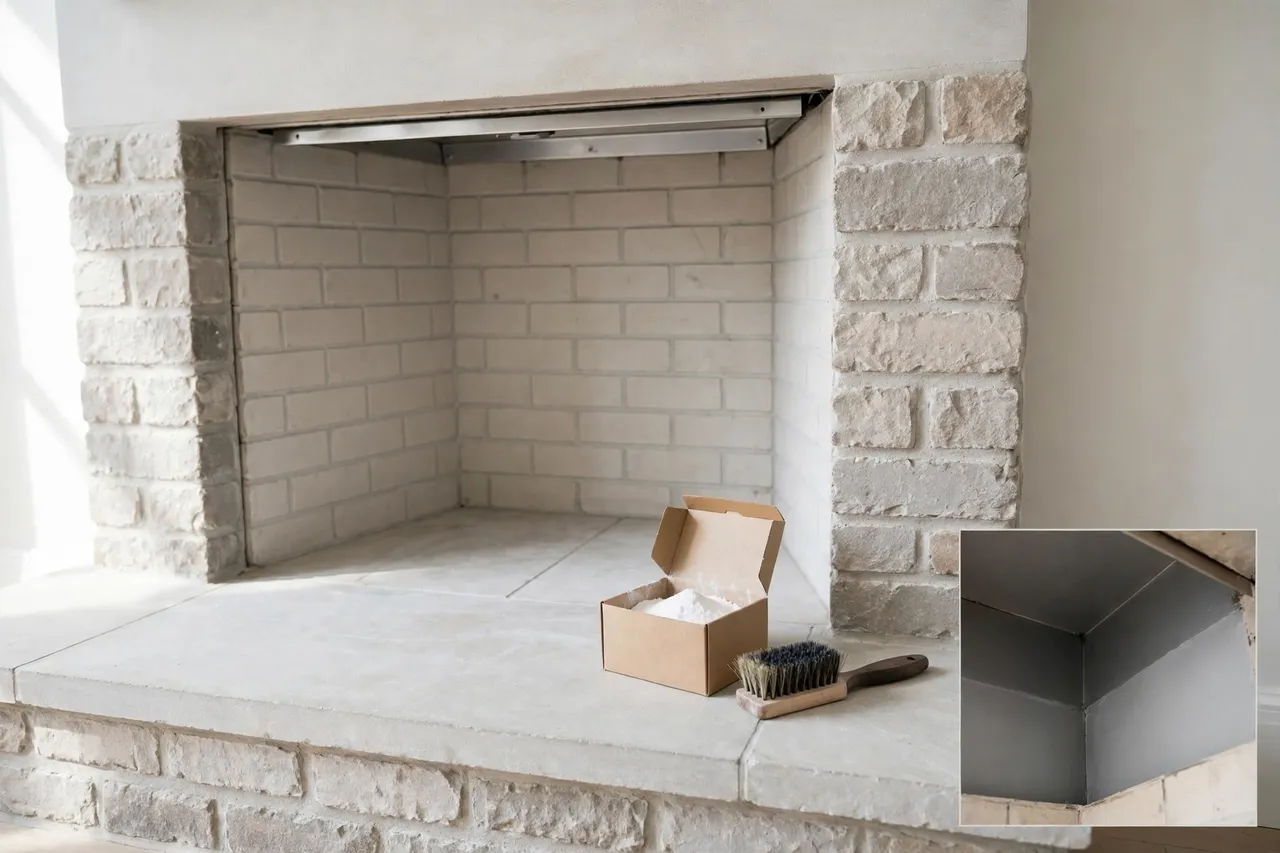
Book a professional sweep before the heating season starts. A sweep usually costs around $260, according to Angi, updated in August 2026. In summer, when the smell is worst, do not stir the flue up with a cleaning right away — seal the fireplace low and tight instead, with the damper closed or a flue plug, so the smell cannot drop into the room. For the firebox itself, the CSIA notes that many people have good results putting baking soda or even kitty litter in the fireplace to absorb the odor: sprinkle it over the floor and walls of the cool firebox, leave it for at least 48 hours, then vacuum it up.
For Moisture
Fix the entry point: a new cap, a crown repair, or new flashing, depending on where the water gets in. Dry the firebox out, and clean the brick soot off the brick while you are at it — our how to clean a brick fireplace guide shows how to do it without damaging the brick.
For Animals and Debris
Have a professional remove the nest or animal and clean the flue, then fit a cap with a mesh screen so it cannot happen again. Do not light a fire until the flue is confirmed clear — a blocked flue pushes smoke and carbon monoxide into the room.
For Downdrafts
Close the damper when the fireplace is idle, and turn off the strongest exhaust fans one at a time to find which one pulls the smell down. If the damper will not seal, a tight-sealing top-mounted damper is the lasting fix. Bringing make-up air into the house takes the pull off the flue for good.
Quick relief is not the same as a fix. Baking soda, vinegar bowls, and charcoal take the edge off for a few days, but the smell comes back once humidity rises, because the deposits are still there. Remove the source, then mask what is left — never the other way around.
What Most People Get Wrong About Chimney Smell
The most common mistake is masking the smell instead of removing its source. Air freshener, candles, and sprays cover the odor for a day, and the deposits that make it are still in the flue, still releasing their smell every time the air turns humid.
Three beliefs cause most of the wasted money. First, that the smell is carbon monoxide — it is not, because the EPA states carbon monoxide has no smell at all, and only an alarm can warn you. Second, that a good cleaning fixes every smell — the CSIA says a sweeping helps but will not usually solve the problem completely, because the air being drawn down the chimney is the real problem. Third, that a top-sealing damper will fix a summer smell — it can actually bottle the odor up inside the flue instead of letting it off-gas outdoors, so sealing the fireplace low and tight works better in summer.
Guess which fix costs almost nothing and which one costs hundreds? Closing the damper and sprinkling baking soda costs almost nothing — a new cap or damper costs hundreds. Start cheap, start with the cause, and spend the money only on the fix your diagnosis points to.
How to Stop the Smell Coming Back
Prevention is a short yearly routine, not a project. An annual inspection, a sweep when buildup reaches 1/8 inch, a sound cap, dry seasoned wood, and a damper kept closed when the fireplace sits idle will keep most chimney smells from ever starting.
- Book a chimney inspection once a year, before the heating season. NFPA 211 says chimneys, fireplaces, and vents shall be inspected at least once a year.
- Burn only well-seasoned wood. The CSIA says nothing else should be burned in a fireplace, because wet wood and trash make far more creosote.
- Clean ash and soot out of the firebox regularly, and keep the cap and flashing sound.
- Close the damper whenever the fireplace is not in use, and check that it still seals.
- Keep working smoke and carbon monoxide alarms in the home, and test them monthly.
If you have a gas fireplace, the yearly routine matters just as much. Our gas fireplace upkeep guide covers the yearly service and the 30 minutes of cleaning that keep a gas unit safe. An annual inspection catches every cause early, while each one is still cheap to fix.
Safety First: When to Call a Professional
Call a CSIA-certified chimney sweep or a licensed professional if the smell stays after a sweep, if you see water stains or rust, if smoke enters the room, or if animals may be in the flue. Roof work, flue-liner work, and animal removal are professional jobs, not homeowner jobs.
Call sooner, not later, if the chimney has not been inspected in over a year, or if you have just bought a home with a fireplace you have never used. A Level 1 inspection under NFPA 211 covers the soundness of the chimney, the deposits inside it, and the clearances around it. If your carbon monoxide alarm sounds, or anyone feels ill near the fireplace, get to fresh air at once and call 911 — our what does a carbon monoxide alarm sound like guide helps you tell the alarm apart from a smoke alarm, and our do smoke detectors detect carbon monoxide guide explains why a smoke alarm alone is not enough.
Safety disclaimer: This article is general home information, not professional advice. Fireplaces, chimneys, and gas appliances can cause fire, smoke damage, and carbon monoxide poisoning if used or repaired the wrong way. Never light a fire in a fireplace with a blocked or partly blocked flue, never try to remove a wild animal from a chimney yourself, and never work on a roof or inside a flue without the right training and safety gear. If you smell gas, leave the house at once and call your gas company or 911 from outside. If a carbon monoxide alarm sounds, or anyone has a headache, dizziness, nausea, or confusion while the fireplace is in use, get to fresh air at once and call 911. If you are unsure about anything here, stop and call a CSIA-certified chimney sweep or a licensed professional before you use the fireplace.
Related Guides
These guides cover the rest of the system around your chimney smell: chimney sweep cost, chimney cap replacement, repair fireplace, gas fireplace upkeep, and best carbon monoxide detector.
Frequently Asked Questions
Why does my chimney smell?
Your chimney smells because of creosote and soot in the flue, moisture from rain, animals or debris, or air being pulled down the flue by negative pressure. The smell itself points to the cause: smoky means deposits, musty means water, and rotten means something dead or decaying. A gas smell is different and means leave the house.
Why does my fireplace smell when it’s not being used?
A fireplace smells when it is not being used because creosote and soot in the flue release their odor in warm, humid weather, and air is pulled down the chimney by exhaust fans or the stack effect. A damper left open lets that smelly air straight into the room. Closing the damper and booking a sweep are the first fixes.
Why is there a smoke smell from my fireplace when not in use?
A smoke smell from an unused fireplace comes from creosote deposits in the flue plus air moving down the chimney instead of up. Warm, humid weather wakes up the smell in the deposits, and negative pressure from fans or air conditioning pulls it into the room. A tight-sealing damper and a professional sweep break the cycle.
Why does my house smell like smoke from the fireplace?
Your house smells like smoke from the fireplace because the flue is pulling air down instead of pushing smoke up. The usual causes are a cold flue, a damper that is open or will not seal, a blockage, or negative pressure from exhaust fans. Check the damper first, then the fans, then book an inspection if the smell stays.
What does carbon monoxide smell like?
Carbon monoxide smells like nothing at all. The U.S. Environmental Protection Agency states it is an odorless, colorless, and toxic gas that you cannot see, taste, or smell. Only a working carbon monoxide alarm can warn you, so keep one in the hallway near every sleeping area and test it monthly.
How do I get rid of the smell from my chimney?
Match the fix to the cause: book a professional sweep for creosote, fix the cap, crown, or flashing for moisture, have a professional remove any animal or nest, and close the damper to stop downdrafts. Baking soda in the cool firebox helps for a few days, but the smell returns until the source is gone.


