
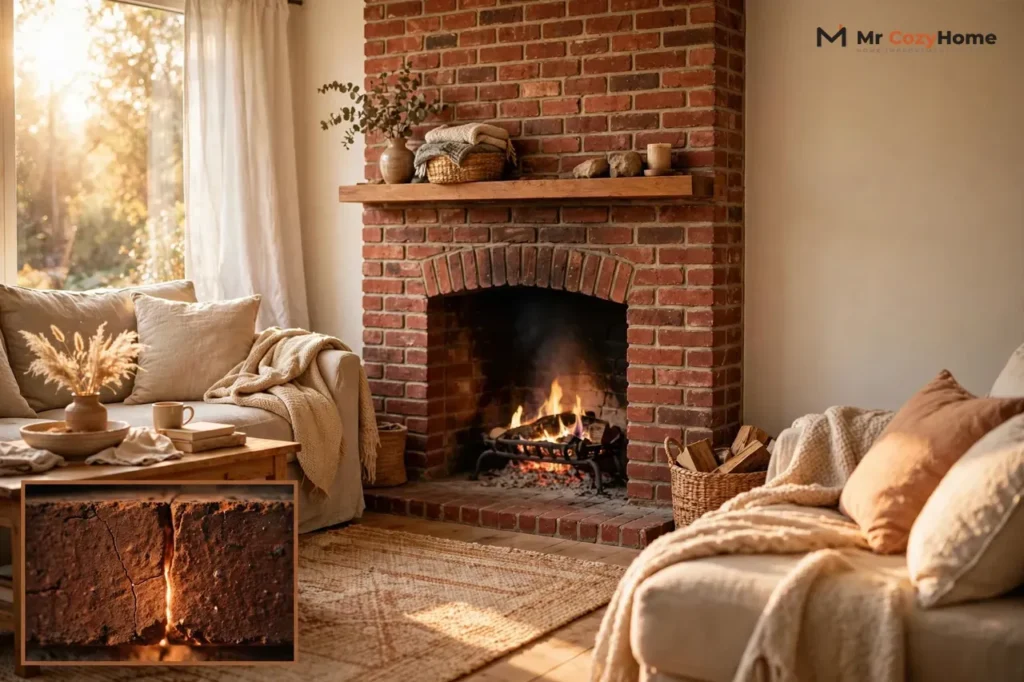
Most fireplace repairs are small, fixable jobs, and the average professional repair cost $614 in 2026, according to Angi’s data from 9,060 verified projects.
To repair a fireplace, first find the exact problem, then fix the cause, not just the symptom. A cracked firebrick needs refractory cement, a pilot light that keeps going out usually needs a new thermocouple, and smoke in the room often means a closed damper or a blocked chimney. Small masonry fixes are safe do-it-yourself jobs. Gas, structural, and chimney-liner work belongs to a qualified professional. This guide walks you through each repair in order, from the safest and cheapest checks first.
What “Repair Fireplace” Really Means
A fireplace is not one thing. It is a system, and each type breaks in its own way.
A wood-burning masonry fireplace has a firebox, a chimney, a damper, and a hearth. Its common problems are cracked firebricks, crumbling mortar, and creosote buildup. A gas fireplace has burners, a pilot light, a thermocouple, and a gas valve. Its common problems are a pilot light that will not stay lit, low flames, and a faulty igniter. An electric fireplace has a heating element, a fan, and light bulbs that make the flame effect. Its common problems are a dead fan, no heat, and burned-out bulbs.
Before you buy parts or call anyone, name your fireplace type. The fix for a wood fireplace will not help a gas unit, and the fix for a gas unit can be dangerous on a wood fireplace. Check the metal plate inside or beside your unit for the brand and model number, and write it down. You will need it to order the right parts.
Start Here: Find the Problem Before You Fix Anything
Most bad fireplace repairs start with a guess. A five-minute check saves you from fixing the wrong thing, and it costs nothing.
The 5-Minute Safety Check
Do this check before every repair, and never skip it. First, make sure the fireplace is completely cold. A firebox can stay hot enough to burn you for hours after the last flame dies. Next, open a window near the fireplace for fresh air. Then look, listen, and smell. Look for cracks, loose bricks, white powdery stains, and black soot marks outside the firebox. Listen for a blower that rattles or grinds. Smell for gas. If you smell gas, do not light anything, do not flip any switch, and leave the house. Call your gas company or emergency services from outside.
Check your carbon monoxide detector too. Press its test button and confirm it works. A working detector is your early warning for the most dangerous fireplace failures, and a dead one must be replaced before you use the fireplace again.
Match the Symptom to the Fix
Use this table to point your repair in the right direction. Find your symptom, then read the matching section.
Symptom-to-fix guide
| Symptom | Likely cause | Where to look |
|---|---|---|
| Smoke comes into the room | Closed damper or blocked chimney | Damper, chimney, chimney cap |
| Fire burns weakly or gives little heat | Wet wood or poor draft | Firewood, damper, chimney height |
| Pilot light will not stay lit | Faulty thermocouple | Gas valve area (call a pro) |
| Cracks in the firebox | Heat stress or old mortar | Firebricks and mortar joints |
| White powder on outside brick | Water getting into the masonry | Chimney crown, cap, flashing |
| Burner flames are low or uneven | Dirty burners or low gas flow | Burners, gas valve (call a pro) |
If your symptom is not on this list, or if two or more symptoms show up at once, get a professional inspection before you repair anything. Two problems at once often share one hidden cause, such as water damage or a cracked flue liner.
How to Repair a Cracked Firebrick and Firebox Mortar
Cracked firebricks are the most common masonry fireplace repair, and they matter more than they look. Firebricks line the firebox and shield your home’s framing from the full heat of the fire. A crack lets heat and harmful gases slip through to wood and other materials behind the wall, so fix cracked firebricks before you light another fire.
Start by deciding whether the damage is a do-it-yourself job. A hairline crack in one brick, or a small gap in the mortar between bricks, is a home repair. A crack wider than 1/8 inch, a brick that moves when you press it, crumbling mortar across a whole wall, or damage you can see through to the other side is a job for a fireplace specialist or mason. Do not patch over structural damage. A patch will hide it, and the heat will find it.
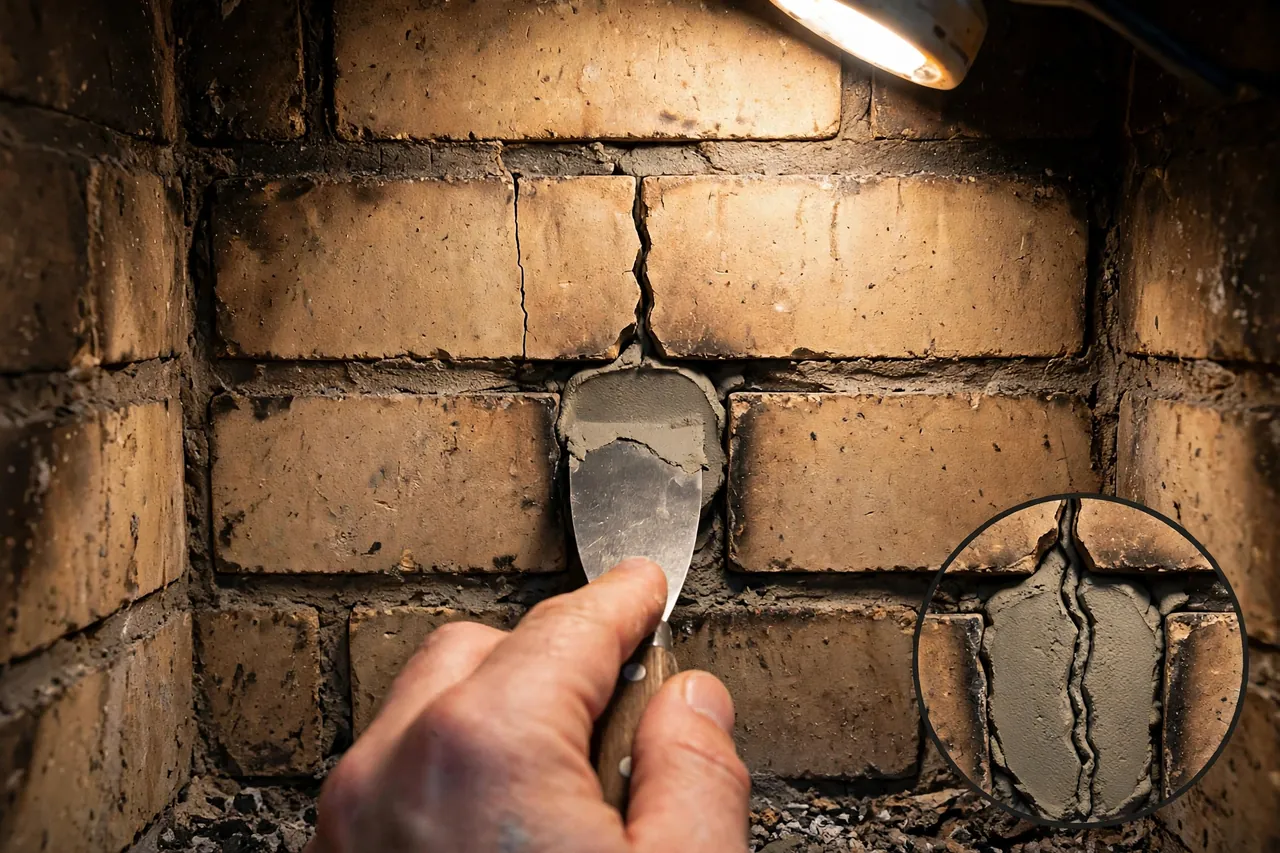
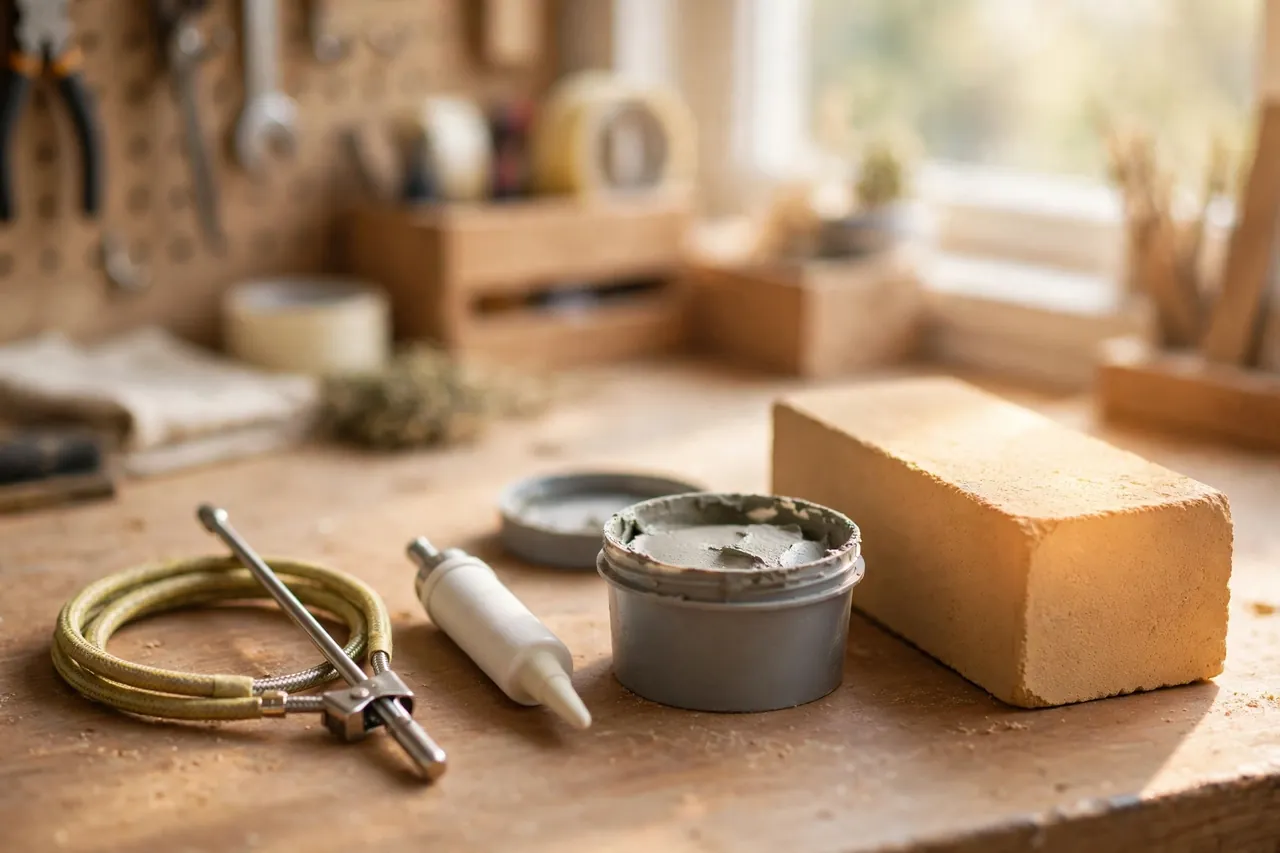
For a small crack, let the fireplace cool completely, then brush out all loose soot and dust with a wire brush and vacuum the crack clean. Dampen the area lightly with water from a spray bottle so the repair material bonds well. Press refractory cement deep into the crack with a putty knife, and scrape off the extra. Refractory cement is made for firebox heat. Never use regular cement, regular mortar, or regular caulk inside a firebox. Standard products break down and fail at fire temperatures, and that failure can be dangerous.
For crumbling mortar joints between firebricks, scrape out the loose mortar with a scoring tool, dampen the joint, and pack in fresh refractory mortar with a tuck-pointing trowel. Pack it tight, in thin layers, and let it cure exactly as the product label directs before you build a fire. Heat the fireplace slowly on the first fire after the repair. A gentle first fire lets the new mortar cure instead of cracking again.
When a whole firebrick is broken, replace it instead of patching it. Chip out the old brick and its mortar, clean the opening, butter the new firebrick with refractory mortar, and set it in place. Check that it sits level with the bricks around it. If most of the firebox lining needs work, or the structure behind it looks damaged, stop and call a professional. That is no longer a patch job.
How to Repair Fireplace Mortar Joints on Brick and Stone
Mortar joints fail on the outside of the fireplace too, and the fix is called repointing. You remove the weak mortar and pack in new mortar, which seals out water and holds the brick or stone in place. Water is the real enemy here. It soaks into cracked joints, freezes in winter, and pushes the mortar apart a little more each year.
This repair works the same way for brick fireplaces and stone fireplaces. First, rake out the loose mortar to a depth of about 3/4 inch with a joint raker or an old screwdriver. Do not dig deeper than you need to, and do not chip the brick or stone faces. Brush and vacuum the joints clean, then dampen them so the new mortar bonds.
Mix your mortar to a firm, peanut-butter thickness. Push it into the joint in thin layers with a pointing trowel, and pack each layer tight before you add the next. A loose pack is a weak joint that will crack again. When the mortar starts to firm up, smooth it with a jointing tool so it matches the joints around it. Mist the repair lightly with water for a day or two while it cures, and keep rain off it if you can.
Use the right mortar for the job. Firebox joints need refractory mortar that handles extreme heat. Outside joints on the fireplace face or chimney need a mortar that matches your home’s existing mortar, usually Type N for most homes. If your fireplace is old, ask a masonry supplier to match the mortar. The wrong mix can be too hard for soft old brick and cause the brick faces to break off, a problem called spalling.
Clean the brick before you admire the repair. Soot and mortar smears come off best with a stiff brush and a cleaner made for masonry. For the full cleaning steps that will not damage the brick, see our guide to how to clean a brick fireplace.
How to Fix a Gas Fireplace That Won’t Light
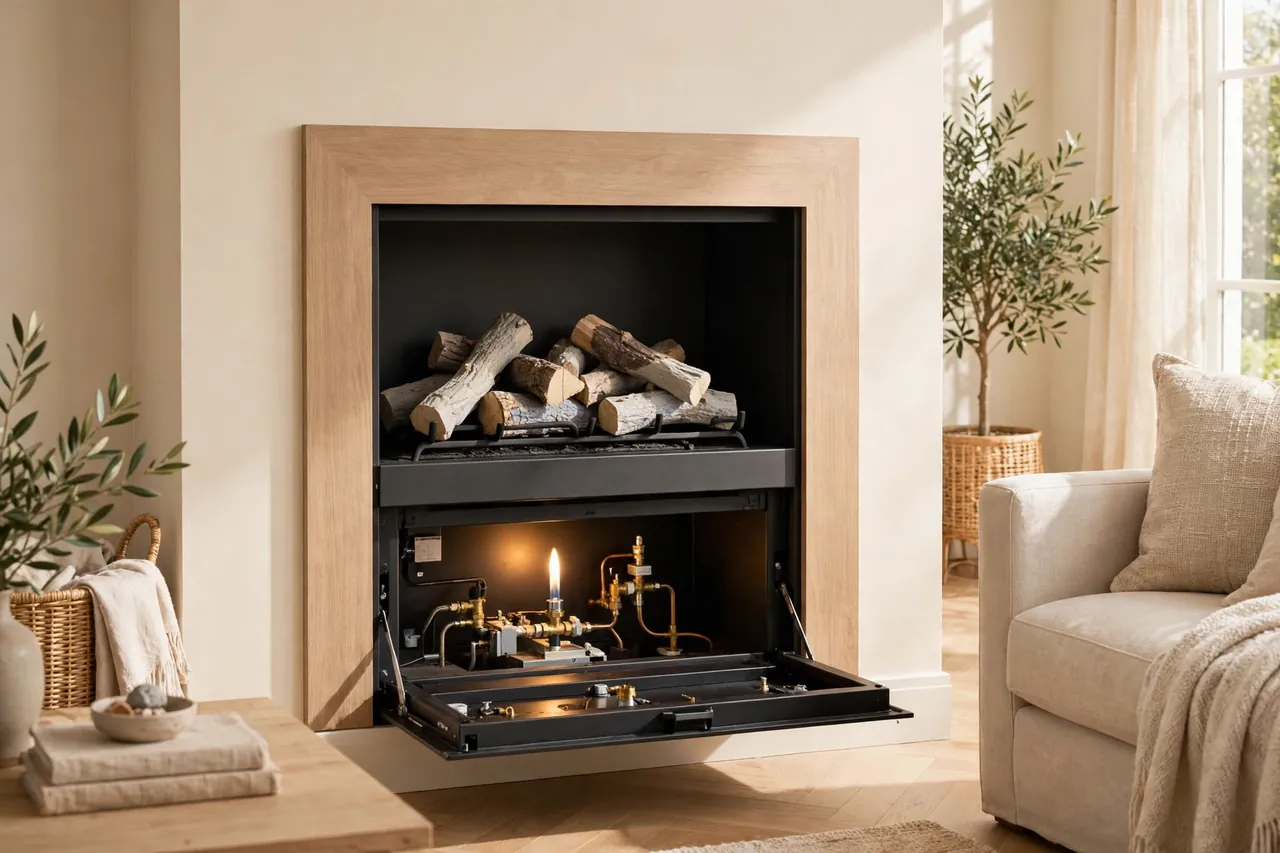
A gas fireplace that will not light is frustrating, but the safest first step is also the simplest. Check the easy things before you touch any gas part. Make sure the gas supply valve to the fireplace is open, the wall switch or remote has fresh batteries, and the pilot light is actually lit. Many “broken” gas fireplaces are simply switched off at a valve or a remote with dead batteries.
If the pilot light is out, follow your fireplace manual’s relighting steps exactly. Every model is a little different, and the manual is the only safe guide. Hold the pilot button down for the time the manual states, then light the pilot and keep holding the button until the flame holds on its own. If the pilot lights but goes out again after 20 to 40 seconds, the thermocouple is the likely cause. The thermocouple is a small safety sensor that tells the gas valve to stay open while the pilot burns. When it fails, the valve shuts the gas off, and the pilot dies.
Here is the hard line: do not replace a thermocouple, gas valve, or igniter yourself unless you are trained and your manual says the part is user-serviceable. Family Handyman gives the same advice in its fireplace repair guide, and it is the right call. Gas parts control fuel flow, and a mistake can cause a gas leak or carbon monoxide buildup. A certified gas fireplace technician can test the thermocouple, the gas valve, and the pilot assembly in one visit and tell you exactly which part failed.
For a dirty gas fireplace, you can do the safe part yourself. Turn off the gas and let the unit cool completely. Vacuum dust and debris from the burners and the glass with a soft brush attachment. Wipe the glass with a cleaner your manufacturer approves, and look for chips or cracks in the glass while you clean. Remove artificial logs that are falling apart, because crumbling logs can block burners and cause a malfunction. Leave the gas line, the valve, and the burner assembly to the technician. If you smell gas at any point, stop, leave the house, and call your gas company from outside.
How to Fix a Fireplace That Smokes Into the Room
Smoke in the room is the most common fireplace complaint, and it usually has a simple cause. Work through these checks in order, from the easiest to the hardest.
First, check the damper. The damper is the steel flap inside the chimney that controls airflow. It must be open before you light a fire, and it must stay at least a little open as long as anything is still burning. If you forgot to open it, smoke has nowhere to go but into your room. Open it fully, wait a few minutes, and see if the smoke clears.
Next, check for a stuck damper. Soot, rust, and creosote can freeze the hinge in place. With the fireplace cold, clean the damper and its hinge with a wire brush, then work a few drops of penetrating oil into the hinge. Open and close the damper several times until it moves smoothly. If the hinge is rusted through or the damper plate is warped, a technician can replace it.
Third, check the chimney for blockages. Birds, nests, leaves, and fallen debris can block the flue, and the first fire of the season is when most homeowners discover it. Shine a flashlight up the flue from the firebox and look for anything that should not be there. If you see a nest or a blockage, do not light a fire. A chimney sweep can clear it safely, and a chimney cap will keep animals out next time.
Fourth, check your firewood. Freshly cut or “green” wood holds a lot of water, so it burns cool, smokes heavily, and makes creosote. Burn only seasoned wood that has dried for at least several months. Dry wood feels light, sounds hollow when you knock two pieces together, and shows cracks on the cut ends.
Finally, check the chimney height. A chimney that is too short cannot draw smoke up and out. Family Handyman notes the standard rule: a chimney must extend at least three feet above the peak of the roof and at least two feet above anything within ten horizontal feet. If your chimney is shorter than that, wind can push smoke back down into the house. Adding a chimney pipe section is a roofer’s job, not a ladder-and-guess job, unless you have real roofing experience and proper safety gear.
How to Repair a Damaged Hearth and Mantel
The hearth is the floor in front of your fireplace, and the mantel is the shelf above it. Both take daily wear, and both are easier to repair than most homeowners expect.
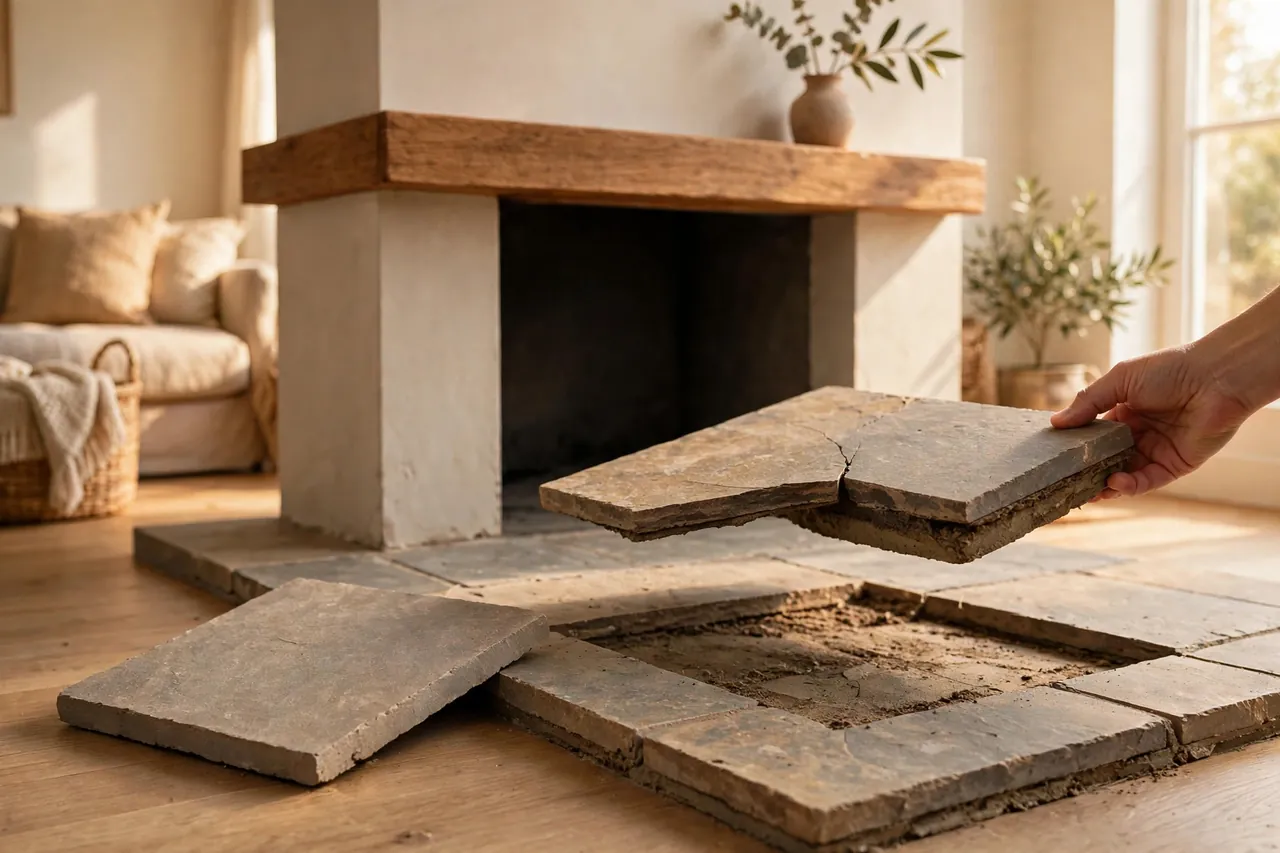
For a cracked hearth tile or stone, chip out the damaged piece carefully so you do not crack its neighbors. Clean the bed underneath, spread fresh thin-set or mortar, and set the new tile or stone level with the old ones. Match the grout color as closely as you can, and seal stone hearths after the repair so spills and soot do not stain them. If the hearth slab itself has shifted or sunk, that is a structural problem. A hearth that moves means the base underneath has settled, and a mason should look at it before you patch the surface.
For a loose mantel, first find out why it is loose. A mantel is usually held by brackets or lag bolts into the wall studs or the masonry. Tighten any loose fasteners, and replace stripped screws with longer ones that bite into solid wood or masonry anchors. If the mantel wood is split around the fasteners, fill the holes with wood filler, let it harden, and re-drill. If the whole mantel sags or pulls away from the wall, take it down and re-mount it properly rather than shimming it and hoping it holds.
For cosmetic damage, a mantel is a good place to refresh the whole fireplace look. Sand out scratches, fill small dents, and repaint or restain. If the brick around the mantel looks tired after the repair, a limewash or whitewash finish can transform it, and our comparison of limewash vs whitewash brick fireplace shows which finish fits your brick and your style.
Chimney Problems That Look Like Fireplace Problems
Many fireplace repairs fail because the real problem lives in the chimney, not the firebox. If your fireplace keeps smoking, smells odd, or leaks water, look up.
Creosote is the biggest chimney risk. It is a hard, black, tar-like substance that forms when wood smoke cools and sticks to the chimney walls. It is highly flammable, and a thick layer can catch fire inside the chimney. You cannot scrub heavy creosote out yourself. If a poker scraped along the flue liner finds a layer 1/8 inch thick or more, about the thickness of a nickel, call a certified chimney sweep. Have the chimney cleaned and inspected once a year if you burn wood regularly, and more often if you burn a lot.
Water is the second chimney risk. White powdery stains on the outside brick, called efflorescence, mean water is moving through the masonry. A cracked chimney crown, a missing chimney cap, or worn flashing lets rain in, and each freeze makes the cracks wider. A chimney cap keeps rain and animals out while letting smoke escape. Inspect yours each fall, and clear leaves and debris from it. If the crown is cracked, a mason can seal or rebuild it before water damage spreads to the firebox below.
For anything inside the flue, hire a certified chimney sweep. The Chimney Safety Institute of America (CSIA) certifies sweeps who can clean a chimney and inspect its structure, and you can find a CSIA-certified sweep through the institute’s own directory. A certified sweep spots liner cracks, water damage, and venting problems that a homeowner cannot see from the firebox.
What Does It Cost to Repair a Fireplace?
Cost decides many repair choices, so here are real 2026 numbers. Angi reports a national average fireplace repair cost of $614 in 2026, based on 9,060 verified projects, with most homeowners paying between $185 and $1,051. The full range runs from $95 for a minor mortar repair to $2,850 or more for a full chimney relining. Prices checked Nov 9, 2026.
Cost by fireplace type
| Fireplace type | Average repair cost in 2026 |
|---|---|
| Electric | $100–$700 |
| Wood-burning | $180–$980 |
| Gas | $200–$1,000 |
Cost by part
| Part | Cost to repair or replace in 2026 |
|---|---|
| Thermocouple | $75–$350 |
| Igniter | $100–$150 |
| Pilot light | $100–$350 |
| Gas valve | $150–$300 |
| Firebox | $160–$2,500 |
| Refractory panel (single) | $200–$300 |
| Hearth | $150–$800 |
| Mantel | $500–$1,200 |
| Chimney flue or liner | $200–$5,000 |
All costs above come from Angi’s 2026 fireplace repair cost guide, updated Oct 2, 2026, and checked Nov 9, 2026. Your price depends on the part, the fireplace type, and where you live, so get two or three local quotes before you commit to a big repair. Small masonry fixes are the cheapest work in the whole list. Angi notes that a homeowner can repair small mortar cracks with heat-resistant refractory mortar for about $30 to $60 in materials, and that an annual chimney inspection runs about $75 to $125.
Use cost as a repair-or-replace test. If one repair costs more than half of a replacement, or if you need three or four major parts at once, ask your technician to price both options. A new insert or a full replacement sometimes costs less over the next five years than a string of repairs on a worn-out unit.
DIY or Call a Pro?
Use this decision guide before you start. It protects your safety and your wallet at the same time.
DIY or pro decision guide
| Job | Who should do it |
|---|---|
| Clean soot and ash from the firebox | DIY |
| Patch a hairline firebrick crack | DIY |
| Repoint outside mortar joints | DIY, with care |
| Replace a hearth tile | DIY |
| Clean and oil a stuck damper | DIY |
| Replace a thermocouple or gas valve | Certified gas technician |
| Relight a pilot light (first time) | Follow the manual, or call a pro |
| Remove heavy creosote | Certified chimney sweep |
| Fix a cracked flue liner | Certified chimney sweep or mason |
| Repair a shifting hearth or leaning chimney | Mason or structural specialist |
| Any job where you smell gas | Gas company, from outside the house |
The rule is simple. If the job touches gas, structure, or the inside of the chimney, hire a qualified professional. If the job is cleaning, patching a small crack, or replacing a surface part, a careful homeowner can do it well. When you are unsure, pay for an inspection. An inspection costs far less than a repair done wrong.
How to Keep Your Fireplace From Breaking Again
Most fireplace repairs are preventable. A little care each season keeps small wear from turning into a big bill.
Clean the firebox after every few fires, and sweep the chimney once a year before heating season. Burn only dry, seasoned wood, and never burn trash, painted wood, or treated lumber. Painted and treated wood releases harmful chemicals and coats your chimney with deposits that are hard to remove.
Inspect the fireplace each fall, before the first fire. Look for new cracks, loose mortar, a damper that sticks, and a chimney cap that has shifted. Fix the small things in fall, when a technician has open slots and parts are easy to get. Waiting until the first cold snap means waiting in line with every other homeowner.
For gas fireplaces, book a yearly service visit. A technician cleans the burners, checks the gas valve and thermocouple, and tests for carbon monoxide leaks. That one visit catches most gas problems while they are still cheap fixes. Keep the area around the fireplace clear, test your carbon monoxide detector every month, and replace its batteries on a schedule you will actually keep.
Disclaimer: This article is general guidance only, not professional advice. Fireplace repairs involve fire, gas, and carbon monoxide — never work on gas parts yourself, and consult a qualified professional for structural damage, gas problems, or flue liner work.
Related Guides
how to clean a brick fireplace · limewash vs whitewash brick fireplace · what to do if your carbon monoxide alarm goes off · home winterization checklist · Gas Fireplace Upkeep · Chimney Sweep Cost
Frequently Asked Questions
How much does it cost to repair a fireplace?
Angi reports a 2026 national average of $614, based on 9,060 verified projects, with most homeowners paying $185 to $1,051. Small fixes start near $95, while a full chimney relining can pass $2,850. The part, the fireplace type, and your location set the final price. Prices checked Nov 9, 2026.
Is it worth fixing an old fireplace?
In many cases, yes. Most fireplace repairs cost around $600 and top out near $2,500, while a full replacement runs about $2,500 to $4,000. Repair also takes less time and makes less mess. Replace the fireplace only when the structure is damaged or several major parts fail at once.
Is it better to repair or replace a gas fireplace?
Repair is usually better. The average gas fireplace repair costs about $600, while replacement runs $2,500 to $5,000. Repair makes sense when one or two parts fail. Replace it when the firebox is damaged, the unit is very old, or several expensive parts need work at the same time.
Do gas fireplaces need servicing?
Yes. A gas fireplace needs a professional inspection and cleaning at least once a year, or whenever a problem shows up. Yearly service keeps it working well, extends its life, and makes sure it runs safely. A technician checks the burners, the gas valve, and the thermocouple in one visit.
A Quick Safety Note
Fireplaces deal with fire, gas, and carbon monoxide, so treat every repair with respect. Never use a fireplace with a cracked firebox, a blocked chimney, or a gas smell. Turn off the gas and leave the house if you smell gas, and call your gas company from outside. Hire a qualified professional for gas parts, structural damage, and chimney liner work. Homes, fireplaces, and local codes vary, so when you are unsure, get a professional inspection before you light a fire.
Start with the safety check, fix the cause, and test the fireplace with a small fire before you settle in for the evening. A fireplace that is repaired right warms the whole house, and it does it safely.


