
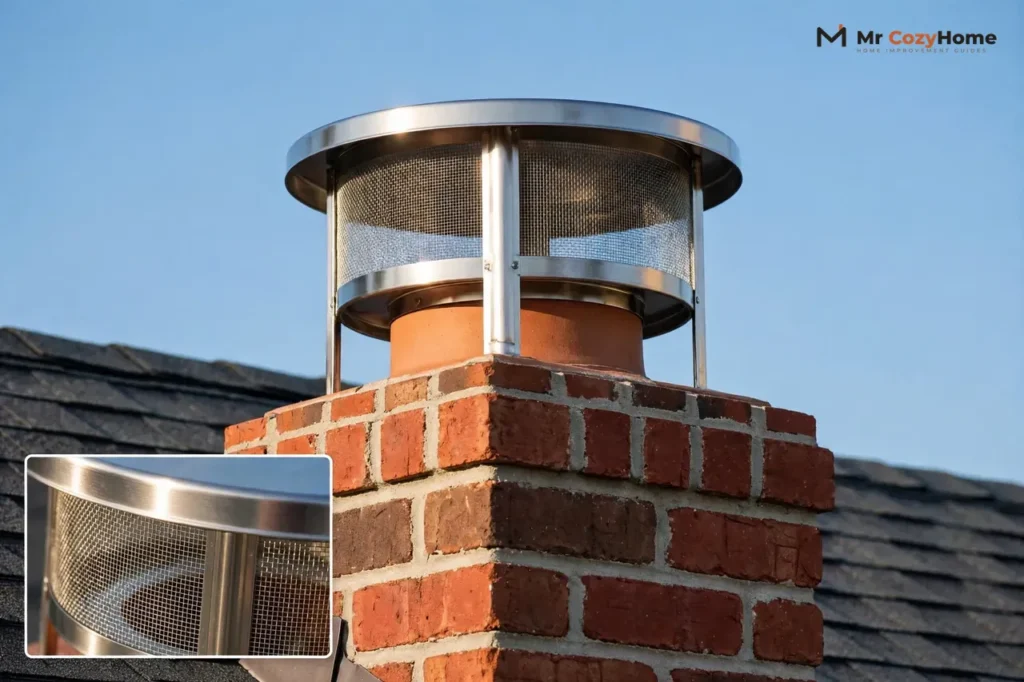
Chimney cap replacement means removing a worn or damaged cap and fitting a new one on top of your flue, and most homeowners pay about $300 for the full job, according to HomeAdvisor cost data checked November 9, 2026.
A chimney cap is the small metal cover that sits on top of your chimney. It keeps rain, snow, leaves, and animals out of the flue while it lets smoke escape. When the cap rusts, cracks, or blows loose, water and pests get in, and the damage they cause costs far more than a new cap. This guide walks you through the signs, the cost, how to pick the right cap, and how to replace a chimney cap safely.
What a Chimney Cap Does for Your Home
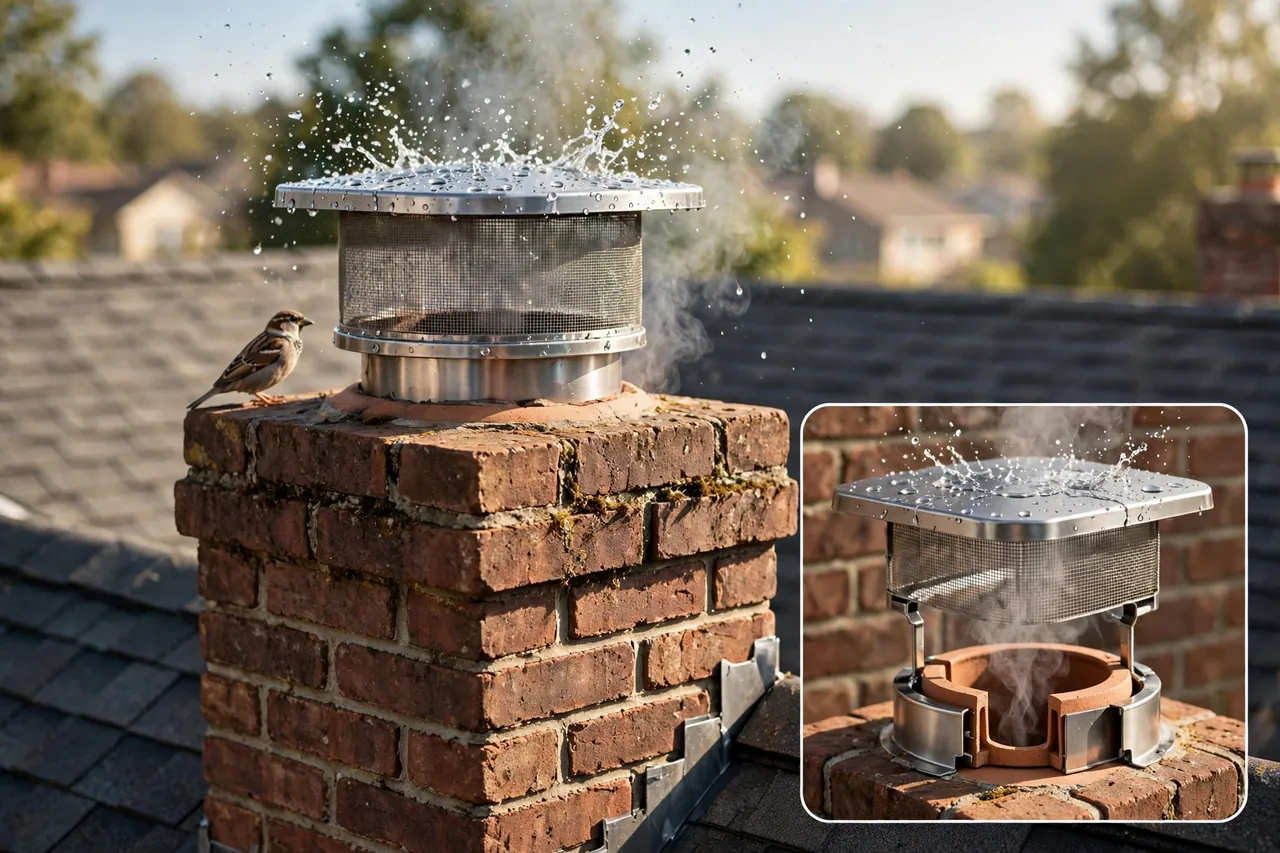
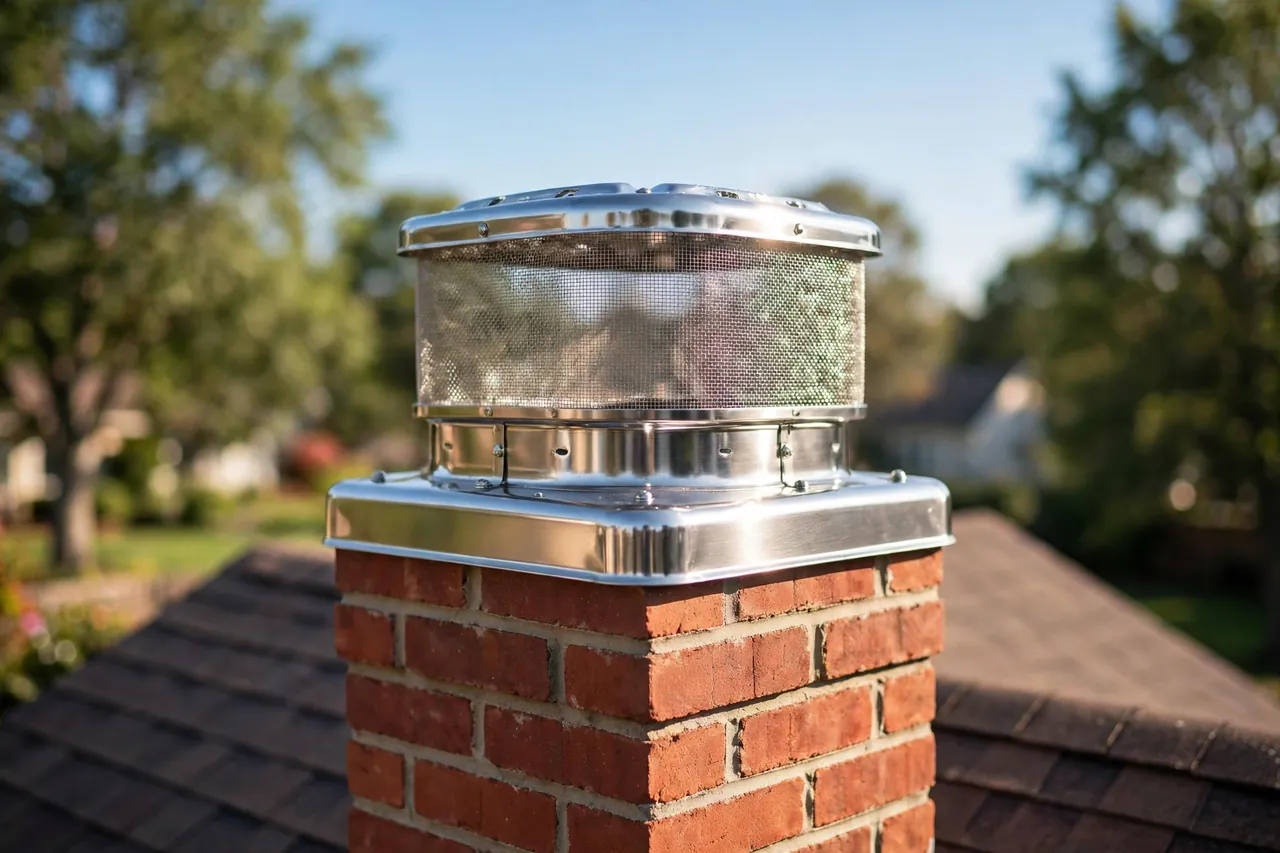
A chimney cap has three simple parts: a lid, a mesh screen, and a base that grips the flue. Together, they do four jobs. First, the lid blocks rain and snow from falling straight down the flue. Second, the mesh screen keeps birds, squirrels, raccoons, and leaves out while smoke still escapes. Third, the screen acts as a spark arrestor, so hot embers cannot land on your roof. Fourth, the cap cuts down on downdrafts, which are gusts of wind that push smoke and fumes back into your home.
Without a cap, your chimney is an open pipe. Rain soaks the flue liner and the masonry around it. In winter, that water freezes, expands, and cracks bricks and mortar. Animals nest in the warm flue, and their nests block airflow. That is why a missing or failed cap is not a small cosmetic problem. It is the start of water damage, bad smells, and poor fireplace drafts.
Most caps also protect the chimney crown, which is the concrete slab on top of the chimney stack. The crown sheds water away from the brickwork, and the cap guards the flue opening itself. The two parts work as a team, so a cap replacement often starts with a quick look at the crown too.
Signs You Need a Chimney Cap Replacement
A cap rarely fails all at once. It gives you warnings first. Check your cap at least once a year, ideally before the burning season starts, and look for these signs from the ground with binoculars or during a roof inspection by a pro.
Rust and Corrosion
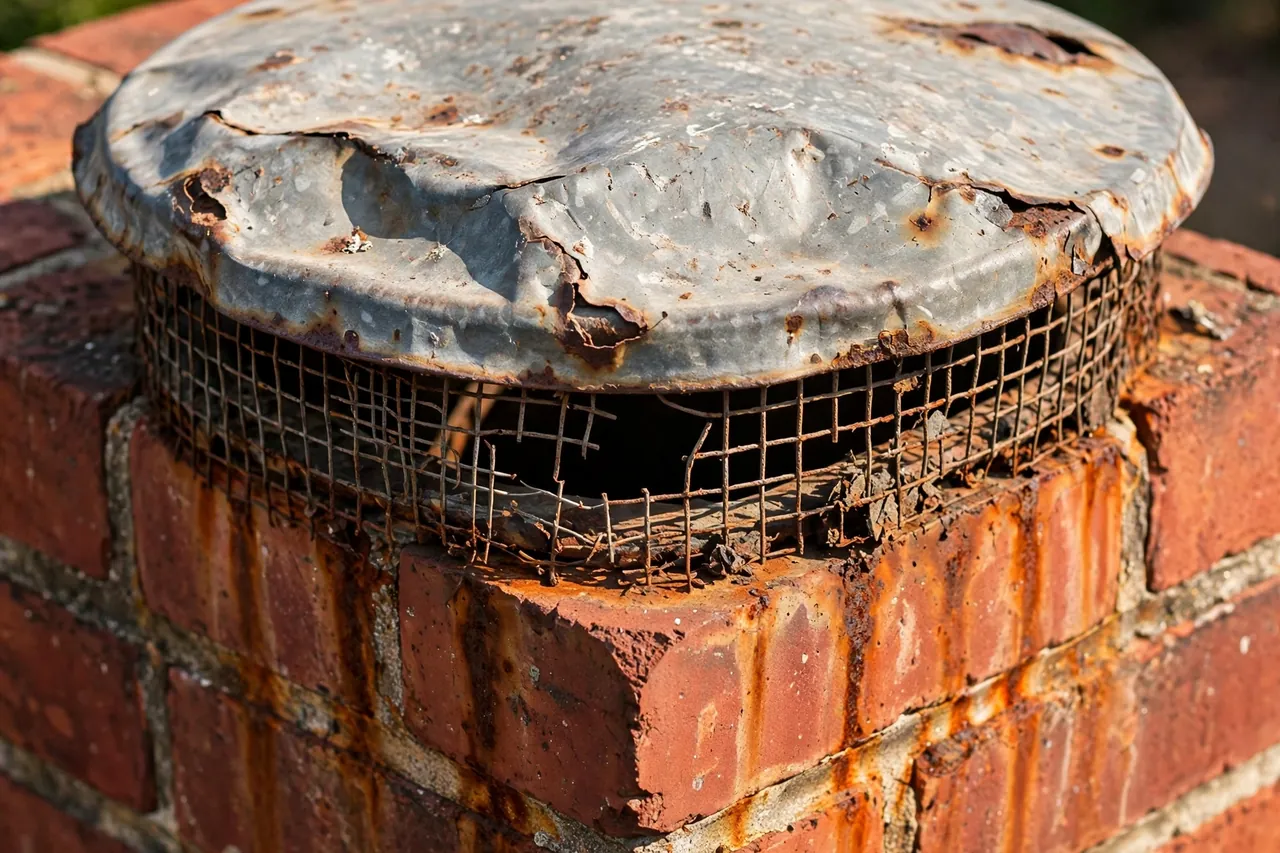
Rust is the most common reason to replace a chimney cap. Galvanized steel caps rust after five to ten years, especially in wet or coastal climates. Look for orange-brown stains running down the chimney or the roof below the cap. If the mesh screen is rusted through or the lid feels thin and flaky, the cap has lost its strength. A rusted cap can also stain the brick around your fireplace, and once the cap is fixed, you can clean that brick safely — see our guide on how to clean a brick fireplace without damaging it.
Water Stains Inside Your Home
Water stains on the ceiling or wall near the fireplace often point to a failed cap. Rain enters through a cracked lid, a torn screen, or gaps where the cap meets the flue. The water runs down the flue and soaks into the masonry and the rooms below. If you see damp patches, peeling paint, or a musty smell near the fireplace, check the cap before you blame the roof.
Animals or Debris in the Flue
Birds, squirrels, and raccoons love an uncapped chimney. You may hear scratching, chirping, or fluttering sounds from the fireplace. Leaves and twigs can also pile up inside the flue and block the draft. A cap with an intact mesh screen stops all of this. If animals got in once, replace the cap with one that has a sturdy screen so it does not happen again.
A Loose, Missing, or Dented Cap
Strong wind can lift a loose cap clean off the chimney. A heavy branch or hail can dent the lid so it no longer sits flat. A cap that rocks in the wind or sits crooked leaves gaps where rain and animals enter. If the cap is gone entirely, replace it right away — every rainy day without one adds water damage to your chimney.
Repair or Replace: How to Decide
Not every damaged cap needs a full replacement. A small dent, a loose screw, or a minor leak around the base can often be fixed with a repair. Repair also makes sense when you own a custom copper cap that would cost a lot to remake. Tighten the fasteners, reseal the base, or patch a small hole, and the cap can serve for years more.
Replace the cap when the damage is structural. Rusted-through mesh, a cracked or warped lid, and a base that no longer grips the flue are all replacement jobs. A cap that has blown off once will likely blow off again if its mounting is worn. Age matters too: a galvanized cap past ten years with visible rust is near the end of its life, so a repair only buys a short delay.
When you decide, weigh the numbers. A repair costs little more than sealant and a few screws. A full chimney cap replacement averages about $300 installed, according to HomeAdvisor, checked November 9, 2026. If the repair costs half that much and the cap is already old, replacement is the better spend.
How Much Does Chimney Cap Replacement Cost?
Most homeowners spend between $75 and $500 on a professional chimney cap replacement, with $300 as the average, according to HomeAdvisor cost data checked November 9, 2026. The cap itself runs from $15 for a basic prefab galvanized steel model to $900 or more for a copper one. Labor makes up about half of the total bill, so a simple job on an easy-to-reach roof costs less than a custom cap on a steep, tall chimney.
Size is the biggest price driver after material. Here is what HomeAdvisor reports for installed caps by size, checked November 9, 2026:
Chimney cap replacement cost by size (installed)
| Cap size (inches) | Average cost range |
|---|---|
| 6 x 6 | $50–$250 |
| 8 x 10 | $75–$300 |
| 8 x 17 | $100–$400 |
| 13 x 13 | $100–$400 |
| 14 x 37 | $200–$450 |
| 17 x 29 | $300–$500 |
Material sets the price of the cap itself. Here are HomeAdvisor’s unit-only ranges, checked November 9, 2026:
Chimney cap cost by material (cap only)
| Material | Average cost range |
|---|---|
| Galvanized steel | $15–$200 |
| Stainless steel | $50–$500 |
| Copper | $150–$900 |
A custom cap costs more. HomeAdvisor puts custom caps at $200 to $1,000 including installation, checked November 9, 2026. You need a custom cap when your chimney has an unusual shape, an oval flue, or more than one flue under a single cover. Multi-flue caps cost more because they are larger and need more material.
Three more factors move the price. First, roof access: a steep or very tall roof takes more time and safety gear, so labor rises. Second, season: winter work in cold or icy conditions can cost more, and spring or fall is the ideal time to schedule the job. Third, your location: labor rates differ by region, so get at least three written quotes from local chimney pros before you commit.
For a DIY job, the cost is the cap plus tools and sealant. A basic galvanized cap starts around $15, and a stainless cap runs $50 to $500, according to HomeAdvisor, checked November 9, 2026. Add a tube of high-heat silicone sealant and masonry screws if your cap does not include them. The savings are real, but only take the DIY route if you are comfortable and safe on a roof.
How to Choose the Right Replacement Cap
The right cap fits your flue, suits your climate, and mounts securely. Get any of those three wrong and the new cap will fail early. Work through them in order: measure, pick a material, then match the mounting style.
Measure Your Flue First
Measure the outside length and width of a square or rectangular flue tile. For a round flue, measure the inside and outside diameters. Write the numbers down and take them to the store or the supplier’s website. The five most common square and rectangular flue sizes are 8 x 8, 8 x 13, 8 x 18, 13 x 13, and 13 x 18 inches, so check whether yours matches a standard size before you order a custom cap.
Also measure how far the flue tile sticks up above the crown. A bolt-on cap needs about three-quarters of an inch of tile above the mortar to grip, according to HY-C, a chimney cap maker. If your tile sits flush with the crown or lower, you need a leg kit or a slip-in style cap instead.
Check the height too. HomeAdvisor recommends setting the cap at least eight inches above the top of the flue. That gap keeps the draft strong, lets smoke exit freely, and stops smoke from puffing back into your living room.
Pick the Right Material
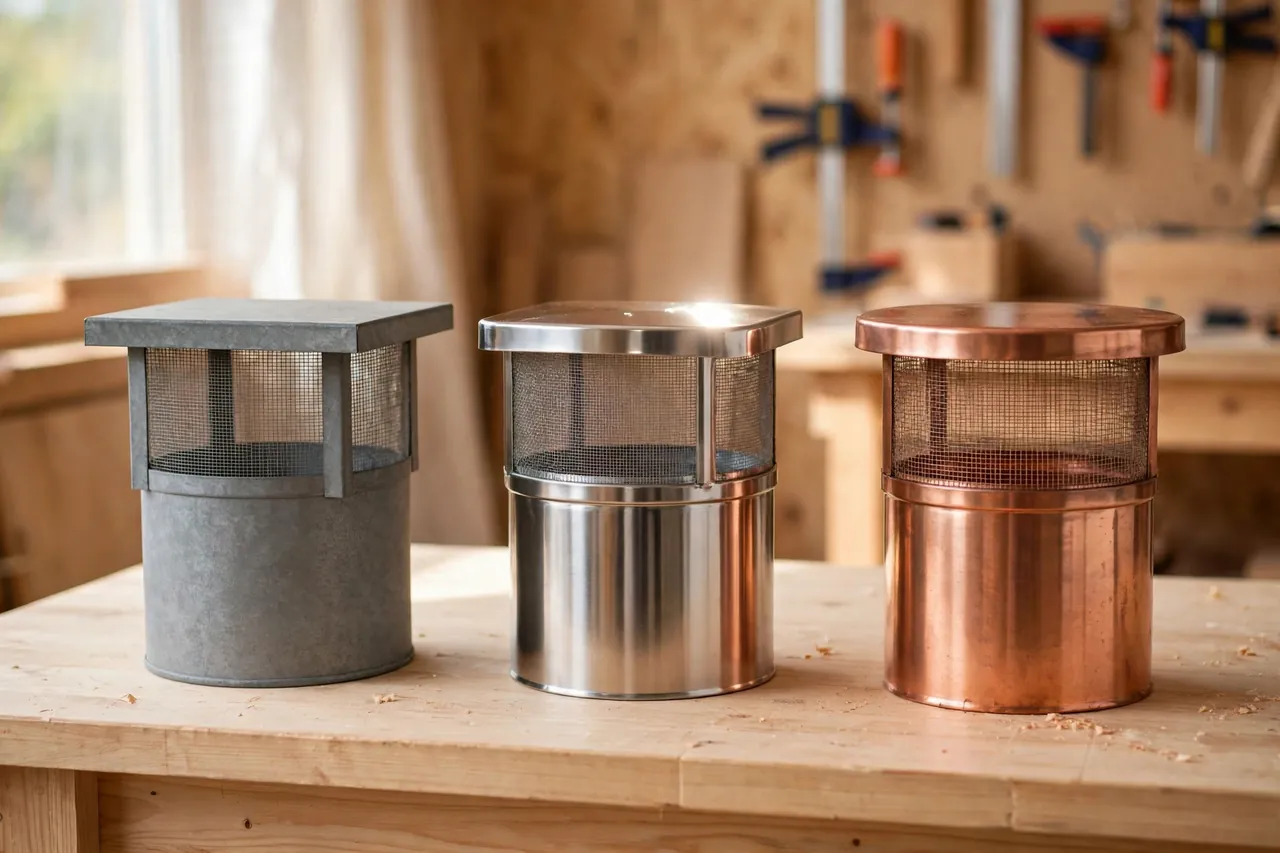
Galvanized steel is the cheapest option, but it rusts first. Expect five to ten years from a galvanized cap in most climates, and less near the coast. Stainless steel costs more and lasts far longer — 15 to 20 years or more — because it resists rust and heat. Copper lasts the longest of all, often 25 years or more, and it looks beautiful on a brick chimney, but it costs the most and needs more upkeep to keep its finish.
Your climate should drive the choice. In a wet, snowy, or coastal area, stainless steel is the smart middle ground: it outlasts galvanized by years and costs far less than copper. In a dry, mild climate, a galvanized cap can serve well for a decade. Near salt water, skip galvanized entirely — the salty air eats it in just a few years.
Match the Mounting Style
Caps attach in different ways, and the style must match your chimney. A bolt-on cap clamps around a single flue tile with four corner screws. A multi-flue cap screws to the crown and covers two or more flues at once. A band-around-brick cap wraps around the top course of brick on chimneys without a protruding tile. A slip-in cap slides into the flue and holds by tension, which suits flush tiles.
Factory-built metal chimneys are a special case. They take only the cap listed by their own maker, so check the chimney brand and model before you buy. A generic cap on a listed metal chimney can break the system’s safety listing.
Whatever style you pick, make sure the cap has a mesh screen. The screen is the spark arrestor that stops embers, and it keeps animals and leaves out. Building codes in many areas require a spark-arrestor screen fine enough to stop a half-inch sphere, under the International Residential Code (IRC R1003.9.2). If your local code demands a finer mesh, follow the local rule.
How to Replace a Chimney Cap
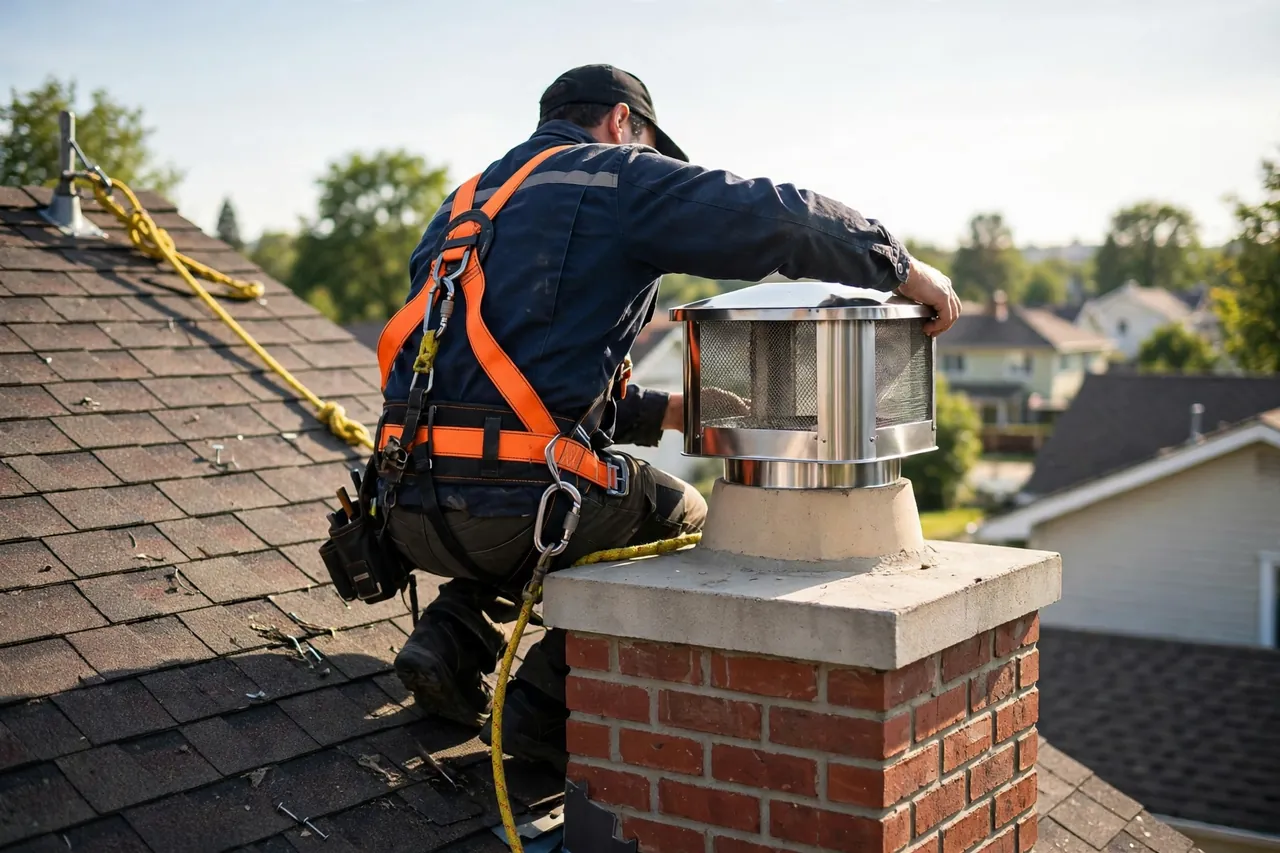
Replacing a chimney cap is a short job — often under an hour once you are on the roof — but the roof itself is the danger. Read this caution first, then decide honestly whether to do it yourself or hire a pro.
Caution: roof work can kill. HY-C, a leading chimney cap maker, states plainly that it does not recommend climbing your own roof, because a fall can cause serious injury. Angi advises the same: if your roof slope is steep, especially over 35 degrees, hire a professional. Never work on a wet, icy, or windy roof. Wear shoes with a good grip, use a ladder with a stabilizer, and wear a safety harness attached to a weight-bearing anchor point. Have a buddy on the ground to spot you. If any of that sounds beyond your comfort, hire a chimney sweep or roofer — the labor cost is small next to a hospital bill.
Also, never light a fire while the cap is off and the flue is open to work. Keep the fireplace cold and the damper closed until the new cap is secure.
Here are the steps for a standard single-flue bolt-on cap:
- Buy the right cap. Use your flue measurements and mounting style to order the cap. Check that all hardware — screws, brackets, and sealant — is in the box before you climb up.
- Clean the crown. Brush loose debris, leaves, and soot off the concrete crown with a wire brush. Rinse it with a garden hose and let it dry fully. While you clean, look for cracks in the crown and note any damage that needs repair before the cap goes on.
- Test the fit. Set the cap over the flue tile without fastening it. Check that it sits level, the mesh clears the flue opening, and the gap above the flue is at least eight inches. Mark the pilot holes with a pencil.
- Fasten the cap. Drill pilot holes with a masonry bit where you marked them, then tighten the four corner bolts or screws. HY-C warns that the bolts must not penetrate the flue tile, and they must be snug but not so tight that they crack the tile. A cracked tile leaks and costs far more to fix than a cap.
- Seal the base. Run a bead of high-heat silicone sealant around the entire base where the cap meets the chimney. This stops water from seeping into small gaps. Let the sealant cure — usually about eight hours in low humidity, longer when it is damp.
- Test the new cap. Light a small fire and watch the smoke. It should rise and exit through the chimney without puffing back into the room. After the next rain, check the flue and the fireplace for any sign of water getting in.
If your chimney has a gas fireplace vented through it, take extra care. A cap for a gas flue must not restrict ventilation, because blocked gas exhaust can push carbon monoxide back into your home. Use a cap rated for gas use, and if you are unsure, hire a qualified chimney professional to fit it.
Mistakes to Avoid When You Replace a Chimney Cap
Most cap replacements go wrong in the same few ways. Avoid these mistakes and the new cap will last its full life.
- Buying the wrong size. A cap that is too small leaves gaps. A cap that is too big rocks in the wind and lets rain in around the edges. Measure twice and match the cap to your flue, not to a guess.
- Overtightening the bolts. Cranking the corner bolts too hard cracks the flue tile. Snug is enough — the cap should not move, but the tile should not groan.
- Skipping the sealant. An unsealed base lets wind-driven rain creep under the cap. One tube of high-heat silicone costs little and saves a lot of trouble.
- Ignoring the crown. A new cap on a cracked crown still lets water in. Fix crown cracks first, or the cap replacement solves only half the problem.
- Choosing the cheapest material for a harsh climate. A galvanized cap near the coast or in a snowy region rusts fast. Stainless steel costs more up front and saves a second replacement in a few years.
- Forgetting the mesh screen. A cap without a screen stops rain but invites birds and embers. Make sure your cap has a spark-arrestor screen, and check it every year for rust or clogs.
How Long Does a New Chimney Cap Last?
A new chimney cap lasts three to 25 years, depending on its material and your climate, according to HomeAdvisor, checked November 9, 2026. Galvanized steel sits at the low end, at five to ten years. Stainless steel lasts 15 to 20 years or more. Copper can pass 25 years with basic care. Severe weather, heavy fireplace use, and salt air all shorten the range.
An annual inspection stretches that life. A chimney sweep checks the cap, the crown, and the flue each year and catches rust, loose screws, and small cracks before they grow. Clean the mesh screen when it clogs with soot or creosote, because a blocked screen chokes the draft and pushes smoke back into the room. Tighten any loose fasteners you find, and reseal the base when the old sealant cracks.
Plan the replacement before the burning season, in spring or fall. That timing gives you mild weather for the work and a fresh cap before winter rain and snow arrive.
When to Call a Professional
Some chimney cap replacements belong to a pro. Call one when your roof is steep, high, or hard to reach; when the chimney is two stories or taller; when the flue tile is cracked or the crown is badly damaged; or when you need a custom-sized cap. A chimney sweep or roofer has the ladders, harness, and experience to do the job safely, and they can spot structural problems you might miss.
Call a qualified professional without delay when gas is involved. If your gas fireplace vents through the chimney, a wrong cap can block exhaust and send carbon monoxide into your home. A certified chimney sweep knows which caps are rated for gas flues and how to fit them without restricting airflow. The Chimney Safety Institute of America (CSIA) certifies chimney sweeps across the United States, and its directory can help you find a certified sweep near you.
Get three written quotes for any pro job, and ask each pro to include the cap model, the material, and the warranty. A good pro will also inspect the crown and flue while they are up there and tell you what else needs attention.
Disclaimer: This guide is general home advice, not a substitute for a professional inspection. Roof work is dangerous, and gas and carbon monoxide risks are serious. Homes, chimneys, and local codes vary, so hire a qualified chimney professional for steep roofs, structural damage, or any gas-vented flue. If you smell gas or suspect carbon monoxide, leave the house and call emergency services.
Related Guides
how to clean a brick fireplace · limewash vs whitewash brick fireplace · Chimney Cap Repair · Chimney Topper · Chimney Sweep Cost
Frequently Asked Questions
Do I need a cap on my chimney?
Yes. A chimney cap keeps birds, squirrels, rain, and debris out of the flue. It stops stray embers, blocks downdrafts, and protects the inner chimney walls from moisture damage, which saves you from costly repairs down the road.
What’s the average lifespan of a chimney cap?
Most chimney caps last three to 25 years. Galvanized steel sits at the low end, while stainless steel, aluminum, and especially copper can exceed the 25-year mark. Annual inspections, quick repairs, and routine chimney cleanings help the cap reach its full lifespan.
What’s the best height for a chimney cap?
Set the cap at least eight inches above the top of the flue. That clearance keeps the draft strong, lets smoke exit freely, and prevents back-puffing into your living room. Extra height also adds a little more protection from wind-driven rain and snow without hurting airflow.
What is the difference between a chimney crown and a chimney cap?
The crown is the solid concrete or mortar slab that sits on top of the chimney stack and sheds water away from the masonry. The cap, mounted above the flue, adds the final layer of defense by blocking rain, animals, and embers while still letting smoke out. The crown guards the structure and the cap safeguards the flue.
Do gas fireplaces need chimney caps?
If your gas fireplace vents through a chimney, a chimney cap is highly recommended. It prevents rain, debris, and animals from entering the chimney, which can cause blockages or damage. A cap also helps prevent downdrafts that could push harmful gases like carbon monoxide back into your home. Make sure the cap is rated for gas use and does not restrict ventilation.
Replacing a chimney cap is a small job with a big payoff. A new cap stops rain, animals, and embers, and it costs about $300 installed on average. Measure your flue, pick stainless steel for the best balance of price and life, and hire a pro if the roof or the gas line makes you hesitate. Then mark your calendar for an annual cap check, so the next replacement never comes as a surprise.


