
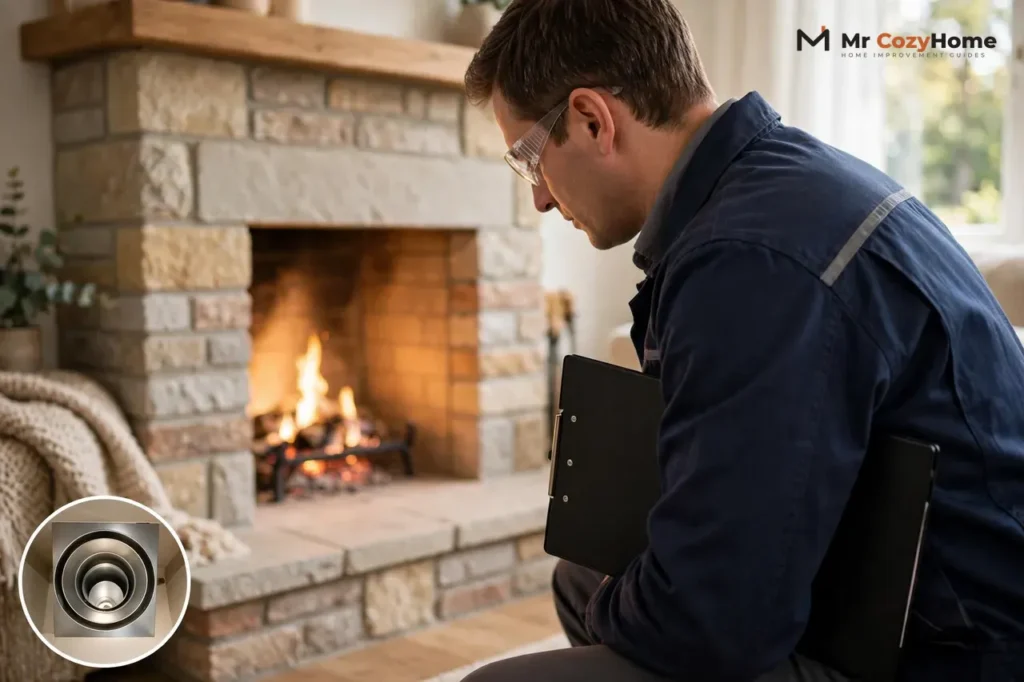
The chimney inspection cost for most homes is $100 to $600, and HomeAdvisor reports an average of $450 for a standard annual inspection. That range covers the routine yearly check and the camera inspection most buyers need, while a rare Level 3 inspection can reach $5,000.
Before you book, know this: the level of inspection is what sets your price, not the company name on the van. One item on the quote can double your bill without adding any safety — it is in the table below, and most homeowners never ask about it.
How Much Does a Chimney Inspection Cost?
A chimney inspection costs $100 to $600 for most homes, with the exact price set by the inspection level your chimney needs. A basic Level 1 visual check sits at the low end, a Level 2 camera inspection sits in the middle, and a Level 3 inspection that opens up walls sits far above both.
Angi, updated October 19, 2026, puts the full national range at $100 to $5,000, with costs reaching $6,300 on the high end for the most difficult jobs. HomeAdvisor reports the same wide range and an average of $450. The wide top end is not what most people pay — it covers tall chimneys, several flues, and inspections that open up the structure.
| Inspection level | Typical cost | Best for |
|---|---|---|
| Level 1 | $100–$950 | Yearly check, no changes |
| Level 2 | $200–$1,000 | Home sale, camera scan |
| Level 3 | $500–$5,000 | Hidden damage only |
These ranges come from Angi, updated October 19, 2026. Other guides report narrower bands for the same levels: HomeGuide, updated February 9, 2026, lists Level 1 at $100 to $250, Level 2 at $250 to $600, and Level 3 at $900 to $5,000. The gap exists because Angi’s range includes very tall chimneys and multi-flue homes, while the narrower guides describe a single-flue home of average height. Ask which level the quote covers before you compare two prices.
Your quote should name the level, the number of flues, and whether a sweep is included. A $150 quote for a Level 1 check and a $450 quote for a Level 2 camera inspection are not two prices for the same job. That one line on the quote is what decides whether you are comparing like with like, and it is the line most homeowners skip.
What Each Inspection Level Includes, and Why the Price Jumps
The three inspection levels come from NFPA 211, the national standard for chimneys, fireplaces, vents, and solid fuel-burning appliances. Each level builds on the one before it, so a Level 2 includes everything in a Level 1, and a Level 3 includes everything in a Level 2.
Your chimney’s history decides the level, not its age. A chimney you have used the same way for years needs a different check than one in a home you just bought.
Level 1: The Routine Yearly Check
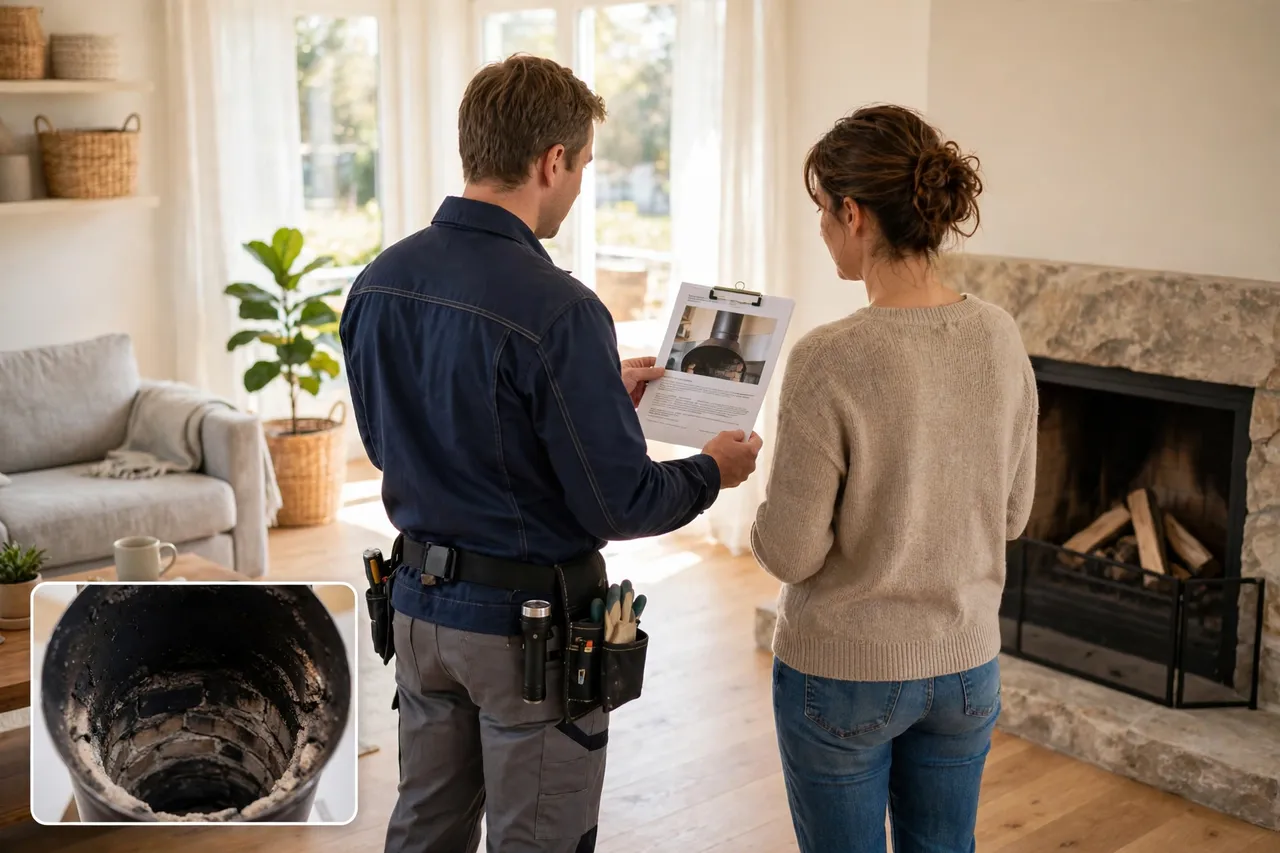
A Level 1 inspection is the basic visual check of the parts the inspector can reach easily: the firebox, the damper, the visible flue, the crown, the cap, and the flashing. The inspector looks for blockages, cracks, and creosote buildup, and confirms the flue is clear.
No camera and no tools that open anything are needed. A Level 1 visit takes about 45 minutes to an hour and a half, according to Angi. A Level 1 inspection is the minimum every chimney needs once a year. It is the right level when nothing has changed — same fuel, same appliance, no known problems, no fire or storm damage.
Level 2: The Camera Inspection
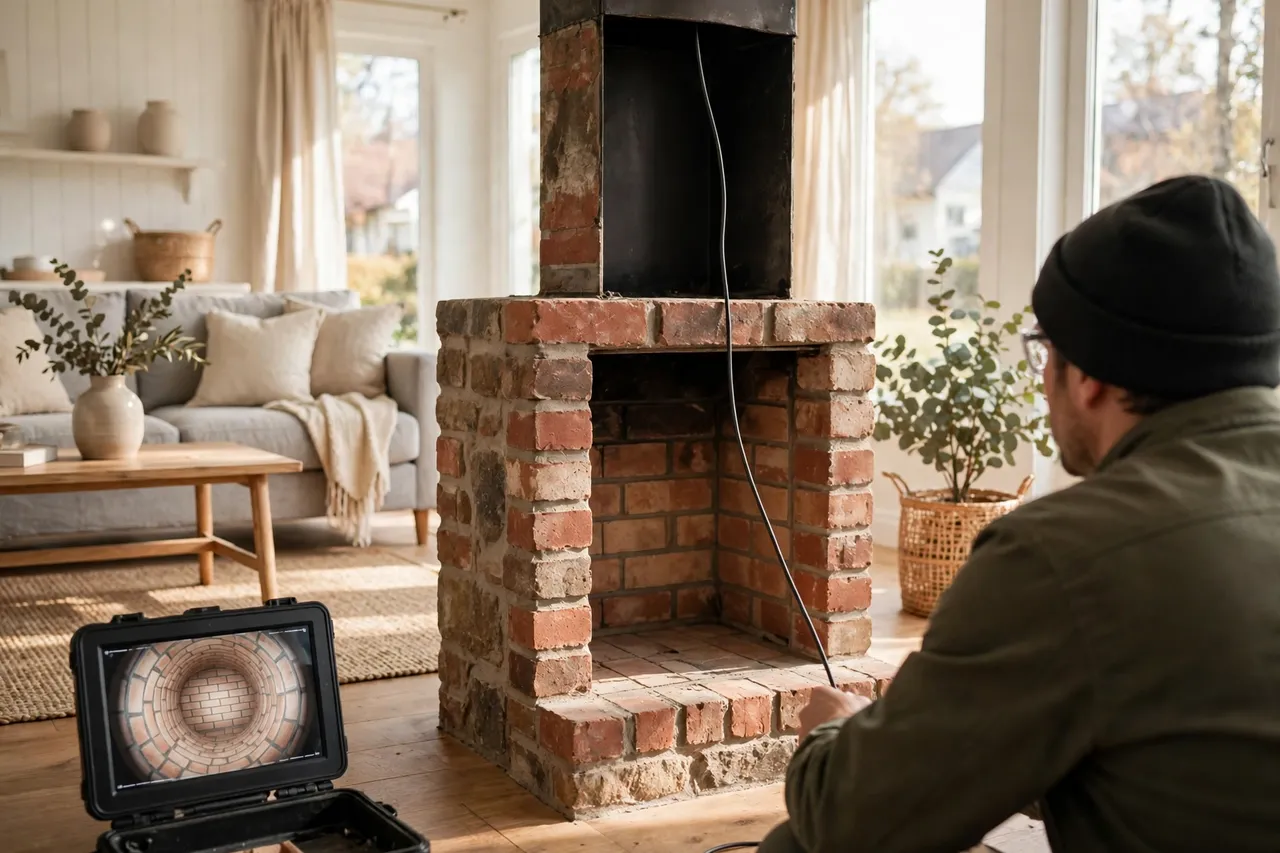
A Level 2 inspection adds a video scan of the full flue. The inspector runs a small camera up the chimney and watches the liner on a screen, joint by joint. This is the only way to see cracks, gaps, and damage hidden inside the flue.
It also covers the accessible parts of the chimney in the attic, crawl space, and basement, and checks clearances from combustible materials. HomeAdvisor puts a camera inspection at $200 to $400 for a single-flue chimney and up to $1,000 for chimneys with several flues. You need a Level 2 when you buy or sell a home, change the fuel or the appliance, or after a chimney fire or storm damage.
The camera is what turns a guess into proof. A cracked liner looks fine from the firebox and only shows up on the video. If you are buying a home, this is the level to ask for by name.
Level 3: The Deep Investigation
A Level 3 inspection is rare and expensive because it opens up the structure. The inspector may remove parts of a wall, the chimney crown, or sections of masonry to reach a concealed area, and only the smallest opening needed is made.
Angi puts a Level 3 at $500 to $5,000, and the top end covers the opening work plus the repairs that follow. A Level 3 can take up to five hours, or several days if it opens up building materials. You will only need one when a Level 1 or Level 2 points to a hidden hazard that a camera cannot fully judge. If a company pushes a Level 3 without showing you Level 2 findings first, get a second opinion before you agree.
What Drives Your Chimney Inspection Cost Up (or Down)
Six things move your chimney inspection cost more than any coupon or discount. The level is the biggest one, and the rest stack on top of it.
First, the number of flues. Each flue is a separate passage to inspect, and a home with two fireplaces or a furnace flue beside the fireplace flue pays for each one. HomeAdvisor notes that a camera inspection can reach $1,000 on a multi-flue chimney. Second, chimney height and size. A tall chimney takes longer to inspect and costs more than a short one on a single-story home.
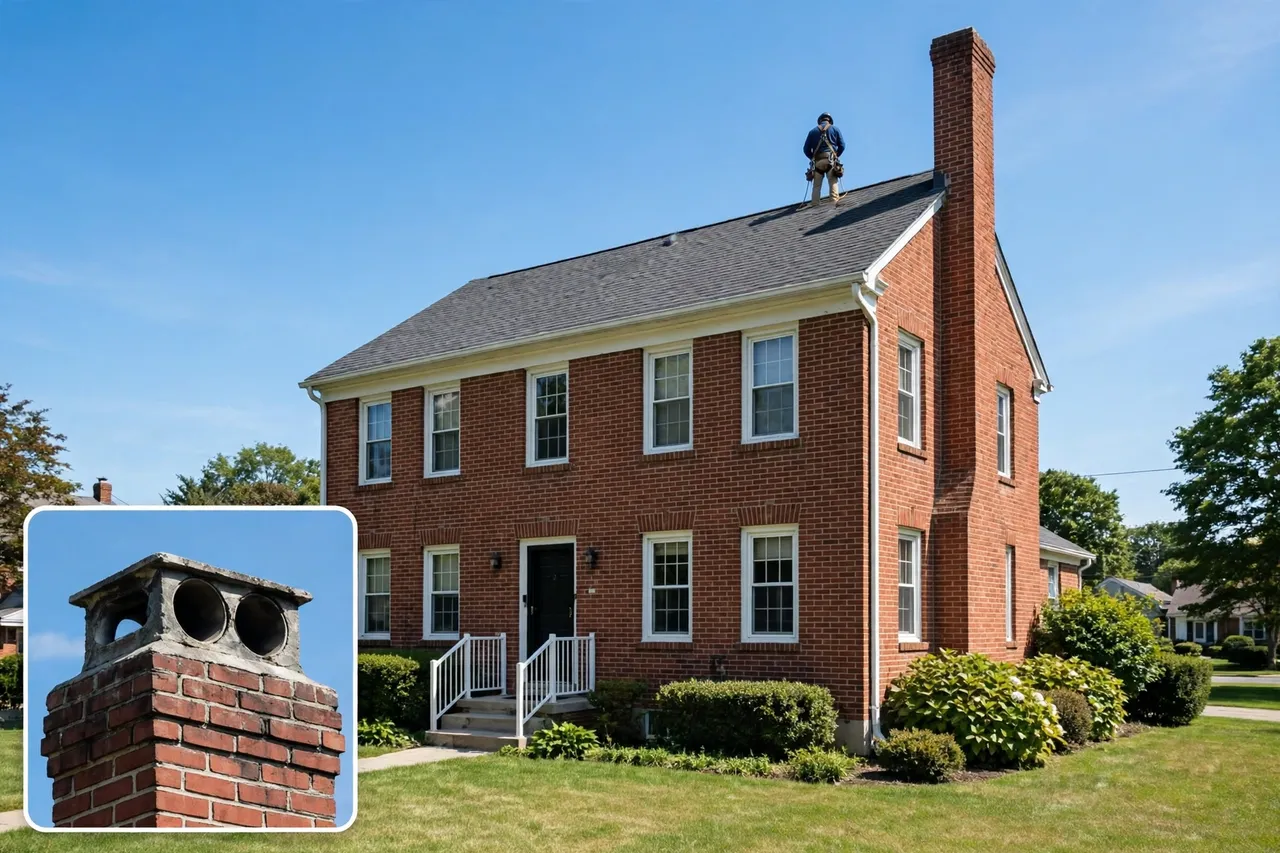
Third, roof access. A steep roof, a shaky roof structure, or overhanging trees that block the chimney all add time and risk, and the price follows. Fourth, the camera itself. A video scan needs special equipment and a trained operator, so it adds $200 to $400 on a single-flue chimney, according to HomeAdvisor.
Fifth, where you live. Inspectors in high-cost cities charge more than inspectors in rural areas, and busy fall weeks cost more than quiet spring weeks. Sixth, what the inspector finds. Repairs are billed apart from the inspection: Angi puts simple repairs at $160 to $750, and complex repairs can reach $15,000. Repairs are never part of the inspection price, so a low quote can still end in a big bill.
One cost driver hides in plain sight: the season. Book in spring or summer, when inspectors have open calendars, and you will usually pay less and wait less. Book in October, when every homeowner wants the same visit before the first fire, and you will pay the peak price and wait the longest. The chimney does not care when you book — your wallet does.
Chimney Inspection vs. Chimney Sweep: What You Actually Pay For
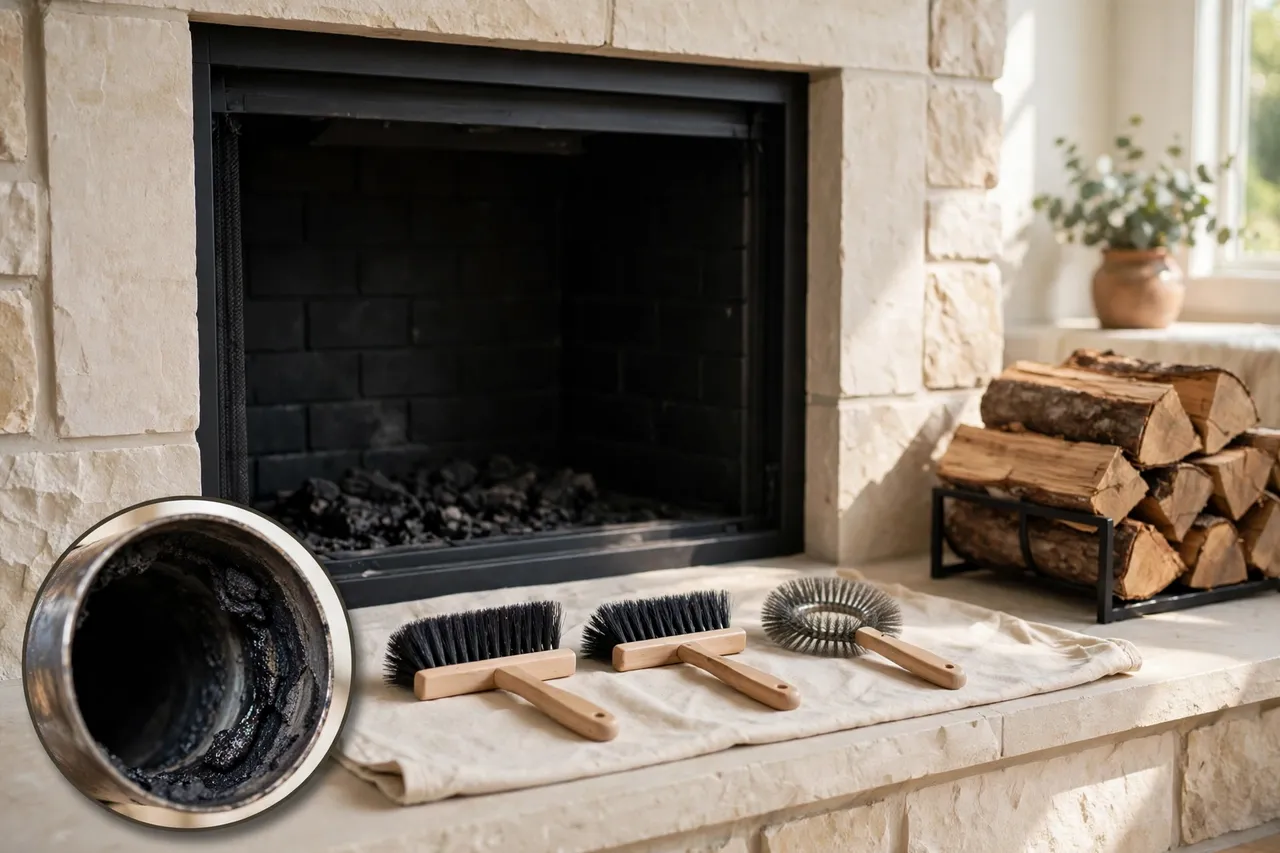
A chimney inspection and a chimney sweep are two different jobs, and the price you pay depends on which one you are buying. An inspection checks whether the system is safe. A sweep cleans soot and creosote out of the flue. Cleaning alone never tells you whether the liner is cracked.
Many companies bundle the two into one visit and one price. HomeAdvisor puts a sweep alone at $130 to $380, and notes that inspectors often bundle cleaning into a Level 1 or Level 2 inspection price. Our guide to chimney sweep cost shows how the bundled price breaks down and how to book it cheaper.
Here is the trap to watch for: a “free inspection” that is really a sales visit. Some companies offer a free look, then find urgent repairs on every chimney they visit. A real inspection ends with a written report and photos or video you can keep. A free inspection with no written report is a sales pitch, not a safety check.
Before you book, ask one question in plain words: “Is the sweep included in this price, or billed apart?” Then ask whether the camera scan is included, and whether you get the video. Three short questions, asked before the visit, stop most surprise charges. The cheapest visit is the one with no surprises in it.
How Often Do You Need a Chimney Inspection?
You need a chimney inspection at least once a year, even if you barely use the fireplace. The Chimney Safety Institute of America (CSIA) follows NFPA 211, which says chimneys, fireplaces, and vents shall be inspected at least once a year for soundness, freedom from deposits, and correct clearances.
Use does not change the rule much. A gas fireplace makes little creosote, but a bird’s nest or debris can still block its vent. A wood fireplace used every night builds creosote fast. Both need the yearly look. Our gas fireplace upkeep guide walks through what the yearly visit should cover for a gas unit.
Book the visit in late summer or early fall, before the first cold snap. Inspectors get busy in October, and you want time to fix anything they find before you need the fire. Once a year is the rule, and before the heating season is the timing.
You also need an inspection right away after a chimney fire, an earthquake, or storm damage, and a Level 2 inspection when you buy a home. A standard home inspection only gives the chimney a basic visual check and does not look inside the flue. If you skip the Level 2 at purchase time, you buy whatever is hiding inside the chimney along with the house.
What Most People Get Wrong About Chimney Inspection Prices
Most people get chimney inspection prices wrong in three ways, and each mistake costs real money. The first mistake is treating the cheapest quote as the best deal. A $99 inspection that skips the camera and the written report is not cheaper than a $300 Level 2 inspection — it is a different, smaller job that leaves the riskiest part of the chimney unseen.
The second mistake is thinking a home inspection covers the chimney. It does not. A general home inspector looks at the chimney from the ground and the roofline, not inside the flue. Only a dedicated Level 2 inspection with a camera shows the liner. Buyers who learn this after closing pay for the repair themselves.
The third mistake is assuming the inspection price includes the fix. It never does. The inspection finds the problem; the repair is a separate job with a separate quote. The inspection is the diagnosis, not the treatment, and the two are always priced apart.
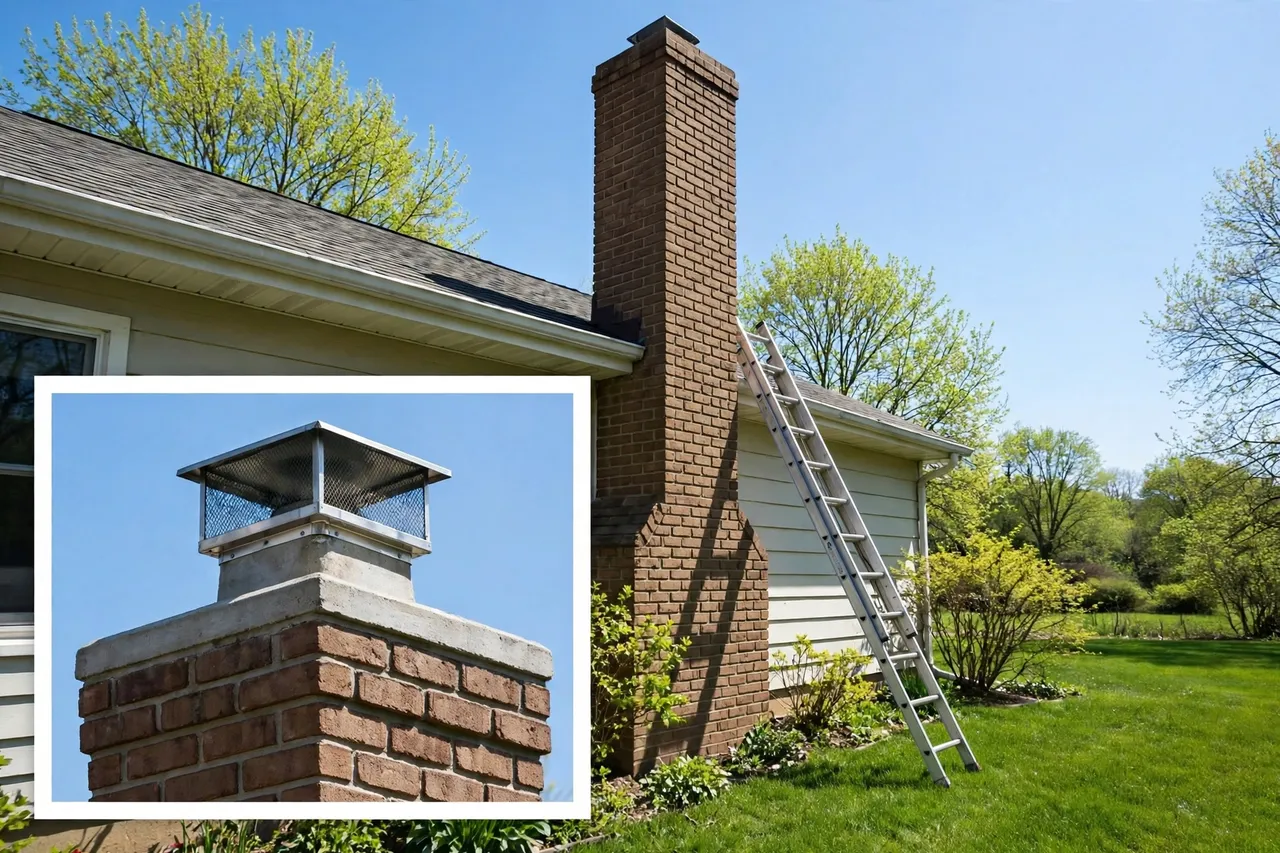
There is one more quiet mistake: skipping the inspection on a chimney you never use. An unused chimney still takes on water through a cracked crown or a missing cap, still attracts birds and animals, and still ages. The yearly rule applies even if you never light a fire, and it matters most before you sell the home. A small cap problem is often a cheap fix if you catch it early, as our chimney cap repair guide explains — and if the cap is beyond repair, our chimney cap replacement guide shows what that costs.
How to Choose a CSIA-Certified Inspector, and Read the Quote
The person matters as much as the check. A certified inspector is trained to the NFPA 211 standard and knows what a hidden crack looks like on camera. Start with the Chimney Safety Institute of America. Its directory lists CSIA Certified Chimney Sweeps by ZIP code, and certification must be renewed every three years.
Ask these questions before you book:
- Are you CSIA certified, and can I check your credential?
- Which inspection level do I need, and why?
- Does the visit include a video scan of the flue?
- Will I get a written report with photos or video?
- Is cleaning included in the price, or billed apart?
- What happens if you find a problem — do I get a written repair quote?
Get the price in writing before the visit starts. A good quote names the level, the number of flues, the camera scan, the written report, and whether the sweep is included. A written quote that names the level beats a low verbal price every time.
Skip any company that will not name its certification, will not put the price in writing, or pushes a big repair before showing you proof on camera. A good pro explains the findings, shows you the video, and lets you decide in your own time. If the inspector finds a cracked liner or heavy glazed creosote, do not light a fire until the repair is done. For repair planning, start with our guide to repair fireplace costs and fixes.
How to Save Money Without Skipping the Safety Check
You can cut the cost of a chimney inspection without cutting the safety out of it. The savings come from timing and bundling, never from skipping the check itself.
First, bundle the sweep with the inspection. One visit, one trip charge, and the inspector is already on the roof. Second, book in spring or summer, when demand is low and calendars are open. Third, get two or three written quotes from CSIA-certified pros in your area and compare the same level, not the lowest number. A $450 average from HomeAdvisor is a useful benchmark, but your local range is what matters.
Fourth, do the easy prep yourself. Clear the hearth, move the screen and tools away from the fireplace, and do not light a fire for at least 24 hours before the visit so the firebox and flue are cool. Clear a path to the attic and basement if the inspector needs to see the chimney there. Fifth, keep the report and photos. They prove the chimney’s condition if you sell the home or file an insurance claim.
Bundle the sweep, book off-season, and compare written quotes for the same level. That is the whole savings plan. Anything that saves money by skipping the camera, the report, or the certified inspector is not a saving — it is a risk you pay for later. If your chimney has no cap at all, read our chimney topper guide before the visit, so you know what that fix costs too.
Safety First: When to Call a Professional
Some chimney problems are homeowner jobs. An inspection is not one of them. Climbing on a steep roof, running a camera up a flue, and judging a cracked liner all need training and the right gear. Angi is blunt about it: a chimney with structural damage or heavy creosote can lead to a fire or dangerous gases leaking into your home, and hiring a pro is the best and safest option for nearly everyone.
Call a CSIA-certified chimney professional right away if smoke spills into the room, if you smell gas near a gas fireplace, if the chimney has not been inspected in over a year, or before you use a fireplace in a home you just bought. Keep working smoke and carbon monoxide alarms in your home, and know what to do if your carbon monoxide alarm goes off. A good detector adds a second layer of safety — read our guide to the best carbon monoxide detector for your home — but a detector is a warning, not a fix.
Never light a fire in a fireplace that has not been inspected in the past year. The inspection finds the problem before the alarm ever sounds, and that is exactly what the $100 to $600 buys you.
Safety disclaimer: This article is general home information, not professional advice. Fireplaces, chimneys, and gas appliances can cause fire, smoke damage, and carbon monoxide poisoning if used or repaired the wrong way. Never light a fire in a fireplace that has not been inspected in the past year, never work on a roof or inside a flue without the right training and safety gear, and never ignore smoke in the room or a carbon monoxide alarm. If you are unsure about anything here, stop and call a CSIA-certified chimney sweep or a licensed professional before you use the fireplace. If a carbon monoxide alarm sounds, or anyone has a headache, dizziness, nausea, or confusion while the fireplace is in use, get to fresh air at once and call 911.
Related Guides
These guides cover the rest of the system around your inspection: chimney sweep cost, repair fireplace, chimney cap repair, chimney cap replacement, gas fireplace upkeep, and best carbon monoxide detector.
Frequently Asked Questions
How much does a chimney inspection cost?
A chimney inspection costs $100 to $600 for most homes, with HomeAdvisor reporting an average of $450. A Level 1 visual check runs about $100 to $250 in most guides, a Level 2 camera inspection about $250 to $600, and a Level 3 inspection $500 to $5,000 or more. Prices vary by region, chimney height, and the number of flues.
How long does a chimney inspection take?
A Level 1 inspection takes about 45 minutes to an hour and a half. A Level 2 inspection with a camera scan usually takes less than two hours. A Level 3 inspection can take up to five hours, or several days if it requires removing parts of the chimney or wall.
Is a chimney inspection part of a home inspection?
No. A chimney inspection performed during a home inspection is a limited review that only highlights visible issues on the inside and outside of the fireplace and chimney. It does not cover hidden defects inside the flue. If you have concerns about the chimney, a dedicated inspection by a chimney specialist is essential.
Should chimneys be inspected annually?
Yes. Chimneys should be inspected annually to ensure they are in safe working order. Inspectors check for cracks, leaks, blockages, creosote buildup, and other problems that could cause structural damage, fire, or carbon monoxide poisoning. A yearly inspection is the best way to catch issues before they can harm your home.
What is involved in a chimney inspection?
A Level 1 inspection involves a visual check of the readily accessible parts of the chimney, including the firebox, damper, flue, crown, cap, and flashing. A Level 2 inspection adds a video camera scan of the full flue interior, plus checks in the attic, crawl space, and basement. A Level 3 inspection opens concealed areas to reach hidden damage.
How do I know if my chimney is safe to operate?
Beyond having an inspection, keep up chimney maintenance at least once a year to be certain the chimney is safe to use. Cleaning the flue of creosote and soot reduces the risk of fire. The cost of hiring a pro to inspect the chimney often includes a chimney cleaning, so you may not face an extra expense for maintenance.


