
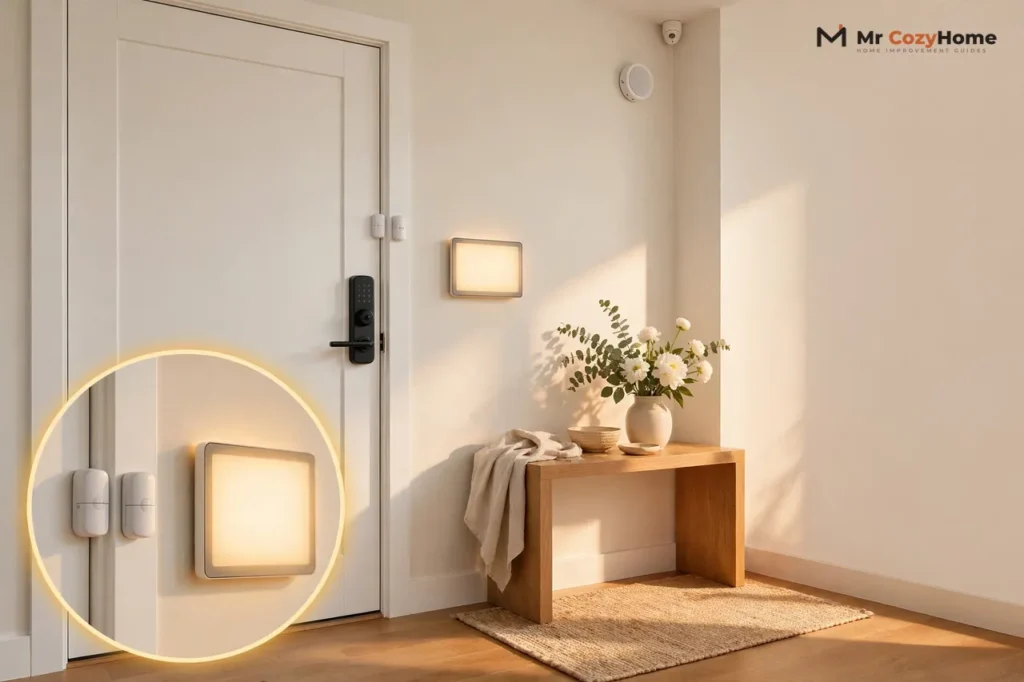
A burglar alarm is a home security system that spots a break-in and warns you fast. When a door opens, a window breaks, or someone moves through a room while the system is armed, sensors send a signal to the control panel. The panel then sounds a loud siren, sends an alert to your phone, or calls a monitoring center. In short, burglar alarms buy you time: they scare off most intruders and alert you before a thief can take much.
This guide covers the whole system, not just one part. You will learn the main types, the parts inside the box, the real difference between monitored and self-monitored systems, what alarms cost in the United States, and how to pick one for a house or an apartment. By the end, you will know exactly what to buy and what to skip.
What Is a Burglar Alarm?
A burglar alarm is a set of connected devices that watch your home for signs of a break-in. The system stays quiet while you are home and awake. When you arm it, usually when you leave or go to bed, it starts watching. If a sensor trips, the system reacts in seconds.
Think of it as a chain with four links. First, a sensor detects something wrong, like a door opening or motion in a hallway. Second, the sensor sends a signal to the control panel, the brain of the system. Third, the panel decides what to do based on whether the system is armed. Fourth, the system acts: the siren sounds, your phone gets an alert, and, if you pay for monitoring, a monitoring center gets the signal too.
A burglar alarm is only one part of home security, but it is the part that reacts. Strong locks slow a burglar down. Cameras record what happens. The alarm is what makes noise, wakes you up, and calls for help while the break-in is still happening.
How a Burglar Alarm Works
Every burglar alarm follows the same four steps, no matter the brand or price. Once you see the pattern, every system on the shelf starts to make sense.
- Detect. A sensor notices a change. A door sensor feels the door and frame separate. A motion detector security alarm senses heat and movement in a room. A glass-break sensor hears the sound of shattering glass.
- Send. The sensor sends a signal to the control panel, through wires or through a wireless radio signal.
- Decide. The panel checks whether the system is armed. If it is armed, the panel triggers the alarm. If it is disarmed, nothing happens.
- Respond. The siren sounds, your phone buzzes, and a monitoring center is alerted if you have that service. You then decide whether to check the app, call a neighbor, or call the police.
Most systems give you a short entry delay, usually 30 to 60 seconds, after you open the front door. That window lets you disarm the system with your code before the siren sounds. You set the delay yourself during setup, so pick a time that fits how fast you walk from the door to the keypad.
The Main Parts of a Burglar Alarm System
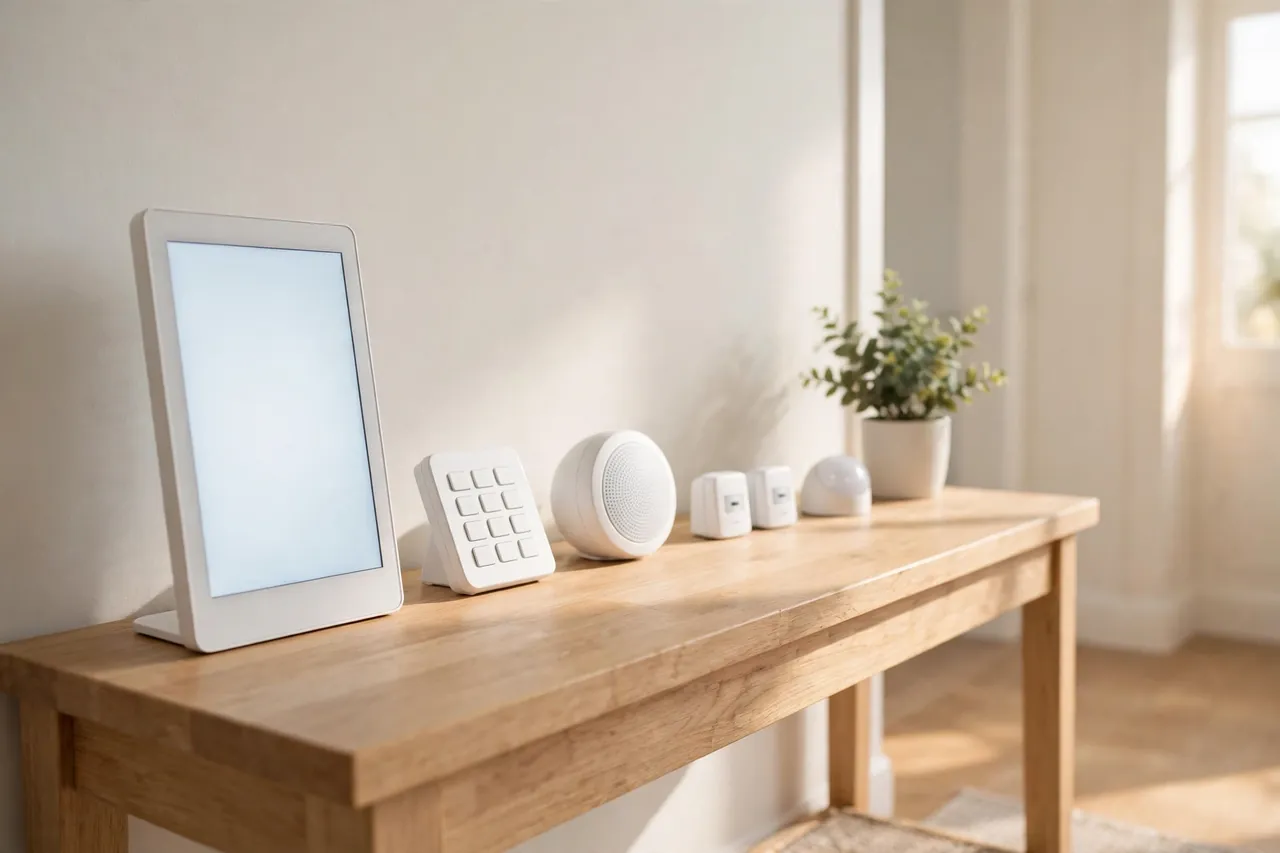
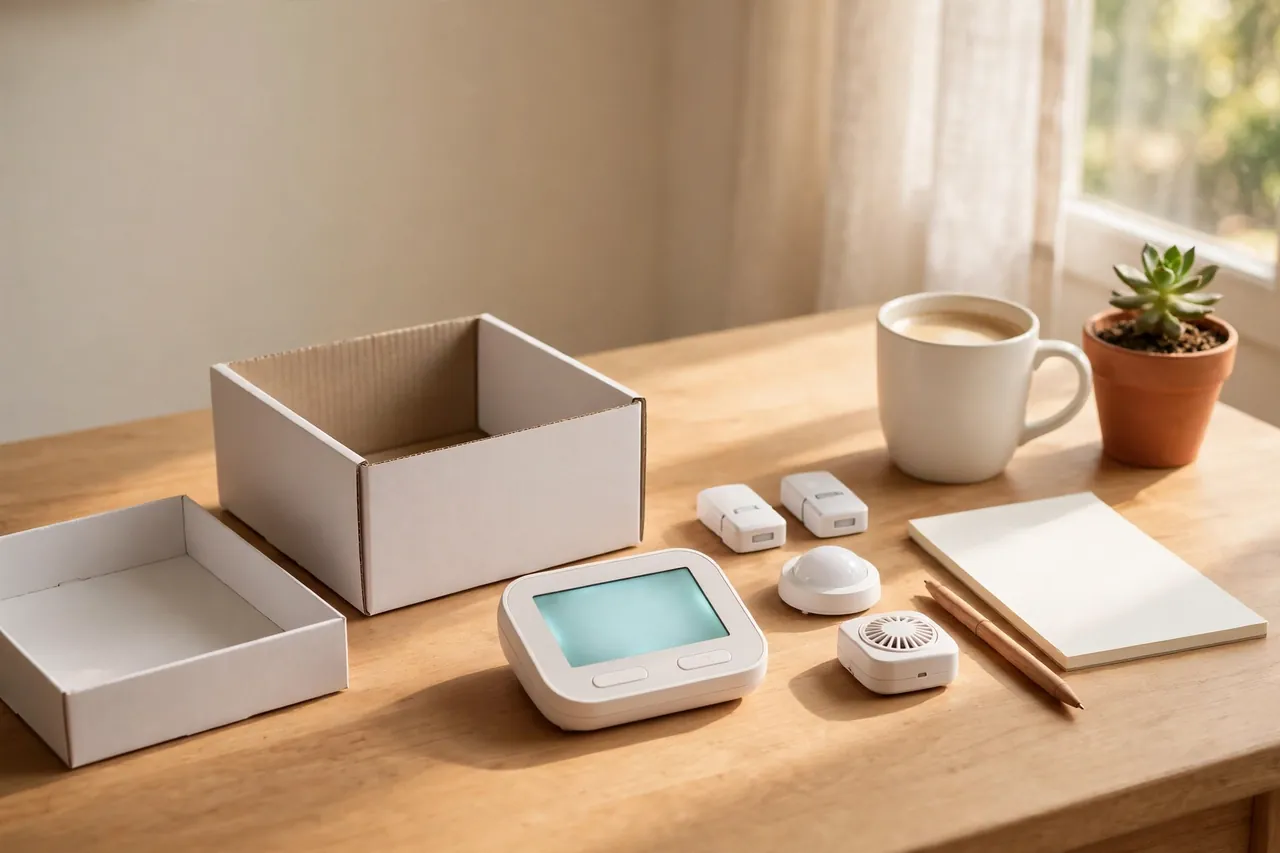
A burglar alarm system has four core parts, plus optional add-ons. You do not need to memorize model numbers. You only need to know what each part does, so you can spot a weak kit before you buy it.
The control panel
The control panel is the brain. It receives signals from every sensor, checks whether the system is armed, and triggers the siren and alerts. Modern panels also connect to your phone app and to smart home systems like Alexa and Google Home. If you want the full detail on what the panel does and how to pick one, read our guide to the security alarm panel.
Door and window sensors
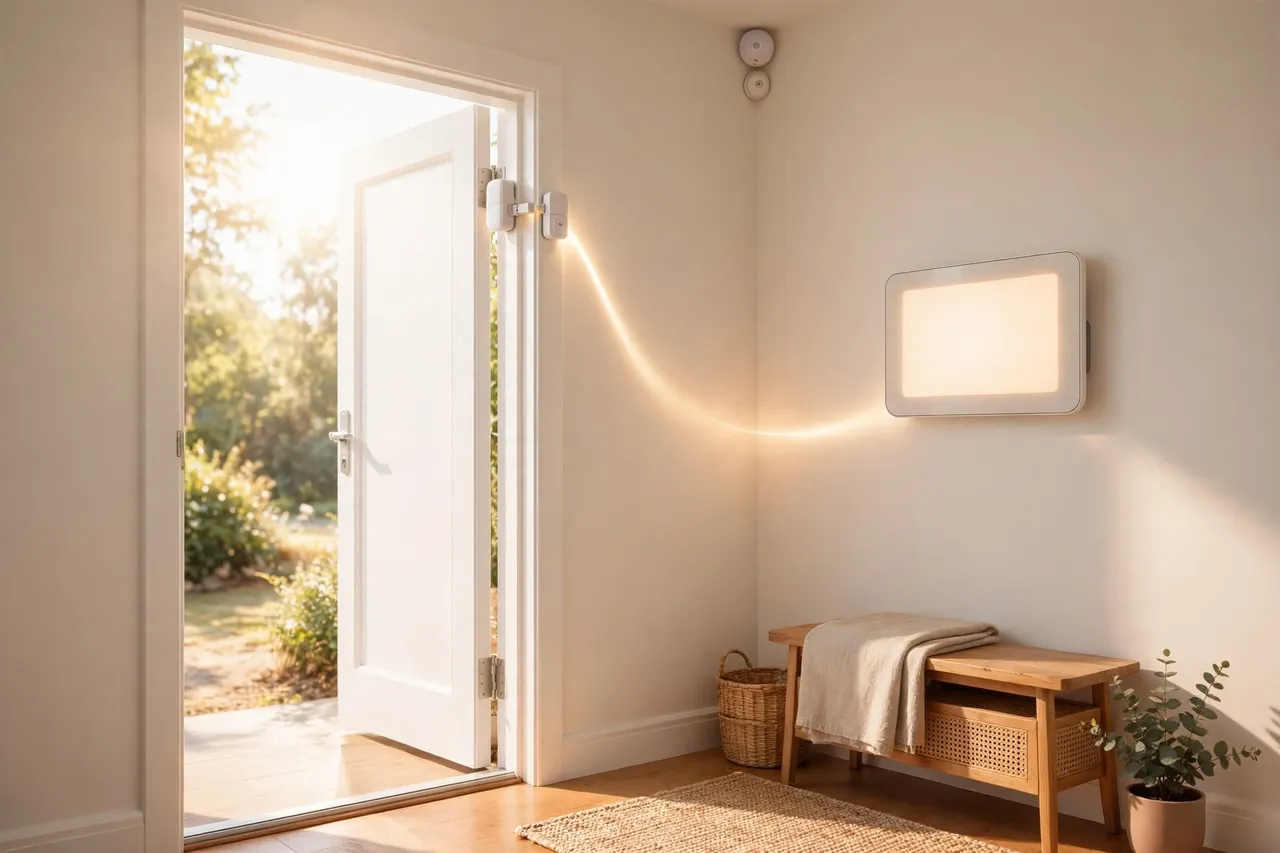
Door and window sensors are the most common part of any system. Each sensor has two pieces: one on the door or window, and one on the frame. When the two pieces separate, the sensor trips. They are cheap, reliable, and they catch the most common way burglars get in, which is through a door or a ground-floor window. Our guide to the door sensor alarm explains the types and where to place them.
Motion sensors
A home alarm motion sensor watches a room for movement and changes in heat. It covers the space inside your home, so it catches an intruder even if they get past a door sensor. Place motion sensors in hallways and main rooms, not in rooms where pets roam, unless you buy a pet-friendly model. A motion alarm on its own is a good start for a small apartment, but it works best as backup to door sensors, not as a replacement.
The keypad and the siren
The keypad is how you arm and disarm the system. You type a PIN code to turn the alarm on and off. Many keypads also have panic buttons that trigger the alarm at once. The siren is the loud speaker, usually mounted inside the home and sometimes outside too. A typical indoor siren is loud enough to hurt your ears in the same room, and that is the point: it makes the house a bad place for a burglar to stay.
Optional add-ons include glass-break sensors, smoke and carbon monoxide detectors that tie into the panel, panic buttons, and outdoor sirens. A system that ties smoke detectors into the alarm panel can also warn you about fire while you sleep, which is a real bonus for one purchase.
The Types of Burglar Alarms
Burglar alarms come in several types, and the names can confuse you because they describe different things. Some names describe the wiring, some describe who responds, and some describe how the alarm alerts you. Here is the full picture in one place.
Burglar alarm types at a glance
| Type | How it works | Best for |
|---|---|---|
| Wired | Sensors connect to the panel through cables in your walls | New builds and whole-house systems |
| Wireless | Sensors talk to the panel by radio signal and run on batteries | Most homes, renters, and DIY installs |
| Monitored | A monitoring center watches your system 24/7 and can call police | People away from home often |
| Self-monitored | Alerts go to your phone only, and you decide what to do | Budget buyers and hands-on owners |
| Bells-only | The siren sounds, but nobody is notified | Low-cost basic protection |
| Smart | App control, smart home links, and remote arming | Smart home owners |
| Hybrid | Wired panel with wireless sensors mixed in | Upgrading an old wired system |
Wired burglar alarms
A wired security alarm connects every sensor to the panel with a physical cable. A hard wired house alarm system is very reliable because wires do not drop signals and never need batteries. The catch is installation: running cables through finished walls is messy and usually needs a professional. Wired systems suit new homes, major remodels, and people who plan to stay put for years.
Wireless burglar alarms
A wireless system uses battery-powered sensors that talk to the panel by radio signal. You can stick a sensor on a door in minutes, move it later, and take the whole system with you when you move. Batteries last one to three years in most sensors, and the app warns you before they die. Wireless is the right choice for most homes today, and it is the only sensible choice for renters.
Monitored burglar alarms
A monitored system connects to a professional monitoring center that watches your alarms around the clock. When a sensor trips, the center calls you to check whether it is real. If you do not answer, or you confirm a break-in, they call the police. This is the strongest protection, and it is also the only type that helps when you are asleep, away, or unable to answer your phone.
Self-monitored burglar alarms
A self-monitored system sends alerts to your phone and leaves the response to you. There is no monthly fee, and you can arm, disarm, and check the system from anywhere. The trade-off is simple: if you miss the alert, nobody else responds. Self-monitoring fits people who check their phones often and live close to home, but it is a weak choice if you travel a lot or sleep with your phone on silent.
Bells-only alarms
A bells-only alarm sounds a loud siren when a sensor trips, and that is all it does. Nobody gets a call or a phone alert. The noise alone scares off many burglars, and the system costs the least to buy and run, because there is no monthly fee. The weakness is clear: if nobody is home to hear it, the burglar can wait out the noise or work fast.
Smart burglar alarms
A smart alarm is a wireless system with app control and smart home links. You arm it from your phone, get alerts with the sensor name and room, and connect it to cameras, locks, and lights. For example, the alarm can turn on the lights and lock the doors when a sensor trips. Smart alarms are the best fit for most buyers today because they combine easy setup with real control.
Perimeter alarm systems
A perimeter alarm system protects the outer edge of your property, not just the house itself. Outdoor motion sensors, driveway sensors, and fence sensors watch the yard and warn you before someone reaches a door or window. A perimeter alarm system suits large yards, rural homes, and anyone who wants an early warning instead of finding out only after a door opens.
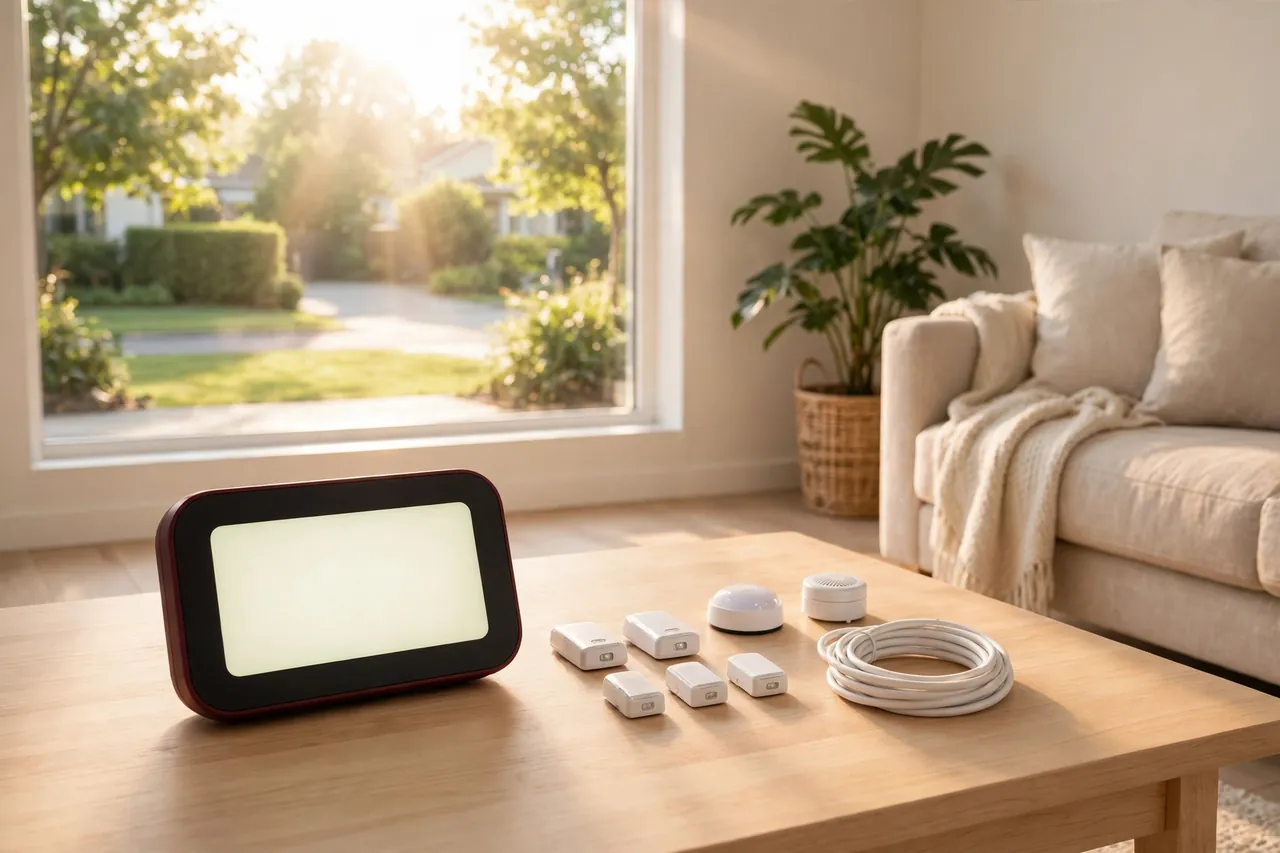
Wired vs Wireless: Which One Fits Your Home?
This is the first big choice, and it is mostly about your house, not the technology. Both types protect well when they are installed right. Pick based on how you live.
Wired vs wireless at a glance
| Factor | Wired | Wireless |
|---|---|---|
| Install | Professional, cables in walls | DIY in an afternoon |
| Reliability | Very high, no signal drops | High, rare interference |
| Power | Mains power, no batteries | Batteries, change every 1 to 3 years |
| Moving sensors | Hard, needs new cable runs | Easy, peel and stick |
| Renters | Not practical | Ideal |
| Upfront cost | Higher, mostly labor | Lower, mostly equipment |
Choose wired if you own your home, you are building or remodeling, and you want a set-and-forget system that never needs batteries. Choose wireless if you rent, you want to install it yourself, or you may move within a few years. If you already have an old wired system, a hybrid panel lets you keep the wired sensors and add wireless ones where you need them, which is often the cheapest upgrade path.
Monitored vs Self-Monitored: Who Responds When It Goes Off?
This is the second big choice, and it is about response, not hardware. The same sensors can feed either setup. What changes is who acts when the alarm trips.
With professional monitoring, a trained person at a monitoring center gets your alarm signal in seconds. They call you first to rule out a false alarm. If you confirm a break-in, or if you do not answer, they contact the police. Some centers also offer video verification, where a camera clip helps police treat the call as a confirmed break-in, which can speed up response. Monitoring only works if your system can reach the center, so pick a system with cellular backup. If a burglar cuts your internet or phone line, cellular backup keeps the signal going.
With self-monitoring, the alert lands on your phone and nowhere else. You check the app, look at your cameras if you have them, and call the police yourself. That saves the monthly fee, and many people are happy with it. But be honest about your habits. If your phone sits on silent at night, if you travel often, or if you would freeze for a minute before acting, self-monitoring leaves a real gap.
One middle path exists: some systems let you self-monitor most of the time and switch on professional monitoring for a month when you go on vacation. Ask the provider before you buy whether that option exists, because not every brand offers it.
Cameras make either choice stronger. A camera that records the break-in gives you and the police something real to act on. Our guide to a security camera with monitor shows how to pair cameras with an alarm, and our guide to a security camera without subscription shows how to keep the video costs at zero.
Burglar Alarm Systems for Apartments
Apartment living needs a different setup from a house. You cannot drill into walls you do not own, you have fewer entry points, and your neighbors are close enough to hear a siren. Burglar alarm systems for apartments work best when they are small, wireless, and easy to remove.
Start with the front door. One door sensor and one motion sensor in the main room cover most apartments. Add a window sensor only on ground-floor or fire-escape windows, since upper floors are hard to reach from outside. A loud indoor siren matters more in an apartment than in a house, because neighbors hear it through the walls and that attention is exactly what a burglar hates.
Before you buy, check two things. First, read your lease or ask your landlord. Most landlords allow peel-and-stick sensors that leave no marks, but some forbid drilling or outdoor sirens. Second, check your building rules on noise. A siren that blasts for 15 minutes will bring complaints, so pick a system that lets you set the siren time and silence it from the app.
Renters should favor no-contract systems with no monthly fee or a cheap self-monitoring plan. You want a kit you can pack in a box and reinstall in your next place in an hour. And pair the alarm with a good lock: a smart key lock or one of the best smart deadbolts makes the door itself harder to open, which is the first line of defense in any apartment.
How Much Does a Burglar Alarm Cost?
Alarm costs have three parts: equipment, installation, and monitoring. The equipment is a one-time cost. Installation is a one-time cost if you hire a pro. Monitoring is the monthly cost, and it is the part that adds up over the years.
For professional monitoring in the United States, expect about $30 to $60 per month, according to Vivint’s monitoring cost guide, updated May 15, 2026 and checked on November 6, 2026. Vivint puts equipment at $200 to $1,500 or more and professional installation at $99 to $199. A basic DIY system with a control panel, door and window sensors, and a motion detector costs about $300 to $800, with professional monitoring typically $25 to $50 per month, according to Armor Concepts’ 2026 guide, last updated September 19, 2026 and checked on November 6, 2026.
Cheaper monitoring exists if you own your equipment. SafeHomeCentral, a monitoring provider for open systems, lists landline monitoring from $8.95 per month on its site, checked on November 6, 2026. That low price only works with compatible panels, so check your panel’s brand before you count on it.
What drives the price up? More sensors, more rooms, cameras, smart locks, and professional installation. What keeps it down? A small DIY wireless kit, self-monitoring, and buying only the sensors you truly need. A two-bedroom apartment can be covered well with a starter kit, while a large two-story house may need twice as many sensors and a second siren.
Watch the contract, not just the monthly price. Some companies offer cheap equipment but lock you into a three-year monitoring contract. Others charge more upfront and let you cancel any month. Add up the full three-year cost before you sign, because a $30 monthly fee is $1,080 over three years, and that number matters more than the price of the box.
False Alarms: Why They Happen and How to Stop Them
False alarms are the most common complaint about burglar alarms, and they are also the most fixable problem. A system that cries wolf trains you to ignore it, and in some cities repeated false alarms can bring fines or a fee for police response. Fix the causes and the system becomes trustworthy again.
The usual causes are simple. Low batteries make sensors send weak or garbled signals. Motion sensors aimed at a heating vent, a sunny window, or a curtain that moves in a draft will trip on heat and movement that is not a person. Pets set off motion sensors that are not pet-friendly. Loose door sensors trip when a door rattles in the wind. And the most human cause: someone arms the system, forgets, and opens a door.
Here is how to cut false alarms to almost zero. Test every sensor after install and once a month after that. Replace batteries the week the app warns you, not months later. Aim motion sensors away from vents, radiators, and direct sun. Use pet-friendly motion sensors if you have a dog or cat over 40 pounds, and check the weight limit before you buy. Tighten loose door frames and adjust sensor gaps so a rattling door does not trip the contact. Finally, teach every person in the house the code and the entry delay, and give guests and cleaners their own temporary code so they never guess.
If your system keeps false alarming after those fixes, call the installer or the maker’s support line. A faulty sensor is cheap to replace, and a bad sensor will keep crying wolf until you swap it.
Do Burglar Alarms Really Work?
Yes, and the evidence is straightforward. Alarms work in two ways: they scare off the burglar who is already inside, and they warn off the burglar who is still outside looking at your house. A visible alarm panel, a yard sign, and an outdoor siren box tell a burglar that your house is a risky target, and most burglars prefer an easy one.
In a University of North Carolina at Charlotte study of convicted burglars, about 60% said they would avoid a home with an alarm system. That number is often quoted because it comes from the people who actually break in, not from alarm sellers. The study also found that alarms matter most when they are visible and when the burglar believes someone will respond.
That last point is the honest limit. An alarm cannot stop a determined burglar by itself, and a bells-only alarm helps nobody if no one hears it. Alarms work best as part of a layered setup: a strong door and lock, an alarm that sounds and alerts, and cameras that record. Each layer covers the weakness of the one before it. If you want to strengthen the first layer, read our guides to the best door locks for home and high security door locks.
What to Check Before You Buy
Run through this list before you spend anything. It takes ten minutes and saves you from the most common buyer mistakes.
- Count your entry points. Walk your home and count every ground-floor door and window. That count decides how many sensors you need.
- Check cellular backup. Make sure the panel can call out over a cellular signal if your internet or phone line goes down.
- Ask about the contract. Get the contract length, the cancellation fee, and the monthly price in writing before you sign.
- Check smart home compatibility. Confirm the system works with Alexa, Google Home, or Apple Home if you use them, and check the exact model, not just the brand.
- Ask about pets. If you have pets, check the motion sensor weight limit and buy pet-friendly sensors.
- Check battery life. Ask how long sensor batteries last and whether the app warns you before they die.
- Ask who installs it. DIY kits save money, but a pro install is worth it for wired systems and large homes.
- Check the warranty. Look for at least a one-year warranty on the panel and sensors, and ask what it covers.
- Ask your insurer. Some insurers offer a discount for a monitored alarm. SafeHomeCentral notes that many insurers offer 10% to 20% off for professionally monitored systems, with 15% the most common figure, according to its insurance guide checked on November 6, 2026. Call your insurer and ask what proof they need, because a discount you cannot claim is worth nothing.
- Test the app first. Download the maker’s app and read recent reviews. A clumsy app will annoy you every single day.
Buy the system that fits your home and your habits, not the biggest box on the shelf. A small wireless kit that you actually arm every night protects you far better than a large system that sits disarmed because it is too much trouble to use.
Related Guides
If you are building out your home security step by step, these guides pick up where this one leaves off. Our smart key lock guide explains keyless entry for your front door. Our best smart deadbolt picks narrow the lock choice to the models worth paying for. Our best door locks for home and high security door locks guides cover the physical lock itself. And our security camera without subscription guide shows how to add cameras with no monthly fee.
Burglar Alarms FAQs
How do burglar alarms work?
A burglar alarm uses sensors to detect motion, vibration, or a door or window opening. When the system is armed and a sensor trips, it sends a signal to the control panel. The panel sounds the siren and alerts you by phone, or alerts a monitoring center if you pay for monitoring.
Are burglar alarms effective?
Yes. Alarms deter burglars because most break-ins are crimes of opportunity, and thieves avoid homes that draw attention. In a University of North Carolina at Charlotte study, about 60% of convicted burglars said they would avoid a home with an alarm. A visible system with monitoring works best.
How much does a burglar alarm cost?
A basic DIY system with a panel, door and window sensors, and a motion detector costs about $300 to $800, according to Armor Concepts’ 2026 guide. Professional monitoring typically runs $25 to $60 per month, depending on the provider. Self-monitoring costs nothing monthly beyond the equipment.
Can burglars disable alarms?
Yes, cheap or poorly installed alarms can be disabled, but it is harder than most people think. Burglars may cut a phone line or smash a panel, which is why good systems use cellular backup, battery backup, and a hidden panel location. A loud siren and a monitoring center make disabling the alarm far less useful to a burglar.
Does a burglar alarm reduce insurance?
Often, yes. Many insurers offer a discount for a professionally monitored alarm, because a monitored home is a lower risk. SafeHomeCentral notes discounts of 10% to 20%, with 15% the most common. Ask your insurer what proof they need, such as a monitoring certificate, before you count on the saving.
How often should burglar alarms be serviced?
Test your system once a month by tripping each sensor and checking that the siren and alerts work. Have a professional service the system at least once a year, and replace sensor batteries when the app warns you. A system that is never tested is a system you cannot trust.
A burglar alarm is a simple idea done well: sensors watch, a panel decides, and a siren and an alert respond. Pick a wireless smart kit for most homes, add monitoring if you are often away, cover every ground-floor entry point, and test the system every month. Do that, and your home becomes the house a burglar walks past. If you want help with the next piece, start with your front door: a strong lock and a door sensor together stop most break-ins before they start.
Security needs vary by home, and prices and monitoring plans change often, so confirm the current price and contract terms with the provider before you buy. For wired systems, large homes, or any work inside your walls or electrical panel, hire a qualified installer rather than doing it yourself.


