
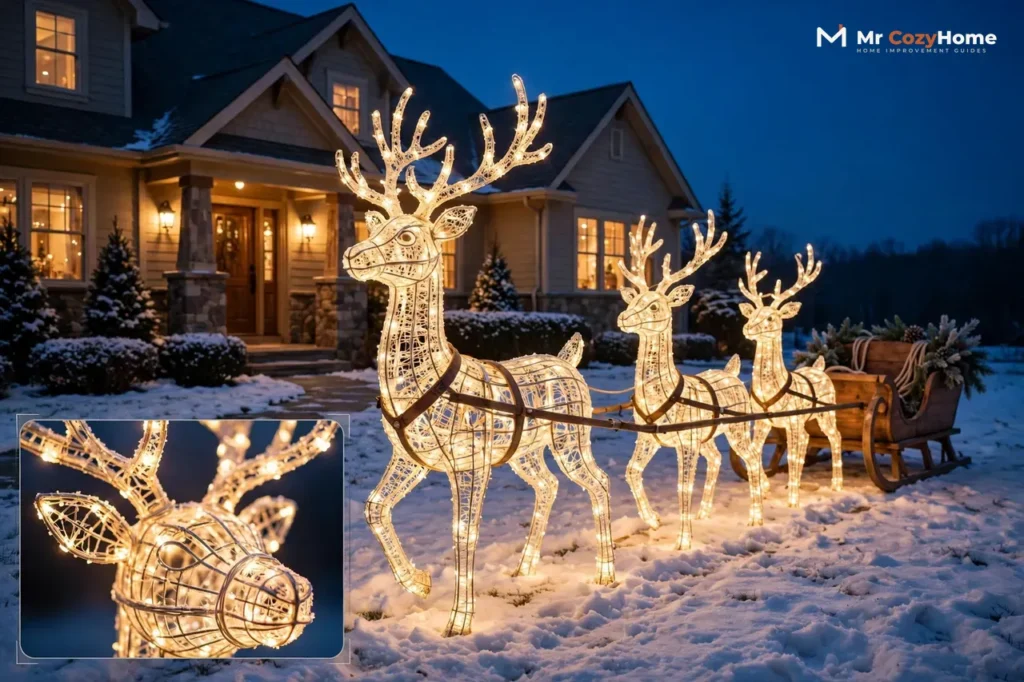
Outdoor reindeer Christmas decorations are lighted figures, wire-frame deer, and inflatable reindeer you place in your yard to build a warm, glowing holiday scene. A single well-placed reindeer can anchor your whole front yard, and a small team pulling a sleigh can turn an ordinary lawn into the display neighbors slow down to enjoy. Pick the right size for your yard, anchor every figure well, and power it from a GFCI-protected outdoor outlet, and you get a display that looks magical and stays safe all season.
Reindeer work so well outside because they read clearly from the street, even at night. A glowing shape with antlers, four legs, and a proud head needs no explanation. Kids spot it from the car, guests follow it toward your door, and you get that storybook feeling every time you pull into the driveway. This guide walks you through the types, the sizes, the placement, the anchoring, and the power setup, so you choose once and enjoy the result instead of fixing it after every windy night.
What Outdoor Reindeer Christmas Decorations Actually Are
People use the phrase reindeer outdoor Christmas decorations for a whole family of yard figures, not one single product. Some are flat wire-frame shapes wrapped in lights. Some are full three-dimensional figures you can walk around. Some inflate with a small fan and glow from inside. All of them share the same job: they put a reindeer shape, lit up, where people can see it from the street.
The deer side of the family belongs here too. Outdoor deer Christmas decorations and Christmas deer outdoor decorations usually mean the same kind of figure, often a graceful doe, buck, or fawn without a red nose or harness. If you love a quiet, woodland look instead of a Santa-team look, a deer figure gives you that same glow with a calmer feel. Treat reindeer and deer figures as one family when you shop, and pick the style that matches your home.
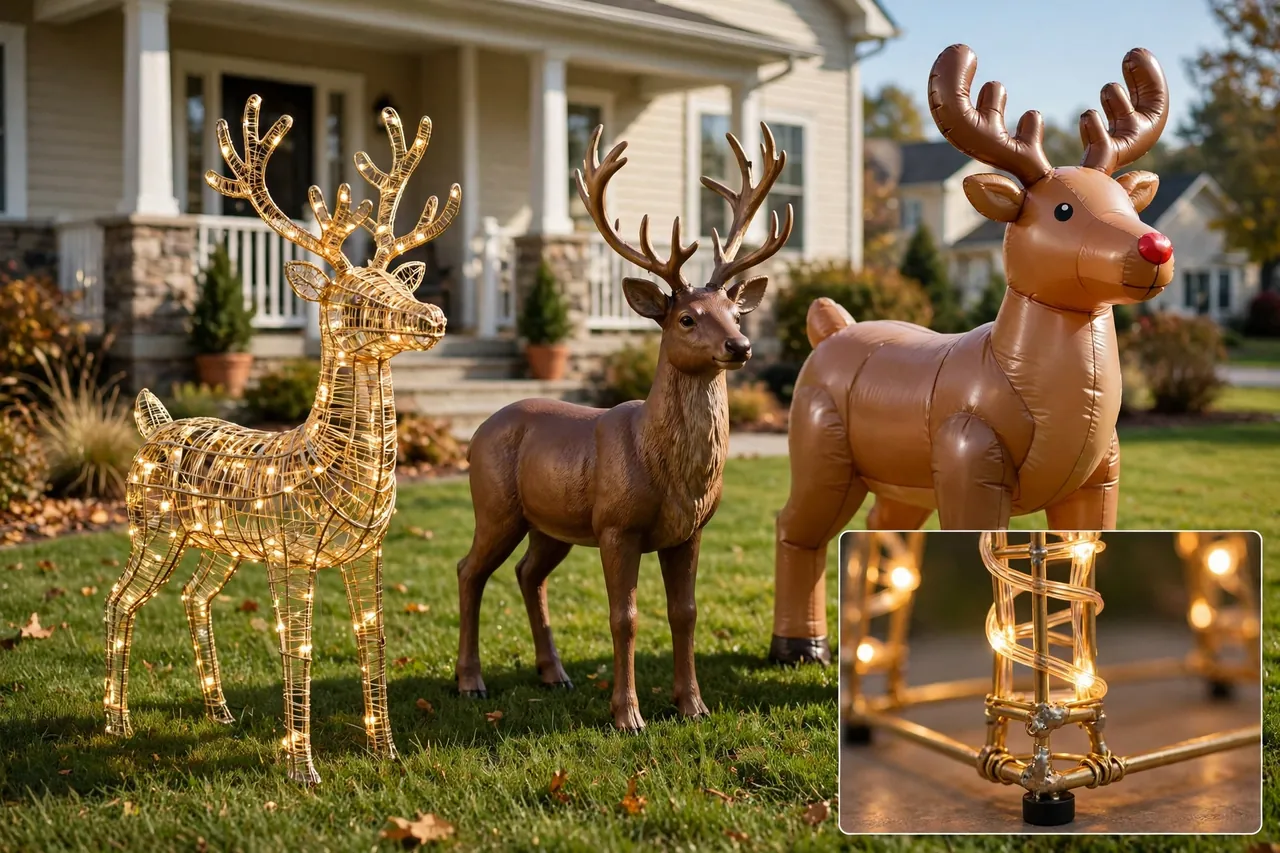
Most outdoor reindeer figures fall into a few clear groups. Lighted wire-frame reindeer use a metal frame wrapped in string lights or a glittery mesh, so they glow as an outline at night and still look neat by day. Inflatable reindeer use a fan to stay puffed up, and they pack down small when the season ends. Solid figures made from resin, rattan, or metal hold their shape without power, and some carry their own lights too. Knowing which group you want makes every other choice easier, from size to anchoring to storage.
Choose the Right Reindeer for Your Yard
Start with your yard, not the catalog photo. A figure that looks perfect in a wide product photo can crowd a small front lawn or disappear against a big two-story house. Measure the spot where the reindeer will stand, note how far it sits from your nearest outdoor outlet, and check how much wind that spot catches. Then match the figure to the spot, not the other way around.
Lighted wire-frame reindeer suit most homes best, because they look good day and night, they weigh little, and they fold flat for storage. Their open frames catch less wind than a solid figure, which helps on breezy nights. Check the frame before you buy: sturdy welded joints, a stable leg base, and ground stakes in the box all point to a figure that will stand straight through December.
Inflatable reindeer suit big, open lawns where you want instant impact. They go up fast, they glow brightly, and kids love them. However, they need constant fan power, they catch a lot of wind, and they need strong tethers in gusty weather. If your yard faces open fields or sits on a hilltop, plan extra anchoring from day one, or pick a wire-frame figure instead.
Solid resin, rattan, or metal deer suit porches, flower beds, and sheltered corners. They look refined up close, they need no fan, and they survive a cold snap without fuss. Their drawback is weight and storage: a large solid figure needs a real storage spot in January, and a heavy figure still needs stakes or weights so a strong gust cannot slide it across an icy porch.
For a classic Christmas story, look at reindeer teams and sleigh scenes. A team reads as one display, so the figures should match in style, light color, and size scale. Mixing one tall inflatable, one small wire-frame deer, and one solid resin buck in the same bed usually looks like leftovers, not a team. Pick one style family for the team, then let the sleigh or the lead reindeer carry the focal point.
How Big Should Your Reindeer Be?
Size decides whether your display looks intentional or accidental. A tiny figure lost in a big lawn looks like it wandered off, while a giant inflatable pressed against a small porch looks like it is trying to move in. Use the front of your house as your guide: the reindeer should relate to your door, your porch, and your roofline, not fight them.
For a small front yard or a townhouse lawn, one or two figures around 2 to 4 feet tall usually hit the sweet spot. They show up from the sidewalk without blocking windows or paths. For an average suburban front yard, a 4 to 5 foot lead reindeer with one or two smaller companions gives you a scene with depth. For a large, open lawn, you can go bigger, but keep the tallest figure shorter than your porch roof so the house still leads the display.
Table: Reindeer size guide for common yards
| Yard type | Lead figure height | Best figure type |
|---|---|---|
| Small lawn or porch | 2 to 4 feet | Wire-frame or solid deer |
| Average front yard | 4 to 5 feet | Wire-frame family or team |
| Large open lawn | 5 to 8 feet | Inflatable or large wire-frame team |
| Sleigh scene | Match the sleigh | Matched team, one style |
Always check the real dimensions on the box, in feet and inches, before you order. Product photos flatter every figure, and a “large” label means different things to different sellers. Measure your spot with a tape, mark the footprint with string or garden hose, and stand back at the sidewalk. That five-minute test saves you a return trip and a display that never quite fits.
Where to Place Outdoor Reindeer Decorations for the Best Look
Placement turns a figure into a scene. The best spot gives your reindeer three things: a clear view from the street, a safe distance from paths and driveways, and a power source that does not force cords across a walkway. Walk to the street at dusk and look back at your house. The dark, empty patch your eye lands on first is usually where your reindeer belongs.
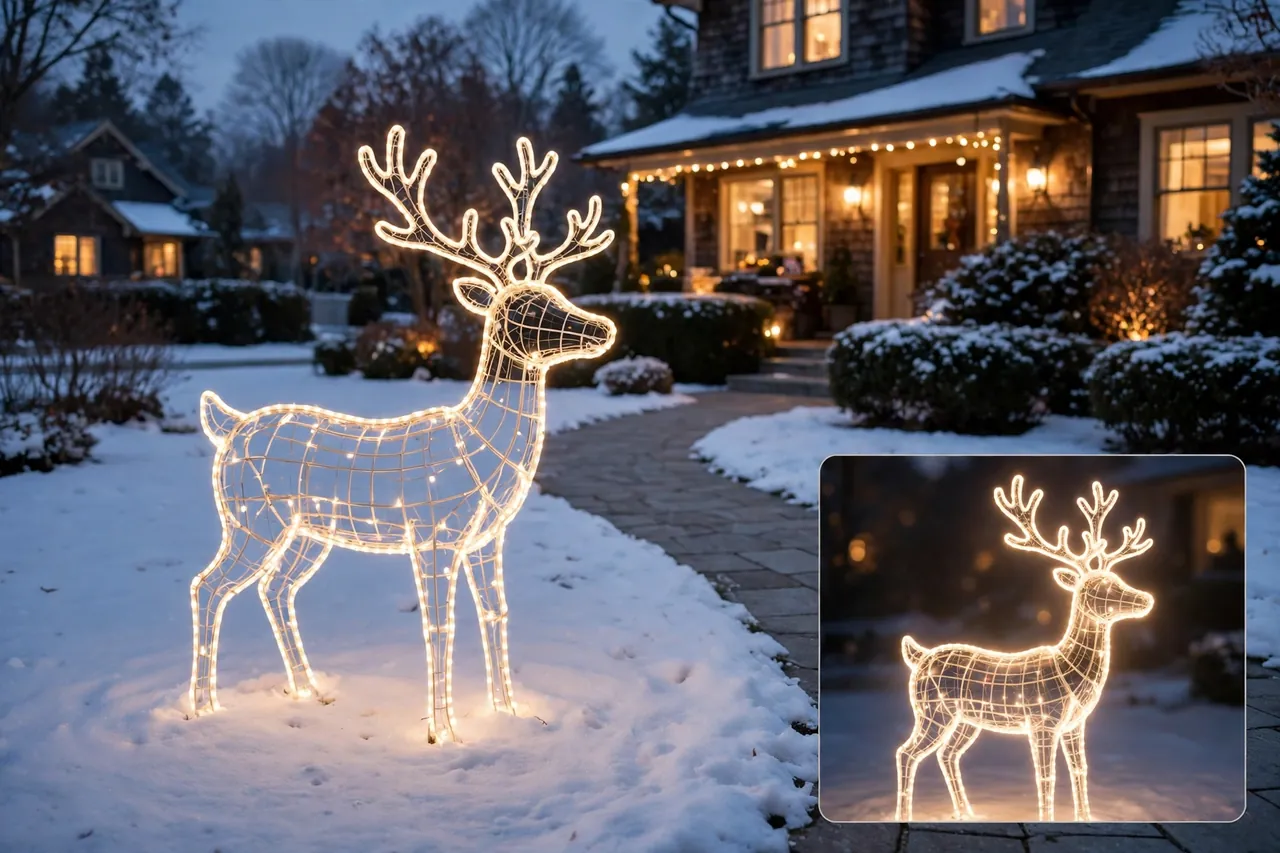
Outdoor reindeer decorations for Christmas shine brightest as a front-yard focal point. Set the lead reindeer where it faces the street at a slight angle, not dead flat against the house, so its shape reads in three dimensions. Give it breathing room: a figure crowded by shrubs loses its outline, while the same figure standing clear against lawn or snow glows like a picture. Keep at least a few feet between the figure and any walkway, so guests never brush antlers or trip over a tether line.
Porches suit smaller deer beautifully. Flank your door with a matched pair, or tuck one deer beside a planter where it greets guests up close. On a porch, choose a solid or wire-frame figure over an inflatable, because porch roofs and railings leave little room for a fan-driven figure to sway. Keep the figure off the walking path, and leave the steps and handrail fully clear.
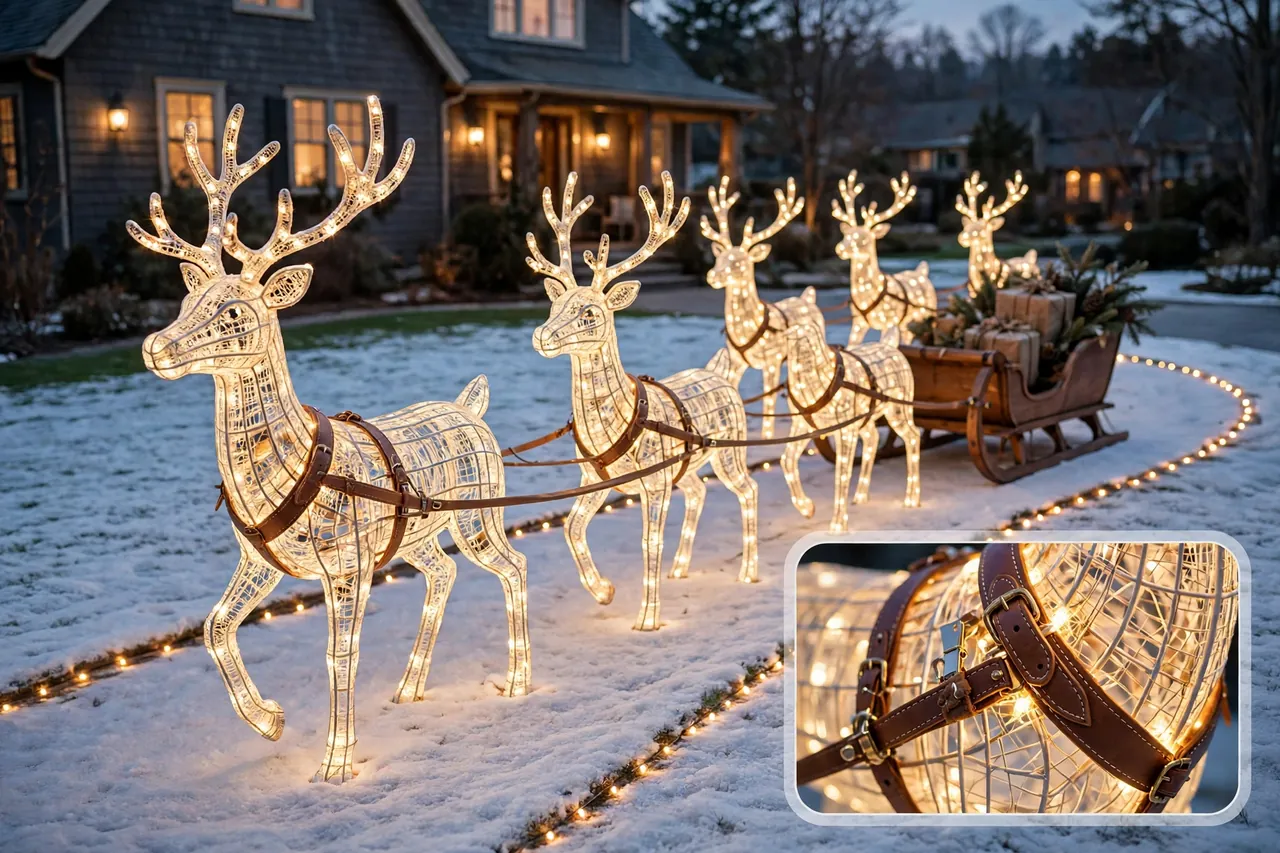
For a sleigh scene, think like a stage director. Place the sleigh as the anchor, then line the team in front of it in a gentle curve, not a stiff straight row. The lead reindeer stands tallest and closest to the street view, and each following figure steps slightly smaller or slightly back. Angle the whole team so it appears to travel across your lawn toward the house or the street, and leave a clear gap behind the sleigh so nobody has to climb over cords to admire it.
One more placement rule protects the whole display: keep every figure clear of mailboxes, house numbers, and street signs. A beautiful reindeer that hides your house number frustrates delivery drivers and guests alike, and a figure leaning over a sidewalk can draw a complaint from a neighbor or a homeowners association. Beauty and good manners share the same patch of lawn here.
How to Anchor Reindeer So Wind Does Not Win
Wind ruins more reindeer displays than rain, snow, or bad lights combined. A lighted figure acts like a small sail, and one gusty night can tip it, tangle its lights, or send it sliding toward the driveway. Anchor every outdoor figure on the day you set it up, even if the forecast looks calm. Calm setup days make for confident stormy nights.
Caution: never anchor a figure by tying it to a gas meter, a power line, a fence that cannot hold the load, or anything that moves, and never climb onto a roof to place or tie down a reindeer. Roof work belongs to professionals with the right gear. If a spot needs roof access, pick a ground-level spot instead.
Follow these steps for a ground-level figure:
- Set the figure on level ground, away from slopes where water and ice pool underneath.
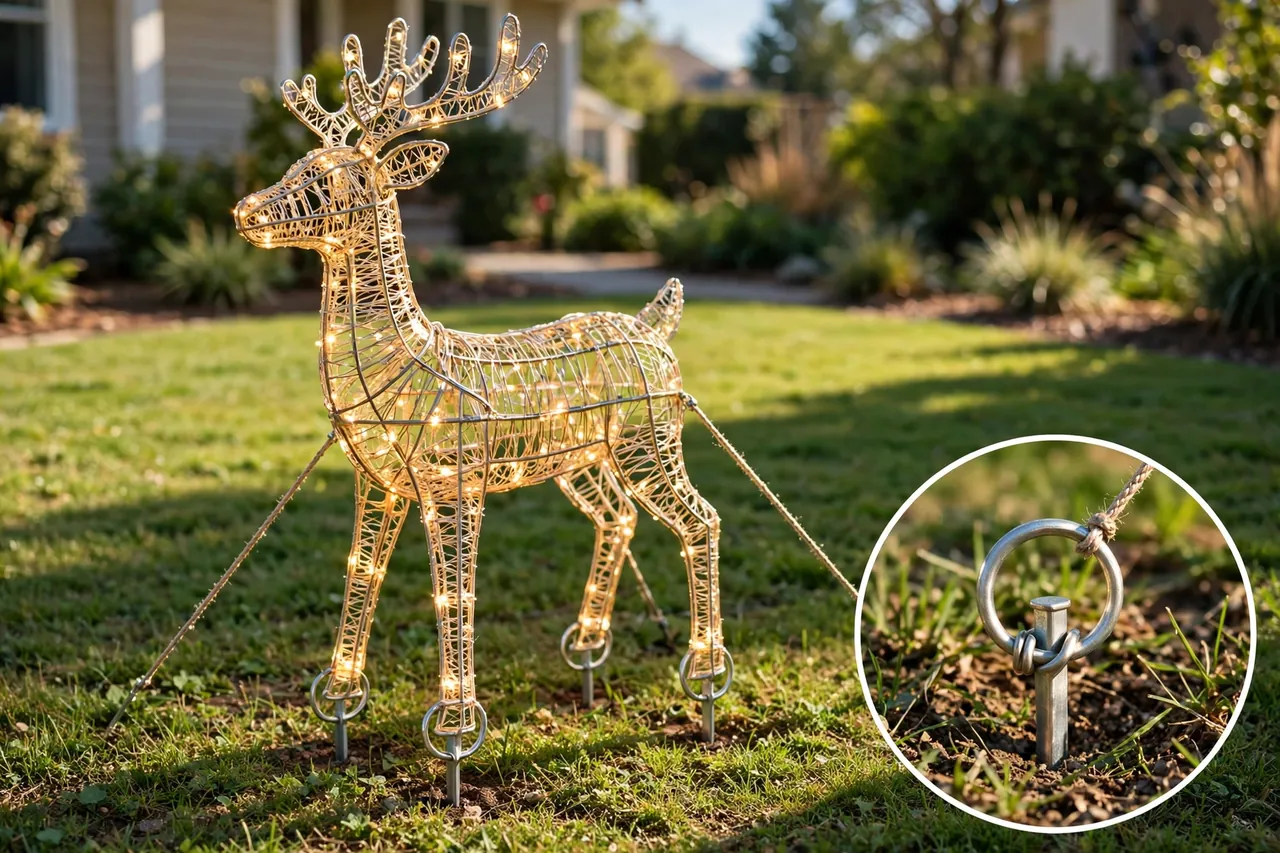
- Push every included ground stake fully into firm soil, through the figure’s feet or base loops, not just beside them.
- Add guy lines from the figure’s frame, never from its antlers or thin decorative parts, to extra stakes set at an angle away from the figure.
- Pull each line snug, then shake the figure gently from several sides. It should sway a little, not lift, slide, or lean.
- Recheck the stakes and lines after the first windy night and after any freeze and thaw, because soft or frozen soil loosens its grip.
Inflatables need extra care, because their fan keeps them full of air and wind pushes hard on that big surface. Use every tether point the maker provides, add sandbags or weights inside or beside the base where the maker allows them, and point the figure so its narrow side faces your usual wind direction when you can. In a forecast of severe wind, deflate an inflatable and bring it inside rather than gambling on stakes. A flat inflatable in the garage beats a torn one in the neighbor’s yard.
Hard surfaces need a different plan, because stakes cannot bite into concrete or a wooden deck. Use weighted bases, sandbags, or heavy planters to hold the figure, and secure cords so they never cross a walking path. If a porch figure still slides, move it to a lawn bed with real soil. A figure that cannot stay put in its spot belongs in a different spot.
Power, Lights, and Timers Without the Tangle
Power sounds boring until a tripped outlet kills your display on Christmas Eve. Plan power before you place a single figure. Count your outdoor outlets, measure the distance from each outlet to each figure, and add up the watts on each circuit from the labels on your products. LEDs sip power compared with old incandescent bulbs, but inflatable fans and long light runs still add up, and one overloaded circuit trips at the worst moment.
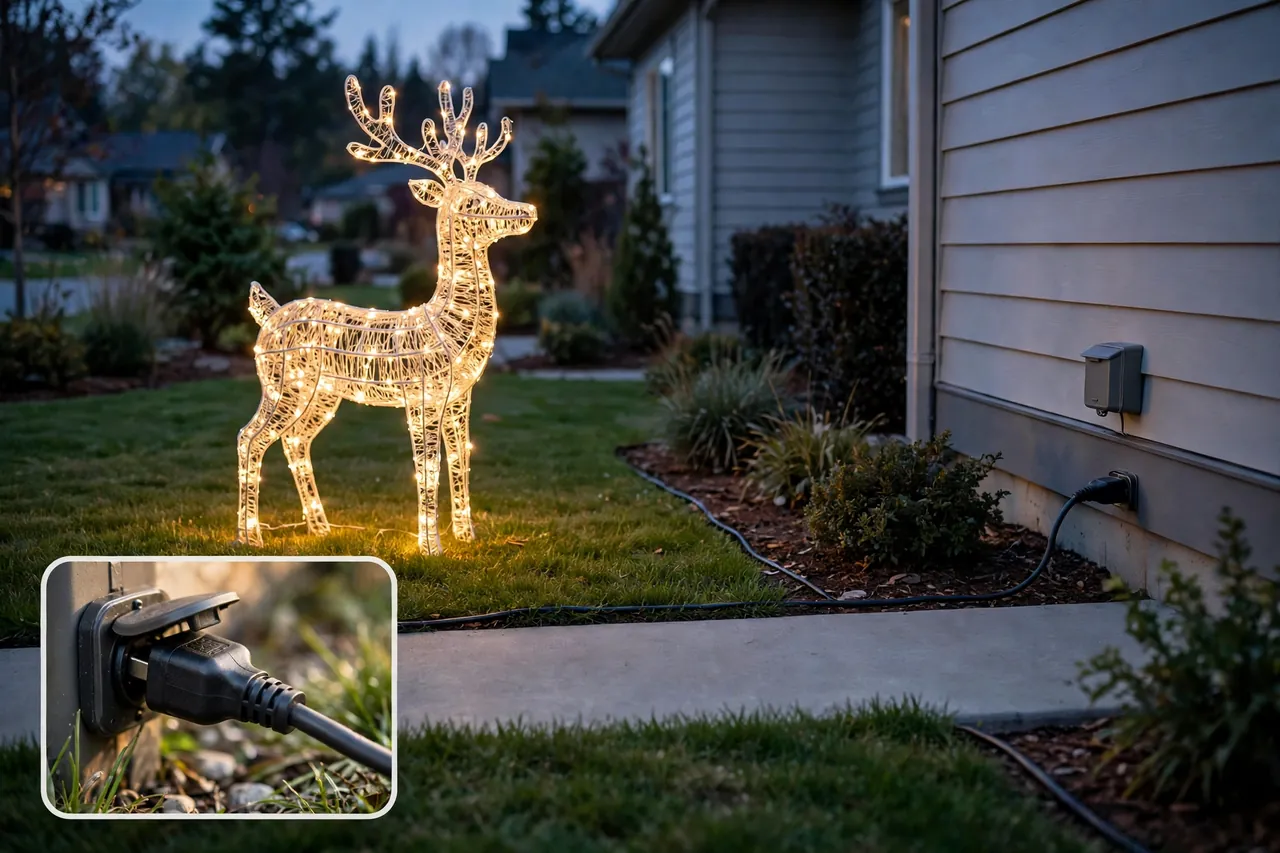
Use only lights and cords rated for outdoor use, and plug every outdoor display into a GFCI-protected outlet. The U.S. Consumer Product Safety Commission advises exactly this: check labels to confirm outdoor certification, and plug outdoor lights only into a GFCI-protected receptacle or a portable GFCI (CPSC holiday decorating safety guide). Test the GFCI with its Test and Reset buttons before the season starts. If it will not trip and reset cleanly, call an electrician before you plug in a single reindeer.
Route cords along lawn edges and beds, never across sidewalks, driveways, or steps. Cover any cord that must cross a path with a proper cord cover, and lift plug connections off wet ground with a weatherproof cover so rain and melting snow cannot pool around them. Inspect every cord and light string before you plug it in, and throw out any set with cracked sockets, frayed wires, or loose connections. The CPSC gives the same warning for all holiday lights: damaged sets belong in the trash, not back in the display (CPSC holiday safety advice).
Timers turn a chore into a habit. A simple outdoor-rated timer switches your reindeer on at dusk and off at bedtime, which saves energy, protects your lights from all-night wear, and keeps the display glowing on the nights you forget. If you want the full setup, how to use a timer plug walks through mechanical and digital timers step by step. Check your timer’s wattage rating before you load it, and use an outdoor-rated timer outside, never an indoor timer under a porch roof.
For the wider light plan around your reindeer, Christmas light ideas shows how one warm base layer plus one bright focal point beats a yard full of competing lights. Your reindeer should play the focal point, with roofline or shrub lights supporting it quietly. If you love the outdoor glow enough to want it every year without the ladder, permanent outdoor Christmas lights explains the cost and the trade-offs honestly.
Light Color, Glow, and Nighttime Look
Light color sets the mood of your whole display. Warm white feels classic, calm, and candlelit, and it flatters brick, wood, and greenery better than any other color. Cool white looks crisp on snow but can feel cold on a brick house. Multicolor lights feel playful and old-fashioned, and kids love them, but they need commitment: one multicolor reindeer lost in a sea of warm white reads as a mistake, while a full multicolor team reads as joyful.
Pick one dominant light color for your yard, then let your reindeer match it. A warm white wire-frame team with a warm white roofline looks planned and peaceful. A red-nosed lead reindeer still works inside a warm white display, because the red nose acts as a single accent, not a competing color story. If your home already glows with one color from decorated Xmas houses style whole-house planning, let your reindeer follow that same palette so the house reads as one display from the street.
Brightness matters too. A reindeer should glow clearly from the sidewalk, not blaze so hard that it washes out its own shape. If your figure looks like a blob of light at night, dim it or move it farther from the street view, or add a darker backdrop like an evergreen shrub behind it. The outline matters more than the wattage: antlers, legs, and head should each read as separate shapes in the dark.
Outdoor Christmas decor reindeer displays also benefit from a simple dusk check. Step out at dusk on the first night, walk to the sidewalk, and look back. Fix dark gaps, a leaning figure, or a cord showing across the lawn while the fix still takes minutes. That one walk makes the difference between a display you admire and a display you keep meaning to fix.
Reindeer Teams and Sleigh Scenes That Read as One Display
A team tells a story, and stories need order. Start with the sleigh or the lead reindeer as your hero, then build around it. Place the tallest, brightest figure where the eye lands first. Step the other figures back in size or distance so the eye travels naturally from the hero through the team. Leave space between figures so each shape stays readable at night, and keep the ground line clean so the team looks like it travels over snow, not over a pile of cords.
Christmas reindeer outdoor decorations in a team setting work best when every figure shares the same light color and the same build style. A wire-frame team with matching warm white lights reads as a unit. A mixed team can still work if you unify it: same light color, same height rhythm, and one shared accent, like matching red bows or matching harness trim. Without that shared thread, the eye sees separate purchases, not a team.
Ground cover finishes the scene. A thin layer of fake snow cloth, a bed of evergreen boughs, or a simple ring of warm white path lights around the team gives the display a stage. Keep the stage low and flat so it never blocks the figures’ legs or hides their stakes. Skip tall props right beside the team, because a tall prop steals the hero’s spotlight and crowds the shapes you worked to arrange.
Think about the view from the car as well as the view from the porch. Drivers see your display for a few seconds, so the team shape must read instantly: sleigh at the back, reindeer in front, all facing the same direction. Porch viewers get the details: bows, harness lines, and the glow on the lawn. A team that reads from both distances is a team worth keeping up all season.
Care, Storage, and Making Them Last
Reindeer figures last for years when you treat takedown as part of the display, not an afterthought. Take figures down in the first week of January, while the weather still cooperates, and work in daylight so you can spot damage. Unplug everything before you touch a figure, and let wet figures dry fully before you pack them, because trapped moisture grows mold and corrodes light connections over the summer.
For wire-frame figures, fold or collapse them gently along their hinges, never by force. Bent antlers and kinked frames rarely straighten cleanly, so pack each figure so nothing presses on its antlers. Coil light strings loosely around cardboard or a cord reel instead of stuffing them into a bag, and label each box with the figure inside. Next December, you will thank yourself within the first ten minutes.
For inflatables, clean off mud and grass, dry the fabric fully, and fold it loosely in a dry, rodent-free bin. Store the fan and stakes with the figure, not in a separate mystery box. Check the fan for debris before the next season, and test the whole inflatable on the lawn for ten minutes before display night. A ten-minute test beats a dark figure on the first night guests arrive.
For solid figures, wipe them down, check for cracks, faded paint, or loose joints, and store them where heavy boxes cannot crush them. A small tube of outdoor-safe touch-up paint in the box keeps next year’s display looking fresh. Toss any light string that failed this season rather than storing a problem for next December, because a stored problem always returns at the worst time.
Mistakes That Ruin a Reindeer Display
Most reindeer displays fail in the same few ways, and every one of them is easy to avoid once you know it. First, too many focal points: one hero team beats five scattered figures fighting for attention. Second, no anchoring: a figure set on the lawn without stakes is a figure waiting for wind. Third, cords across paths: a tripping hazard cancels out any beauty the display adds.
Fourth, wrong scale: a giant figure on a tiny lawn or a tiny figure on a huge lawn both look accidental. Fifth, mixed light colors with no plan: warm white, cool white, and multicolor all at once reads as noise, not festivity. Sixth, indoor gear outside: indoor lights and indoor cords fail fast in rain and cold, and they create a real shock and fire risk. Fix these six, and your display already beats most of the street.
One last mistake deserves its own warning: buying on looks alone. A figure with thin wire, weak joints, or no stakes in the box may cost less, but it costs you again in repairs, returns, or a mid-season replacement. Read the dimensions, the outdoor rating, the wattage, and the anchoring parts before you buy. A sturdy figure you keep for five seasons beats a pretty figure you replace every year.
A Quick Safety Note Before You Plug In
Outdoor reindeer displays mix electricity, wind, and winter weather, so treat safety as part of the fun, not a footnote. Use only outdoor-rated lights, cords, and timers. Plug everything into GFCI-protected outlets. Keep cords out of walkways and connections off wet ground. Turn lights off when you go to bed or leave home, and bring inflatables in during severe wind. If an outlet lacks GFCI protection, a circuit keeps tripping, or any wiring looks damaged, stop and call a qualified electrician instead of pushing ahead. This guide covers decoration only, and your products’ own instructions always win over general advice.
Related Guides
Christmas Light Ideas: Glow Up Your Home Inside and Out · Permanent Outdoor Christmas Lights: Cost & DIY Guide · Decorated Xmas Houses: Whole-House Christmas Ideas · How to Use a Timer Plug: Step-by-Step Guide
Frequently Asked Questions
What type of outdoor reindeer decoration lasts longest?
A sturdy wire-frame or solid resin figure usually lasts longest, because it has no fan to wear out and no fabric to tear. Wire-frame figures also fold flat for storage and catch less wind. Whichever type you pick, dry storage, gentle handling of antlers, and a full anchoring setup do more for lifespan than the price tag alone.
How do I secure outdoor reindeer decorations in high wind?
Use every stake and tether point the maker provides, set stakes fully into firm soil at an angle, and tie guy lines to the figure’s frame, never to its antlers. Add sandbags or weights for inflatables, recheck everything after the first windy night, and deflate an inflatable during severe wind rather than trusting stakes alone.
Can I put reindeer decorations on my roof?
Ground placement is the safe default for most homeowners, and roof work brings fall and roof-damage risks that a decoration never justifies. If you love a rooftop look, hire a professional installer with proper gear and roof-safe mounts, and never drill into shingles or tie figures to power lines, vents, or gutters that cannot hold the load.
Do inflatable reindeer use a lot of electricity?
Inflatables use more power than LED-only wire-frame figures because their fan runs the whole time the display glows. LEDs themselves sip power, so a wire-frame figure costs little to run each night. For any inflatable, check the wattage label, add it to your circuit total, and run it on a timer so it rests overnight.
Can I leave outdoor reindeer decorations up all winter?
You can leave sturdy figures up through the holiday season, but holiday decorations are temporary gear, not permanent fixtures. Months of sun, ice, and wind wear wires and fabrics out faster. Take figures down in early January, dry them fully, and store them labeled and protected, so next December starts with working lights.
Start with one well-placed reindeer this year: the right size for your yard, anchored well, lit in one warm color, and switched by a timer. Watch it glow from the sidewalk at dusk, fix the small things while they are still small, and add a teammate next year if the scene asks for one. That is how a simple figure becomes a tradition your whole street looks forward to.


