
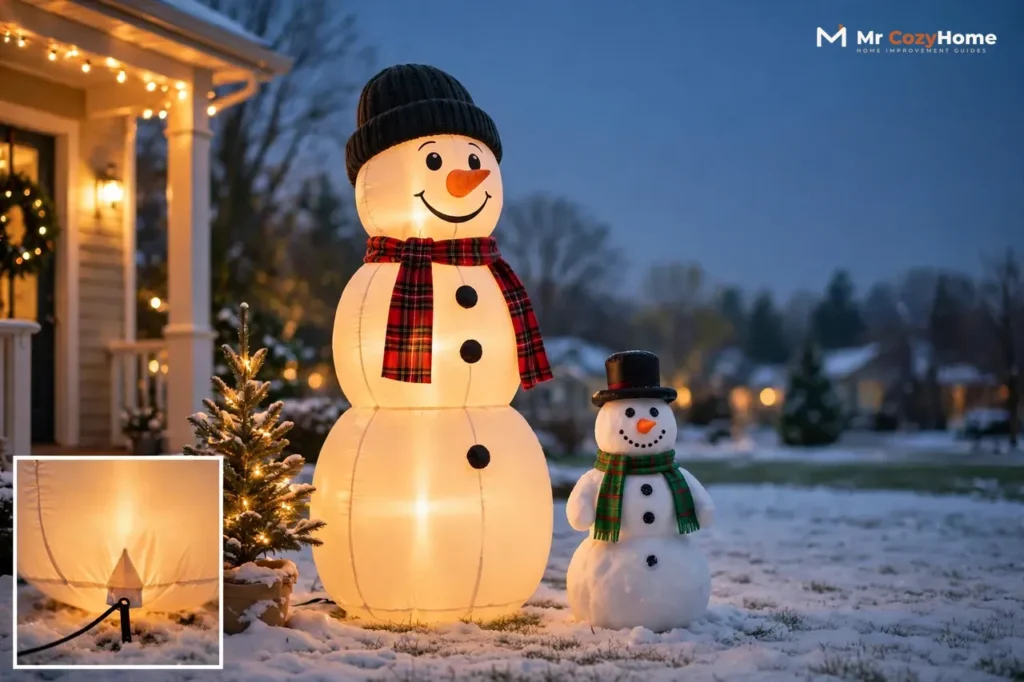
An outdoor Christmas decorations snowman works best when you match the snowman to your yard, your weather, and your nearest outlet. Pick a big inflatable snowman for a bold, glowing focal point, or pick a sturdy blow-mold snowman for a quiet display that needs no fan. Then anchor it well, plug it into a GFCI-protected outdoor outlet, and put it on a timer.
That simple plan solves most snowman problems before they start. A snowman that tips over, sags in the cold, or goes dark at night usually fails for one of three reasons: weak anchoring, the wrong spot, or unsafe power. This guide walks you through each choice in order, so your snowman still looks happy on Christmas Eve, not just on setup day.
Here, snowmen get the whole stage. You will not find a general yard tour or a cast of other holiday figures. Every choice below serves one goal: a snowman display that looks warm, reads clearly from the street, and survives real December weather.
Start With the Right Snowman for Your Yard
Before you shop, step outside and look at your yard the way a driver sees it. Note the size of the lawn, the nearest outdoor outlet, and any fence, shrub, or house corner that can break the wind. A small porch does not need a giant snowman, and a wide front lawn can swallow a tiny one.
Measure the spot, too. Write down the width of the bed or lawn area and the distance to the outlet. That one minute of measuring stops the two most common regrets: a snowman too big for its corner, and a cord that cannot reach safely.
Then ask one honest question: how much work do you want each night? An inflatable needs power every night to stay upright. A blow-mold or lighted wireframe snowman keeps its shape with the power off, and it only needs power when you want light. Your answer points straight to the right type.
Outdoor snowman Christmas decorations come in three main families. Each one suits a different yard, budget, and tolerance for nightly fuss. The table below sums up the trade-offs at a glance.
Table: Snowman types at a glance
| Type | Best for | Watch out for |
|---|---|---|
| Inflatable snowman | Big impact, fast setup | Wind, fan noise, nightly power |
| Blow-mold snowman | Quiet, sturdy, classic look | Heavier, needs storage space |
| Lighted wireframe snowman | Bright outline, light storage | Needs careful staking, thin frame |
Inflatable Snowmen: The Big, Bright, Friendly Choice
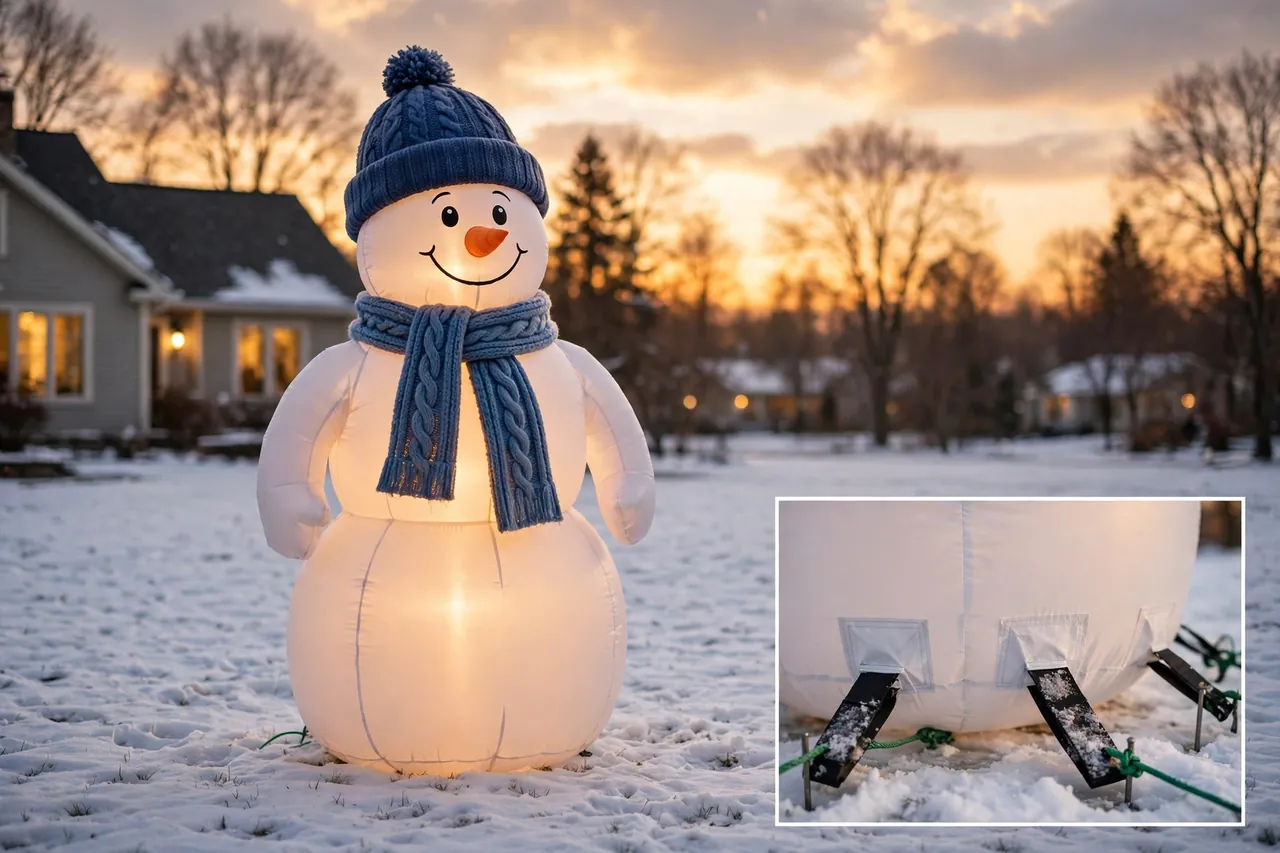
An inflatable snowman gives you the biggest smile for the least setup time. You stake it down, plug it in, and watch it rise in a minute or two. Kids love it, drivers slow down for it, and built-in lights make it glow from inside after dark.
Inside, a small blower fan keeps air moving through the fabric. That fan must run the whole time you want the snowman upright. When you switch it off, the snowman folds down flat. That is normal, not a defect, and it makes storage easy.
Choose your size with your yard in mind. A 4- to 5-foot snowman suits a porch bed or a small lawn. A 6- to 8-foot snowman suits a wide front yard, where it can stand clear of shrubs and walkways. Taller snowmen catch more wind, so they need stronger anchoring, which you will find in the wind section below.
What to check before you buy an inflatable snowman
Read the box for outdoor rating, height, cord length, and what comes in the box. Look for stakes, tethers, and sandbags or water bags. If the kit lacks them, buy them before setup day, not during a storm.
Check the fabric and seams with your hands if you can. Thicker fabric and double-stitched seams last longer than thin, single-stitched fabric. Look for reinforced loops or grommets at the base, because those loops carry all the wind load.
Check the blower, too. The fan housing should sit clear of the ground, and the intake should stay free of leaves and snow. A blocked intake starves the fan, and a starved fan makes the snowman sag, even on a calm night.
Why inflatable snowmen sag in cold weather
Cold air shrinks a little, so a snowman can look softer on a freezing night than it did at dusk. A small amount of sag in deep cold is normal, and the snowman usually firms up as the day warms. Do not panic and over-tighten the tethers, because tight ropes can pull seams and distort the shape.
Real sag has a different look. If one side collapses, if the head flops, or if the snowman never firms up, check the zipper at the base first. An open zipper leaks air faster than the fan can replace it. Then check the intake for snow or leaves, and check the fabric for a tear.
Blow-Mold and Lighted Snowmen: The Quiet, Sturdy Choice
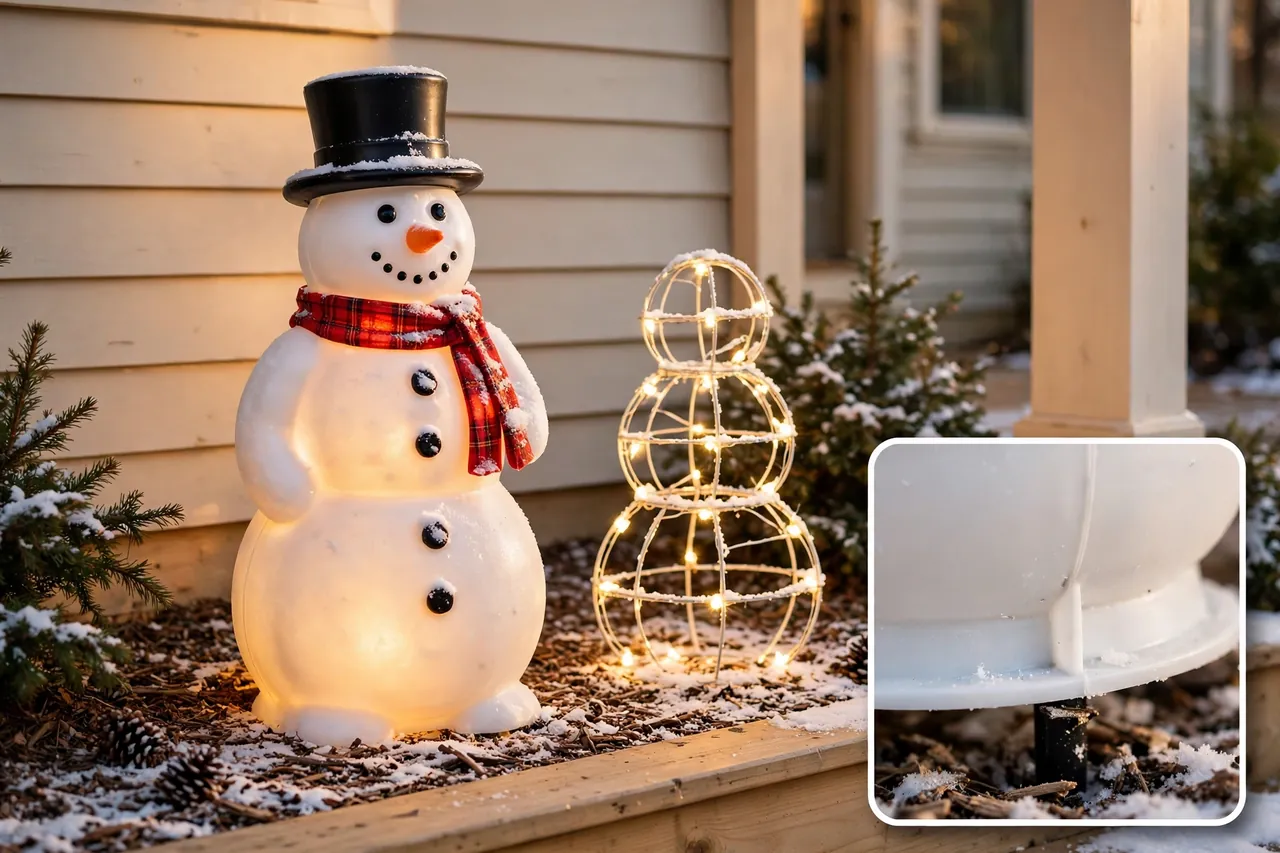
A blow-mold snowman is a hollow plastic figure, molded into shape and lit from inside. It stands on its own, makes no fan noise, and keeps its shape whether the lights are on or off. For many homeowners, that quiet reliability is the whole appeal.
Blow-mold snowmen suit porches, entry beds, and spots near the house, where you want a classic look without a nightly ritual. They also suit windy yards better than tall inflatables, because a low, solid figure catches less wind. Stake the base down anyway, because a strong gust can still slide or tip a light plastic figure.
Lighted wireframe snowmen work a little differently. A metal or plastic frame holds the snowman shape, and light strands wrap the frame. They glow as a bright outline at night, fold flat for storage, and weigh less than a blow-mold figure. They need firm staking, because a thin frame can twist in wind if you leave it loose.
How to judge a blow-mold snowman in the store
Pick it up and feel the plastic. Thick, even plastic with clean seams resists cracks better than thin plastic with rough edges. Look at the paint in daylight. Bright, even paint holds up better than thin paint that already looks faded on the shelf.
Check the light access, too. You will change a bulb sooner or later, so find the bulb door or cord entry before you buy. A snowman with easy bulb access saves you a cold, fiddly job in December. Check the cord length as well, and confirm the figure carries an outdoor rating on its label.
For a wireframe snowman, check the joints. Each joint should feel firm, not wobbly, and the light strands should sit tight against the frame. Loose strands snag, sag, and break when you move the figure in and out of storage.
Snowman Families and Scenes That Look Planned, Not Piled Up
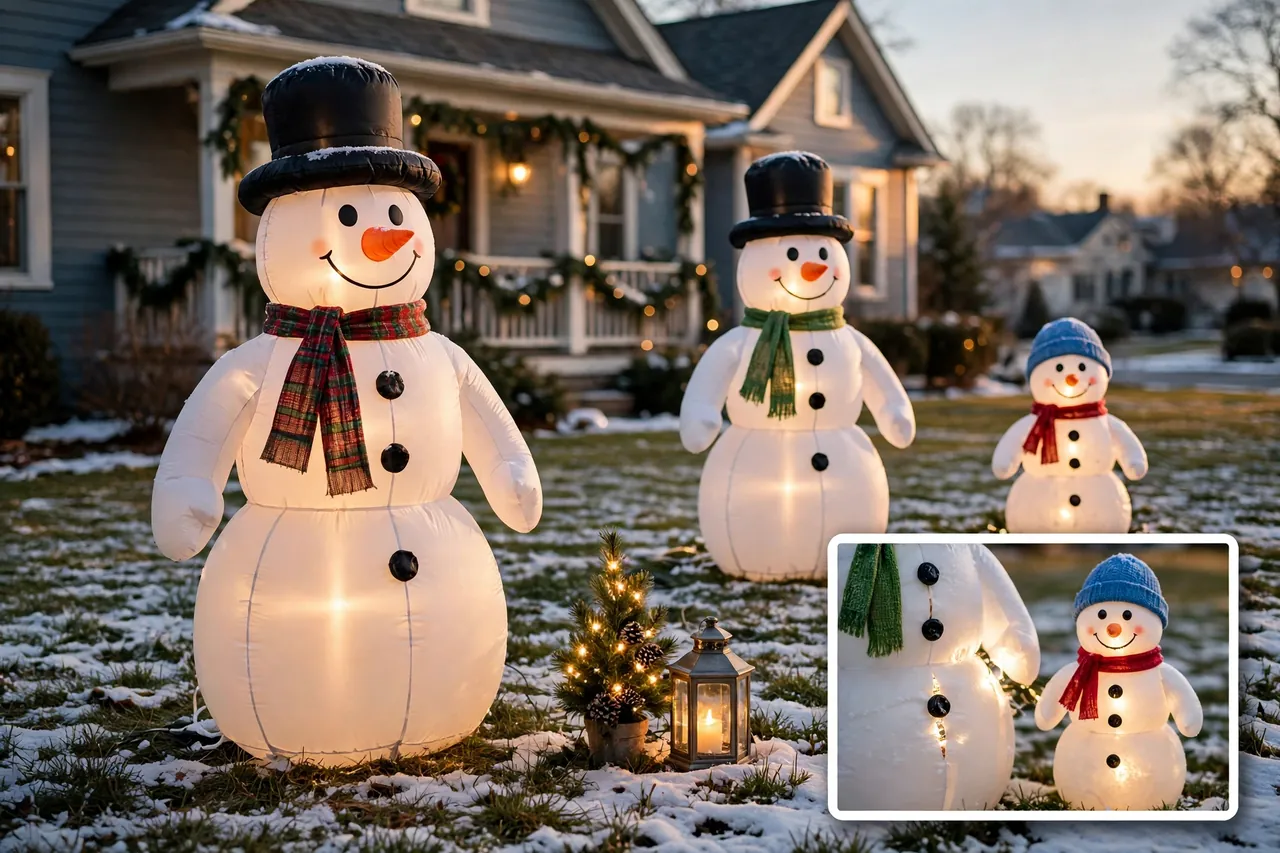
A single snowman makes a clear statement. A snowman family makes a scene, but only if you group it on purpose. The trick is simple: one hero, one or two supporters, and empty space around them.
Start with your tallest snowman as the hero. Place it slightly off-center in its bed or lawn area, so the scene feels natural instead of lined up like a parade. Then add smaller snowmen beside it, at different heights, and angle them a little toward the street or walkway.
Give each figure breathing room. When snowmen touch, they read as one white blob at night. When they stand a foot or two apart, each scarf, hat, and carrot nose reads clearly, and the lights have room to glow between them.
Keep the scene to snowmen and snowman props: a lantern, a gift box, a small pine, or a sign the snowman holds. When you add unrelated figures, the eye jumps around and the snowman stops being the star. If you want a whole-house display, let the snowman anchor one bed or corner, and let the rest of the house tell its own story. For ideas on tying the whole front of the house together, see Decorated Xmas Houses.
Three scene recipes that always work
- Porch greeters: two matching medium snowmen, one on each side of the door, with warm lights behind them.
- Lawn family: one tall snowman, one medium snowman, and one small snowman, grouped in a triangle on the lawn.
- Corner winter scene: one snowman beside a small lit pine, with a lantern at its base and open lawn in front.
Pick one recipe and stop there. A second scene in the same yard splits attention and doubles your nightly work. One strong snowman scene beats two half-finished ones every time.
Where to Put Your Snowman So Everyone Sees It
Place your snowman where people already look: near the walkway, at the front corner of the lawn, or in a bed that faces the street. Stand on the sidewalk at dusk and check the view yourself. If a shrub hides the face, or a porch post cuts the snowman in half, move it a few feet.
Keep the snowman clear of walkways, driveways, and snow-shoveling paths. A snowman beside a path greets guests. A snowman on a path trips them, blocks the shovel, and ends up coated in slush from the first storm.
Think about the background, too. A white snowman pops against dark evergreens, a brick wall, or a deep green hedge. Against a white fence or a snowdrift, the same snowman fades away. In that case, add warm lights, a dark scarf, or a lit pine behind it, so the outline reads clearly at night.
Wind shelter matters as much as visibility for a snowman kept outdoors. A spot near a fence, a shrub row, or a house corner breaks the wind and keeps an inflatable steadier. Avoid hilltops, open corners between buildings, and gaps where wind funnels through, because those spots turn a calm night into a wrestling match.
Finally, check the ground. Flat, firm lawn or a level bed beats a slope, a puddle zone, or rough gravel. A level base keeps an inflatable upright, keeps a blow-mold figure from leaning, and keeps stakes from pulling out in wet soil.
Anchor It for Wind Before the First Storm
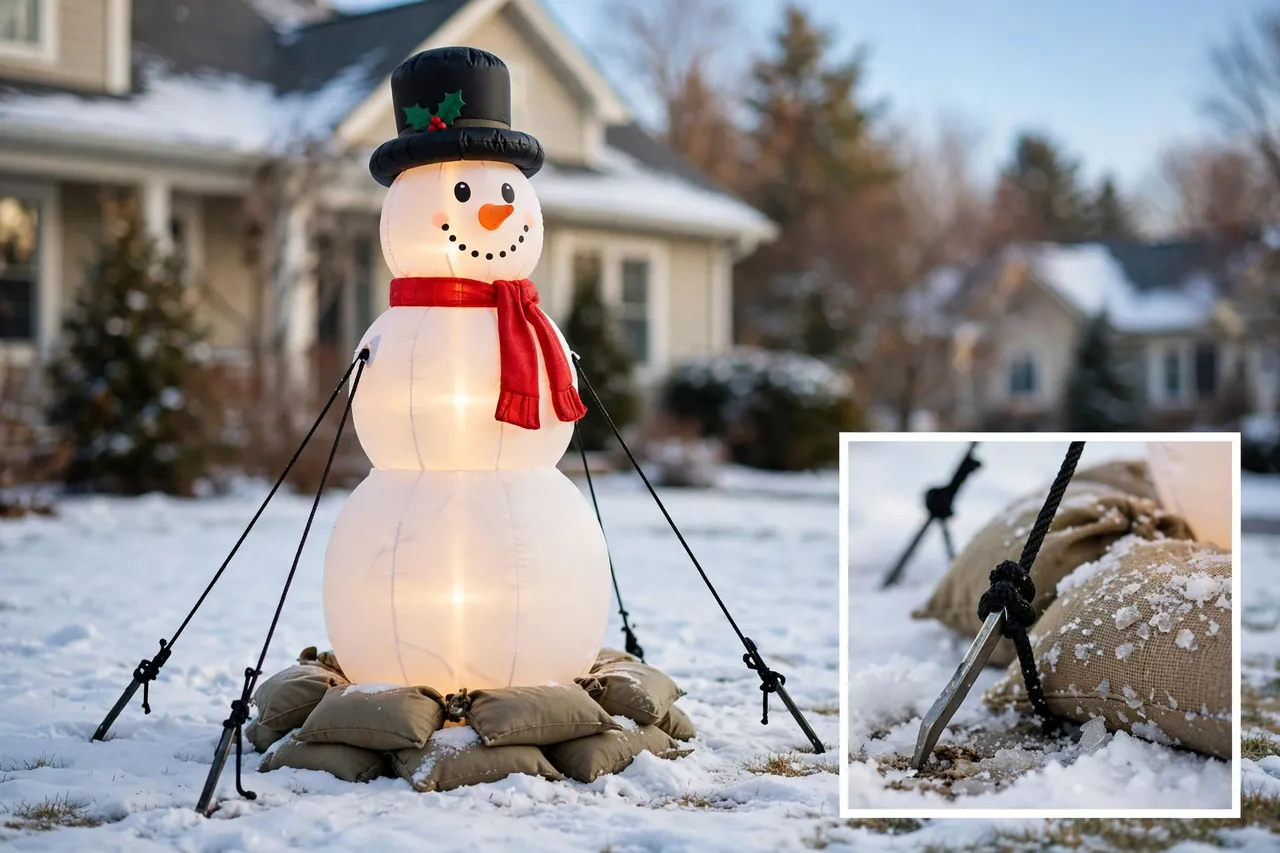
Wind is the number one enemy of an outdoor snowman display. A tall inflatable acts like a sail, and even a sturdy blow-mold figure can slide on icy ground. Anchor on setup day, in calm weather, not when the forecast already shows gusts.
Caution: never climb a ladder or wrestle a large inflatable in high wind to fix a loose anchor. Bring the snowman down first, wait for calm weather, and then re-anchor. A display is never worth a fall or a torn figure.
Anchor an inflatable snowman step by step
- Inflate the snowman fully first, so you can see its true shape and tension points.
- Find the reinforced loops, grommets, or D-rings at the base. Use those points only, never plain fabric or a seam edge.
- Drive stakes at an angle away from the snowman, so they resist pull instead of sliding straight out.
- Attach tethers to the stakes with firm, even tension. Keep the lines taut but not drum-tight, so the fabric can flex a little.
- Add sandbags or water bags at the base for extra weight, especially on hard or frozen ground where stakes grip poorly.
- Push the snowman gently from each side. It should resist the push without lifting a stake or shifting a bag.
On a porch, patio, or driveway, stakes will not work. Use sandbags, water weights, or heavy planters to hold the tethers, and keep the weights clear of the walkway. On frozen ground, drive stakes before the deep freeze if you can, or switch to weights when the soil turns too hard to stake.
Anchor a blow-mold or wireframe snowman
Stake through the base holes, or tie the base to a ground stake with a short, low cord. Keep cords low and tight to the ground, so feet and snow shovels pass over them safely. For a wireframe figure, stake each leg or frame foot, not just one side, so wind cannot twist the frame.
Check your anchors after every storm and once a week in a windy spell. Cold makes some cords stretch and stakes loosen, so a quick tug and re-tighten takes a minute and saves a midnight rescue. When forecasts call for strong gusts, bring tall inflatables down for the night. Guides for inflatable displays commonly treat moderate wind up to about 15 to 20 miles per hour as manageable with good anchoring, and advise deflating above about 25 miles per hour, so treat a high-wind warning as your signal to deflate early.
Power It Safely: Outlets, Cords, and Timers
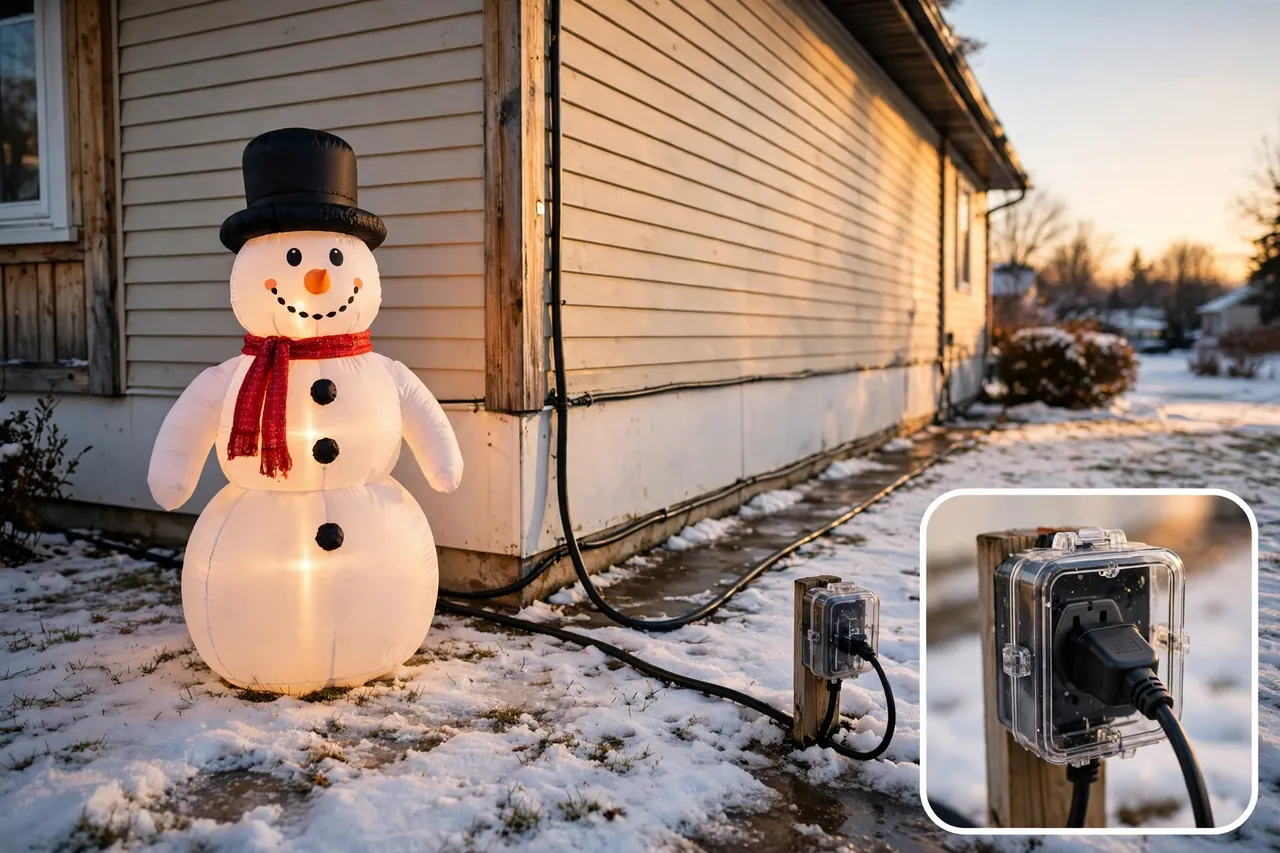
Outdoor power mixes electricity with rain, snow, and foot traffic, so safety comes before sparkle. Use only outdoor-rated snowmen, cords, and timers, and plug every outdoor display into a GFCI-protected outlet. A GFCI outlet has small Test and Reset buttons, and it cuts power fast if moisture causes a fault.
Caution: if an outlet lacks GFCI protection, if a breaker keeps tripping, or if any cord looks cracked, frayed, or bare, stop and call a qualified electrician. Do not run the display on a damaged cord while you wait for a repair.
Keep every connection off wet ground and out of puddles. Use cord covers or raised connection boxes rated for outdoor use, and route cords along walls or beds, never across a walkway where feet catch them. Never pinch a cord in a door or window, because pinched insulation can fail without warning.
Check the wattage on your timer and your snowman before you connect anything. Add up the watts of everything on that timer, and stay below the rating on the label. Do not plug a power strip into a timer and load it with several displays, because the watts add up fast and the timer can overheat.
Put the whole snowman display on a timer, so it glows from dusk to bedtime and rests overnight. A timer saves energy, rests the blower motor, and keeps you from walking the yard in the cold each night. If you want the setup steps, How to Use a Timer Plug walks through mechanical and digital timers step by step.
The U.S. Consumer Product Safety Commission holiday safety tips give the same core rules: use only outdoor-certified lights and decorations outside, fasten them firmly against wind, plug outdoor displays into GFCI-protected circuits, and turn lights off when you go to bed or leave the house.
Light It So It Glows After Dark
A snowman earns its magic after dark, when lights turn white fabric into a glowing figure. Inflatable snowmen usually carry built-in lights, so your job is placement and power, not extra strands. Blow-mold snowmen glow from one internal bulb, so keep that bulb fresh and the plastic clean.
For a wireframe snowman, the lights are the figure. Check every strand before you wrap it, and replace dark or damaged strands before the figure goes outside. One dark section on a wireframe snowman reads as a missing arm or a broken hat from the street.
Choose one light color for the snowman scene and stick with it. Warm white flatters snowmen, brick, and greenery, and it reads as cozy from the street. Cool white suits a crisp winter-night look, but it can feel harsh beside warm porch lights. Multicolor lights suit a playful family scene, but they work best when the whole scene commits to color, not when one strand fights a sea of white.
Add a soft spotlight only if the snowman still looks flat at night. Aim a low, outdoor-rated spot from the ground up, so it washes the figure without blinding drivers or neighbors. For wider lighting ideas across the whole front of the house, Christmas Light Ideas shows how one warm base layer plus one bright focal point pulls a display together.
Check the glow from the street at dusk, not just from the porch. The street view shows dark gaps, glare, and blocked faces that you miss up close. Move a light, shift the snowman a foot, or add a lit pine behind it until the figure reads cleanly from where people actually see it.
When Snow, Ice, and Cold Hit Your Snowman
Real snow looks magical on a snowman display, but wet snow weighs a lot. Brush light snow off an inflatable with a soft broom, and never scrape ice off fabric or plastic with a hard tool. Scraping tears fabric, scratches plastic, and turns a small ice patch into a permanent scar.
Heavy, wet snow can flatten an inflatable or bend a wireframe. If a storm drops heavy snow, switch the blower off, let the snow slide off as the figure deflates, and re-inflate after you clear the base. For a blow-mold figure, brush snow off the hat and shoulders before the weight leans the figure.
Ice on cords and connections needs patience, not force. Let ice melt naturally, keep connections raised and covered, and check for cracks after a freeze. If a cord feels stiff, cracked, or brittle in the cold, retire it instead of bending it back into shape.
Salt and slush cause their own trouble. Keep snowmen clear of salted walkways and plow piles, because salt spray stains fabric and eats paint. A few feet of distance keeps the snowman white and the plow driver happy.
Troubleshooting: Sagging, Leaning, Dark, and Deflated
Most snowman failures follow a short list, and most fixes take minutes. Work through the list in order, and check the simplest cause first.
- Sagging inflatable: check the base zipper, clear the blower intake, and look for a tear. Cold alone causes mild softness, but a flat side means a leak or a blocked fan.
- Leaning snowman: check the ground first. Re-level the base, re-drive loose stakes, and re-tension the tethers evenly. A lean that returns each night usually means one anchor has failed.
- Dark snowman: check the timer, the outlet, and the bulb or light strand before you blame the figure. Test the outlet with another device, and confirm the timer sits in Auto, not Off or Always On.
- Deflated overnight: check the power first, then the zipper and seams. A tripped GFCI, a timer set to the wrong hour, and a loose zipper cause most overnight flats.
- Faded or stained fabric: clean gently with mild soap and water, rinse well, and let the figure dry fully before storage. Harsh cleaners fade prints and weaken fabric faster than weather does.
If a blower hums but never lifts the figure, unplug it and check the intake and the cord. Do not open a sealed blower motor yourself. A replacement blower from the maker, matched to your model, usually costs far less than a whole new snowman, and it restores most tired inflatables.
Take It Down and Store It So It Lasts
Take snowmen down within a week or two after the holidays, while the weather still allows a calm takedown. Outdoor decorations are seasonal gear, not year-round fixtures, and months of sun, rain, and freeze-thaw wear fabric, paint, and wiring down fast.
Clean each snowman before you pack it. Wipe blow-mold figures with mild soap and water, brush loose dirt off inflatables, and let every piece dry fully. A damp snowman packed in January grows mold by next December, and mold stains fabric for good.
Fold inflatables loosely instead of crushing them into a tight ball. Sharp folds crease fabric and stress seams, while a loose fold keeps the figure ready for next year. Store the stakes, tethers, and bags with the figure, so setup next year takes minutes, not a hardware run.
Store blow-mold and wireframe snowmen where nothing stacks on top of them. A heavy box on a blow-mold figure cracks plastic, and a bent wireframe never quite holds its shape again. Label each box with the snowman inside, and keep bulbs and spare parts in the same box.
With careful storage, a quality inflatable commonly lasts about three to five seasons, according to an inflatable Christmas decorations guide. Blow-mold and wireframe figures often last longer, because they have no fan to wear out. Either way, dry storage and gentle handling matter more than the price tag.
A Quick Safety Note Before You Plug In
Outdoor snowmen mix electricity, water, wind, and ladders, so keep safety first even when the display looks simple. The Electrical Safety Foundation International holiday safety resources stress the same habits: inspect every decoration before use, use only outdoor-rated gear outside, plug outdoor displays into GFCI-protected outlets, and turn lights off when you leave home or go to bed.
Disclaimer: this guide gives general decorating advice only. If an outlet is not GFCI-protected, if a circuit keeps tripping, if wiring looks damaged, or if wind, height, or ice makes a job feel unsafe, stop and call a qualified electrician or a professional installer. Homes, wiring, and weather vary, so always follow your snowman’s own instructions and labels.
Related Guides
Outdoor Reindeer Christmas Decorations: Lighted Figures, Sleigh Scenes, and Safe Yard Displays · Outdoor Christmas Dog Decorations: A Happy Dog for Your Front Yard · LED Outdoor Christmas Decorations: A Bright, Safe, Money-Saving Guide
Frequently Asked Questions
How long do inflatable Christmas decorations last?
A quality inflatable snowman commonly lasts about three to five holiday seasons with proper care. The blower motor usually wears out first, but replacement blowers are often available and easy to fit. Dry, clean storage between seasons matters more than any other habit.
Are inflatable Christmas decorations safe in wind?
Yes, in moderate wind, when you anchor them well with stakes and sandbags. Guides commonly treat wind up to about 15 to 20 miles per hour as manageable, and advise deflating above about 25 miles per hour. Never leave an inflatable up during a storm warning or high-wind advisory.
Can I leave my inflatable snowman outside all winter?
No, you should not leave it out all winter. Extended exposure to snow, ice, wind, and moisture shortens its life and raises the risk of electrical trouble. Enjoy it through the season, then take it down within a week or two after the holidays and store it dry.
Should I leave Christmas inflatables on all the time?
You can run them for a full evening, but a timer works better. Most makers and guides recommend an evening cycle, often six to eight hours, rather than continuous running. A timer saves energy, rests the blower, and keeps the lights glowing when people actually see them.
Can I connect multiple inflatables to one timer?
Yes, if the total watts stay below the timer’s rating. Add up the watts on every snowman and light string on that timer, and check the label before you connect them. If the total runs close to the limit, split the display across two timers or two circuits.
Your snowman does not need to be the biggest on the street. It needs to stand tall, glow warm, and greet everyone who passes, night after night. Pick the right type, anchor it on a calm day, power it safely, and put it on a timer. Then step back to the sidewalk at dusk, enjoy the smile it brings, and let that one happy snowman carry your whole Christmas welcome.


