Here is the honest answer first. Yes, a smart lock for a sliding glass door does exist, but only one name-brand model is truly built for sliding panels: the Lockly Guard Athena Slide Edition. It is sold through Lockly’s pro channel and locksmith dealers, it costs pro-level money, and stock is scarce. Every standard smart deadbolt from the big brands cannot fit your slider at all. For most homes, the smarter buy is not smart at all: a double-bolt security lock for about $24, plus simple fixes for the ways sliding doors actually get broken into. This guide shows you the real options, the real prices, and the weak points no lock can fix on its own.
Why Sliding Glass Doors Are Different
A sliding glass door does not work like the front door of your house, and that is the whole problem. A normal door swings on hinges and locks with a deadbolt. The bolt is a solid bar of steel that shoots sideways into a hole in the door frame. Almost every smart lock you have seen is just a motor that turns that kind of deadbolt.
A sliding panel is built in a completely different way:
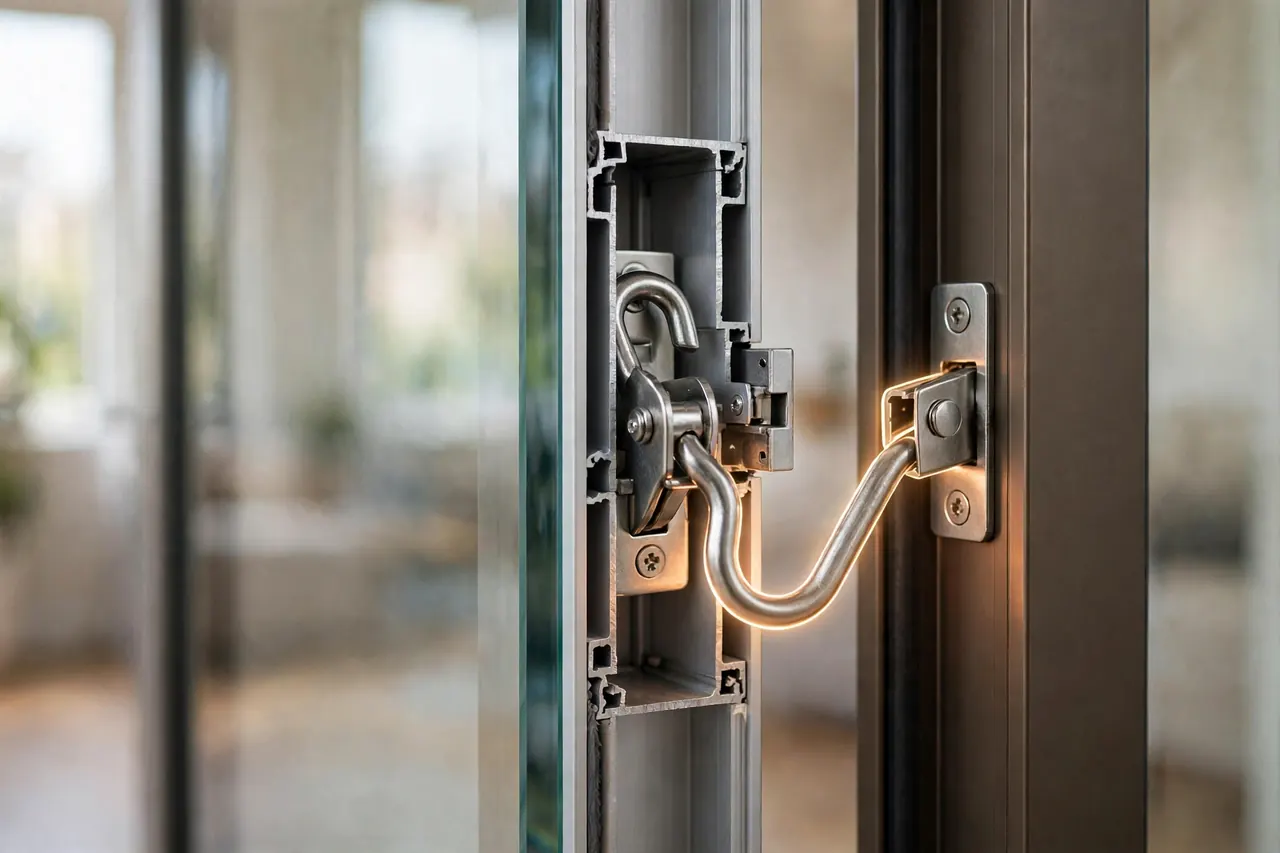
- It locks with a hook, not a bolt. Inside the edge of the panel sits a small mortise lock. When you flip the thumb turn, one or two steel hooks swing up or down and grab a keeper plate on the frame. There is no sideways bolt and no deep hole for one.
- The frame edge (the stile) is narrow and thin. A deadbolt needs a round 2-1/8 inch hole drilled through a thick door. A slider’s aluminum or vinyl stile is too slim to hold that hole or the motor box behind it.
- The panel moves sideways. A sliding panel travels parallel to the fixed panel and the frame. A chunky deadbolt body mounted on the edge would crash into the frame every time you opened the door.
So when a listing says a smart lock “fits most doors,” it means most hinged doors. On a slider, the shape of the door itself says no. If you want the full picture of how standard smart deadbolts work on regular doors, our smart key lock guide covers them in detail. For sliding panels, you need hardware that hooks, pins, or bolts vertically, and that is a much smaller world.
The One True Smart Lock Built for Sliding Panels: Lockly Guard Athena
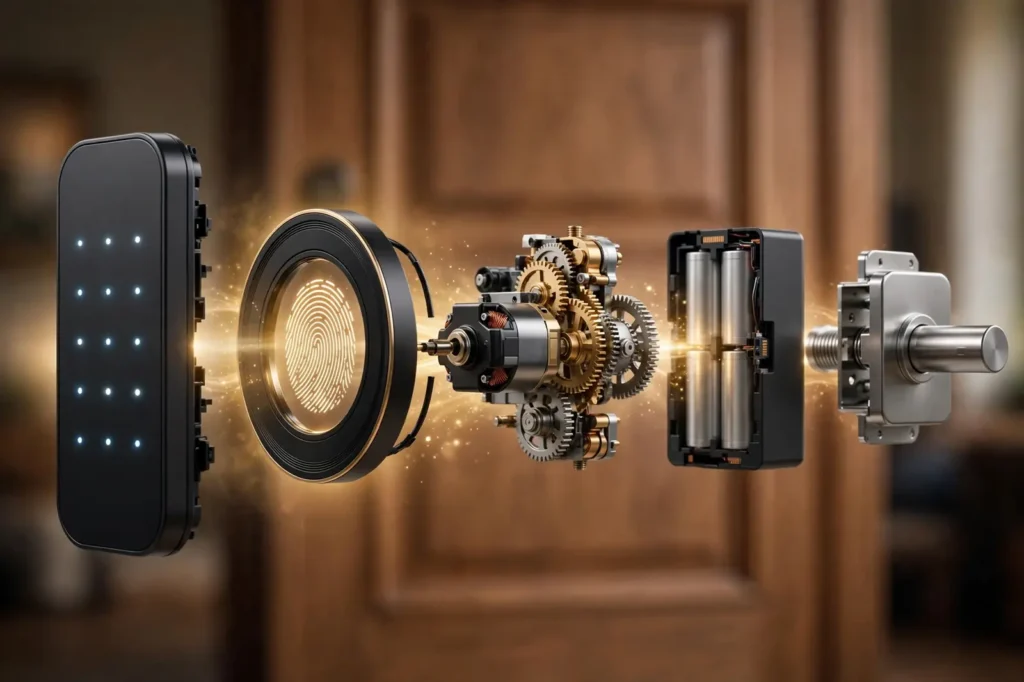
Lockly is the one major smart lock brand that engineered a lock for this job. The Lockly Guard Athena Slide Edition (model PGD228) replaces the mortise lock inside your sliding panel instead of fighting against it. Its steel slide hook is 0.70 inches long, and it is made for standard sliding door prep: a backset of 1.20 to 1.40 inches and a door thickness of about 1.40 to 2 inches.
What you get for the money:
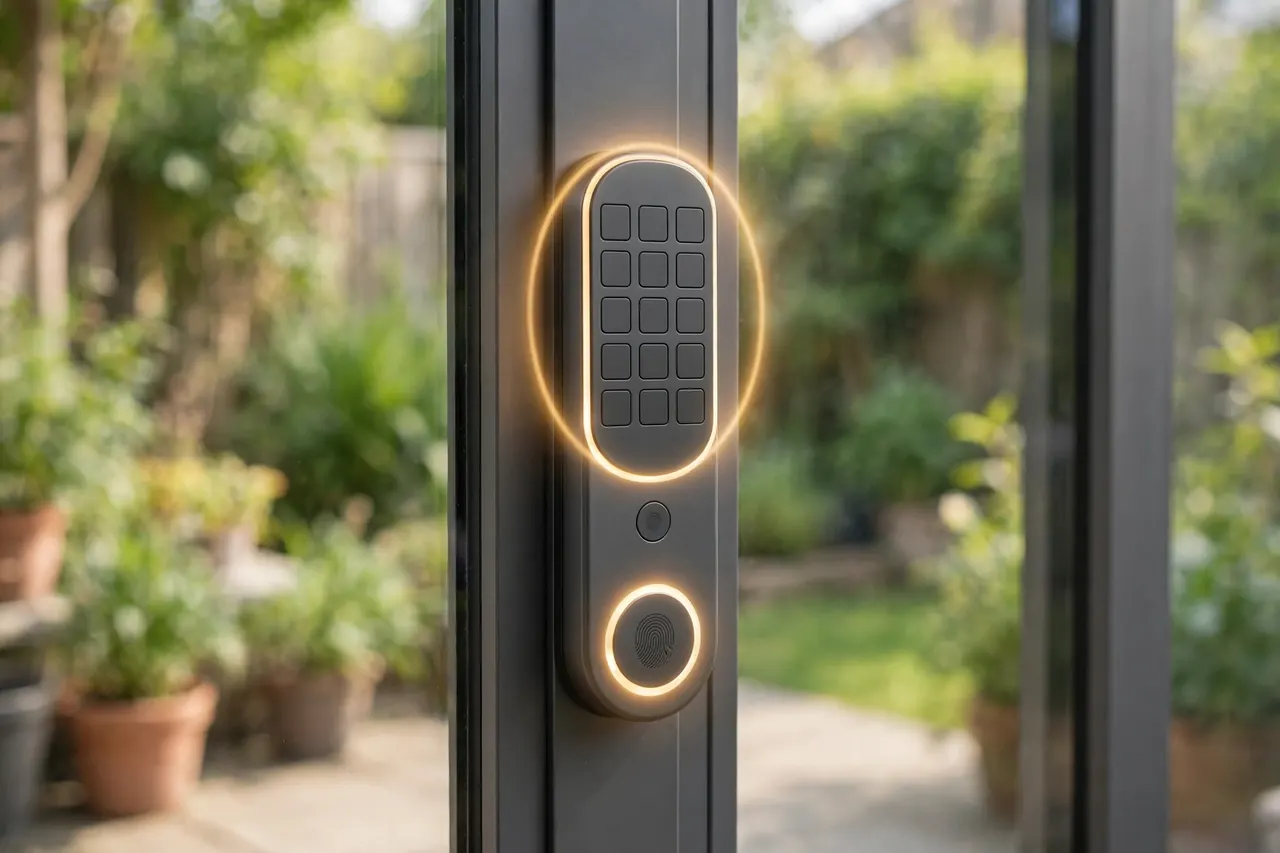
- Fingerprint entry. A 3D fingerprint reader that stores up to 99 fingerprints.
- A scrambling keypad. Lockly’s PIN Genie keypad shuffles the numbers after every use, so no one can guess your code from worn spots or watching your fingers. The manual lists room for up to 18 access codes, plus one-time offline codes you can create for a guest without any internet connection.
- RFID cards and real keys. Tap a card, or use the physical backup keys like a normal lock.
- Battery power. It runs on four AA batteries, which Lockly rates at up to about 9 months of regular use. A micro-USB port lets you power it briefly from a phone charger if the batteries die while you are outside.
Now the honest catches, because there are several:
- Remote control costs extra. The keypad, fingerprint reader, cards, and nearby Bluetooth control work out of the box. Locking from your phone while away from home, and voice control with Alexa or Google Assistant, need Lockly’s Secure Link Wi-Fi Hub, which is sold separately.
- No auto-lock on sliders. Lockly’s own manual states plainly that the auto-lock feature is not available on sliding doors. You have to lock it yourself, every time.
- It is a pro product. The same manual labels this lock “for commercial use and professional installation.” Lockly sells the Guard line through its LocklyPRO channel for property managers and through locksmith dealers, not as a normal consumer product on its main store.
- The price and the stock. Lockly announced this lock at $499.99 back in 2021. Today, one US locksmith retailer lists the full sliding door kit (lock, Wi-Fi hub, door sensor, RFID cards, and backup keys) at $788, and that listing showed out of stock when checked on October 19, 2026. A working locksmith’s guide to these locks says the same thing in plain words: it is their top pick, and “inventory is scarce.”
So who should buy it? If you run rentals or a small business, use the patio door as a main entrance many times a day, and truly need codes, fingerprints, and an access log, the Athena is the real thing, and it is basically your only name-brand choice. For everyone else, read on before you spend pro money on a residential patio door.
The Budget “Smart” Sliding Locks You Will See Online
Search a big marketplace for “sliding door smart lock” and you will find slim fingerprint locks, often under generic brand names, built around the Tuya or TTLock app platforms. Prices bounce around, listings appear and vanish, and most have no US support network or long-term parts supply behind them. A few locksmith roundups name individual budget models, but we could not verify a stable manufacturer page and a stable price for any of them, so this guide does not list them as picks. That is deliberate. A lock is the one product where “the listing disappeared” is a real problem.
If you still want to try one, check these points before you pay:
- Does it replace your mortise hook lock, or does it glue or clamp on? Adhesive-only mounts on a heavy glass panel are a weak point.
- Does it fit your measured backset and stile thickness, in writing, on the maker’s own spec sheet?
- Is there a physical key backup? App-only entry means a dead battery or a dead app can lock you out.
- Who honors the warranty, and where? If the answer is unclear, treat the lock as disposable.
Keyless Without the App: The Lockey C150 Mechanical Hook Bolt
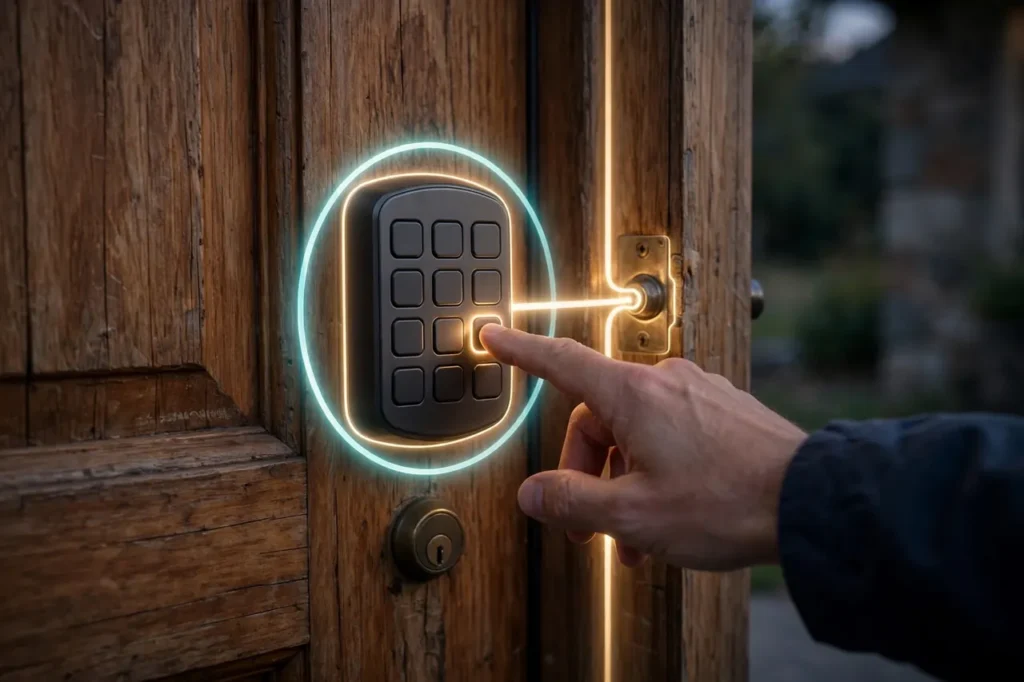
Between “smart” and “plain manual” sits one more real option: keyless with no electronics at all. The Lockey C150 is a mechanical push-button lock made for sliding glass patio doors. It surface-mounts on the panel, and its hook bolt (3/8 inch throw) grabs the frame the same way your door’s own latch does, only stronger and code-operated. One user code, no batteries, no app, nothing to charge and nothing to hack. Lockey lists it for doors 1-3/16 to 2 inches thick, rates it weather resistant for indoor or outdoor use, and backs it with a lifetime mechanical warranty.
Lockey sells through dealers rather than one fixed store price, and the price varies by finish and dealer, so check a Lockey dealer for the current figure before you budget. What you give up versus a true smart lock is remote access, alerts, and an entry log. What you gain is keyless entry that works in a power cut, in the rain, and in ten years, with zero upkeep beyond the code itself.
The Manual Lock Most Owners Should Buy First: The Double-Bolt Lock
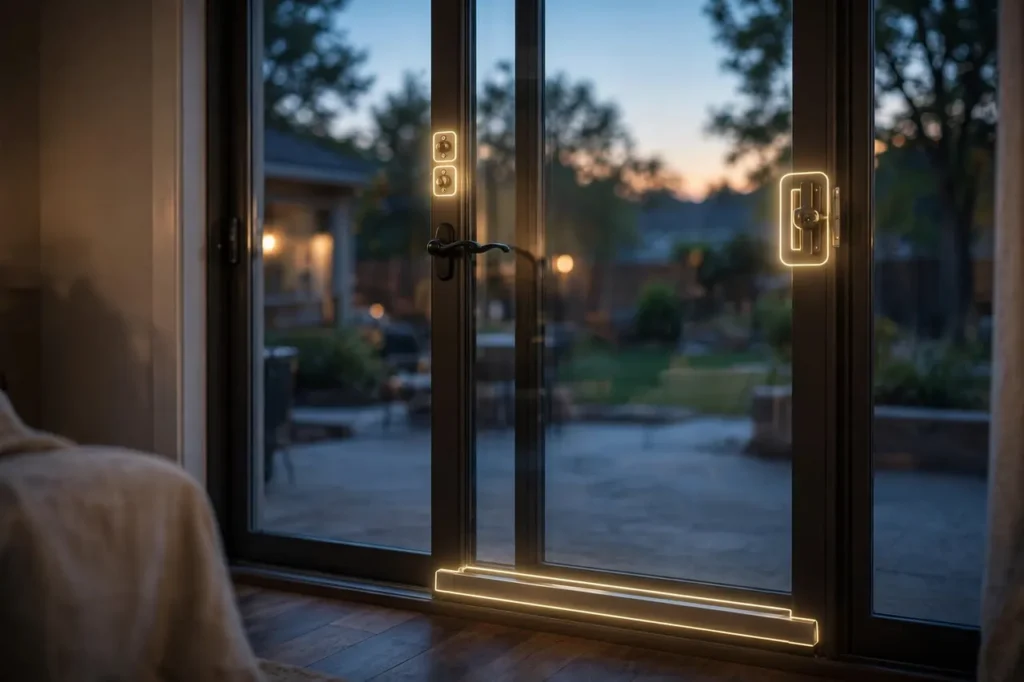
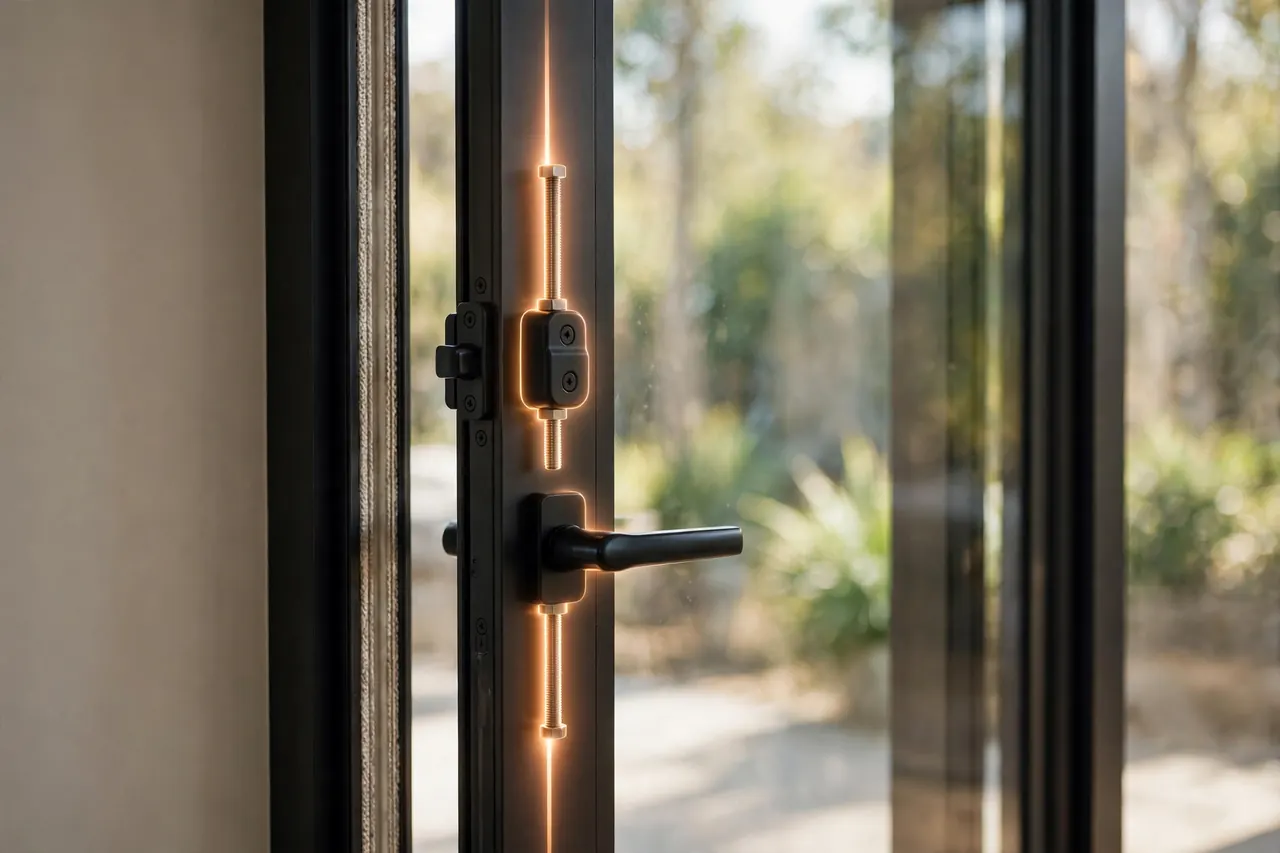
Ask working locksmiths what they actually install on sliding glass doors and one answer keeps coming up: a double-bolt lock, such as the CAL Double-Bolt Lock. It mounts on the inside face of your sliding panel, above your existing handle, and throws two steel bolts at once, one up into the top frame and one down into the bottom frame. The door is then locked to the frame at two points instead of one small hook.
Why locksmiths like it:
- It stops the lift. Because the bolts pin the panel to the frame at the top and bottom, the panel cannot be lifted off its track, which is the classic way sliders are defeated (more on that below).
- It is strong. Acme Locksmith, which sells and installs this lock, rates it as resisting up to 1,000 lbs of force.
- It is cheap. The CAL Double-Bolt sells for about $23 to $25 at locksmith suppliers such as UHS Hardware (checked on October 19, 2026).
- It is a child lock too. Opening it takes two hands lifting both bolts at once, which small children cannot do. The newest version adds a small key so you can lock the bolts in place.
- It is a simple install. It screws on with a few screws, and most owners fit it themselves.
The limits matter just as much. It works from inside only, so it can never be your keyed entry from the patio; your normal handle latch still does that job. It also needs about 1/2 inch of flat mounting space, and it will not fit c-channel doors, which have a raised rib down the middle instead of a flat face. On those doors, use a Charlie bar or a loop lock instead (covered next). None of that changes the main point: for the price of a pizza, this lock fixes the two biggest weaknesses of a sliding door, and no smart feature does that.
What No Lock Can Fix: The Real Weak Points of a Sliding Door
Here is the part most lock ads skip. A sliding door can have a great lock and still be easy to open, because the lock is not the weakest part of the door. Police crime-prevention guides say it bluntly: sliding glass doors are secured by latches, not locks, and those latches can be forced. Fix these four weak points and any lock you own works better.
The Panel Can Be Lifted Off Its Track
A sliding panel sits on small rollers in a bottom track, and there is open space in the deeper top track above it. On many doors, especially older ones, there is enough up-and-down play that someone outside can lift the whole panel up into that space, swing the bottom off the track, and set the panel aside. Your latch, your lock, and your security bar all stay exactly where you left them, on a door that is no longer in the frame.
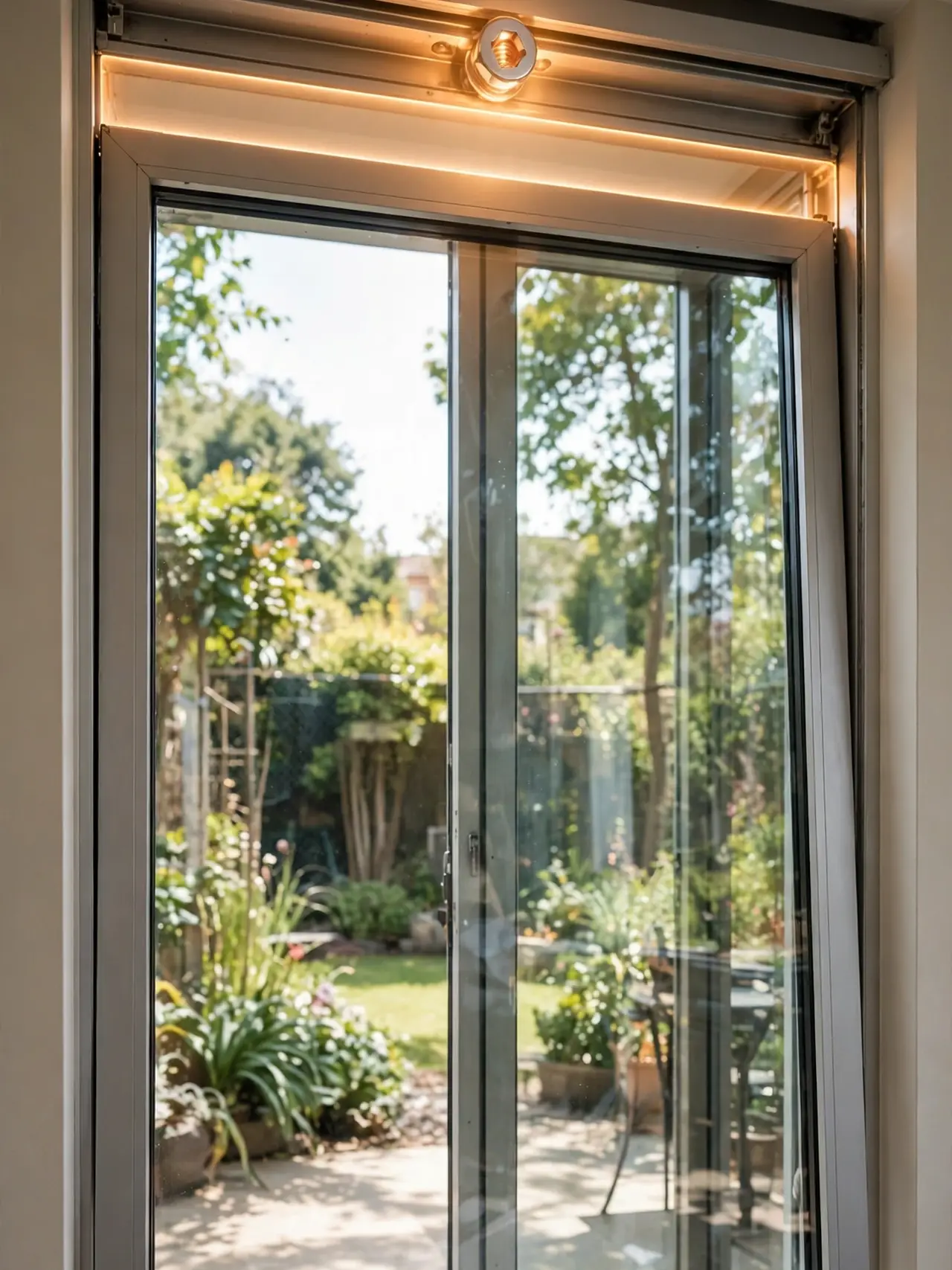
The fix is cheap and it is the same one police departments recommend: put screws or anti-lift blocks in the top track. Large-head screws are driven into the top frame so the panel barely clears them as it slides. The panel can still move sideways, but it can no longer rise high enough to leave the track. Keep the rollers clean and adjusted, too, because a sagging, wobbling panel has more lift play. The double-bolt lock above solves the same problem a second way, by pinning the panel to the frame.
💡 Practical Home Tip: Do the 10-second lift test before you buy anything. Close and latch your sliding door, grip the panel with both hands, and try to lift it straight up. If it rises more than a little, or rattles loosely in the frame, fix the lift first with top-track screws or a double-bolt lock. A $500 smart lock on a panel that lifts out is money spent in the wrong order.
The Factory Latch Is Weak
The little hook latch that came with your door was made to keep the door shut, not to stop a determined push. King County’s crime prevention guide puts it in one line: sliding doors “are secured by latches not locks,” and the latches are vulnerable to being forced open from outside. A pry bar at the meeting stile can flex the frames enough for a small hook to slip its keeper. This is why a second, independent lock (the double-bolt, a foot bolt, or a pin lock) matters more than a fancier version of the same single hook.
Security Bars and Charlie Bars
A security bar is a steel bar that drops into the bottom track behind the sliding panel, or a hinged “Charlie bar” that folds down across the frame at waist height. With a bar in place, the panel physically cannot slide open, even if every latch is defeated. A wooden dowel cut to fit the track does the same basic job for almost no money, and police guides have suggested it for decades.
Be honest about the limits, though. A bar stops sliding only. It does nothing against lifting, which is why locksmiths call the dowel a one-out-of-three fix, and a loose dowel can walk or bounce out of the track if the door is rattled. A hinged Charlie bar is sturdier and doubles as a visible deterrent. A ready-made option is the Master Lock dual-function security bar, listed at $23.99 at Target (checked on October 19, 2026); it adjusts from 27.5 to 42 inches to fit sliding doors. Whatever bar you use, it must lift out fast from inside, with no key and no tool, so it never traps you in a fire.
Pin Locks and Foot Bolts
The cheapest hardware-store layer is a pin lock: you drill a hole through the sliding panel’s frame into the fixed frame, and a steel pin drops through both, locking the two together. A spring-loaded foot bolt does a similar job low on the panel, bolting into the track. Both cost very little, both add a second locking point that also resists lifting, and both are inside-only. They are not glamorous, but layered with the factory latch, they turn one weak hook into three separate problems for an intruder. Drill carefully and only into the frame, never near the glass, and keep the pin easy to pull from inside.
How to Choose the Right Option for Your Door
Match the lock to how the door is really used:
- “I need codes, fingerprints, and a record of who came in.” The Lockly Guard Athena is the only true smart answer, and it is a pro purchase: budget for the lock, the separate Wi-Fi hub if you want remote control, and likely a locksmith to fit it. Start by asking a Lockly dealer or local locksmith about stock, because supply is the hard part.
- “I want keyless entry but hate batteries and apps.” The Lockey C150 gives you a code with zero electronics to maintain.
- “I just want this door to be hard to break into.” Buy the double-bolt lock, add top-track anti-lift screws, and drop in a bar. That stack costs less than $75 in parts and covers sliding, lifting, and prying.
- “I rent.” Stick to no-drill layers: a security bar or dowel in the track, and ask your landlord before any screw touches the frame.
- “My door is old, loose, or hard to slide.” Fix the rollers and alignment first. Motors and tight-tolerance locks both fail on a door that sticks.
While you are working on this door, check its seal as well. A slider that leaks air around the edges is telling you the panel is not sitting true, and our door weatherstripping guide walks through the draft tests and fixes. And if this project has you thinking about the rest of the house, our guide to the best door locks for home covers the hinged doors, where your smart lock choices are far wider.
Installation Notes: Measure First, Drill Once
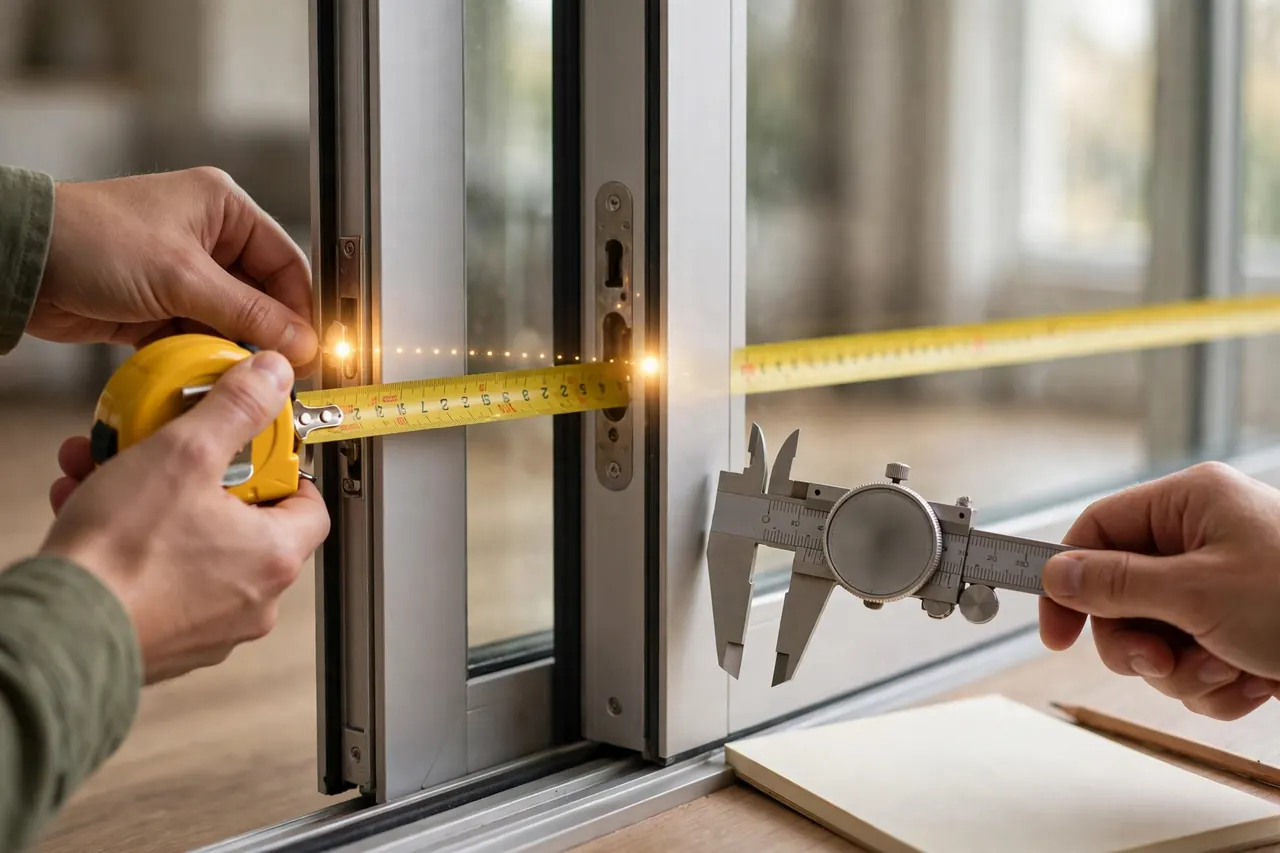
Whatever you choose, measure before you order. Lockly’s own fitting numbers show why: the Athena needs a sliding backset of 1.20 or 1.40 inches and a door 1.40 to 2 inches thick, and mortise pockets vary more than most owners expect. Write down your backset (the distance from the edge of the stile to the center of the lock), your stile width, and your door thickness, and compare all three against the maker’s spec sheet.
- Make the door slide well first. Clean the track, check the rollers, and adjust the panel so it closes square. A lock aligned to a crooked door will bind, jam, or miss its keeper.
- Mark twice, drill once. Alignment between the moving panel and the fixed frame is everything on a slider. A strike that is off by a few millimeters means a bolt that grinds or never fully engages.
- Use the right bit for the frame. Aluminum and vinyl stiles crack and distort with the wrong bit or too much pressure. Drill pilot holes, and go slowly.
- Never drill the glass. Patio panels are tempered glass. All hardware mounts to the frame and stile only. If a step seems to need the glass drilled, stop and call a professional.
- Know when it is a pro job. The Lockly Guard is sold for professional installation, and mortise work on a slim stile leaves no room for a practice run. A locksmith visit costs less than a ruined panel.
- Test the exit. After any install, open the door from inside with your eyes half closed, the way you would at 3 a.m. in smoke. Every layer must release fast, from inside, without a key.
Common Mistakes to Avoid
- Buying a normal smart deadbolt and hoping it fits. It will not. There is no bore hole, no thick stile, and no fixed jamb for it on a sliding panel.
- Trusting the factory latch alone. It is a latch, not a lock. Add a second, independent locking point.
- Spending on smart features before fixing the lift. Electronics do not stop a panel from being lifted out of its track. Hardware first, gadgets second.
- Using only a dowel in the track. It stops sliding and nothing else, and it can bounce out when the door is rattled.
- Forgetting the extras in the budget. On the Lockly, the Wi-Fi hub is separate, installation is a pro job, and the kit price you see may not be the price you pay. Add it all up before you commit.
- Blocking your own escape. Any bar, pin, or bolt that needs a key, a tool, or strength to release from inside is a fire hazard, not a security upgrade.
- Ignoring a door that sticks or sags. Locks fail early on badly rolling doors, and a loose panel is easier to lift and pry.
The Bottom Line
A sliding glass door smart lock exists, but it is a niche pro product, not a normal store purchase: one name-brand model, sold through dealers, often out of stock, with remote control sold separately. Most owners get more real security, for far less money, from the unglamorous stack: keep the factory latch healthy, add a double-bolt lock, stop the panel from lifting, and drop a bar in the track. Secure the door first. Add the smart features second, if you still want them.
Disclaimer: This article is general information, not professional security advice. No lock can make a glass door burglar-proof; locks slow intruders down and push them to easier targets. If your home is high-risk, if a door needs drilling or adjustment you are unsure about, or if you are not certain an install keeps a fast exit from inside, hire a licensed locksmith or door professional.
Frequently Asked Questions
Can you put a smart lock on a sliding glass door?
Yes, but only a lock designed for sliding panels. Standard smart deadbolts cannot fit, because a slider has no bore hole, a thin narrow stile, and a hook latch instead of a bolt. The one name-brand purpose-built option is the Lockly Guard Athena Slide Edition, sold through Lockly’s pro channel and locksmith dealers.
What is the most secure way to lock a sliding glass door?
Layers. Keep the factory hook latch in good shape, add a double-bolt lock so the panel is pinned to the frame at the top and bottom, fit anti-lift screws or blocks in the top track so the panel cannot be lifted out, and use a security bar in the track. That combination covers sliding, lifting, and prying, which a single lock never does.
Are sliding glass doors easy to break into?
They are one of the weaker entry points in most homes, which is why police crime-prevention guides single them out. The factory latch can be forced, older panels can be lifted off their tracks, and the glass itself can be broken. The good news is that the fixes are cheap: a double-bolt lock, anti-lift screws, and a bar close most of the gap.
What is the best way to secure a sliding door?
Start with the lift test: if the panel can be raised in its frame, fix that first with top-track screws or a double-bolt lock, which resists both lifting and sliding. Then add a track bar as a second layer and keep the rollers and latch adjusted. Add keyless or smart hardware only after the door itself is sound.
Why not just use a wooden stick in the track?
A dowel is better than nothing, and it does stop the panel from sliding. But it does nothing to stop the panel being lifted up and off its track, which is the move experienced burglars use, and a loose stick can walk or bounce out of the track when the door is shaken. Use it as one layer, not the whole plan.
Can a sliding door smart lock work without Wi-Fi?
Yes, partly. On the Lockly Guard Athena, the fingerprint reader, keypad codes, RFID cards, and phone control over Bluetooth all work without Wi-Fi. What you lose without the separate Secure Link Wi-Fi Hub is remote locking from away from home and voice control through Alexa or Google Assistant. Note that auto-lock is not offered on the sliding model at all.