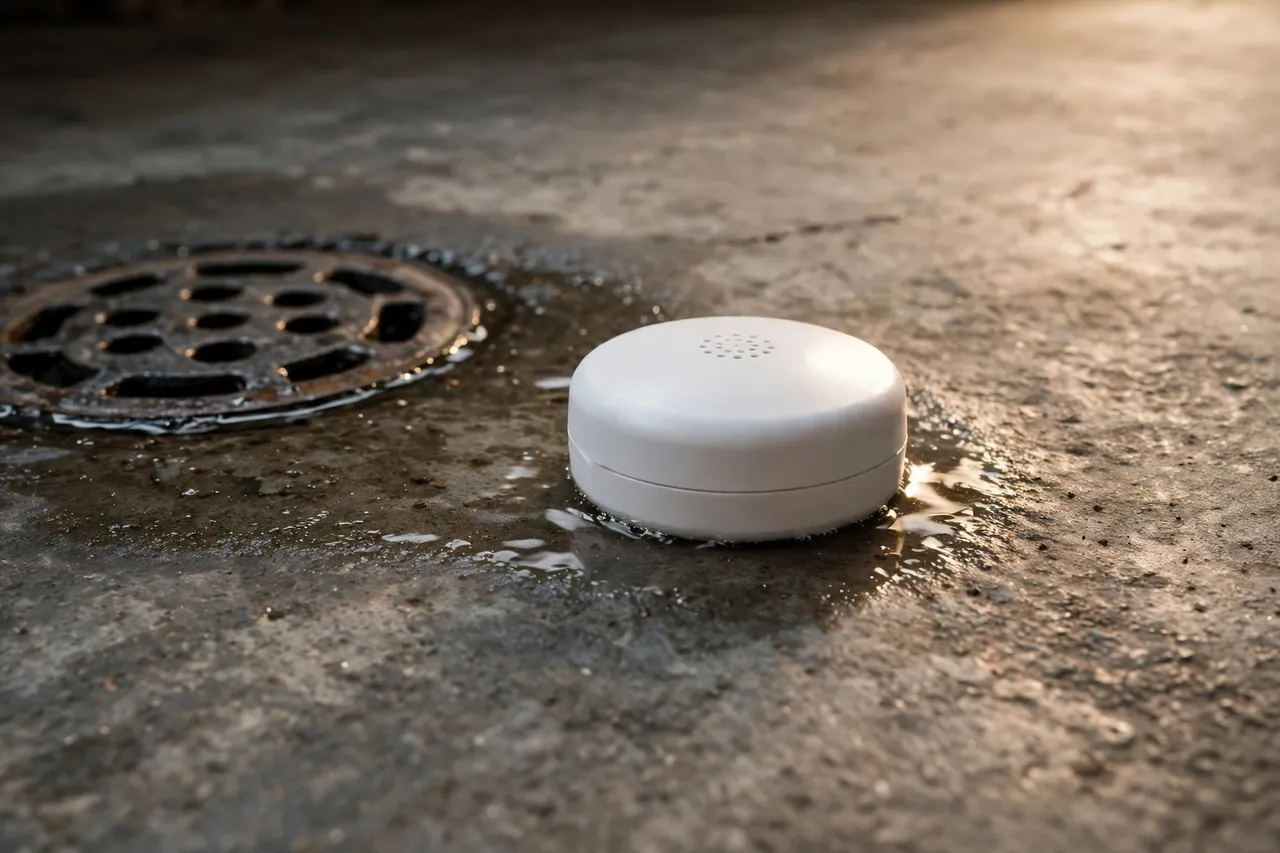
A flood sensor is a small device that sits on your floor and warns you the moment water touches it. Two metal probes on the bottom of the sensor do the work: when water bridges the gap between them, it completes an electrical circuit and sets off an alarm, a phone alert, or both. Put one where water shows up first, and a leak that could soak a floor for days gets caught in minutes instead.
Flood sensors are also called flood detectors, and the two names mean the same thing. This guide covers the whole home: how the sensors work, the two types to choose from, where floods actually start, exactly where to place each sensor, how the alerts reach you, and what to do when one trips.
💡 Practical Home Tip: Start with the lowest point in your home, not the prettiest room. Water runs downhill, so a sensor in a basement corner or beside a sump pump protects you more than a sensor in a room that almost never sees water.
How a Flood Sensor Works
Most flood sensors are simple on purpose. There is no camera, no complicated setup, and nothing to calibrate. The sensor rests flat on the floor with its metal probes facing down, touching the surface. As long as the floor stays dry, nothing happens.
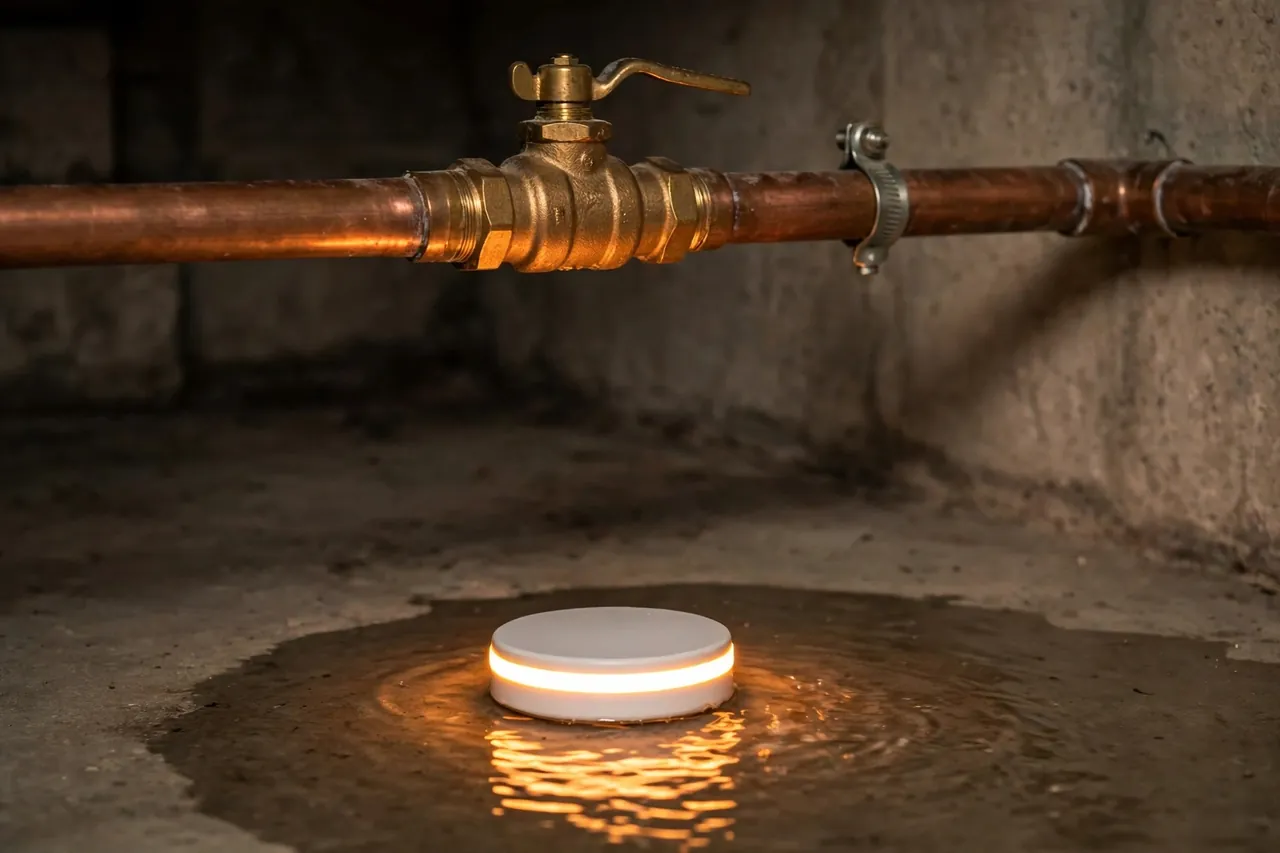
When water reaches the sensor, it touches both probes at once. Water conducts electricity, so the water itself closes the circuit between the probes. That closed circuit is the trigger. The sensor then sounds its alarm, sends a wireless alert, or does both, depending on the model you bought.
This design has one big advantage: the sensor does not need to guess. It reacts to real water on a real floor. That is also why a spilled glass of water rarely causes trouble in practice. Most sensors need the probes to stay wet for a short moment before they alert, so a quick splash that you wipe up right away is less likely to set one off than a steady leak.
However, a flood sensor only watches the spot where it sits. It cannot see a leak three rooms away, and it cannot see water inside a wall. That is why placement matters more than any single feature. One well-placed sensor beats three sensors sitting in the wrong rooms.
What a Flood Sensor Cannot Do
A flood sensor is an early warning device, not a repair tool. It will not stop the water, dry the floor, or fix the pipe. Some systems pair with an automatic shut-off valve that closes your main water line when a sensor trips, but the sensor on its own only tells you there is a problem. You still need a plan for what happens next, and this guide gives you one.
A sensor also cannot protect a home nobody checks on. If the sensor only beeps and nobody is home to hear it, the warning is wasted. That is why the alert method matters as much as the sensor itself, and why the section on alerts later in this guide deserves your attention.
Spot Sensors vs. Rope Sensors
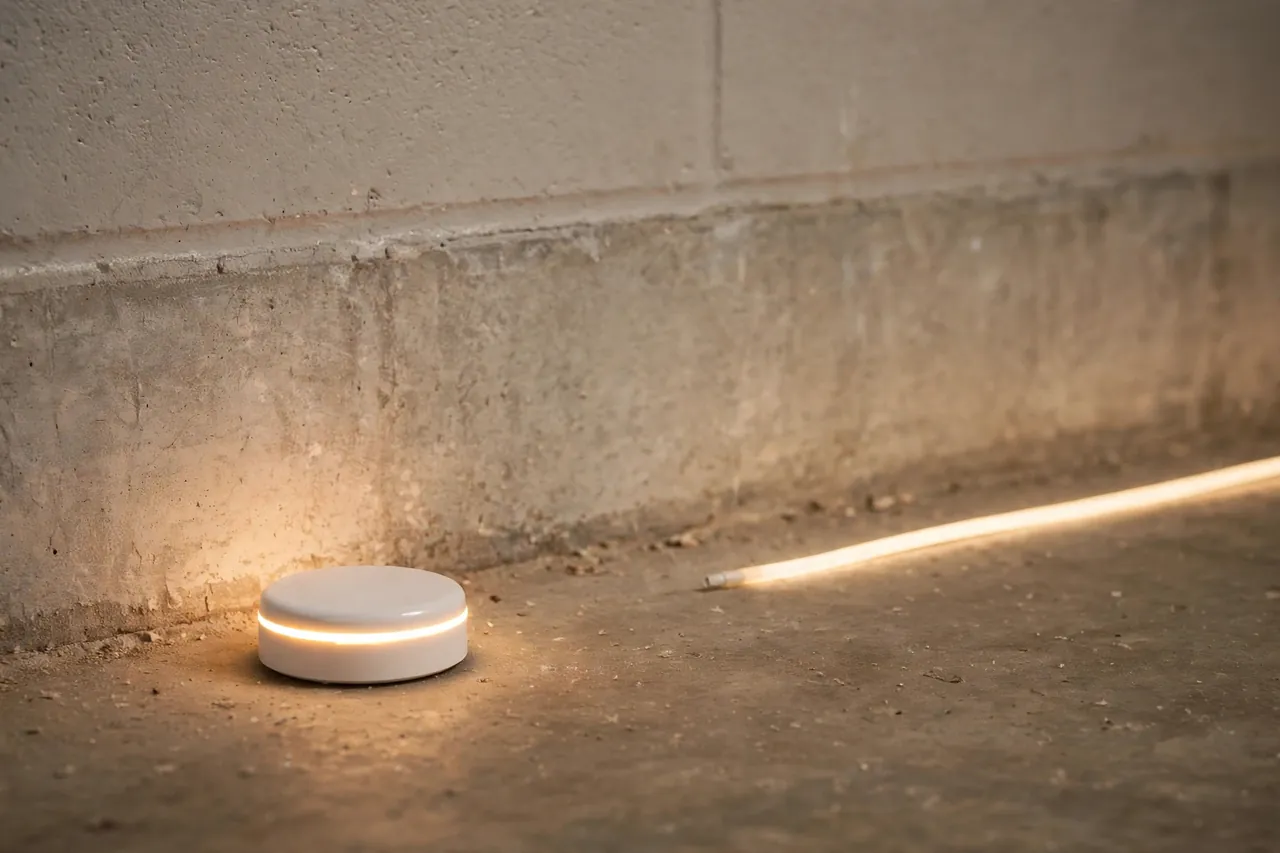
There are two kinds of flood sensors, and the difference is simply how much floor each one watches. A spot sensor watches one point. A rope sensor watches a whole line. Choosing between them is the first buying decision you will make, so it helps to see them side by side.
| Feature | Spot sensor | Rope (cable) sensor |
|---|---|---|
| What it watches | One point on the floor, about the size of the sensor itself | A full line along the cable, such as a wall base or a row of pipes |
| Best for | Under a sink, behind a toilet, beside a washing machine | Along a basement wall, around a water heater, under a long pipe run |
| How many you need | One per risk spot | One cable can cover a whole stretch |
| Weak point | Water a few feet away can be missed | Costs more and takes longer to lay out neatly |
| Typical home use | Most rooms and appliances | Basements and long, open stretches |
For most homes, spot sensors do most of the work. You place one under each sink, one behind the washing machine, one near the sump pump, and you have covered the places leaks actually start. Rope sensors earn their place in basements, where water can come in along a whole wall rather than from one appliance, and around a water heater, where a leak can spread in any direction. Vesternet’s guide to smart water leak detection systems explains the same spot-versus-rope choice in depth.
Some rope sensors can even tell you where along the cable the water touched, which helps you find the leak faster in a long basement. Simpler rope sensors only tell you that water touched somewhere on the cable, so you still have to walk the line to find it. Check which kind you are buying before you pay, because the difference matters in a big room.
Where Floods Start in a Home
Floods rarely start where people expect them. They do not begin as a dramatic burst in the middle of a room. They begin as a slow drip behind something you never move, or as water collecting in a corner you never visit. Knowing the usual starting points tells you where sensors belong.
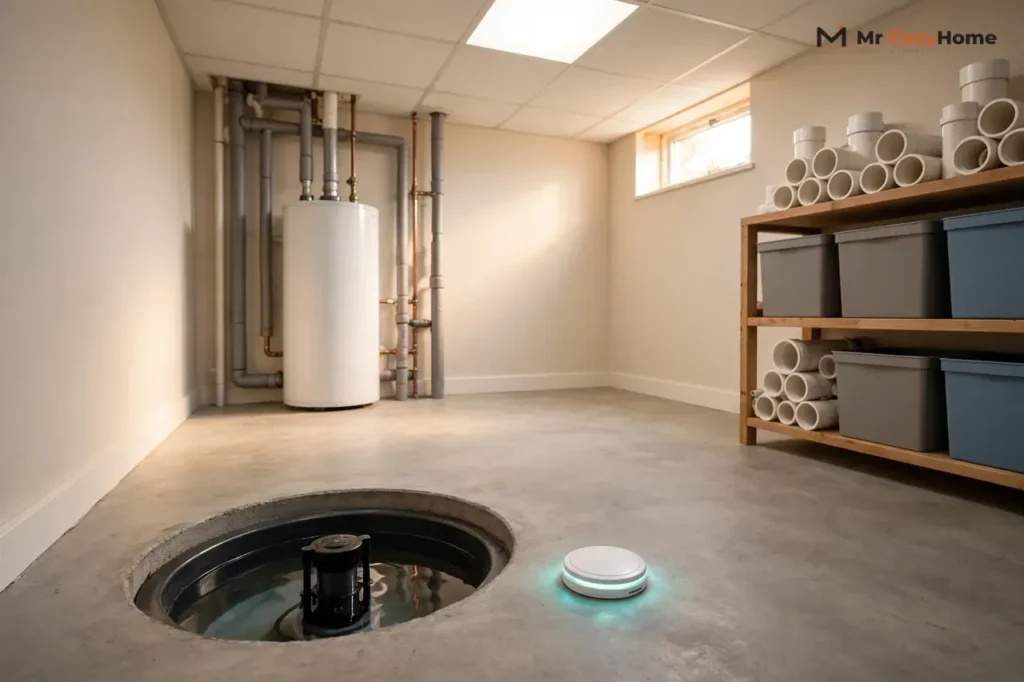
The basement is the most common trouble spot. Water comes in through foundation walls, window wells, and floor drains, and it collects at the lowest point of the floor. A sump pump failure is another classic basement flood: the pump stops, the pit fills, and water spreads across the floor while nobody is watching. A sensor beside the sump pit catches that failure early, because the water reaches the sensor before it reaches your stored boxes.
The laundry room comes next. Washing machine supply hoses sit under constant pressure, and they age. A hose can split without warning and release a large amount of water in minutes. Dishwashers fail the same way, usually at a hose or a door seal, and the leak hides under the machine until the kitchen floor warps.
Bathrooms hide leaks behind toilets and inside sink cabinets. A toilet supply line or a loose connection under a sink can drip for weeks before anyone notices, because the cabinet door stays shut. Kitchens add the refrigerator ice maker line and the dishwasher to the same list. Even a slow drip matters here, because water trapped under a cabinet feeds mold and rots wood quietly.
Finally, watch the heating and cooling system. An air conditioner drip pan can overflow when its drain clogs, and a water heater can leak as it ages. A water heater deserves its own sensor, but this guide keeps the focus on the whole home, so the heater gets one spot in your placement plan rather than a whole chapter.
Where to Put Flood Sensors, Room by Room
Place a sensor where water arrives first, not where it ends up. That one rule fixes most placement mistakes. Water runs downhill and pools at low points, so start low and work outward from each water source. The room list below matches the high-risk rooms in Brinks Home’s water leak detection guide: basements, laundry rooms, under sinks, and near appliances.
Basement
Put your first sensor at the lowest point of the basement floor, near a floor drain if you have one. Put a second sensor beside the sump pump pit, so a pump failure is caught the moment water rises past the pit. If your basement has a wall that has leaked before, run a rope sensor along the base of that wall. Keep the probes flat on the floor, facing down, so they touch water as soon as it arrives.
Laundry Room
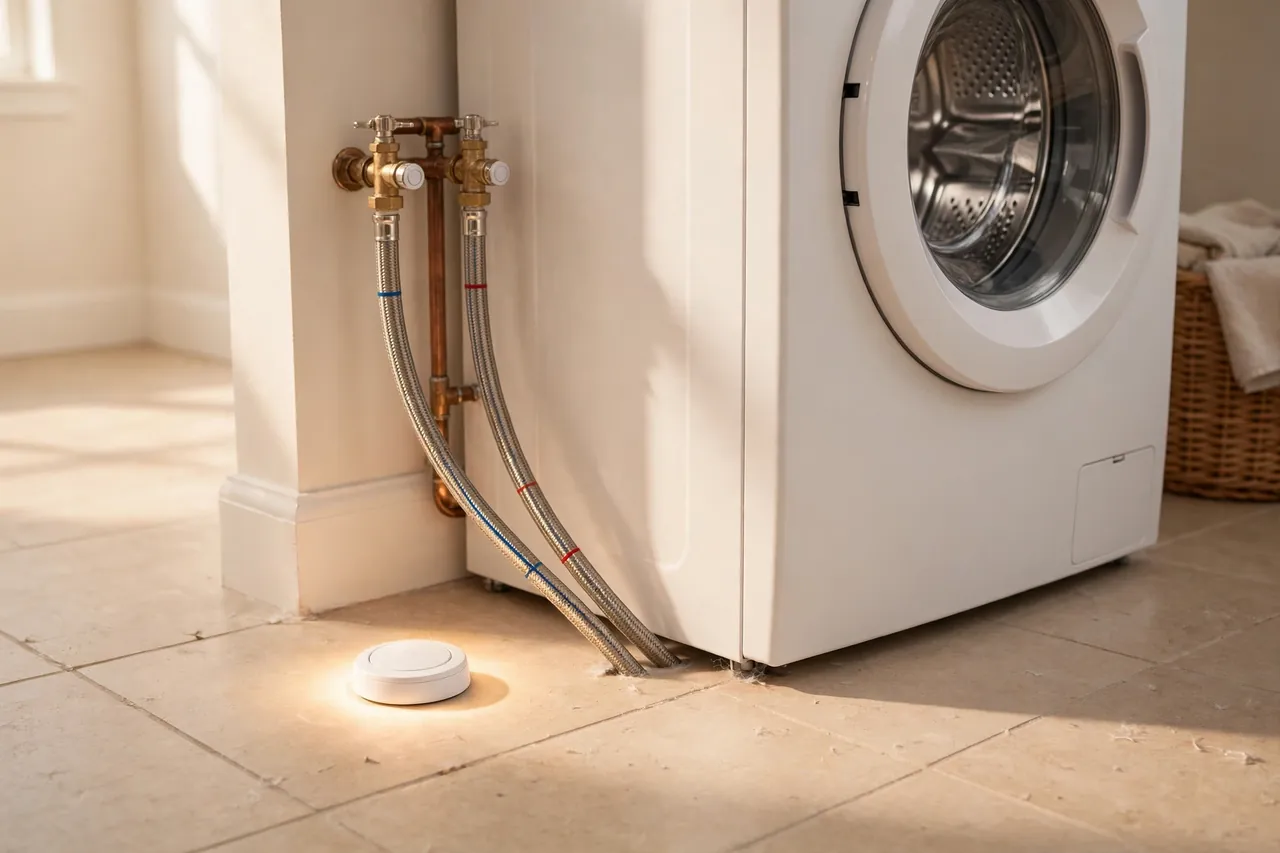
Place a spot sensor on the floor behind or beside the washing machine, close to the supply hose connections. If you can only fit one sensor, put it on the side where the hoses connect, because that is where a burst starts. Slide it flat on the floor rather than balancing it on a hose or a drain pan edge, where it can tip and miss the water.
Kitchen
Put one sensor inside the cabinet under the kitchen sink, right under the pipes. Put another behind the dishwasher if you can reach the space, or on the floor beside it if you cannot. If your refrigerator has an ice maker or a water dispenser, slide a thin spot sensor under the front edge of the fridge, near the supply line.
Bathroom
Place a sensor inside the vanity cabinet under each bathroom sink, and one on the floor behind the toilet, near the supply line connection. Toilets and sinks are the two most common bathroom leak points, and both hide their leaks behind closed doors or porcelain. A sensor in each spot removes the guesswork.
Other Spots Worth One Sensor
Add a sensor beside the water heater, in the drip pan area of your air conditioner if it is easy to reach, and near any upstairs appliance that could leak onto the ceiling below. An upstairs leak is easy to miss, because the damage shows up downstairs first. One sensor upstairs can save a ceiling, a floor, and a very expensive repair.
Placement Mistakes to Avoid
Do not put a sensor where you mop. Kitchen and bathroom floors get wet during cleaning, and repeated false alarms teach everyone in the house to ignore the sensor. Keep sensors inside cabinets, behind appliances, or beside equipment instead of out in the open floor. Do not place a sensor on a slope where water runs past it instead of pooling on it, and do not rely on a sensor in a spot with weak wireless signal, because a sensor that cannot connect cannot warn you. Finally, do not mute the alerts. Set leak alerts as high-priority notifications on your phone so they break through Do Not Disturb.
How Flood Sensors Alert You
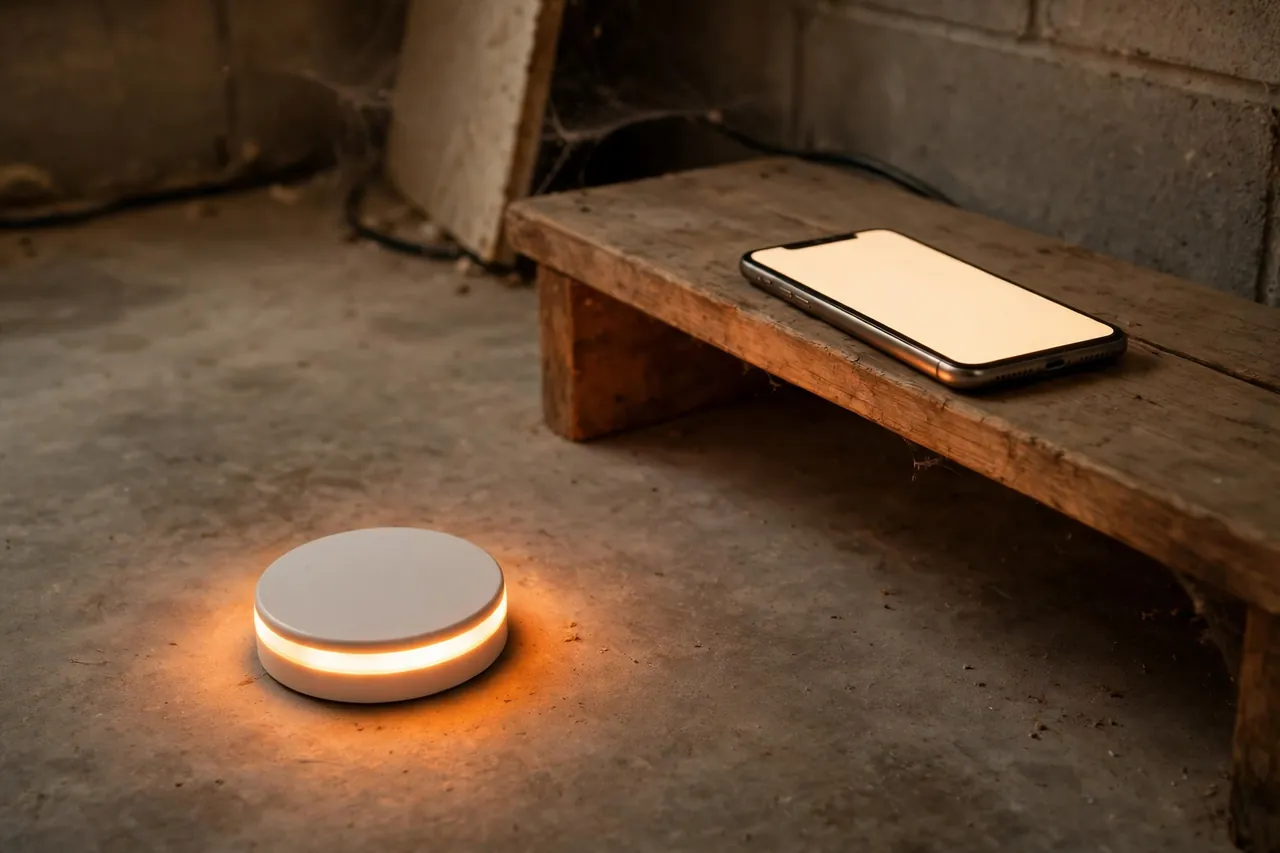
A flood sensor can warn you in three ways, and the best setups use more than one. The first is a local alarm: the sensor itself beeps loudly when water touches it. That works well when someone is home, and it still works when the internet is down, because the beep needs no connection at all.
The second way is a phone alert. Smart sensors send a push notification, a text, or an email to your phone, often naming which sensor tripped. That is the alert that protects you when you are at work or on vacation, because you can act even from far away. If you use a smart home app, it helps to know how a smart home app handles alerts, because flood alerts travel through the same kind of app and the same notification settings.
The third way is through a hub or a home security system. The sensor talks to the hub, and the hub can alert a monitoring service, trigger other devices, or both. Some systems go one step further and pair the sensor with an automatic shut-off valve. When the sensor detects water, the valve closes your main water line and stops the flow entirely. That is the strongest protection you can buy, and it is worth considering if you travel often or have a basement that has flooded before.
One honest limit applies to all three methods: a phone alert only helps if your phone can receive it. Before you trust a sensor in a basement corner, test the alert from that exact spot. Walk downstairs, trigger the sensor with a damp cloth, and confirm the alert arrives on your phone. A sensor that cannot reach your phone from its real location is a sensor that will fail you quietly.
Battery vs. Wired Sensors
Most home flood sensors run on batteries, and that is a feature, not a flaw. A battery sensor keeps working during a power outage, which is exactly when storms and sump pump failures happen. It also goes anywhere, with no outlet needed, so you can place it under a sink or beside a sump pit without running a cord.
Battery life depends on how the sensor talks to your home. Sensors that use low-power wireless protocols, such as Z-Wave, Zigbee, or LoRa, commonly last two to five years on one set of batteries. Sensors that connect directly over Wi-Fi use more power, and their batteries more often last one to two years. Either way, the companion app usually shows the battery level and warns you before it dies, so a dead sensor should never surprise you.
Wired or plug-in sensors skip batteries entirely. They plug into an outlet and never need a battery swap, which suits a sensor that sits in one place for years, such as beside a water heater. Their weakness is obvious: when the power goes out, they go quiet unless they have a battery backup. For a basement sensor, that trade-off matters, because the worst floods often arrive with the worst storms.
Whichever type you choose, build one habit around it. Check the battery level in the app every six months, and test each sensor once a month by touching a damp cloth to its probes and confirming the alert arrives. That thirty-second test is the difference between a sensor you trust and a sensor you only hope works. The same battery habit that keeps a smart lock working applies here: check before it dies, not after.
What to Do When a Flood Sensor Trips
An alert is only useful if you know the next five moves. Decide them now, while the floor is dry, so you are not figuring them out with water spreading. Print this list or save it on your phone if it helps.
- Do not ignore the alert. Go to the sensor right away, or call someone who can. A leak caught in the first hour is usually a mop and a repair; the same leak left overnight can mean a ruined floor.
- Find the source. Look at the appliance or pipe nearest the sensor. Check supply hoses, connections under sinks, and the base of the toilet or water heater. If you cannot find the source, look uphill: water runs down, so the leak may start above the sensor.
- Stop the water if you can do it safely. Close the shut-off valve for that appliance, or close the main water shut-off for the whole house if you cannot find the source. If water is near electrical outlets, cords, or a panel, do not step into it. Call for help instead.
- Move what matters and start drying. Lift boxes, rugs, and electronics off the wet floor. Mop up standing water, run fans, and open the area to air. Drying early is what stops mold from starting.
- Call a professional when the job is bigger than a loose connection. A burst pipe, a failed water heater, or water that has soaked into walls and floors is plumber or water-damage work, not a do-it-yourself fix. Take photos of the damage before anything is repaired, because your insurer will want them.
One more step is easy to forget: after the repair, test the sensor again. Put it back flat on the floor, probes down, and trigger it with a damp cloth. A sensor that was moved during the cleanup and never put back properly is a sensor that will miss the next leak.
Choosing the Right Flood Sensors for Your Home
Start by counting your risk spots, not by buying a box and hoping it is enough. Walk through your home with the placement list from this guide and count: basement low point, sump pit, laundry, each sink cabinet, each toilet, dishwasher, fridge line, water heater. Most homes land between six and ten spots. That count is your shopping list.
A starter kit with three or four sensors covers the worst spots first: the basement low point, the laundry, and the kitchen sink. Add the rest over the following weeks, starting with the rooms above finished ceilings and the bathroom you use least. A sensor in a rarely visited room is worth more than a second sensor in a room you walk through every day, because you are the early warning system in the rooms you visit.
A few bonus features are worth weighing. Some sensors also watch temperature and warn you when a room drops toward freezing, which helps prevent burst pipes in winter. Some work with your existing smart home system, and some need their own hub, which adds cost. And before you buy, ask your home insurer whether monitored leak sensors earn a discount. Some carriers offer one, and even when they do not, the sensor usually pays for itself the first time it catches a leak early.
Related Guides
If you are building a safer smart home, these MrCozyHome guides cover the devices that work alongside flood sensors: the complete guide to smart key locks explains the other half of home safety, controlling who can enter, while your flood sensors watch what happens inside.
For the full comparison of detection methods, see how leak detection works, and for connected sensors with app alerts, our WiFi water leak detector guide.
Frequently Asked Questions
How does a flood sensor work?
A flood sensor has two or more metal probes on its underside. When water touches both probes, it completes an electrical circuit and triggers the alert. That alert can be a loud alarm on the sensor itself, a notification on your phone, or both, depending on the model.
Where should I put a water sensor in a basement?
Put it where water reaches first: the lowest point of the basement floor, near a floor drain, or beside the sump pump pit. Add a second sensor along the base of any wall that has leaked before, or under pipes and near windows where leaks can start.
Are flood sensors worth it?
Yes, for most homes they are. A sensor costs far less than repairing a soaked floor, and it catches leaks you would not notice for days or weeks, such as a slow drip under a sink or a sump pump that stopped overnight. The value is highest in basements and laundry rooms.
How long do flood sensor batteries last?
Most flood sensor batteries last between two and five years, depending on the wireless protocol and how often the sensor alerts. Low-power sensors using Z-Wave, Zigbee, or LoRa often reach three to five years, while direct Wi-Fi sensors more often last one to two years on AA or AAA batteries.
What happens if my Wi-Fi goes down?
Your phone alerts will stop, because they need the internet to reach you. However, most good sensors still sound their built-in alarm, so anyone at home will hear it. If you travel often, a sensor that works through a hub or a cellular connection is a safer choice than a Wi-Fi-only sensor.
Can a flood sensor automatically shut off water?
A sensor on its own cannot, but some systems pair sensors with an automatic shut-off valve. When the sensor detects water, it signals the valve to close your main water line and stop the flow. That pairing is the strongest protection available, and it is worth considering for basements and homes left empty for long stretches.
Disclaimer: Water damage can hide mold, weaken floors, and reach electrical wiring, so treat any large leak, soaked wall, or water near outlets as a job for a qualified plumber or water-damage professional. This guide explains how flood sensors help you catch leaks early; it does not replace professional advice for your home’s plumbing, wiring, or structure.
Start today with one sensor at the lowest point in your home. Test it, confirm the alert reaches your phone, and then work through the rest of your risk spots one room at a time. The best flood sensor is not the most expensive one. It is the one sitting flat on the floor, in the right place, with a fresh battery, ready for the leak you never see coming.