
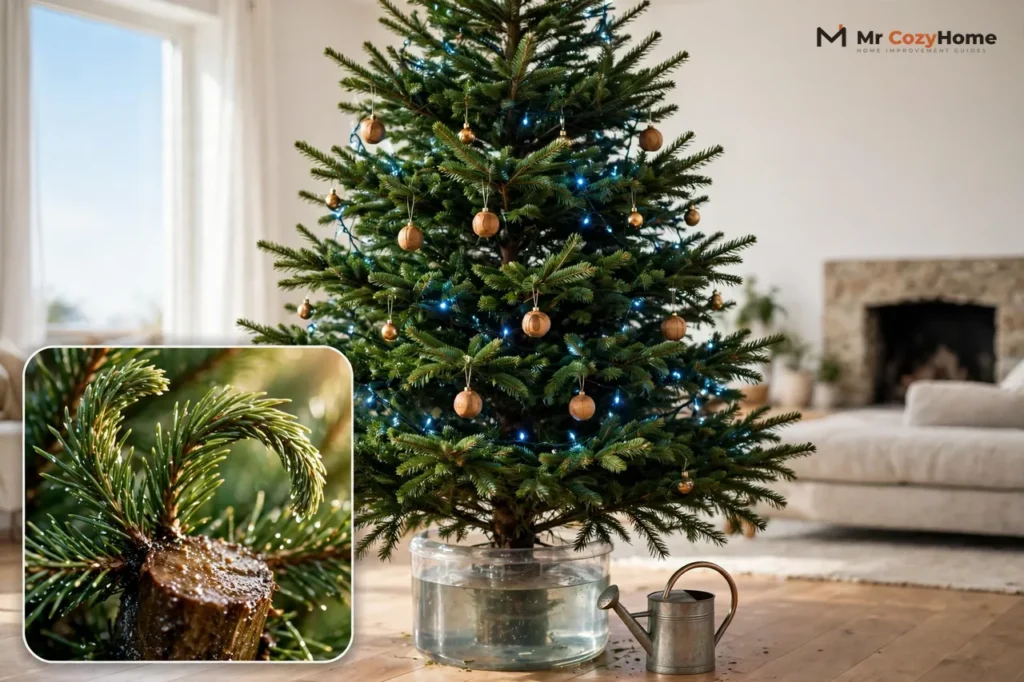
A real Christmas tree decorated well starts with one simple rule: keep the tree drinking. Pick a fresh tree, cut a thin slice off the trunk, stand it in plenty of plain water, and check that water every day. Keep the tree at least 3 feet from heat, use cool LED lights, and take it down as soon as it starts to dry out. Do those things, and your live tree can look full, smell fresh, and stay safe for weeks.
The trouble starts when a real tree stops drinking without anyone noticing. A dry tree drops needles, loses its scent, and turns into a fire risk fast. This guide covers only what makes a real tree different: freshness, watering, live-branch decorating, and recycling. For broad styling ideas, see our guide to tree decorating ideas for Christmas after you finish the real-tree steps here.
Choose a Fresh Real Tree
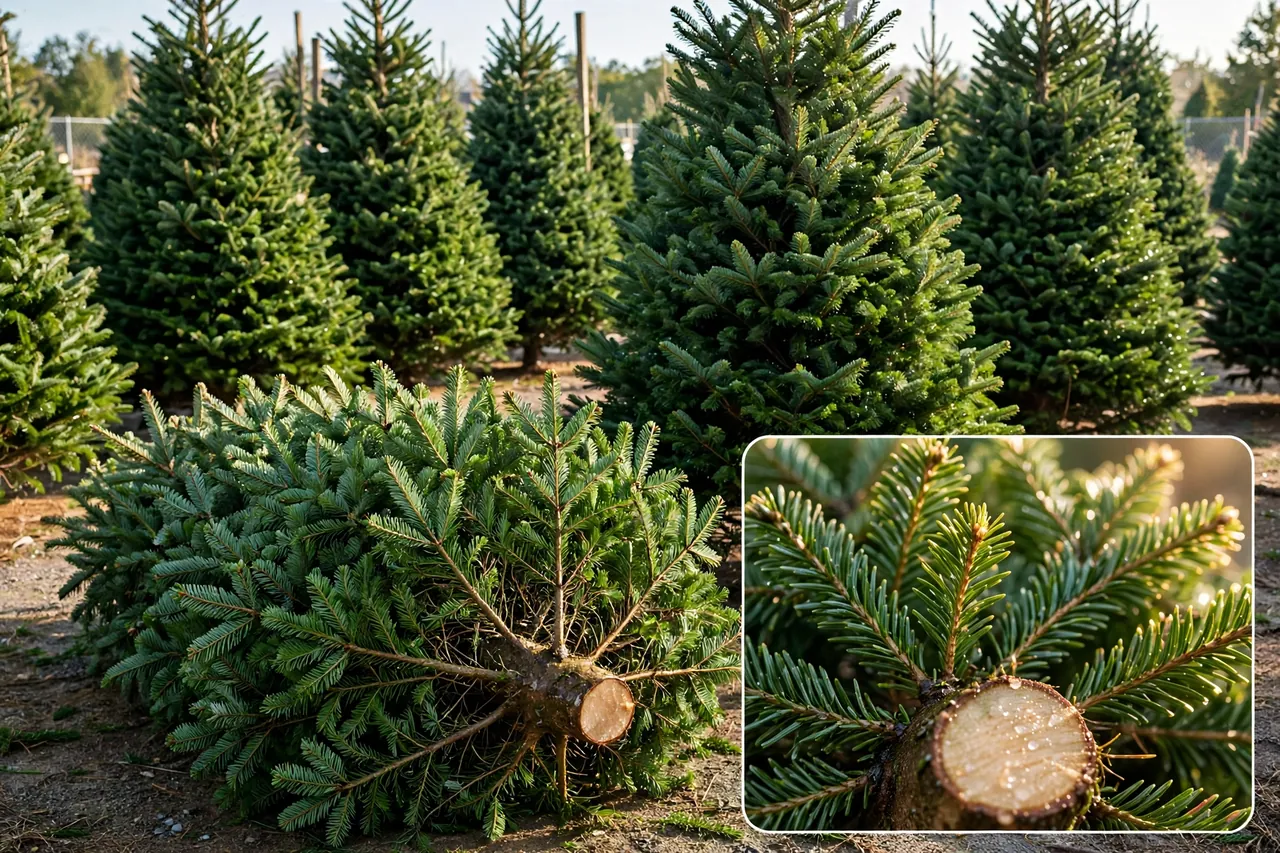
Freshness decides everything that follows. A tree that already dried out at the lot will not bounce back, no matter how much water you give it. So test the tree before you buy it. The tests below take about a minute, and they save you weeks of needle drop.
First, look at the color. A fresh tree looks deep green all over, not dull, gray, or brown at the tips. Next, run a branch gently through your fingers. The needles should bend, not snap, and only a few green needles should come off. Then lift the tree a few inches and tap the trunk on the ground. If a shower of green needles falls, pick a different tree. Check the trunk, too: it should look straight and feel damp at the cut, not dry and cracked. Ask when workers cut the tree if you can, because a tree cut that week starts far ahead of one cut weeks ago.
Freshness Tests You Can Do in One Minute
- Bend a needle: fresh needles bend, dry needles snap.
- Pull a branch through your fingers: only a few needles should come off.
- Tap the trunk on the ground: a fresh tree drops very few green needles.
- Feel the trunk cut: it should feel damp, not dry and hard.
- Smell the branches: a fresh tree still smells like pine when you crush a few needles.
Which Real Tree Type Holds Up Best?
No type stays fresh forever, but some hold their needles longer than others. Fraser fir and noble fir rank among the best for needle retention, and Fraser fir also has strong branches for ornaments. Balsam fir smells wonderful and holds needles well. Douglas fir looks soft and full but can drop needles sooner if it dries out. Scotch pine holds its needles even when dry, yet its stiff branches suit lighter ornaments better.
Real Christmas Tree Types at a Glance
| Tree Type | Needle Retention | Branch Strength | Best For |
|---|---|---|---|
| Fraser fir | Excellent | Strong | Heavy ornaments and long displays |
| Noble fir | Excellent | Strong | Long displays and sturdy branches |
| Balsam fir | Very good | Good | Strong scent and classic shape |
| Douglas fir | Good | Medium | Soft, full look with lighter ornaments |
| Scotch pine | Very good, even when dry | Stiff | Homes that run warm or water late |
Set It Up So It Can Drink
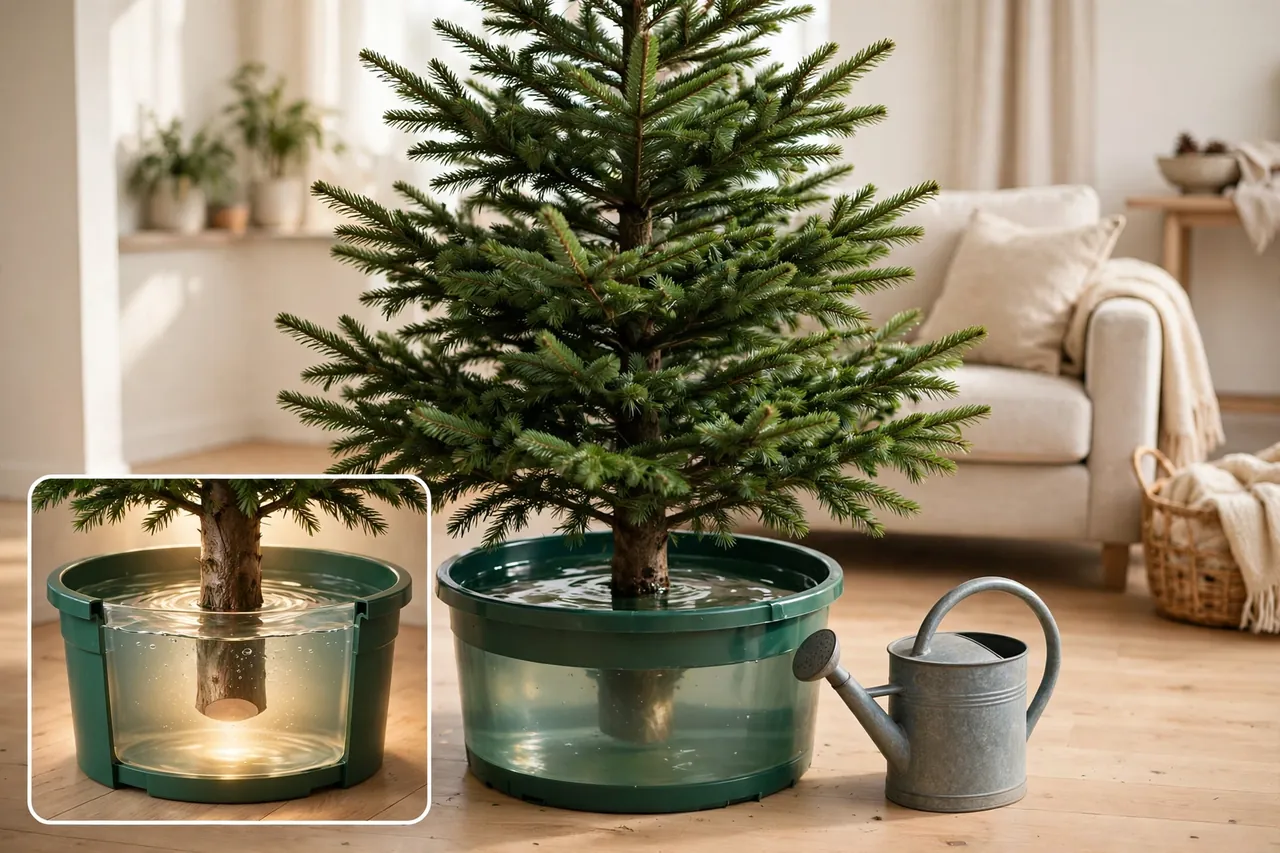
A cut tree has no roots. The stand is its only water supply, so the setup matters more than any decoration you add later. Get the tree into water fast, and give it a stand that holds enough water for its size. That one habit carries your real Christmas tree with decorations through the whole season.
Start with a fresh cut. Saw a straight slice, about a quarter inch to one inch thick, off the bottom of the trunk, and put the tree in water right away. Do not cut at an angle, and do not drill a hole in the base. Water travels up through tiny tubes just under the bark, so a straight cut opens the most tubes. Skip the whittling, too: if you shave bark off the sides to force the trunk into a small stand, you cut away the tissue that carries water up the tree.
If you cannot set the tree up the same day, store it outside in a cool, shaded spot, out of wind and sun, with the trunk in a bucket of water. Bring it inside only when you can stand it in its water-filled stand right away, and let the branches relax for a few hours before you decorate.
Pick a Stand That Holds Enough Water
Buy the stand before you buy the tree if you can. As a rule, a stand should hold about one quart of water for every inch of trunk diameter. That means a tree with a 6-inch trunk needs a stand that holds about one and a half gallons. Many small stands fall short, so check the capacity on the box. A big reservoir buys you slack on busy days, and it keeps the cut end under water while you sleep.
Set the tree straight and tighten the stand bolts evenly. A leaning tree can shift as you add ornaments, spill water, or tip over. Keep the netting on until the tree stands secure, then cut it off and let the branches fall open. Leave room around the lowest branches so they can spread and you can reach the stand.
Where to Place a Real Tree
Place the tree away from fireplaces, radiators, heating vents, space heaters, and sunny windows. Heat pulls moisture out of the needles fast, and a tree near a heat source can dry out in days instead of weeks. Keep the room as cool as you can without making the house uncomfortable. Never block a door or an exit with the tree. You need a clear path out of the room, and you need easy access to the stand for daily watering.
A skirt can finish the base nicely, but do not let it hide the stand so well that you forget to water. Lift the skirt or leave a small gap each day when you check the water. Our guide to Christmas tree skirt ideas can help you pick a size that covers the stand yet still lets you reach it.
Keep It Fresh All Season
Watering is the single most important job in live Christmas tree decorating. A fresh tree can drink a gallon or more in its first 24 hours, then settle into roughly a quart to a gallon a day, depending on its size and how warm your home runs. Check the water twice a day for the first few days, then at least once a day after that. Never let the water level drop below the cut end of the trunk.
Why does that line matter so much? When the cut end sits above water for even a few hours, sap seals the cut, and the tree stops drinking. You can refill the stand, but the sealed trunk cannot take the water up. Oregon State University Extension notes that most common types, such as Douglas fir, noble fir, and Fraser fir, can still recover if you refill the stand within 24 hours of it going dry, but grand fir may only forgive about 12 hours. After that window, you would need to take the tree down and cut the trunk again, which no one wants to do once workers hung the ornaments.
Use plain, clean tap water. That is all the tree needs. Sugar, aspirin, soda, bleach, vodka, and store-bought preservatives do not beat plain water in university tests, and some additives can harm pets or children who drink from the stand. Tie watering to a habit you already have, such as your morning coffee.
Daily Real-Tree Care Routine
- Morning: check the water level and top up the stand so the cut end stays well under water.
- Look: scan for brown tips, heavy needle drop, or branches that droop more than yesterday.
- Evening: check the water again during the first week, and switch the lights off before bed.
- Weekly: step back and check that the tree still stands straight and no branch sags under its ornaments.
What Kills Freshness Fastest
- A dry stand: the cut seals, and the tree cannot drink again without a fresh cut.
- Heat: fireplaces, vents, radiators, and direct sun pull moisture out of the needles.
- Dry indoor air: winter heating dries the air, so a humidifier nearby can help a little.
- Waiting too long to set up: a tree left dry in a warm garage loses moisture before it ever reaches the stand.
Misting the branches does not replace water in the stand. Put your effort into the stand, not the spray bottle.
Decorate a Live Tree Without Damaging It
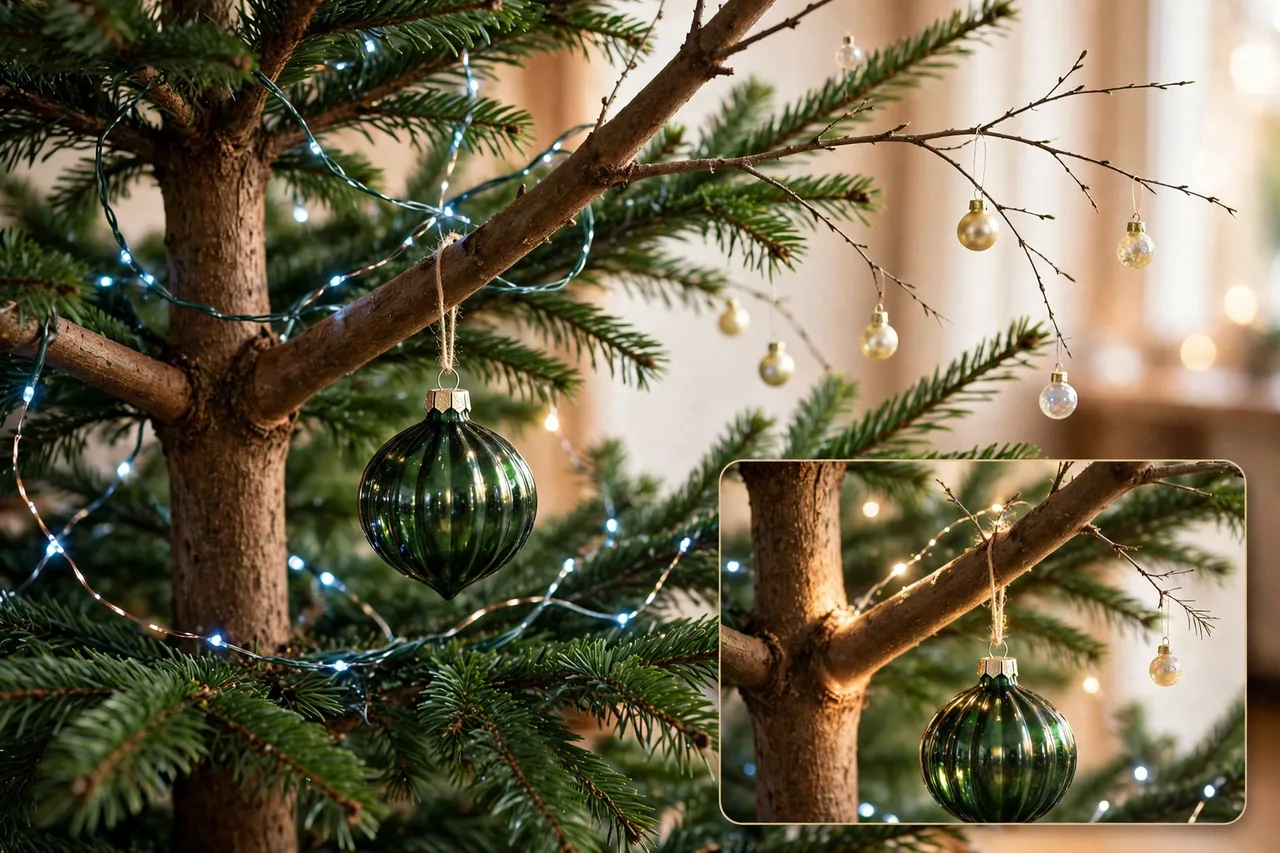
Real Christmas tree decoration on a live tree works a little differently from decorating a fake one. Real branches bend, snap, and sag, and they cannot bend back into shape the way wire branches can. So hang with the branch in mind, not just the look you want. Start with lights, then add heavier pieces close to the trunk, and save light, small ornaments for the branch tips.
Use LED lights. LEDs run cooler than old incandescent bulbs, and cooler lights dry the needles less and lower the fire risk. Test every strand before you hang it, and toss any strand with frayed wires, cracked sockets, or loose connections. Wind the lights loosely through the branches, from the trunk outward, and do not pull them tight. A tight wrap can pinch a branch and strip needles as you work.
Hang heavy ornaments on thick branches near the trunk, where the wood can carry the weight. Glass, ceramic, and metal ornaments belong there, not on thin tips. Use sturdy hooks or short wire ties, and hang each heavy piece so it rests on the branch rather than dangling from one needle cluster. If a branch droops the moment you hang an ornament, move that piece inward or swap it for a lighter one. A drooping branch tells you the truth before the branch snaps.
Garlands and ribbons add weight, too, so drape them across several branches instead of hanging a whole loop from one limb. For step-by-step garland placement, see our guide on how to hang garland on a Christmas tree. Add the topper last, and pick one the top branches can hold without bending sideways.
Real-Branch Weight Rules
- Heavy ornaments go near the trunk, on thick branches.
- Light ornaments go near the tips, where thin branches can hold them.
- Spread garlands over many branches, never one single limb.
- Step back often: if a branch sags, move the weight inward right away.
- Keep fragile ornaments high and out of reach of small children and pets.
Live Christmas tree decor also means you should expect a few needles on the floor. A small daily drop is normal, especially in the first days after setup. A sudden heavy drop, dry and brittle needles, or branches that feel stiff all signal a thirsty or drying tree. Check the water first, because thirst causes most sudden needle drop.
Real-Tree Fire Safety: The Rules That Matter Most

A well-watered real tree burns far more slowly than a dry one. That fact drives every safety rule in this section. Water keeps the needles moist, moisture slows ignition, and a moist tree gives your family more time if something ever goes wrong. The Illinois Office of the State Fire Marshal gives the same core advice: pick a fresh tree, cut the base before you stand it, keep it at least 3 feet from heat sources, never block an exit, and add water to the stand every day.
Keep candles far from the tree, and never use lit candles on a real tree. Keep the tree away from fireplaces, space heaters, radiators, and heating vents, and do not place it where a stocking, curtain, or gift wrap can drape onto a light strand. Turn the tree lights off when you leave the house and before you go to sleep. That one habit removes the ignition source during the hours when no one can watch the tree.
Check your lights each year. Look for worn cords, loose bulbs, and warm plugs. Do not overload one outlet, and do not run cords under rugs or through doorways where feet can damage them. If a strand feels hot, flickers, or smells odd, unplug it and replace it.
Watch for the signs that say the tree must come down. Needles that fall in handfuls when you touch a branch, brittle branches that snap instead of bending, and a dull, faded color all mean the tree has dried past the point of safe display. Do not keep a dry tree in the house or move it into the garage to wait for disposal. A dry tree stored against the house or in a garage still burns fast, so take it outside promptly and keep it away from the building until your recycling pickup or drop-off day.
Real Tree Versus Artificial Tree: One Short Comparison
A real tree gives you scent, natural shape, and a yearly trip to pick a new one, but it also asks for daily water and a firm takedown date. An artificial tree gives you zero watering and a tree you can reuse for years, but it cannot match the scent or the natural branch texture of a real one. If you love the ritual and you can commit to daily watering, a real tree rewards you. If you travel often or you know you will forget the stand, an artificial tree is the safer, kinder choice for your home.
The choice matters here for one reason: only a real tree dries out, drops needles, and grows more flammable with time. That living-tree reality shapes every tip in this guide.
Real-Tree Care Quick Reference
Use this table as your fridge-door checklist for the whole real-tree routine.
Real-Tree Care Quick Reference
| Job | What to Do | How Often |
|---|---|---|
| Fresh cut | Saw a straight quarter-inch to one-inch slice off the trunk | Before you stand the tree |
| Water | Use plain tap water and keep the cut end under water | Twice daily at first, then daily |
| Stand size | Allow about one quart per inch of trunk diameter | Check before you buy the tree |
| Placement | Keep the tree at least 3 feet from heat and clear of exits | At setup, and recheck weekly |
| Lights | Use cool LED lights and switch them off at night | Every night and when you leave |
| Takedown | Remove the tree as soon as needles turn brittle | As soon as drying signs show |
Troubleshoot a Real Tree That Starts to Struggle
Most real-tree problems trace back to water, heat, or a branch that carries too much weight. Work through the cheapest, safest fix first. Check the stand before you blame the tree type, and move the tree away from heat before you buy a new product for the water.
- Heavy needle drop: check the water level first, then check for heat sources nearby.
- Water level never drops: the cut may have sealed, so refill within a day and watch for recovery.
- One branch sags: move its heavy ornaments inward, toward the trunk.
- Brown tips only on one side: that side may face a vent, radiator, or sunny window.
- Tree leans: straighten it, tighten the stand bolts evenly, and rebalance heavy ornaments.
If the tree stays dry and brittle even after you refill the stand, do not try to rescue it with additives. Take the ornaments off, take the tree down, and recycle it.
Take It Down and Recycle It Right
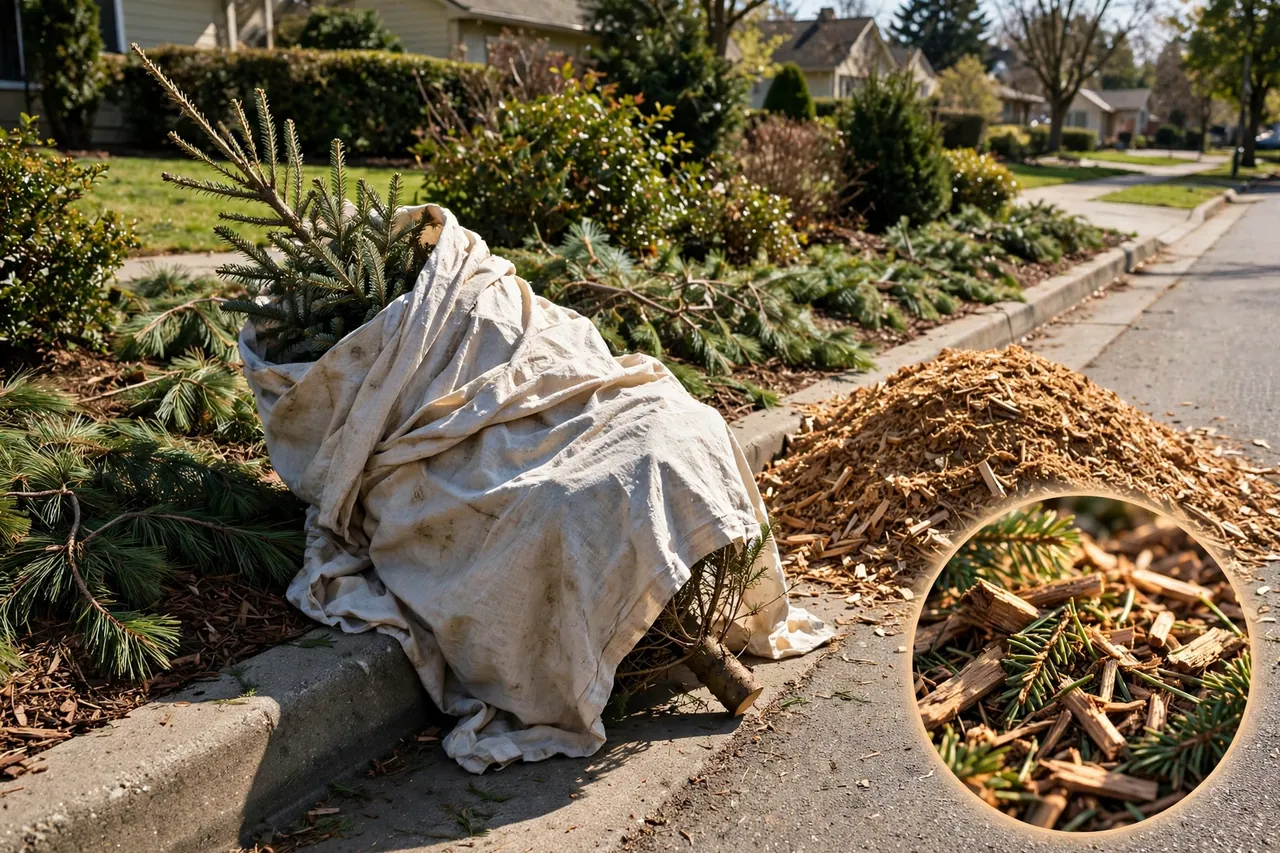
Plan your takedown before the tree turns brittle. Most well-watered real trees last about four to six weeks indoors, so a tree that goes up in early December should come down in early January, not late January. Mark a takedown weekend on your calendar when you set the tree up, and treat that date as firm if drying signs show up sooner.
Take the tree down in this order: switch the lights off and unplug them, remove ornaments from the top down, then remove garlands, ribbons, and the topper. Sponge or siphon leftover water out of the stand into a bucket before you lift the tree, or you will mop the floor. Lay an old sheet under the tree, wrap the sheet around it, and carry it outside. The sheet catches loose needles and keeps sap off your floors and clothes.
Remove every ornament, light, hook, nail, wire, and strand of tinsel before recycling. Recycling crews chip real trees into mulch, and metal and plastic jam their equipment and spoil the mulch. Check your city or county website for the local rule, because programs differ. Many towns offer curbside pickup in the first two weeks of January, and many counties run free drop-off sites where workers chip trees into mulch for parks and gardens. Flocked trees often cannot go through the same chipper, so check that rule, too, if your tree carries flocking.
If your town offers no pickup, cut the branches off and lay them over garden beds as winter mulch, or chip them if you own a chipper. Pine needles break down slowly, so they work well as mulch for acid-loving plants such as azaleas. Do not burn a whole dry tree in a fireplace or fire pit: it burns fast and hot and can throw sparks. A potted tree with roots can go back outside after a short indoor stay, but a cut tree has no roots, so recycling it into mulch is the kindest ending for it.
Related Guides
Christmas Display Ideas: Plan a Display That Looks Designed, Not Random · How to Decorate Outside Your House for Christmas: A Whole-House Plan · Christmas Decorations for Columns
Frequently Asked Questions
How often should I water a real Christmas tree?
Check the water twice a day for the first few days, then at least once a day after that. A fresh tree can drink a gallon or more in its first 24 hours. Never let the water level drop below the cut end of the trunk, because sap can seal the cut and stop the tree from drinking.
How long does a real Christmas tree last?
A fresh, well-watered real tree usually lasts about four to six weeks indoors. Heat, dry air, and missed watering shorten that life fast. Plan your setup date backward from takedown day, so the tree still looks fresh on Christmas Day and comes down before it dries out.
How do I stop my tree dropping needles?
Keep the stand full, keep the tree away from heat and direct sun, and shake it outside before you bring it in. Most needle drop comes from thirst or heat, not from the tree type. If heavy drop starts suddenly, check the water first, then look for a vent or radiator near the tree.
How long does a real Christmas tree last without water?
Only a few hours pass before sap starts to seal the cut end, and most types need a refill within 24 hours to recover. Grand fir may only forgive about 12 hours. After that window, the trunk often needs a fresh cut before the tree can drink again, which means taking a decorated tree down.
How do I know if my tree is too dry?
Touch a branch: if needles feel brittle, snap instead of bending, and fall off in handfuls, the tree is too dry. Dull color and drooping branches confirm it. Take the ornaments off, take the tree down promptly, and recycle it, because a dry tree also carries a higher fire risk.
A real Christmas tree decorated with care gives you the scent, the shape, and the ritual no fake tree can copy. Start fresh, water daily, hang heavy pieces near the trunk, keep heat away, and take the tree down on time. If you follow that short routine, your tree will look its best on Christmas morning and leave your home cleanly in January. For broader styling once the real-tree work is done, revisit our classic Christmas tree decorations guide for a timeless finish.
Disclaimer: Homes, tree types, and local recycling rules vary, so check your local program before disposal and follow your stand and light instructions. This guide shares general home advice, not fire-service or professional arborist advice. If a tree looks dry, brittle, or unsafe, take it down promptly and ask a local fire department or extension office for guidance.
Sources: the Illinois Office of the State Fire Marshal explains the 3-foot heat rule and daily watering in its Christmas tree safety guidance; Oregon State University Extension busts water additives and explains refill windows in its Christmas tree care answers; Penn State Extension covers stand size and plain water in its selection and care guide for cut Christmas trees.


