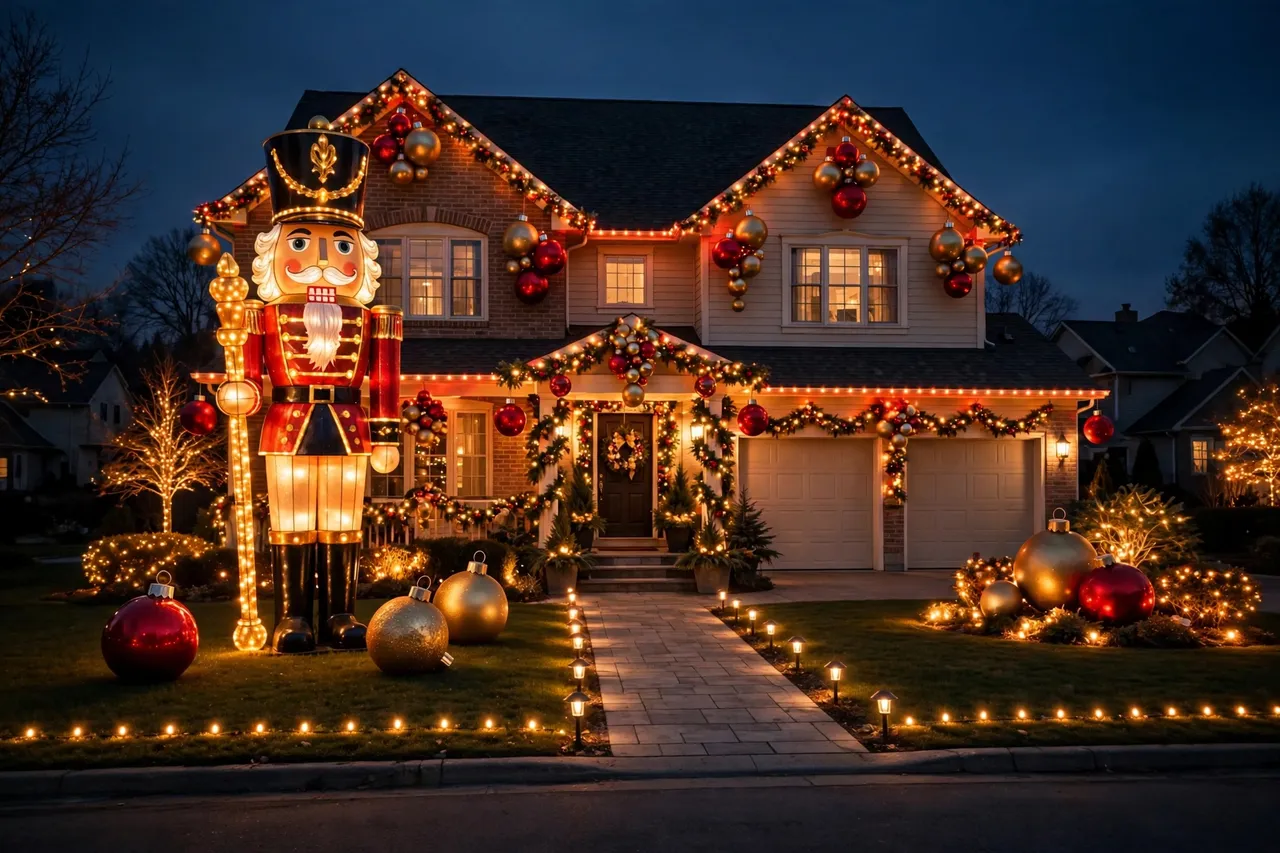
Giant Christmas decorations work when you treat size as a plan, not a purchase. Pick one oversized focal piece, match its height to your home and yard, anchor it well, and make sure you have a place to store it in January. Do that, and one big piece beats ten small ones. Skip that plan, and the same piece blocks a path, leans in the wind, or never fits through the garage door.
Think of giant Christmas decor as statement decor. A giant ornament, an oversized figure, or a big yard piece should catch the eye from the street and still leave room for people to walk, park, and enjoy the rest of your home. This guide shows you how to choose the right size, place it well, keep it standing in winter wind, light it safely, and store it without damage.
What Counts as Giant Christmas Decorations?
A decoration earns the word giant when its size changes how you handle it. Standard ornaments hang from a branch with one hand. Giant ornaments need two hands, a strong hook or stand, and a storage plan. A standard yard figure sits on a porch step. A giant one needs stakes, weights, or guy lines, and it changes how your whole front yard looks.
Use this simple test before you buy. If you can carry it with one hand, tuck it in a normal ornament box, and set it out without help, it is not giant. If you need a second person, a bigger box, or a new anchor plan, you are in giant territory, and this guide is for you.
Giant pieces fall into four broad groups. Giant ornaments, often 24 inches or wider, hang from porches, trees, or entryways and read clearly from the street. Oversized figures stand several feet tall and anchor a lawn or entry scene. Big yard pieces, such as large stars, arches, and light frames, shape the whole display. Inflatable giants use a fan and fabric to reach impressive heights, but they catch the most wind, so they need the strongest anchors.
Pick the Right Size for Your Home and Yard
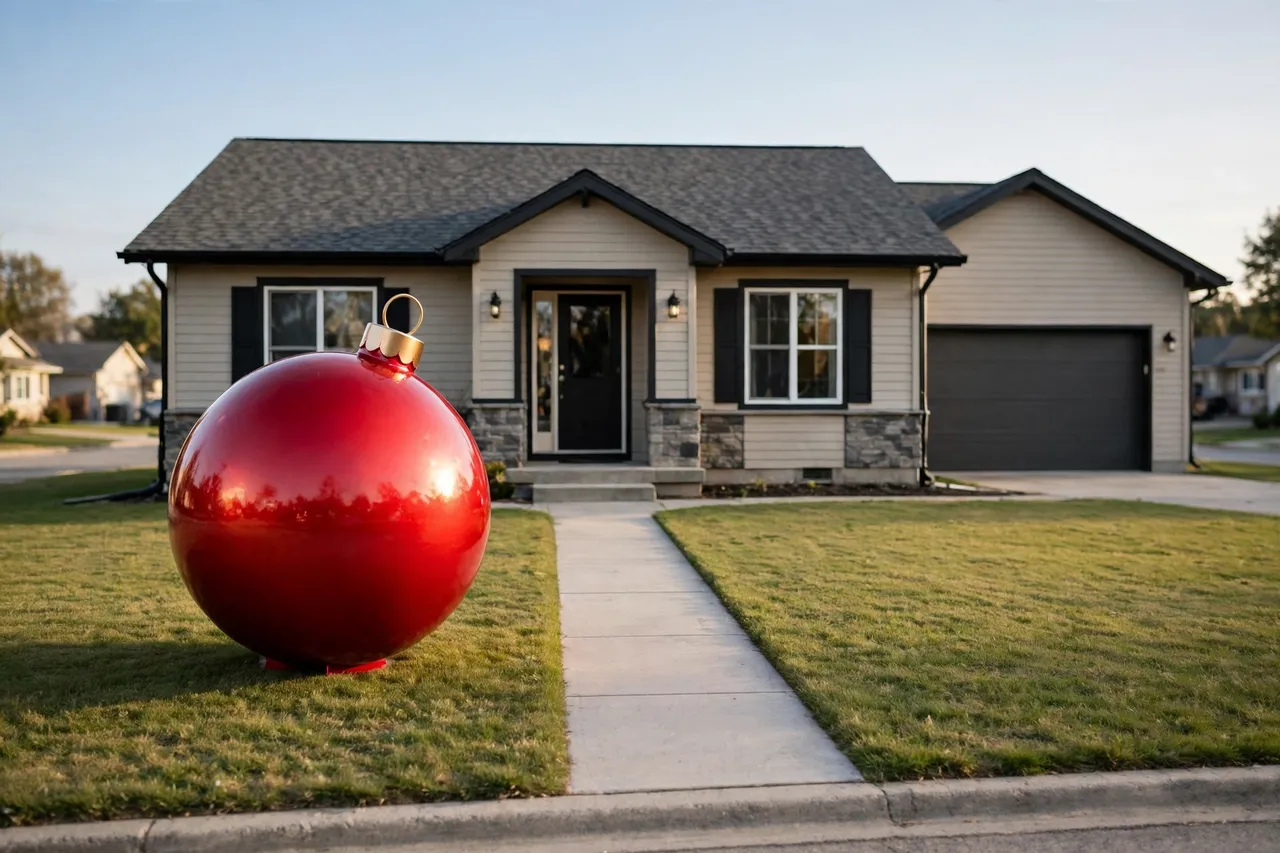
Size looks different on a small ranch than it does on a two-story home. A 12-foot inflatable can look perfect beside a tall home and completely swallow a small one. Step across the street and look at your home first. That view, not the store aisle, tells you what giant really means for your house.
Follow the one-third rule as a starting point. Let your tallest outdoor piece reach about one-third of your home’s visible front height. On a single-story home, that usually means a piece around 6 to 8 feet tall. On a two-story home, you can often go 10 to 14 feet without the piece taking over. Then check the width too. A wide piece needs open lawn on both sides, or it crowds the walkway and the shrubs.
Measure three things before you order anything: the height of your porch or eave, the width of your flattest open lawn, and the narrowest gate or door the piece must pass through. Write those numbers down. Many returns happen because a buyer loved a piece online and never checked whether it fits through the side gate.
| Your space | A good focal height | What to watch |
|---|---|---|
| Small yard, single-story home | 4 to 6 feet | Keep paths clear and leave lawn on both sides |
| Average yard, single-story home | 6 to 8 feet | One focal piece, plus small accents only |
| Large yard, two-story home | 10 to 14 feet | Strong anchors and guy lines matter most here |
| Indoors, high ceilings | 24 inches or wider for ornaments | Check ceiling height and hanging weight first |
When you compare options, remember that height alone does not make a display feel big. A tall, thin piece can disappear against a tall home, while a wide, well-lit piece at 6 feet can stop traffic. Width, color, and light matter just as much as height.
Best Types of Giant Christmas Decorations
Start with the type that fits your space, your weather, and your patience for setup. Each giant type brings a different payoff and a different chore.
Giant Ornaments
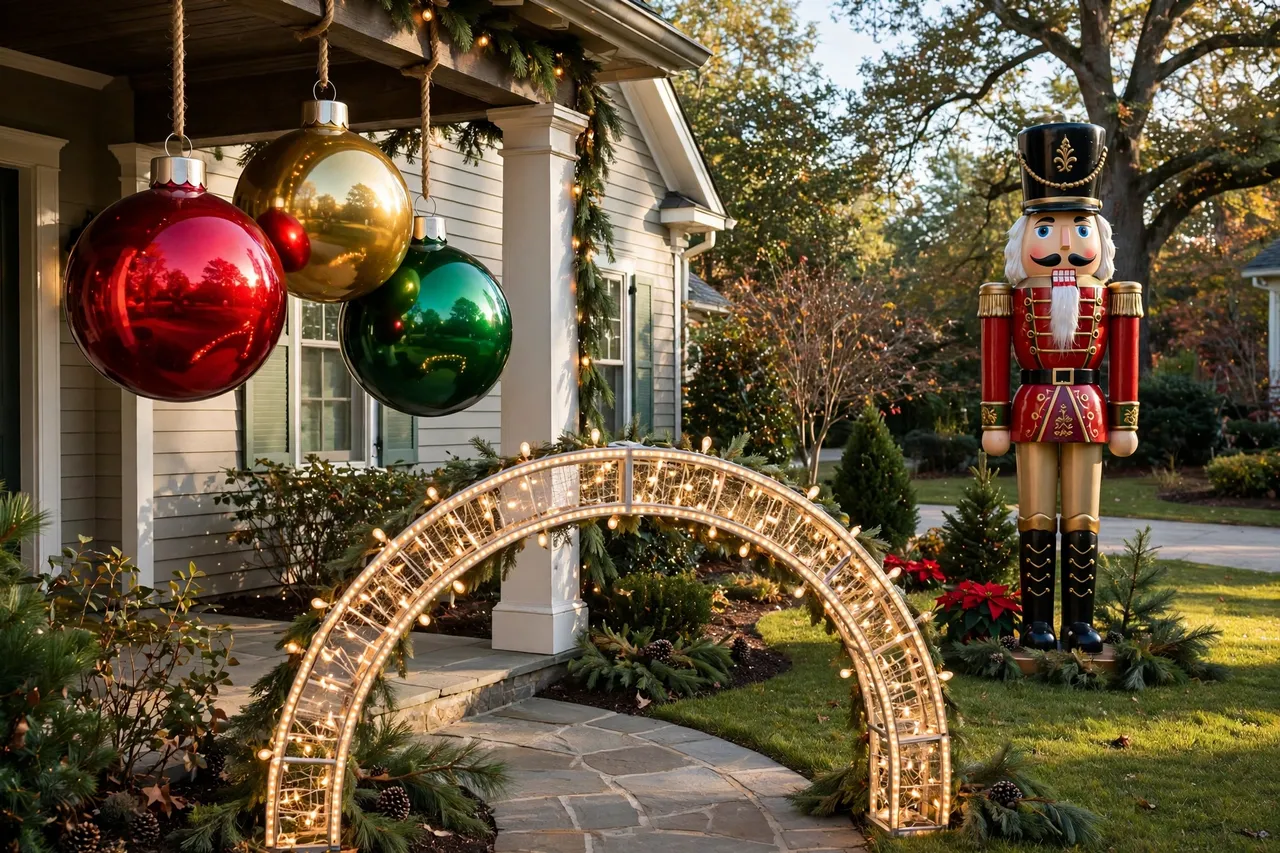
Giant ornaments give you the biggest visual return for the least ground space. Hang a few oversized balls from a porch beam, a sturdy tree branch, or an entry arch, and the whole front of your home reads festive from the road. Inflatable PVC ornaments, often around 24 inches wide, weigh little, deflate flat for storage, and shrug off rain. Rigid ornaments look richer up close, but they weigh more and need stronger hooks and safer storage.
Hang giant ornaments where people cannot walk into them. Keep them above head height on paths, and tie them with more than one line if wind can swing them. A swinging 24-inch ball can crack a window or knock a wreath down, so give it room to move without hitting anything hard.
Oversized Figures
Oversized figures work as the hero of a display. One large figure near the entry or in the middle of the lawn tells visitors where to look first. Because these pieces carry so much visual weight, one hero beats three competing giants. Add small lights, garland, or pathway markers around the hero, but let the hero keep the spotlight.
Check the base before you fall in love with a figure. A wide, flat base holds better than a narrow one. A figure with built-in tie-down loops, grommets, or stake holes saves you a lot of improvising on a cold December afternoon.
Big Yard Pieces and Light Frames
Big yard pieces, such as oversized stars, arches, and framed light shapes, stretch a display across a wide frontage without filling the lawn. They frame a walkway, mark an entry, or outline a roofline in light. Because they sit low and wide, they often handle wind better than tall inflatables, but they still need stakes or weights at every corner.
For lighting ideas that pair with these frames, our guide to Christmas light ideas covers color choices and timers that keep a big display calm instead of chaotic.
Inflatable Giants
Inflatables deliver the most height for the least storage space. A 12- or 14-foot inflatable packs down small, sets up in minutes, and glows at night. That same height, though, turns the piece into a sail. Wind grabs fabric that a rigid figure would shrug off, so never judge an inflatable by its calm-weather look. Judge it by its anchors, its tethers, and your plan for stormy nights.
If your yard faces open wind with no fence, hedge, or wall to break it, choose a shorter inflatable or a rigid piece instead. A giant that spends every windy night deflated is not a display. It is a chore.
Plan the Layout Like a Display, Not a Pile
Big pieces fail most often through placement, not taste. A giant ornament hung too low blocks the door. A tall figure set too close to the driveway blocks the driver’s view. A wide piece set dead center leaves no path for guests. Sketch your layout on paper before you carry anything outside.
Use one focal point, two supporting accents, and open space. Place the focal piece where the eye lands first, usually near the entry or the center of the widest lawn. Put smaller accents, such as lights or garland, around it to lead the eye toward the door. Leave every walkway, driveway edge, and mailbox approach fully clear.
Test the view at night, not just in daylight. Giant pieces change completely under lights. Walk to the street after dark, check for dark gaps, glare in drivers’ eyes, and cords crossing paths. Fix those problems while setup is still fresh, not on Christmas Eve.
Think about neighbors and the street, too. Aim lights at your own home, not into a neighbor’s windows or oncoming traffic. Keep sound, if your piece plays any, low and on a timer. A display people admire beats a display people complain about.
If part of your display sits on a patio, our guide to Christmas patio decorating ideas shows how to keep that smaller, closer space cozy while the big yard pieces do the shouting out front.
Anchor Giant Outdoor Decorations So Wind Cannot Win
Wind is the real enemy of giant Christmas decorations. A tall piece catches wind like a sail, and a gust can drag it across the lawn, into a car, or over a fence. Anchor every outdoor giant before you plug it in, and never trust the small plastic stakes in the box as your only defense.
Safety first: never anchor a decoration to a power line, a utility pole, or anything near overhead wires. Keep every piece, ladder, and guy line well clear of power lines. If the ground is frozen solid, skip stakes and use weights instead of forcing metal into ice. If a storm warning calls for high winds, deflate inflatables and lay tall rigid pieces down until the storm passes.
Follow these steps for a solid outdoor anchor:
- Pick a sheltered spot. Set the piece near a fence, hedge, or wall that breaks the wind, with room for air to flow behind it. Avoid hilltops and wide-open corners where wind funnels through.
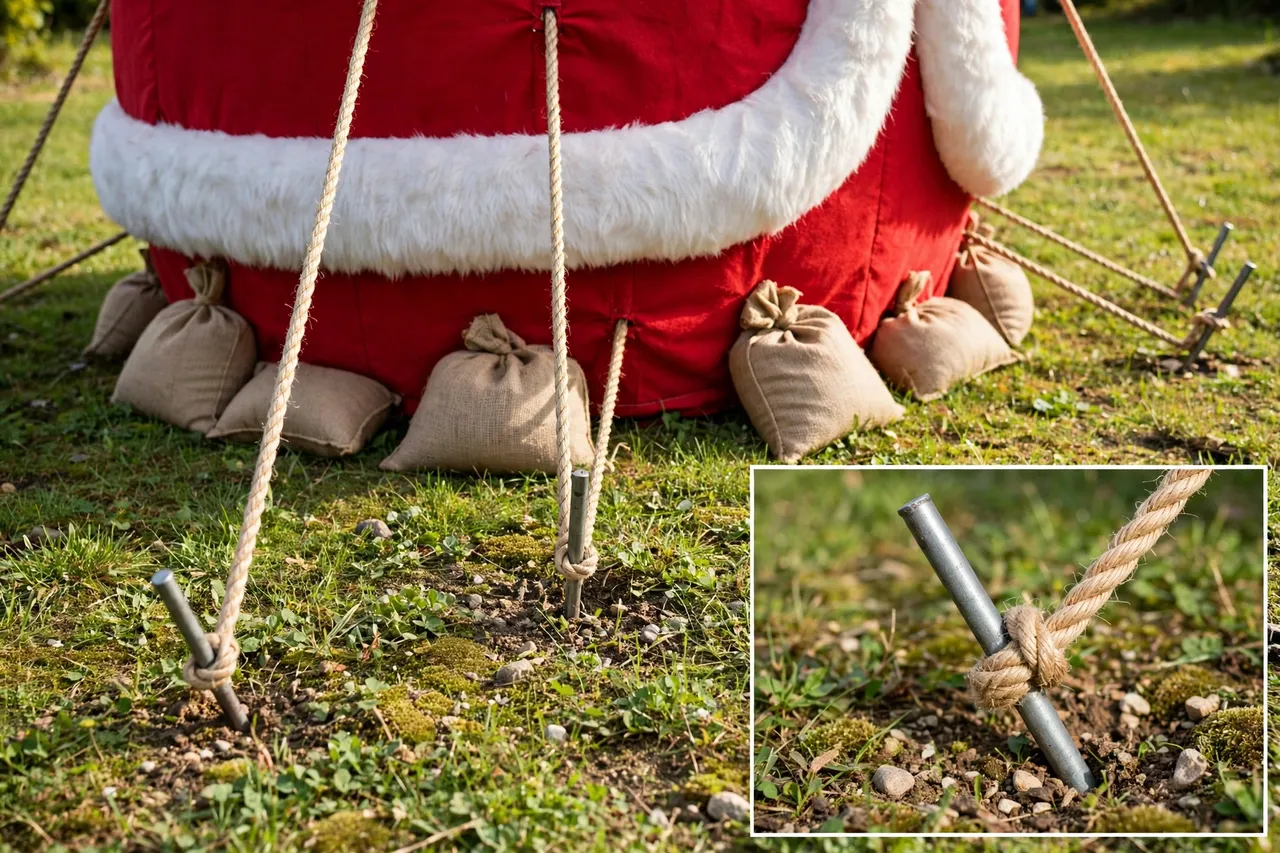
- Drive heavy stakes at an angle. Use metal tent stakes at least 8 to 10 inches long, driven at about a 45-degree angle away from the piece. Use every tie-down loop on the piece, not just one or two, so wind force spreads across several anchors.
- Add weight where stakes cannot hold. Place sandbags, gravel bags, or water weights at the base, inside the base if the design allows, or tied to the tether lines. Hide them behind shrubs or under snow if you want a clean look.
- Add guy lines on tall pieces. Run guy ropes from the upper part of any piece taller than about 8 feet down to separate stakes in different directions. Check the tension after the first windy day, because lines loosen as the ground settles.
- Test it by hand. Push the piece gently from several sides. If it shifts more than an inch or leans, add another anchor before you call the job done.
- Recheck after every storm. Walk the display after wind, snow, or ice. Tighten loose lines, reset lifted stakes, and clear snow weight from fabric tops before it freezes in place.
For animated pieces that move or sway, our guide to Christmas outdoor decorations animated covers motion, timers, and placement that keeps a moving display safe and steady.
Power and Lights for Big Pieces Safely
Giant pieces often need more power than a single porch outlet comfortably gives. Fans, lights, and motors add up fast, and outdoor winter weather punishes every weak connection. Plan power before setup day, not while you stand in the cold with an armful of cords.
Safety first: use only outdoor-rated lights, cords, and decorations, and plug outdoor pieces into circuits protected by ground fault circuit interrupters (GFCIs). The U.S. Consumer Product Safety Commission advises exactly that, along with checking every set for broken or cracked sockets, frayed wires, and loose connections and throwing out damaged sets, in its holiday decorating safety guidance. Never run a cord under a rug or mat, never nail or staple through a cord, and turn lights off when you go to bed or leave the house.
Follow these power rules for big displays:
- Use outdoor-rated extension cords, and keep every connection off the ground and out of standing water or snowmelt.
- Use no more than three standard-size light sets per single extension cord, as the CPSC advises, unless the maker clearly allows more for LED sets.
- Spread the load across more than one circuit when you run fans, motors, and lights together, so one tripped breaker does not kill the whole display.
- Cover outdoor connections with weatherproof covers, and keep cords out of walkways where guests can trip.
- Put the display on a timer so it switches on at dusk and off at bedtime without a nightly trip outside.
LED lights suit giant displays well because they run cooler and use less power than old incandescent sets, which leaves more capacity for fans and motors. Our guide to LED outdoor Christmas decorations explains brightness, color, and weather ratings in more detail.
Ladder caution: if a giant piece needs height, use a sturdy ladder on level ground, keep your body centered between the rails, and ask another person to foot the ladder. Never lean a ladder against a decoration, and never reach so far sideways that your belt buckle passes the rail.
Giant Decorations Indoors
Giant decor works indoors too, but the limits change. Outdoors, wind rules. Indoors, ceilings, doorways, and weight rule. A giant ornament that looks grand in a store can overwhelm a standard 8-foot ceiling or block a doorway swing.
Measure ceiling height and hanging points before you buy. A 24-inch ornament needs a beam, a sturdy hook rated for its weight, and clearance above furniture and below the ceiling. Hang it where nobody walks into it and where it cannot swing into a light fixture or a fan. For very heavy rigid ornaments, screw the hook into a joist or beam, not just drywall, and test it with a gentle pull before you hang the piece.
Use giant pieces indoors as single focal points: one oversized ornament cluster in an entry, one large figure beside a fireplace that you never light while decor sits near it, or one wide arrangement above a mantel. Keep giant pieces away from heat sources, candles, and fireplaces, and keep small, breakable parts out of reach of young children.
Indoors, scale works through contrast. Pair one giant piece with smaller, matching pieces in the same colors, and the giant piece looks intentional. Pair it with ten other large pieces, and the room feels like a warehouse. Less really is more once you go giant.
Buy Smart: What to Check Before You Pay
Giant decorations cost more, take more space, and fail harder than small ones, so check the boring details before you pay. Read the maker’s listing and manual for weight, packed size, setup time, and wind guidance, and buy only from sellers who state those numbers clearly.
- Material: thick PVC or reinforced fabric handles weather and folding better than thin plastic. Powder-coated metal resists rust on rigid frames.
- Wind and stake kit: look for multiple tie-down loops, included stakes or weights, and guy-line points on tall pieces. A piece with one loop is a warning sign.
- Power needs: check whether the piece needs a fan, a motor, or lights, and whether it plugs in or runs on batteries. Battery giants sound simple until you change batteries in the cold every few nights.
- Packed size: ask how big the box is and whether the piece folds, deflates, or breaks down. If the box will not fit in your storage space, the piece will live in a hallway all year.
- Repair parts: check whether the maker sells replacement stakes, tethers, fans, or bulbs. A giant with no spare parts becomes trash after one torn seam.
- Return window: buy early enough to set the piece up once before the return window closes, so a defect shows up in your yard, not in January.
Set the piece up once, early, even if you plan to take it down again. That test run shows missing parts, weak anchors, and bad power runs while you still have time to fix them.
Store Oversized Pieces Without Wrecking Them
Storage decides whether a giant decoration lasts one season or ten. Big pieces crush, tangle, and tear when you force them into boxes made for small ornaments. Plan storage at the same time you plan the display, and your future self will thank you.
Clean and dry every piece before you pack it. Wipe off dirt, let fabric dry fully, and check for tears while the damage is still fresh in your mind. Pack inflatables loosely after full deflation, fold along the seams rather than crushing the fabric, and keep fans and motors in their own padded bag so they do not snag the fabric.
Use large, labeled bins for rigid giants, with soft cloth or bubble wrap between pieces so paint and finishes do not rub. Store ornaments upright or nested with padding, never stacked under heavy boxes. Photograph each piece in its bin and tape the photo to the lid. Next December, you will find the right piece in seconds instead of opening five bins in the cold.
Store everything in a dry place, off a concrete floor if you can, and away from heat sources. Moisture breeds mold on fabric, and heat warps plastic. A garage shelf beats a damp basement corner every time.
For standard ornaments and the lights that frame your giants, our guides to Christmas ornament storage box options and how to store Christmas lights cover dividers, winding, and labeling that keep small pieces safe beside the big ones.
Common Mistakes That Ruin a Big Display
Most giant displays fail in the same few ways. Dodge these, and yours already stands out.
- Too many giants. Three heroes fight each other. Pick one focal piece and let the rest support it.
- Wrong scale for the house. A giant that dwarfs a small home looks like a mistake, not a statement. Use the one-third rule and the street view test.
- Weak anchors. Small plastic stakes and a single tether fail on the first windy night. Use heavy stakes, weights, and guy lines from day one.
- Cords across paths. A cord across a walkway trips guests and fails in snowmelt. Route cords along edges and cover every connection.
- No storage plan. A giant with no home in January ends up damaged in a hallway. Measure storage space before you buy.
- All height, no light. A tall piece with no light disappears after dark. Light the focal piece first, then the accents around it.
Finally, carry one theme across the whole display. Pick two or three colors and one light color, and repeat them from the giant piece to the smallest accent. Our guide to themes for Christmas decoration lists whole-home looks you can borrow, so your giant piece feels like part of a planned home, not a random purchase.
Disclaimer: this guide covers general home decorating practice, not professional electrical or structural advice. Follow your decoration maker’s manual first, use GFCI-protected outdoor circuits, and call a qualified electrician or contractor when a display needs new wiring, roof work, or a permanent mount. If you smell gas, see damaged wiring, or find a tripped breaker that will not reset, stop and get professional help.
Related Guides
Christmas Light Ideas · LED Outdoor Christmas Decorations · Christmas Outdoor Decorations Animated · Christmas Patio Decorating Ideas · Christmas Ornament Storage Box · How to Store Christmas Lights · Themes for Christmas Decoration
Frequently Asked Questions
How do I keep giant Christmas decorations from blowing away?
Use heavy metal stakes at least 8 to 10 inches long, driven at an angle away from the piece, and use every tie-down loop it has. Add sandbags or water weights at the base, add guy lines on pieces taller than about 8 feet, and deflate inflatables during high-wind warnings. Recheck anchors after every storm.
How big should giant Christmas decorations be for my yard?
Let your tallest outdoor piece reach about one-third of your home’s visible front height. That usually means 6 to 8 feet for a single-story home and 10 to 14 feet for a two-story home with a large yard. Always measure your open lawn, porch height, and narrowest gate before you buy.
Can I leave giant inflatable decorations outside all winter?
Yes, if the piece is rated for outdoor use and you anchor it well, but bring it in or deflate it during storms and high winds. Check the fan intake stays clear of snow, inspect seams after storms, and turn the display off when you leave the house or go to bed.
Are giant Christmas decorations safe around children and pets?
They can be, with care. Keep cords out of walkways, cover connections, keep small or breakable parts out of reach, and anchor every piece so it cannot tip onto a child or pet. Never let children climb on inflatables or figures, and supervise play near guy lines and stakes.
How do I store giant Christmas decorations after the holidays?
Clean and dry each piece, deflate inflatables fully, and fold along seams instead of crushing fabric. Pack rigid pieces in large labeled bins with padding between them, photograph each bin’s contents for the lid, and store everything dry, off the floor, and away from heat.
A Big Finish, Done Right
Go giant on purpose, not by accident. Choose one focal piece that fits your home, anchor it like you mean it, light it well, and give it a storage home before December ends. Your display will look bigger, safer, and calmer than a yard full of competing giants, and next year you will set it up in half the time. Start with your measurements, pick your one hero piece, and build the rest of the display around it.