
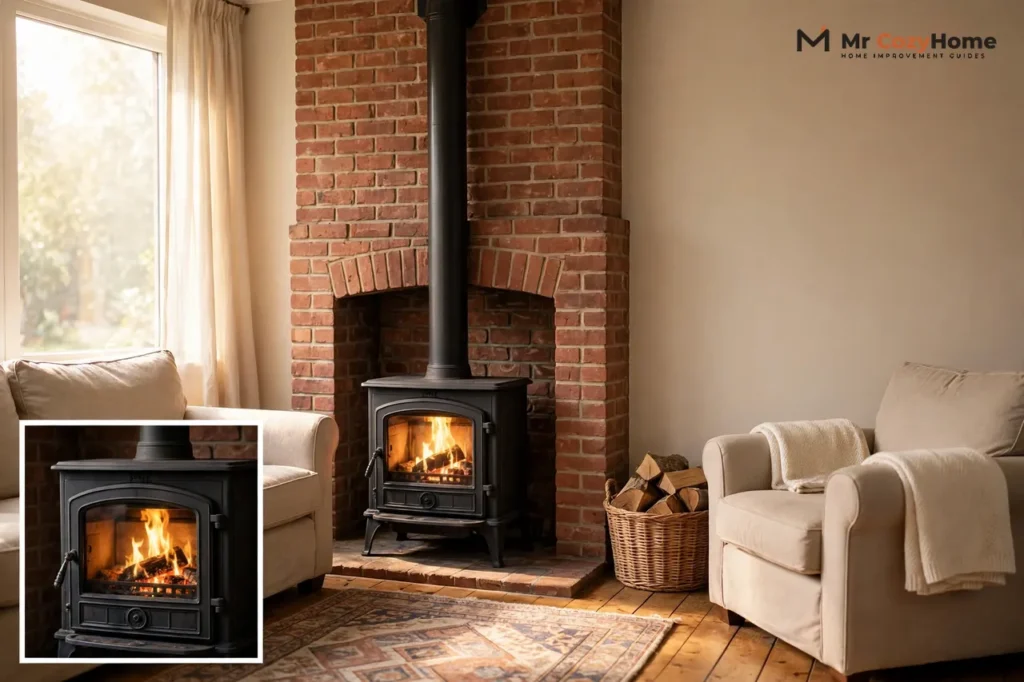
Yes, you can put a wood-burning stove in a fireplace, and the usual way is a wood insert that slides into the opening. Angi puts the national average cost for a fireplace insert at $3,600 in 2026, with most homeowners paying between $700 and $6,500.
A fireplace with a wood burning stove gives you real heat from a fire you already have a chimney for, but only when three things pass: the opening fits the stove, the chimney gets a liner sized to the stove, and the hearth and clearances meet the stove maker’s manual. This guide walks through each check, the two ways to fit a stove, the install steps, the honest costs, and the mistakes to avoid.
Can You Put a Wood Burning Stove in a Fireplace?
Yes, in most masonry fireplaces you can put a wood-burning stove in the fireplace, either as an insert that slides into the opening or as a freestanding stove that sits on the hearth in front of it. The fireplace must be sound, the chimney must be safe to vent a sealed stove, and the stove must fit with the clearances its manual demands.
Not every fireplace qualifies, and the type you have decides the answer. A sound open masonry fireplace with a working chimney is the best candidate. A gas fireplace can often convert, but only with a new liner, because a gas-only flue is not built for wood smoke and creosote. A factory-built or zero-clearance fireplace is the strictest case: it accepts a stove only when the fireplace maker lists that exact stove or insert as approved.
Before you shop for any stove, book a Level 2 chimney inspection from a CSIA-certified sweep. That inspection looks inside the flue with a camera and checks the firebox, smoke chamber, and chimney structure for cracks, loose brick, and bad mortar. A Level 2 inspection before you buy is the cheapest step in the whole job. It tells you whether the chimney can take a liner at all, and it stops you buying a stove your fireplace cannot hold.
One item on this list voids a warranty and fails an inspection more than any other, and it sits in the liner section below. That fixes the question of whether it fits. The next section decides which kind of stove fits best.
Insert or Freestanding Hearth Stove: Which Fits Your Fireplace?
A wood insert is a sealed firebox built to slide into your existing fireplace opening, while a freestanding hearth stove is a standalone stove that sits on the hearth in front of the opening and connects to the chimney with a short run of stovepipe. The insert keeps your fireplace’s look and seals the old open flue; the freestanding stove gives off heat from every side.
An insert is the neater fit for most homes. It fills the opening, its surround panel covers the gaps around the firebox, and many models have a blower that pushes warm air back into the room. Because it sits inside masonry, it needs less floor space in the room. Its weak point is size: the insert must fit inside your firebox, so a small opening limits how big a firebox you can buy.
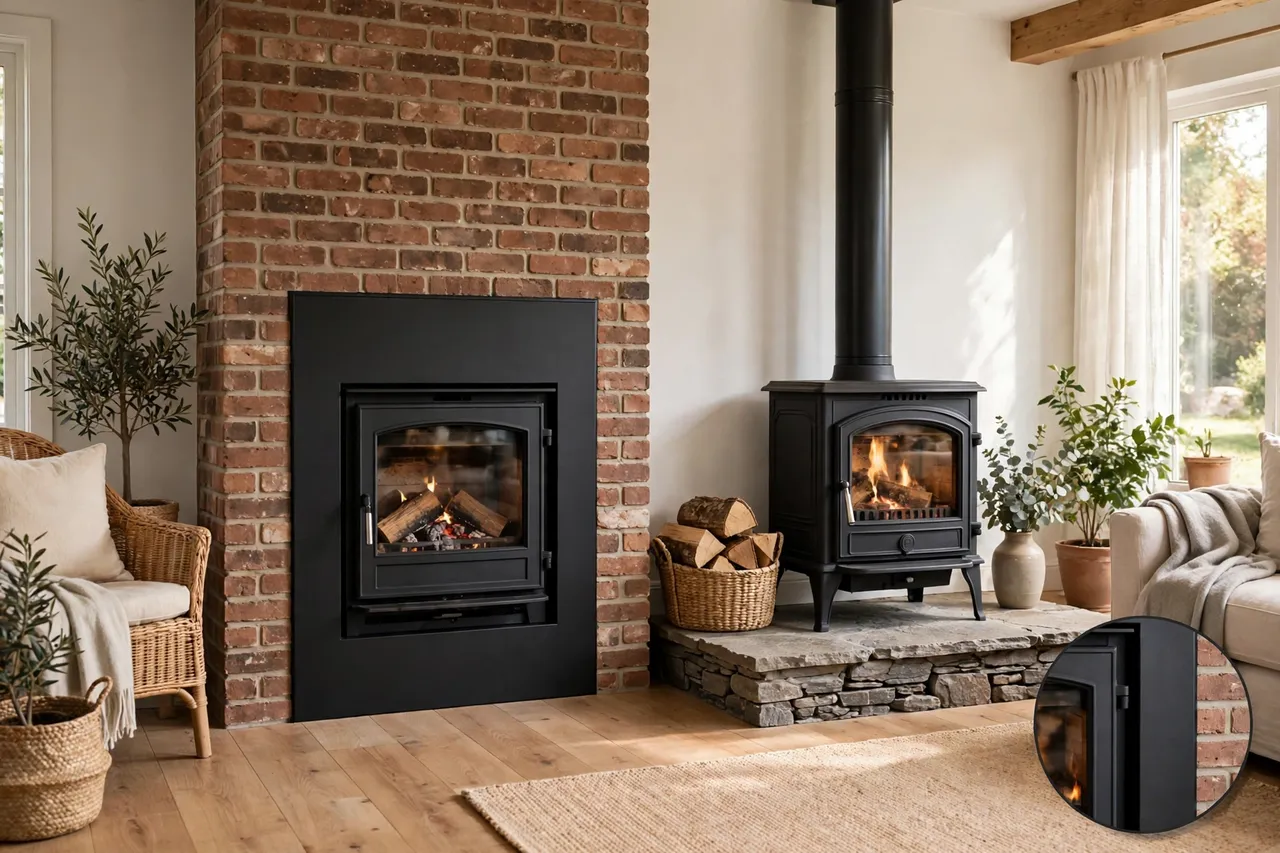
A freestanding stove on the hearth heats a bigger space better because it radiates from all sides, and you can see the fire from more angles. It also needs more room. A freestanding stove needs more clearance around it than an insert, because more of its surface radiates heat. It sits proud of the fireplace, so it eats into the room, and the stovepipe must run from the stove into the fireplace throat and up the lined flue without sharp bends.
| Feature | Wood insert | Freestanding hearth stove |
|---|---|---|
| Where it sits | Inside the fireplace opening | On the hearth, in front of the opening |
| Heat output | Heats the room, often with a blower | Radiates from all sides, heats wider |
| Floor space | Very little extra room used | Needs clear floor space in front |
| Look | Keeps the fireplace face | Stove stands out into the room |
| Best for | Small rooms, neat retrofit | Open rooms, maximum heat |
Choose the insert when your opening is a good size, you want the fireplace to still look like a fireplace, and you heat one room. Choose the freestanding stove when the room is large and open, the opening is tall enough for the stove and its pipe, and you want the most heat from the fire. Pick the stove by the opening you have, not the opening you wish you had. Either way, the opening measurements in the next section decide whether your pick can actually go in.
What Your Fireplace Opening Must Measure
Your fireplace opening must be wide enough, tall enough, and deep enough for the stove plus the air gap its manual requires around it. Measure the opening width, height, and firebox depth with a tape, and measure twice, because the stove’s listed size is the firebox size, not the size with its clearances.
Start with the opening itself. Measure the width at the front, the height from the hearth to the top of the opening, and the depth from the face to the back wall of the firebox. Then check the firebox shape: many masonry fireboxes narrow toward the back, so measure the width at the back too. A stove that fits the front and not the back will not go in.
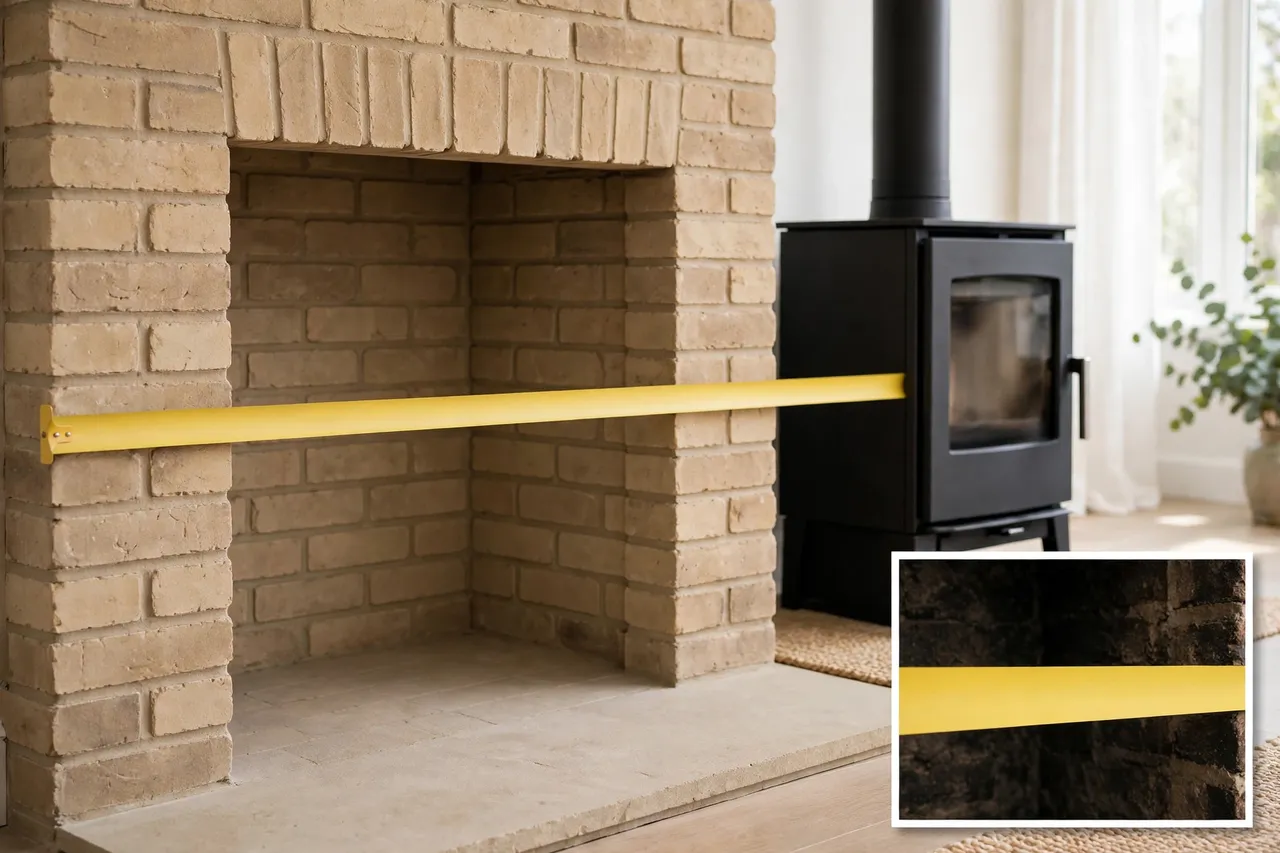
Next, read the stove manual’s clearance page before you fall in love with a model. The manual gives the minimum distance from the stove to combustible material on each side, and the minimum hearth size. Our guide to average fireplace size shows the common fireplace sizes and how to measure yours, which helps you compare your opening against the stove’s numbers.
Measure the back of the firebox, not just the front, because masonry fireboxes narrow toward the back. A stove that slides in halfway and sticks is a delivery you cannot use. Once the opening passes, the chimney is the next gate, and it is the one that matters most.
The Chimney Liner: The Part That Makes It Safe
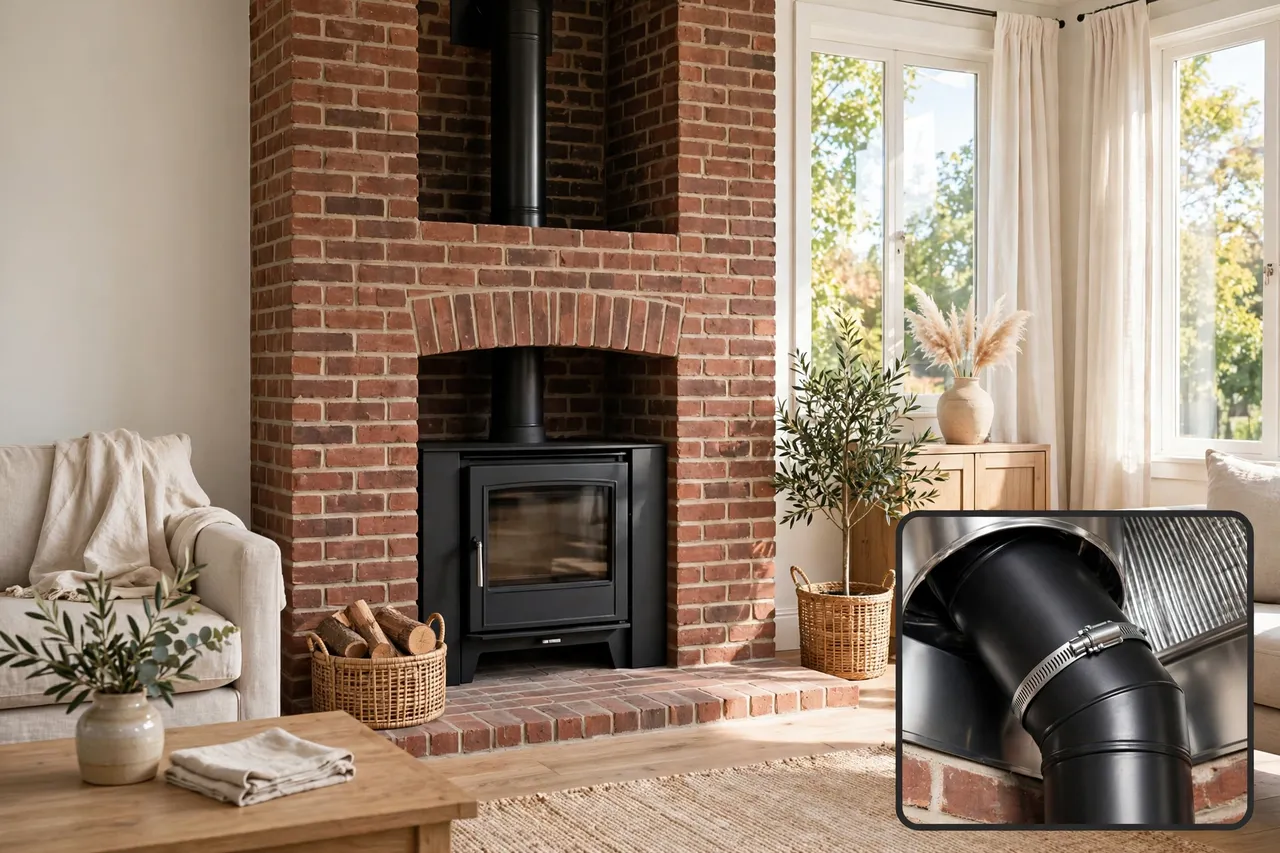
The chimney liner is a stainless steel tube that runs from the stove up the full height of the chimney, and it is the part that makes a fireplace with a wood burning stove safe. Never vent a wood stove into an old fireplace chimney without a liner, because the old flue is too wide, too cold, and too rough for a sealed stove, and it lets creosote build up fast.
An open fireplace has a wide flue built for a big, hot, smoky fire. A sealed stove makes cooler, slower exhaust, so that wide flue cools the smoke, and cooling smoke drops creosote onto the flue walls. A liner sized to the stove’s outlet keeps the exhaust hot and moving, so the stove drafts properly and the chimney stays cleaner. A full-height liner sized to the stove outlet is not optional. Most wood stoves need a 6-inch liner, and the liner must match the stove outlet size the manual states.
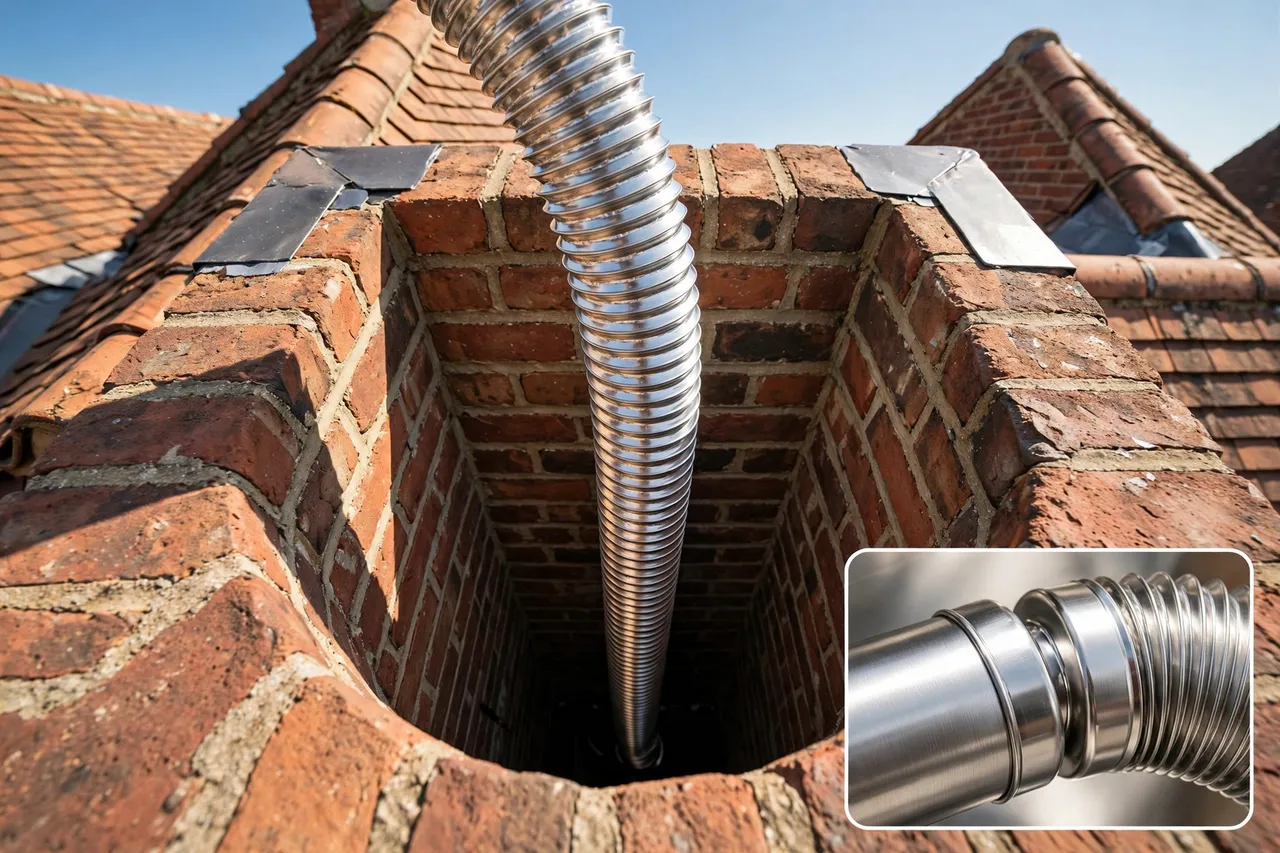
The liner must run the full height of the chimney, from the stove to the top, with a proper connection at the bottom and a cap at the top. A short stub of pipe into the throat is not a liner, and it is not safe. The Chimney Safety Institute of America (CSIA) says liners for solid-fuel appliances should be insulated, because insulation keeps the flue gases hot, improves the draft, and protects nearby combustible material.
Here is the warranty point from the first section: using a stove with the wrong liner size, or with no liner at all, can void the stove warranty and fail a home inspection. The liner is also where most of the job’s cost sits, so get it quoted as its own line item. With the liner settled, the floor under the stove is the next thing to get right.
Hearth and Clearances: The Numbers That Decide the Fit
The hearth is the non-combustible floor in front of and under the stove, and the clearances are the minimum distances from the hot stove to anything that can burn. Both come from the stove maker’s manual first, and the national standard NFPA 211 fills the gap for unlisted stoves. Never guess a clearance number, because the manual’s number is the one your inspector will check.
For an unlisted stove with no manual, NFPA 211 sets a baseline of 36 inches from the stove to unprotected combustible walls, and that number is the reason listed stoves carry their own smaller clearances in their manuals. A listed stove with built-in heat shields can sit much closer, but only at the exact distances printed in its manual. Heat shields on the wall or on the stove can reduce a clearance, but only by the method the manual and NFPA 211 allow.
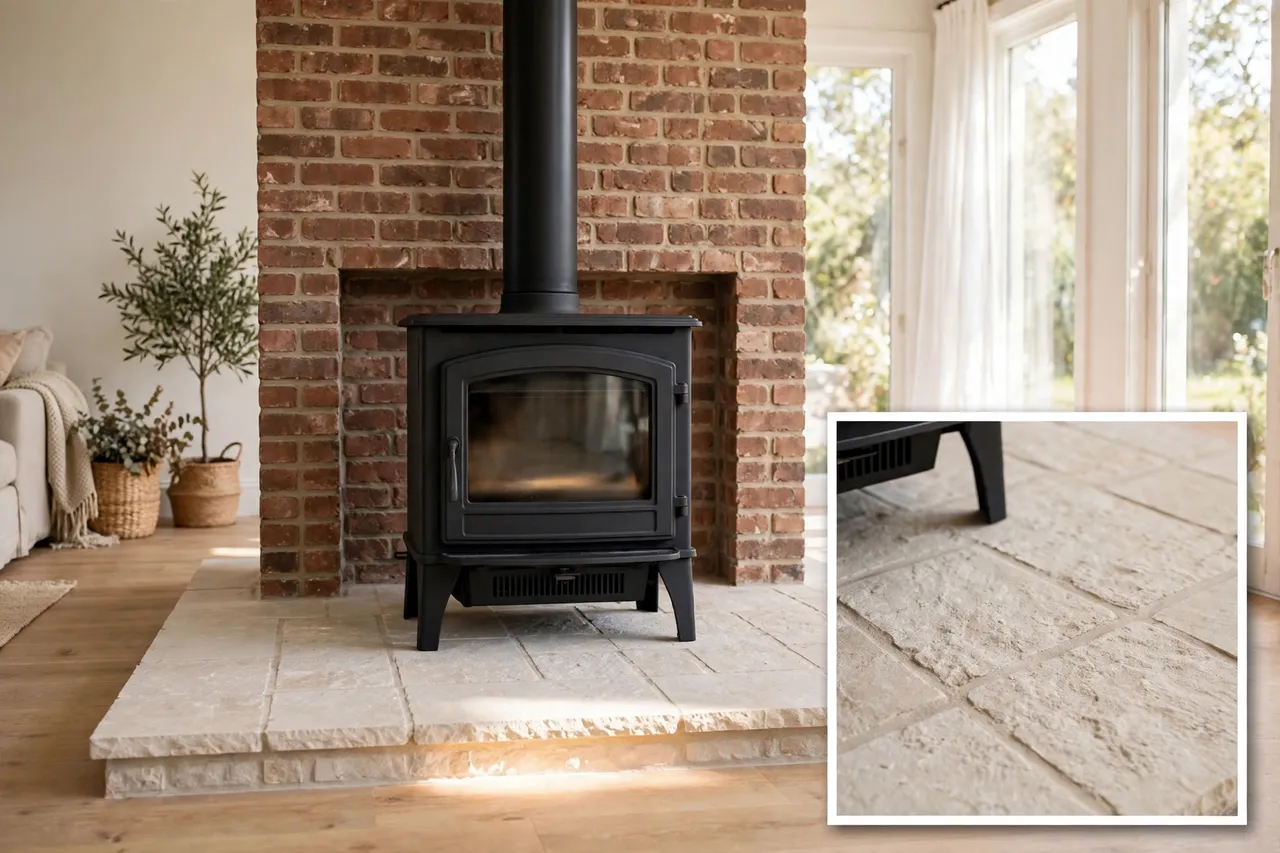
The hearth must extend in front of the stove’s loading door, because that is where hot embers fall when you open the door. The common rule for listed stoves is at least 18 inches in front of the door and at least 8 inches past the sides and back of the stove, and the hearth material must be non-combustible, such as brick, stone, tile, or concrete. The hearth must extend at least 18 inches in front of the loading door, where embers fall. If the stove sits low, with short legs, the manual may also demand a hearth with a stated thermal rating, because heat conducts down through the stove base into the floor.
Check your existing hearth before you assume it passes. An old hearth that is too short, cracked, or built over a wood floor may need an extension or a new hearth pad. If you are dressing up the fireplace at the same time, our fireplace renovation ideas show what a remodel can cost, from a small refresh to a full rebuild.
How to Install a Wood Stove in a Fireplace
Installing a wood stove in a fireplace means inspecting the chimney, fitting the liner, setting the stove, sealing the gaps, and testing the draft before the first real fire. A handy homeowner can handle the measuring, the cleaning, and the stove placement, but the liner and roof work belong to a professional in most homes.
- Book the Level 2 inspection and sweep the chimney. Fix cracked firebrick, bad mortar, and a damaged damper before anything else goes in. Our repair fireplace guide walks through the common smoke, crack, and pilot-light fixes and what they cost.
- Measure the opening, firebox depth, hearth, and mantel clearances, then buy the stove that fits those numbers and carries EPA certification.
- Have the liner installed from the roof down, insulated, sized to the stove outlet, and connected with the right adapter. Fit the block-off plate where the old damper was, so warm room air cannot escape up the old flue.
- Set the stove or insert in place, level it, and connect the stovepipe to the liner. Seal the surround panel around an insert so smoke cannot leak into the room.
- Fit a working carbon monoxide alarm in the room and near the sleeping areas. Our best carbon monoxide detector guide shows what to look for, and our what to do if a carbon monoxide alarm goes off guide covers the emergency steps.
- Light a small test fire with dry kindling and watch the draft. Smoke should rise steadily up the flue, and no smoke should spill into the room. If it spills, stop and call the installer back before you burn again.
- Get the permit inspection signed off, and keep the manual, the liner paperwork, and the inspection report together for your insurer and the next owner.
Expect the work to take one to two days for a straightforward insert into a sound chimney, and longer if the opening needs widening or the chimney needs repair. Never skip the small test fire, because it is the only check that proves the draft works in your house. Most towns require a permit and an inspection for a solid-fuel appliance, so get the permit before the work starts, not after.
What Most People Get Wrong
Most people get this job wrong in the same few ways, and the common belief behind each one sounds reasonable until the smoke comes back into the room. The fix for every one of them is the same: trust the manual and the liner, not the shortcut.
The first wrong belief is that a stove can just slide into the fireplace and use the old chimney as it is. It cannot. An open fireplace flue is too wide and too cold for a sealed stove, so smoke cools, creosote builds, and the draft fails. The liner is what fixes that, and a stove without one is a chimney fire waiting for a cold night.
The second is that any freestanding stove fits any fireplace. It does not. A freestanding stove is taller than an insert, its pipe must bend into the throat, and its clearances are bigger. If the opening is short or the firebox is shallow, the stove will not fit, and forcing it in leaves no air gap around it. A stove that fits is a stove that fits with its clearances, not a stove that just squeezes through the opening.
The third is that a factory-built fireplace takes any insert. It takes only the models its maker lists, because the prefab firebox and chimney were tested as one system. Fitting an unlisted insert into a prefab fireplace can void both warranties and fail an inspection.
The fourth is that wet or green wood burns fine once the fire is hot. It does not. Wet wood makes cool, smoky exhaust, and that smoke drops creosote into the liner. The U.S. Environmental Protection Agency (EPA) says to season wood outdoors for at least six months and burn only dry, seasoned wood, and to never burn garbage, plastic, or pressure-treated wood. Wet wood is the fastest way to fill a new liner with creosote.
How Much Does a Fireplace With a Wood Burning Stove Cost?
A fireplace with a wood burning stove usually costs $2,000 to $6,500 all in for an insert into an existing fireplace, and the chimney liner and labor drive the total more than the stove itself. Angi puts the national average for a fireplace insert at $3,600 in 2026, with most homeowners paying $700 to $6,500, and wood-burning insert labor alone at about $2,200.
| Part of the job | Typical cost | Notes |
|---|---|---|
| Wood insert unit | $1,000–$1,500 | Size and features set the price |
| Wood-burning insert labor | About $2,200 | Chimney connection drives labor |
| Stainless chimney liner | $1,000–$3,000 | Height and access set the price |
| Firebox repair and lines | $200–$1,000 | Budget this before the install starts |
| Full insert job, average | $3,600 | Angi national average, 2026 |
These figures come from Angi, updated October 11, 2026, checked November 13, 2026. A freestanding stove on the hearth can cost more, because it needs a bigger hearth and more stovepipe, and a job with chimney repair or opening work can pass $8,000. Get the whole job quoted as separate lines, stove, liner, labor, hearth, and permits, so you can see which line is driving the total.
Burning Right and Keeping It Safe Year After Year
Burning right means dry wood, hot fires, and a yearly inspection, and those three habits keep a wood stove safe for years. A clean stove with a clean liner drafts well, heats well, and gives a chimney fire nothing to feed on.
Burn only dry, seasoned wood. The U.S. Environmental Protection Agency (EPA) says to season wood outdoors for at least six months, keep it off the ground with the top covered, and burn wood under 20 percent moisture. Start fires with newspaper and dry kindling, build hot fires instead of smoldering ones, and never burn garbage, plastic, or pressure-treated wood.
Clean the ashes out regularly and watch the glass and the firebox for signs of trouble. Soot on the glass, smoke smells in the room, or a lazy flame all mean the draft is weak or the liner needs cleaning, so stop burning and get it checked. When you clean the brick around the firebox, our how to clean a brick fireplace guide shows how to do it without damaging the brick.
Book a yearly inspection and sweep. The Chimney Safety Institute of America (CSIA) follows NFPA 211, which says chimneys, fireplaces, and vents shall be inspected at least once a year, and masonry fireplaces should be swept when soot buildup reaches 1/8 inch. Our chimney sweep cost guide shows what a sweep costs. Book the yearly inspection before the heating season, not after the first cold snap.
Efficiency in One Short Note
A wood insert or stove heats far better than an open fireplace, because an open fire sends most of its heat up the chimney while a sealed stove sends it into the room. That is the whole efficiency story for this article: the gain comes from sealing the firebox and controlling the air, not from a special rating. If you want the full picture on efficiency ratings and EPA certification, that belongs in a dedicated efficiency guide.
Safety First: When to Call a Professional
Measuring, cleaning, and choosing the stove are homeowner jobs. The liner, the roof work, a stuck damper, a cracked firebox, and any gas line work are professional jobs, and a permit and inspection close the project.
Call a CSIA-certified chimney sweep or a licensed installer if smoke spills into the room, the draft stays weak after a test fire, the chimney has not been inspected in over a year, or you smell smoke or gas near the stove. Keep working smoke and carbon monoxide alarms in the home, and if a CO alarm sounds, get everyone to fresh air at once and call 911.
Call a professional rather than forcing a stove into an opening that does not fit or lighting a fire you are unsure about. A short visit costs far less than a smoke-filled house or a chimney fire.
Safety disclaimer: This article is general home information, not professional advice. Fireplaces, chimneys, and wood-burning stoves can cause fire, smoke damage, and carbon monoxide poisoning if installed or used the wrong way. Never vent a wood stove without a proper liner, never ignore the clearance and hearth numbers in the stove maker’s manual, and never work on a roof or inside a flue without the right training and safety gear. Get the required permits, and have the work inspected before you use the stove. If you are unsure about anything here, stop and call a CSIA-certified chimney sweep or a licensed professional before you light a fire. If a carbon monoxide alarm sounds, or anyone has a headache, dizziness, nausea, or confusion while the stove is in use, get to fresh air at once and call 911.
Related Guides
These guides cover the rest of the system around your stove: average fireplace size, chimney sweep cost, repair fireplace, chimney cap replacement, best carbon monoxide detector, and limewash vs whitewash brick fireplace.
Frequently Asked Questions
Can you put a woodstove inside a fireplace?
Yes. A woodstove made for fireplaces, usually called a wood insert, slides into a sound masonry fireplace with a properly sized chimney liner. Factory-built fireplaces accept only the models their maker lists. Get a Level 2 inspection from a CSIA-certified sweep before you buy, so you know the chimney can take the stove.
Do you need venting for a wood burning stove?
Yes. Every wood-burning stove needs venting to carry heat, smoke, and carbon monoxide out of your home. For a stove in a fireplace, that means a full-height stainless steel liner sized to the stove outlet, run up the chimney. Never vent a stove into an unlined chimney or through a side wall.
Is a wood stove safer than a fireplace?
A modern wood stove is safer than an open fireplace in most ways. Its sealed door keeps sparks and embers inside, and its controlled air supply makes a steadier fire with less smoke in the room. It is only safer when it is installed right, with a liner, correct clearances, and a working carbon monoxide alarm.
Can you put a wood burning stove in a house without a chimney?
Yes, but you must build a new venting system, usually an insulated Class A chimney through the roof. That costs more than fitting a stove into an existing fireplace, needs permits and an inspection, and must follow the stove manual and local code. A stove can never vent through a side wall.
How often should a wood-burning stove in a fireplace be inspected?
At least once a year. NFPA 211 says chimneys, fireplaces, and vents shall be inspected at least once a year, and the CSIA says masonry fireplaces should be swept at 1/8 inch of soot buildup, sooner with glazed creosote. Book the inspection before the heating season starts each year.
Can a wood-burning stove in a fireplace be used as the primary heating source for a home?
It can heat a home well, but it rarely serves as the only heat source for a large house. A stove heats the rooms near it best, and heat fades with distance and closed doors. Most owners use it as a strong supplemental heater beside their main heating system, not as a full replacement.


