
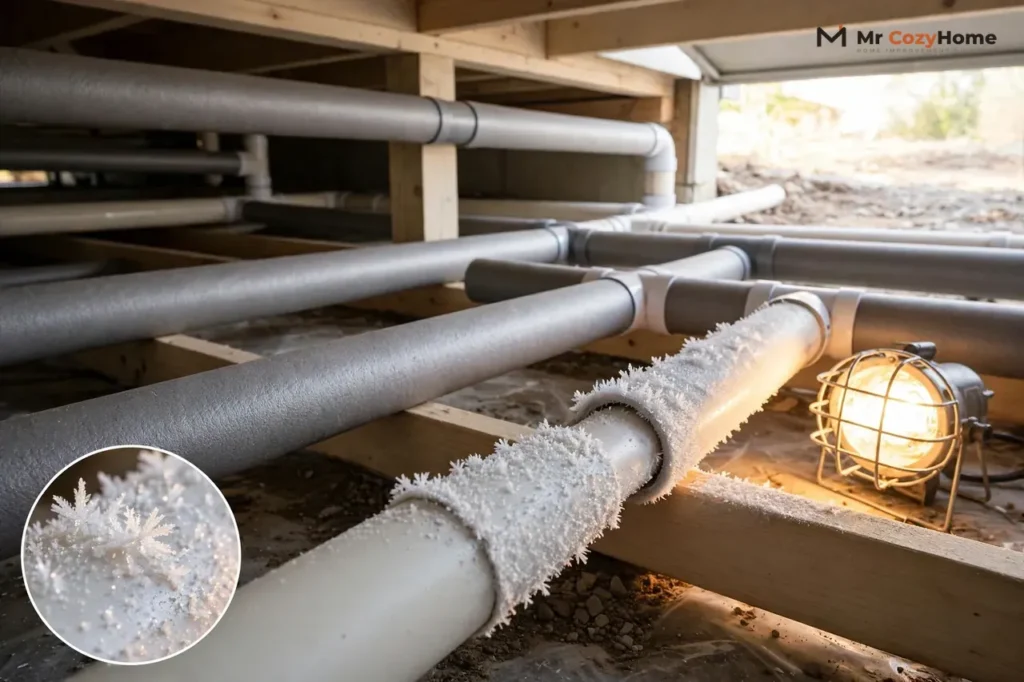
Yes, PVC pipes can freeze — and yes, they can crack or burst when they do. The plastic itself does not freeze. The water inside it does. When that water turns to ice, it grows by about 9 percent, and the pressure it builds can split rigid PVC wide open.
The good news is that a freeze does not have to end in a flood. PVC gives you clear warning signs, and a few simple steps before a cold snap keep most pipes safe. This guide shows you the temperatures that matter, how PVC compares with copper and PEX, and exactly what to do if a PVC pipe freezes.
What Happens Inside a PVC Pipe When Water Freezes
Most people picture ice pushing outward on the pipe wall until it breaks. That is not quite how it happens. The maker of FlowGuard Gold CPVC explains that ice forms first on the inside wall of the pipe and grows inward until it forms a plug that blocks the pipe. That plug then grows along the pipe and pushes against the liquid water trapped behind it.
Water does not squeeze smaller under pressure, so the trapped water has nowhere to go. Pressure climbs fast inside that sealed stretch of pipe. When the pressure passes the pipe’s short-term burst strength, the pipe fails — usually at its weakest point, which is often a joint or fitting rather than the spot where the ice formed.
PVC makes this worse in two ways. First, PVC is rigid, so it gives very little as pressure builds. Second, cold makes PVC more brittle. Charlotte Pipe, one of the largest PVC pipe makers in the United States, states in its Plastics Technical Manual that PVC and CPVC become more brittle at low temperatures, particularly below freezing at 32 degrees Fahrenheit, and it recommends proper insulation for cold-weather installs.
The numbers show why no home pipe wins this fight. Normal household water pressure runs about 40 to 60 psi. The pressure from freezing water can climb into the tens of thousands of psi. That is far above the burst rating of any pipe in a normal home, which is why prevention matters so much more than pipe material.
At What Temperature Do PVC Pipes Freeze?
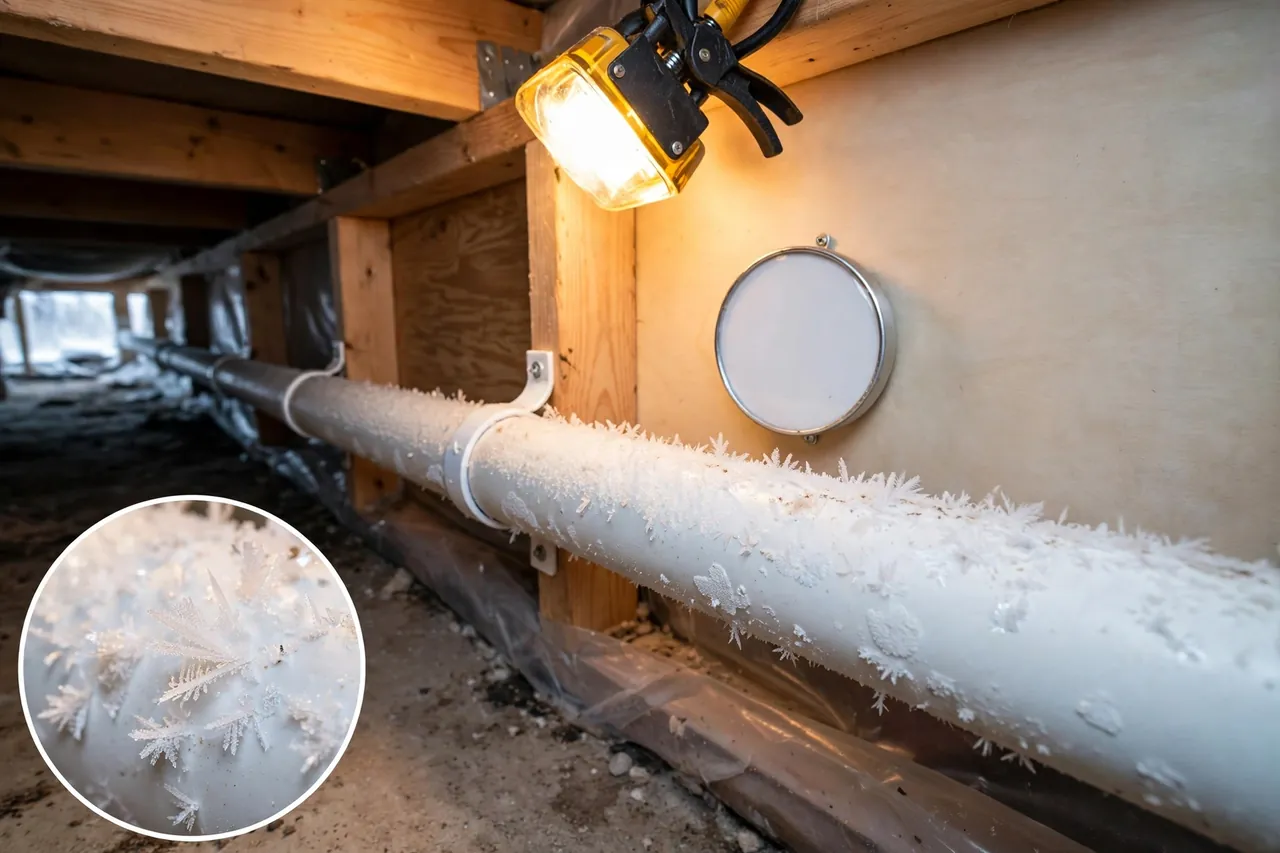
Water starts to freeze at 32 degrees Fahrenheit. But a PVC pipe does not freeze the moment the air outside hits 32. The water inside the pipe has to lose its heat first, and the pipe wall, the insulation around it, and the warmth of your home all slow that down.
The real danger zone starts around 20 degrees Fahrenheit. When the temperature drops to 20 degrees or below and stays there, exposed or poorly protected PVC pipes can freeze solid in as little as six hours. Unprotected pipes in a drafty spot can freeze even faster, in about three hours.
How long the cold lasts matters as much as how cold it gets. A quick dip to 25 degrees overnight rarely freezes a pipe inside a heated home. Three days at 15 degrees with wind finding every gap in your crawl space is a different story. Wind chill speeds up heat loss from exposed pipes, and still water freezes faster than moving water, which is why a pipe nobody uses all winter is at greater risk than one that runs every day.
Smaller pipes freeze faster too. A half-inch line holds less water, so it loses its heat sooner than a two-inch line. That is one reason the thin supply lines to an outdoor faucet or a bathroom on an exterior wall are often the first to go.
Do PVC Pipes Burst When They Freeze?
Yes, PVC pipes can burst when they freeze, but the damage often looks different from a burst copper pipe. Copper tends to split open at one spot. PVC often cracks or splits along its length, and the split can run for inches. Joints and fittings fail first in many cases, because the glued joint is the stiffest part of the run and the place where pressure concentrates.
Here is the cruel part: you may not know the pipe cracked until it thaws. A crack in a frozen pipe often leaks nothing while the water inside is still ice. The flood starts hours later, when the ice melts and water pushes through the crack. A single burst pipe can release hundreds of gallons of water per hour once it thaws, which is why a frozen pipe is a serious-water problem even before you see a drop.
Frozen PVC can also fail quietly in a smaller way. A hairline crack may leak only a slow drip inside a wall or under a floor, and you may not notice it until you see a stain, a soft spot, or a higher water bill. If you want the full picture of what frozen water does once a pipe gives way, read what happens when pipes freeze.
One more honest point: a PVC pipe that survives one freeze is not guaranteed to survive the next. A freeze can leave a weakened spot in the wall or the joint, and the next cold snap can finish the job. Treat every freeze as a warning, even if nothing leaked.
PVC vs Copper vs PEX: How Each Material Handles a Freeze
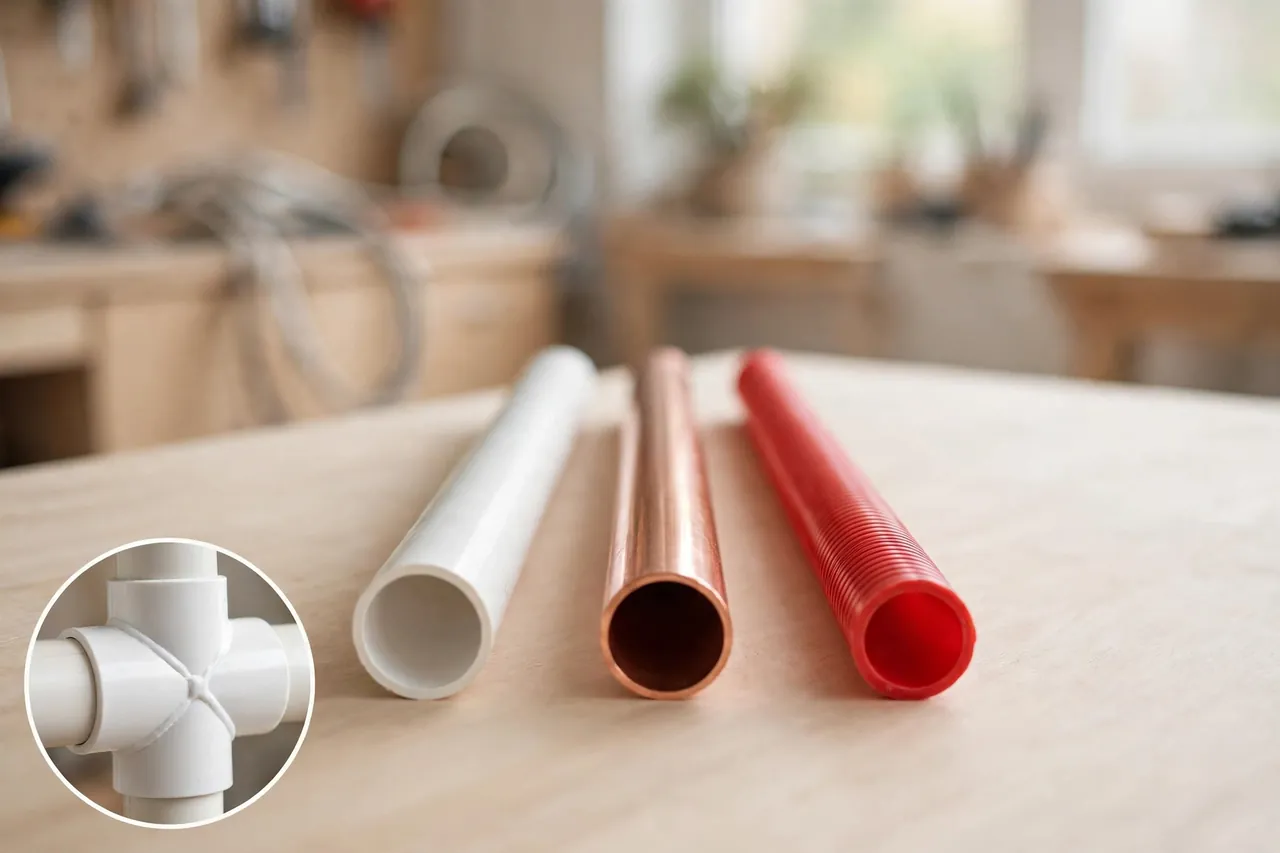
No home pipe is freeze-proof. That is the clear message from FlowGuard Gold, the CPVC maker, which states plainly that all pipe materials are vulnerable to freezing and there is no freeze-proof plumbing system. Still, the three common materials fail in different ways, and knowing the difference helps you judge your own risk.
The table below compares PVC, copper, and PEX using short-term burst pressure ratings published by FlowGuard Gold, plus the burst rating for 2-inch Schedule 40 PVC published by PowerBlanket.
| Pipe material | How it handles a freeze | Burst strength | Weak spot |
|---|---|---|---|
| PVC | Rigid; cracks or splits as pressure builds | 890 psi (2-inch Schedule 40) | Joints and fittings |
| CPVC | Rigid; splits like PVC when water freezes | 1,250 psi | Joints and fittings |
| Copper | Strong but rigid; splits when pressure peaks | 3,000 to 4,000 psi (Type L) | Soldered joints |
| PEX | Flexes and can expand around ice | 475 psi | Fittings and connections |
Read the table with care, because the numbers can mislead you. Copper has the highest burst rating by far, yet copper still bursts in real freezes. Copper conducts heat quickly, so it cools fast, and once the pressure inside passes its limit, it splits just like the rest. A high burst rating buys time. It does not buy safety.
PEX looks like the winner at first glance, because it flexes. FlowGuard Gold warns that flexibility is not the deciding factor — burst strength is. PEX has the lowest burst rating of the group at 475 psi. The Plastics Pipe Institute notes that PEX expansion can relieve some freezing pressure, but only when the pipe can expand evenly along its whole length. In a real home, pipes run through holes, brackets, and tight corners that stop even expansion. PEX fittings are rigid too, and they often fail before the tubing does.
PVC sits in the middle on strength and at the bottom on flexibility. It cannot stretch the way PEX does, and cold makes it more brittle, so it cracks rather than bulging. Schedule 80 PVC has thicker walls than Schedule 40 and holds more pressure, but no PVC pipe is immune. If the water inside freezes hard and long enough, any PVC pipe can fail.
PVC and CPVC Are Not the Same Pipe
Homeowners often mix up PVC and CPVC, and the mix-up matters in winter. PVC, or polyvinyl chloride, is the white rigid pipe used for cold-water lines, drains, waste, and vents, and for outdoor jobs like irrigation. CPVC, or chlorinated polyvinyl chloride, is a close cousin that handles hot water, so you will find it on hot-water supply lines. FlowGuard Gold is a CPVC product, not a PVC product.
Both materials freeze the same way, because the water inside them freezes the same way. But their ratings differ. FlowGuard Gold lists plumbing-size CPVC at a 1,250 psi short-term burst pressure, while 2-inch Schedule 40 PVC bursts at 890 psi. Do not read CPVC advice as PVC advice, or the other way around. When you buy insulation, heat tape, or fittings, match the product to the pipe you actually have, and check the maker’s instructions for that material.
Charlotte Pipe gives CPVC its own cold-weather guidance: drain the system if overnight temperatures are likely to drop below 32 degrees Fahrenheit, because CPVC may split like other materials when water freezes in it. That advice is just as sound for PVC. If a line can be drained, draining beats every other protection method, because a dry pipe cannot freeze.
Where PVC Pipes Freeze First in a Home
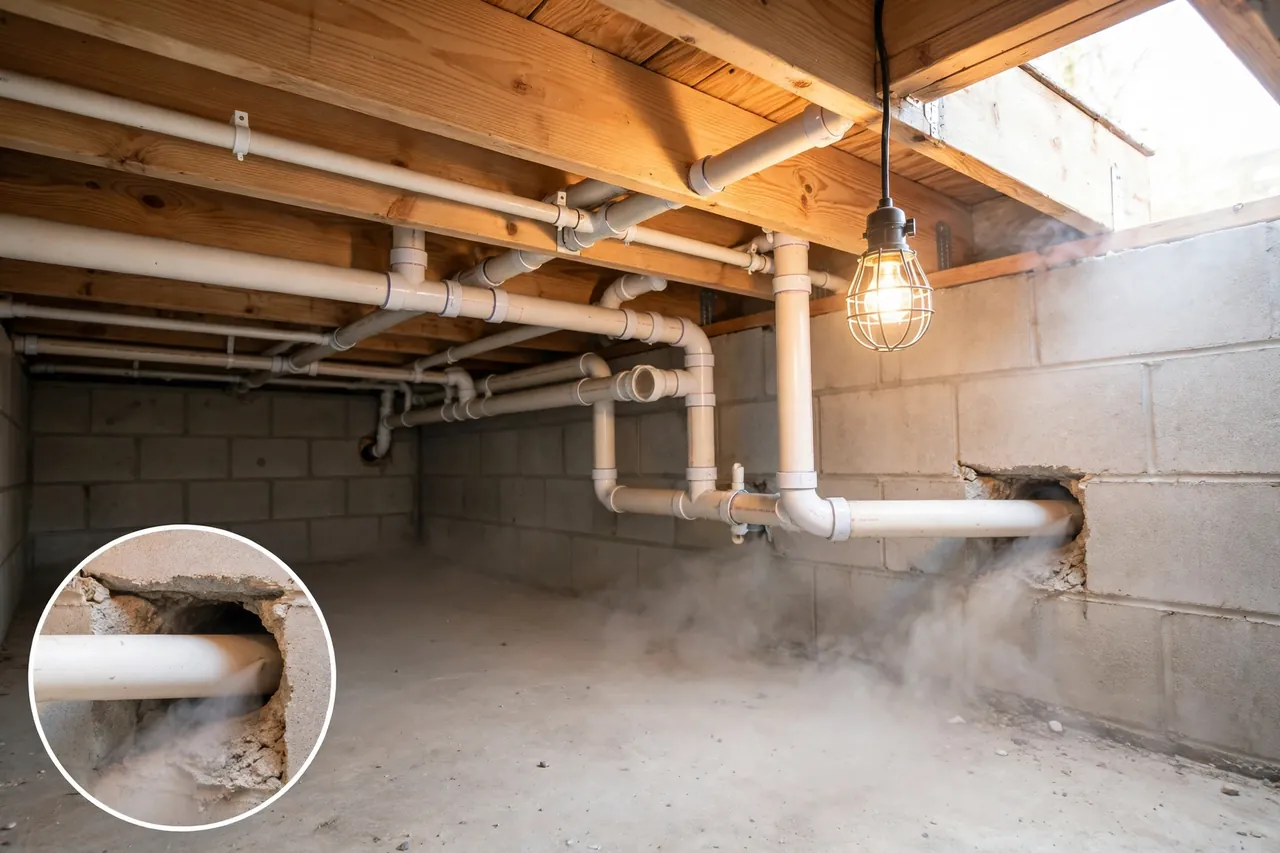
PVC pipes freeze first where cold air reaches them and warm air does not. Walk your home with that rule in mind, and you will find the risky spots fast.
- Crawl spaces — open vents and thin floors let cold air wash over pipes all night. This is the most common freeze spot in many homes.
- Attics — pipes that run through an unheated attic sit in the coldest air in the house.
- Garages — a water line to a garage sink or a laundry room in an unheated garage has almost no protection.
- Exterior walls — pipes inside a poorly insulated outside wall freeze when wind drives cold air through gaps around the pipe.
- Basements — an unfinished basement with drafts near the rim joist can freeze pipes along the outside wall.
- Outdoor lines — irrigation pipes, hose bibs, pool lines, and outdoor kitchen lines are fully exposed, and shallow-buried lines can freeze if the frost goes deeper than usual.
Two details raise the risk anywhere. First, still water freezes faster than moving water, so a line to a guest bathroom or a seasonal cabin freezes before a line you use every day. Second, a pipe does not need to sit outside to freeze. A pipe in a heated room can still freeze if cold air blows through a gap where the pipe enters the wall. Seal those gaps, and you remove the wind chill that does much of the damage.
Signs Your PVC Pipes Are Freezing
A freezing PVC pipe usually warns you before it breaks. Watch for these signs during a cold snap, and act on the first one you notice.
- Little or no water comes out when you open a faucet, or the flow slows to a trickle.
- You see frost or ice on an exposed section of pipe.
- The pipe bulges, or you hear creaking and banging as ice forms and expands inside it.
- One section of pipe feels far colder to the touch than the rest.
- Your water runs oddly cold, or the temperature swings for no clear reason.
No water at all from a faucet is the clearest sign. Do not keep forcing the tap or assume the problem will fix itself when the sun comes up. If you want help telling a frozen pipe from a burst one, read how do you know if pipes are frozen.
How to Protect PVC Pipes From Freezing
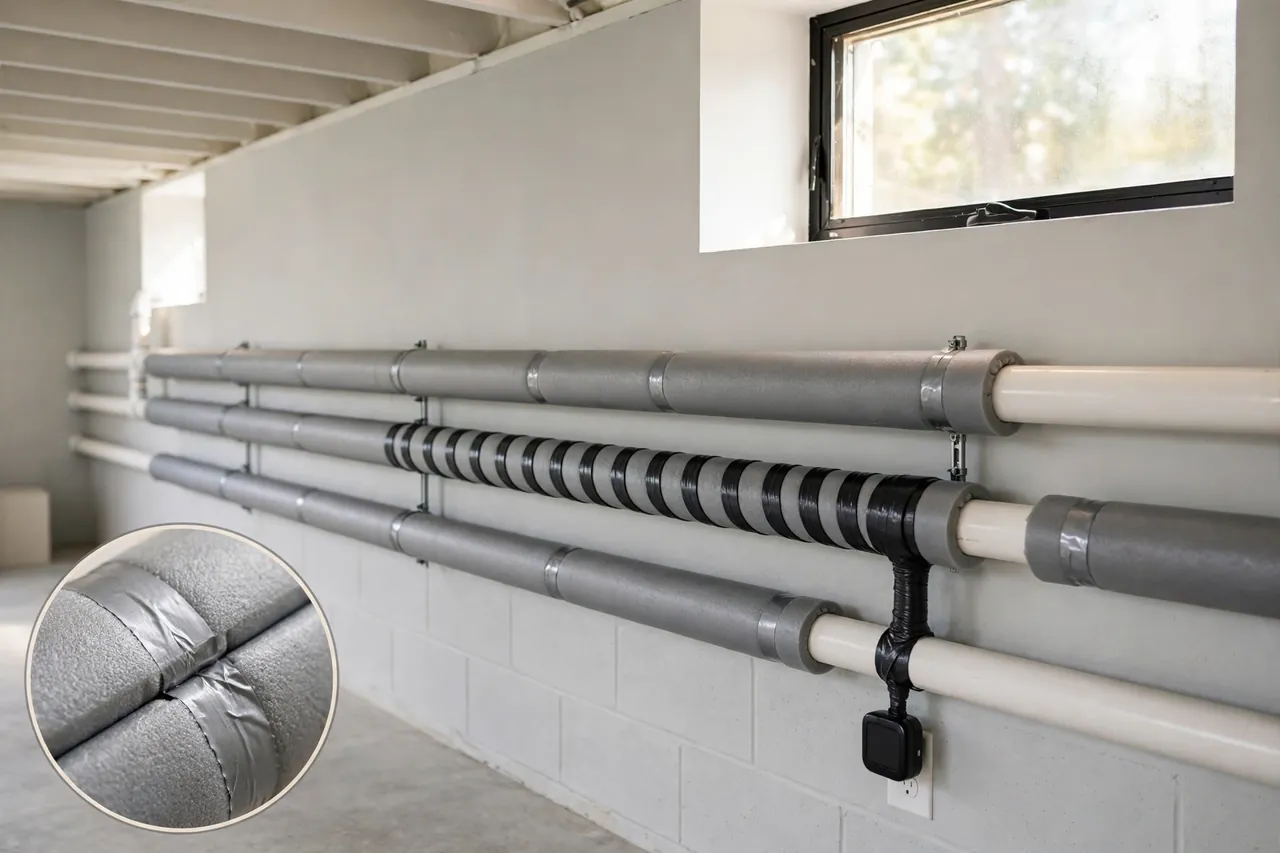
Protecting PVC pipes is mostly a before-the-cold job. Do these steps in the fall, and a hard freeze becomes a cold night instead of a plumbing emergency.
- Insulate every exposed run. Slide foam pipe sleeves over PVC in crawl spaces, attics, garages, and along exterior walls. Insulation does not add heat, but it slows heat loss enough to buy your pipes hours. Tape the seams so no bare pipe shows.
- Add heat tape where insulation is not enough. Thermostat-controlled heat tape or heat cable wraps around the pipe and warms it only when the temperature drops. Follow the maker’s instructions for your pipe material, and never overlap the tape unless the instructions allow it.
- Seal drafts around pipes. Caulk and weather-strip the gaps where pipes pass through outside walls, floors, and the rim joist. Cold air blowing straight onto a pipe is the fastest way to freeze it.
- Let a faucet drip in a hard freeze. A slow trickle keeps water moving through the line and relieves pressure if ice starts to form. Drip the faucet farthest from where the water enters the house.
- Open cabinet doors under sinks on exterior walls. Warm room air needs to reach the pipes behind the cabinet, and a closed door blocks it.
- Keep the heat on. Set your thermostat to at least 68 degrees Fahrenheit during a cold snap, even if you leave town for a few days. A few extra dollars on the heating bill is far cheaper than a burst pipe.
- Drain outdoor lines before winter. Shut off the water to hose bibs and irrigation lines, then open the outside faucet and let the line drain. A dry pipe cannot freeze, and this one step saves more PVC than any other.
One caution about heat tape: buy tape rated for use on plastic pipe, and check that it suits PVC. Some heat tapes run hot enough to damage plastic if they are the wrong type or installed wrong. Read the label before you wrap a single foot.
What to Do If Your PVC Pipes Freeze
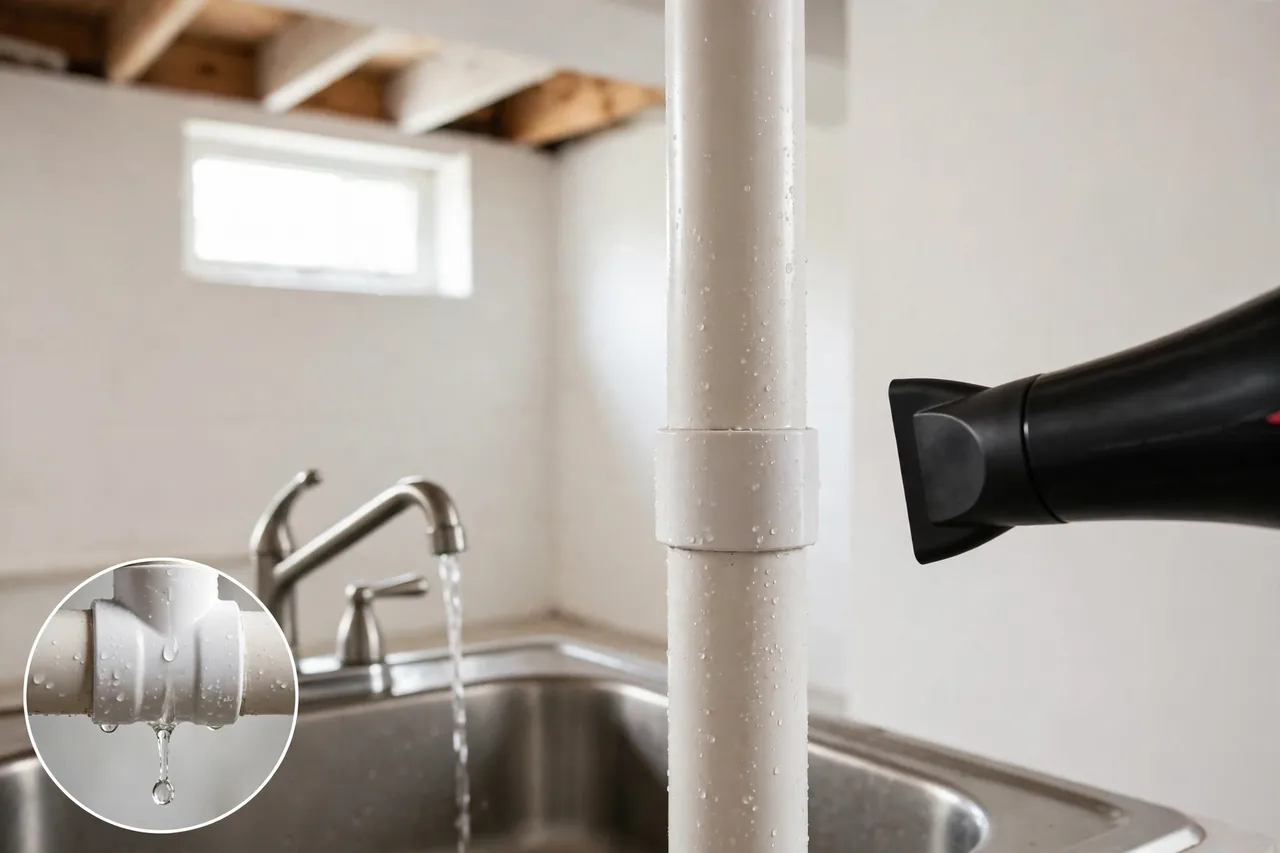
Stop and think before you grab a heat source. Thawing a frozen PVC pipe the wrong way can melt the pipe, start a fire, or turn a small crack into a flood. Take it slow, and keep the steps in this order.
- Open the faucet the frozen pipe feeds. An open tap gives melting water somewhere to go and relieves pressure as the ice thaws.
- Look for a crack or leak before you warm anything. If you see a split, a bulge, or water already pooling, shut off the water at the main valve first, then call a plumber. Warming a cracked pipe only opens the floodgates sooner.
- Find the frozen section. Feel along the pipe for the coldest stretch, or look for frost on the outside of the pipe.
- Warm it gently. A hair dryer on low or medium heat, warm towels, a heating pad, or a space heater set a few feet away all work. Move the heat slowly along the frozen section, and expect it to take 20 to 30 minutes or longer.
- Never use an open flame. Do not use a blowtorch, a propane torch, or any open flame on PVC. It can melt or burn the pipe and start a fire. PVC also softens at around 140 degrees Fahrenheit, so high heat damages the pipe even without a flame. Charlotte Pipe warns that the heat source used to thaw a frozen CPVC line should not exceed 180 degrees Fahrenheit, and gentle heat is the safe rule for PVC too.
- Watch for leaks as the pipe thaws. Keep towels and a bucket nearby. If water starts leaking from a crack, shut off the main valve right away and call a plumber.
- Leave the faucet open until full flow returns. Once water runs freely, let it run for a minute, then check every joint along the thawed section for drips.
If you cannot find the frozen section, or the pipe will not thaw after gentle warming, stop and call a plumber. A frozen section hidden inside a wall is not a do-it-yourself job, and forcing it can break the pipe inside the wall where you cannot see the leak.
When to Call a Plumber
Some frozen-pipe jobs belong to a professional. Call a plumber if you see a crack or a leak after thawing, if the same pipe freezes more than once in a season, if the frozen section sits inside a wall or under a slab, or if an outdoor or buried line is involved. A plumber can find the frozen spot with proper tools, repair the pipe correctly, and tell you what to change so it does not freeze again.
Call sooner rather than later if water is already leaking. Shut off the main valve, move valuables out of the water’s path, and mop up what you can while you wait. Fast action limits the damage far more than any repair skill.
Related Guides
A burst pipe is a water problem the moment it thaws, so catching a leak early matters as much as stopping the freeze. Flood sensors catch a leak before it becomes a flood, and a WiFi water leak detector sends phone alerts when water shows up where it should not. Both are worth a look before winter sets in.
Frequently Asked Questions
Can PVC pipes freeze in cold weather?
Yes, PVC pipes can freeze when exposed to temperatures below 32 degrees Fahrenheit, especially if they are not insulated or buried below the frost line. The water inside freezes first, and the ice can crack or burst the rigid pipe as it expands.
What happens to PVC pipes when they freeze?
When water inside PVC pipes freezes, it expands and creates internal pressure. This pressure can lead to cracks, splits, or complete pipe failure. The leak often shows up only after the ice thaws and water pushes through the crack, and the damage is usually permanent.
Are PVC pipes more susceptible to freezing than metal pipes?
PVC pipes have lower thermal conductivity than metal pipes, which means they lose heat slower. However, this does not prevent freezing; both types are vulnerable if not properly insulated. PVC also turns more brittle in the cold, so it tends to crack rather than stretch.
How can I prevent PVC pipes from freezing?
Insulate exposed PVC pipes using foam sleeves or pipe insulation. Additionally, keep indoor temperatures above freezing and allow faucets to drip slightly during extreme cold. Seal drafts around pipes and drain outdoor lines before winter for the best protection, and do this work in the fall.
Can frozen PVC pipes be thawed safely?
Yes, frozen PVC pipes can be thawed safely using warm towels, heat lamps, or hair dryers. Avoid open flames or high heat sources to prevent pipe damage. Open the faucet first, warm the pipe gently, and watch for leaks as it thaws.
What should I do if a PVC pipe bursts due to freezing?
Turn off the water supply immediately, drain the damaged section, and replace or repair the pipe. Contact a professional plumber for extensive damage or if unsure about repairs. Mop up standing water fast to limit damage to floors and walls.
This guide covers general homeowner steps for frozen PVC pipes. If you are unsure about a repair, if water is leaking inside a wall, or if the frozen section is hidden or buried, call a licensed plumber rather than forcing the job. Water damage spreads fast, and a professional repair costs far less than the damage a burst pipe can cause.
Yes, PVC pipes can freeze, but a frozen PVC pipe is not a lost cause. Insulate the exposed runs, seal the drafts, drip a faucet in a hard freeze, and drain the outdoor lines before winter. Do those four things, and your PVC pipes will stand a far better chance of making it through the coldest night of the year.


