
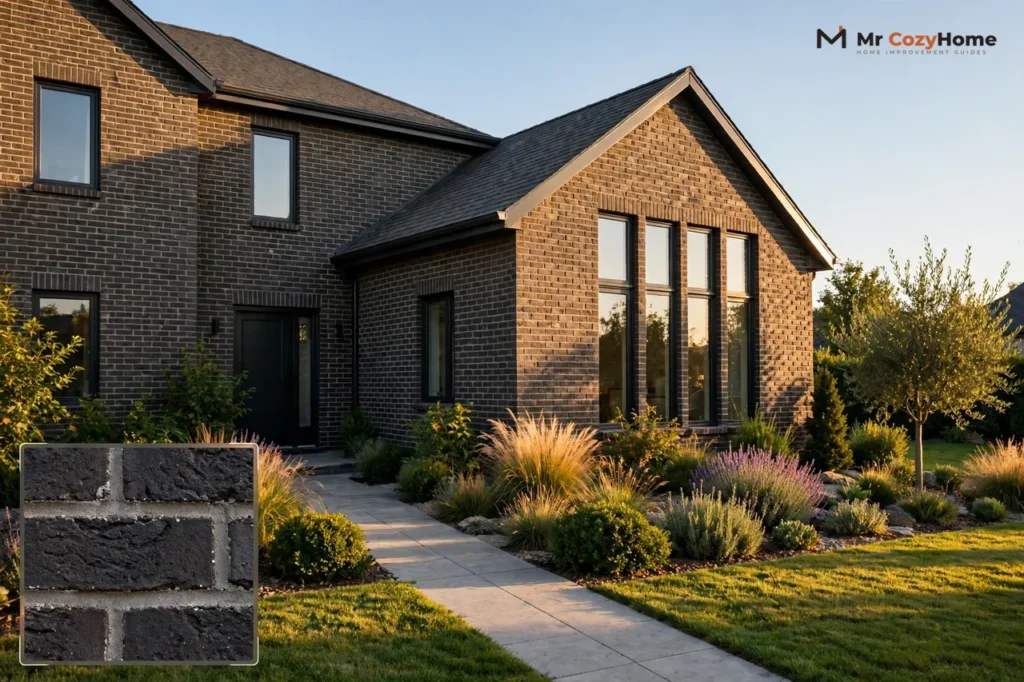
Brick stain changes the color of brick by soaking pigment into the pores and bonding it there, instead of laying a film on top the way paint does. A pro job costs $1 to $4 per square foot, averaging $2.50 per square foot, according to Angi’s 2026 cost guide, updated September 18, 2026. The Brick Industry Association reports stained brick projects lasting 20 years or more with no maintenance, because there is no film to peel.
Two things decide the result. First, the color you pick is only half of it: your brick’s starting color is the other half. Second, one ten-second test tells you whether your brick will take a stain at all. The color table below shows what red, orange, tan, and buff brick turn into.
💡 Practical Home Tip: Before you buy a gallon of stain, buy a small sample pot first and test it on a hidden corner of the wall. Judge it only when fully dry, because stain looks darker wet than it will look for the next twenty years.
What Is Brick Stain — and How Is It Different From Paint?
Brick stain is a pigmented mineral solution that soaks into the pores of unpainted, absorbent brick and bonds chemically with the masonry, changing its color while keeping its natural texture. Paint, by contrast, forms a film on the surface that hides the texture, traps moisture, and eventually peels.
Most mineral stains use iron oxide pigments carried in a potassium silicate solution. The Brick Industry Association’s Technical Note 6 defines masonry stains as treatments that change the color of masonry while maintaining its natural texture. Once the stain meets the brick, the silicate forms a permanent mineral bond — nothing sits on top, so the brick still looks and feels like brick.
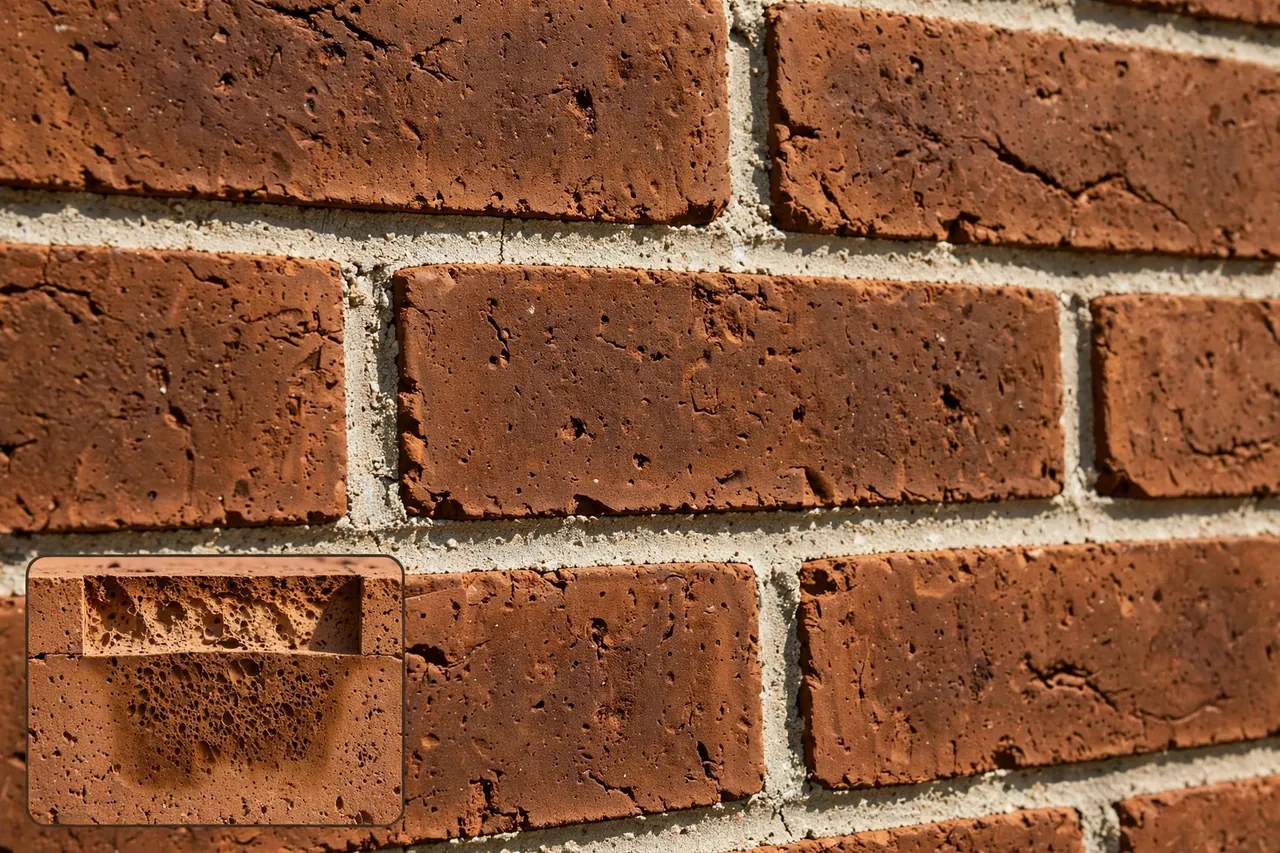
Stain lets the brick breathe. Mineral stains are highly vapor permeable, so moisture inside the wall can still escape as vapor instead of getting trapped behind a film. In cold climates, trapped water freezes and pushes paint — and sometimes brick faces — off the wall.
But here is the trade-off: stain is permanent, and it cannot take a dark brick to a bright white. A stain adds color to what is already there, so the starting brick always shows through. If you want an opaque white, paint or limewash is the honest answer.
Which Brick Stain Colors Work on Your Brick?
The best brick stain colors are the ones that work with your brick’s starting color, not against it: red brick takes deep brown, charcoal, and black-brown well; tan and buff brick take warm gray, greige, and taupe; orange brick takes muted terracotta and warm brown. Darkening is easy, shifting hue is possible, and lightening is hard.
Guess which color shift is the safest bet on a 1970s red brick house? Not white, and not a pale cream — charcoal or warm brown, because both darken the brick and let its variation show through. A stain is a tint, not a cover-up: the brick’s own color and the mortar joints stay visible under it, just in a new key.
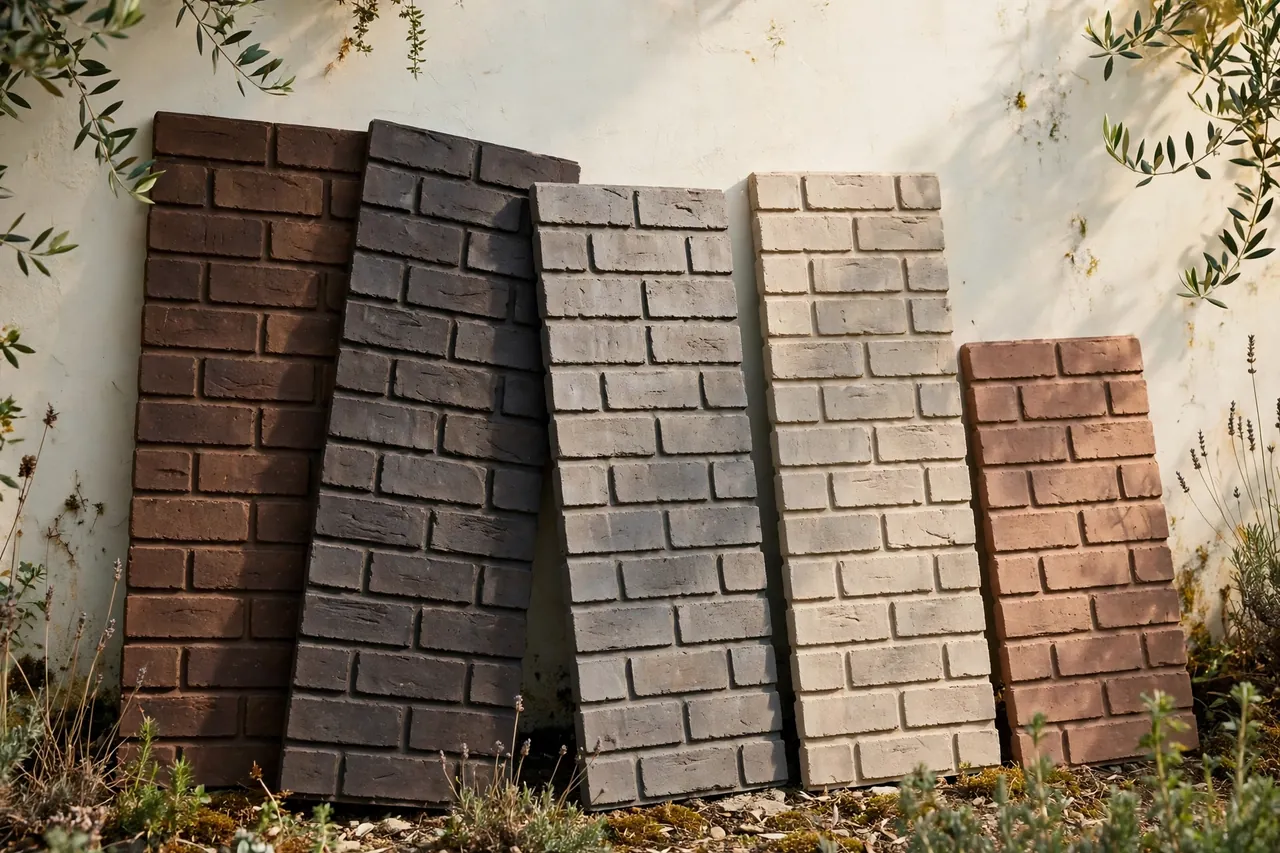
| Your brick now | Best stain colors | Avoid expecting |
|---|---|---|
| Red brick | Deep brown, charcoal, black-brown, burgundy | Bright white, pale cream |
| Orange brick | Muted terracotta, warm brown, deep red | Cool gray, bright white |
| Tan or buff brick | Warm gray, greige, taupe, soft brown | Charcoal black, bright white |
| Blended or mixed brick | One mid-tone stain to unify the range | A pale stain that shows every variation |
| Dark brown brick | Charcoal, black-brown, deeper brown | Any lighter color |
Semi-transparent and opaque stains give two levels of change. Semi-transparent stain deepens or warms the brick while letting most of the original variation show; opaque stain is a complete transformation. Sherwin-Williams frames the choice the same way: semi-transparent to give masonry new life, opaque for a full makeover.
Warm charcoal, mocha, greige, weathered gray, and soft terracotta photograph best on stained brick, because they read as natural brick in a new color. ProMason’s water-based masonry stain sells twelve colors, including Charcoal, Stone Gray, Brown Tone, and Burgundy, and the colors mix for a custom match.
Judge the color dry, on your own brick, in daylight. The Brick Industry Association advises approving the look with a sample panel judged dry, because stain looks different when wet. A test patch on a hidden corner is the only color proof that counts.
That settles which colors are realistic. The next question is whether stain is even the right finish — because limewash and paint each win in one specific case, and picking the wrong one is a twenty-year mistake.
Brick Stain vs Limewash vs Paint: Which Finish Wins?
Stain wins for unpainted, absorbent brick when you want a lasting color change that still looks like brick. Limewash wins when you want the mottled, aged white look and accept that it weathers over five to ten years. Paint wins when your brick is already painted or glazed, or when you want an opaque bright white that stain cannot reach.
| Finish | How it works | Look | Life and upkeep |
|---|---|---|---|
| Mineral brick stain | Pigment soaks in and bonds chemically | Brick texture intact, matte | 20+ years, no maintenance |
| Limewash | Slaked lime forms calcite on the brick | Mottled, old-world white | 5 to 10 years, easy recoat |
| Mineral paint | Silicate bonds with the brick | Fully opaque, matte | 15+ years, breathable |
| Acrylic latex paint | Film on the surface | Opaque, any color or sheen | Repaint every 3 to 5 years |
Limewash is the finish most people confuse with stain. It is slaked lime mixed with water, brushed on in thin coats, and it calcifies into the brick as it cures, giving a soft, chalky, slightly uneven white. It lasts five to ten years before a refresh, and that weathering is part of its charm. If your dream is a white brick house, our guide to limewash vs whitewash brick fireplace walks through the choice.
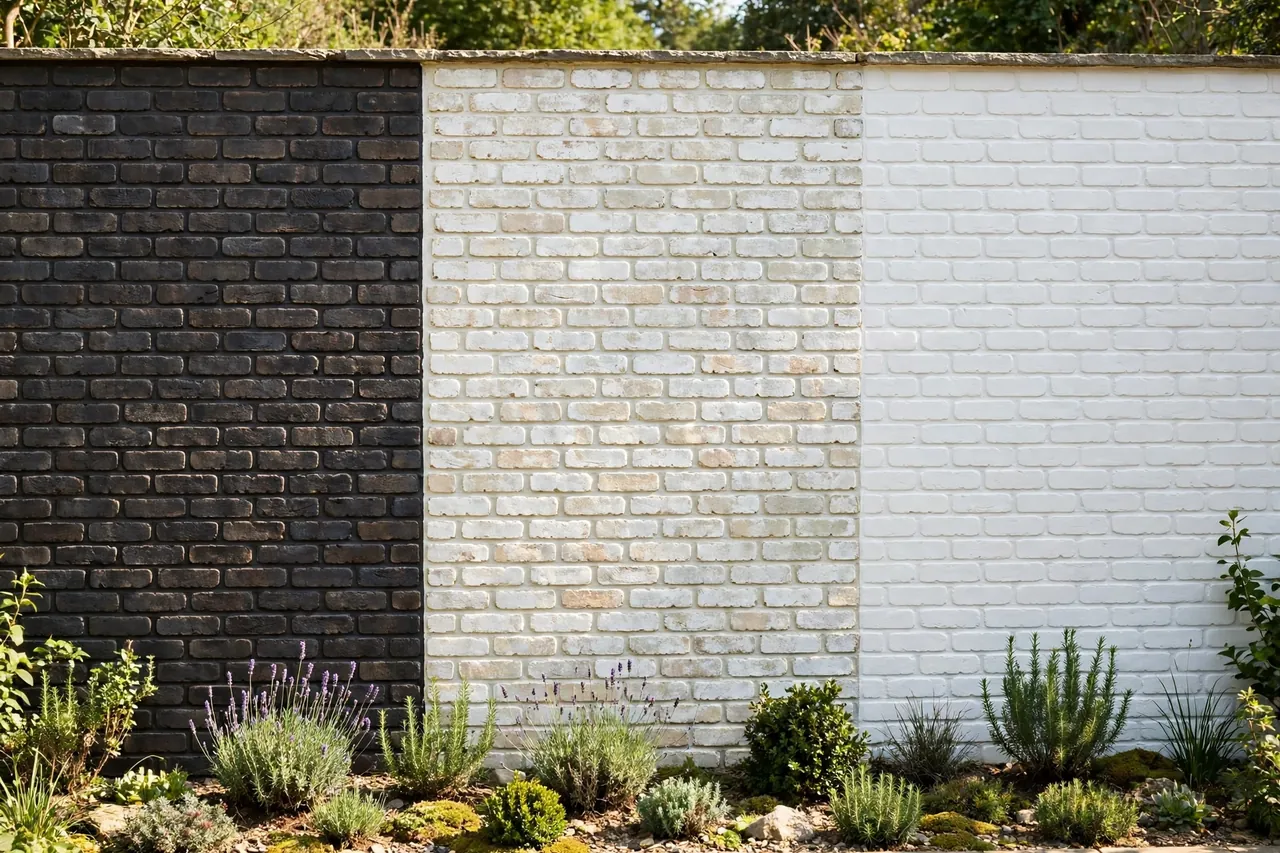
Paint is the most flexible finish and the highest-maintenance one: any color, even coverage, and it hides stains and patchy brick completely. The price is a film that traps moisture and peels in three to five years. Paint is still the right call for brick that is already painted — stain cannot soak through a paint film — and for glazed brick, where nothing porous is exposed for a stain to grip.
Choosing by color alone is the trap: the finish you want may not work on the brick you have. The next section gives you the ten-second test that settles it.
Can Your Brick Be Stained? The 10-Second Water Test
Your brick can be stained only if it is unpainted, unsealed, and absorbent enough to drink water. Splash clean water on a dry section of wall: if the brick darkens and the water soaks in within seconds, it will take a stain. Beading water means sealed, glazed, or dense brick, and stain will not work.
The Brick Industry Association is explicit: because masonry stains rely on absorption into the pores, a water test must be performed before staining. Do it on a dry day, on a clean patch, and try more than one spot.
Good candidates are common red, orange, tan, and buff clay brick that has never been painted or sealed, blended brick you want to unify, and new brick that came out the wrong color. Mortar joints can be stained separately, which is how a mason blends a new addition into old brick.
Do not stain painted brick, glazed brick, brick treated with a sealer or water repellent, or brick in a working firebox. Paint and sealer have to come off first with a chemical remover made for brickwork — never sandblasting. A clear sealer is invisible, so the water test is the only way to catch it.
Check the wall before you check the color: fix loose bricks, failed mortar, cracks wider than a business card, missing flashing, and efflorescence first, and let new mortar cure for at least 30 days. A stain locks in the wall you have, flaws included.
The water test takes ten seconds and saves the most expensive mistake in this project: stain on a wall that cannot absorb it. Now, what the job should cost.
How Much Does Brick Staining Cost?
Professional brick staining costs $1 to $4 per square foot, averaging $2.50 per square foot including labor and materials, according to Angi’s 2026 cost guide, updated September 18, 2026. A whole house typically runs $1,200 to $10,000, averaging about $4,200.
Materials are the small part of the bill. Angi puts brick stain at $30 to $60 per gallon and $130 to $170 per 5-gallon bucket. A water-based masonry stain covers about 250 to 500 square feet per gallon, according to the manufacturer ProMason, so a single-story house needs only a few gallons — labor, prep, and access move the total.
| Item | Typical cost | Notes |
|---|---|---|
| Pro staining, per sq ft | $1–$4 (avg $2.50) | Labor and materials included |
| Whole house, pro job | $1,200–$10,000 (avg $4,200) | Size, height, and condition drive it |
| Stain, per gallon | $30–$60 | $130–$170 per 5-gallon bucket |
| Pro labor, per hour | $40–$80 | Higher for tall or hard-to-reach walls |
| Scaffolding permit | $100–$300 | Multi-story homes only |
| Painting brick, per sq ft | $1.50–$4.50 | Cheaper up front, repaint every 3–5 years |
Three things push the price up. Height adds 25% to 50% labor per additional story, Angi notes. Heavy prep and repointing can double the labor, and a full color change costs the most of all. Brush work — staining brick while leaving the mortar natural — can cost more than double the spray price.
DIY cuts the bill roughly in half, because hiring labor adds 50% or more to the total, Angi reports. Your costs are the stain, a sprayer upward of $100, and $200 or more in drop cloths, brushes, tape, and ladder hire. The saving is real only on a single-story wall that is sound and easy to reach.
Compare the lifetime cost, not just the quote. Stain at $1 to $4 per square foot with no maintenance for 20 years or more beats paint at $1.50 to $4.50 per square foot that needs redoing every three to five years. The cheapest finish on day one is rarely the cheapest over the life of the house.
How to Stain Brick in 7 Steps
Staining brick takes seven steps in order: repair the wall, remove old treatments, clean it, let it dry, test the color, apply the stain, and leave it to cure. Skip a step and the stain shows it — uneven color and blotches are almost always prep problems, not stain problems.
- Repair the wall first. Replace loose or damaged bricks, repoint failed mortar, and fix cracks wider than a business card. Let new mortar cure for at least 30 days, and fix flashing, weeps, and water getting into the wall.
- Remove old paint, sealer, or water repellent with a chemical remover made for brickwork, tested on a hidden patch first. Never sandblast brick or pressure-wash hard enough to damage the brick face.
- Clean the brick. Scrub with a stiff, non-metallic brush and soapy water, or use low-pressure washing, and remove dirt, mold, mildew, and efflorescence. Never use muriatic acid: the Brick Industry Association warns it can cause damage that cannot be removed or repaired.
- Dry the wall and run the water test. Let the brick dry for at least 24 hours after cleaning, longer in humid weather, then splash water on a dry patch: it should darken and soak in within seconds.
- Mix and test the color. Brush a small batch on a sample panel or a hidden corner, and judge it only when fully dry. Keep the panel until the job is done.
- Apply the stain. Work top to bottom in sections of about 3 feet by 3 feet, keep a wet edge so sections blend, and brush brick by brick if you want the mortar to stay its own color. Let each coat dry fully before adding another — most jobs need two to three coats.
- Let it cure and do not seal it by default. Water-based stains cure fully within 48 to 72 hours. A mineral stain generally needs no sealer, and sealing reduces the breathability that is the whole point of staining.
Work in dry weather between 40°F and about 90°F, and mask off windows and trim first, because stain dyes anything absorbent it touches.
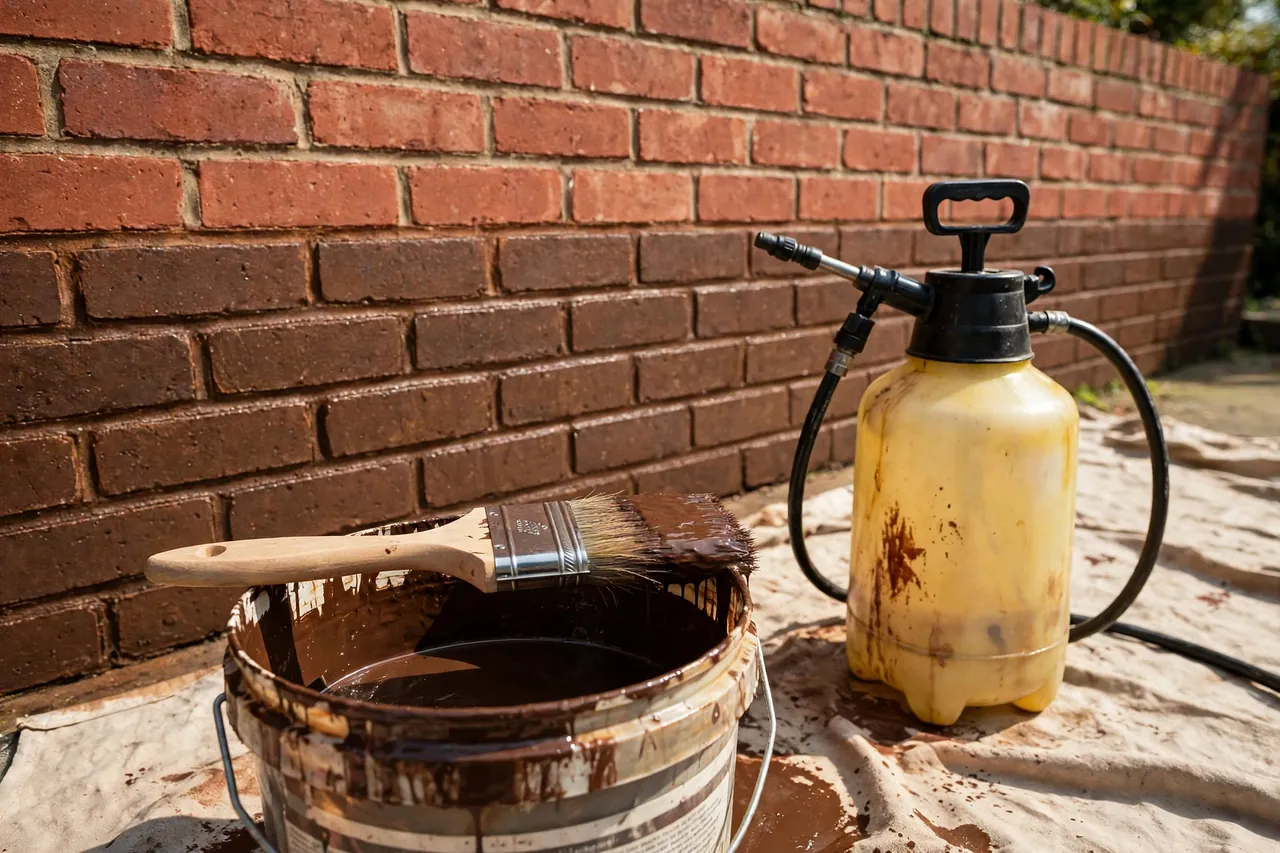
That is the whole job, and it is slower than painting because every brick gets individual attention. But the slowness is the point: the next section names the three mistakes that turn a slow, careful job into a blotchy one.
What Most People Get Wrong About Brick Stain
Most people get brick stain wrong in three ways: they think it works like paint, they think it can make dark brick white, and they think the color on the swatch is the color they will get. Each belief is common, and each one ends with a wall that cannot be undone.
First, stain is not thin paint. Paint covers flaws in one coat; stain soaks in and shows every flaw the wall already has. A cracked brick, a patched area, and a dirty patch all stain differently, which is why repair and cleaning come before the stain, never after. If your wall needs hiding, you need paint or limewash.
Second, stain cannot lighten dark brick to white. This is the most common disappointment in brick staining: a homeowner buys a white or pale cream stain, brushes it onto red brick, and gets a pink-gray wash instead of a white wall. Darkening and shifting hue are easy; lightening is limited. A bright white over dark red brick is a job for limewash or mineral paint.
Third, the wet color lies. Stain looks darker when wet, and the final color only shows when the test patch is fully dry — sometimes a full day later. Homeowners who judge a wet patch and switch to a lighter stain end up with a wall paler than they wanted. Judge dry, in daylight, on your own brick.
How Long Does Brick Stain Last — and How Do You Care for It?
Brick stain lasts 20 years or more with no maintenance when applied correctly to sound, absorbent brick. The Brick Industry Association cites staining projects lasting 20 years or more. Angi gives a more cautious range of 10 to 20 years, depending on climate, exposure, and prep.
Maintenance is almost nothing. Angi says you need no sealant — just wash the wall two to three times a year with mild detergent and a soft brush or low-pressure water. Skip harsh chemicals and high-pressure washers, which wear the brick face.
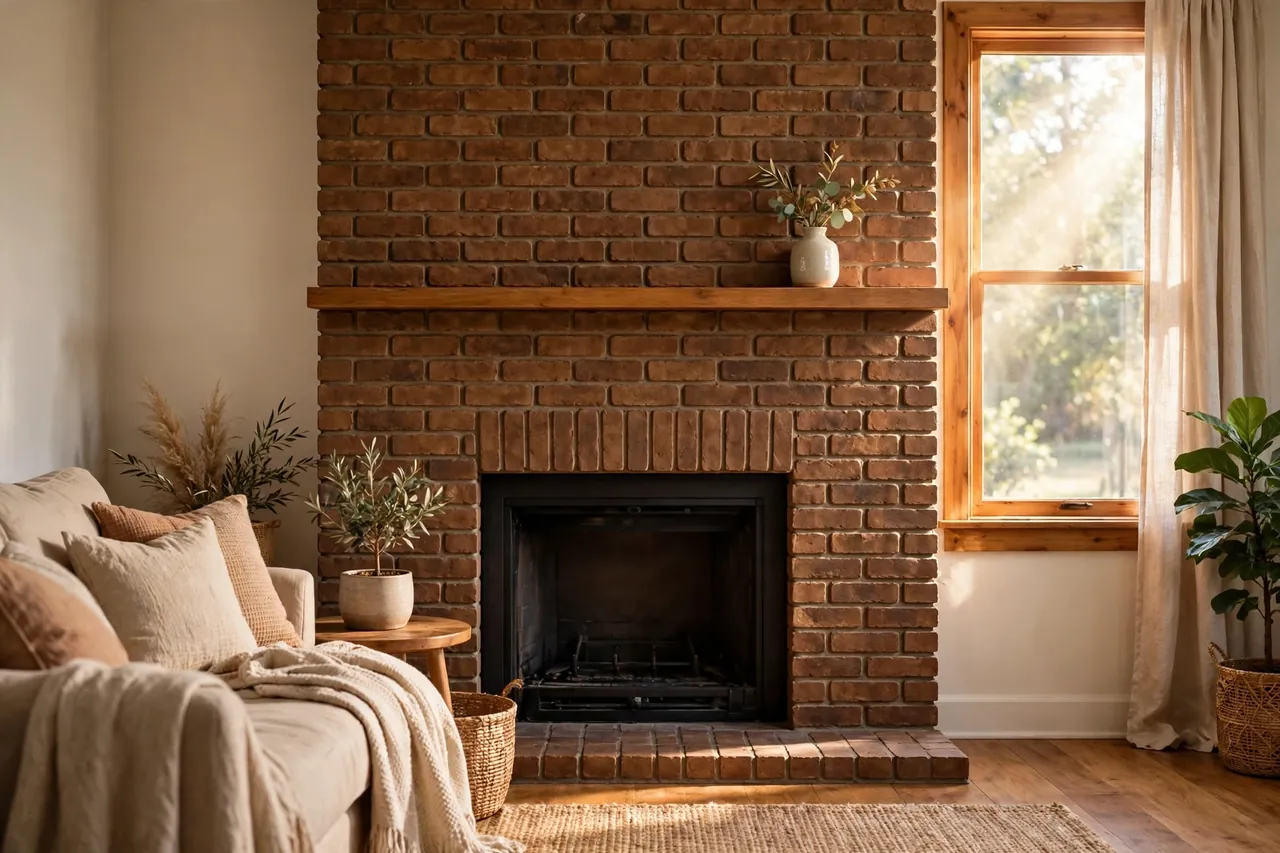
When the color eventually fades enough to bother you — usually after many years — re-staining is simple, because the old stain never has to come off. Clean the wall, let it dry, and apply a new coat over the old one. No peeling layer to strip, no chemical remover.
But the long life is also the risk: a color you hate lasts as long as a color you love. The next section protects you from a twenty-year regret.
Should You Stain Brick Yourself or Hire a Pro?
Hire a pro for a whole house, a two-story wall, a full color change, or any wall that needs repairs first. DIY fits a single-story wall in good condition, a small fireplace surround, or a test patch — jobs where a mistake costs an afternoon, not a whole elevation. The deciding factor is scale and height, not skill.
A pro brings three things a first-timer does not: color matching, even application at height, and a warranty. Matching matters most on repairs and additions, where new brick has to disappear into old brick — a pro mixes the stain on site and tests it until it blends. The Brick Industry Association’s benchmark: three years of experience and a warranty of 15 years or more.
DIY makes sense when the job is small and the wall is easy to reach. A fireplace surround is the classic DIY stain job: one wall, ground level, and a color you can test in an afternoon. Before you stain a fireplace, clean it first — our guide to how to clean a brick fireplace shows how — and check whether it needs repairs, in our guide to repairing a fireplace, before the stain locks in any damage. Our fireplace renovation ideas show how a stained surround fits a full makeover.
Get three quotes, and ask each contractor the same questions: how many years have you applied masonry stain, what warranty do you offer, and can I see a job you did five or more years ago? A five-year-old job shows how the color ages.
Whether you hire it out or do it yourself, the rule is the same: test the color on your own brick, judge it dry, and be sure before the first coat goes on. Stain rewards patience and punishes haste.
Disclaimer: Brick stains and chemical cleaners can irritate skin, eyes, and lungs — wear gloves, eye protection, and a mask, and follow the product label exactly. Work above ground level needs a stable ladder or scaffolding and a helper; never lean out from a ladder, and hire a pro for high walls. If your brick shows cracks or water damage, get a mason to check it first.
Related Guides
If you want the whitewashed look instead, our limewash vs whitewash brick fireplace guide compares the two pale finishes. Before staining a fireplace, read our guide to how to clean a brick fireplace, and if it needs work, our guide to repairing a fireplace covers cracks, pilot lights, and smoke. Our fireplace renovation ideas show twelve makeovers, and our best exterior caulk guide covers the joints where stain meets trim.
Frequently Asked Questions
Is staining brick better than painting it?
For unpainted, absorbent brick, usually yes. A mineral stain penetrates the pores and bonds chemically, keeps the texture and breathability of the brick, and the Brick Industry Association reports staining projects lasting 20 years or more with no maintenance, while painted masonry needs repainting every three to five years. Paint wins when the brick is already painted or sealed.
How much does brick staining cost?
Professional brick staining costs $1 to $4 per square foot, averaging $2.50 per square foot including labor and materials, according to Angi’s 2026 cost guide. A whole house typically runs $1,200 to $10,000, averaging about $4,200. Materials are a small share: stain costs $30 to $60 per gallon, and labor, prep, and access drive the total.
Can all brick be stained?
No. A stain needs absorbent brick. Glazed brick, sealed brick, painted brick, and some very dense unglazed brick will not take a stain. Do the water test first: sprayed water must darken the brick and soak in within seconds. Then test the actual stain on a sample patch and judge the color only when it is fully dry.
Can you stain brick a lighter color or white?
Darkening and shifting the hue are easy, but lightening is limited. Opaque mineral stains can take red brick toward gray or greige, but a bright white or pale cream over dark brick is a job for limewash or mineral paint, which are the opaque matte finishes the industry uses for that look. A white stain on red brick turns pink-gray.
How long does brick stain last?
On average, a quality exterior brick stain lasts 10 to 20 years, and sometimes longer, according to Angi. The Brick Industry Association cites projects lasting 20 years or more with no maintenance. Lifespan depends on the stain quality, the brick condition, the thoroughness of the prep, and exposure to sun and weather.
Your next step is simple: splash water on a dry patch of your brick. If it drinks the water in seconds, order a sample pot in charcoal or warm brown, test it on a hidden corner, and judge it dry in daylight. If the water beads, or the color you want is bright white, read the limewash guide.


