
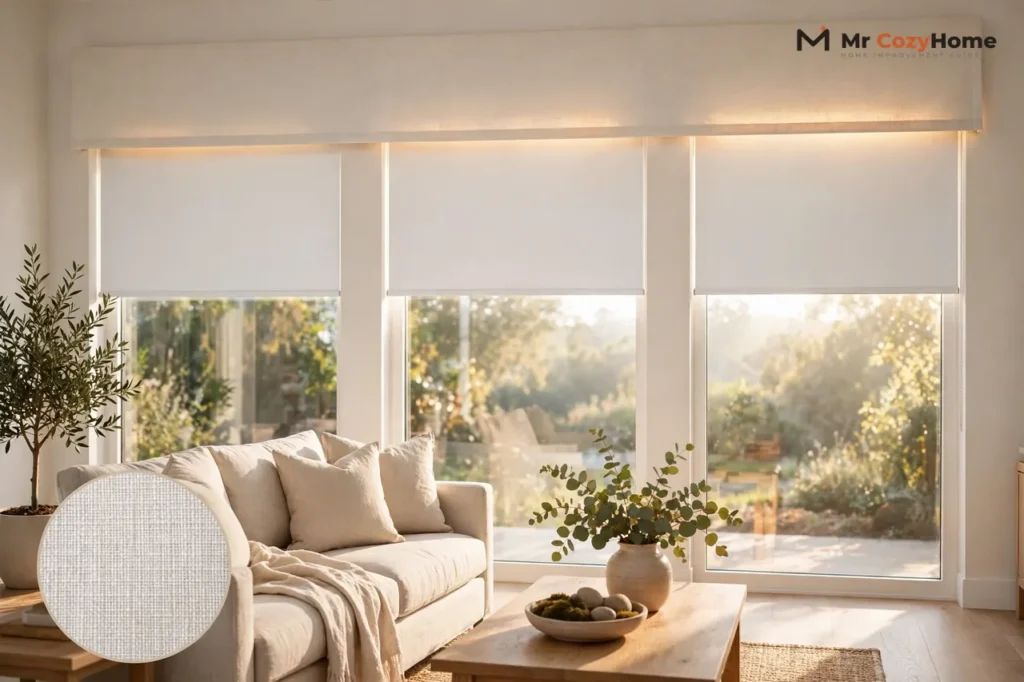
A modern window valance is a short fabric panel that covers only the top 12 to 18 inches of a window, and it is the fastest way to make a bare window look finished without hanging full curtains. It hides the rod and hardware, adds one clean horizontal line, and leaves the glass open so light and the view stay exactly as they are. Most ready-made valances cost $12 to $35, while a custom one runs about $120 to $400 per window.
The trick is picking the restrained kind. The poufy, ruffled valances of the 1990s are what give valances a bad name, and the modern version is their opposite: flat lines, solid fabric, mounted high and wide over a shade that does the real work. This guide covers which style fits your room, what it costs, and how to measure and hang it.
💡 Practical Home Tip: Before you buy, hold a folded bed sheet across the top of your window and step back. A sheet at 14 inches looks neat; at 20 inches it swallows the window. That quick test shows your right drop length.
What Is a Modern Window Valance?
A modern window valance is a short fabric panel that covers only the top 12 to 18 inches of a window. It frames the opening, hides the curtain rod or shade headrail, and adds color or texture without blocking light. Unlike full curtains, it never covers the glass, so the room keeps its daylight and view.
The word valance simply means the top layer of a window treatment: soft fabric gathered on a rod, flat fabric on a wooden board, or a hard fabric-covered box called a cornice. All three frame the window, hide hardware, and add softness or structure.
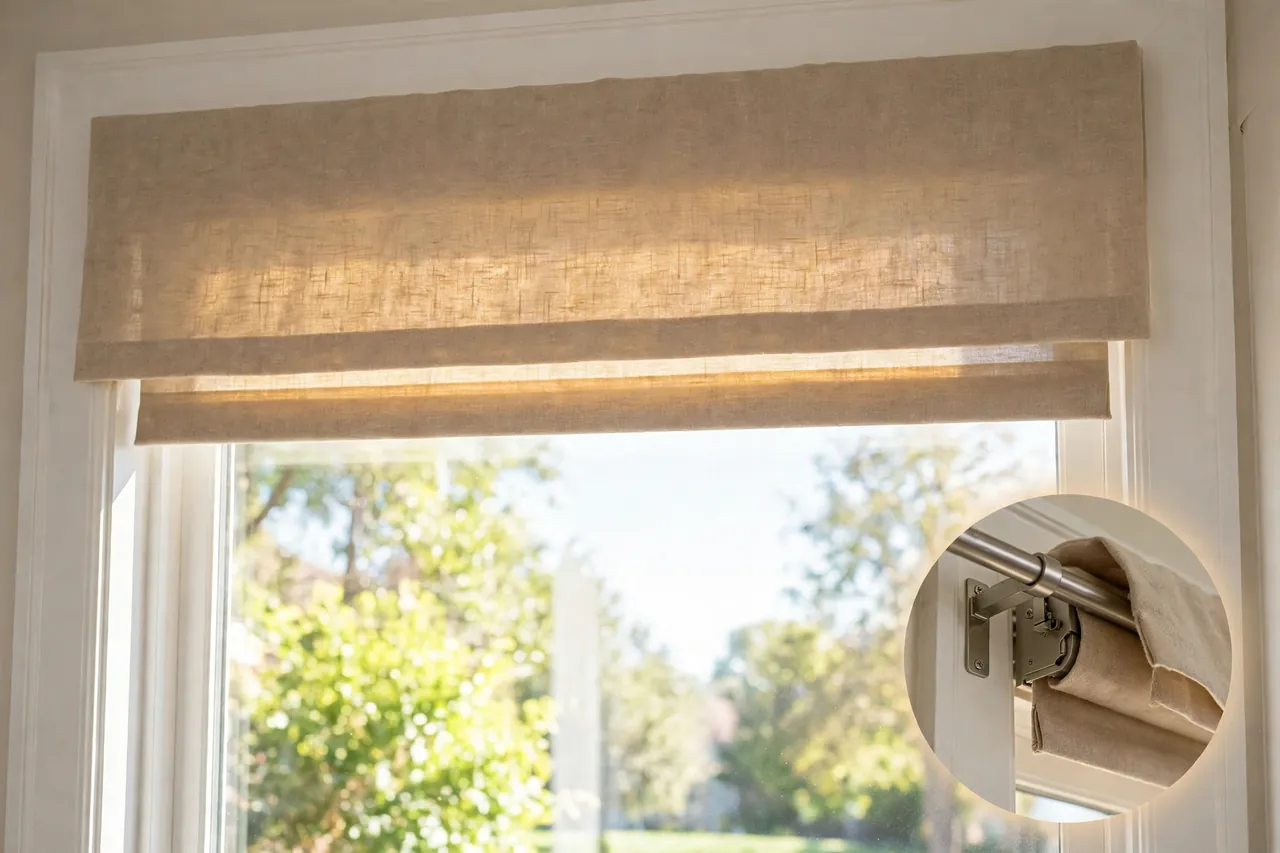
What makes one modern is restraint: clean lines, a solid color or quiet pattern, and fabric with texture instead of shine. It sits high and wide, so the window looks taller, and it almost always has a working shade underneath, because the valance itself does almost nothing for privacy, light, or insulation.
Think of it as the trim on the room. A bare roller shade works fine but looks unfinished, like a wall without baseboards. Add a tailored valance and the same window suddenly looks designed.
Are Valances Still in Style in 2026?
Yes, valances are still in style in 2026, but only the tailored, restrained kind. A flat board-mounted valance or an upholstered cornice in a solid or subtle fabric reads as modern and intentional. The dated look is the heavy gathered fabric with busy prints, fringe, and balloon shapes from the 1990s.
Designers have not dropped the valance; they dropped the fuss. The current look is flat, tailored lines, solid fabrics with texture instead of busy patterns, mounted high and wide over a working shade. BlindPros’ valance guide, written by a certified interior designer and updated in September 2026, puts it plainly: the valance never went out of fashion, only the fussy versions did.
One honest exception: in a strictly minimalist room, even a good valance can be one layer too many. A roller shade with a fabric-wrapped cassette headrail finishes the window alone. Skipping the valance there is a design choice, not a missing piece.
So the question is not whether valances are in style, but whether yours looks like 2026 or 1996. Flat beats gathered, solid beats busy, high-and-wide beats tight-and-low.
Modern Valance Styles: Which One Fits Your Room?
Five modern valance styles cover nearly every room, and the right one depends on how formal your space is and what sits underneath. Flat and board-mounted styles suit contemporary rooms best, while rod-pocket and layered styles suit kitchens and casual spaces. The table below compares them at a glance.
| Style | Best room | Typical drop |
|---|---|---|
| Flat / tailored | Living room, office | 14–16 inches |
| Box pleat | Living room, bedroom | 14–18 inches |
| Rod pocket | Kitchen, bathroom | 14–18 inches |
| Layered sheer | Bedroom, coastal rooms | 14–18 inches |
| Upholstered cornice | Dining room, bedroom | 16–20 inches |
Flat and tailored valances
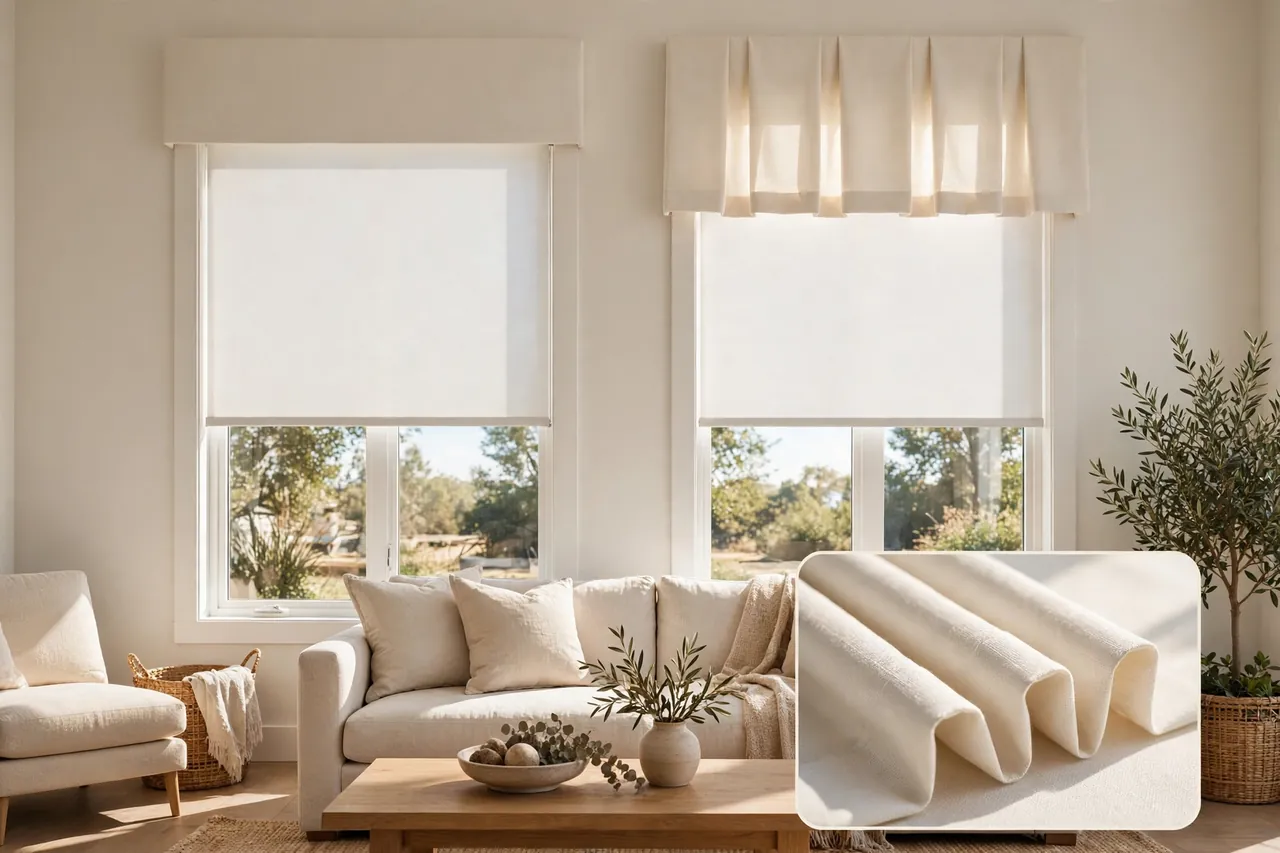
The flat valance is the modern default. A single straight panel of fabric, usually linen or cotton in a solid color, hangs with almost no gather. It works beautifully over roller shades and suits minimalist and urban rooms best.
Box-pleat valances
A box-pleat valance adds crisp, even folds to a flat panel, which gives the window structure without frills. The pleats catch light and shadow, so it looks tailored rather than flat. Choose a mid-weight fabric like linen or a wool blend so the pleats hold their shape.
Rod-pocket valances
A rod-pocket valance slides onto a curtain rod through a sewn pocket at the top, which gathers the fabric into soft folds. It is the most casual style and the easiest to hang, and it suits kitchens and bathrooms in washable cotton or linen. Keep the gather light, because a heavy gather is exactly what reads as dated.
Layered sheer valances
A layered valance pairs sheer fabric over a heavier one, creating depth while still letting light through. The sheer softens the window and the solid layer underneath adds privacy at the top. This style suits bedrooms and coastal rooms, where soft light matters more than a sharp line.
Upholstered cornices
A cornice is the hard valance: a wooden box wrapped in padded fabric, mounted above the window like a piece of architecture. It is the most formal and durable option, and it hides headrails and light gaps better than any soft valance. Save it for dining rooms, bedrooms, and studies.
How Much Does a Modern Window Valance Cost?
A modern window valance costs $12 to $35 ready-made, about $120 to $400 per window custom-made, and roughly $50 to $150 for a do-it-yourself cornice board. The ready-made price covers one standard panel; the custom price covers fabric, making, and measuring for your exact window. Your window size and fabric choice move the price more than the style does.
Ready-made valances are the budget route. A 2026 roundup puts standard panels, usually 50 to 60 inches wide and 14 to 18 inches long, at $12 to $35, flat styles low and box-pleat styles high. That price buys one window, so count your windows first.
Custom valances cost far more because they are cut to your exact window. BlindPros’ valance guide puts custom fabric and cornice valances at about $120 to $400 per window, depending on style, fabric, and width, with hard cornices at the top of that range. That price is usually in addition to any shade underneath, and a wrong measurement cannot be exchanged like a stock panel.
Hardware adds a little more: a board-mounted valance needs a wooden board plus Velcro or staples, and a rod-pocket style needs only a rod and brackets. A do-it-yourself wood valance, built from three 8-foot 1×4 boards, costs little more than lumber and paint.
Budget honestly for the whole window. The valance is the cheap part; the shade underneath costs more, and it is also where the privacy and insulation come from. Price both layers before you buy either one.
How to Measure for a Valance
Measure a valance by its width first, then its drop length, and always measure the window itself rather than guessing from a curtain you already own. Width decides whether the valance covers the hardware, and drop length decides whether it looks deliberate or skimpy. Two measurements, done once with care, prevent the most common valance mistake.
Start with the width. For an outside mount, measure the total window width including the casing, then add 4 inches on each side, which gives 8 inches of total overlap. That extra width makes the window look larger. WindowDigest’s measuring guide gives the same rule: measure the width at the top of the window, where the valance will hang.
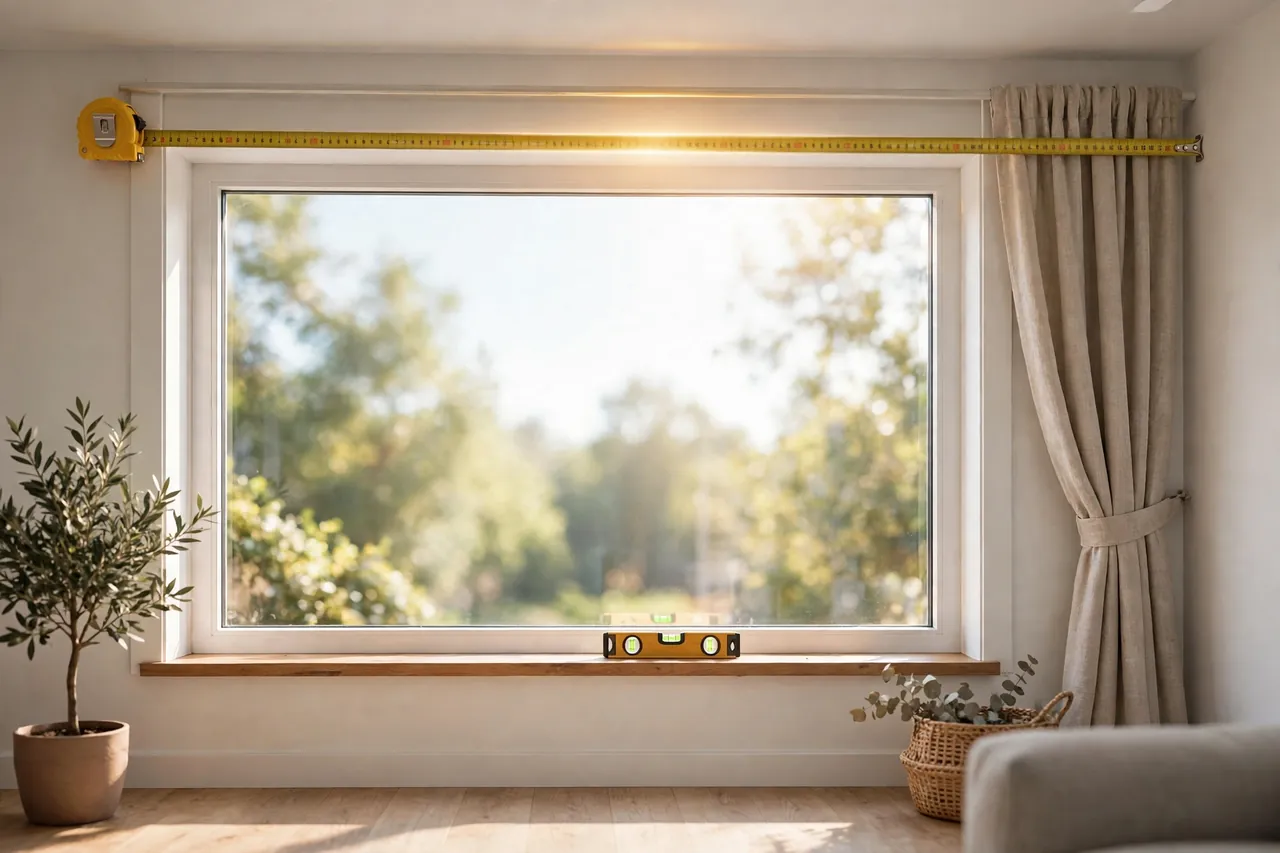
Then set the drop length. A standard modern drop is 14 to 18 inches, and the classic rule keeps the drop between one-fifth and one-sixth of the window height from mount point to sill. For a typical 60-inch window that means 12 to 15 inches. Anything longer than 18 inches starts to feel formal.
Account for fullness if the style gathers. A rod-pocket valance needs fabric 1.5 to 3 times the rod width, while a flat valance needs only about 1.5 times. Check the listing for the finished width, not the flat fabric width.
Finally, measure the mount height. Most valances hang 2 to 4 inches above the frame, and in rooms with 8-foot ceilings, 1 to 2 inches below the ceiling line looks best. Write all three numbers down before you order.
- Measure the window width including casing, at the top of the window.
- Add 4 inches on each side for an outside mount.
- Measure from your mount point to the sill, then take one-fifth of that height as your drop.
- Check fullness: 1.5 times the width for flat styles, up to 3 times for gathered styles.
- Note the mount height, 2 to 4 inches above the frame, and order by finished width.
How to Hang a Valance
Hanging a valance is a straightforward do-it-yourself project that takes about 30 minutes per window once the brackets are up. You need a drill, a level, a pencil, a tape measure, and the rod or mounting board your valance uses. Most people install their own valance on the first try, and the only skill that matters is measuring twice.
Mark the bracket positions first. Hold the rod or board at your mount height, usually 2 to 4 inches above the frame, and mark the spots with a pencil and a level. For an outside mount, brackets sit 4 inches past the casing on each side. Over 48 inches, plan a center support bracket, or the rod sags.
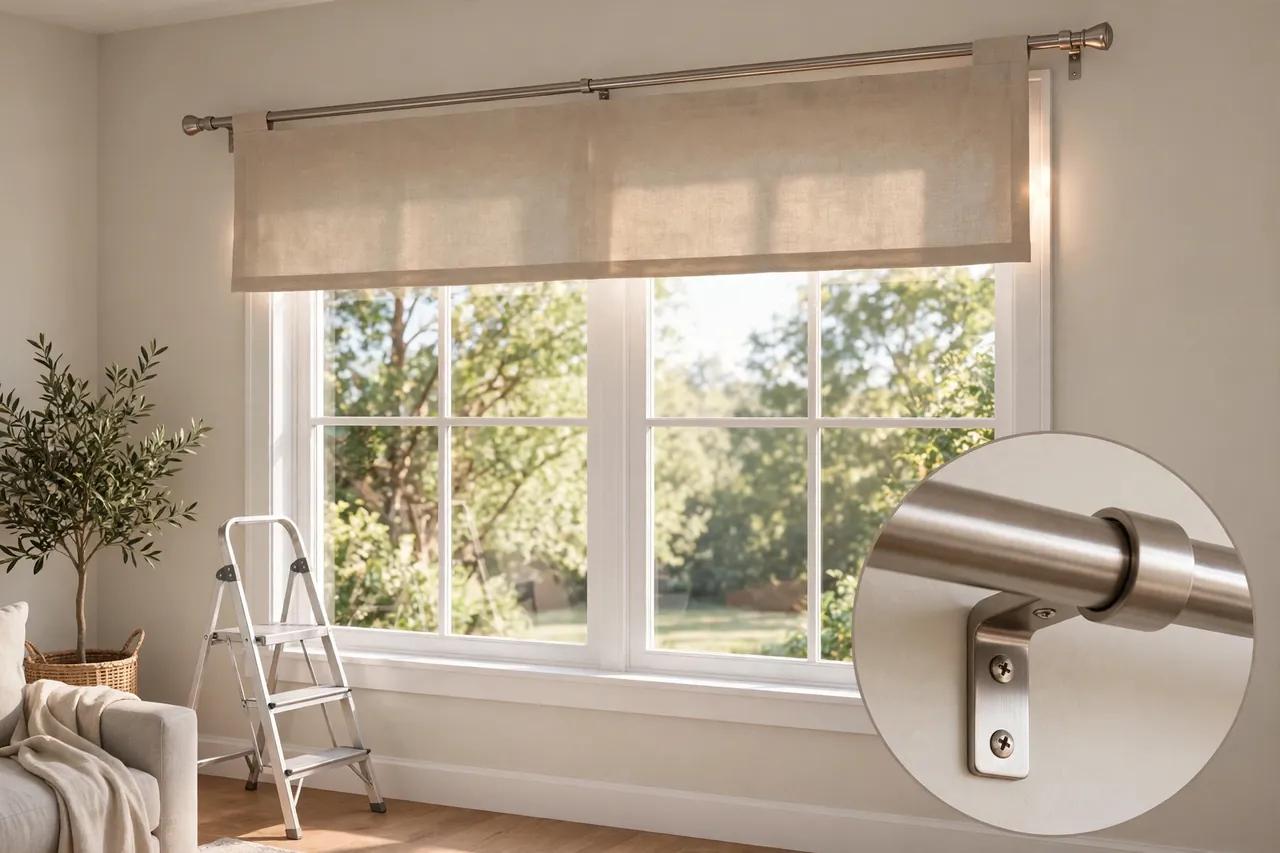
Drill pilot holes next. If you hit a stud, standard screws hold fine. If not, use wall anchors rated for your rod and fabric weight, and never trust a bare screw in drywall. A quick tug on each bracket before you hang the fabric saves a fall later.
Then mount the valance. For a rod-pocket style, slide the rod through the pocket, spread the fabric evenly, and match the gathers on both sides. For a board-mounted style, fix the board to the brackets, then press the fabric onto the Velcro. Step back and check it from across the room, because a crooked edge is invisible up close and obvious from the sofa.
Use a sturdy step ladder, keep three points of contact, and have someone hold the ladder if the window is high. A short safety note: hanging a valance means working above your head on a ladder, so never stretch sideways to reach a bracket, move the ladder instead, and stop if you feel unsteady.
- Mark bracket positions with a pencil and level, 2 to 4 inches above the frame.
- Drill pilot holes, using wall anchors where there is no stud.
- Fix the brackets firmly and test each one with a tug.
- Slide the rod through the pocket or fix the board, then spread the fabric evenly.
- Step back, check the line from across the room, and adjust the gathers.
How to Layer a Valance With Curtains, Blinds, and Shades
Layer a valance over a working shade or blind, because the valance is decoration and the layer underneath does the real job. The valance frames the top and hides the hardware, while the shade or blind below handles privacy, light, and heat. Pick the under-layer first, then choose a valance that covers its headrail.
The energy pairing is a valance over a cellular shade. A honeycomb shade insulates, and the valance dresses it up, which suits bedrooms and sunny rooms. The U.S. Department of Energy reports that up to 76 percent of the sunlight hitting standard double-pane windows enters as heat, so on a sunny window the shade underneath is what keeps the room cool, not the valance. If you want the window to insulate better, our guide to how to insulate windows covers the drafts a valance never touches.
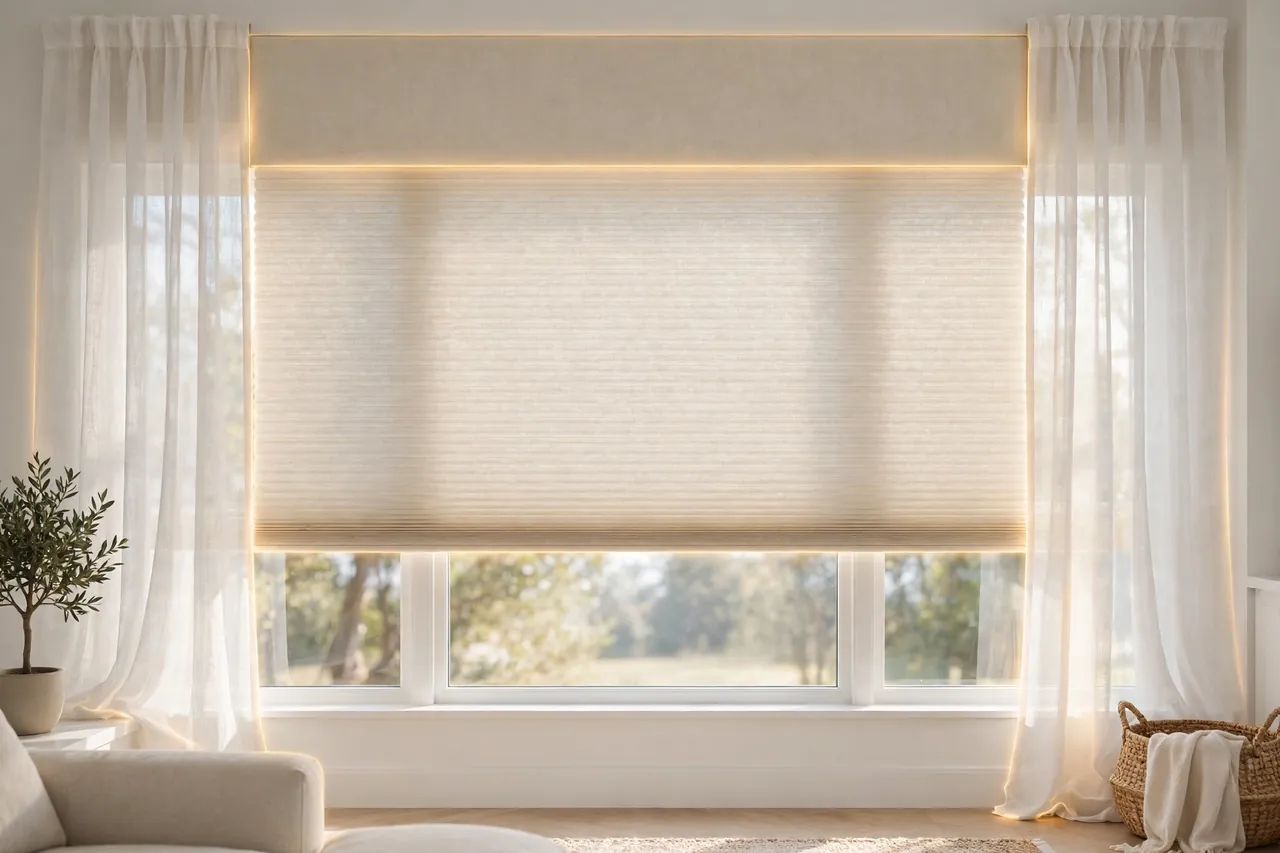
Motorized blinds pair well too, because the motor hides behind the valance and the window keeps its clean line with no visible cord. Our guide to remote control window blinds explains the motors that work behind a valance. One rule for every pairing: the valance must cover the under-layer’s hardware, or it pokes out at the sides and ruins the finish.
Valance vs Cornice: What’s the Difference?
A valance is soft fabric that drapes and moves, while a cornice is a rigid box of wood or foam covered in fabric. Both hide hardware and frame the window, but the valance hangs from a rod or board and the cornice mounts as a solid structure. The difference is feel: soft and relaxed against hard and architectural.
Choose a valance for softness, a lower price, and fabric you can take down and wash. It installs in under an hour and forgives small measuring errors, because fabric drapes where a box would show every gap.
Choose a cornice for structure, height, and the best hardware hiding. As a solid box projecting from the wall, it closes the light gap at the top of a shade, which matters in a bedroom. It also adds architecture to a tall dining-room or study window, where a soft valance can look thin.
The cost gap is real: a ready-made valance starts around $12, while a custom cornice sits at the top of the $120 to $400 range. On a tight budget, a flat board-mounted valance gives most of the cornice look for a fraction of the price.
Room by Room: Where a Modern Valance Works Best
A modern valance works best in kitchens, living rooms, and bedrooms, and each room wants a different style. Kitchens want a washable rod-pocket valance over blinds, living rooms want a flat valance over a roller shade, and bedrooms want a cornice over a blackout shade.
Kitchens are the natural home for valances. A tailored or simple rod-pocket valance over the sink window softens a hard-surface room without full curtains, and it stays clear of counters and faucets. Choose washable fabric, because kitchen valances catch grease and steam.
Living rooms want the tailored look. A flat or box-pleat valance in solid linen, mounted high and wide over a roller shade, frames the main window and hides the headrail. Keep the fabric the same tone as the sofa or rug, so the valance ties the room together.
Bedrooms want a cornice. The solid box hides the headrail and closes the light gap at the top of a blackout shade, which helps you sleep. Pair it with full-length drapery for a formal look, or let it stand alone over a cellular shade.
Small windows and bathrooms suit short, simple valances. A 14-inch rod-pocket valance warms a bathroom window without blocking light, and a long valance on a small window looks top-heavy. In December, our guide to decorating a Christmas window shows how to dress the same window without blocking the light.
DIY Wood Valance: A Weekend Project
A do-it-yourself wood valance is a slatted wooden pelmet built from 1×4 boards in about two hours, and it gives a window a modern, architectural top for little more than the cost of lumber. It suits rooms where fabric would look too soft, and it paints or stains to match any trim.
The design is simple: one tall board across the front, or three skinnier slats with small gaps, plus two short return boards that connect the front to the wall. The Homes I Have Made wood valance project built six valances from just three 8-foot 1×4 boards in about two hours, joined with pocket holes so no screws show. The returns sit behind the front boards.
Measure first, then cut the boards to length. For a 40-inch window, the front boards run about 42 inches, and the returns run a few inches deep, enough to clear the rod or shade behind. Sand the edges, then prime and paint or stain to match your trim.
Mount it like a cornice: fix small brackets or cleats above the window, set the valance on them, and screw through the returns into the wall. Check the line with a level first, because wood shows a crooked edge far more than fabric does.
Mistakes to Avoid With a Modern Valance
The biggest mistake with a modern window valance is hanging it too low and too narrow, which makes the window look smaller instead of taller. The second is choosing a busy, ruffled fabric that drags the room back to the 1990s. Both are easy to avoid once you know them.
Do not hang the rod on the frame itself. A valance tight to the casing looks cramped and hides the trim, while one mounted 2 to 4 inches above the frame and 4 inches wider on each side makes the same window look generous.
Do not pick a heavy gather or a loud print. Deep gathers, balloon shapes, swags with fringe, and tiny floral prints are the dated signals. A flat panel in a solid color or a quiet geometric print, in mid-weight linen or cotton, looks current and stays current.
Do not forget the layer underneath. A valance alone gives no privacy, light control, or insulation, so a bedroom with only a valance is one the neighbors can see into. Pair every valance with a shade, blind, or curtain that does the work.
Do not skip the center support on a wide rod: over 48 inches it sags without one, and a sagging valance looks broken even when the fabric is new. And never order a custom valance from one rough measurement, because custom fabric cut wrong cannot be returned.
Related Guides
The window is only one layer of the room. Pair your valance with the working layer from our remote control window blinds guide, stop the drafts a valance never touches with our how to insulate windows guide, and dress the same window for the holidays with our decorating a Christmas window guide.
Frequently Asked Questions
Are window valances still in style in 2026?
Yes, but only the tailored, restrained kind. A flat board-mounted valance or an upholstered cornice in a solid or subtle fabric, mounted high and wide and layered over a working shade, reads as modern and intentional. The dated look is heavy gathered fabric with busy prints, fringe, and balloon shapes from the 1990s.
What are the main types of window valances?
The main types are rod-pocket or gathered fabric valances, tailored board-mounted valances, hard upholstered cornice boxes, swags and scarf valances, and the built-in fabric-wrapped cassette that hides a shade’s headrail. They range from casual and soft to formal and architectural, so the room decides which one fits.
What can you use instead of a valance?
Hang a decorative drapery panel or two high and wide, use a Roman shade with a clean tailored fold, or finish a shade or blind with a fabric-wrapped cassette headrail so it looks built-in on its own. Many modern rooms skip the separate valance entirely and still look finished.
Do valances need blinds or shades under them?
Usually, yes. A valance only covers the top few inches, so it does little for privacy, light, or energy by itself. Pairing it with a cellular shade, roller shade, or wood blind is what makes the window both attractive and livable, and in sunny rooms the under-layer is what blocks the heat.
How long should a window valance be?
Roughly one-sixth to one-fifth of the window’s height, about 12 to 18 inches on a standard window, so it frames the top without eating the view. Extend it a few inches beyond the frame on each side and mount it a few inches above the opening so it looks generous and hides the hardware.
Pick the flat, tailored style, mount it high and wide over a shade that works, and measure twice before you order. One short panel, hung right, makes the whole window, and the whole room, look finished.


