
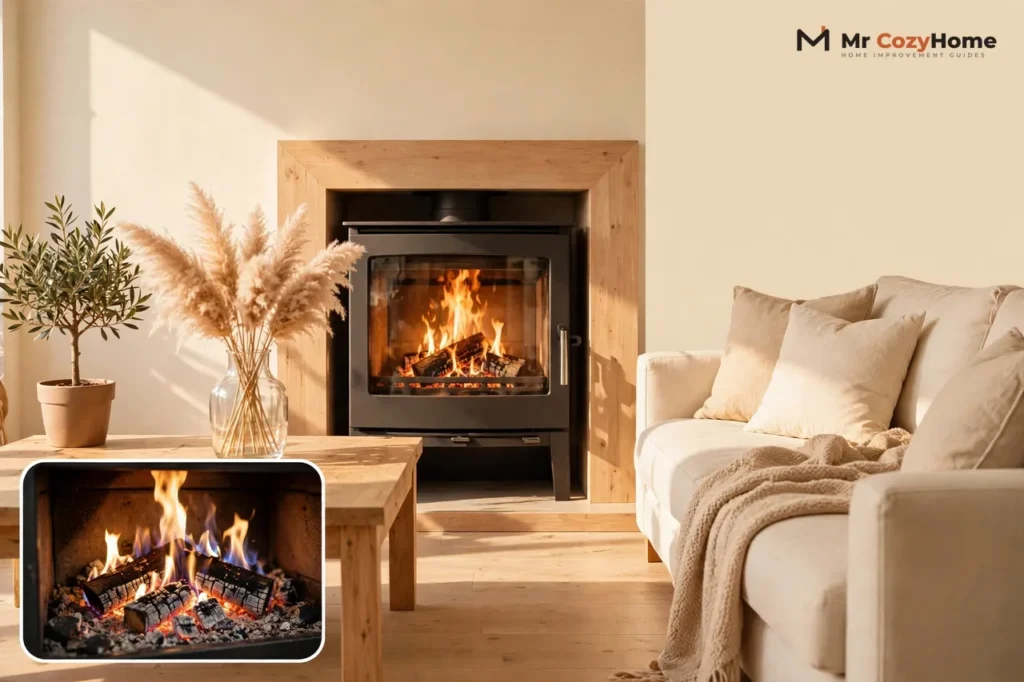
A high efficiency wood burning fireplace is a sealed, EPA-certified fireplace that turns about 70% or more of your wood’s heat into warmth for your home, while an open fireplace keeps only about 10%. The U.S. Environmental Protection Agency (EPA) says its certified wood heaters use one-third less wood for the same heat as older models, so the same cord of wood warms your house far longer.
If your old fireplace eats wood all evening and still leaves the room cold, this guide is for you. You will learn what the efficiency numbers really mean, which type fits your home, what one costs, and the one spec-sheet trick that makes a weak fireplace look strong.
What Is a High Efficiency Wood Burning Fireplace?
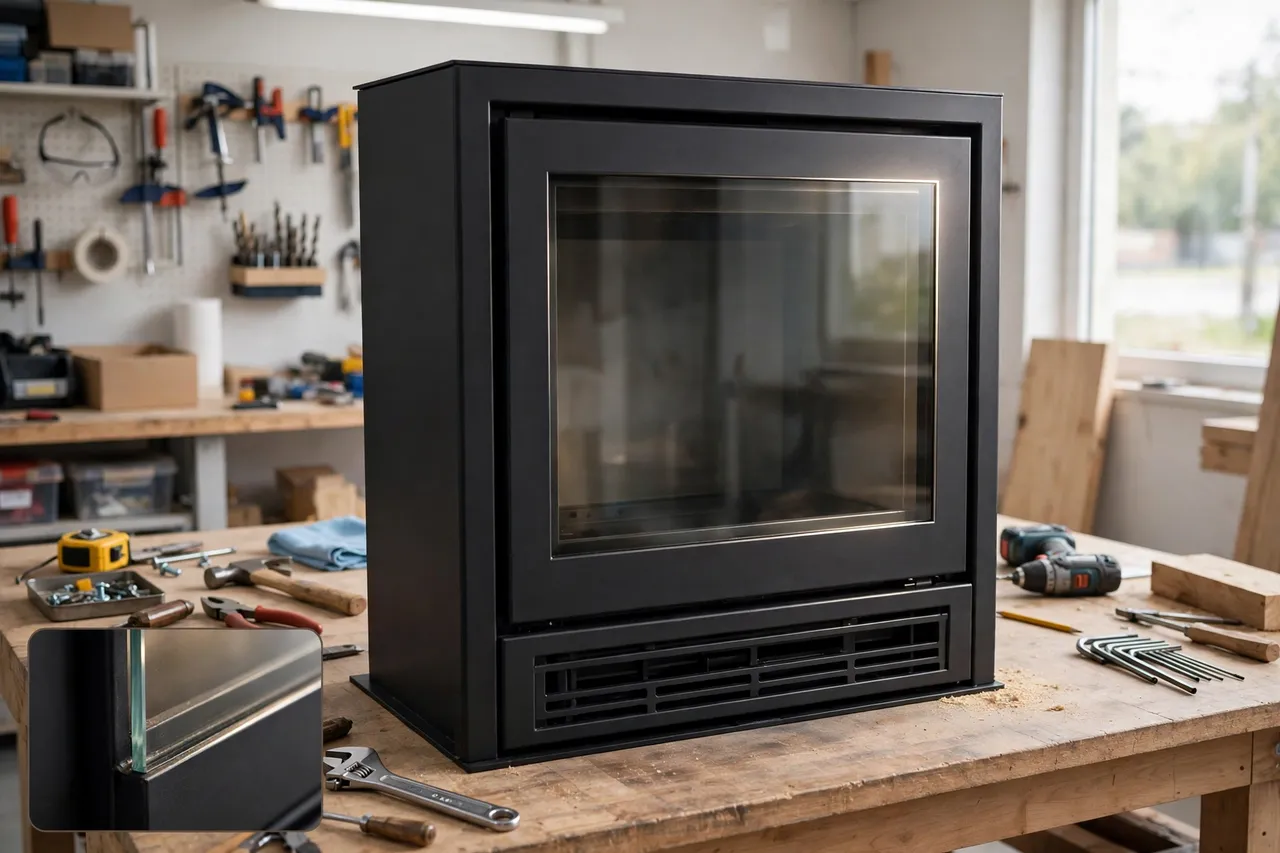
A high efficiency wood burning fireplace is a factory-built, sealed firebox with glass doors, controlled air inlets, and a tested combustion system that burns wood — and its smoke — a second time. It carries an EPA certification label and a tested overall efficiency rating, usually 70% or higher.
The sealed firebox is the whole secret. An open fireplace pulls huge amounts of warm room air up the chimney to feed the fire, and most of the heat goes with it. A sealed unit pulls in only the air it needs through small, controlled inlets, so the heat stays in the room.
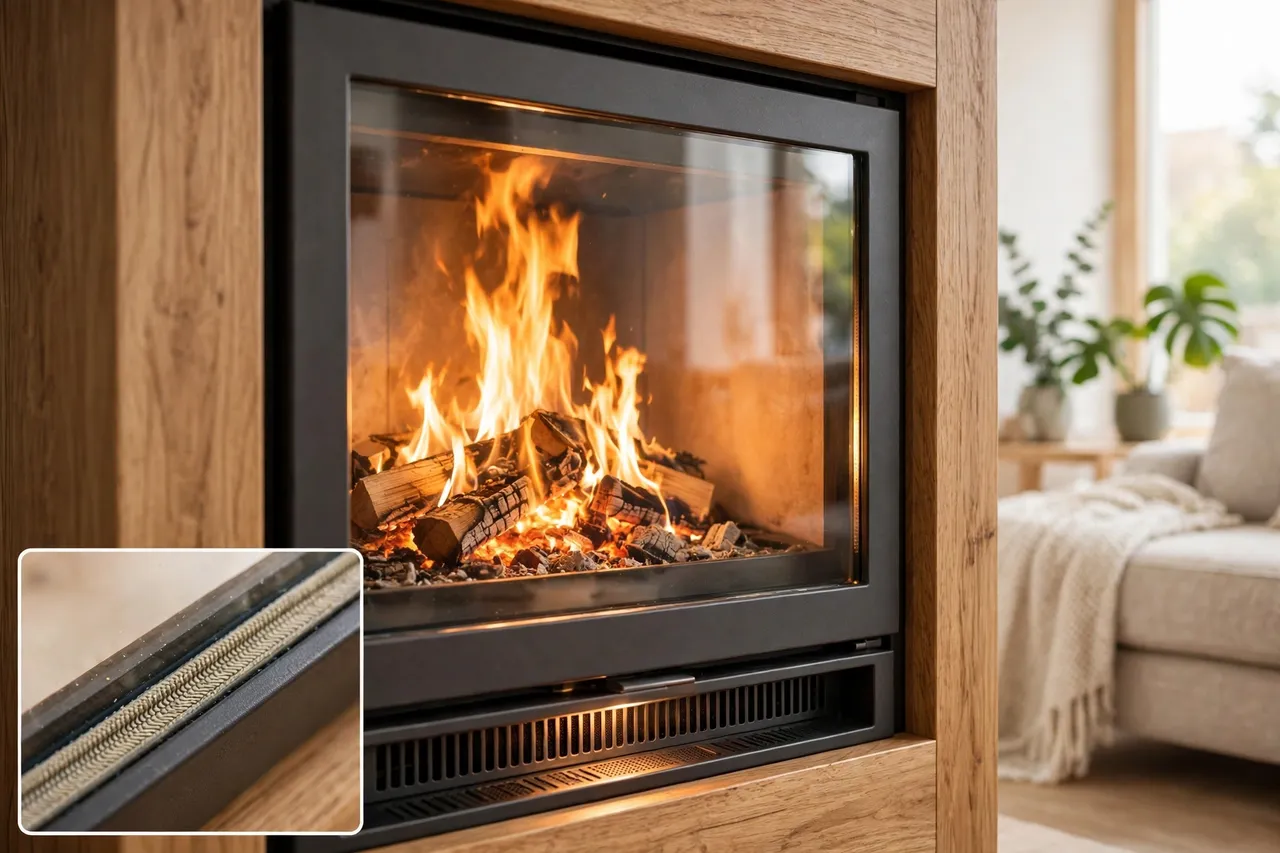
Glass doors are part of the design, not decoration. They close off the firebox so the air controls can do their job, and a blower or fan, fitted to most models, pushes the warm air out into the room.
Inside, the fire burns in two stages. First the wood burns, then the hot smoke and gases get burned again — through a catalytic combustor or secondary air tubes — before they leave the flue. That second burn is free heat your old fireplace threw away.
To check a model, look for the metal EPA certification tag on the back of the unit, check the owner’s manual, or look the model up on the EPA’s certified list. An EPA certification label and a tested rating of 70% or higher separate a real high-efficiency fireplace from a good-looking box.
What “High Efficiency” Really Means: HHV vs LHV
Efficiency numbers come in two kinds, and brochures almost always print the bigger one. HHV, or higher heating value, counts all the heat in the wood. LHV, or lower heating value, leaves out the heat that escapes as water vapor, so the LHV number always runs higher. Always compare the overall efficiency, not the combustion efficiency, and compare HHV to HHV.
The EPA warns buyers about this exact trick. Its Burn Wise guidance says an ad may claim “85% efficient” without saying that is the combustion efficiency, while the overall efficiency — the heat that actually reaches your room — may be 10% to 20% lower. Overall efficiency, not combustion efficiency, is the number that matters.
Real spec sheets show both numbers, and the gap proves the point. The Valcourt Waterloo, a large EPA-certified built-in fireplace, lists 64% efficiency on an HHV basis and 69% on an LHV basis for the same unit. The Heat & Glo Pioneer III lists 68% HHV and 73% LHV. Same fireplace, two numbers — and the lower one is the honest comparison. The overall HHV figure is the one to ask your dealer for before you compare models.
The EPA keeps a public list of certified wood heaters with the overall efficiency of each model. Makers of wood heaters built after May 1, 2015 must test and report overall efficiency as part of certification. Check the list before you buy, and match the model name exactly.
How Much Heat Do You Actually Get?
An open fireplace keeps only 5% to 15% of the wood’s heat, while a sealed high-efficiency model keeps 70% to 85%. That gap is the whole story: the same logs that barely warm one room in an open hearth can heat a large part of your home in a sealed unit.
The table below uses the efficiency ranges Angi published in its July 2026 wood fireplace guide. Treat them as typical ranges, not promises for any one model.
| Fireplace type | Typical efficiency | Best for |
|---|---|---|
| Open hearth | 5%–15% | Looks and mood only |
| Closed hearth (sealed, glass doors) | 70%–80% | Real room heating |
| Fireplace insert | 60%–85% | Upgrading an old open fireplace |
| EPA-certified model | 75% and up | Cleanest, most efficient burns |
| Masonry heater | 65%–90% | Slow, stored radiant heat |
The University of Maryland Extension puts the same gap in plain numbers: an open fireplace at about 10% efficient, an EPA-approved wood stove at about 70%. Same cord of wood, roughly seven times the useful heat. About 10% from an open fireplace, about 70% or more from a sealed EPA-certified unit.
But efficiency is not the same as heating power. A small, very efficient fireplace still cannot heat a big, drafty house, and a huge unit in a small room will smolder and waste wood.
Catalytic vs Non-Catalytic vs Hybrid: Which Burns Best?
High-efficiency fireplaces burn their smoke a second time, and they do it in two main ways. A catalytic unit routes the smoke through a coated honeycomb combustor that ignites it at low heat. A non-catalytic unit uses hot air tubes and baffles to re-burn the smoke at high heat. A hybrid uses both.
A catalytic combustor ignites smoke at around 500°F, far below the roughly 1,100°F a non-catalytic unit needs for its second burn. That low-temperature burn is why catalytic models hold a steady, even fire for so long — quality catalytic units often run 8 to 12 hours or more on one load. The longest burns and the cleanest exhaust come from catalytic models.
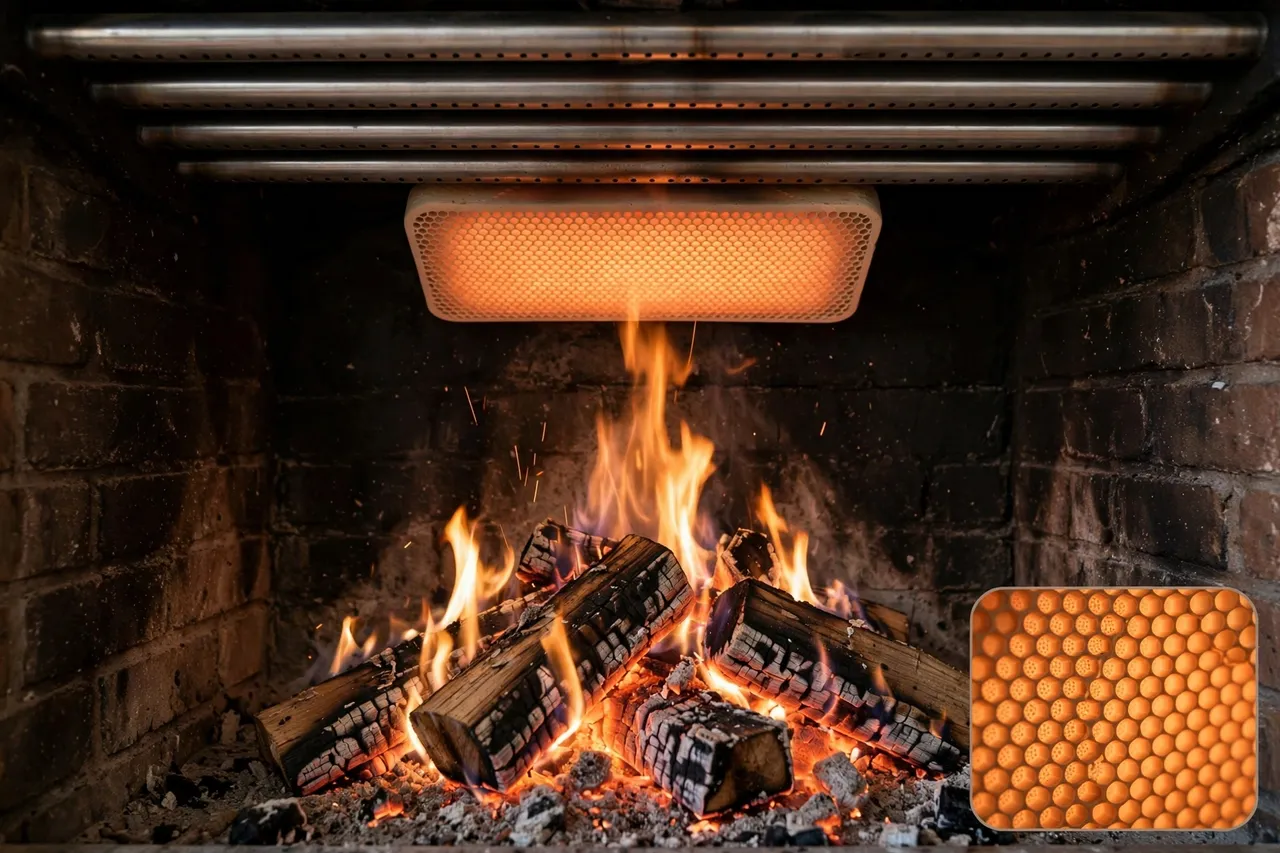
The trade-off is upkeep. The combustor needs care, and U.S. Department of Energy guidance puts catalyst replacement at roughly every 5 to 8 years. You also have to run the unit the way the manual says — bypass the combustor on startup, engage it once the fire is hot — or the catalyst can clog and fail early.
A non-catalytic unit is simpler. Secondary air tubes and a baffle push pre-heated air into the smoke path, and the smoke ignites on its own at high heat. These models usually run 65% to 75% efficient, with shorter burns of about 6 to 8 hours per load, but they cost less, need less attention, and show a livelier flame. Roughly 80% of wood stoves sold are non-catalytic, because most buyers want simple.
A hybrid pairs a catalytic combustor with secondary air tubes, so it burns clean at both low and high output.
| Feature | Catalytic | Non-catalytic |
|---|---|---|
| Second burn starts at | About 500°F | About 1,100°F |
| Typical efficiency | 70%–85% | 65%–75% |
| Burn time per load | 8–12+ hours | 6–8 hours |
| Upkeep | Catalyst replaced every 5–8 years | Very little |
| Best for | Main heat, all winter | Evening fires, simpler use |
Either type beats an open fireplace by a wide margin. The bigger decision is the shape of the unit — and that one depends on the fireplace you already have.
The Three Shapes: Built-In Fireplace, Insert, or Freestanding Stove?
High-efficiency wood heat comes in three shapes. A built-in fireplace is a factory-made sealed unit framed into a wall, usually during a build or a big remodel. An insert is a sealed firebox that slides into your existing masonry fireplace opening. A freestanding stove stands on the floor, in front of the fireplace or in another spot entirely.
A built-in unit is the cleanest-looking choice. It arrives as one tested appliance with its own chimney system, so the whole install is engineered as a set. It costs the most of the three shapes, and it makes sense when you are building new or gutting a room.
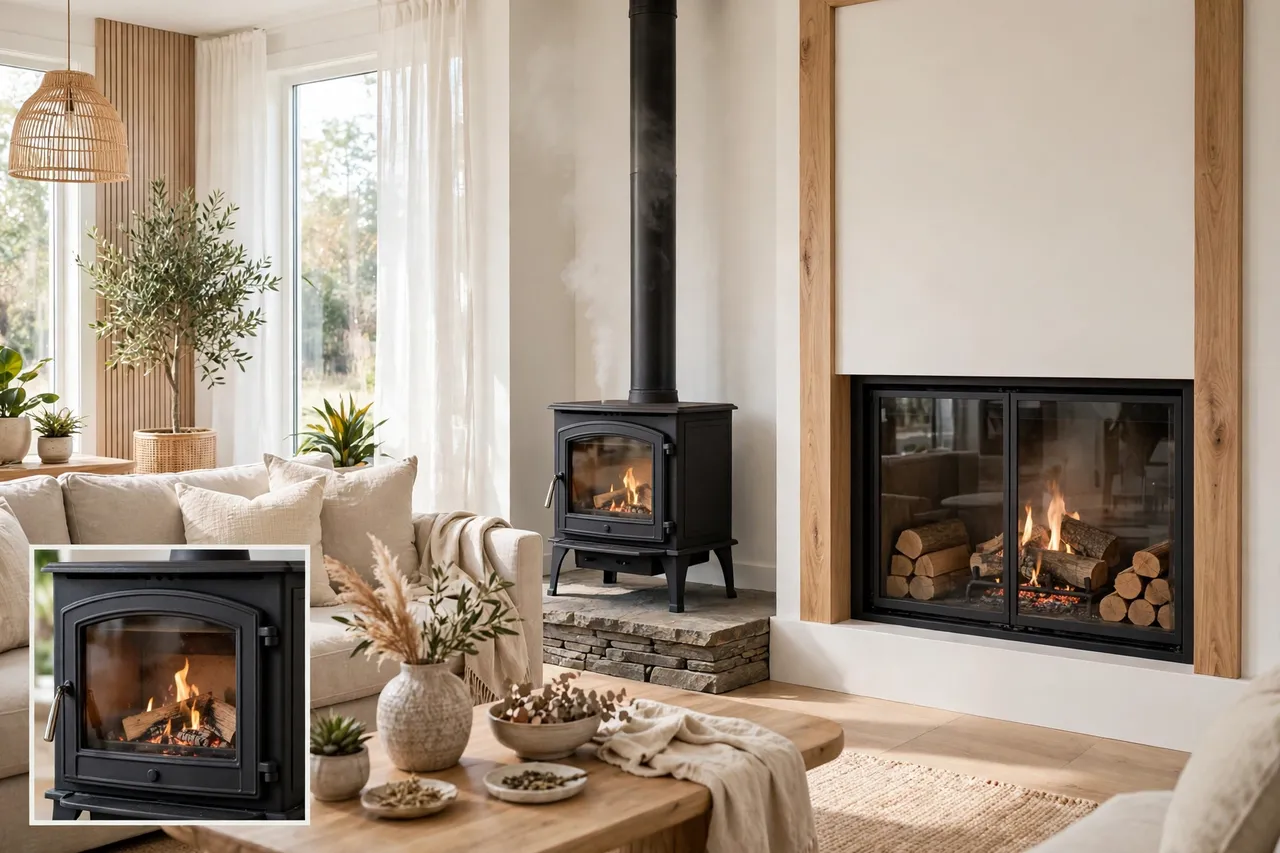
An insert is the smart fix for a house that already has an open masonry fireplace. It seals the open hole, adds glass doors and air controls, and vents through a steel liner in your old chimney. Inserts typically run 60% to 85% efficient, so the same fireplace that used to lose most of its heat can become a real heater without tearing the wall open. An insert turns an open fireplace into a heater without a rebuild.
A freestanding stove is the most flexible shape. It can sit in front of the fireplace opening on a hearth pad, or stand alone in a room with its own flue. A stove set into a fireplace opening is a different setup from an insert — it needs its own clearances, hearth, and liner — so treat it as its own project, not a shortcut version of an insert.
Before you pick a shape, measure the space you have. Our average fireplace size guide shows the common firebox sizes and how to measure yours, so the unit you buy actually fits the opening you own.
What Most People Get Wrong About Wood Fireplace Efficiency
Most buyers get three things wrong, and each one costs heat, wood, or money. The first is the big-fire myth: a bigger fire does not mean more heat. An oversized firebox stuffed full and choked down smolders, makes creosote, and wastes wood.
The second mistake is trusting the brochure number. A headline “85% efficient” figure is usually combustion efficiency, not the overall efficiency that reaches your room. As the EPA notes, the overall figure can run 10% to 20% lower. The brochure number is usually the flattering one.
The third mistake is thinking any wood will do. Wet or green wood spends its heat boiling off water, so the fire smolders, the glass blacks up, and creosote builds fast in the flue. And one more honest limit: no blower or gadget fixes a bad fireplace. A fan moves the heat a weak unit makes — it cannot make heat the firebox never produced.
How Long Does One Load Burn, and How Much Space Will It Heat?
A high-efficiency built-in fireplace usually burns 6 to 10 hours or more on one load of dry hardwood. The Valcourt Waterloo, for example, burns for up to 11 hours on a single load, with a maximum output of 95,000 BTU per hour and a heating area of 1,000 to 2,800 square feet.
Some models go further. The Heat & Glo Pioneer III, a large built-in EPA-certified fireplace, burns for up to 18 hours on a load and heats 1,200 to 3,000 square feet. But those are best-case numbers on a full load of dry hardwood in a well-insulated home.
Use a rough guide to size the unit: about 20 to 40 BTU per square foot.
One honest limit matters here: a fireplace heats by zone, not like a furnace. The room with the fireplace and the rooms above it get warmest, while far rooms and closed-off bedrooms stay cooler. Your insulation decides how far the warmth travels, so read our how to improve home insulation guide before you blame the fireplace for a cold back bedroom.
The Wood Matters More Than the Fireplace
Even the best fireplace wastes wood if the wood is wet. The EPA’s Burn Wise guidance says properly dried wood should read 20% moisture or less on a meter, and wet wood makes excessive smoke — which is lost heat going up the chimney.
Seasoning takes time, and there is no shortcut. Split logs to 6 inches across or smaller so they dry faster, stack them off the ground with the split side down, cover only the top so air can move through the stack, and store softwood for at least 6 months and hardwood for at least 12 months. A cheap moisture meter tells you the truth in seconds.
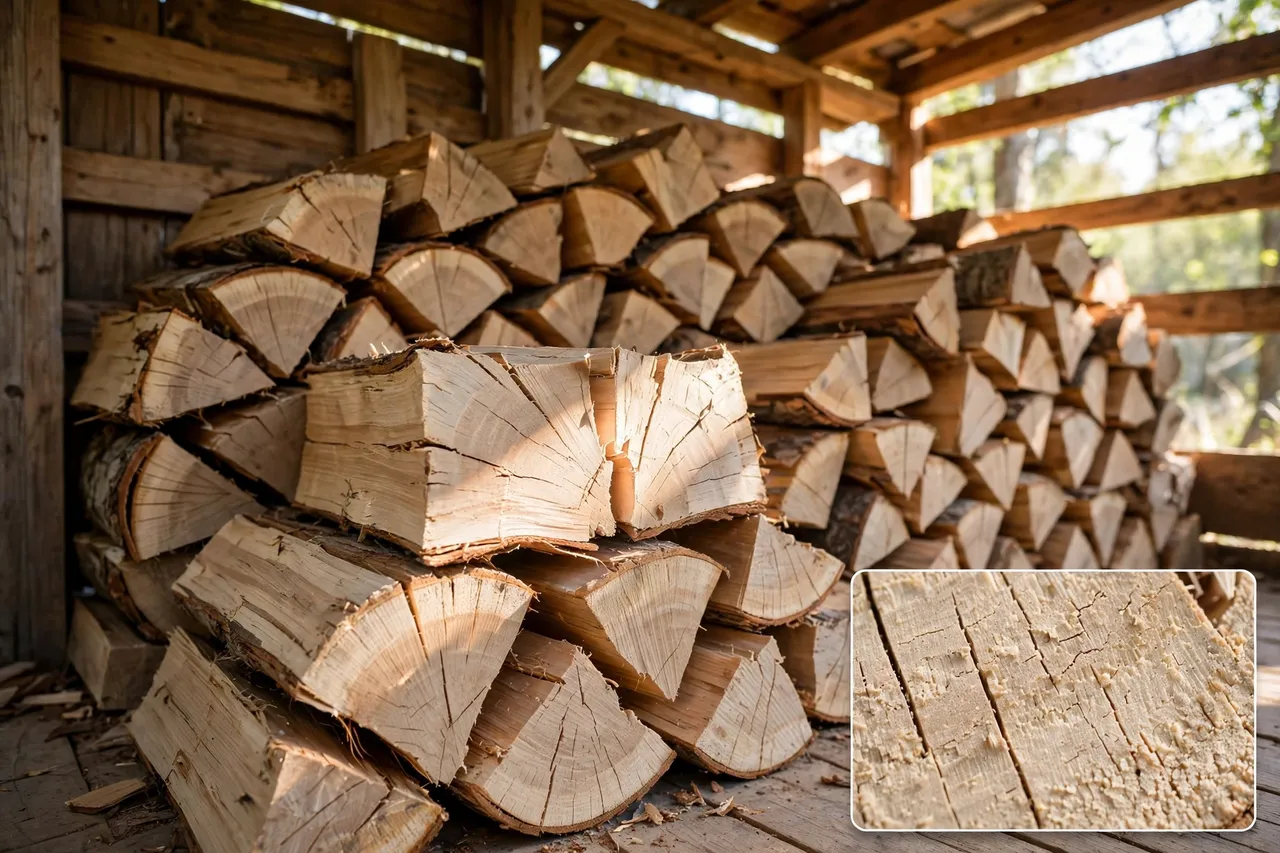
Wet wood causes three problems at once. It puts out less heat, because part of the fire’s energy boils water instead of warming the room. It smokes more, which dirties the glass and the room. And it builds creosote faster in the flue, which raises the risk of a chimney fire.
Never burn painted, stained, or pressure-treated wood, plywood, particle board, or trash. These release chemicals you do not want in your home or your air, and they can damage the combustor in a catalytic unit.
What Does a High Efficiency Wood Burning Fireplace Cost?
A high-efficiency wood fireplace unit itself usually costs $1,000 to $6,000 or more, not counting installation, according to the HVACDirect 2025 buying guide checked on November 13, 2026. Installation adds $1,000 to $15,000 depending on the type and the work needed, and a new flue or steel liner can add $1,000 to $3,000 more.
| Item | Typical cost | Notes |
|---|---|---|
| High-efficiency unit only | $1,000–$6,000+ | Before installation |
| Installation | $1,000–$15,000 | Depends on type and complexity |
| New flue or steel liner | $1,000–$3,000 | Often needed for inserts |
| Basic EPA-certified stove unit | $800–$4,000+ | Freestanding models |
| Custom masonry build | $30,000–$50,000+ | Full custom fireplace |
Those are US ranges from the sources named above, checked on November 13, 2026. A factory-built unit is a fraction of a custom masonry build, which is why most buyers pick a built-in or an insert. A factory-built unit: $1,000 to $6,000 or more, before installation.
Does it pay for itself? Honestly, it depends. The EPA says certified models use one-third less wood for the same heat, so a household that burns a lot of wood saves real money on fuel — but the payback time depends on your wood price, your climate, and how many nights you burn.
One cost break is worth checking: high-efficiency wood heaters rated at 75% efficiency or higher may qualify for the federal 25C residential clean energy tax credit, worth 30% of the unit and installation cost. Check the current IRS rules before you count on it, because tax rules change.
Before You Buy: The 7-Point Checklist
Run this checklist before you sign anything. It takes an hour, and it stops the expensive mistakes.
- Check the EPA certified list. Confirm the exact model name and its overall efficiency, and make sure the unit carries the EPA metal tag.
- Compare overall efficiency on an HHV basis. Look for 70% or higher, and ignore a lone headline number with no HHV or LHV label.
- Match the heating capacity to your home. Use 20 to 40 BTU per square foot, and size slightly above the minimum so the firebox holds enough wood.
- Check the firebox and log length. A bigger firebox means longer burns and fewer reloads, but only if it fits your space.
- Inspect the chimney. A cracked cap, a damaged liner, or a blocked flue must be fixed before the new unit goes in.
- Check local rules. Some areas limit wood burning on bad-air days, and most need a permit and an inspection for a new install.
- Confirm clearances and the hearth. The unit needs set distances from walls and a non-combustible hearth pad — the manual lists both.
Check the EPA certified list first. If a dealer cannot show you the model’s tested overall efficiency, walk away and buy from one who can.
Keeping It Efficient Year After Year
A high-efficiency fireplace stays efficient only if it is looked after. The chimney, the door seals, and the air controls all wear, and a small problem quietly eats the efficiency you paid for.
Book a yearly chimney inspection. The Chimney Safety Institute of America (CSIA) follows NFPA 211, the national standard, which says chimneys, fireplaces, and vents shall be inspected at least once a year. The CSIA also says masonry fireplaces should be swept when soot buildup reaches 1/8 inch, and sooner if there is glazed creosote. Inspected once a year, swept at 1/8 inch of soot.
Check the door gaskets every season. Close the door on a dollar bill — if it slides out easily, the seal is worn and the firebox is leaking air it should control. Replace worn gaskets, clean the glass, and keep the air controls moving freely. Check the cap too: a cracked cap lets rain into the flue, and our chimney cap replacement guide shows what the fix costs. If smoke starts coming back into the room, our repair fireplace guide walks through the common smoke, crack, and draft fixes.
Clean the blower and the firebox on schedule, and empty ash into a metal container with a lid — never a paper bag or a plastic bin. A clean firebox burns hotter and cleaner, and a clean blower actually moves the heat.
Safety First: When to Call a Professional
Choosing and running a fireplace is a homeowner job. Anything involving the chimney, the flue liner, or a fire that does not behave is a professional’s job.
Call a CSIA-certified chimney sweep or a licensed professional if smoke enters the room even with dry wood and a clean flue, if the firebox or chimney is cracked, or if the chimney has not been inspected in over a year.
Keep working smoke and carbon monoxide alarms in your home. The EPA says CO alarms are a back-up, not a replacement for proper use and maintenance, and recommends one in the hallway near every sleeping area, certified to UL 2034. Our do smoke detectors detect carbon monoxide guide explains which alarms catch CO and which do not. Fresh air at once, then call 911, if the CO alarm sounds.
Call a professional rather than forcing a bad fire. A short visit costs far less than a smoke-filled house or a chimney fire.
Safety disclaimer: This article is general home information, not professional advice. Wood fireplaces and chimneys can cause fire, smoke damage, and carbon monoxide poisoning if installed, used, or maintained the wrong way. Never burn wet, painted, or treated wood, never run a fireplace with a blocked or damaged flue, and never work on a roof, chimney, or flue liner without the right training and safety gear. If you are unsure about anything here, stop and call a CSIA-certified chimney sweep or a licensed professional before you use the fireplace. If a carbon monoxide alarm sounds, or anyone has a headache, dizziness, nausea, or confusion while the fireplace is in use, get to fresh air at once and call 911.
Related Guides
These guides cover the rest of the system around your fireplace: repair fireplace, chimney sweep cost, average fireplace size, and how to improve home insulation.
Frequently Asked Questions
What is a high efficiency wood burning fireplace?
A high efficiency wood burning fireplace is a sealed, factory-built fireplace with glass doors and controlled air inlets that burns wood — and its smoke — a second time. It carries an EPA certification label and a tested overall efficiency rating, usually 70% or higher, so most of the wood’s heat warms your home instead of escaping up the chimney.
Is a wood stove more efficient than a fireplace?
Yes, by a wide margin. The University of Maryland Extension figures an open fireplace at about 10% efficient and an EPA-approved wood stove at about 70%. A sealed high-efficiency fireplace closes most of that gap, reaching 70% to 85%, while an open fireplace keeps only 5% to 15% of the heat from the same wood.
How much does a wood burning fireplace cost?
A high-efficiency unit usually costs $1,000 to $6,000 or more before installation, and installation adds $1,000 to $15,000 depending on the type and the work needed. A new flue or steel liner can add $1,000 to $3,000, while a full custom masonry fireplace runs $30,000 to $50,000 or more. Get two or three local quotes in writing.
Can a wood stove heat a whole house?
It can heat a well-insulated home, but it heats by zone, not like a furnace. The room with the stove and the rooms above it get warmest, while far rooms stay cooler. Success depends on the unit’s size, the home’s insulation, and a plan to move the heat. Most homes keep a second heat source as backup.
Is a gas or wood fireplace more efficient?
Both can be highly efficient. A high-quality direct-vent gas fireplace runs about 70% to 90% efficient, and an EPA-certified wood fireplace or insert often reaches 75% to 90%. Gas wins on convenience and control, while wood wins on fuel cost where firewood is cheap. For more on gas upkeep, see our gas fireplace upkeep guide.
Are catalytic wood stoves more efficient?
Yes, catalytic wood stoves are generally more efficient than non-catalytic models, with typical efficiency ratings of 70% to 85% compared with 65% to 75% for non-catalytic stoves. The catalytic combustor ignites smoke at around 500°F, giving longer, steadier burns, but the catalyst needs replacing every 5 to 8 years and more careful operation.
A high efficiency wood burning fireplace only earns its name when three things line up: the right size for your home, dry wood at 20% moisture or less, and a yearly chimney check. Start by checking the EPA certified list for the model you are considering.


