
You can clean gas fireplace glass yourself in about an hour with a cream fireplace glass cleaner that costs under $10, according to Angi’s guide updated in April 2026. The two rules that matter most are simple: clean only glass that is fully cool, and never use an ammonia cleaner like Windex on it.
This guide shows you how to clean gas fireplace glass step by step, what that cloudy white film really is, which cleaners are safe, and which ones can etch or crack the glass for good. One cleaner most homes already own is the one that does the permanent damage, and it is in the table below.
Why Gas Fireplace Glass Gets Cloudy
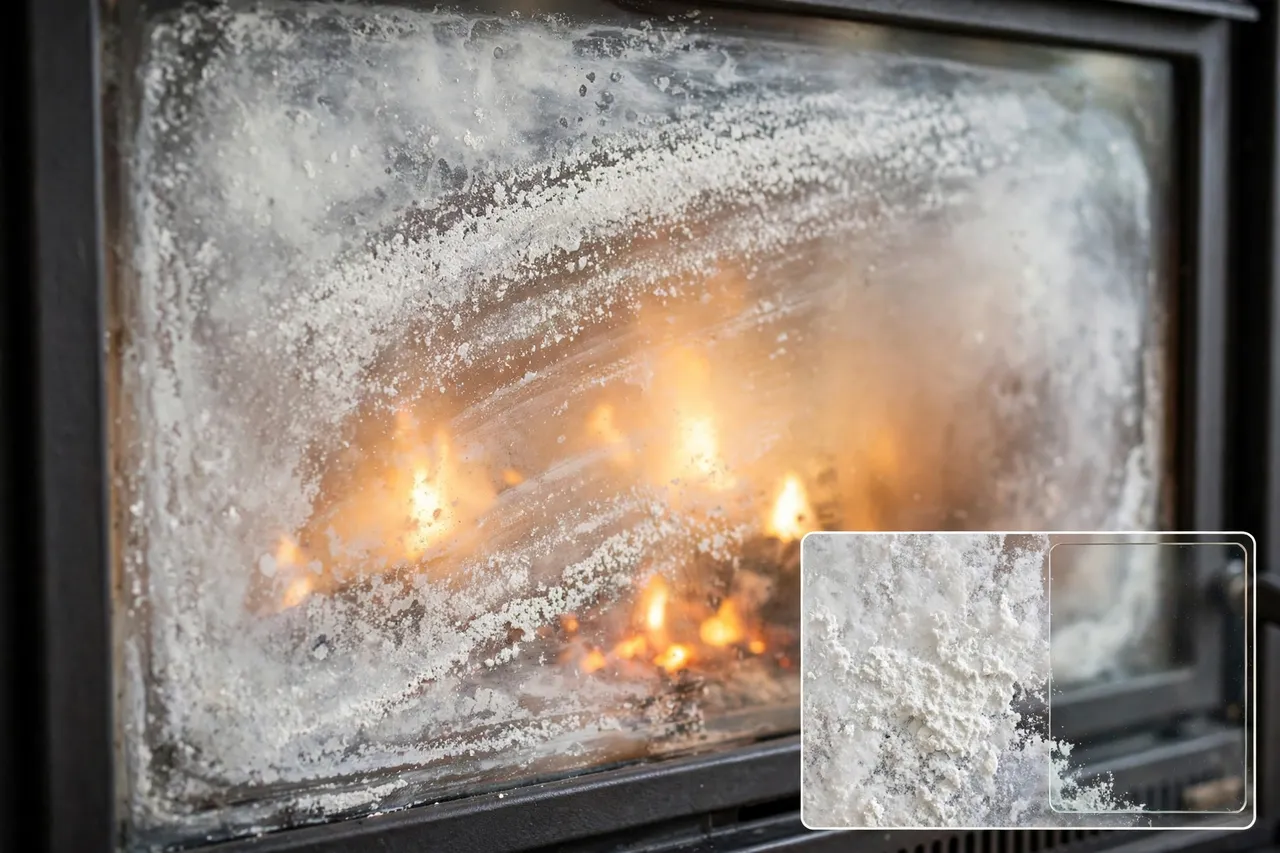
Gas fireplace glass gets cloudy because burning gas releases water vapor and sulfur compounds that condense on the cool glass and bake into a white mineral film. New fireplaces build the film fastest during their first hours of use, and the film turns acidic if you leave it sitting there.
That white or grey haze is normal, and it is not dirt. When gas burns, it makes water vapor, and that vapor carries sulfur and calcium onto the inside of the glass. As the glass heats up, the moisture dries and leaves the minerals behind as a milky film. Napoleon, the fireplace maker, says in its owner’s manuals that sulfur from fuel deposits on the glass and that the film can permanently mark the glass if you do not clean it off regularly.
The glass itself is not window glass. Most gas fireplaces use a ceramic glass panel about 3/16 inch thick, built to take high heat. It handles heat well, but it is far more sensitive to harsh chemicals than a window pane. That is why the cleaner you choose matters as much as how you clean.
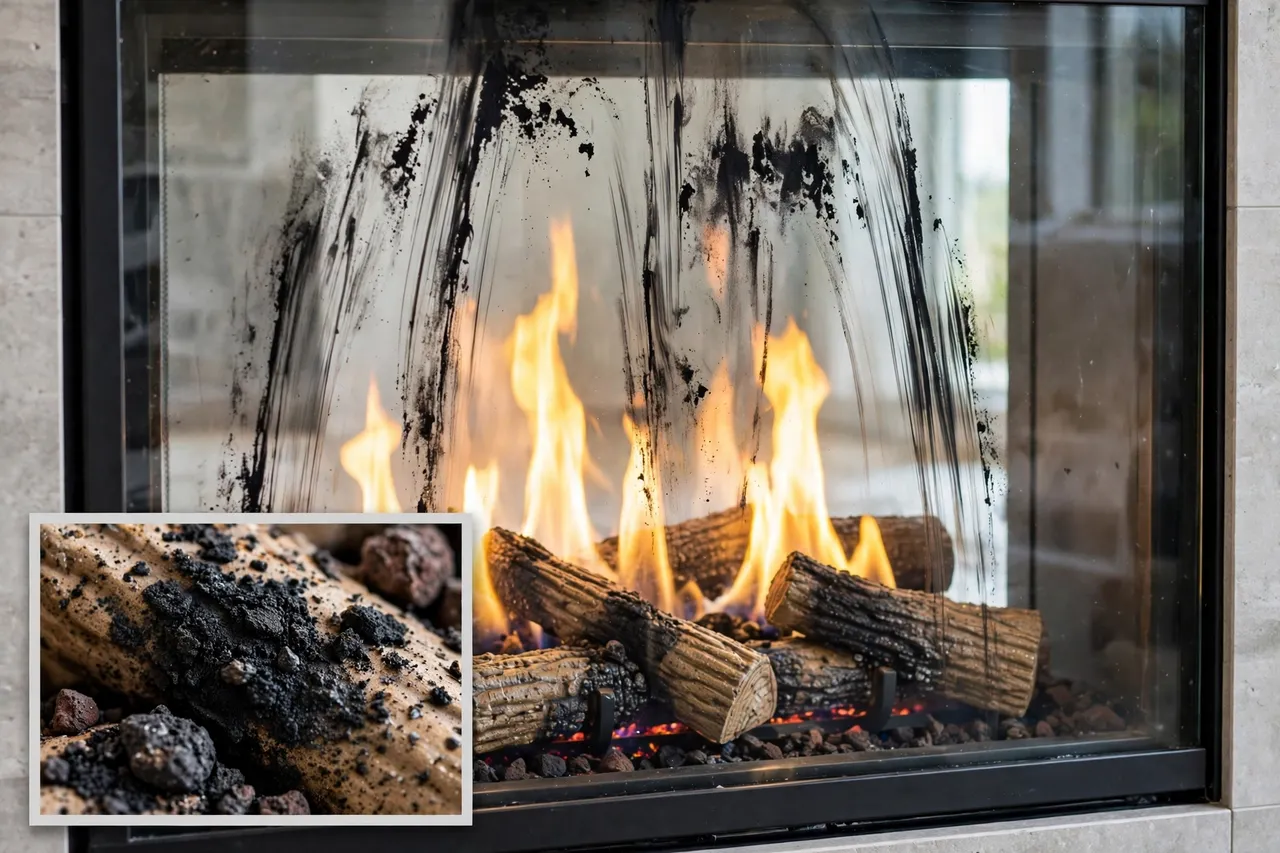
White haze is a cleaning job; black soot is a repair job. Black soot means the gas is not burning cleanly, often because the ceramic logs have shifted out of place or the vent is blocked. If you see black soot, skip the cleaning steps and read the bigger-problem section near the end first. Left alone, the white film turns acidic and etches the glass for good, and no cleaner can undo an etch.
What Most People Get Wrong About Fireplace Glass Cleaner
Most people grab the nearest glass spray, and that is exactly the mistake. A cleaner for fireplace glass has to dissolve a baked-on mineral film without harming ceramic glass, and ordinary window spray does the opposite: it leaves a residue that bakes on harder the next time the fire runs.
The worst offender is ammonia. Windex and similar household glass sprays are ammonia-based, and ammonia can streak, discolor, and weaken hot-service glass. The residue it leaves behind burns onto the surface at the next fire, which is how a quick wipe turns into a permanent haze. Angi warns plainly that you should not use Windex or any other ammonia-based glass cleaner on a gas fireplace, and its guide puts a proper fireplace glass cleaner at under $10 at a local hardware store.
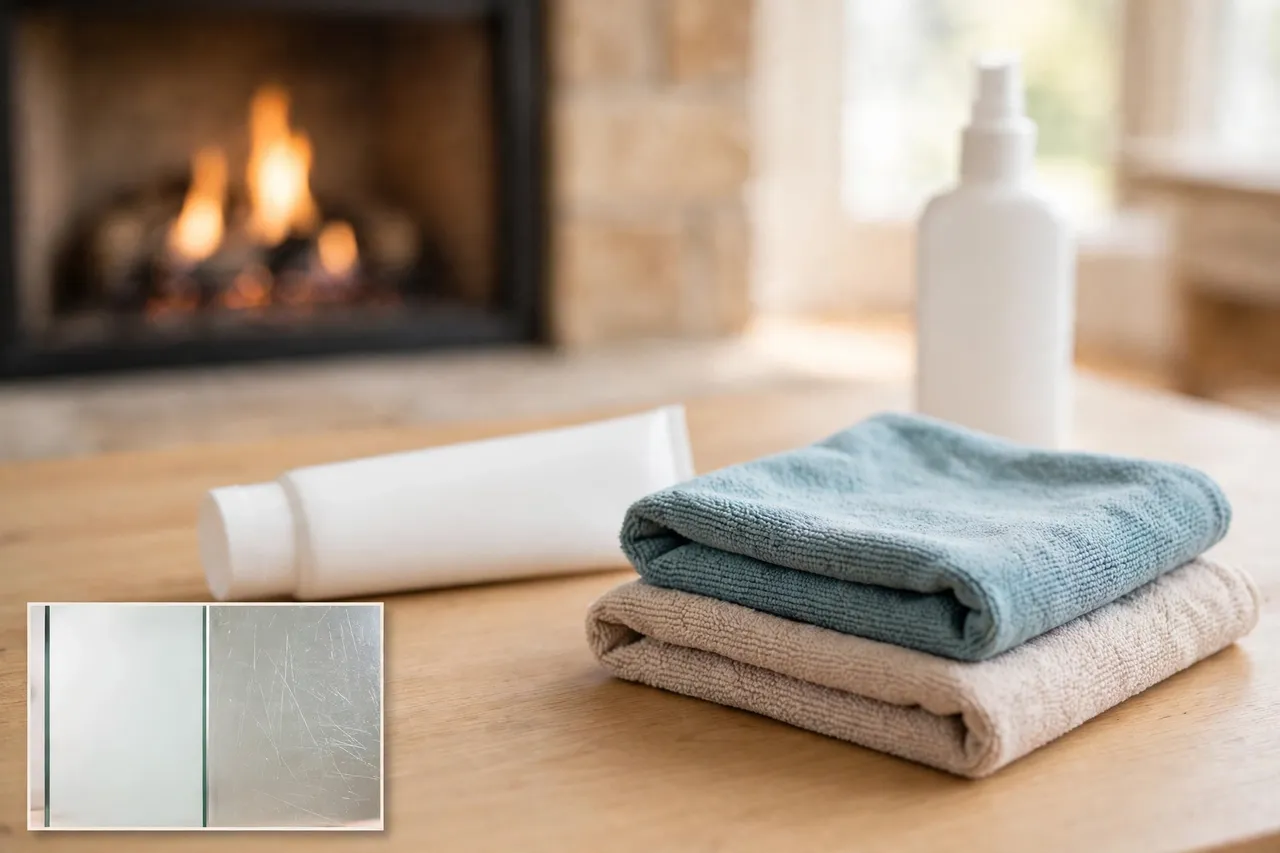
Oven cleaner is even worse, and abrasive pads, steel wool, and scouring powders scratch the ceramic surface. Scratches do more than look bad: they catch the next round of film and make every future cleaning harder. Magic erasers are abrasive too, so keep them away from the glass. The one product that actually works on baked-on film is a cream or paste fireplace glass cleaner, a non-ammonia formula with a very mild polishing action. Rutland White Off is one widely sold example. For very light haze, a mix of equal parts white vinegar and water works as a first pass, but it will not cut film that has already baked on.
| Product | Safe for gas fireplace glass? | Why |
|---|---|---|
| Cream fireplace glass cleaner (non-ammonia) | Yes, best choice | Mild polish lifts mineral film without harming ceramic glass |
| Equal-parts vinegar and water | Yes, light haze only | Mild acid dissolves fresh film, not baked-on deposits |
| Ammonia glass cleaner (Windex and similar) | No | Streaks and weakens the glass, and residue bakes on at the next fire |
| Oven cleaner | No | Far too harsh, and it can damage the glass and its coatings |
| Abrasive pads, steel wool, scouring powder | No | Scratch the surface, and scratches catch more buildup |
Guess which cleaner costs under $10 and which one costs you a new glass panel? The cream cleaner is the cheap one. A replacement ceramic glass panel, fitted by a dealer, costs many times more, and that is before the wait for the part. So the rule is short: never use Windex or any ammonia cleaner on fireplace glass, and for baked-on film, a cream fireplace glass cleaner is the product that works.
What You Need Before You Start
You need very little for this job, and you probably own most of it already. Gather everything before you touch the fireplace so the glass panel never sits unprotected while you hunt for a cloth. Everything below costs little, and the cleaner itself runs under $10.
- A cream fireplace glass cleaner made for gas fireplaces (non-ammonia)
- Two soft microfiber cloths, one damp for applying and one dry for buffing
- A clean towel or drop cloth to lay the glass panel on
- White vinegar and a spray bottle, only if the haze is very light
- Your fireplace owner’s manual, open to the glass-removal page
- Gloves, if your skin is sensitive to the cleaner
Skip the paper towels. They shed lint and can drag grit across the glass, and a microfiber cloth does the job better for about the same price. You need two soft cloths: one damp to apply, one dry to buff, because buffing with the same damp cloth you applied with just smears the film back on. With the supplies ready, the step most people rush is the cool-down, and rushing it is how glass cracks.
How to Clean Gas Fireplace Glass, Step by Step
Cleaning gas fireplace glass takes about an hour from start to finish, and most of that time is waiting for the glass to cool. Follow the steps in order, and do not skip the cool-down to save time. The method below works for most direct-vent gas fireplaces, but your owner’s manual always wins if it says something different.
First, the safety warning, before any step that involves touching the unit: never clean glass that is warm or hot. Cold liquid on hot glass risks thermal shock, and cleaner flash-dries into a film that bakes on harder. Step one is also the safety rule: clean only glass that is fully cool to the touch.
- Turn the fireplace off, including the pilot light. Open a window for fresh air while you work.
- Wait until the glass is fully cool to the touch. That usually takes at least 1 to 2 hours after shutdown, and longer after a long burn. If the glass still feels warm anywhere, wait longer.
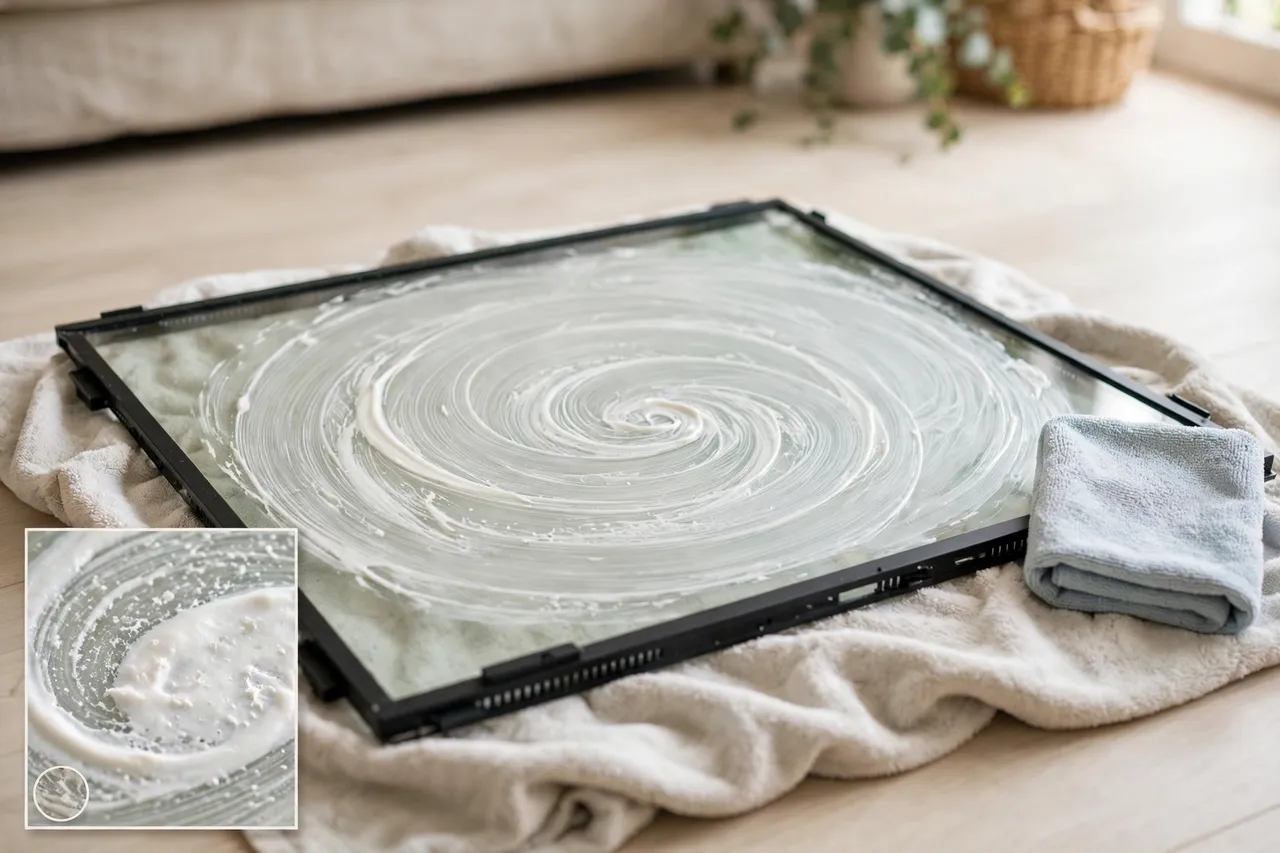
- Remove the glass panel the way your owner’s manual shows, usually by releasing spring clips or latches at the bottom first, then the top, while you support the panel. Lay it flat on the towel, inside face up, and never set it on a hard floor.
- Wipe loose dust off both faces with a dry microfiber cloth so grit cannot scratch the glass while you clean.
- Spread a small amount of cream fireplace glass cleaner over the inside face with the damp cloth, working in small circles. Let it dry for 10 to 15 minutes until it forms a light white film.
- Buff the dried film off with the clean, dry microfiber cloth until the glass turns clear. If haze remains, repeat the application once more rather than scrubbing harder.
- Wipe the glass once with a cloth dampened in warm water to lift any cleaner residue, dry it fully, then refit the panel and the barrier screen exactly as the manual shows. Relight the pilot and check that the flame burns steady and mostly blue at the base.
Angi’s step-by-step guide to cleaning a gas fireplace follows the same order, and it notes that a fireplace glass cleaner costs under $10 at a local hardware store. If the brick around the firebox is dirty too, clean it as a separate job with a method made for brick: our how to clean a brick fireplace guide shows how, because brick cleaner and glass cleaner are not interchangeable. Before you relight, refit the glass and the barrier screen, and never run the fireplace with the glass removed, cracked, or loose.
How Often Should You Clean Gas Fireplace Glass?
Clean gas fireplace glass as soon as it starts to look cloudy, which for most homes works out to once or twice a year. A fireplace that runs most evenings in winter may need it once a month, and a new fireplace needs its first cleaning after about 10 hours of use, when the break-in film is heaviest.
That schedule comes from two directions. Angi says to clean a gas fireplace once or twice a year for light use and every month for regular winter use, and Napoleon tells owners to clean the glass after the first 10 hours of operation and then as required, warning that glass left uncleaned can discolor permanently. The pattern is the same either way: the film never gets easier to remove with age, so an early wipe beats a hard scrub.
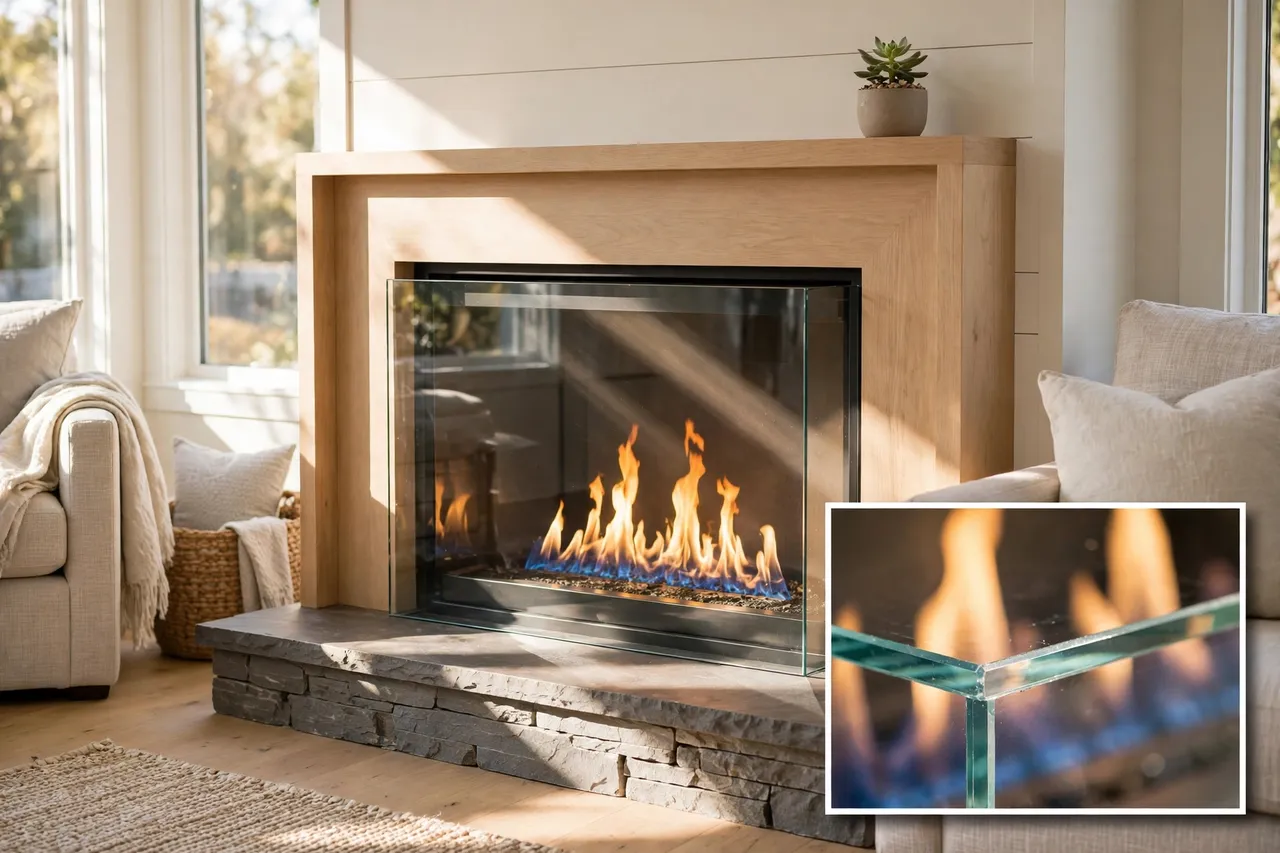
Do not wait for the heating season to end. The rule is simple: clean it as soon as it starts to look cloudy. A film that sits through a summer of disuse keeps working on the glass the whole time. If you want the rest of the yearly routine in one place, our gas fireplace upkeep guide covers the checks that go with each cleaning.
How to Keep Gas Fireplace Glass Clear Longer
You cannot stop the white film completely, because water vapor is a natural by-product of burning gas. What you can do is keep the film light, so each cleaning stays a ten-minute wipe instead of a battle. Three small habits do that: correct log placement, clear vents, and cleaning the film the week it appears.
Start with the logs. The ceramic logs look like decoration, but their position is part of how the burner burns. Each log sits exactly where the maker put it so the flame burns clean. A log shifted even slightly out of place can deflect the flame, and that is the most common reason a gas fireplace that used to burn clean starts making soot. Never move the logs to “improve” the look, and if you take them out for any reason, photograph them first so they go back exactly.
Keep the vents clear and book a yearly professional service. A blocked vent changes the air-to-fuel mix and pushes the fire toward soot, and a yearly visit catches that before it shows on the glass. Our chimney sweep cost guide shows what a yearly visit costs and what it should include. Dust the firebox when you clean the glass, run the fireplace at its normal flame rather than a low flicker for hours, and wipe the glass the week the haze appears instead of the month after. That habit is the whole secret, and it is also the cheapest one.
When Cloudy Glass Means a Bigger Problem
Some cloudy glass is not a cleaning problem at all, and scrubbing harder only wastes your time. Learn the signs that mean stop and call a professional instead. Black soot, yellow flames, a gas smell, and glass that stays cloudy after cleaning all point to a fault in the burner or vent, not to dirt on the glass.
Black soot on the glass is the clearest warning. White haze is normal, but black soot means the gas is not burning cleanly, often because the logs have shifted or the vent is blocked. Black soot means stop using the fireplace and call a technician before you light it again. The same applies to yellow, lazy flames instead of steady blue-based flames, a smell of gas, or soot marks appearing on the wall above the fireplace opening.
Glass that stays cloudy after two rounds of cream cleaner is the other sign. That haze is not dirt anymore; it is etched, not dirty, and no cleaner, cloth, or razor will bring it back. Etched glass needs a replacement panel from your fireplace dealer, fitted to your exact model. A cracked or chipped panel needs the same treatment at once, because a damaged panel can fail when it heats up. Our repair fireplace guide walks through the common smoke, crack, and pilot-light fixes and what they cost, so you know what to expect before you call.
Safety First: Gas, Glass, and Carbon Monoxide
Cleaning gas fireplace glass is a safe homeowner job when the gas is off, the glass is fully cool, and the room is ventilated. The danger is not the cleaning itself; it is a gas appliance that is not burning cleanly, and a dirty glass panel is often the first visible sign of that.
Test your carbon monoxide alarm every time you clean the fireplace. The U.S. Environmental Protection Agency (EPA) says carbon monoxide is odorless and colorless, that it can kill before you are aware it is in your home, and that keeping gas appliances properly adjusted and having them inspected by a trained professional every year are among the steps that reduce exposure. If you do not have a working alarm yet, our best carbon monoxide detector guide compares the options, and if an alarm ever sounds, our what to do if your carbon monoxide alarm goes off guide tells you the exact steps.
Book a yearly inspection by a qualified professional. The Chimney Safety Institute of America (CSIA) follows NFPA 211, the national standard, which says chimneys, fireplaces, and vents shall be inspected at least once a year. If your CO alarm sounds, get everyone to fresh air at once and call 911. Do not open windows and wait, and do not go back inside to check the fireplace.
Safety disclaimer: This article is general home information, not professional advice. Gas fireplaces can cause fire, burns, and carbon monoxide poisoning if used or repaired the wrong way. Clean only glass that is fully cool, turn the gas and pilot light off first, and never run the fireplace with the glass removed, cracked, or broken. If you smell gas, see black soot, or feel unsure about anything here, stop and call a licensed gas technician or a CSIA-certified chimney professional. If a carbon monoxide alarm sounds, or anyone has a headache, dizziness, nausea, or confusion while the fireplace is in use, get to fresh air at once and call 911.
Related Guides
These guides cover the rest of the system around your fireplace glass: gas fireplace upkeep, repair fireplace, how to clean a brick fireplace, and best carbon monoxide detector.
Frequently Asked Questions
What is the white residue on my gas fireplace, and how do I remove it?
The white residue is a mineral film, mostly sulfur and calcium left behind when combustion moisture condenses on the cool glass and dries. Remove it with a non-ammonia cream fireplace glass cleaner on fully cooled glass: spread it in circles, let it dry to a film, then buff it off with a dry microfiber cloth.
Can I use Windex on my fireplace glass?
No. Windex and most household glass sprays contain ammonia, which can streak, discolor, and weaken ceramic fireplace glass, and the residue can bake on the next time the fire runs. Use a cream cleaner made for fireplace glass instead, or a vinegar-and-water mix for very light haze.
How often should you clean gas fireplace glass?
Clean it as soon as it starts to look cloudy. For most homes that means once or twice a year, and once a month during heavy winter use, according to Angi. New fireplaces need their first cleaning after about 10 hours of use, when the break-in film is heaviest.
Is black soot on gas fireplace glass normal?
No. White haze is normal, but black soot means the gas is not burning cleanly, often because the ceramic logs have shifted or the vent is blocked. Stop using the fireplace and book a repair before you light it again.
Why is my gas fireplace glass foggy?
Foggy glass at startup is usually condensation: burning gas makes water vapor, which clouds the cool glass and clears as it warms. If the fog never clears, it is mineral film baked onto the glass, or glass that has already etched. Clean the film promptly so it does not become permanent.
Can I clean foggy fireplace glass myself?
Yes, if the glass is only hazy or filmed. Turn the fireplace and pilot light off, wait until the glass is fully cool, remove the panel if your manual allows it, and clean it with a cream fireplace glass cleaner. If the glass is cracked, sooty, or stays cloudy after cleaning, call a technician.
Start with the next cloudy morning, not the next season. Wipe the film while it is still a film, keep the logs where the maker put them, and let a yearly professional visit catch what your eyes cannot. Clear glass is not just a prettier fire; it is the easiest early warning your gas fireplace gives you.


