
A gas fireplace that won’t light most often has a dead pilot light, a closed gas valve, or a dead remote battery, and Angi reports that most service calls for this problem cost about $100.
That sounds simple, and most of the time it is. But one item on the checklist below can quietly void your warranty if you skip it. Work through the checks in order, from the cheapest fix to the hardest, and stop the moment you smell gas.
Why Your Gas Fireplace Won’t Light
A gas fireplace won’t light when one link in a short chain breaks: gas must reach the unit, the pilot must burn, a sensor must prove the flame is there, and the switch must tell the gas valve to open.
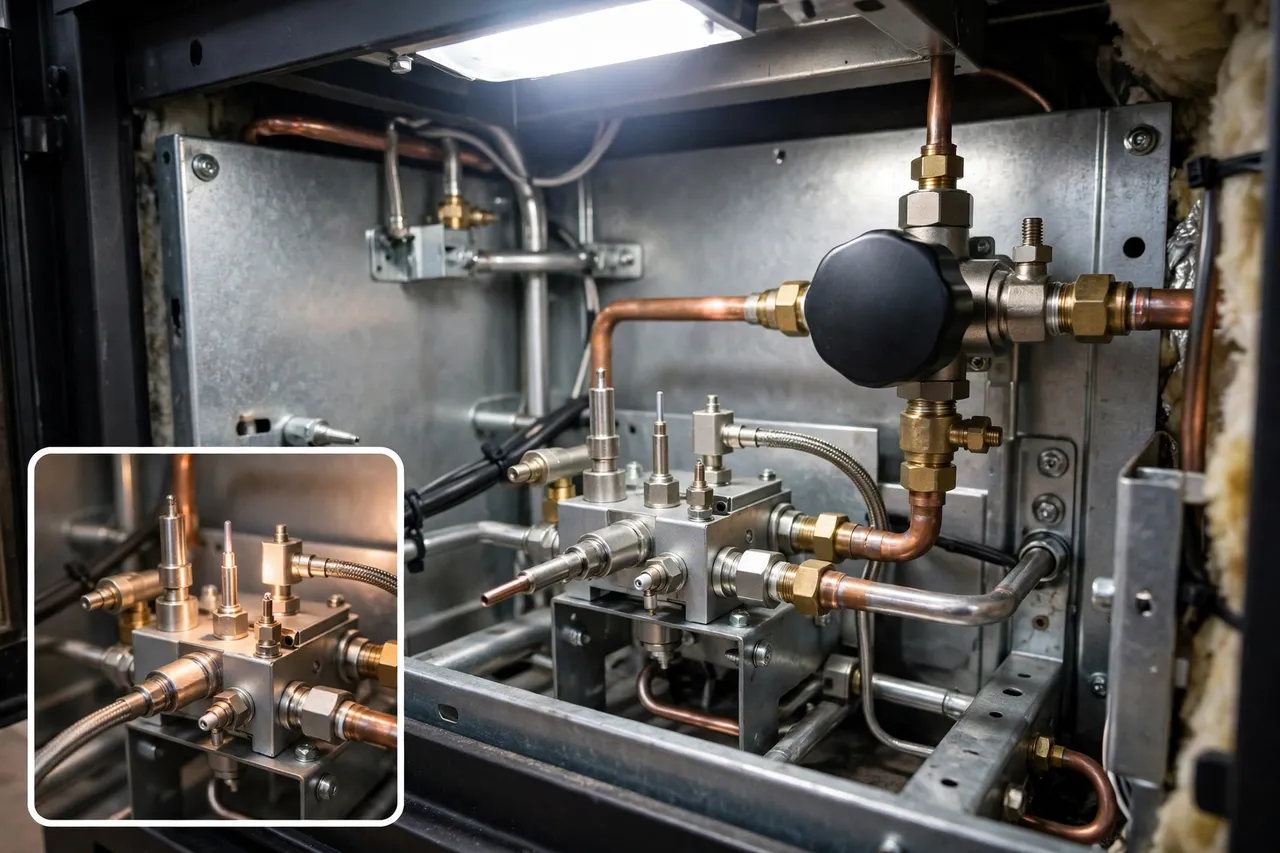
Most gas fireplace problems fall into six causes: the pilot is out, a sensor has failed, the igniter makes no spark, the gas supply is off or low, the burner or vent is dirty or blocked, or the switch, remote, or power has failed. The table below matches what you see to the most likely cause.
| What happens | Most likely cause | Start here |
|---|---|---|
| Nothing happens at all, no click, no spark | Power, switch, or remote | Check batteries, breaker, and receiver |
| Clicking, but no flame at all | Pilot light out or no gas | Check the gas valve, then relight the pilot |
| Pilot lights, then dies when you let go | Thermocouple | Hold the knob longer, clean the sensor |
| Pilot stays lit, burner never starts | Thermopile or gas valve | Check the switch circuit, call a pro |
| You smell gas | Gas leak | Stop, ventilate, leave, call the gas company |
Before you touch anything, find your model number on the rating plate behind the lower access panel and pull up the manual. Lighting and reset steps change from model to model, and the manual always wins.
First, Check the Simple Things: Gas, Power, Switch, and Remote
Start here, because these checks fix more gas fireplace issues than any part replacement does: confirm the gas is on, the power is on, and the switch or remote is calling for heat.
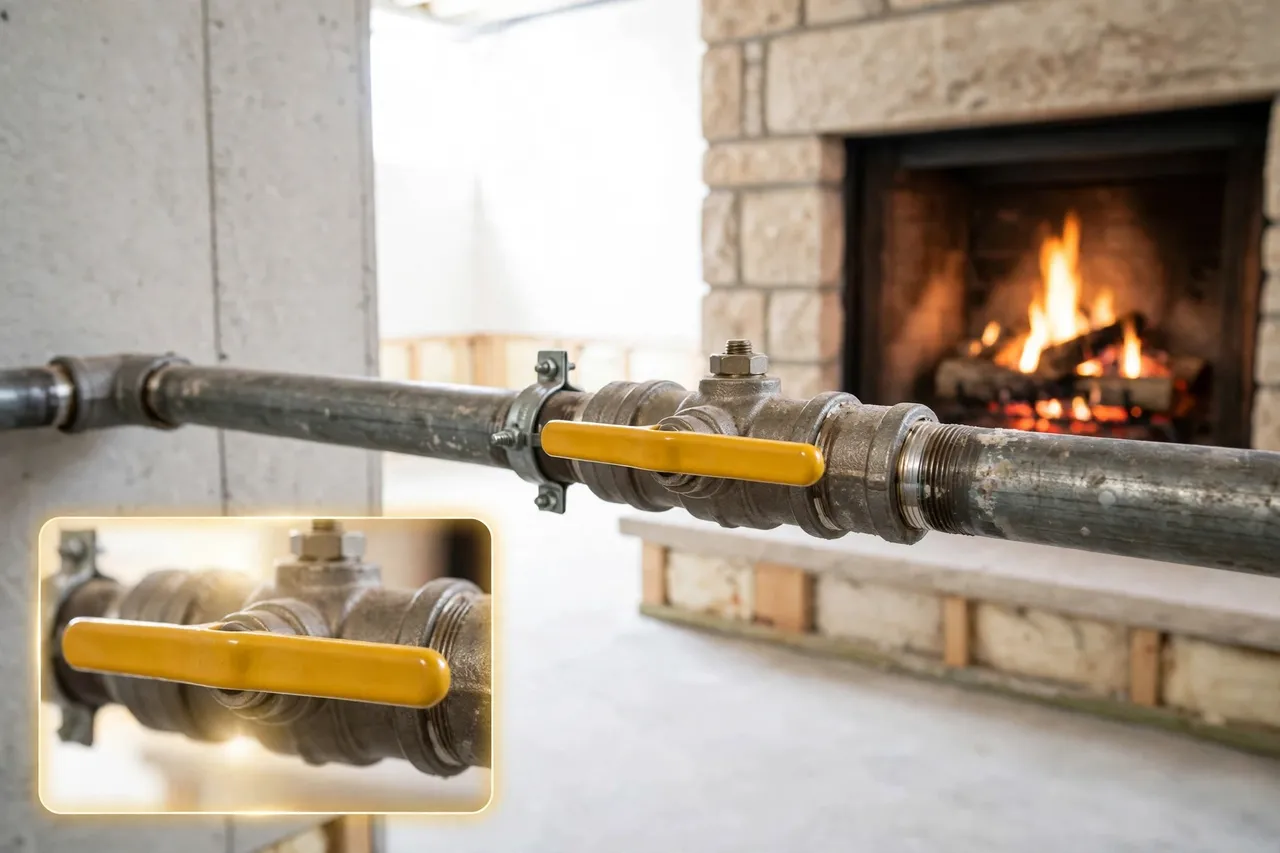
First, check the gas. Find the shutoff valve on the gas line near the fireplace: the handle must run parallel to the pipe to be on, and at a right angle it is off. If your home runs on propane, check that the tank is not empty.
Next, check power. If your fireplace uses electronic ignition, a tripped breaker stops it cold, so flip the breaker for the fireplace circuit off and back on. A tripped breaker or dead remote batteries cause more “broken” fireplaces than any failed part.
Then check the switch and remote. Flip the wall switch on and off a few times and listen for a click; a loose or gritty switch may be failing. For a remote, put fresh batteries in both the remote and the receiver box, and check that the receiver slider sits on ON or REMOTE, not OFF.
The Pilot Light Is Out
The pilot light is a small flame that burns all the time in a standing-pilot fireplace, and it lights the main burner when you call for heat. If the pilot is out, the main burner cannot light, no matter how many times you press the switch.
Look through the viewing window near the bottom of the unit, or open the lower access panel. A healthy pilot flame is mostly blue with a small yellow tip, and it touches the thermocouple rod beside it. No flame means the pilot is out; a weak, yellow flame usually means dirt in the pilot opening or a draft across it.
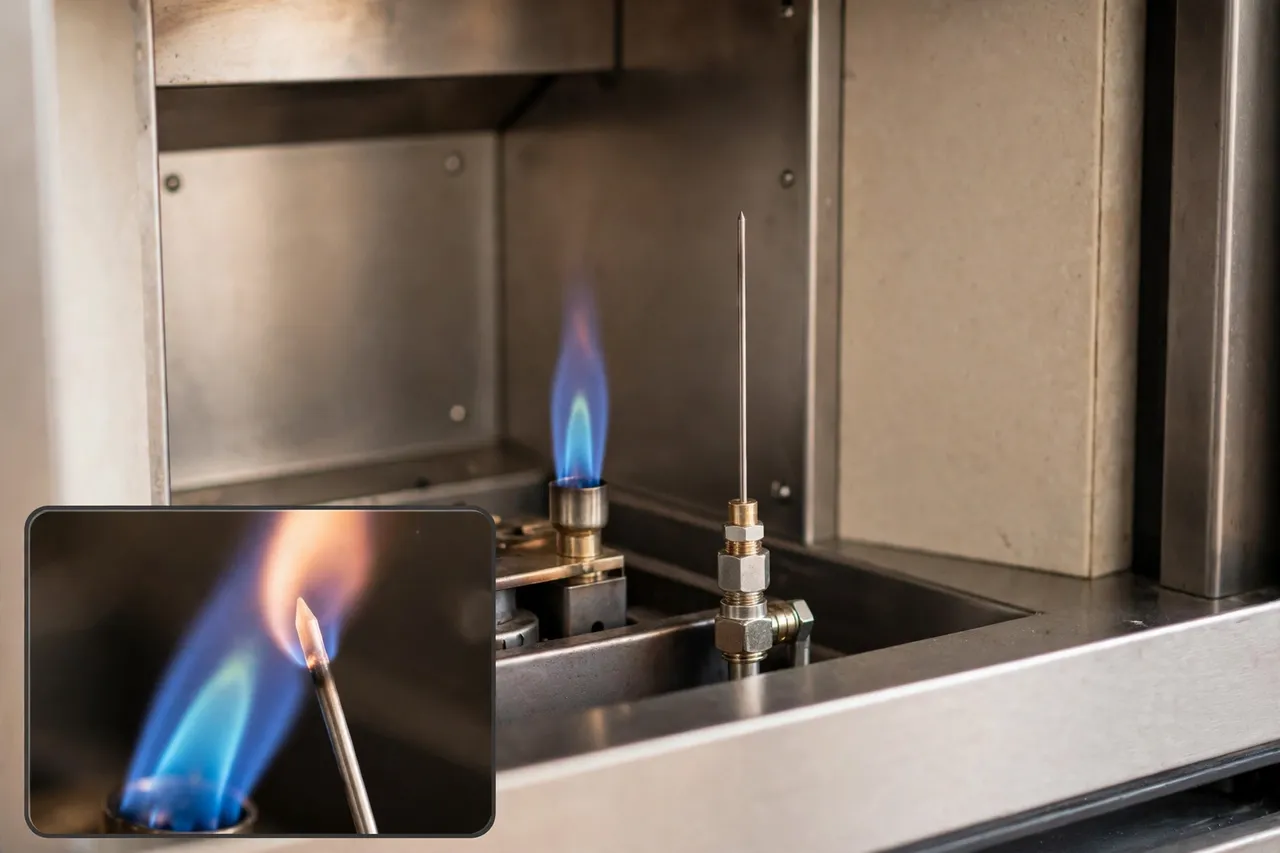
Relight the pilot exactly as your manual says. In most standing-pilot units, turn the control knob to PILOT, press it in, and press the igniter button until the pilot catches, then keep holding the knob for 30 to 60 seconds so the thermocouple heats up. Hold the knob a full 30 to 60 seconds after the pilot catches, or the safety valve will shut the gas off again.
If the pilot has been off all summer, air may sit in the gas line. Angi notes that you should hold the pilot button down for about one to three minutes while the air bleeds out, and if the pilot lights but will not stay lit, the thermocouple is the likely fault.
If the pilot will not light after a few tries, stop and wait five minutes with the gas off so unburned gas can clear. If it still will not light, the pilot opening may be blocked or the igniter may be dead.
The Thermocouple and Thermopile: Pilot Lit, Burner Dead
The thermocouple and the thermopile are the two sensors that turn pilot heat into the small electric signal that holds the gas valve open. The thermocouple guards the pilot, and the thermopile powers the main burner, so which one fails decides exactly what your fireplace does.
The thermocouple is a thin metal rod that sits in the pilot flame. When the flame heats it, it makes a small current that holds the gas valve open; if it cools, the valve closes and the gas stops. That is a safety feature, not a flaw. The classic sign of a bad one is a pilot that lights while you hold the knob, then dies the moment you let go.
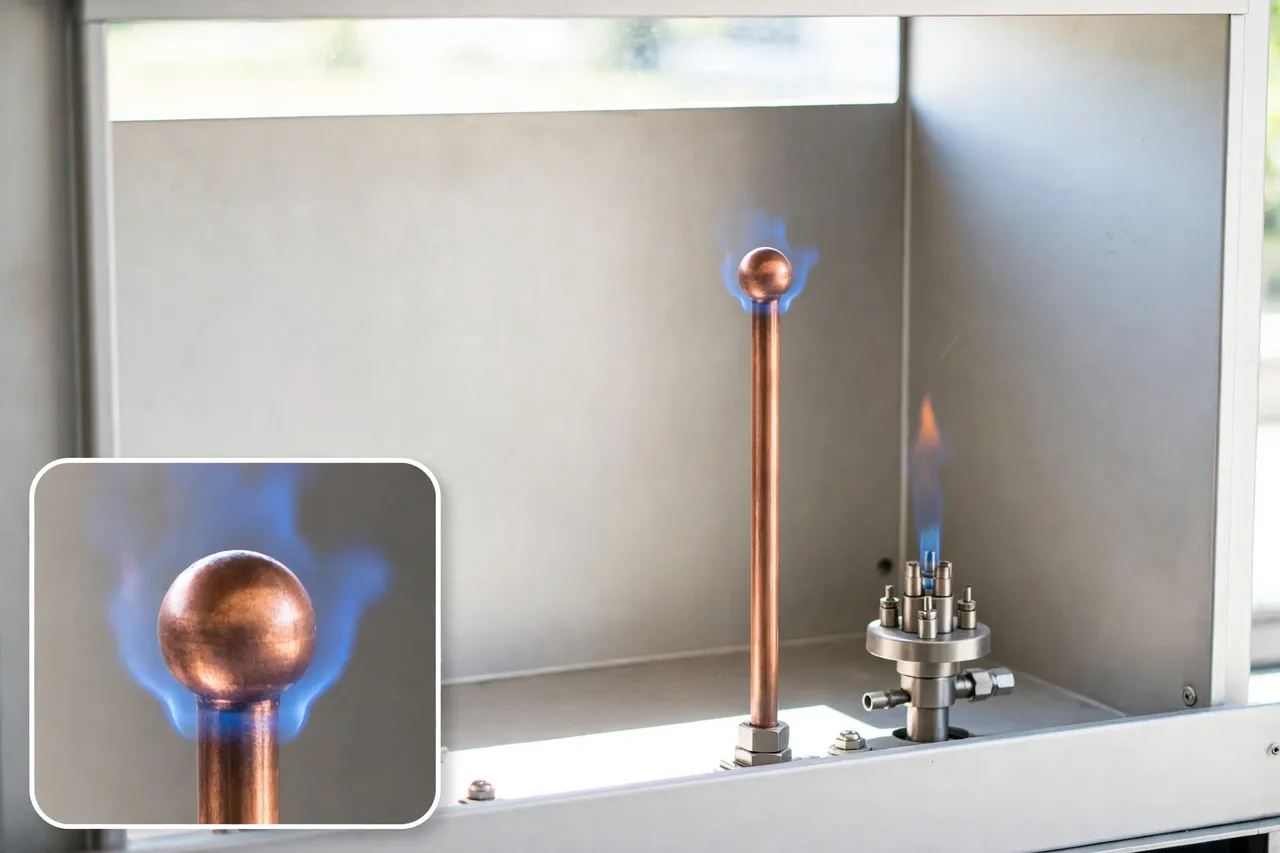
Before you blame the part, check the easy causes. Soot can coat the rod and block the heat, so a gentle cleaning with a soft cloth can bring it back, and the rod can bend out of the flame over time. A pilot that dies the second you release the knob almost always points to the thermocouple, not the gas supply.
The thermopile is a stack of thermocouples that makes a bigger current, enough to run the main gas valve when the wall switch or remote calls for heat. If the pilot stays lit and steady but the burner never starts, the thermopile is the most likely fault.
Both parts wear out with age and heat, and replacing either one is a technician’s job. Our gas fireplace upkeep guide covers the yearly checks that catch a weak sensor before the first cold night.
The Igniter Isn’t Sparking
The igniter is the part that makes the spark that lights the pilot flame. If you press the igniter button and hear no clicking at all, or you see no spark through the viewing window, the pilot has nothing to light it.
First, figure out which ignition system you have. A standing-pilot unit has a control knob with OFF, PILOT, and ON positions and can be relit by hand. An intermittent pilot (IPI) unit only lights the pilot when you call for heat. Your manual names the system, and the fix depends on it.
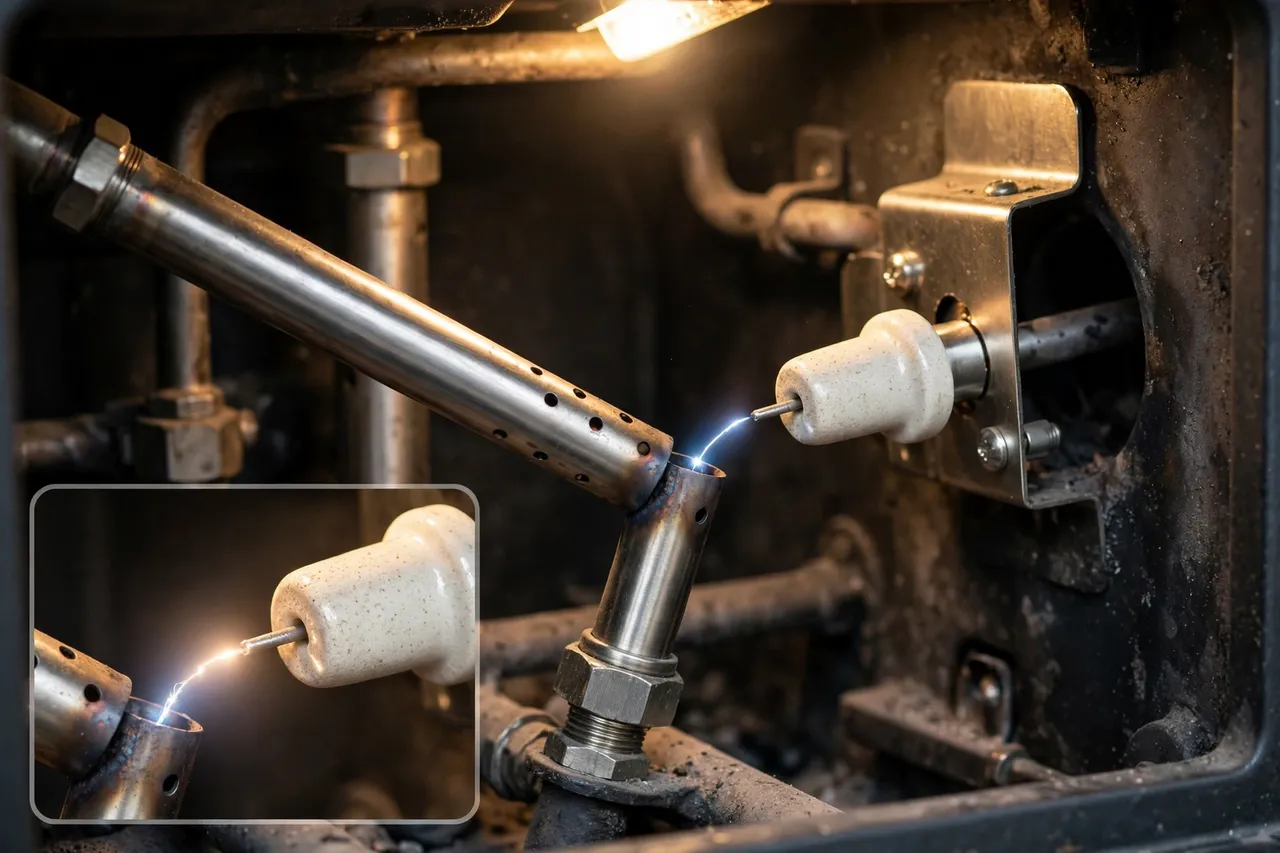
On a standing-pilot unit, the usual cause is dirt between the igniter tip and the thermocouple, and the spark cannot jump the gap. With the gas off and the unit cold, blow compressed air gently into the pilot area, wait a couple of minutes, and try again. Angi gives this exact step: clear the debris, blow compressed air into the pilot area, wait, and try again.
On an IPI unit, no clicking at all usually means no power to the control module, so check the batteries, the breaker, and the receiver first. Clicking with no flame usually means a cracked spark electrode or a dirty flame sensor. Many IPI modules also lock out after several failed tries and stay silent until you reset them with a one-minute power cycle.
If the igniter clicks but no flame appears after three tries, stop and let the gas clear for five minutes before you try again. Repeated sparking with gas flowing and no flame is how a small puff becomes a loud bang. If a clean electrode and a reset do not bring the spark back, the igniter or the control module needs a technician.
Gas Supply Problems: Valve, Air in the Line, and Low Pressure
A gas fireplace with no gas cannot light, and the supply can fail in three quiet ways: the valve is closed, air sits in the line after months of non-use, or the pressure is too low to hold a flame.
The closed valve is the most common cause, and it happens more than anyone admits: someone turns the gas off for summer, or a renovation crew shuts it and forgets. Check the appliance shutoff valve near the unit and the main house valve, and confirm both handles run parallel to their pipes. A fireplace key valve must also be fully open, not just cracked.
Air in the line is the second cause, and it shows up every fall on the first cold night: gas sat unused all summer, and now the pilot gets puffs of air instead of gas. Hold the pilot button down for one to three minutes to bleed the air out, as Angi advises.
Low gas pressure is the third cause, and it is not a homeowner fix. If other gas appliances also burn weakly, call your gas company. If only the fireplace is weak, the pressure regulator or the gas valve inside the unit may be failing, and both need a licensed technician with a pressure gauge. Never adjust a gas pressure regulator yourself; the wrong pressure can flood the burner or starve the flame.
Dirty Burner, Blocked Vent, and a Closed Damper
A gas fireplace can have gas, a pilot, and a spark, and still not light, because the burner ports are clogged, the vent is blocked, or the damper is closed. These airflow problems are easy to miss because everything else looks fine.
Burner ports are the small holes along the burner tube where gas comes out. Dust, soot, and bits of ceramic fiber fall into them over a season, and a blocked port means no gas reaches that part of the burner. With the gas off and the unit fully cold, vacuum the firebox gently and brush the ports clean with a soft brush. Do not poke them with a pin or a wire, because a widened port burns unevenly forever.
The vent matters just as much. A direct-vent fireplace pushes exhaust outside through a sealed vent, and a blocked vent can trip a safety switch that shuts the whole unit down. Birds nest in vent caps and ice can seal one in a cold snap, so check the outside cap for nests and damage. Our chimney cap repair guide shows how to spot a failing cap.
On a vented unit, confirm the damper is fully open before you light anything. A closed damper on a vented gas fireplace traps exhaust in the room, so check it with a flashlight before every first fire of the season. The Chimney Safety Institute of America (CSIA) follows NFPA 211, which says chimneys, fireplaces, and vents shall be inspected at least once a year.
What Most People Get Wrong About Gas Fireplace Problems
The most common mistake in gas fireplace troubleshooting is treating every no-light problem as a pilot problem. The pilot is only one link in the chain, and relighting it again and again cannot fix a dead remote battery, a closed valve, or a failed thermopile.
People also assume the fireplace is broken when it is simply locked out: many electronic modules stop trying after three or four failed attempts and sit silent until a one-minute power cycle resets them.
Another wrong belief is that a yellow pilot flame is normal. A healthy pilot flame is blue; a yellow, lazy flame means incomplete burning from a dirty pilot opening, and it heats the thermocouple badly. Clean the pilot area before you buy any part.
The last mistake is the dangerous one: lighting the main burner directly with a long lighter when the pilot system has failed. The pilot and its sensor exist so gas never flows without a flame. Never light the main burner directly; relight only the small pilot flame, and only on a standing-pilot unit that your manual says can be lit by hand.
Step-by-Step: Safe Gas Fireplace Troubleshooting in Order
Work this list top to bottom and stop at the first step that fixes the problem. It runs cheapest and safest first.
- Smell check first. If you smell gas, stop now. Turn the gas off if you can do it safely, open windows, leave the house, and call your gas company or 911 from outside.
- Confirm the gas is on. Check the appliance shutoff valve and the house valve, and confirm both handles run parallel to their pipes.
- Check power and controls. Flip the breaker off and back on, put fresh batteries in the remote and receiver, and set the receiver to ON or REMOTE.
- Look at the pilot. Open the access panel and check whether the pilot flame is burning blue and touching the thermocouple.
- Relight the pilot by the manual. Turn the knob to PILOT, press it in, press the igniter, and hold the knob 30 to 60 seconds after the flame catches. If the pilot has been off for months, hold it up to three minutes to bleed air out.
- Reset an electronic unit. If the igniter clicked several times and then went silent, switch the unit off for a full minute, then power-cycle it at the breaker and try once more.
- Clean the pilot area. With the gas off and the unit cold, blow compressed air gently into the pilot area to clear dust from the igniter and thermocouple, wait two minutes, and try again.
- Check the burner and vent. Vacuum the firebox, brush the burner ports clean, confirm the damper is open, and check the outside vent cap.
- Try the switch once more. If the pilot is lit and steady but the burner never starts, the thermopile or gas valve is the likely fault.
- Stop and call a professional. If you have reached this step, the fault is inside the gas valve circuit, and that is technician work.
This list fixes most gas fireplaces in the first five steps, and step ten is not a failure; it is the safe ending. A fireplace that will not light after these checks has a failed part, and guessing which one costs more than a proper diagnosis.
What NOT to Do When Your Gas Fireplace Won’t Light
A gas fireplace that will not light is frustrating on a cold night, but the wrong shortcut can turn a cold room into a dangerous one. These are the lines you do not cross.
Do not keep trying to light it over and over. After three failed tries, turn the gas off, wait at least five minutes, and let the room air out before you try again.
Do not use a match or a lighter on the main burner. The pilot system proves a flame before gas flows to the burner, and lighting the burner directly skips that safety check, so a delayed ignition can flash back at you.
Do not take the gas valve apart, adjust the pressure regulator, or bypass the thermocouple or any safety switch. Never bypass a safety sensor or adjust gas pressure yourself; that is the line between a repair and a gas leak.
Do not block the vent or close the damper to “keep the heat in” while you troubleshoot. A blocked vent can push carbon monoxide back into the room. Carbon monoxide is colorless and odorless, and the U.S. Environmental Protection Agency (EPA) warns that it can kill before you know it is there, so keep the vent open and keep a working CO alarm in the room.
What a Gas Fireplace Repair Costs
Most gas fireplace repairs are small bills. Prices vary by region and model, so treat these as US ranges, not quotes.
| Repair | Typical cost | Notes |
|---|---|---|
| Service call and diagnosis | About $100 | Often waived if you approve the repair |
| Pilot light repair | $100–$350 | Includes labor and a new pilot assembly if needed |
| Thermocouple replacement | $75–$350 | Parts and labor; one of the cheapest fixes |
| Thermopile replacement | $75–$375 | About the same as a thermocouple |
| Igniter replacement | $100–$150 | One of the most affordable repairs |
| Gas valve replacement | $150–$300 | Never delay; a bad valve can leak gas |
| Gas fireplace repair, all types | $200–$1,000 | Most jobs land in this range |
These figures come from Angi, updated in October 2026 from 9,060 verified projects, and from its gas fireplace guide, updated in July 2026, which puts most service calls at about $100.
A thermocouple or igniter usually costs under $350 fitted, so get a quote before you decide the fireplace is not worth fixing. If the estimate passes half the cost of a new unit, ask the technician whether replacement makes more sense. Our repair fireplace guide walks through the wider repair costs, including chimney and firebox work.
When to Call a Professional
Call a licensed gas technician or a certified chimney professional when the fault is inside the gas valve circuit, when you smell gas, or when the fireplace keeps failing after the safe checks above. That is not giving up; it is the point where the right tool is a pressure gauge and a license.
Call at once if you smell gas, if the pilot lights but the burner never starts, if the fireplace lights and then goes out again, or if you see soot building up on the glass or the logs. Soot is a sign of incomplete burning, which can make carbon monoxide.
Book a yearly service even when the fireplace works fine. The Chimney Safety Institute of America (CSIA) follows NFPA 211, which says chimneys, fireplaces, and vents shall be inspected at least once a year. Our best carbon monoxide detector guide helps you pick the alarm that guards the room, and our what to do if a carbon monoxide alarm goes off guide tells you the exact steps if it ever sounds.
When the fault is inside the gas valve, a professional visit costs less than one wrong guess with gas.
Safety disclaimer: This article is general home information, not professional advice. Gas fireplaces can cause fire, explosions, and carbon monoxide poisoning if used or repaired the wrong way. Never work on a gas valve, gas line, or pressure regulator yourself, never bypass a safety sensor, and never light a fireplace if you smell gas. If you smell gas, turn the gas off if you can do so safely, open windows, leave the house, and call your gas company or 911 from outside. If a carbon monoxide alarm sounds, or anyone feels headache, dizziness, nausea, or confusion while the fireplace is in use, get to fresh air at once and call 911.
Related Guides
These guides cover the rest of your fireplace system: gas fireplace upkeep, repair fireplace, best carbon monoxide detector, and chimney sweep cost.
Frequently Asked Questions
Why won’t my gas fireplace light?
A gas fireplace usually will not light because the pilot light is out, the gas valve is closed, the remote batteries are dead, or the thermocouple has failed. Check the gas valve, the power, and the pilot flame first. If the pilot dies when you release the knob, the thermocouple is the likely fault.
Why does my gas fireplace keep going out?
A gas fireplace that keeps going out usually has a weak pilot flame, a dirty or failing thermocouple, a blocked vent, or low gas pressure. A yellow or flickering pilot is the first clue: clean the pilot area and check that the flame touches the thermocouple. If it still goes out, call a technician.
How do you light a gas fireplace?
It depends on the model. Most standing-pilot units light from a control panel: turn the knob to PILOT, press it in, press the igniter until the pilot catches, hold the knob for 30 to 60 seconds, then turn it to ON. Electronic units light from a wall switch or remote. Always follow your manual.
Can you light a gas fireplace with a lighter?
You can relight the small pilot flame with a long fireplace lighter on a standing-pilot unit, if your manual allows it. Hold the knob in PILOT, touch the lighter to the pilot opening, and keep holding the knob for 30 to 60 seconds. Never light the main burner directly, and never try this on an electronic ignition unit.
What happens if my pilot light goes out?
If your pilot light goes out, the thermocouple cools and the gas valve closes, so gas should stop flowing into the firebox. That safety shutoff is why a dead pilot is safe to find. Relight it by your manual, and if it will not stay lit, call a technician.
How much does fireplace repair cost?
Gas fireplace repairs usually cost $200 to $1,000, according to Angi’s October 2026 data from 9,060 verified projects. A pilot light repair runs $100 to $350, a thermocouple $75 to $350, an igniter $100 to $150, and a gas valve $150 to $300. Most service calls cost about $100.


