
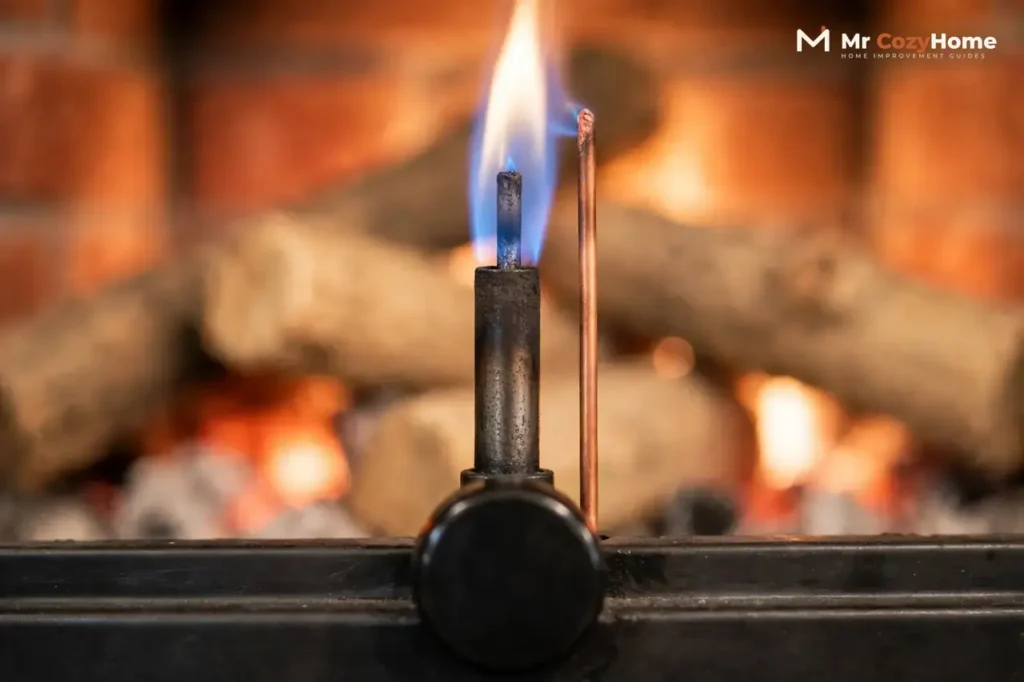
You can fix a pilot light on a gas fireplace in about 10 minutes: turn the control knob to Off, wait 5 minutes, turn it to Pilot, hold the knob in while you spark the pilot, keep holding for about a minute, then turn the knob to On. That is the whole job when the pilot is healthy — but if you smell gas at any point, stop, leave the house, and call your gas company from outside. Never try to light a fireplace when gas is in the air.
One thing on this page can save you a service call and one thing can void your warranty: the part that usually fails costs less than a dinner out, and the mistake that voids the warranty is forcing the control knob. Both are in the sections below, so read the safety rules first and the steps will take care of themselves.
What a Gas Fireplace Pilot Light Does
A gas fireplace pilot light is a small flame that burns all the time inside the firebox, next to the main burner. When you flip the wall switch, the pilot flame lights the main burner, and your fireplace warms the room. Without that small flame, the burner has no ignition source and nothing happens when you turn the fireplace on.
The pilot does a second job that matters more than the first. It heats a safety sensor called a thermocouple, and that sensor holds the gas valve open. A pilot that goes out is a safety system working, not a fireplace breaking. When the flame dies, the sensor cools, the valve shuts, and gas stops flowing into your home. That is why a pilot that will not stay lit is a warning to read, not a nuisance to force past.
Three pilot systems exist, and yours is almost certainly the first one. A standing pilot burns all the time and you relight it by hand. An intermittent pilot (IPI) lights itself only when the fireplace runs, and an electronic ignition system has no standing pilot at all. If your fireplace has a knob marked Off, Pilot, and On, you have a standing pilot, and this guide is written for you.
That small flame is the heart of the whole system. Now let us look at why it goes out in the first place.
Why Your Gas Fireplace Pilot Light Went Out
A gas fireplace pilot light usually goes out because the thermocouple is dirty or worn, the pilot orifice is clogged with dust, the gas supply is weak, or a draft blew the flame away from the sensor. In most homes the cause is dirt: dust, pet hair, and spider webs collect in the pilot assembly all summer while the fireplace sits idle, and the flame shrinks until it can no longer heat the sensor.
Drafts are the next most common cause. A strong gust down the vent, a window left open near the fireplace, or a range hood pulling air out of the house can bend the pilot flame away from the thermocouple for a second, and a second is all it takes. If the pilot only goes out on windy days, a draft is the likely suspect, and a damaged or missing chimney cap can let wind and rain straight down the flue — our guide to chimney cap repair shows what to check up there.
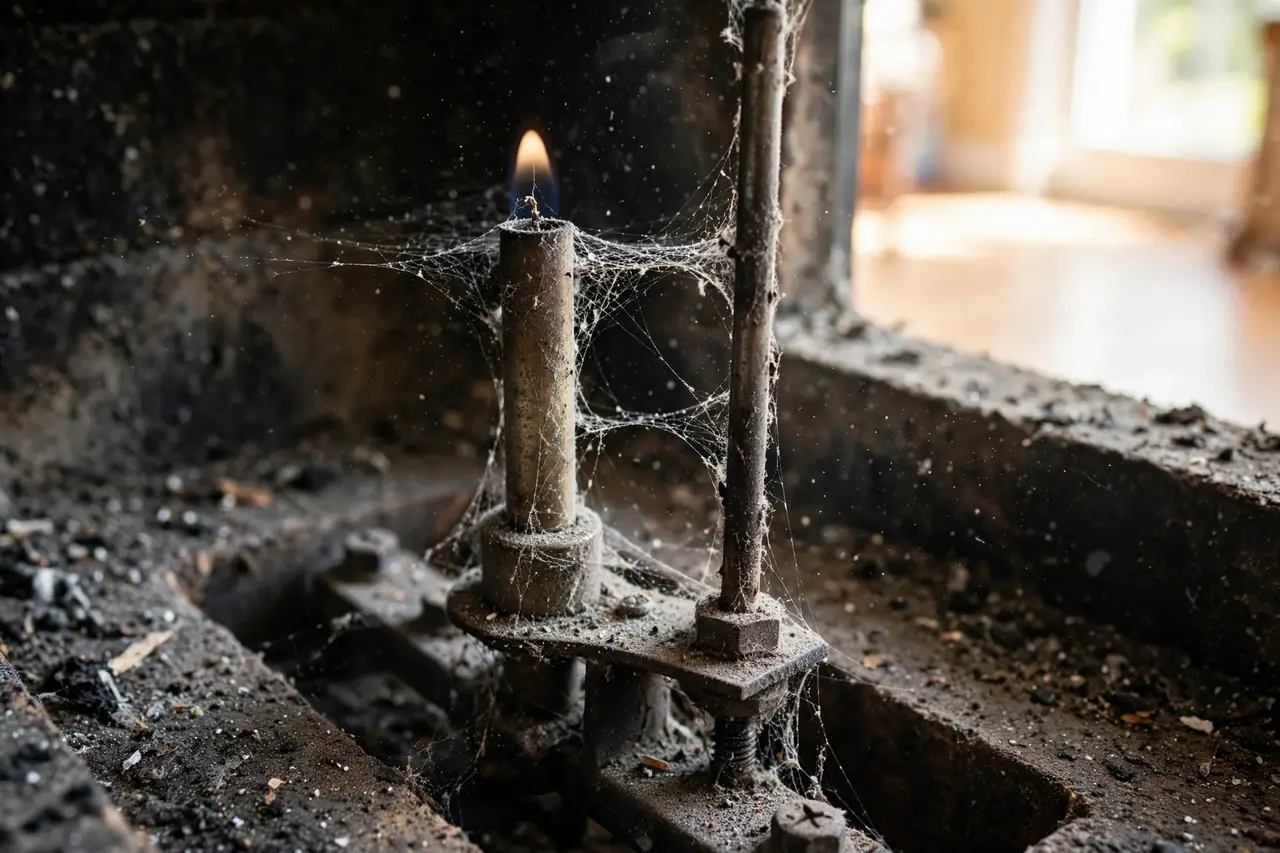
Gas supply problems are rarer but real. A partly closed shut-off valve, air trapped in the line after months of non-use, or low gas pressure can all starve the pilot. If other gas appliances in your home are acting up too, the problem is probably the supply, not the fireplace.
Here is the problem with that list: every cause on it looks the same from the outside — a pilot that is out. The next sections show you how to tell them apart.
Gas Safety Rules: Read This Before You Touch Anything
Gas safety rules come before every step in this article. If you smell gas — a rotten-egg odor — do not light the pilot, do not flip any switch, and do not use your phone inside. Leave the house at once, take everyone with you, and call 911 and your gas company from outside. The Pennsylvania Public Utility Commission gives the same order in its gas emergency guidance: leave immediately, cause no spark, and wait for the utility to say it is safe to return.
Never force the control knob. Use only your hand, never a tool, and if the knob will not push in or turn, stop and call a technician. A stuck knob is a broken valve, and forcing it can crack the valve and leak gas. The same rule covers every part of the gas system: never bypass the thermocouple, never disconnect a safety device, and never open a gas fitting yourself.
Keep the room clear while you work. Move flammable items at least 3 feet from the fireplace, keep children and pets out of the room, and make sure your carbon monoxide detectors work. If a detector sounds, leave and call for help — a CO alarm is never a false alarm you can ignore.
These rules are not extra caution. They are the line between a 10-minute fix and a dangerous one, so keep them in mind through every step that follows.
How to Fix a Pilot Light on a Gas Fireplace
To fix a pilot light on a gas fireplace, follow your manufacturer’s lighting label first — it is printed inside the access panel — and use the 10 steps below as the standard standing-pilot procedure from Heat & Glo’s own owner’s manual. The whole job takes about 10 minutes, and the two numbers to remember are 5 minutes of waiting and about 1 minute of holding.
What You Need Before You Start
- Your fireplace owner’s manual or the lighting label inside the access panel
- A long fireplace lighter or matches, if your unit has no piezo igniter button
- A flashlight, so you can see the pilot assembly clearly
- Five quiet minutes with no one flipping switches in the room
Relight the Pilot in 10 Steps
- Smell for gas around the fireplace, including near the floor. If you smell gas, stop here, leave the house, and call your gas company from outside.
- Turn the wall switch, remote, or thermostat to Off so the main burner cannot fire while you work.
- Open the lower grille or access panel and find the gas control knob. It is marked Off, Pilot, and On.
- Push the knob in slightly and turn it clockwise to Off. Do not force it — if it will not move by hand, stop and call a technician.
- Wait at least 5 minutes so any gas in the firebox clears out, then smell for gas again, including near the floor.
- Find the pilot inside the combustion chamber, next to the main burner. It is a small metal tube with a tiny opening, and the thermocouple rod sits beside it.
- Turn the knob counterclockwise to Pilot. This sends gas only to the pilot, not to the main burner.
- Push the knob in all the way and hold it. While holding it, press the red or black piezo igniter button once a second until the pilot lights, or touch a long lighter to the pilot opening. If the pilot does not light after 10 seconds, go back to step 4 and wait 5 minutes again.
- Keep holding the knob in for about one minute after the pilot lights. This heats the thermocouple so it can hold the gas valve open on its own.
- Release the knob slowly. If the pilot stays lit, turn the knob counterclockwise to On, test the fireplace with the wall switch, and close the access panel.
Heat & Glo’s standing-pilot manual gives exactly this sequence — 5 minutes to clear gas, about 1 minute of holding — and adds the limit that matters: if the pilot will not stay lit after two tries, turn the knob to Off and call your service technician or gas supplier. Read the full procedure in the Heat & Glo 6000C owner’s manual if your model differs at all.
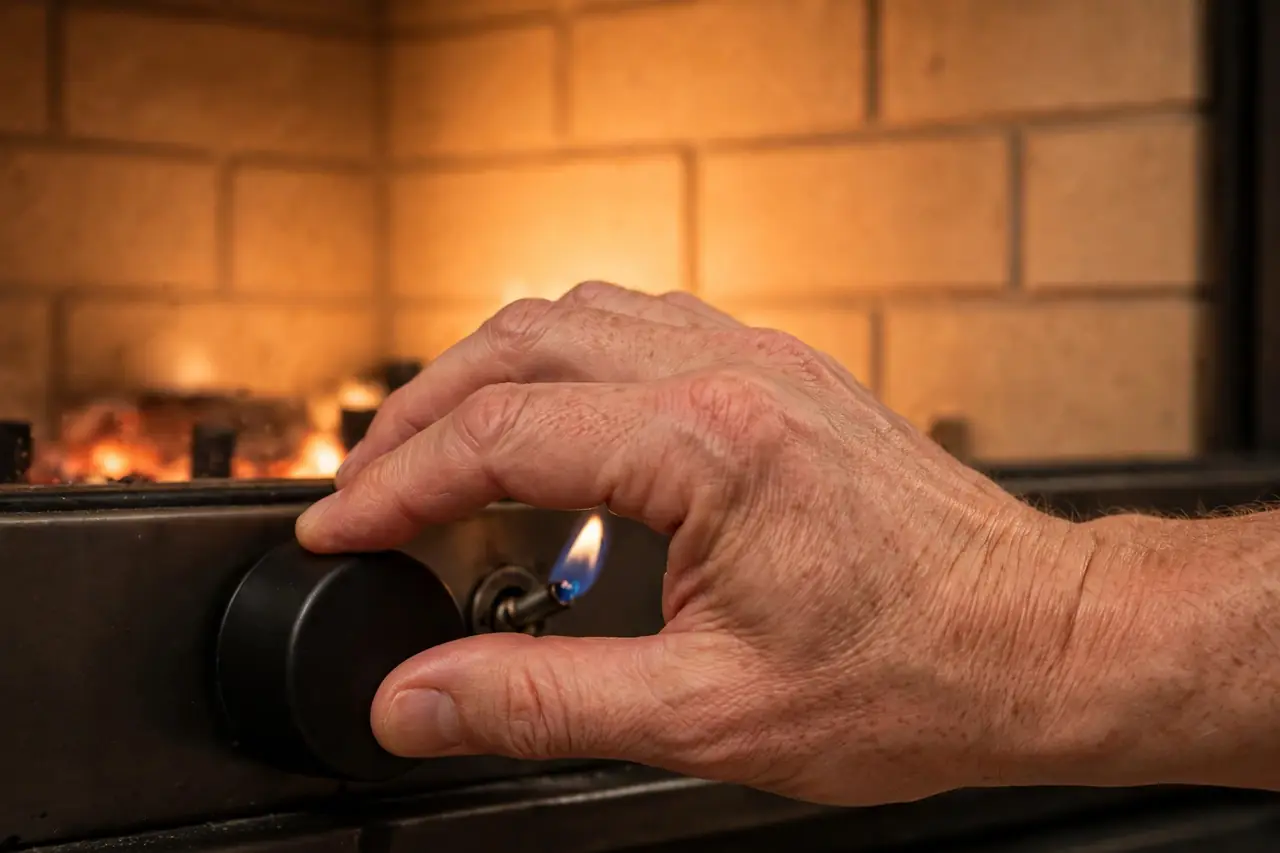
The pilot is lit, but a lit pilot is not a fixed pilot. The next sections show you how to read what the flame is telling you.
What Most People Get Wrong About Pilot Lights
Most people get pilot lights wrong in one way: they think a pilot that goes out is broken, so they relight it again and again until it holds. A pilot that goes out is usually the safety system shutting the gas off on purpose, and repeated relighting without finding the cause just pumps unburned gas into the firebox each time.
The second common mistake is releasing the knob too soon. Releasing the knob early is the most common reason a fresh pilot dies. The thermocouple needs about a minute of flame to make enough current to hold the valve open, and letting go after 10 seconds starves it. Hold the full minute, even when the flame looks strong.
The third mistake is turning the pilot off all summer to save gas, then wondering why it will not light in fall. A pilot left off lets dust and spiders settle into the orifice for months, and the first cold night becomes a cleaning job. Many owners leave the pilot on year-round for exactly this reason — it keeps a small positive pressure in the line that keeps debris out.
Here is the truth behind all three mistakes: the pilot is a sensor system, not a candle. Treat it like one, and the next section will make sense.
Pilot Lights but Won’t Stay Lit: the Thermocouple Test
When a pilot lights but dies the moment you release the knob, the thermocouple is almost always the cause. The thermocouple is a thin copper-colored rod that sits in the pilot flame, and when the flame heats it, it makes a tiny electric current — at least 25 millivolts — that holds the gas valve open. If the rod is dirty, bent out of the flame, or worn out, it makes too little current and the valve snaps shut.
Read the flame first, because the flame tells you which thermocouple problem you have. If the flame is small and barely touches the tip of the rod, the pilot is dirty or the rod has shifted. If the flame wraps the rod fully and the pilot still dies on release, the rod itself is likely worn out. A healthy flame is steady, mostly blue, about 1 to 2 inches tall, and it wraps the top 3/8 to 1/2 inch of the thermocouple tip.
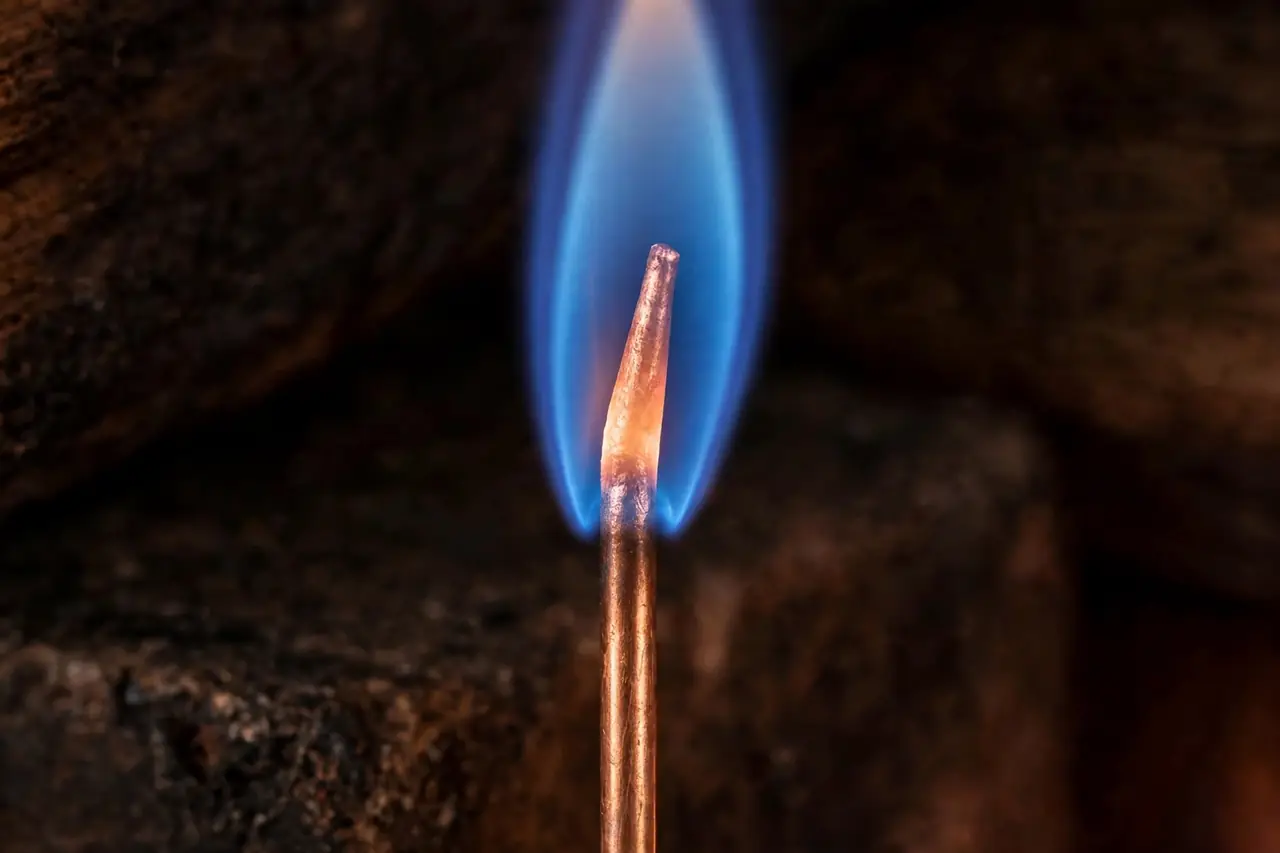
You can try one safe cleaning step. With the gas off and the fireplace fully cool, wipe the thermocouple tip gently with a soft cloth or very fine sandpaper to remove soot and oxidation, and check that the tip sits in the hottest part of the flame. Do not bend the rod hard, and do not remove any gas fitting to reach it.
If cleaning does not fix it, the thermocouple needs testing and replacement, and that is a technician’s job. A professional thermocouple replacement typically costs $100 to $350 for parts and labor, checked on November 13, 2026. If the pilot still dies after two relight attempts, stop trying — the part has told you its answer.
Pilot Flame Looks Wrong: Weak, Yellow, or Flickering
A weak, yellow, or flickering pilot flame means the pilot is not burning cleanly, and the cause is usually a dirty pilot orifice or the wrong air mix. A healthy pilot flame is steady and mostly blue with at most a small yellow tip. A flame that is mostly yellow, lazy, or shorter than an inch is not heating the thermocouple properly, and it can also make soot that coats the inside of the firebox.
The pilot orifice is a tiny opening that feeds gas to the flame, and it clogs easily. Dust, lint, and spider webs are the usual culprits — spiders are drawn to the mercaptan odorant added to natural gas, so they build webs inside pilot assemblies over the summer. A can of compressed air, blown gently across the pilot assembly with the gas off and the unit cool, clears most light blockages.
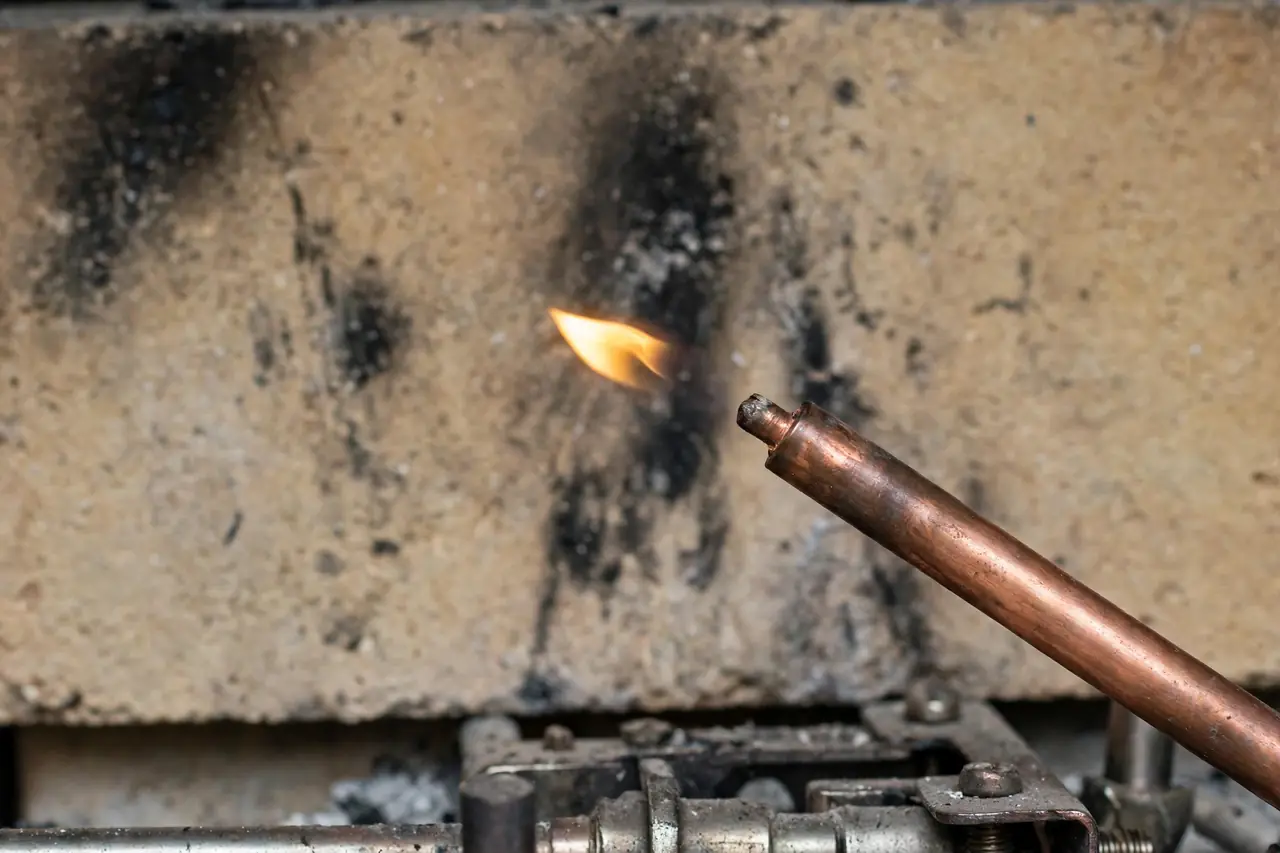
Do not poke the orifice with a pin or wire. A scratched or widened orifice burns wrong forever, so leave that cleaning to a technician. If compressed air does not restore a strong blue flame, the orifice needs a professional cleaning, or the gas pressure needs checking.
Soot on the glass or firebox walls is a second warning worth reading. Our guide to how to clean a brick fireplace covers safe soot removal, but heavy or fast-returning soot means the fireplace needs a service visit, not just a cleaning. A wrong-looking flame is a symptom, and the next section covers the fuel behind it.
Gas Supply Problems: When the Pilot Gets No Fuel
Gas supply problems starve the pilot, and the pilot flame gets small, weak, or refuses to light at all. The most common supply fault is the simplest: the fireplace shut-off valve is only partly open. Find the valve behind the lower grille — its handle should sit in line with the pipe when fully open — and open it fully by hand.
Air in the gas line is the next cause, and it shows up after a long idle summer or after gas work on the house. The first relight attempts push air out of the line, so the pilot may sputter or die once or twice before the gas reaches it. This is normal for one or two attempts, and it is why the 5-minute wait between tries matters.
Low gas pressure is harder to spot and you cannot fix it yourself. If the pilot flame stays small after cleaning, if other gas appliances in the house are weak or failing, or if the fireplace worked fine last season and nothing else changed, call your gas provider. Gas pressure and regulator work belong to the utility or a licensed technician, never to a homeowner with a wrench.
Fuel is only half the story, though. The other half is the decision to stop, and that decision has a clear line.
When to Stop and Call a Certified Gas Technician
Call a certified gas technician when the pilot fails twice, when you smell gas, when the flame is yellow and sooty, or when any gas part needs opening. Two failed relight attempts is the hard limit in Heat & Glo’s manual, and every extra attempt adds unburned gas to the firebox without adding information.
Use the table below to match what your fireplace is doing to the right next step.
Table: Pilot light symptoms and what to do next.
| What the fireplace does | What it usually means | What to do |
|---|---|---|
| Pilot dies when you release the knob | Worn or dirty thermocouple | Clean the tip once, then call a technician |
| Pilot flame is weak or yellow | Clogged orifice or low pressure | Blow out dust, then call a technician |
| Pilot will not light at all | No gas, air in the line, or bad valve | Check the shut-off valve, then call a technician |
| You smell gas at any point | Possible gas leak | Leave and call the gas company |
| Burner lights with a pop or thump | Delayed ignition | Keep it off and call a technician |
A technician can test the thermocouple’s millivolt output, test the thermopile, check gas pressure, and inspect the valve — jobs that need tools and training no homeowner guide can replace. If your fireplace needs wider work than a pilot fix, our fireplace repair guide explains what a service visit covers and what it usually costs. A pop or thump when the burner lights is the one symptom to never ignore: it means gas built up before igniting, so leave the fireplace off until it is serviced.
Knowing when to stop is the real fix. The last job is making sure you do not face the same cold night next year.
Keep Your Pilot Light Working All Winter
Keep your pilot light working all winter with one annual service visit before the heating season and a quick look at the flame each month. A technician cleans the pilot assembly and orifice, tests the thermocouple and thermopile, checks gas connections, and inspects the vent — the same visit that catches a blocked flue before it becomes a carbon monoxide risk.
The Chimney Safety Institute of America follows NFPA 211, the national standard that says chimneys, fireplaces, and vents shall be inspected at least once a year, and that standard covers gas fireplaces too. The CSIA’s homeowner resources explain what that annual inspection covers and why even a clean-burning gas fireplace needs it — bird nests and debris can block a gas flue with no visible warning.
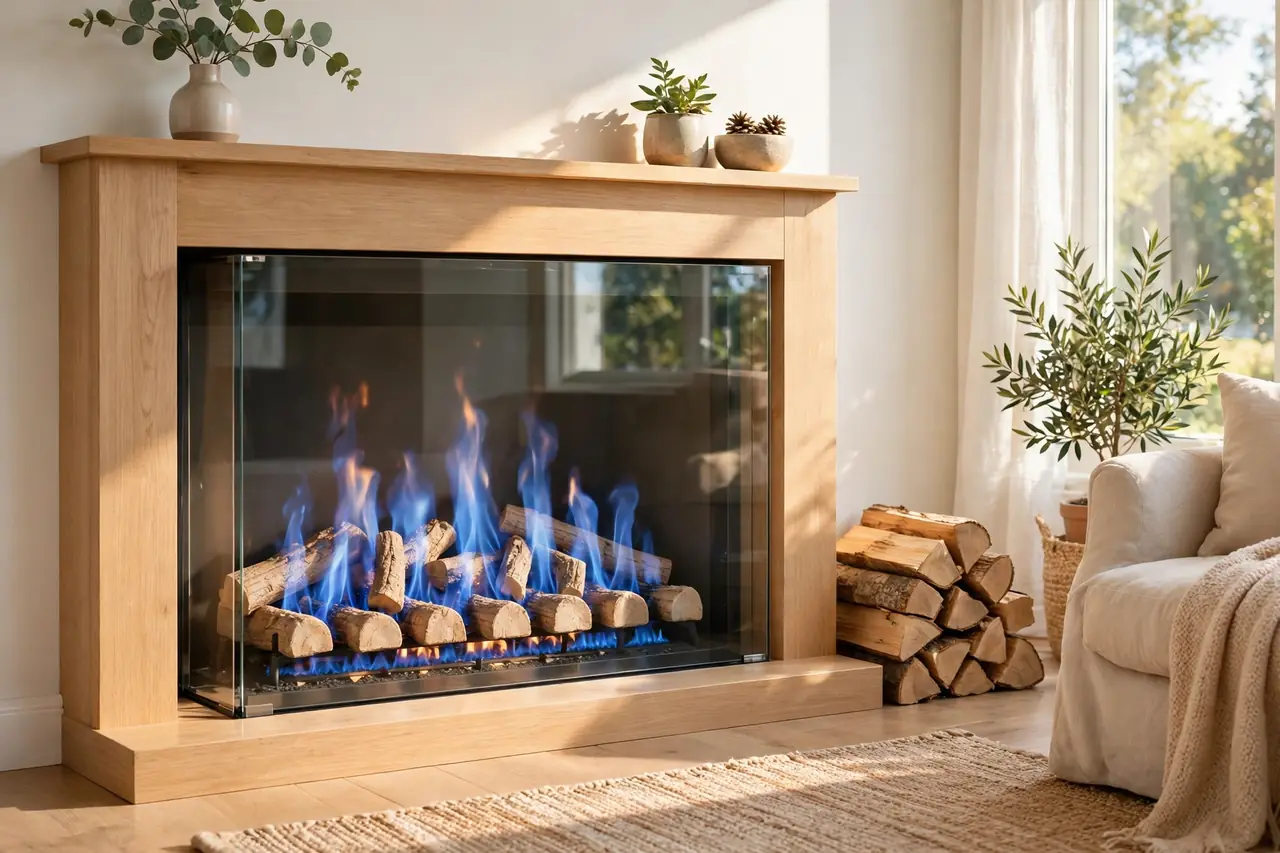
Between visits, do three small things. Look at the pilot flame once a month and make sure it is steady, blue, and wrapping the thermocouple tip. Keep the area around the fireplace clear of dust, pet hair, and flammable items. And test your carbon monoxide detectors monthly, since a venting problem does not announce itself with a smell you can trust.
Yearly care is the cheapest pilot fix there is, and our gas fireplace upkeep guide lays out the full seasonal routine — it is the single most useful next read if you want this pilot to light first try next fall. Before the questions, one honest note about this article itself.
A Short Safety Disclaimer
This article explains how to relight a standing pilot light and how to recognize common pilot problems, but it is general information, not a substitute for your fireplace’s own manual or a qualified technician. Always follow the lighting instructions printed on your unit first, and if anything in this guide conflicts with your manual, your manual wins. If you smell gas, feel unsure, or the pilot fails twice, stop and call a certified gas technician or your gas company. Gas work done wrong can cause fire, explosion, or carbon monoxide poisoning, so never open a gas fitting, bypass a safety device, or force a valve.
Related Guides
- Gas Fireplace Upkeep: The Full Seasonal Routine
- Fireplace Repair: What a Service Visit Covers and Costs
- Chimney Sweep Cost: What an Annual Inspection Runs
- Chimney Cap Repair: Stop Wind and Rain Reaching Your Pilot
- How to Clean a Brick Fireplace Without Damaging It
Frequently Asked Questions
Why does my gas fireplace pilot light keep going out?
A pilot light keeps going out when its safety sensor stops reading enough heat and closes the gas valve. A worn or dirty thermocouple is the most common cause, followed by a clogged pilot orifice and drafts down the vent. If it goes out again after one careful relight, call a technician.
How long should a gas fireplace pilot light stay lit?
A healthy standing pilot light should stay lit all the time unless you turn it off on purpose. It burns around the clock through the heating season, and many owners leave it on year-round to keep debris out of the pilot line.
Is it normal for a pilot light to go out?
A pilot light can go out once in a while from a strong draft or a brief gas interruption, and that is not unusual. It is not normal for it to go out often. Frequent outages mean a dirty orifice, a weak thermocouple, or a vent problem that needs attention.
How much does it cost to fix a pilot light on a gas fireplace?
A simple cleaning costs nothing but your time, while a professional thermocouple replacement typically costs $100 to $350 for parts and labor, checked on November 13, 2026. Gas valve or control problems cost more, which is why a technician should diagnose the cause first.
Can I relight my own pilot light?
Yes, most homeowners can safely relight a standing pilot by following the lighting label on their fireplace and the 10 steps in this guide. If you smell gas, feel unsure, or the pilot fails twice, stop and call a certified gas technician instead.
Why is my pilot light yellow instead of blue?
A yellow pilot flame usually means incomplete combustion from a dirty pilot orifice, the wrong air mix, or a gas supply problem. A healthy pilot flame is mostly blue with at most a small yellow tip, so a mostly yellow flame needs cleaning or a technician’s check.
How often should a gas fireplace be serviced?
A gas fireplace should be professionally inspected and serviced at least once a year, ideally before the heating season starts. The CSIA follows NFPA 211, which calls for an annual inspection of all chimneys, fireplaces, and vents, including gas systems.


