
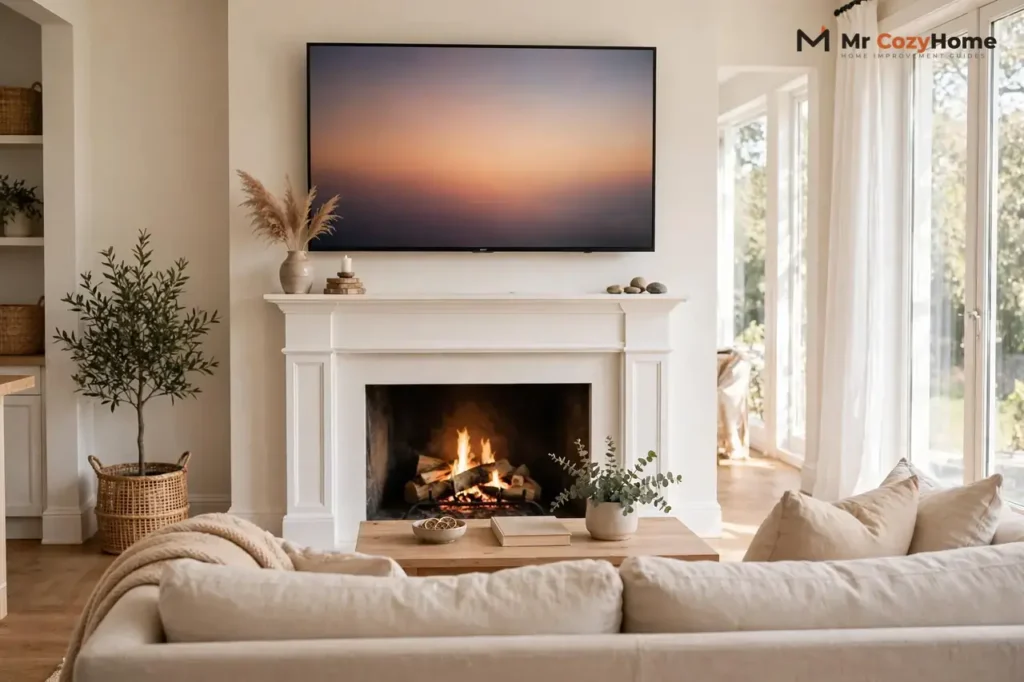
A TV over the fireplace looks clean and simple. One wall holds the fire and the screen, the sofa faces both, and the room feels calm instead of crowded.
But a TV over fireplace setup only works when two tests pass. First, the wall above the fire must stay cool enough for the TV — Samsung lists an operating temperature of 50°F to 104°F (10°C to 40°C) in its TV user manuals, and most other brands land in the same range. Second, the screen must sit low enough to watch without a sore neck. If either test fails, the TV belongs on another wall.
This guide walks you through both tests, the right height, the mantel gap, the best mount, and how to hide the cables. You will know by the end whether your fireplace wall is a good home for your TV — or a costly mistake.
The Short Answer: Yes, If Two Tests Pass
Yes, you can mount a TV over a fireplace. It works best over an electric fireplace or a gas fireplace with a deep mantel, where the wall stays cool and the mantel is not too high.
It works worst over a hard-used open wood fire. That setup brings the most heat, the most soot, and the highest risk to the screen. Many installers advise against it, and this guide agrees unless the heat test below comes back clearly safe.
Run these two checks before you buy a mount. First, run the fire for two to three hours on a cold day, then measure the wall where the center of the TV would sit. If the wall reads above about 100°F, that spot is too hot. Second, sit on your sofa and picture the screen center. If it would sit more than about two feet above your seated eye level and you sit closer than ten feet away, expect neck strain unless you use a pull-down mount.
How High Should a TV Go Above a Fireplace?
For seated viewing, the center of the screen should sit near your seated eye level, about 42 inches off the floor. That is the comfort target used across most mounting guides, and it is the number to measure against.
Above a fireplace, you will almost never hit 42 inches. A typical mantel sits 54 to 60 inches off the floor. Add a small gap above the mantel and half the screen height, and the center of a 65-inch TV lands around 74 to 84 inches — roughly 30 to 40 inches above your eyes.
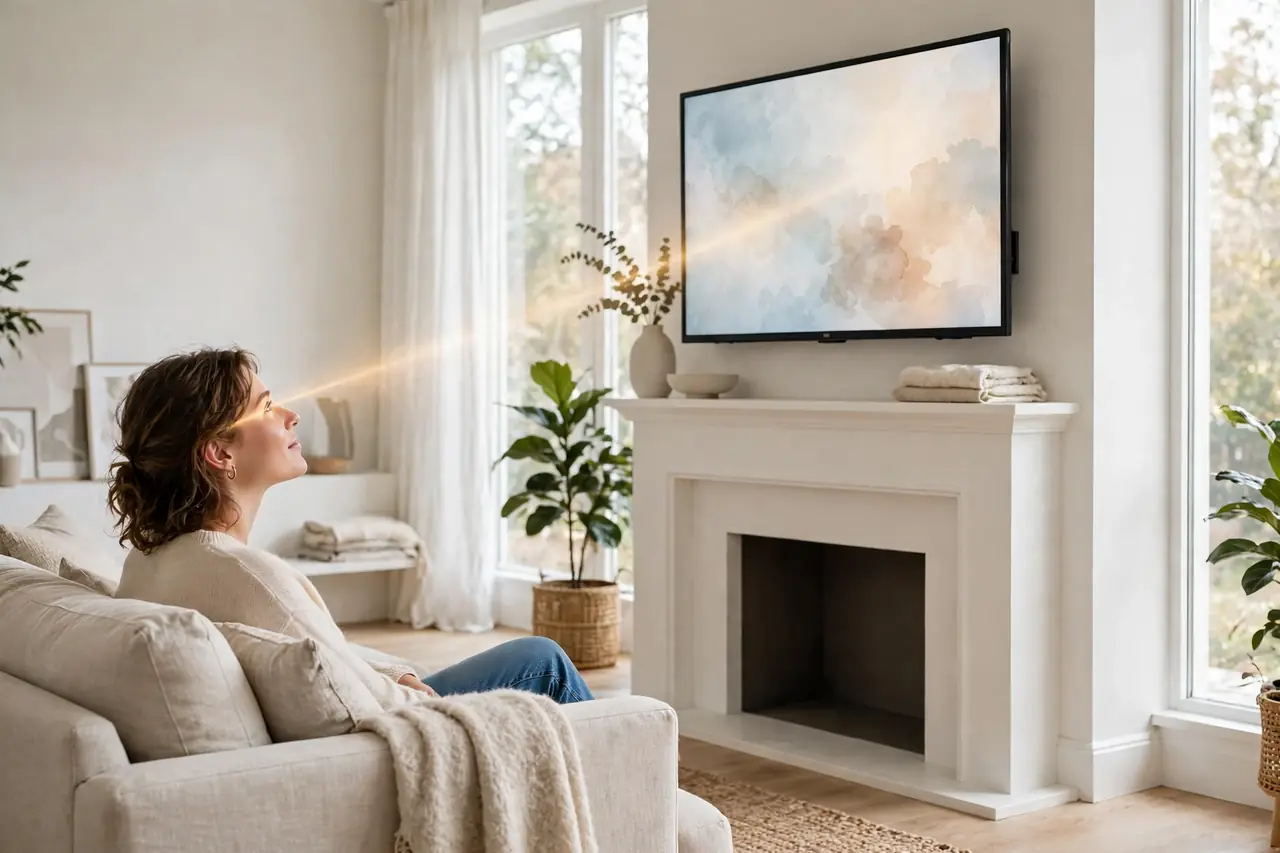
That height is the real problem with this setup. Sitting ten feet away, a screen center 30 inches above eye level means looking up about 14 degrees. That sits near the edge of comfort. Sit closer, and the angle grows fast. Keep the upward angle at or under about 15 degrees for long, relaxed viewing.
So the rule above a fireplace is simple: mount the TV as low as the mantel and the heat allow. Keep the bottom edge 4 to 8 inches above the mantel, and never center the TV on the wall above it. Every extra inch higher makes the viewing angle worse.
Size matters too. A bigger screen is easier to watch at a slight upward angle, but a screen wider than the fireplace surround looks top-heavy and wrong. As a rule, pick a TV no wider than the mantel or the fireplace surround. If you are still sizing the fireplace itself, our guide to average fireplace size shows the standard widths to plan around.
| TV size | Screen height | Screen center | Angle at 10 feet |
|---|---|---|---|
| 55 inch | About 27 in | About 72 in | About 14 degrees |
| 65 inch | About 32 in | About 74 in | About 15 degrees |
| 75 inch | About 37 in | About 77 in | About 16 degrees |
The table assumes a 4-inch gap above the mantel and seated eye level near 42 inches. Your mantel may be higher, which pushes every number up. Measure your own mantel before you trust any chart.
Will Heat From the Fireplace Damage Your TV?
Yes, heat can damage a TV over time. Hot air rises straight up the wall face, right into the screen and its parts. Long exposure above the rated temperature can dim pixels, warp parts inside the set, and shorten the life of the panel. Heat damage is also usually not covered by the TV warranty.
The risk depends on the type of fire. Electric fireplaces are the safest choice for a TV above, because most vent heat forward or down, and many let you run the flame with no heat at all. Gas fireplaces sit in the middle: they need the right clearance and a mantel that deflects heat. Open wood fires are the riskiest, with the hottest and least controlled heat.
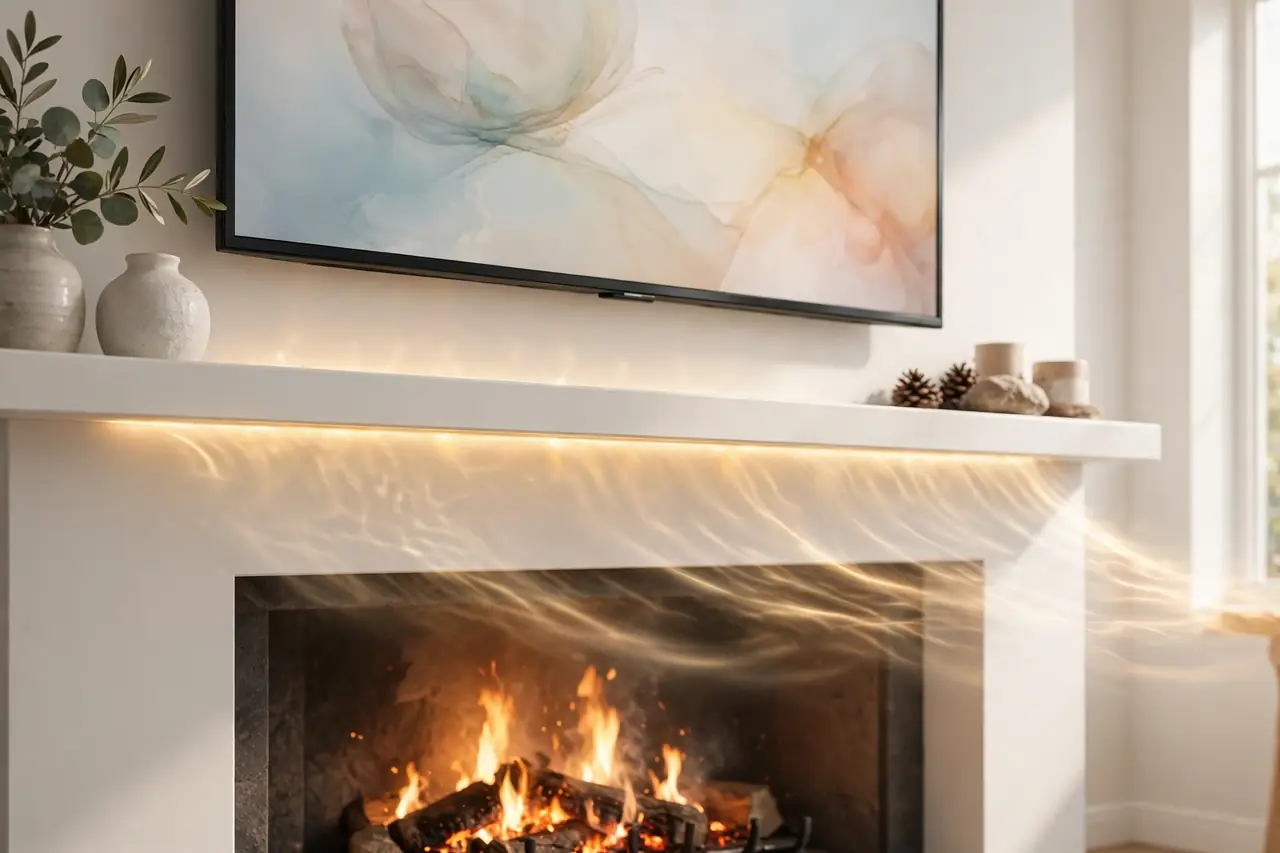
Do the heat test before you drill anything. Run the fireplace at its normal setting for two to three hours, then check the wall at the planned TV spot with an infrared thermometer. Under 90°F is safe. From 90°F to 100°F is borderline — add clearance or a heat deflector first. Over 100°F means the TV does not go there until the heat problem is fixed.
Your fireplace manual beats every rule of thumb in this article. Some gas models require a mantel or hood before anything goes above them, and some forbid a TV outright. If you lost the manual, the model number on the rating plate inside the firebox will find you a PDF online. A yearly gas fireplace service is also the right time to ask a tech whether your unit is safe for a TV above it.
Soot is the second problem with wood fires. It settles on the screen and inside the vents, and it is hard to clean off a panel safely. Keep the brick and surround clean, and see how to clean a brick fireplace without damaging the brick before soot builds up. A yearly chimney sweep also keeps a wood fire burning cleaner and cooler at the wall.
Mantel Clearance: The Gap That Protects Your TV
The mantel is not just decor. A deep mantel shelf pushes rising hot air out into the room before it reaches the wall above. Without that shelf, heat runs straight up the wall face and into the TV.
Keep the bottom edge of the TV 4 to 8 inches above the mantel. That gap gives heat room to escape, leaves space for cables and the mount, and lets a tilting mount angle down without hitting the shelf. Go higher only if your fireplace manual or your heat test says you must.
Also keep distance from the firebox itself. Aim for at least 20 inches from the top of the firebox opening to the bottom of the TV. A mantel that projects at least 8 inches from the wall deflects heat best. If your mantel is shallow or missing, a heat deflector shield under the TV can do the same job.
Building code sets limits here too. Under the International Residential Code, combustible mantel and trim material must sit at least 6 inches from the fireplace opening, and material between 6 and 12 inches from the opening may only project 1/8 inch for every inch of distance. So a deeper mantel has to sit higher above the opening. Check your local code before you change a mantel.
If the mantel is bare or dated, dressing it up is part of the same job. Our fireplace renovation ideas show low-cost mantel updates, and winter mantel decor ideas keep the shelf styled without crowding the TV.
Which Mount Works Best Above a Fireplace?
The mount you pick decides whether the TV is watchable. A fixed mount is the wrong choice above a fireplace in most rooms, because it locks the screen at its highest, least comfortable angle.
A tilting mount is the minimum. It angles the screen down toward the seats, usually 10 to 15 degrees, which cuts glare and color shift from a high position. The Sanus VLT6 manual lists a 12-degree downward tilt, support for 46- to 90-inch TVs up to 150 lbs, and mounting to wood studs or solid concrete — never drywall alone. That stud rule applies to every mount in this guide.
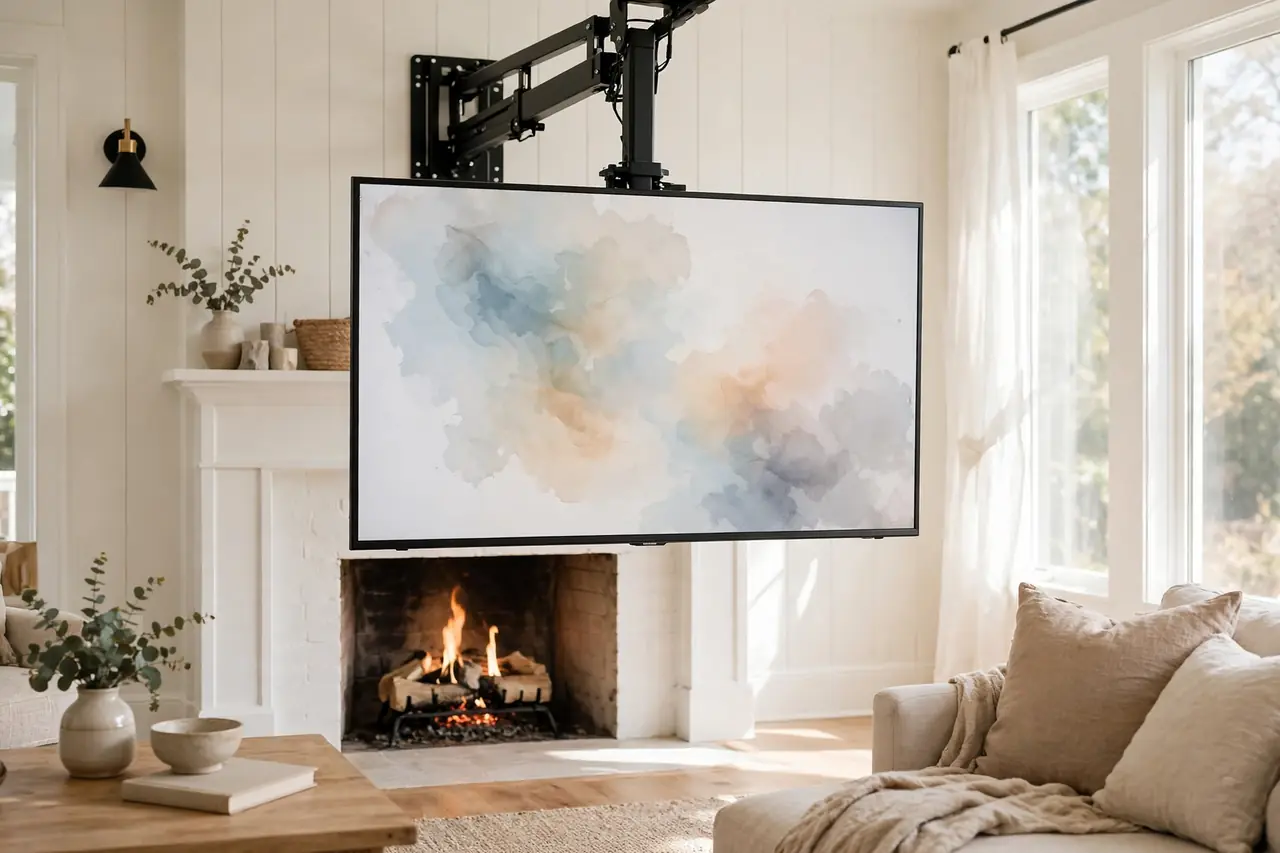
A pull-down mount is the best fix for a tall mantel. You pull the TV down and forward to near eye level to watch, then push it back up when you are done. The MantelMount MM700 manual lists up to 26 inches of vertical travel, swivel up to 30 degrees each way, and heat-sensor handles that turn red if the heat above the fireplace passes 110°F. Note its limit: it is made for decorative fireplaces that are not the home’s main heat source.
Pick the mount by your numbers, not by the box photo. Match the TV’s size and weight to the mount’s rated range, check the VESA pattern on the back of your TV, and confirm the wall has studs where the mount must anchor. Brick and stone need masonry anchors, not wood screws. If you cannot find two solid studs, hire a pro rather than trusting drywall anchors with a heavy screen.
| Mount type | Best when | Watch out for |
|---|---|---|
| Fixed | TV center near eye level | No angle fix; rarely right here |
| Tilting | Center up to 15 degrees high | Only 10 to 15 degrees of help |
| Pull-down | Tall mantel, center over 70 in | Needs clearance to swing down |
| Full-motion | Seats off to one side | Must clear the mantel when it moves |
How to Mount a TV Above a Fireplace, Step by Step
Plan first, drill once. A fireplace wall hides studs, brick, wiring, and sometimes a flue, so each step below earns its place.
- Read both manuals. Check the fireplace manual for TV clearances and the TV manual for its operating temperature limit.
- Run the heat test. Fire the fireplace for two to three hours, then measure the wall at the planned TV spot with an infrared thermometer. Do not proceed if it reads over 100°F.
- Mark the height. Tape the TV outline on the wall with the bottom edge 4 to 8 inches above the mantel. Sit on the sofa and check the angle.
- Find the studs. Use a stud finder and mark the centers. Above a fireplace, studs may sit wider apart or hide behind masonry, so verify each mark twice.
- Check what is behind the wall. Look for wiring, gas lines, and the flue path. If you are unsure, stop and call a pro.
- Mount the bracket into studs or masonry anchors. Use the hardware the mount maker supplies, rated for your TV’s weight.
- Hang the TV with a helper. A 65-inch screen is heavy and awkward; one slip can crack the panel or hurt someone.
- Set the tilt and test the pull-down travel. Make sure the TV clears the mantel through its full range of motion.
- Run the fire again with the TV in place. Check the wall temperature behind the set after an hour. If it climbs past 100°F, move the TV or fix the heat first.
If the wall is brick or stone, drill with a masonry bit and use anchors made for masonry. Never mount a TV to a mantel shelf itself — the shelf is not built to hold that weight. And if anything about the wall feels wrong — crumbling mortar, a hollow sound, or no studs where you need them — stop and get help. See how to repair a fireplace first if the surround has cracks or loose brick.
How to Hide the Cables
Dangling cables ruin the clean look that makes a TV over the fireplace attractive. Plan the cable path before you mount, because it is much harder to fix after the TV is on the wall.
The cleanest option is an in-wall cable kit. It routes power and HDMI behind the drywall from the TV down to an outlet near the floor. Only use cable rated for in-wall runs: low-voltage runs such as HDMI, Ethernet, and speaker wire need a CL2 or CL3 rating under the National Electrical Code. Never run a standard power cord inside the wall.
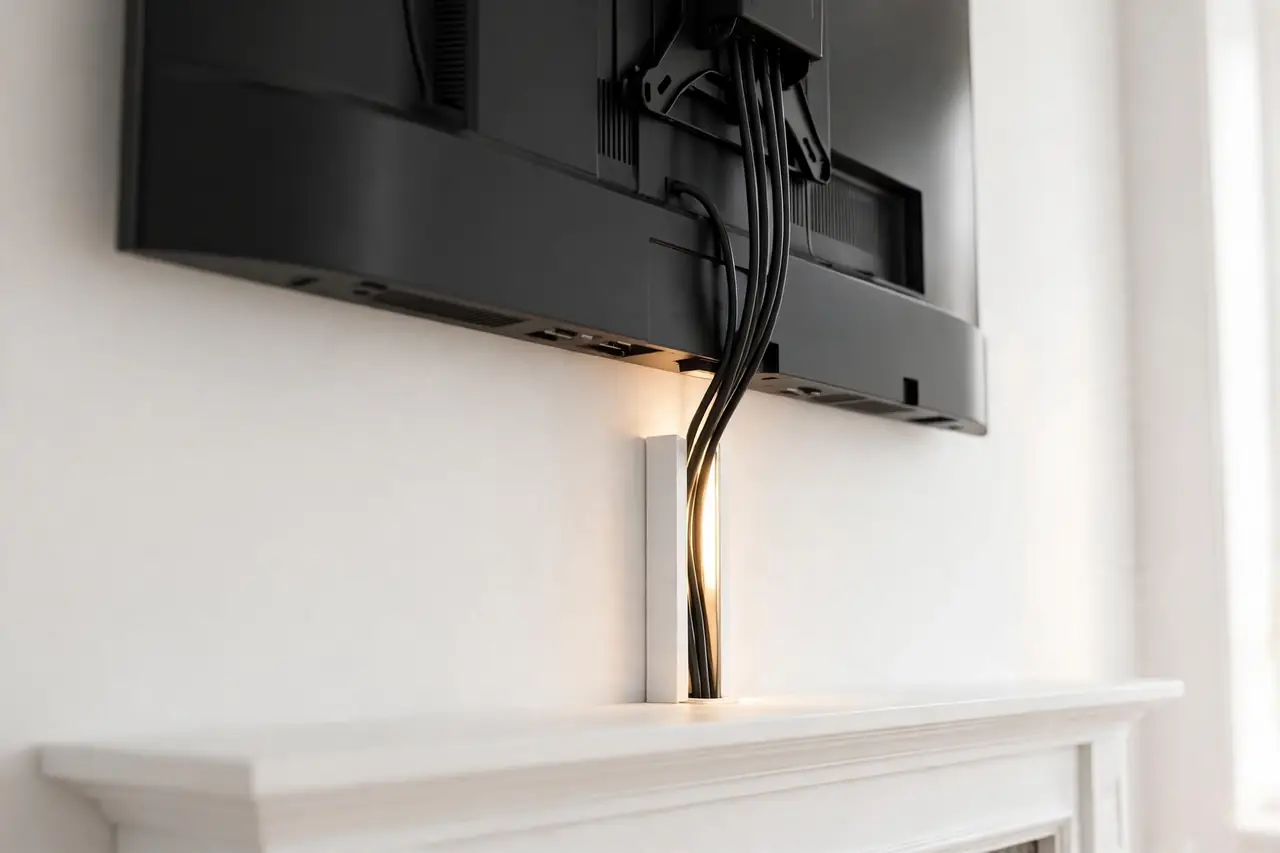
If you cannot open the wall, use a paintable cable raceway that runs down the side of the surround, or route cables behind the mantel shelf to a media cabinet beside the fireplace. A streaming stick hidden behind the TV removes one more cable from view.
Keep one thing in mind: the TV still needs air. Do not block the vents on the back of the set with a tight recess or a cover. Leave the airflow gaps the TV manual asks for, or heat will build up behind the screen even when the fireplace is off.
When a TV Over the Fireplace Does Not Work
Some rooms say no, and it is better to hear it before you drill. Walk away from the fireplace wall when any of these are true.
- The wall reads over 100°F at the TV spot after the heat test, even with a mantel and a deflector.
- The fireplace is an open wood fire you use often, with no deep mantel to deflect the heat.
- The fireplace manual forbids a TV above the unit.
- The mantel is so high that the screen center would sit more than about two feet above eye level and you sit close.
- The wall cannot hold the mount — no studs where you need them, crumbling brick, or a flue in the way.
- Someone in the home gets neck pain or headaches from looking up, even with a tilt mount.
A pull-down mount fixes the viewing angle, not the heat. If the wall is too hot, no mount makes it safe. In that case the fireplace wall is for art, and the TV goes elsewhere.
Better Alternatives: a Frame TV, a Media Wall, or the Side Wall
If the fireplace wall fails the tests, you still have good options. The first is a Frame TV. Samsung’s The Frame looks like framed art when it is off, thanks to Art Mode and a matte screen that cuts glare, and it ships with a slim no-gap mount plus a separate One Connect Box that hides the connections. It does not fix heat or height — the same tests apply — but it fixes the black rectangle problem that makes many people dislike a TV over the mantel.
The second option is a media wall beside the fireplace. Build the TV into the wall next to the fire, at eye level, with shelving and hidden cables. You keep the fireplace as the room’s focal point and gain a screen you can actually watch in comfort. Our fireplace renovation ideas include media-wall layouts that pair a TV wall with a fresh surround.
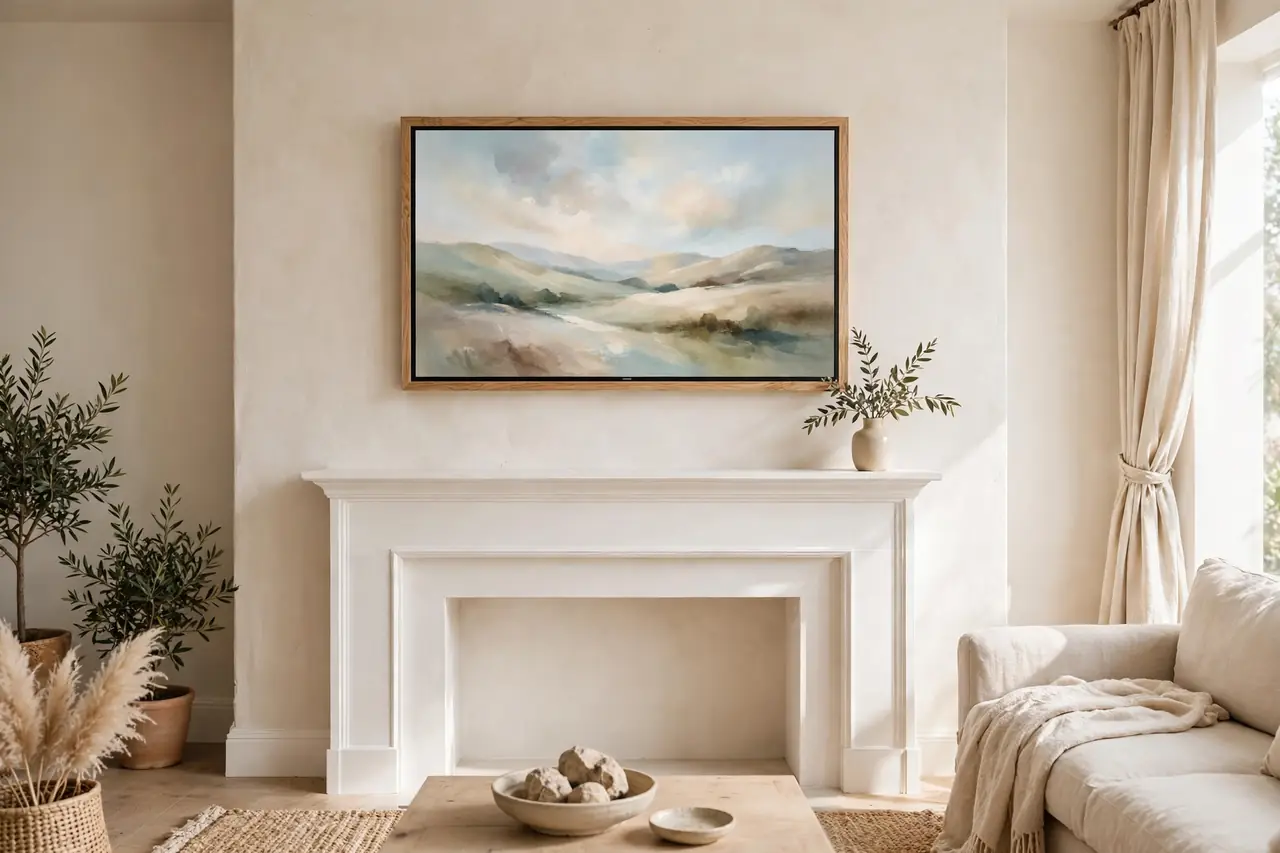
The third option is the simplest: put the TV on the side wall and keep the mantel for decor. A mirror, a large canvas, or a styled mantel shelf fills the space above the fire without any heat risk. Paint or stain can refresh the surround itself — see limewash vs whitewash for a brick fireplace and brick stain colors for two low-cost ways to change the look.
Whichever option you pick, keep the two focal points from fighting. One wall leads, the other supports. When the fire and the screen share one wall, the TV wins while it is on and the art wins while it is off — and that balance is the whole point.
Safety Disclaimer: Read This Before You Drill
This guide is general home advice, not a substitute for your fireplace manual, your TV manual, or local building code. Heat limits, clearances, and mounting rules vary by model and by home, and the manuals for your exact models always win.
Mount only into studs, solid concrete, or masonry with the right anchors — never into drywall alone. A falling TV can cause serious injury, so get a helper for the lift and use hardware rated above your TV’s weight. Keep power and low-voltage cables separate, use CL2 or CL3 rated cable for any in-wall run, and never run a power cord inside a wall.
Hire a licensed pro if you find damaged wiring, a gas line, a flue, or crumbling masonry in the way, or if the heat test fails and you still want the TV there. Stop and call a pro at once if you smell gas or see scorch marks, cracked brick, or smoke coming from anywhere except the firebox.
Related Guides
Fireplace Renovation Ideas: 12 Makeovers From a $50 Paint Job to a Full Remodel
Average Fireplace Size: 36×30 Inches — and How to Tell If Yours Fits Your Room
Gas Fireplace Upkeep: One Yearly Service and 30 Minutes of Cleaning Keeps It Safe
Repair Fireplace: Fix Cracks, Pilot Lights, and Smoke — Most Jobs Average $614
How to Clean a Brick Fireplace Without Damaging the Brick
Limewash vs Whitewash Brick Fireplace: Which One Should You Choose?
Frequently Asked Questions
Is it safe to mount a TV above a fireplace?
Yes, if the wall stays cool enough and the fireplace manual allows it. Run the fire for two to three hours, then measure the wall at the TV spot. If it stays under 100°F, mounting is usually safe with the right clearance. Over 100°F, or if the manual forbids a TV, choose another wall.
How high should a TV be above a fireplace?
As low as the mantel and the heat allow. Keep the bottom edge 4 to 8 inches above the mantel and aim for the screen center as close to 42 inches off the floor as you can. Above a typical mantel the center lands near 74 inches, so use a tilting or pull-down mount.
How far should a TV be from a fireplace?
Keep the bottom of the TV at least 20 inches above the top of the firebox, with a 4- to 8-inch gap above the mantel. Electric fireplaces need the least clearance, gas needs more, and open wood fires need the most — 50 cm or more, with a deep mantel.
Is it bad to mount a TV above a fireplace?
Not always, but it is often a compromise. The screen usually sits too high, which strains your neck, and heat can shorten the TV’s life. It works well over electric fireplaces and low gas units with a deep mantel, and poorly over hard-used wood fires.
Can you mount a TV above a wood-burning fireplace?
You can, but most installers advise against it for a fire you use often. Wood fires produce the hottest, least controlled heat plus soot. Only mount there if the heat test stays under 100°F, the mantel is deep, and the manual allows it.
Should a TV be mounted above a fireplace?
Only if both tests pass: the wall stays cool and the screen sits at a watchable height. If another wall lets you mount at eye level, use it and keep the fireplace wall for art. If the fireplace wall is your only option, use a tilting or pull-down mount.


