
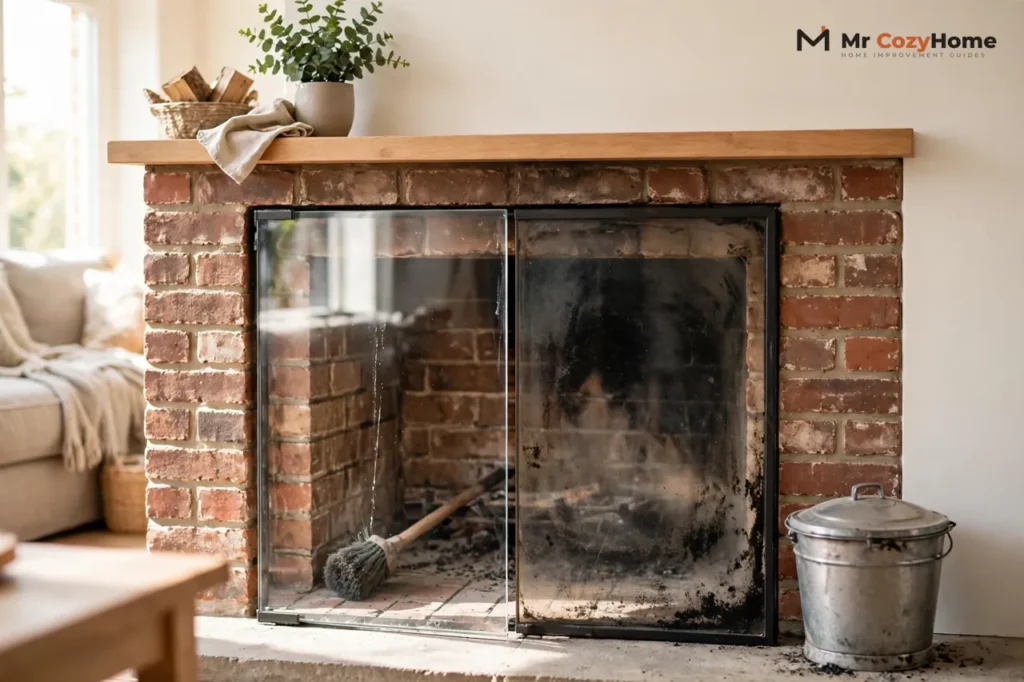
A dirty fireplace is more than an eyesore. Soot, ash, and a sticky black substance called creosote build up every time you burn wood, and that buildup is a real fire risk. Fireplace cleaning is a simple job once you know the order to work in and which cleaner is safe on each surface.
Here is the short answer. Wait at least 12 to 24 hours after your last fire so every ember is cold, then scoop the ash into a metal container with a lid, scrub the firebox with a baking soda and dish soap paste, and clean the glass with a vinegar solution or a fireplace glass cleaner. The Chimney Safety Institute of America (CSIA) says a masonry fireplace should be swept when soot reaches 1/8 inch of buildup, and the national standard calls for a chimney inspection at least once a year.
What Fireplace Cleaning Really Means
When people say “fireplace cleaning,” they usually mean three different jobs at once. The first is the firebox, which is the open box where the fire burns. It collects ash, soot, and half-burned bits of wood. The second is the glass, whether that means glass doors on a wood fireplace or the sealed glass front on a gas unit. The third is the chimney, where creosote builds up out of sight.
Only the first two are normal do-it-yourself jobs. Chimney cleaning needs a brush, rods, and a trained eye, and most homeowners hire a certified sweep for it. That split matters, because fireplace cleaning is a safety job, not just a tidy-up. A clean firebox burns better and smells better, but the real payoff is a chimney that cannot catch fire from its own buildup.
Your fireplace type decides your method. A wood-burning fireplace makes ash, soot, and creosote, so it needs the full routine. A gas fireplace burns cleaner and makes no creosote, but dust and a white haze still build up on the glass and the logs. This guide covers both types.
Before you start, check your owner’s manual. It tells you which cleaners are safe for your model and how to remove the glass or logs, and the maker’s website usually has a free copy if yours is lost.
Before You Start: Cool Down, Gear Up, and Protect the Room
Never clean a fireplace that is still warm. Ash can hide hot embers for a long time, even when the surface looks cool and gray. Wait at least 12 to 24 hours after your last fire, then hold your hand near the ash bed without touching it. If you feel any warmth at all, wait longer. Everything you touch must be cold to the touch before you begin.
Gather your tools before you make a mess. You will need a metal ash shovel and a metal bucket with a tight lid, a stiff brush, a shop vacuum or ash vacuum, rubber gloves, safety glasses, and a dust mask. For cleaners, keep it simple: baking soda, dish soap, white vinegar, warm water, and a few soft cloths. Add a fireplace glass cleaner for baked-on haze and a drop cloth or old towels for the floor.
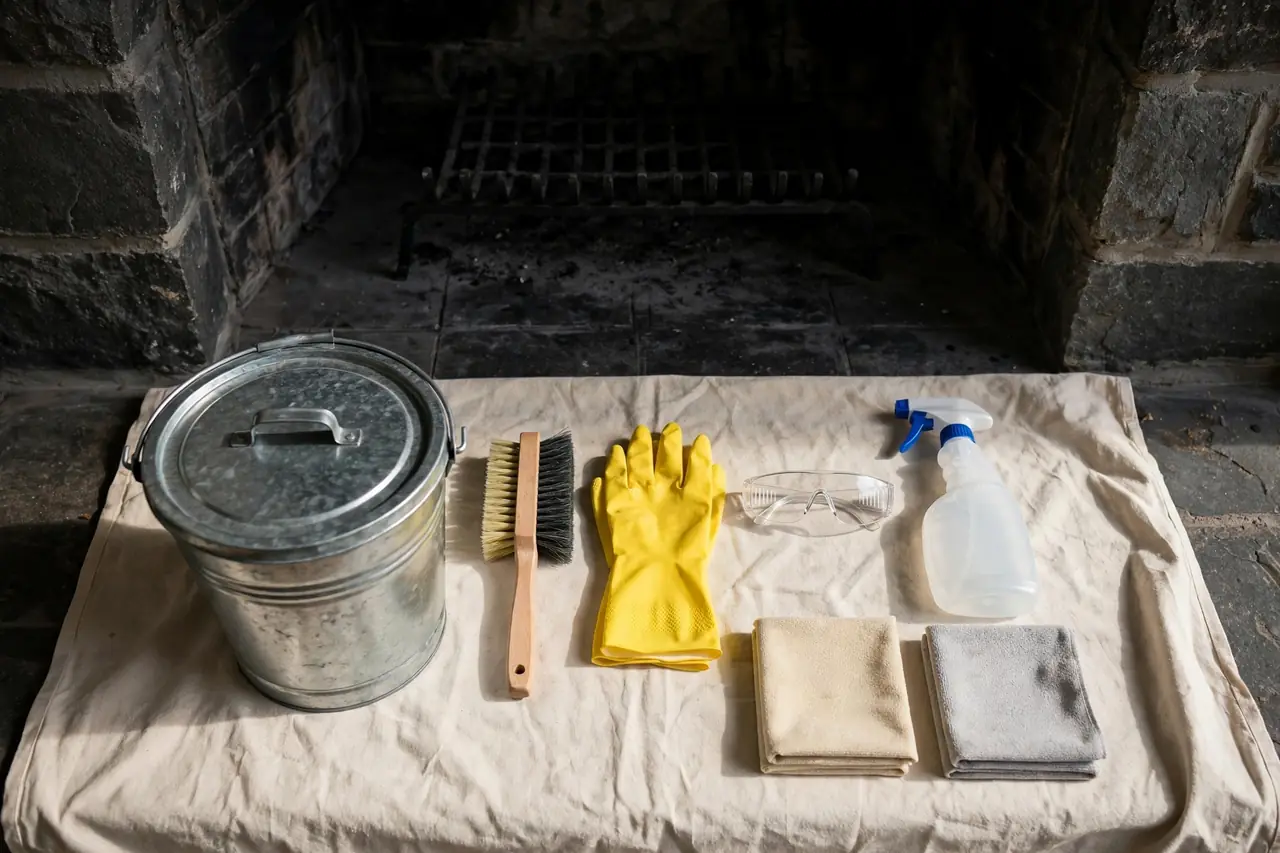
Protect the room next. Lay the drop cloth over the hearth and the floor in front of the fireplace, and move any rugs or decor out of the way. Soot dust floats, so open a window a crack for fresh air. Put on your gloves, glasses, and mask now, because fine ash is rough on lungs, skin, and eyes.
How to Clean a Wood-Burning Fireplace, Step by Step
Cleaning a wood-burning fireplace is a job of order, not force. Work in the right sequence and the mess stays small. Plan for about an hour for a full clean, plus drying time.
Follow these steps in order:
- Remove the grate, andirons, and any loose logs. Set them outside on an old towel or on the drop cloth.
- Scoop out the ash with the metal shovel and put it straight into the metal bucket. Leave about an inch of ash on the firebox floor, since a thin ash bed helps insulate your next fire.
- Vacuum the fine dust with a shop vacuum or ash vacuum. Never use a regular household vacuum, because fine ash can clog its filter and ruin the motor.
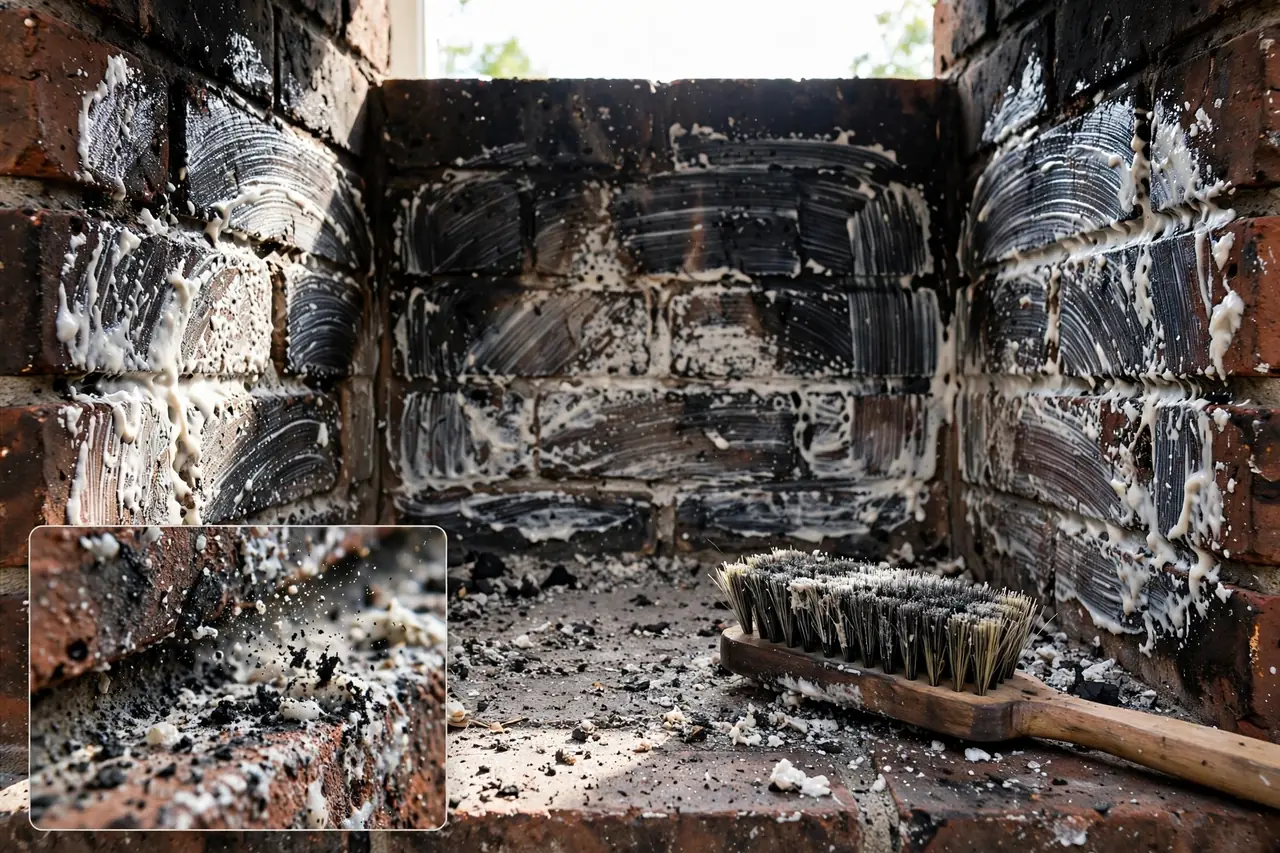
- Mix a thick paste of baking soda, dish soap, and a little warm water. Spread it over the sooty firebox walls with a cloth.
- Let the paste sit for 10 to 15 minutes, then scrub with a stiff brush. Always work top to bottom so the dirty water runs down to the floor, where you can wipe it up.
- Wipe the walls with a clean, damp cloth, then dry them with a towel. Rinse your cloth often so you are not spreading soot around.
- Scrub the grate and andirons with warm, soapy water, rinse them, and dry them well so they do not rust.
- Put everything back only when the firebox is fully dry.
For stubborn black stains, make a second pass with the same paste and give it more time to sit. Do not reach for oven cleaner or a harsh chemical spray, which can react with heat the next time you light a fire. Plain baking soda and dish soap handle most soot if you let them sit.
The ash bucket deserves care of its own. Put the lid on tight, carry the bucket outside, and set it at least 10 feet from your home. The U.S. Fire Administration advises storing cooled ashes in a tightly covered metal container kept outside, at least 10 feet from the house, because embers can stay hot for days. Never pour ash into a plastic bin, a paper bag, or the trash while it is still warm. You can find the full guidance in the U.S. Fire Administration heating fire safety sheet.
How to Clean Fireplace Glass Doors Without Scratches
Glass doors turn black fast, and they are the part of the fireplace you see most. The best glass cleaner is already in your fireplace: wood ash. For light to medium soot, dip a damp cloth into fine white ash, then rub the glass in small circles. The ash lifts soot without scratching. Wipe it clean with a damp cloth, then buff it dry.
For a lighter haze, mix equal parts white vinegar and water in a spray bottle. Spray the cool glass, let it sit for a minute, and wipe it with a soft microfiber cloth. Vinegar will not remove baked-on haze, so for that use a cream fireplace glass cleaner: spread a small amount with a soft cloth, let it dry to a light film, then buff it off.
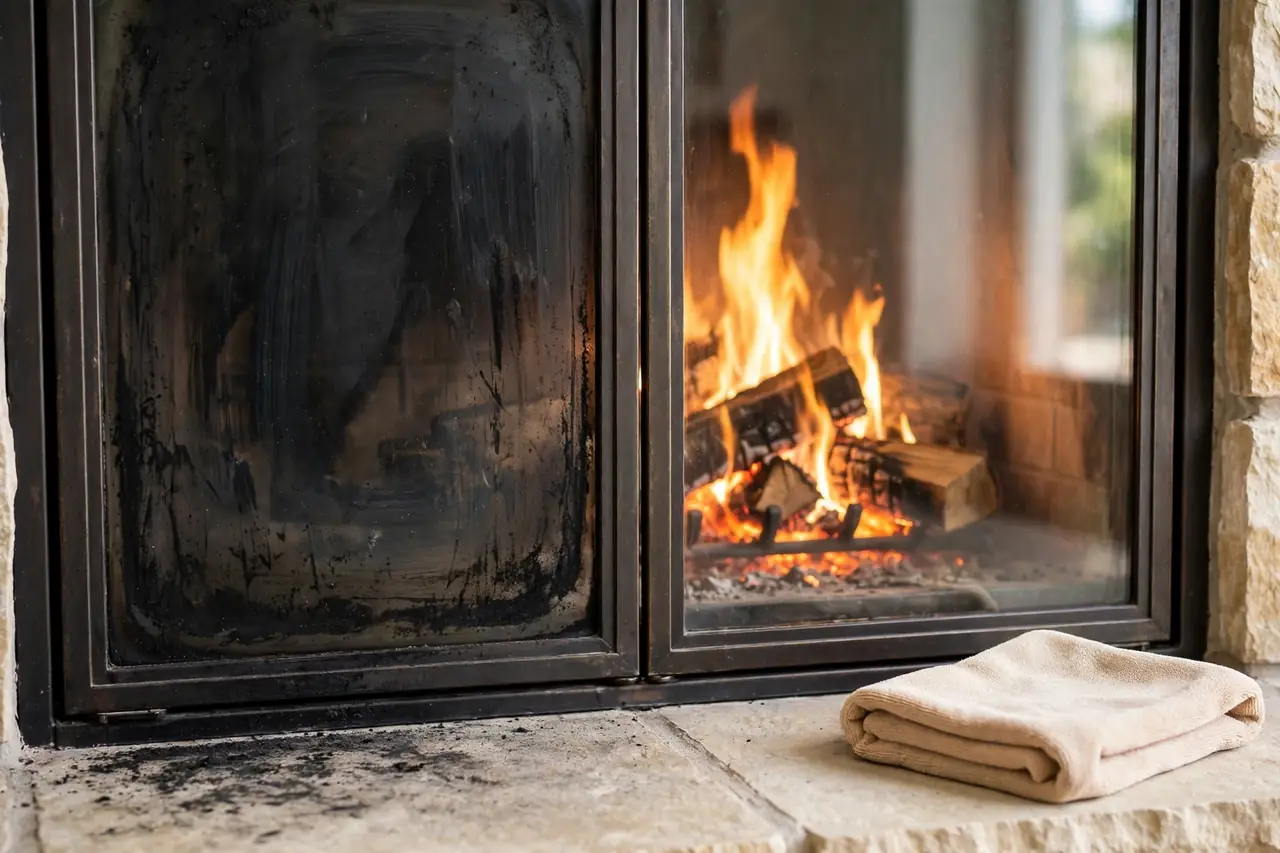
One rule matters more than any product choice: never use ammonia-based cleaner on fireplace glass. Standard window cleaners like Windex contain ammonia, and ammonia can streak, discolor, and weaken fireplace glass. The residue can also bake onto the surface the next time the fire runs. The Napoleon owner’s manual for its gas fireplace inserts says the same thing in plain terms: always use ammonia-free glass cleaners, and never use abrasive cleaners or razor blades on the glass. You can read the maker’s own care rules in the Napoleon Rosedale owner’s manual, which also notes that vinegar-based cleaners give a clean, streak-free finish.
Clean glass only when it is fully cool. Cold liquid on hot glass can crack it, and cleaner on a warm surface dries too fast and leaves streaks. If your doors come off, lay them flat on a soft towel, and check the gasket around the edges while they are out. A worn gasket lets smoke leak into the room.
How to Clean a Gas Fireplace
A gas fireplace looks low-maintenance, and in some ways it is. It makes no ash and no creosote. But dust and a white mineral haze still build up on the glass, the logs, and the burner. A yearly clean keeps it burning well and looking clear.
Start with safety. Turn the gas off first and let the unit cool down fully. Find the gas valve and switch it to off, and make sure the pilot light is out before you touch anything inside. If you are not sure where the valve is, check your owner’s manual before you go any further.

Follow these steps:
- Turn off the gas and let the fireplace cool completely.
- Remove the glass front the way your manual shows, and lay it on a soft towel.
- Take out the ceramic logs and lava rocks, and set them on an old towel outside the firebox.
- Brush dust off the logs and rocks with a soft paintbrush. Do not wash them with water or liquid cleaner.
- Vacuum the inside of the firebox with a brush attachment to remove dust and cobwebs.
- Clean the glass with a fireplace glass cleaner or a 50/50 vinegar and water mix. Never use an ammonia cleaner.
- Wipe the inside edges and the outside of the unit with a soft cloth dipped in warm, soapy water, then dry it.
- Let everything dry fully, put the logs and rocks back exactly where they were, and refit the glass.
The log layout matters. Gas logs sit in a set pattern that shapes the flame, so take a photo before you move them and put each piece back in the same spot. If a log is cracked or a burner port looks clogged, do not try to fix it yourself. Book a gas technician instead. For the full monthly and yearly routine between pro visits, see our guide to gas fireplace upkeep.
The Firebox, Hearth, and Tools: The Parts People Forget
Start with the hearth, the floor area in front of the firebox. Sweep it, then wipe it with warm, soapy water and dry it well. A soft brush gets soot out of grout lines on stone or tile. For a marble hearth, skip the vinegar and use only mild soap, since acids can etch marble.
Clean your tools next. The shovel, poker, tongs, and brush pick up soot every time you use them. Wipe them with warm, soapy water, dry them at once, and rub metal tools with a little metal polish if they look dull. A screen or glass spark guard gets the same treatment: dust it, wipe it, and check that it stands steady and has no holes.
Keep a thin ash bed on purpose. About an inch of ash left on the firebox floor is not laziness. That thin layer insulates the floor and helps your next fire catch faster. Leave about an inch of ash on the floor each time you scoop, and take out only the extra.
Keep your cleaning gear in one bucket near the fireplace so the next clean takes minutes. If your fireplace feels too small or too big for the room once it is clean, check our guide to average fireplace size to see how your unit compares.
Brick, Stone, and Marble: A Quick Note
Brick stains worst and forgives least, since soot sinks into its pores. A mild paste of baking soda and water, worked in with a stiff brush, handles most brick soot. Wet the brick first so it does not drink in the cleaner, scrub in small circles, and rinse well.
That is the short version on purpose. Brick cleaning is a big job of its own, and we cover it in full detail in our guide to how to clean a brick fireplace, including the methods for deep black stains and what to avoid on old brick. If your brick looks tired even after a good clean, you may like the softer look in our comparison of limewash vs. whitewash for a brick fireplace.
Stone needs a gentler touch than brick. Warm water and a little dish soap are enough for most stone. Never use vinegar on marble or limestone, because the acid can etch the surface. For stone, the rule is simple: test a small hidden spot first, wait for it to dry, and only then clean the rest.
Creosote: The Hidden Danger in Your Chimney
Creosote is the reason fireplace cleaning is a safety job. It is a dark, tar-like substance that forms when wood smoke cools and sticks to the inside of the chimney, and every wood fire adds a little more. Creosote is highly flammable, and a chimney fire can reach around 2,000°F, hot enough to crack flue tiles and let flames reach the wood framing of your house.
Creosote builds up in three stages. Stage one is light, flaky soot that brushes off easily. Stage two is harder and crusty, like dried tar on the flue wall. Stage three is a shiny glaze fused to the surface that cannot be brushed off at all, and it needs a pro with chemical treatment or special tools.
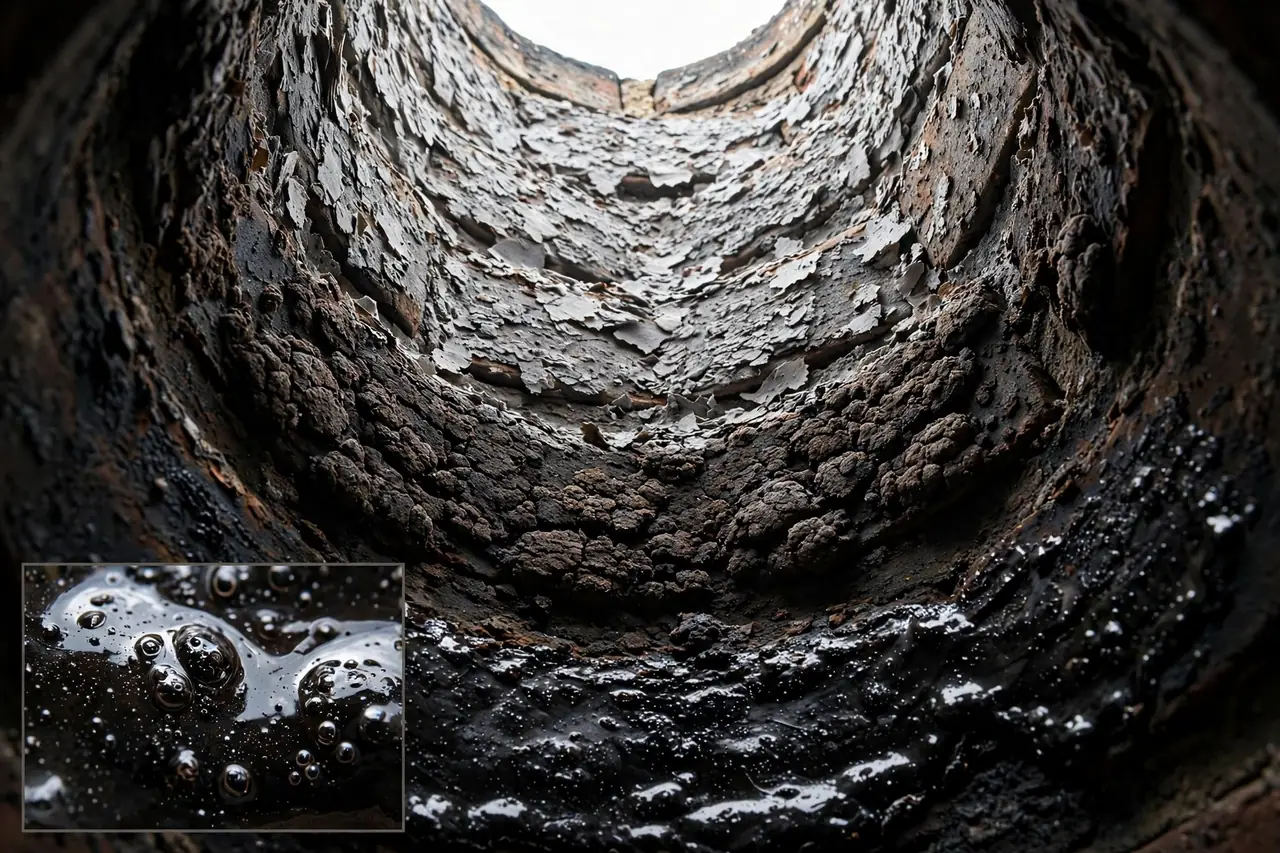
The Chimney Safety Institute of America gives a clear rule for when to act: a masonry fireplace should be swept at 1/8 inch of buildup, and sooner if any glaze is present. Factory-built metal fireplaces should be swept at any appreciable buildup, since the deposits are acidic and can corrode parts. The CSIA also warns against trusting chemical cleaning logs in place of a real sweep. You can read the CSIA’s own fire-prevention tips in their chimney fire safety guidance.
Three habits speed up creosote buildup: burning wet or unseasoned wood, burning slow smoldering fires with the air choked down, and running a cold chimney. Burn only dry, seasoned wood that has been split and stored under cover for six months to a year, and build small, hot fires with the damper fully open. These habits slow creosote more than any cleaning product can.
Watch for warning signs between sweeps: a strong campfire smell in summer, smoke pushing back into the room, or a black tar-like sheen inside the firebox. Stop using the fireplace and call a sweep if you see any of these. If you ever suspect a chimney fire, get everyone out and call 911.
How Often Should You Clean Your Fireplace?
The right schedule depends on how often you burn. A fireplace you light every night needs far more care than one you light twice a year. Use this table as a starting point, then adjust it to your own use.
| Task | How often | Who does it |
|---|---|---|
| Scoop out extra ash | Weekly in burning season | You |
| Wipe glass doors | Monthly, or when hazy | You |
| Deep clean firebox | At season start and end | You |
| Clean gas fireplace | Monthly dust, yearly deep clean | You |
| Chimney inspection | Once a year | Certified sweep |
| Chimney sweep | At 1/8 inch buildup | Certified sweep |
The yearly inspection is the one task you should never skip. The national standard, NFPA 211, says chimneys, fireplaces, and vents shall be inspected at least once a year, and cleaned or repaired as needed. That rule applies even if you barely used the fireplace, because animals can nest in the flue and moisture can damage a chimney that sat unused. Book in late summer or early fall, before sweeps get busy.
If you burn more than three times a week or burn softwood like pine, ask your sweep whether a mid-season cleaning makes sense. The rule is simple: inspect every year, clean when needed. The calendar sets the inspection, and the buildup sets the cleaning.
Budget for the pro visit, too. A standard sweep and inspection is a modest yearly cost, and far cheaper than chimney fire damage. Our guide to chimney sweep cost breaks down what a sweep and each inspection level usually cost.
Mistakes That Damage a Fireplace (or Start a Fire)
Most fireplace damage comes from small, avoidable mistakes:
- Cleaning while the fireplace is still warm, which risks burns and cracked glass.
- Using a regular household vacuum on ash, which clogs filters and can ruin the motor. Use a shop vacuum or ash vacuum instead.
- Using ammonia window cleaner on fireplace glass, which can discolor and weaken it.
- Scrubbing with steel wool or a razor blade, which scratches glass and damages firebrick.
- Pouring ash into a plastic bin or trash can, where hidden embers can smolder for days.
- Burning wet wood, trash, cardboard, or treated lumber, which builds creosote fast and can release harmful fumes.
- Skipping the yearly inspection because the fireplace “looked fine” from the front.
Fine ash passes through a normal vacuum filter and into the motor, and a single hot ember can melt or catch inside the machine. An ash vacuum is built with a metal canister and a heat-safe filter for exactly this job. If you do not own one, sweep the fine dust into a dustpan instead. Either way, never use a household vacuum for ash.
Another common mistake is closing the glass doors on a gas fireplace while it runs. On a gas-fueled masonry fireplace, the doors should stay fully open during use, since closed doors can make the flames burn unevenly. Never leave a fire burning when you go to sleep or leave the house.
Safety Disclaimer: Read This Before You Light the Next Fire
This guide covers routine cleaning only. It does not replace a professional chimney inspection, and it does not cover chimney sweeping, structural repair, or gas line work. If you see glazed creosote, cracked firebrick, a damaged flue liner, a stuck damper, or any sign of a chimney fire, stop using the fireplace and call a CSIA Certified Chimney Sweep before you burn again.
Handle ash as if it can still burn, because it can. Let ash cool fully, move it only in a metal container with a tight lid, keep that container outside at least 10 feet from your home, and never put ash in the trash until it is completely cold. Creosote is flammable, so do not burn your way through a dirty chimney and hope for the best.
Keep smoke and carbon monoxide alarms working, test them every month, and change the batteries when you change your clocks. If an alarm sounds or you smell gas near a gas fireplace, leave the house and call for help from outside. When in doubt, ask a certified chimney sweep or a licensed gas technician.
Related Guides
If you are getting your fireplace ready for the season, these guides cover the next steps. Learn how to clean a brick fireplace in depth, plan your yearly visit with our chimney sweep cost guide, and keep your unit in shape with gas fireplace upkeep. If you spot damage, read our guide to repairing a fireplace before you decide what to fix yourself. Up top, a sound cap keeps rain and animals out, so see chimney cap repair, chimney cap replacement, and our look at the chimney topper. And if a clean fireplace has you thinking bigger, browse fireplace renovation ideas for a fresh look.
Frequently Asked Questions
How often should a fireplace be cleaned?
Scoop out extra ash weekly during burning season, wipe the glass monthly, and deep clean the firebox at the start and end of each season. Have the chimney inspected once a year, and swept when soot reaches 1/8 inch thick, or sooner if you see glazed creosote.
How long should you wait before cleaning a fireplace?
Wait at least 12 to 24 hours after your last fire. Ash can hide hot embers long after the flames are out, so everything must be cold to the touch first. If you feel any warmth near the ash bed, wait longer.
Can you use vinegar to clean fireplace glass?
Yes, for light buildup. Mix equal parts white vinegar and water, spray it on the cool glass, let it sit for a minute, and wipe it with a soft cloth. Vinegar will not remove baked-on haze, so step up to a cream fireplace glass cleaner for that. Never use ammonia-based window cleaner, which can discolor and weaken fireplace glass.
Can I clean my fireplace myself, or do I need a chimney sweep?
You can clean the firebox, glass, hearth, and tools yourself with basic supplies. Chimney sweeping and inspection are pro jobs. Hire a CSIA Certified Chimney Sweep once a year, and whenever creosote reaches 1/8 inch or you see glaze, smoke, or damage.
How do I dispose of fireplace ashes safely?
Let the ashes cool fully, then shovel them into a metal container with a tight-fitting lid. Keep it outside, at least 10 feet from your home, for several days. Never use a plastic bin or trash can for warm ash, since hidden embers can smolder and start a fire.
What is the best way to clean soot off a fireplace?
For the firebox, use a paste of baking soda, dish soap, and warm water. Spread it on, let it sit for 10 to 15 minutes, scrub with a stiff brush from top to bottom, then wipe clean. For glass, rub with damp ash or use a vinegar solution for light soot. Avoid harsh chemicals, steel wool, and oven cleaner, which can damage the surface.


