
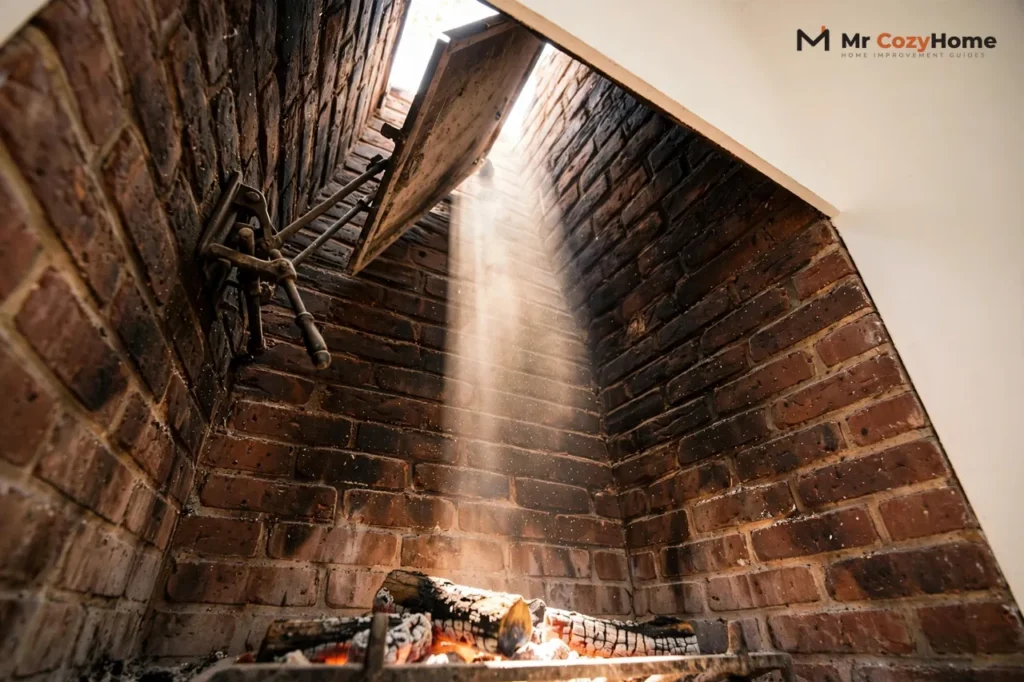
A fireplace damper is a metal plate that opens and closes your chimney flue. When it is open, smoke and fumes from your fire rise up the chimney and out of your house. When it is closed, it seals the chimney so cold air stays out and your warm air stays in.
If smoke has ever puffed back into your room, or you have felt a cold draft from the fireplace, the damper is almost always the answer. This guide shows you what it does, how to open and close it, how to tell if the flue is open, what to do when it sticks, and what a repair costs.
What Is a Fireplace Damper?
A fireplace damper is a small metal door inside your chimney system. Most are made from cast iron or steel, and a few are ceramic. It sits in the flue, which is the passage that carries smoke from the firebox up through the chimney and out of your roof.
Think of it as the chimney’s door. A metal plate that opens and closes the chimney flue is all it is, but that one plate controls the air in your whole fireplace.
People use a few names for the same part. Chimney dampers, fireplace flue dampers, and flue dampers all mean the same thing. When someone says “open the flue,” they mean “open the damper.”
Most modern fireplaces have a damper because building codes in most places require one for safety. Older homes and do-it-yourself fireplaces built without permits may not have one. Without a damper, the chimney is an open hole in your roof that lets warm air out, cold air in, and rain and animals in too.
The damper size matches your fireplace opening, so know your firebox size before you shop for parts. Our guide to average fireplace size shows the common sizes and how to measure yours.
One rule runs through this whole guide, and it is the most important thing in it: never light a fire with the damper closed. Smoke and carbon monoxide will have nowhere to go except into your room.
How a Fireplace Damper Works
A fireplace damper works by opening or closing the passage between your firebox and the sky. Open, it clears the way for air to move up the flue. Shut, it blocks that passage.
Hot air rises. That simple fact is what makes a chimney work. A lit fire heats the air in the flue, and the hot air rises fast, pulling fresh air into the fire and carrying smoke up with it. This upward pull is called the draft, and the damper controls it.
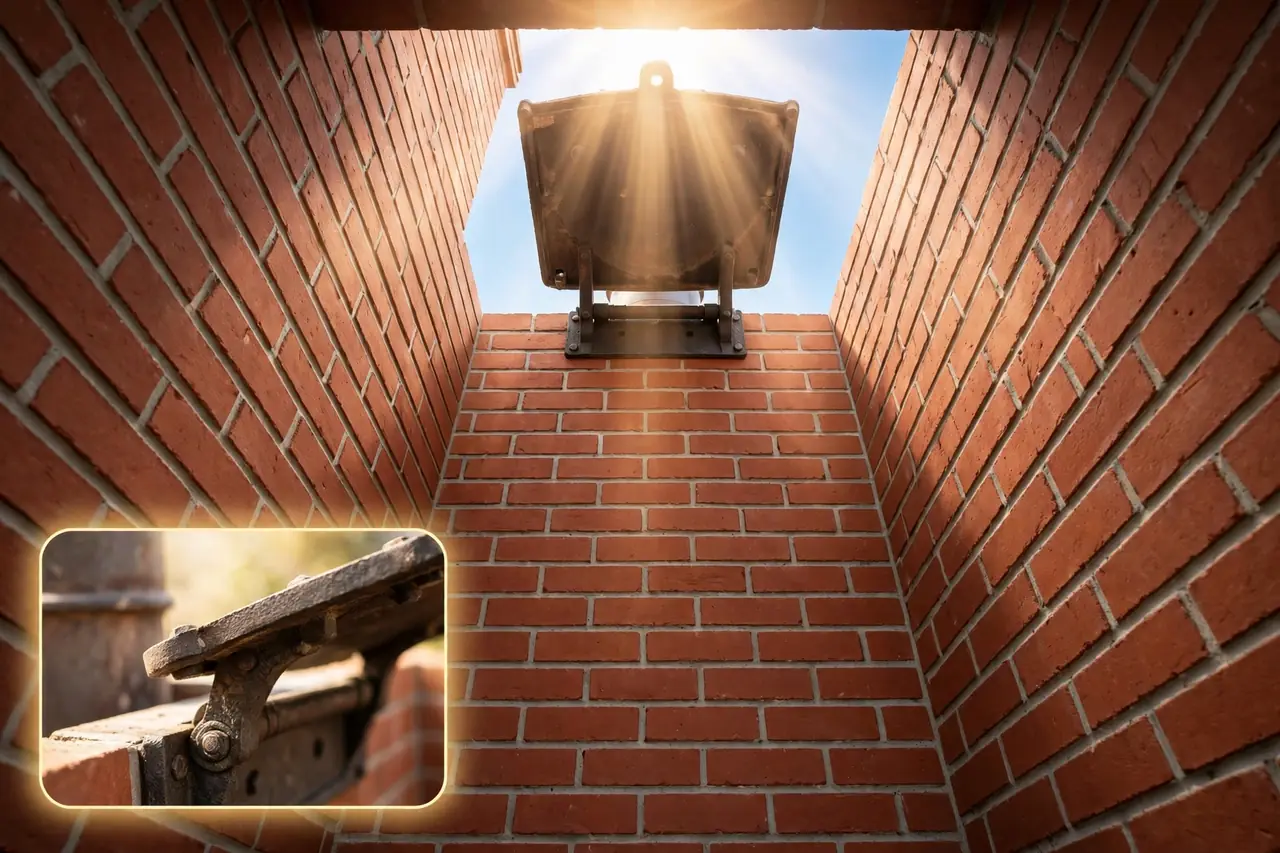
With the damper fully open, the draft is strong, and smoke, soot, and gases travel up the chimney and out. Hot air rises, so an open flue pulls smoke up and out of your home. With the damper half open, the draft is weak, and smoke can spill back into the room.
When no fire is burning, the same passage works against you. Warm air rises up the open chimney and escapes, and cold outside air sinks down it. Closing the damper stops both. A closed damper seals the chimney like a lid on a pot.
Some dampers only have two positions, fully open or fully closed. Most let you set the plate partway, so once a fire is burning well you can close it a little to slow the burn. Never do this during startup, and never close it partway if smoke starts to enter the room.
Types of Fireplace Dampers
Most fireplaces use one of two damper types. They do the same job in different places.
Throat Dampers
A throat damper sits just above the firebox, at the base of the chimney. It is a cast-iron or steel plate in a metal frame, moved by a handle, lever, poker, rotary knob, or chain inside the fireplace.
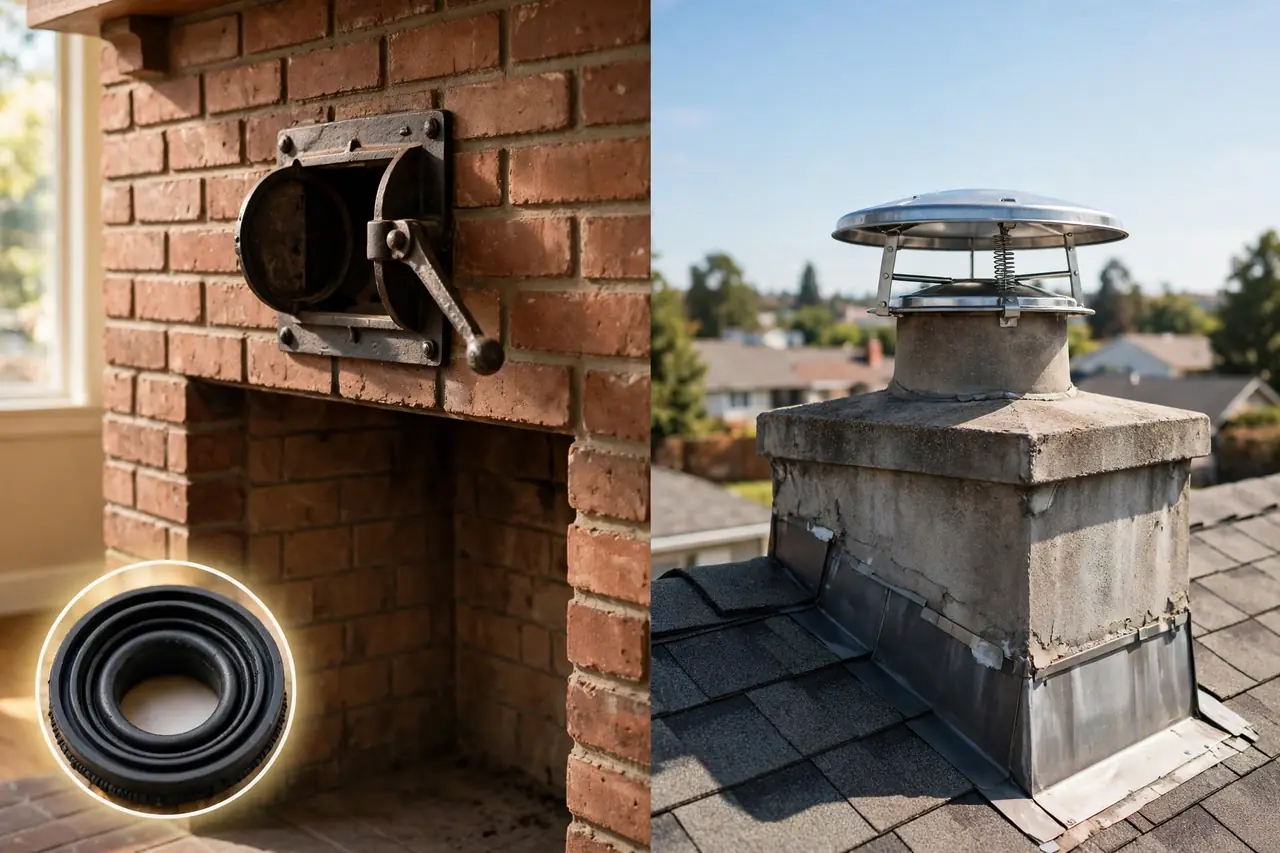
Throat dampers are the common type in older masonry fireplaces. They are simple and cheap, and the parts are easy to find. A throat damper sits just above the firebox, where you can reach its handle from inside the fireplace. The weak point is the seal: metal on metal never seals perfectly, and heat warps the plate over time, so an old one often leaks air even when closed.
Common controls are the poker handle (push up and away to open, pull toward you to close) and the rotary knob (turn a key and a screw pushes the plate open). The exact motion varies by maker.
Top-Sealing Dampers
A top-sealing damper sits at the top of the chimney, on the flue itself. It is a gasketed lid that closes over the flue opening, with a long cable or chain running down into the firebox. Pull the cable to close it, and release it from its hook to let the spring or weight pop it open.
Because the lid seals with a rubber gasket, it closes far tighter than a throat damper. A top-sealing damper seals tighter than a throat damper, so it stops drafts and heat loss better. It also keeps rain and animals out when closed. The trade-off is cost: it sits on the roof, so fitting one is usually a professional job.
A top-sealing damper is not the same as a chimney cap, though the two work together. A chimney cap is a cover that keeps rain and animals out while still letting smoke escape. If your cap is cracked or rusted, read our chimney cap replacement guide, and if you want to know what sits on top of the flue, see our chimney topper guide.
Which Type Do You Have?
Look inside the firebox with a flashlight. A metal plate just above the firebox with a handle nearby means a throat damper. A cable or chain hanging in the firebox with no plate above it usually means a top-sealing damper. Gas fireplaces often have a different setup, so check your manual. Our gas fireplace upkeep guide covers the yearly checks that keep a gas unit safe.
How to Open a Fireplace Flue
Opening a fireplace flue means opening the damper. Do it before you light anything, and confirm it is fully open before the first match is struck.
First, make sure the fireplace is cold and empty, and put on gloves and safety glasses if there is soot in the firebox.
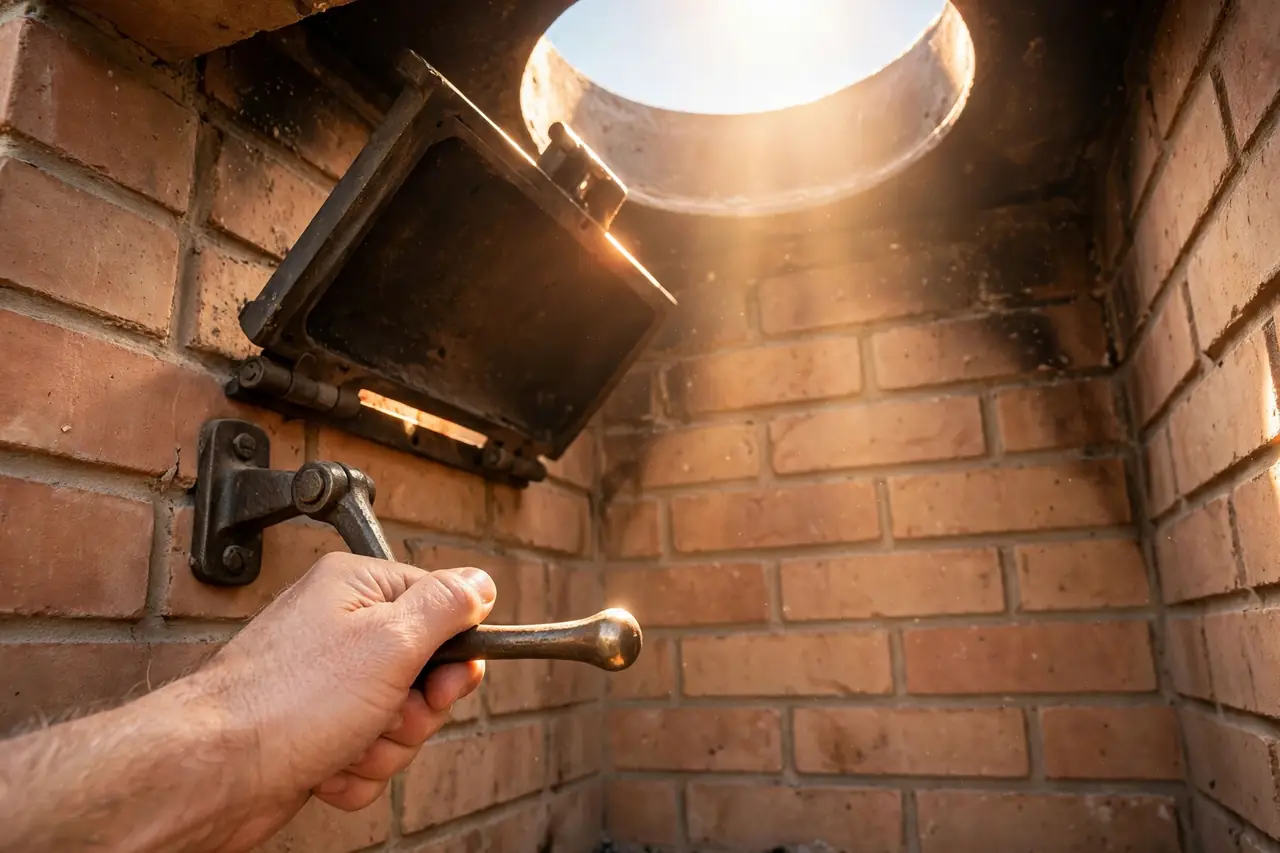
- Find the handle, lever, knob, or chain. On a throat damper it is inside the firebox near the top. On a top-sealing damper it is the cable hanging in the firebox.
- Move the control until the damper is fully open. Push a lever up or away from you until it locks. Turn a rotary knob until the plate stops. Lift a poker handle and push it in. Unhook a top-sealing cable from its bracket and let the lid spring open.
- Check with a flashlight. Look up the flue and confirm the plate is swung fully out of the way and the passage is clear.
- Test the draft. Hold a lit match or a small piece of burning paper under the flue. If the flame and smoke are drawn steadily upward, the flue is open.
The damper must be fully open before you light anything. Half open is not open enough. A half-open damper still blocks the draft, and smoke will drift into the room even if the fire looks fine.
If the control will not move, do not force it. A stuck damper is a repair job, not a strength test. Forcing it can crack the frame or damage the flue liner. If the handle sticks or the plate will not move, stop and get a professional to look at it.
How to Tell If Your Chimney Flue Is Open
Handle position alone is not a safe test. Different makers use different directions, and a handle can move without the plate moving. Use one of these checks instead.
Look Up the Chimney
With the fireplace cold and unlit, shine a flashlight up into the flue. If a metal plate blocks most of the opening, the flue is closed. If you see a clear passage, and sometimes daylight at the top, the flue is open. This is the most reliable check for a throat damper.
For a top-sealing damper, also look outside. If the lid at the top of the chimney is raised, the damper is open.
Feel for a Draft
Hold your hand inside the firebox near the top. On a cold day, an open flue usually lets you feel air moving. Moving air in the firebox usually means the flue is open. Still, stale air does not prove it is closed, so use this check with the flashlight test.
Use the Smoke Test
Light a match or a small piece of paper and hold it under the flue opening. If the smoke rises straight up the chimney, the flue is open. If it hangs in the firebox or drifts into the room, the flue is closed or blocked. Do not start a real fire to find out. If you are still unsure, do not light a fire until a chimney professional has looked at it.
How to Close a Chimney Flue the Safe Way
Closing the flue is just as important as opening it, but the timing is what keeps you safe. Close it too soon and you trap smoke and carbon monoxide in your home. Close it too late and you waste heat all night.
Wait until the fire is fully out and the ashes are cold. That means no flames, no red glow, and no warmth when you hold your hand near the firebox. Close the damper only when the ashes are fully cold. For most fires this takes at least 8 to 12 hours, and a big hardwood fire can need a full day. Stir the ashes gently with a poker first. If you see any orange glow or a wisp of smoke, leave the damper open.
Once the firebox is cold, close the damper with the same control you used to open it, then look up with a flashlight and confirm the plate covers the opening.
Glowing embers still make carbon monoxide, even with no flame at all. That is the reason for the wait. Carbon monoxide is colorless and odorless, so you cannot see or smell it building up. The U.S. Environmental Protection Agency (EPA) warns that CO at high levels can kill in minutes, and it lists “open flues when fireplaces are in use” among its steps to reduce exposure. Keep the damper open until the fire is truly cold.
When the fireplace will not be used for a while, keep the damper closed to stop drafts, humidity, and pests in summer and heat loss in winter. For a gas fireplace, turn the gas off first, then close the damper, and follow your appliance manual.
Common Fireplace Damper Problems
Dampers live in heat, moisture, and soot, so they wear out. Most problems show up as smoke in the room, a cold draft, or a handle that will not move.
Stuck or Stiff Damper
Rust, soot, warping, and misalignment are the usual causes. A warped plate no longer sits flat in its frame, and a rusted hinge no longer swings free. If the damper is stuck closed, do not light a fire: smoke and carbon monoxide will fill the room. If it is stuck open, your home will lose heat and let in rain and animals until it is fixed.
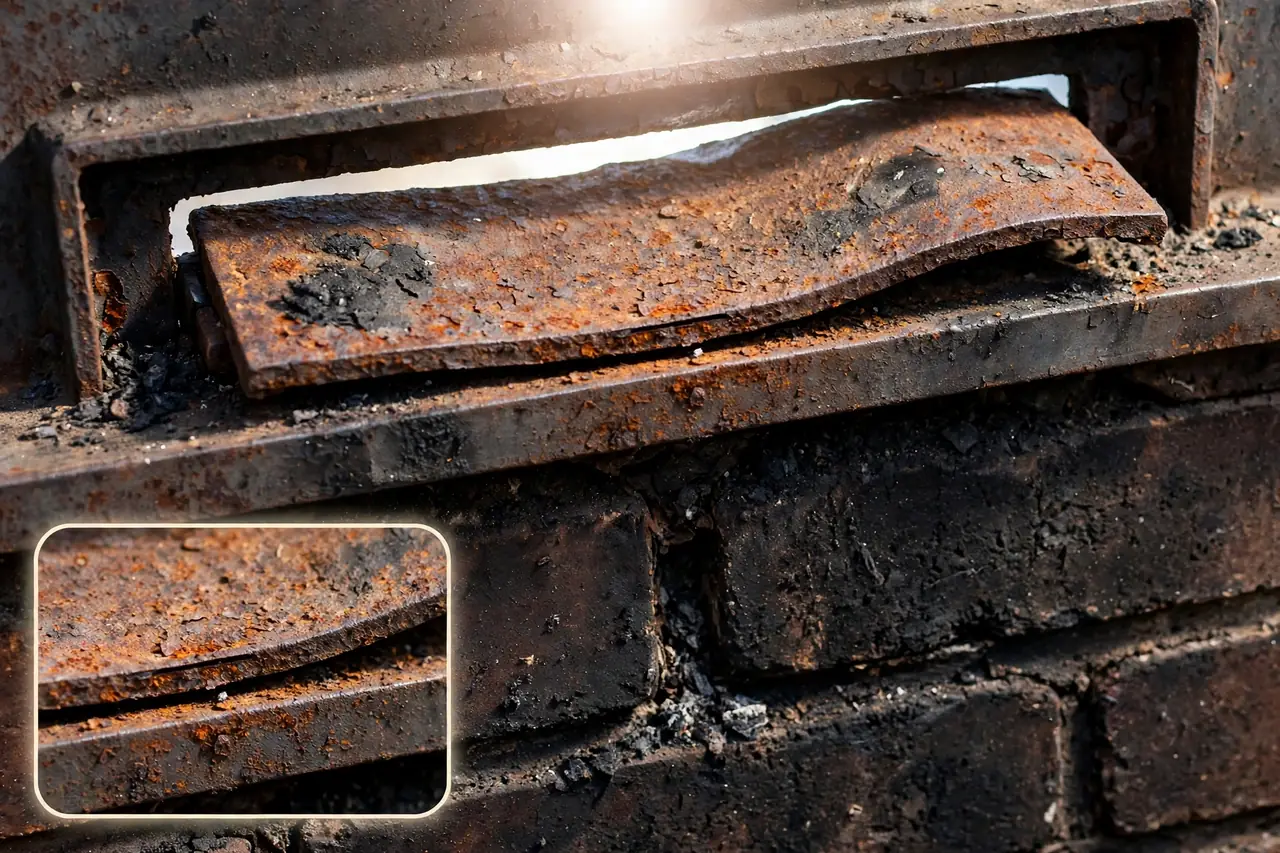
Never force a stuck damper. Forcing it can crack the frame, damage the flue liner, or leave the plate half open, which is the most dangerous position of all.
Damper Will Not Seal
A damper that closes but still lets in a cold draft has usually warped or rusted, or soot has packed into the frame so the plate cannot seat. You may feel a draft in the firebox on a still day, or see a thin line of daylight around the plate. The fix is usually a repair, or a switch to a gasketed top-sealing damper.
Smoke in the Room
Smoke that puffs back is often a damper that is closed or only half open. But if the damper is fully open and smoke still comes back, the cause may be a cold flue, a blocked chimney, or negative pressure in a tightly sealed home. Check the damper first, then look for a blockage. Our repair fireplace guide walks through the common smoke, crack, and pilot-light fixes and what they cost.
Rattling or Loose Handle
A handle that slips, rattles, or no longer locks into its notch usually means a worn pivot or a loose linkage. The plate may look open from below while it is actually half closed. Do not trust a loose handle. Check the plate with a flashlight every time.
Smoke in the room means stop. Put the fire out safely, open a window for fresh air, and do not relight it until the cause is found.
Fireplace Damper Cost: Repair vs. Replacement
Damper work is one of the cheaper chimney jobs, and fixing it early beats fixing the damage a bad damper causes. Prices vary by size, type, and location, so treat these as US ranges, not quotes.
| Job | Typical cost | Notes |
|---|---|---|
| Damper plate only | About $50 | Part only, if the frame is sound |
| Throat damper with mechanism | $150–$250 | Cast iron, size dependent |
| Top-sealing damper | $200–$300 | Plus screened cap, $90–$120 |
| Professional installation labor | $200–$400 | Roof work costs more |
| Full damper replacement | $150–$500 | Depends on type and size |
These figures come from FamilyHandyman, updated in January 2025, and Angi, updated in August 2026, and the two agree closely. A throat damper is held by a rod and four nuts, so a handy homeowner can sometimes fit one. A top-sealing damper sits on the roof, so fitting one is best left to a professional.
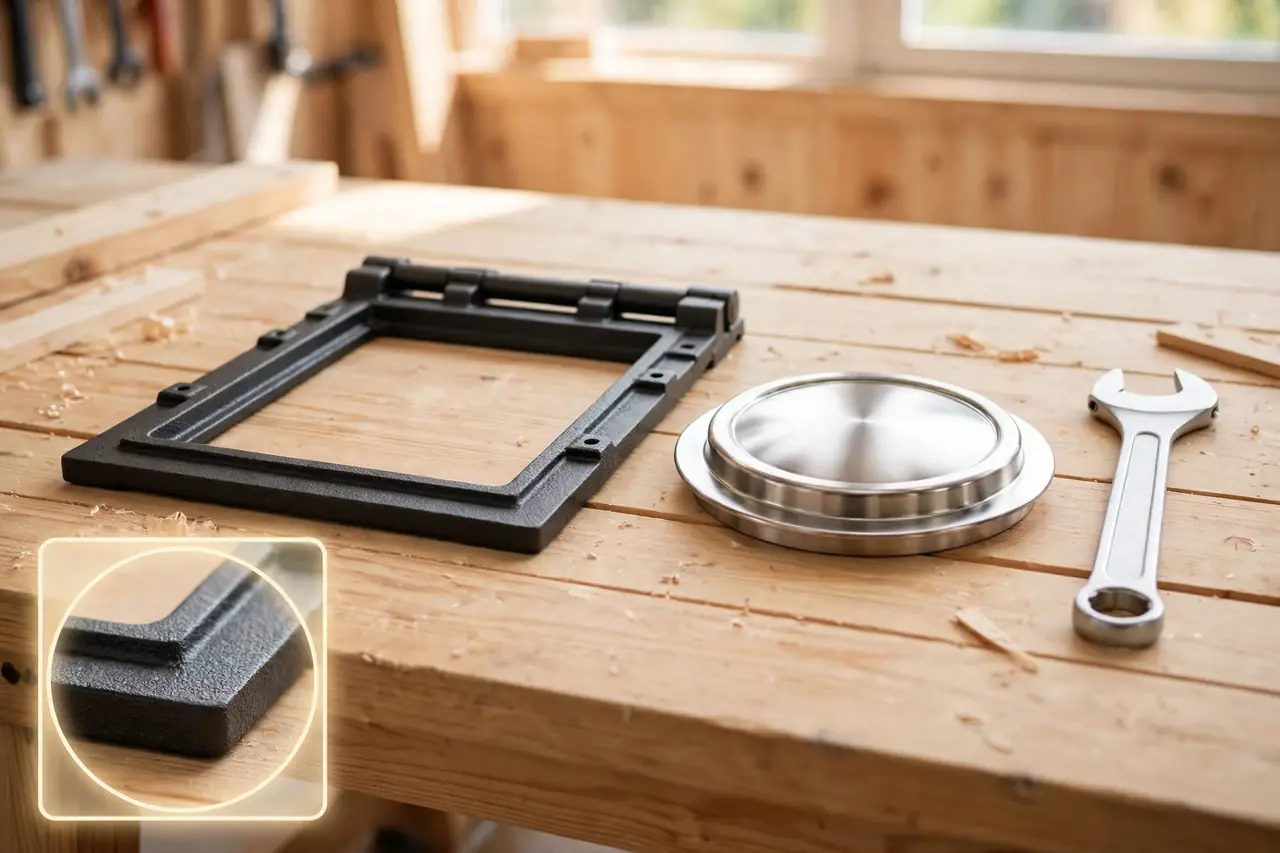
A new damper typically costs $150 to $500 fitted, depending on the type. That is small next to what a failed damper can cost. A damper that does not close tightly can add up to 30% to heating bills, according to the heating expert quoted by FamilyHandyman. A stuck-closed damper can fill a home with smoke and carbon monoxide.
A top-sealing damper costs more up front but seals better and lasts longer. If your throat damper keeps warping or leaking air, the upgrade often pays for itself in saved heat. If you are planning bigger work, our fireplace renovation ideas show what a remodel can cost, from a $50 paint job to a full rebuild.
Keeping Your Damper Working Year After Year
A damper lasts decades if it is used and checked on a schedule. Most failures come from years of sitting still, so the best maintenance is to move it.
Open and close the damper fully at least once a season, even in summer. That keeps the hinge free and tells you early if it is starting to stick. While it is open, look at the plate and frame with a flashlight. Open and close the damper fully at least once a season, even when you are not using the fireplace.
Brush soot off the plate and frame when you clean the firebox, since soot holds moisture and moisture makes rust. If you clean the brick around the firebox, our how to clean a brick fireplace guide shows how to do it without damaging the brick. A clean firebox also makes the flashlight check much easier.
Book a yearly chimney check. The Chimney Safety Institute of America (CSIA) follows NFPA 211, the national standard, which says chimneys, fireplaces, and vents shall be inspected at least once a year. The CSIA also says masonry fireplaces should be swept when soot buildup reaches 1/8 inch, and sooner if there is glazed creosote. A sweep usually costs around $260, according to Angi, and our chimney sweep cost guide shows what affects the price and how to book it cheaper.
Check the cap too. A cracked cap lets rain onto the damper, and rain is what rusts it. Small cap damage is often a cheap fix if you catch it early, as our chimney cap repair guide explains. Book a yearly chimney check, and ask the sweep to test the damper while they are there.
Safety First: When to Call a Professional
Opening, closing, and checking the damper are safe homeowner jobs. Anything that needs the roof, the flue liner, or a stuck part is not.
Call a CSIA-certified chimney sweep or a licensed chimney professional if the damper is stuck, warped, or cracked, if smoke enters the room even with the damper open, if you smell gas near a gas fireplace, or if the chimney has not been inspected in over a year. Also call one before you use a fireplace in a home you just bought.
Keep working smoke and carbon monoxide alarms in your home. The EPA says CO alarms are a back-up, not a replacement for proper use and maintenance, and recommends one in the hallway near every sleeping area, certified to UL 2034. If your CO alarm sounds, get everyone to fresh air at once and call 911. Do not open windows and wait, and do not go back inside to check the fireplace.
Call a professional rather than forcing a stuck damper or lighting a fire you are unsure about. A short visit costs far less than a smoke-filled house or a chimney fire.
Safety disclaimer: This article is general home information, not professional advice. Fireplaces, chimneys, and gas appliances can cause fire, smoke damage, and carbon monoxide poisoning if used or repaired the wrong way. Never light a fire with a closed or partly open damper, never force a stuck damper, and never work on a roof or inside a flue without the right training and safety gear. If you are unsure about anything here, stop and call a CSIA-certified chimney sweep or a licensed professional before you use the fireplace. If a carbon monoxide alarm sounds, or anyone has a headache, dizziness, nausea, or confusion while the fireplace is in use, get to fresh air at once and call 911.
Related Guides
These guides cover the rest of the system around your damper: chimney sweep cost, repair fireplace, chimney cap replacement, and gas fireplace upkeep.
Frequently Asked Questions
What is a fireplace damper?
A fireplace damper is a metal plate in the flue that opens and closes the chimney. Open, smoke and gases from the fire escape up the chimney. Closed, it seals the chimney so cold air stays out and warm air stays in. Most are cast iron or steel and sit just above the firebox or at the top of the flue.
How do you open a fireplace flue?
Find the lever, knob, chain, or cable inside the firebox and move it until the damper is fully open, then confirm with a flashlight that the plate is swung clear. For a top-sealing damper, unhook the cable from its bracket so the lid springs open. Never light a fire until you have confirmed the flue is fully open.
How can you tell if your chimney flue is open?
Shine a flashlight up the flue. A closed plate blocks the view, while an open flue shows a clear passage and sometimes daylight. You can also feel for moving air or hold a lit match under the flue: smoke drawn steadily upward means it is open. Handle position alone is not a safe test.
Should the fireplace damper be open or closed when not in use?
Closed. Once the fire is fully out and the ashes are cold, close the damper to stop warm air escaping and cold air, rain, and pests coming in. An open damper with no fire is like an open window in the roof. Keep it open only while a fire is burning or the embers are warm.
How long should you leave the flue open after a fire?
Leave it open until the fire is fully out and the ashes are cold, with no glow and no warmth. That usually takes 8 to 12 hours, and a large hardwood fire can need a full day. Stir the ashes first: if you see any orange glow or smoke, leave it open. Glowing embers still make carbon monoxide.
Can I use my fireplace if the damper is stuck closed?
No. With the damper closed, smoke and carbon monoxide have nowhere to go except into the room. Do not light a fire, and do not force the damper open. Leave the fireplace unused and call a CSIA-certified chimney professional to fix it first.
How much does it cost to replace a fireplace damper?
A full replacement usually costs $150 to $500, depending on type and size. A throat damper with its mechanism runs about $150 to $250, a top-sealing damper about $200 to $300, and professional installation about $200 to $400. A plate alone costs around $50 if the frame is sound.


