
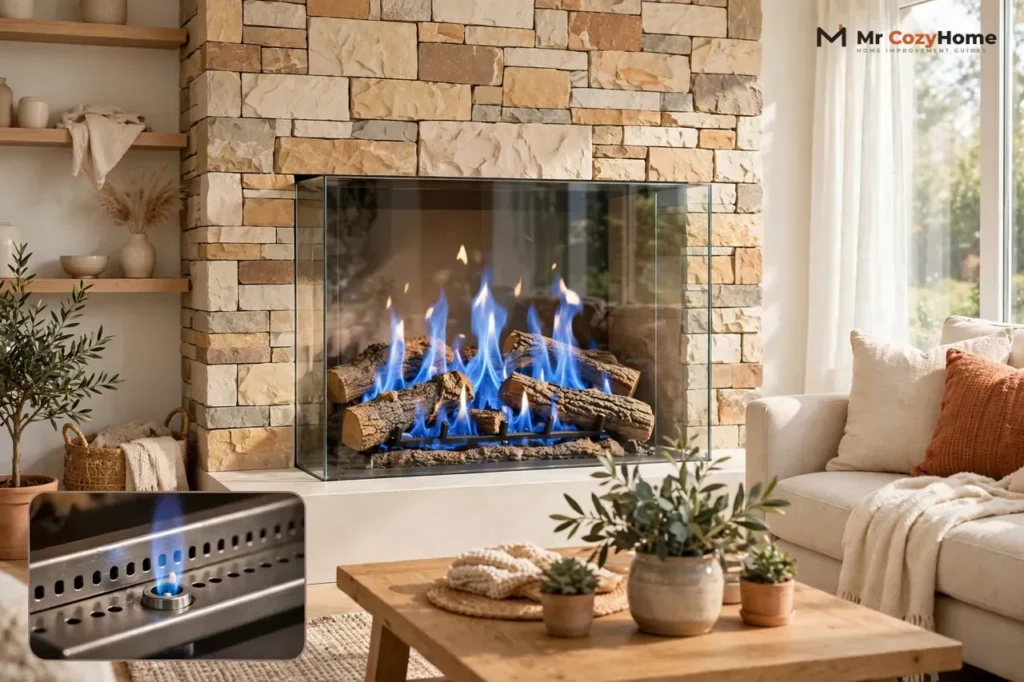
Gas fireplace upkeep means one professional inspection each year plus simple cleaning you do yourself, and Taskrabbit’s maintenance guide recommends scheduling that professional inspection once a year, ideally in late summer or early fall.
That yearly rhythm is the whole job in one line. You handle the light work: clean glass, dust the firebox, check the flame, and test your detectors. A qualified technician handles the rest: gas lines, burner, pilot assembly, and venting. Your owner’s manual always wins over any general guide, so keep it near the fireplace and follow its model-specific steps first.
What Gas Fireplace Upkeep Actually Covers
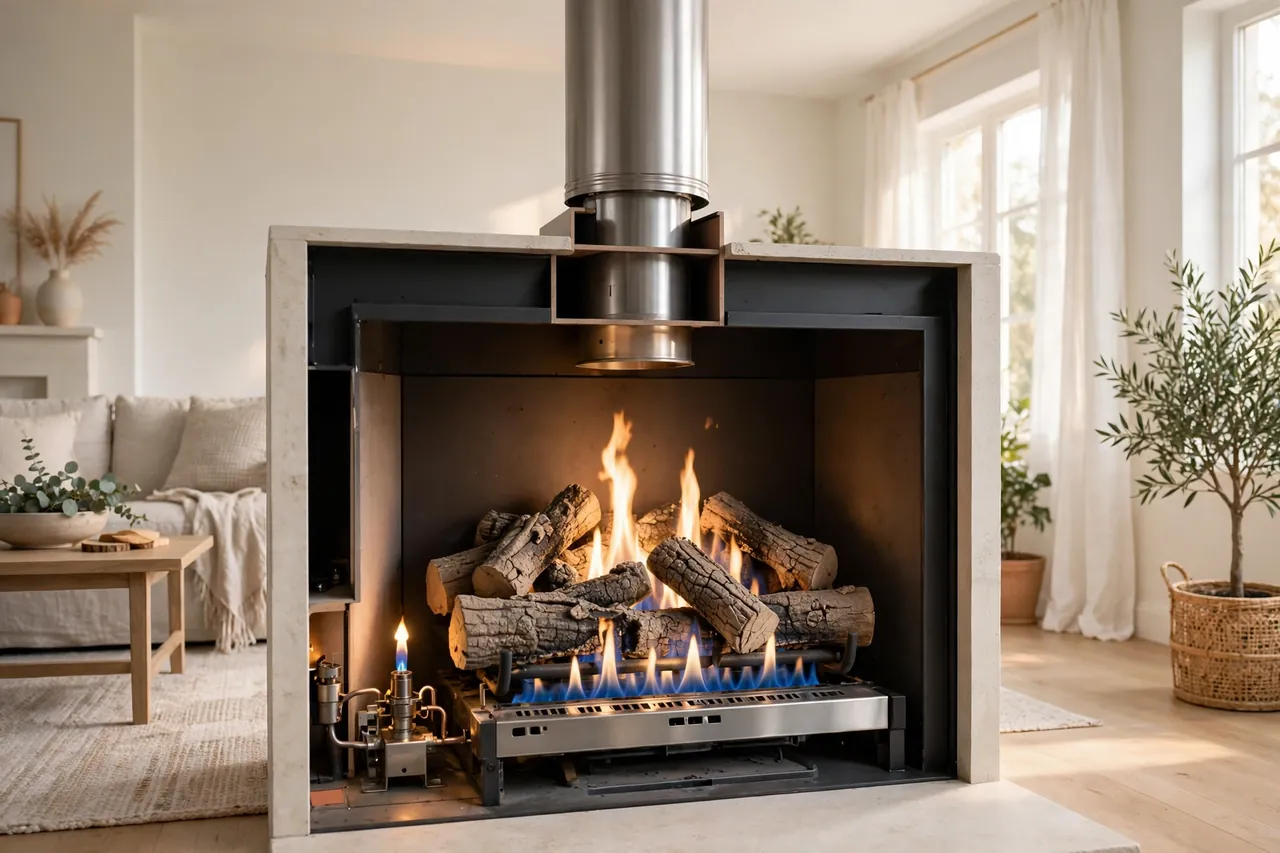
Gas fireplace maintenance covers four parts of one system: the firebox, the gas supply, the ignition, and the venting. The firebox holds the logs, burner, and glass. The gas supply feeds the burner through a valve and lines. The ignition lights the gas with a pilot flame or an electronic igniter. The venting carries combustion gases outside, or, in a vent-free unit, relies on room air and safety sensors instead.
Upkeep is not one big yearly chore. It is a set of small checks spread across the year. Light cleaning keeps the flame clear and the glass bright. A yearly service catches worn parts, weak flames, and small leaks before they turn into failed starts on the coldest night of the year. Think of it like car care: you wash it and check the tires yourself, and a mechanic handles the engine once a year.
Gas fireplaces earn their “low maintenance” name honestly. They make no ash, no soot piles, and no creosote like a wood fire does. But low maintenance never means no maintenance. Dust still settles on the burner. Spiders still nest in pilot openings. Glass gaskets still age. A dirty burner can burn yellow instead of blue, waste gas, and coat the glass with soot.
How Often Should You Maintain a Gas Fireplace?
Book a professional inspection once a year, before the heating season starts. Late summer or early fall is the best window. Technicians have open calendars then, and any repair gets fixed before you need heat every night. That is the single most useful date on your fireplace calendar.
Between visits, do quick checks on a simple schedule. Clean the glass every few weeks while you use the fireplace often. Dust the louvers and exterior once a month during the heating season. Test your carbon monoxide detector monthly and change its batteries twice a year. Check the pilot flame color each time you light the fireplace for the season.
Some homes need service more than once a year. Book an extra check if you run the fireplace daily as a main heat source, if you have pets or heavy dust, if you just finished a dusty remodel, or if the unit is more than ten years old. A fireplace that heats a room every day works harder than one that glows on weekends, and its parts wear faster.
Use this schedule as your plan:
| When | What to do | Who does it |
|---|---|---|
| Every few weeks in use | Clean the glass and dust the exterior | You |
| Monthly in season | Test the carbon monoxide detector and check the flame color | You |
| Each fall | Full visual check, fresh batteries, vent cap check | You |
| Once a year | Full inspection, cleaning, leak check, and vent check | Qualified technician |
| After a remodel | Extra inspection for dust in the burner and pilot | Qualified technician |
Gas Fireplace Cleaning You Can Do Yourself
Most cleaning jobs on a gas fireplace are safe for a homeowner, as long as you start the right way. Turn off the gas supply and the electrical power first. Then wait until the fireplace is fully cool to the touch. Hot glass cracks when cold cleaner hits it, and a hot firebox burns fingers fast. Never rush this step.
Follow these steps in order:
- Turn everything off and let it cool. Switch off the gas valve and the power. Wait at least 30 minutes after the last use, longer if the glass still feels warm.
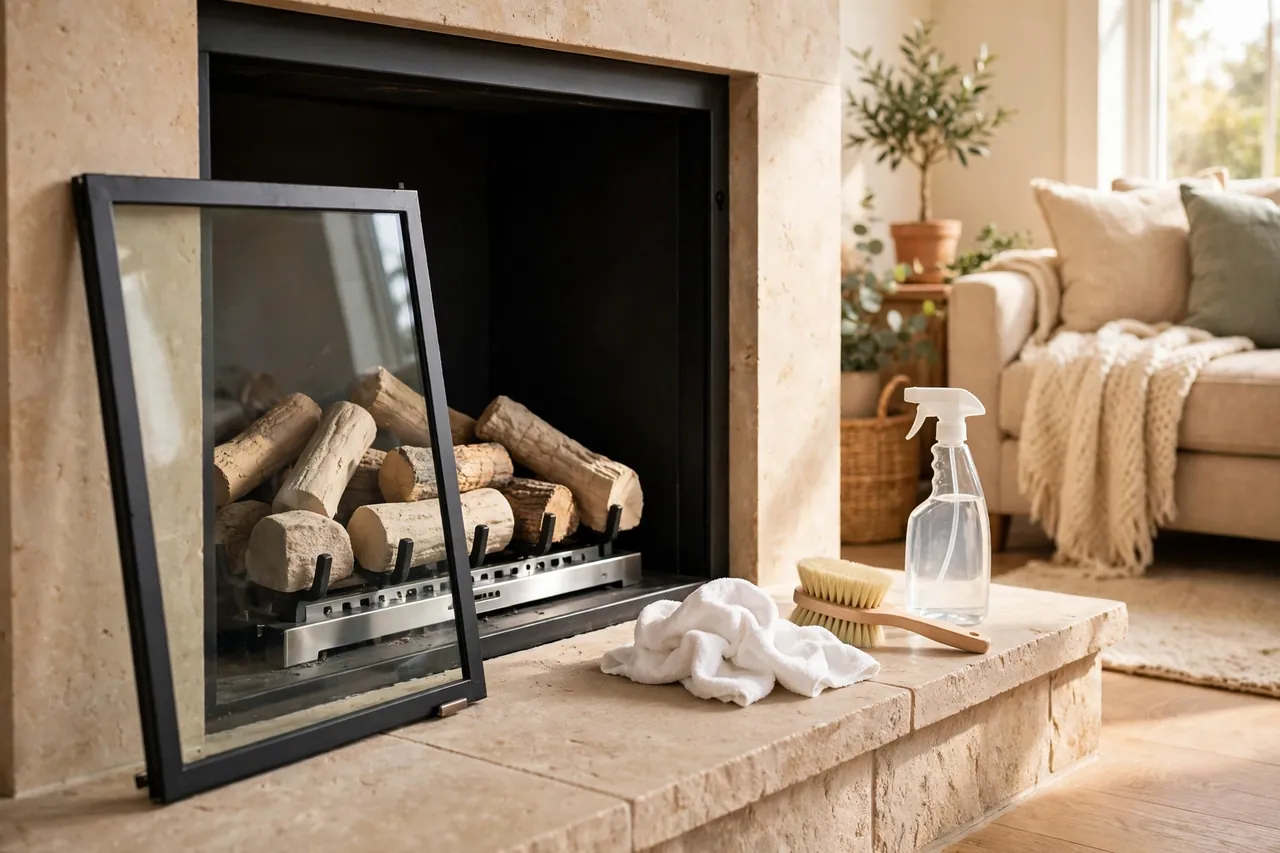
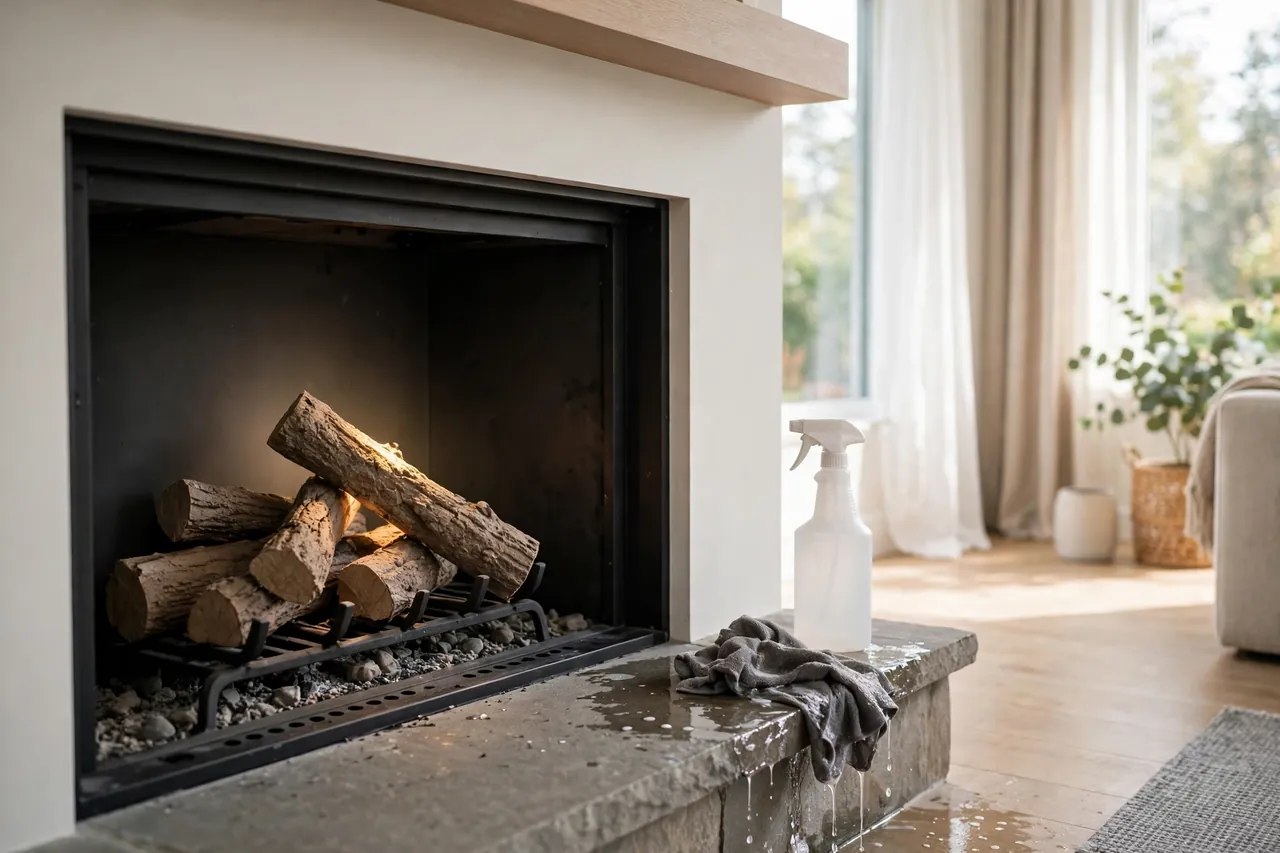
- Clean the glass. Remove the glass door or panel using your manual’s steps. Clean both sides with an ammonia-free glass cleaner or a 50/50 mix of white vinegar and water, the same mix Godby Hearth & Home recommends in its gas fireplace cleaning guide. Use a soft cloth, never an abrasive pad. Let the glass dry fully for at least 30 minutes before you put it back.
- Check the glass gasket. Look at the seal around the back of the glass. It should sit flat with no gaps, cracks, or loose spots. A worn gasket lets combustion gases leak into the room, so call a technician if the seal looks damaged.
- Dust the firebox. Use a soft brush or a vacuum with a brush attachment to lift dust, cobwebs, and lint from the firebox floor, the burner area, and the louvers. Work gently around the logs and never move them from their set positions.
- Brush the logs. If you have vented gas logs, you can lift them out following your manual and brush soot off outside with a soft paintbrush, top to bottom. Never wash logs with water, soap, or spray. Water damages the finish and fades the color. If you have vent-free logs, do not remove them yourself. A qualified technician should handle them.
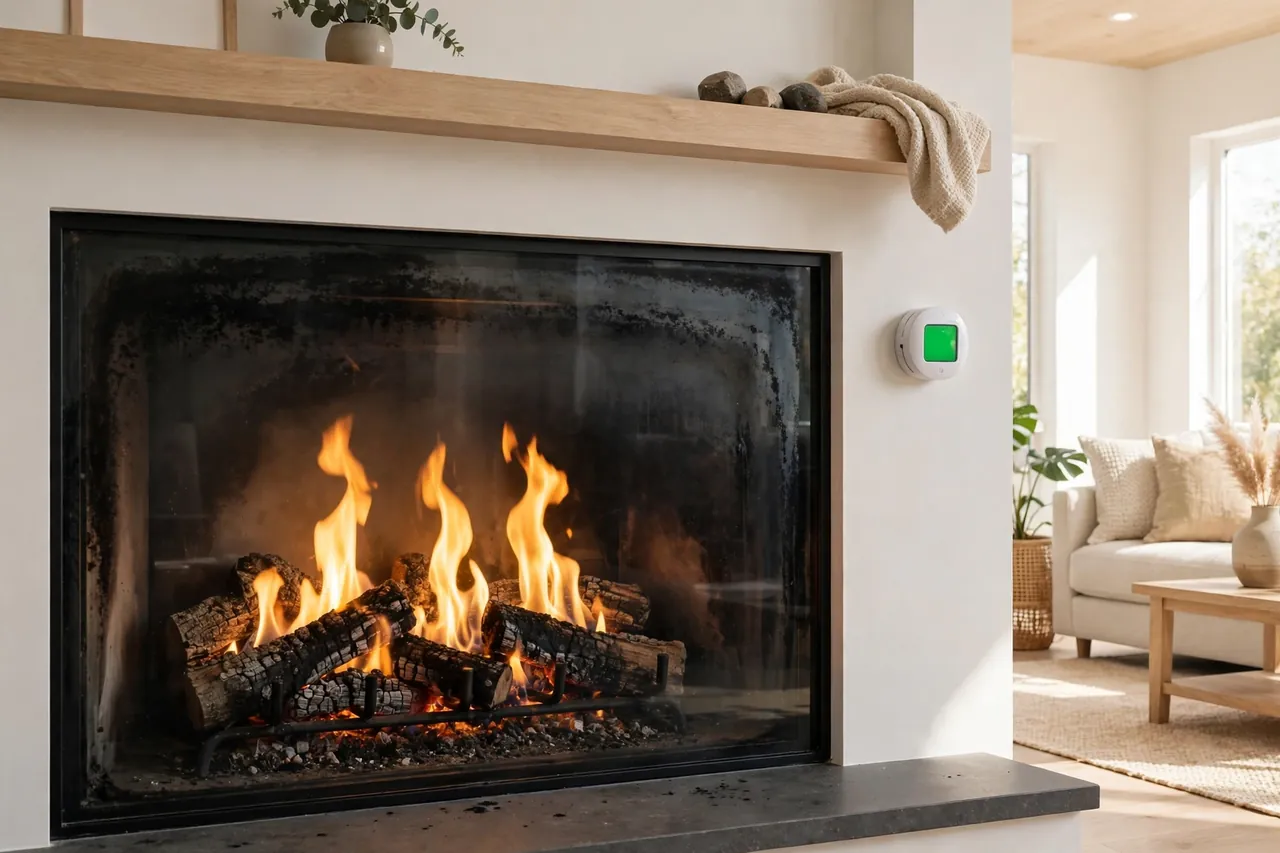
- Check the pilot flame. When you light the fireplace again, look at the pilot flame. A healthy pilot burns blue. A yellow or orange pilot can mean dirt in the opening or a combustion problem, so book a service visit.
- Replace remote batteries. Put fresh batteries in the remote, receiver, and wall switch once a year. Weak batteries cause the most common “fireplace will not start” complaint, and a fresh set fixes it in a minute.
Cleaning a gas fireplace takes about 30 minutes once you know the steps. Do the glass first, because a clean view shows you everything else. Soot on the glass often points to a burner problem, not a cleaning problem, so note it and mention it at your next service visit.
The brick or stone around your fireplace needs care too, but it is a different job from cleaning the glass and logs. If soot has stained the brick surround, read our guide on how to clean a brick fireplace without damaging the brick before you scrub it. Brick is porous, and the wrong cleaner can drive soot deeper or etch the surface.
What Your Annual Professional Service Should Include
A proper annual service is a full pass through the whole system, not a quick look and a lit pilot. The technician cleans the burner and pilot assembly, checks the gas lines for leaks, tests the ignition and safety controls, inspects the venting, and checks the glass gasket. That visit is the one that keeps the fireplace safe, not just clean.
Here is what a good service visit covers:
- Burner and pilot cleaning. The technician removes dust, lint, and insect nests from the burner ports and pilot opening, then checks the flame pattern on every burner opening.
- Gas leak and pressure check. The technician tests connections with proper tools and confirms the gas pressure matches your model’s rating. Never test for a gas leak with a flame.
- Ignition and safety controls. The thermocouple or thermopile, the gas valve, and the shut-off controls get tested. These parts keep the gas valve open only while the flame burns, so a weak one can shut the fireplace down for no clear reason.
- Venting inspection. The vent run gets checked for blockages, cracks, corrosion, and loose joints, including the hidden sections you cannot see from the room.
- Logs and media reset. The logs, rocks, or glass media go back in their exact factory positions. Log placement shapes the flame, and a log in the wrong spot can cause soot and poor combustion.
- Blower check. If your unit has a blower, the technician cleans it and checks that it moves air freely.
Ask the technician what they found before they leave. A good visit ends with a short report: what was cleaned, what was worn, and what to watch next year. Write the date on your calendar and book next year’s visit before the technician leaves. That one habit ends the yearly scramble for an appointment in November.
Direct Vent vs Vent-Free: Upkeep Differences
Your fireplace type changes what you check. A direct vent fireplace pulls combustion air from outside and sends exhaust gases out through a sealed vent. A vent-free fireplace burns room air and sends heat and combustion by-products into the room, with an oxygen depletion sensor that shuts the unit off if oxygen drops too low.
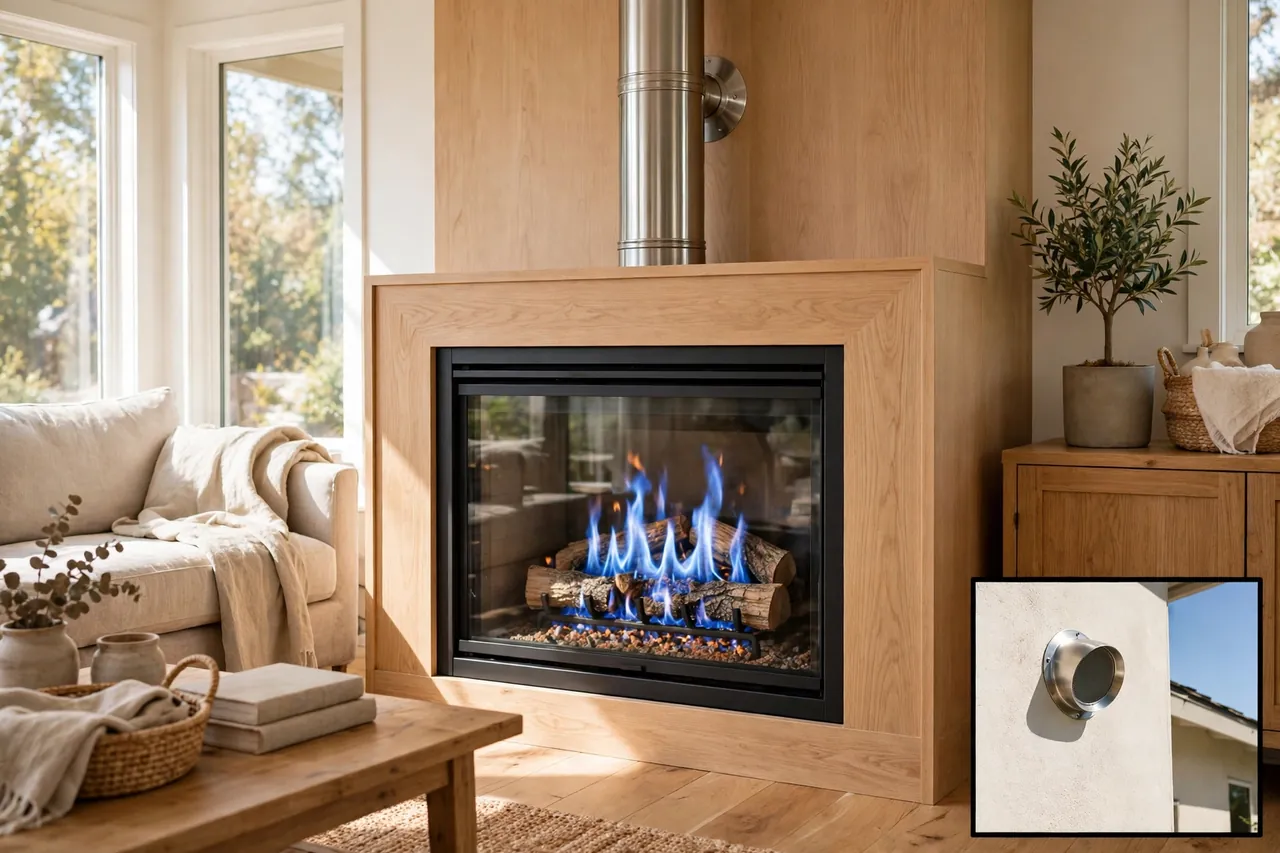
For a direct vent unit, the outside vent cap is your extra check. Charleston Gas lists checking the exterior vent cap for obstructions, like yard debris, plant growth, and animal nests, on its upkeep checklist. Walk outside once each fall and look at the vent termination. Clear away leaves, plant growth, bird nests, and wasp nests. A blocked vent cap can push exhaust back into the house, so never skip this check. Also check that the vent cap sits tight and shows no rust or damage.
For a vent-free unit, the rules are stricter. Never remove vent-free logs yourself. Only a qualified technician should take them out and service them. Vent-free units also need extra care with room air: keep the room ventilated as your manual directs, never block the air openings, and keep a working carbon monoxide detector in the room. Many local codes limit where vent-free units can be used, so check your local rules before you install or run one.
Both types share the same yearly service rule. The vent type changes the checklist, not the schedule. If you do not know which type you own, the rating plate inside the fireplace or your manual will name it. When in doubt, ask your technician at the next visit and write the answer on the manual’s cover.
Propane Fireplace Maintenance: What Changes
Propane fireplace maintenance follows the same yearly rhythm as natural gas, with a few extra checks. Propane burns a little dirtier than natural gas, so soot builds up on the logs and glass faster. Clean the glass more often during heavy use, and mention heavy soot to your technician, because it can point to a burner or air-shutter problem.
Check the propane supply line and tank connection once a year. Look for cracks, wear, or damage on the hose and fittings. If you smell gas near the tank or the fireplace, leave the house, do not flip any switches, and call your gas supplier or emergency services from outside. Never hunt for a propane leak with a lighter or a match.
Propane fireplaces also need the same pilot and burner care as natural gas units. Dust and spiders love the pilot opening in both fuels. If your propane fireplace sits unused all summer, book the service visit before the first cold snap, because a pilot that sat idle for months is the one most likely to fail on the first cold night.
Warning Signs Your Gas Fireplace Needs Service Now
Some signs mean “book a visit soon.” Others mean “stop using the fireplace and call now.” Learn the difference, because it protects your home and your family.
Call a qualified technician right away if you notice any of these:
- A gas smell. Natural gas smells like rotten eggs. If you smell it, turn off the fireplace, leave the house, and call your gas company or emergency services from outside. Do not turn lights on or off, and do not use your phone inside.
- Yellow, orange, or lazy flames. Healthy gas flames burn mostly blue with small yellow tips. Mostly yellow or lazy, wispy flames point to incomplete combustion.
- Heavy soot on the glass or logs. A thin haze is normal between cleanings. Thick black soot is not, and it often means the burner or venting needs attention.
- The fireplace will not stay lit. A pilot that keeps going out or a burner that shuts off on its own can mean a worn thermocouple, a dirty pilot, or a safety control doing its job. Let a technician find out which one.
- Strange noises. New rattling, booming on startup, or a loud whoosh can mean delayed ignition or a loose part. Turn the unit off and call for service.
Book a routine visit soon, not urgently, if the glass fogs up fast after cleaning, the remote works only sometimes, or the heat feels weaker than last winter. These are wear signs, not emergencies, but they still deserve a technician’s eye before the next cold stretch.
Your carbon monoxide detector is part of this warning system. Test it every month and replace its batteries twice a year. If the alarm ever sounds, treat it as real: get everyone outside into fresh air and call emergency services. Our guide on what to do if your carbon monoxide alarm goes off walks through the exact steps. Detector placement matters too, so read does CO rise or fall before you move a detector to a new spot.
How Much Does Gas Fireplace Upkeep Cost?
There is no single national price for gas fireplace upkeep, because rates change by market, unit type, and what the visit finds. Local service companies publish the clearest numbers, and they show how wide the range runs.
Allegiance Chimney Solutions lists annual gas fireplace maintenance at $250 to $400 in the Nashville and Murfreesboro market, with a service call at the same $250 to $400 range for the diagnostic visit and labor, checked Nov 9, 2026. Wolfman Chimney & Fireplace lists annual gas fireplace maintenance at $400 to $600 in the Austin area for a standard residential unit, checked Nov 9, 2026. Both companies note that repairs and parts cost extra once the technician finds a fault.
Use those figures as local examples, not as a quote for your home. Your price depends on your city, your fireplace type, roof or chase access, and the unit’s condition. Always get a written quote before you book, and ask what the visit includes: cleaning, leak check, vent inspection, and a written report should all be in the price.
DIY upkeep costs almost nothing beyond supplies you likely own: an ammonia-free glass cleaner or white vinegar, soft cloths, a soft brush, and fresh batteries once a year. That small spend is the cheapest part of fireplace ownership, and it is also the part that prevents the expensive repairs.
Common Upkeep Mistakes to Avoid
Most gas fireplace damage comes from small, avoidable mistakes. Here are the ones technicians see most:
- Cleaning hot glass. Spraying cold cleaner on hot glass can crack it. Always wait until the glass is fully cool, then clean it.
- Washing the logs. Water, soap, and spray ruin ceramic log finishes. Brush logs dry, and only if your manual says you can remove them.
- Moving the logs. Logs sit in exact positions for a reason. A moved log changes the flame and can cause soot or poor combustion. Put every log back exactly where it was.
- Using ammonia glass cleaner. Ammonia can cloud fireplace glass over time. Use an ammonia-free cleaner or the vinegar and water mix instead.
- Skipping the detector test. A carbon monoxide detector with dead batteries protects no one. Test it monthly and change batteries twice a year, like a smoke alarm.
- Blocking the vent or air openings. Furniture, drapes, and stored boxes near the fireplace block airflow and trap heat. Keep the area clear, and keep the outside vent cap free of nests and leaves.
- Fixing gas parts yourself. Gas valves, pressure settings, and air shutters belong to a qualified technician. A wrong adjustment can cause soot, poor combustion, or a gas leak.
If you plan to refresh the brick surround while you clean, think about the finish before you scrub. Our comparison of limewash vs whitewash brick fireplace explains which finish suits your brick and how each one ages, so you pick the look once instead of redoing it.
Your Seasonal Upkeep Checklist
Fireplace upkeep follows the seasons. Fall is the big one, winter is light checks, and spring is the shut-down. Put these on your calendar and the work stays small.
Fall, before the first cold night: book the annual professional service, clean the glass, check the pilot flame color, test the carbon monoxide detector, put fresh batteries in the remote, and check the outside vent cap for nests and leaves. If you winterize the rest of the house too, add the fireplace to your home winterization checklist so nothing gets missed.
Winter, while you use it: clean the glass every few weeks, dust the louvers monthly, watch the flame color, and test the detector monthly. Note any new soot, smell, or startup trouble and call a technician instead of waiting for spring.
Spring, after the season ends: clean the glass and firebox once more, dust the interior, and check the glass gasket. Some owners turn the pilot off for summer to save gas. Your manual will say whether that fits your model. If you turn it off, note it on the manual so fall startup goes smoothly.
Summer, while it rests: leave the fireplace alone except for a quick dust. This is the best time to book next fall’s service, because technicians have the most open calendars from March through September.
When to Call a Professional Instead of DIY
The line is simple: you clean and look, a qualified technician opens, adjusts, and repairs. You can clean glass, dust the firebox, brush vented logs, change batteries, and check the vent cap from outside. Leave everything else to a pro.
Call a qualified technician for gas pressure testing, leak detection, pilot and ignition repairs, burner cleaning beyond a light dusting, gas valve work, air shutter adjustment, vent repairs, and any part replacement. These jobs need special tools and training, and a mistake can cause a gas leak or carbon monoxide exposure.
When you call, share what you noticed: flame color, soot level, noises, and how the problem started. That detail helps the technician bring the right parts and fix the problem in one visit. Also ask whether the visit includes a written report and what the warranty covers on the work.
Keep your manual, your service dates, and your technician’s notes together in one folder. A short service history helps the next technician, protects your warranty, and shows a future buyer that the fireplace was cared for.
A Short Safety Note Before You Start
Gas fireplaces are safe when they are installed and maintained correctly, and they turn risky when gas work or venting gets ignored. This guide covers homeowner cleaning and checks only. It is general information for a typical residential gas fireplace, and it does not replace your owner’s manual or a qualified technician’s advice. Homes, models, and local codes vary, so follow your manual first and your local rules second.
Never work on gas lines, gas valves, or internal gas parts yourself. If you smell gas, hear a hissing sound near a gas line, or your carbon monoxide alarm sounds, leave the house and call for help from outside. If you feel unsure at any step, stop and call a qualified technician. A service visit costs far less than a repair caused by a wrong guess.
Disclaimer: This article is general guidance only, not professional advice. Gas fireplace work involves gas, fire, and carbon monoxide risks — never work on gas lines, gas valves, or internal gas parts yourself, and consult a qualified technician for anything beyond basic homeowner cleaning and checks.
Related Guides
How to Clean a Brick Fireplace Without Damaging the Brick · Limewash vs Whitewash Brick Fireplace: Which One Should You Choose? · What to Do If Your Carbon Monoxide Alarm Goes Off · Does CO Rise or Fall? The Science and Where to Put Your Detector · Home Winterization Checklist: Get Your Whole House Ready Before the First Freeze · Repair Fireplace · Chimney Sweep Cost
Frequently Asked Questions
What Maintenance Does a Gas Fireplace Require?
It needs an annual inspection and cleaning by a certified technician, who cleans the burner, inspects the gas lines, checks for leaks, and confirms the venting works properly. Between visits, dust the exterior, wipe the glass with a suitable cleaner, test your carbon monoxide detector monthly, and change remote batteries once a year.
Do Gas Fireplaces Need Maintenance?
Yes, gas fireplaces absolutely need regular maintenance. They involve gas lines, ignition systems, and combustion, so neglected upkeep can cause poor performance, carbon monoxide exposure, and costly repairs. They need less daily work than wood fireplaces, but the yearly inspection and light cleaning still matter.
How Often Should a Gas Fireplace Be Maintained?
Schedule a professional inspection once a year, ideally in late summer or early fall, before the cold months begin. Clean the glass every few weeks during heavy use and dust the unit quarterly. Book an extra visit if you use the fireplace daily, just finished a dusty remodel, or own a unit over ten years old.
Does a Gas Fireplace Require a Chimney?
Not every gas fireplace needs a chimney. Vent-free models need no venting at all, while direct-vent models vent straight through an exterior wall. Many owners prefer vented models because they carry combustion by-products outside the home. Check your manual to confirm which type you own.
Is a Natural Gas Fireplace Safe?
Yes, when it is installed and maintained correctly. Gas fireplaces carry safety features such as automatic shut-off valves, oxygen depletion sensors, and glass fronts. Have a licensed professional install and service the unit so it meets local building codes and the manufacturer’s specifications.
Gas fireplace upkeep is a small habit with a big payoff: one yearly service, a few minutes of cleaning each month, and a working carbon monoxide detector. Book this fall’s service today, clean the glass this weekend, and your fireplace will be ready the first cold night you need it.


