
If your carbon monoxide alarm goes off, get everyone out of the house right now and call 911 from outside. Do not stop to open windows, hunt for the source, or grab your things. Carbon monoxide has no smell and no color, so you cannot tell how much is in the air. Stay outside until firefighters test your home and tell you it is safe to go back in.
That short answer is the whole plan in one breath. The rest of this guide walks you through each step in order, shows you what not to do, and explains what happens after the alarm stops. Read it now, while things are calm, so you do not have to think it through while an alarm is screaming.
What to Do Right Now: 5 Steps in Order
Your carbon monoxide alarm sounds four quick beeps, then a pause, then four beeps again. If your alarm is old or you need a replacement, see our best carbon monoxide detector guide. That pattern means the alarm has found carbon monoxide in your air. Treat it as a real emergency every single time. Follow these steps in order, and do not skip ahead to figure out what caused it.

- Get everyone outside to fresh air right away. Wake sleeping family members, help small children, and bring your pets with you. Move to fresh air outdoors, or at least to an open door or window, and do a head count so you know every person is out.
- Call 911 from outside. Use your cell phone once you are out, or go to a neighbor and ask to use their phone. Tell the dispatcher that your carbon monoxide alarm is going off, give your address, and say if anyone feels sick.
- Stay outside until firefighters say it is safe. Do not go back in for a phone charger, a pet you missed, or a quick look around. Carbon monoxide can make you pass out fast, and you cannot see or smell it building up.
- Tell responders about any symptoms. Headache, dizziness, nausea, confusion, or trouble breathing all matter. Say who feels sick and when it started, so medics can act fast.
- Do not use the suspected appliance again until a qualified technician checks it. If firefighters point to a furnace, water heater, or stove, leave it off. A repair comes after the all-clear, not before it.
The National Fire Protection Association gives the same core advice on its carbon monoxide safety page: if the CO alarm sounds, move at once to a fresh air location outdoors or by an open window or door, make sure everyone in the home is accounted for, call for help from that fresh air location, and stay there until emergency personnel arrive. The U.S. Consumer Product Safety Commission adds the same warning in plain words: if you suspect CO poisoning, get outside to fresh air immediately, and then call 911.
What Not to Do When Your CO Alarm Goes Off
Panic makes people do the wrong things, and a loud alarm at 2 a.m. makes clear thinking hard. Knowing the mistakes in advance helps you avoid them.
- Do not ignore the alarm or assume it is a false alarm. A full alarm means the sensor found carbon monoxide at a level that matters. Alarm makers such as First Alert and Kidde print the same warning in their manuals: actuation of the alarm indicates the presence of carbon monoxide, which can kill you.
- Do not stay inside to open windows first. Fresh air helps, but opening windows is not a rescue plan. Leave first. You can open a door or window on your way out if it costs you no time at all, but never delay leaving to air the house out.
- Do not hunt for the source. Do not open the furnace closet, lean over the water heater, or check the stove. Finding the source is the fire department’s job. They carry meters that read carbon monoxide levels room by room, and you do not.
- Do not pull the batteries or unplug the alarm to stop the noise. Silencing the alarm does not remove the gas. Worse, a silenced alarm cannot warn you if levels climb again while you are still inside.
- Do not call a plumber or heating technician before you call 911. A technician cannot test your air or treat poisoning, and waiting for one wastes the minutes that matter. Call emergency services first, then deal with repairs after the all-clear.
- Do not drive yourself to the hospital if you feel sick. Carbon monoxide dulls your thinking and can make you pass out without warning. Call 911 and let medics come to you.
One more mistake is easy to make: do not send one person back inside while the rest wait outside. If someone is missing, tell the 911 dispatcher at once. Firefighters have the gear to go in safely, and you do not.
Is It the Alarm or Just a Chirp?
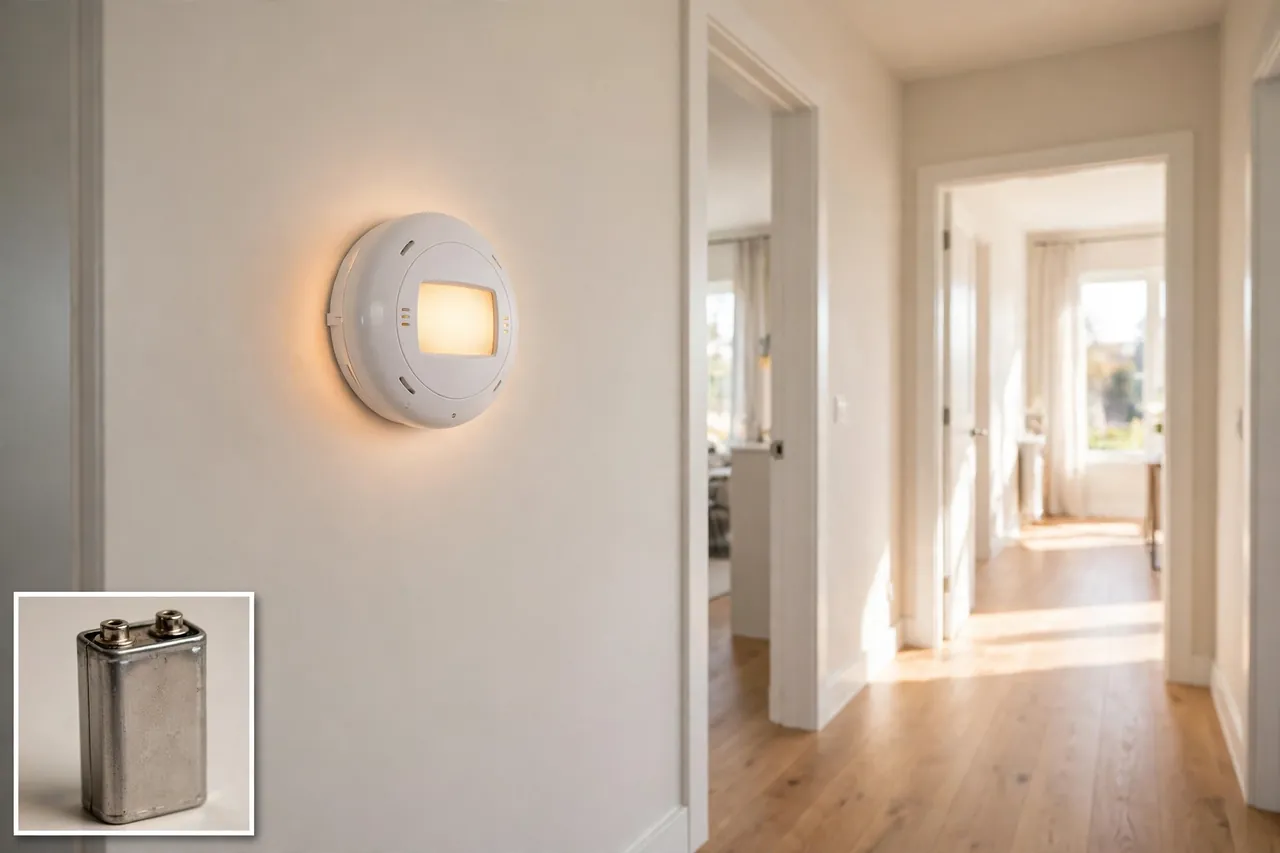
Not every sound from the unit on your wall is an emergency. A full alarm and a low-battery chirp sound very different, and mixing them up causes two problems: people ignore a real alarm, or they call 911 for a dead battery. Use this table to tell them apart.
| What You Hear | What It Usually Means | What to Do |
|---|---|---|
| Four quick beeps, a pause, four beeps again | Carbon monoxide found | Leave at once and call 911 from outside |
| One short chirp about once a minute | Low battery | Replace the battery right away |
| Several chirps every minute | End of life or a fault | Replace the whole alarm |
| Three long beeps, a pause, three beeps again | Smoke, not carbon monoxide | Leave at once and call 911 |
Patterns can vary a little by brand and model year, so check the label on the back of your own alarm. It lists the sounds and the replace-by date. If you are not sure which sound you heard, treat it as the full alarm and leave. It is far better to stand outside for a false alarm than to stay inside for a real one. If you want to learn each pattern in detail, read our guide to what a carbon monoxide alarm sounds like.
One more mix-up is common in homes with combination units. A combination alarm watches for smoke and carbon monoxide in one box, but the two dangers sound different on purpose. Three long beeps mean smoke, and four quick beeps mean carbon monoxide. Either way, you leave and call 911. If you are not sure your unit covers both dangers, our guide on whether smoke detectors detect carbon monoxide explains how to tell.
What to Tell 911 and the Fire Department
A short, clear call gets help to you faster. You do not need a long story. The dispatcher needs a few facts, and then they send the right crew.
- Your address, including the apartment or unit number if you have one.
- That your carbon monoxide alarm is sounding, and whether it is the four-beep alarm pattern.
- How many people were inside, and whether everyone is now outside.
- Whether anyone feels sick, and what the symptoms are.
- Whether you can see or smell anything else, such as smoke or a gas smell.
- Your phone number, in case the call drops.
Write your address and the fire department’s non-emergency number on a card near your alarm, or save them in your phone today. The National Fire Protection Association suggests calling your local fire department’s non-emergency number ahead of time to find out which number to call if the CO alarm sounds. That one small step saves you fumbling when the alarm is going off.
If anyone feels sick, say so first, before anything else. Dispatchers send medical help faster when they hear about symptoms early. Mention headaches, dizziness, nausea, vomiting, confusion, or chest pain by name. Also say if anyone in the group is a baby, pregnant, elderly, or living with heart or breathing trouble, because carbon monoxide hits those people harder at lower levels.
What Happens After the Fire Department Arrives
Many people picture firefighters rushing in with hoses. A carbon monoxide call looks quieter than that, but it is just as serious. Knowing what happens next takes away some of the fear, and it helps you give the crew what they need.
Firefighters arrive with handheld meters that measure carbon monoxide in the air. They test room by room, starting near the alarm and moving toward the likely sources. They check the furnace, the water heater, the stove, the fireplace, and any vent or flue that carries exhaust outside. They also check the garage, because a car or generator running in an attached garage can fill a house with carbon monoxide.
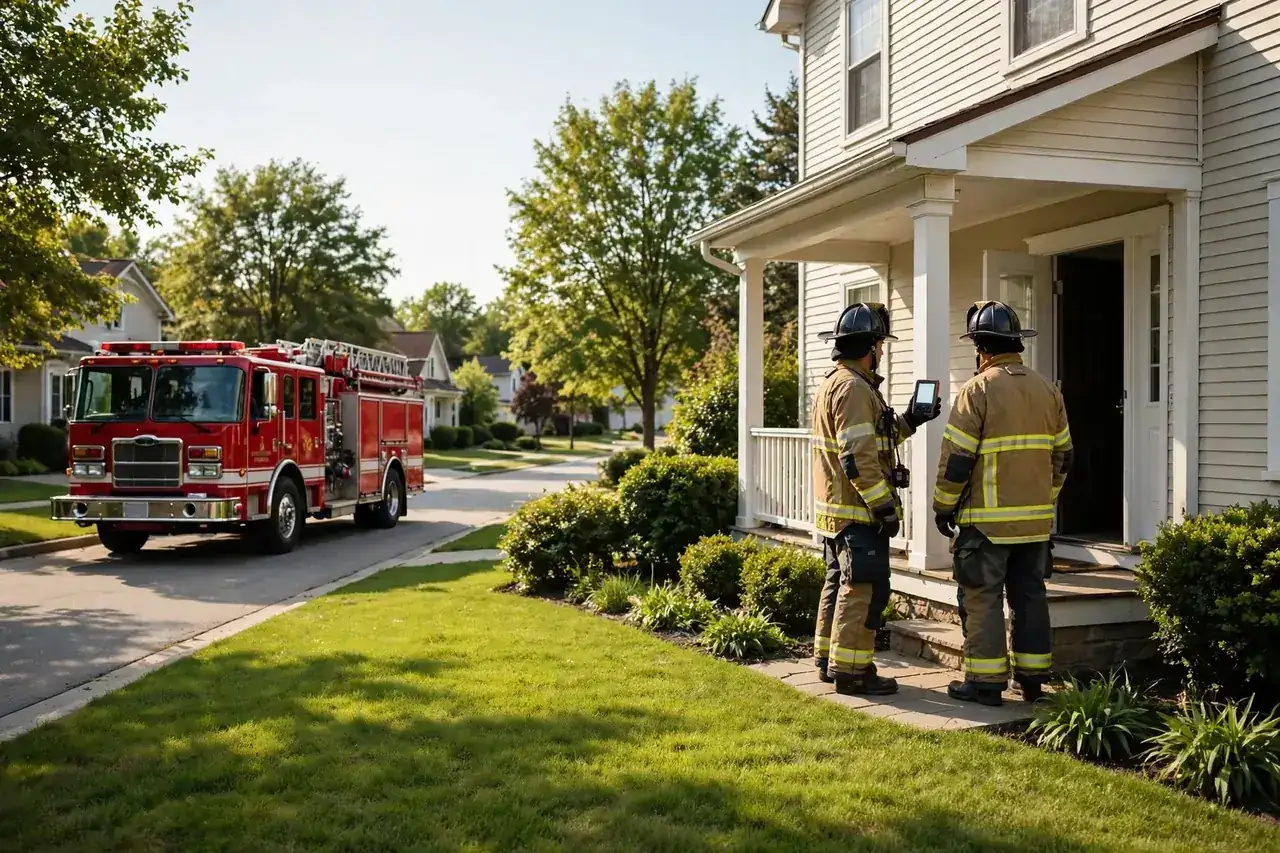
While they test, they open doors and windows to air the house out. Ventilation at this stage is their call, not yours, because they know the readings and they can watch them fall. They may shut off a gas appliance or close a gas valve if they find the source. Do not turn anything back on yourself, even if the alarm has gone quiet by then.
Then they give you the all-clear, or they tell you the source and what must be fixed first. Either way, ask them to say the all-clear out loud before anyone goes back inside. A quiet alarm is not an all-clear. Only a person with a meter can give you one.
If the alarm goes off again within 24 hours after a call-out, repeat the same steps: leave, call 911, and stay out. Then call a qualified appliance technician to check every fuel-burning appliance in the home, not just the one that looked likely the first time. Kidde’s user guides carry this exact instruction, and it exists because a second alarm means the problem was never really fixed.
My CO Alarm Went Off and Then Stopped — Am I Safe?
No, not yet. An alarm that stops does not mean the danger is gone. It only means the carbon monoxide level near the sensor dropped below the level that sets the alarm off. The source may still be making gas, and levels can climb again as soon as a furnace cycles back on or a door closes.
Opening windows and doors lets carbon monoxide drift out, so levels fall and the alarm quiets down. That is normal, and it is also misleading. The appliance that made the gas is often still there, still faulty, and still able to fill the room again. First Alert makes this point in its own guidance: do not return into the building until first responders clear it, even if your alarm stops alerting and you have switched off all the appliances and opened the windows and doors, because the source may still be producing the poisonous gas.
So the rule stays the same even when the noise stops. Leave, call 911 from outside, and wait for firefighters to test the air. If you already left and the alarm stopped while you were outside, still make the call. A stopped alarm is a question for a meter, not a reason to go back in.
Why Did My Carbon Monoxide Alarm Go Off?
Carbon monoxide forms when fuel does not burn all the way. In a home, that usually means a fuel-burning appliance with a fault, a blocked vent, or a bad setup. Common sources include a cracked furnace heat exchanger, a water heater with a blocked flue, a gas stove with a burner problem, a fireplace with a blocked chimney, and a generator or car running in or near an attached garage.
Winter brings more alarms than summer, and the reason is simple: heating runs longer, windows stay shut, and snow can block the vents that carry exhaust outside. The National Fire Protection Association notes that carbon monoxide incidents are more common during the winter months, and in residential properties. Storms add another risk, because people run generators too close to the house during a power cut. A generator belongs outdoors, well away from windows, doors, and vents, and never inside a home or garage, even with the doors open.
One thing the alarm does not do is detect a natural gas leak. A rotten egg smell means gas, not carbon monoxide, and that is a different emergency with the same first move: leave at once, then call 911 and your gas company from outside. Do not flip light switches or use your phone inside the house if you smell gas.
Signs of Carbon Monoxide Poisoning to Watch For
Carbon monoxide poisoning often feels like the flu, which is why people miss it. The clue is the pattern: several people or pets feel sick at the same time, the symptoms ease when you leave the house, and they come back when you return. Watch for these signs in yourself and in everyone who was inside.

- Headache that starts or gets worse indoors
- Dizziness or light-headedness
- Weakness or unusual tiredness
- Upset stomach, nausea, or vomiting
- Chest pain
- Confusion or trouble thinking clearly
- Shortness of breath
- Fainting or loss of consciousness
The Centers for Disease Control and Prevention lists the most common symptoms as headache, dizziness, weakness, upset stomach, vomiting, chest pain, and confusion, and notes that they are often described as flu-like. The CDC also warns that people who are sleeping or under the influence of alcohol or other substances can die from carbon monoxide poisoning before they have symptoms, which is why a working alarm near sleeping areas matters so much.
If anyone shows these signs, get them to fresh air at once and call 911. Tell the dispatcher you suspect carbon monoxide poisoning. At the hospital, say the same words to the doctor, because fast treatment matters and the right test depends on knowing the cause. Do not wait to see if the headache fades on its own. Pets can show signs first, because they are smaller: a dog or cat that seems wobbly or sleepy for no clear reason deserves the same response.
How to Keep This From Happening Again
Once the emergency is over, a few steady habits keep the alarm quiet for the right reason: there is nothing to warn you about.
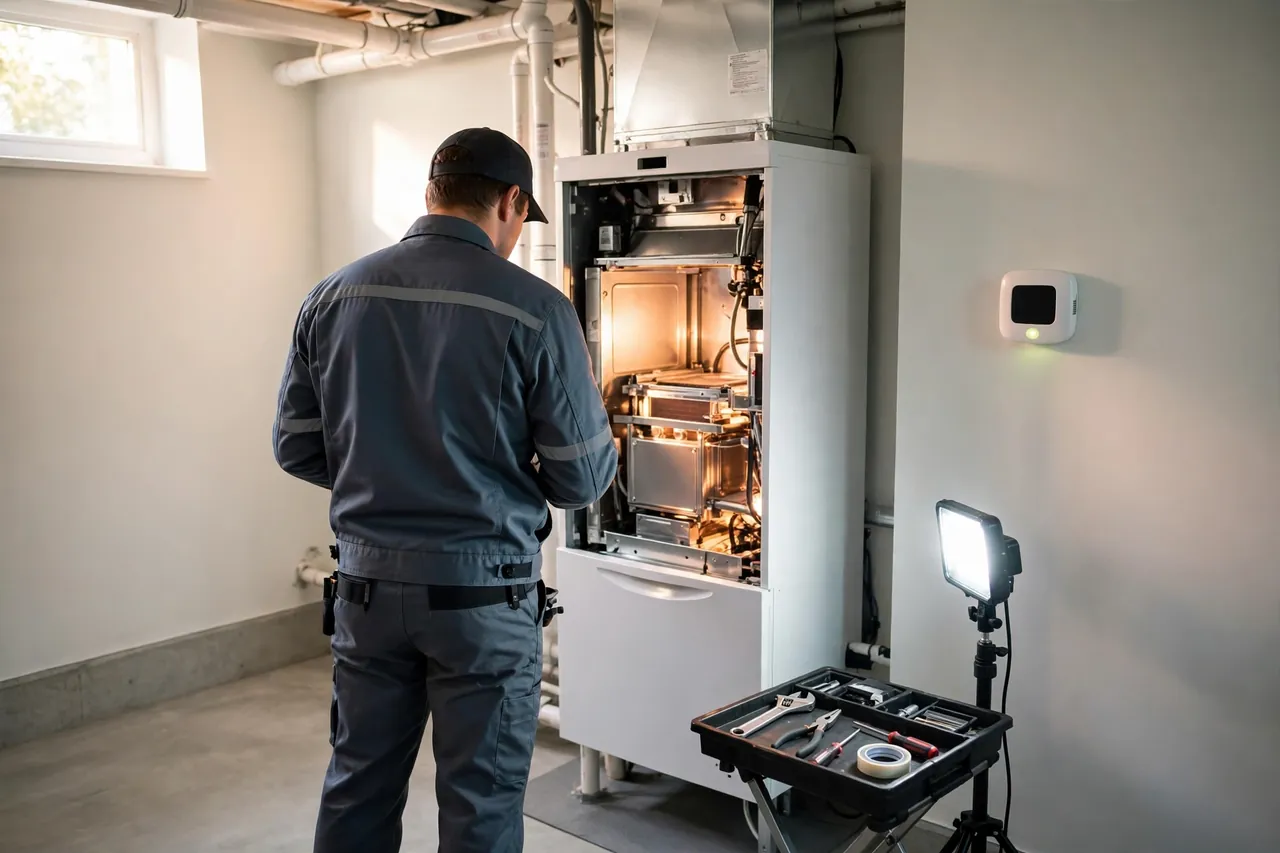
- Have your heating system, water heater, and any other gas, oil, or coal burning appliance serviced by a qualified technician every year. The Centers for Disease Control and Prevention recommends this annual service, and it catches cracked parts and blocked flues before they become emergencies.
- Test your CO alarms at least once a month, and replace them as the maker directs. The Centers for Disease Control and Prevention adds that if you have no instructions, you should replace the alarm every 5 years. Write the install date on the unit so you never have to guess its age.
- Keep one alarm on every level of your home and outside each sleeping area. Interconnect them when you can, so when one sounds, they all sound. Choose an alarm that carries the label of a recognized testing laboratory.
- Keep vents clear. After a snowstorm, make sure the vents for the dryer, furnace, stove, and fireplace are clear of snow build-up. A blocked vent pushes exhaust back into the house.
- Never run a car, generator, or any fuel-burning engine inside an attached garage, even with the garage door open. Run a generator outdoors, more than 20 feet from windows, doors, and vents. Never heat your house with a gas oven, and never burn charcoal indoors.
- Have your chimney checked or cleaned every year. Debris and nests can block a chimney and send carbon monoxide back into the room.
Where you put the alarm matters too. Carbon monoxide mixes through the air in a room, so height is less important than coverage: one alarm on each level and one outside each sleeping area covers your home far better than a single alarm in the hallway. Our guide on whether carbon monoxide rises or falls explains the science behind placement in plain words.
A Quick Safety Note
This guide gives general safety information for a home emergency, not medical advice and not a substitute for a qualified technician or emergency responder. Homes, appliances, and local rules vary, so follow the instructions from the firefighters and technicians who check your home, and call 911 whenever you are unsure. If anyone feels sick, get medical help at once.
Related Guides
What Does a Carbon Monoxide Alarm Sound Like? · Do Smoke Detectors Detect Carbon Monoxide? · Does CO Rise or Fall? The Science and Where to Put Your Detector
Frequently Asked Questions
Should I call 911 if my carbon monoxide alarm goes off?
Yes. Leave the house first, then call 911 from outside and say your carbon monoxide alarm is sounding. Firefighters carry meters that measure carbon monoxide room by room, so they can find the source and tell you when it is safe to go back in. Call even if no one feels sick.
What should I do if my carbon monoxide alarm goes off and then stops?
Leave the house and call 911 anyway. An alarm that stops only means the level near the sensor dropped, often because a window or door let gas out. The faulty appliance may still be making carbon monoxide, and levels can climb again. Only a firefighter with a meter can say the home is safe.
Can a carbon monoxide detector go off falsely?
Yes, but true false alarms are uncommon. Dust, steam, a dying sensor, or an alarm past its end of life can set one off. You cannot tell a false alarm from a real one by listening, so always treat a full four-beep alarm as real: leave, call 911, and let responders test the air.
What should I do if my carbon monoxide alarm goes off in the middle of the night?
Wake everyone, get outside to fresh air at once, and call 911 from outside. Do not wait until morning, and do not go back to bed to see if the alarm stops. Carbon monoxide can make you pass out while you sleep, so a night alarm is the one you must act on fastest.
What are the symptoms of carbon monoxide poisoning?
The most common symptoms are headache, dizziness, weakness, upset stomach, vomiting, chest pain, and confusion, often described as flu-like. Several people or pets feeling sick at the same time is a strong clue. If you notice these signs, get to fresh air at once and call 911.
Your Next Step Tonight
Do one small thing before bed tonight: press the test button on each carbon monoxide alarm and check the date on the back of each unit. If any alarm is past its replace-by date, order a new one tomorrow. Then save your fire department’s non-emergency number in your phone, so the night you need it, you already have it.


