
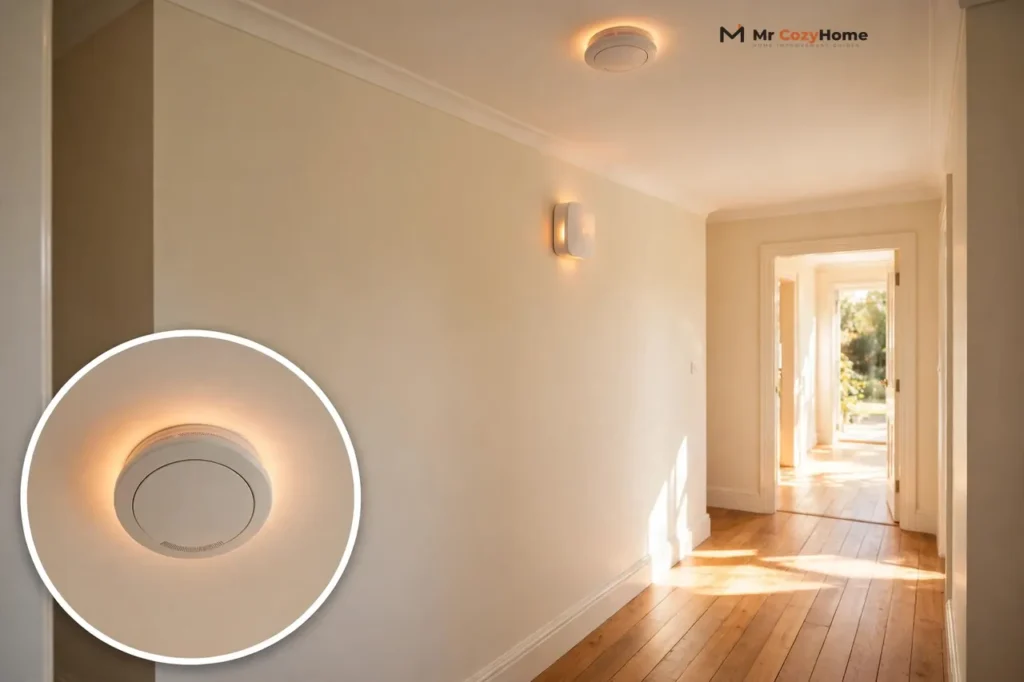
No. A standard smoke detector does not detect carbon monoxide. It watches for smoke from a fire, and it has no sensor that can sense carbon monoxide gas. Carbon monoxide is colorless and odorless, so you cannot see it or smell it, and a smoke-only alarm will stay silent while it builds up in your home. To catch carbon monoxide, you need a CO alarm or a combination smoke and CO alarm.
That gap matters because many homes have smoke alarms in every room but no CO protection at all. A dedicated CO detector closes that gap — see our guide to the best carbon monoxide detectors. A furnace, a gas stove, a water heater, or a car left running in an attached garage can all release carbon monoxide. The good news is that fixing the gap is simple once you know what each device does and how to check the ones you already own.
How a Smoke Detector Works
A smoke detector looks for tiny bits of smoke in the air. It does not test the air for gas at all.
Most homes have one of two types. An ionization alarm uses a small electric current inside a chamber. When smoke drifts in, it breaks up that current, and the alarm sounds. A photoelectric alarm shines a beam of light inside a chamber. When smoke drifts in, it bends the light onto a sensor, and the alarm sounds.
Both types react to particles. Smoke is made of solid bits and tiny drops of liquid that come from burning material. Carbon monoxide is a gas, and a gas has no particles for these sensors to catch. That is why a smoke detector cannot warn you about carbon monoxide, no matter how new or expensive it is.
A smoke detector can still save your life in a fire. The National Fire Protection Association (NFPA) says you may have as little as two minutes to escape safely once a fire starts, which is why working smoke alarms belong in every bedroom, outside each sleeping area, and on every level of your home. Its job is fire, and it does that job well.
How a Carbon Monoxide Alarm Works
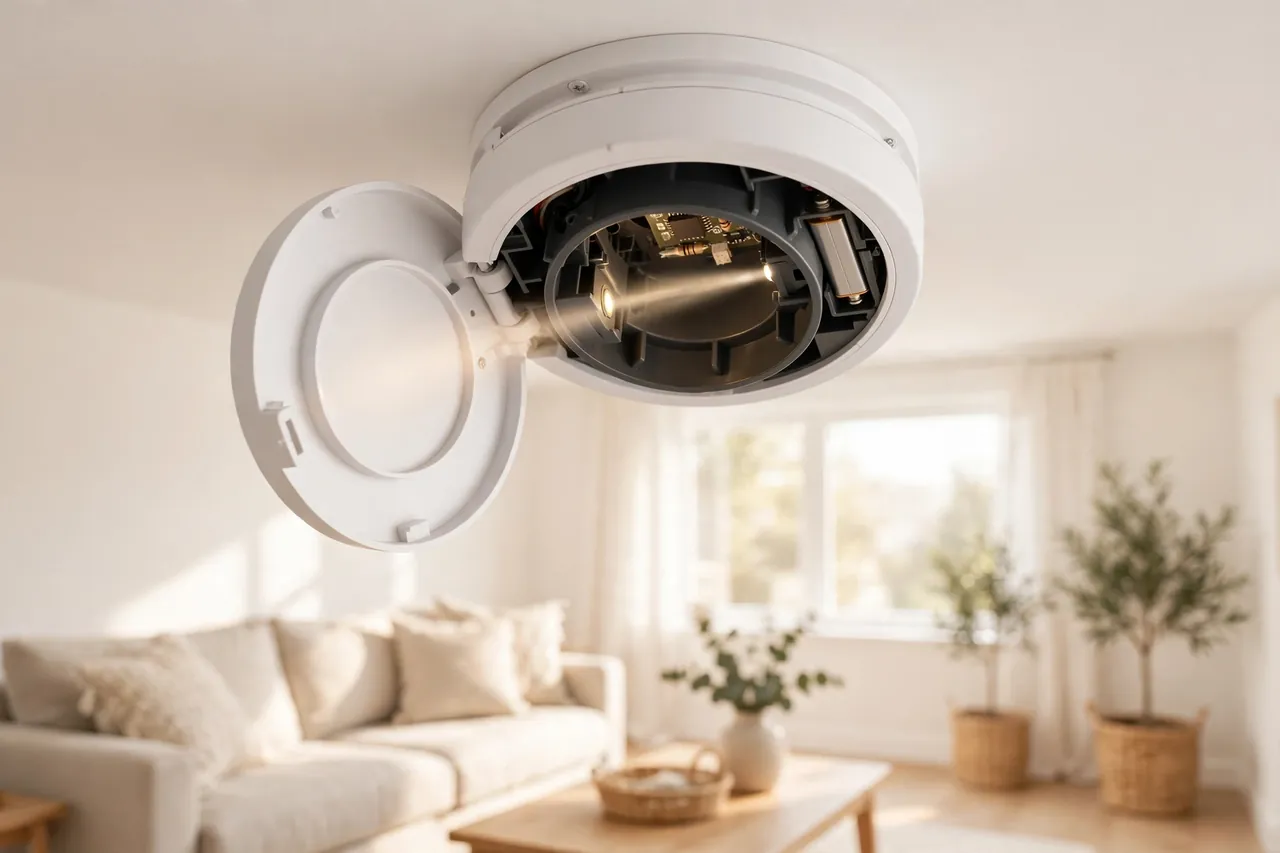
A carbon monoxide alarm looks for gas, not smoke. Inside it sits a small electrochemical sensor. When carbon monoxide reaches that sensor, it starts a chemical reaction that makes a tiny electric current. The alarm measures that current, turns it into a reading in parts per million, and sounds when the level stays dangerous for long enough.
Carbon monoxide alarms do not trip the moment a little gas appears. They watch the level over time, because a small amount for a short time is less dangerous than a large amount for a long time. That is why a CO alarm may wait before it sounds, while a smoke alarm reacts in seconds.
You cannot sense carbon monoxide on your own. It has no color, no smell, and no taste. The CPSC warns that it can kill within minutes, often before people notice any symptoms. An alarm is the only warning you get, and that is why the device matters so much.
Smoke Detector vs. Carbon Monoxide Alarm: Side by Side
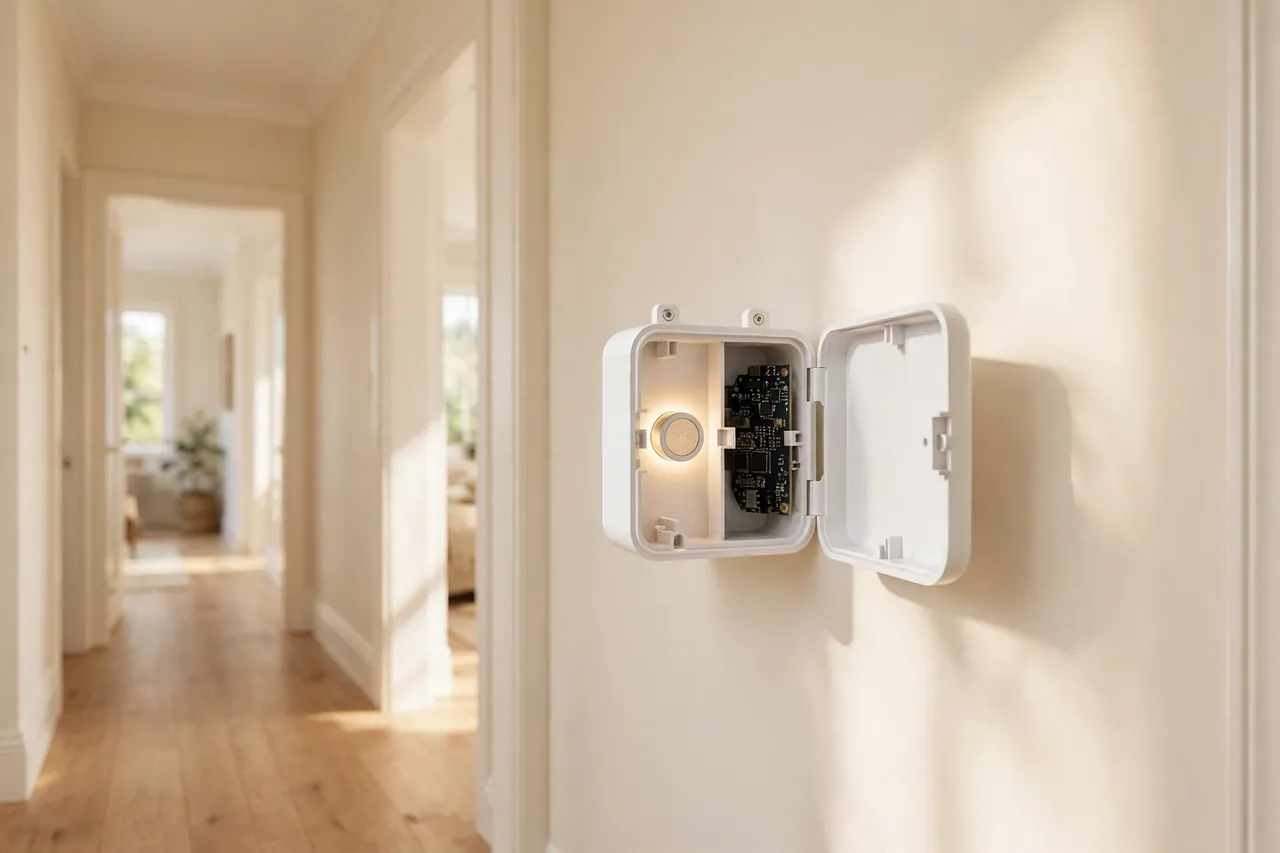
The two devices look alike, sit in the same rooms, and both make a loud noise when they trip. That is where the likeness ends.
| Feature | Smoke Detector | Carbon Monoxide Alarm |
|---|---|---|
| What it senses | Smoke particles from fire | Carbon monoxide gas |
| Sensor inside | Ionization or photoelectric | Electrochemical |
| What it cannot sense | Carbon monoxide gas | Smoke from fire |
| Where it goes | Ceiling or high on a wall | Outside sleeping areas, on every level |
| Alarm sound | Three beeps, then a pause | Four beeps, then a pause |
| Replace it | Every 10 years | On the date the maker prints on it |
Notice the last row. A smoke alarm and a CO alarm also age on different clocks. The NFPA says to replace every smoke alarm 10 years after its manufacture date, which is printed on the back of the unit. A CO alarm has its own end-of-life date set by the maker, so check the label on yours.
Can a Fire Set Off Both Alarms?
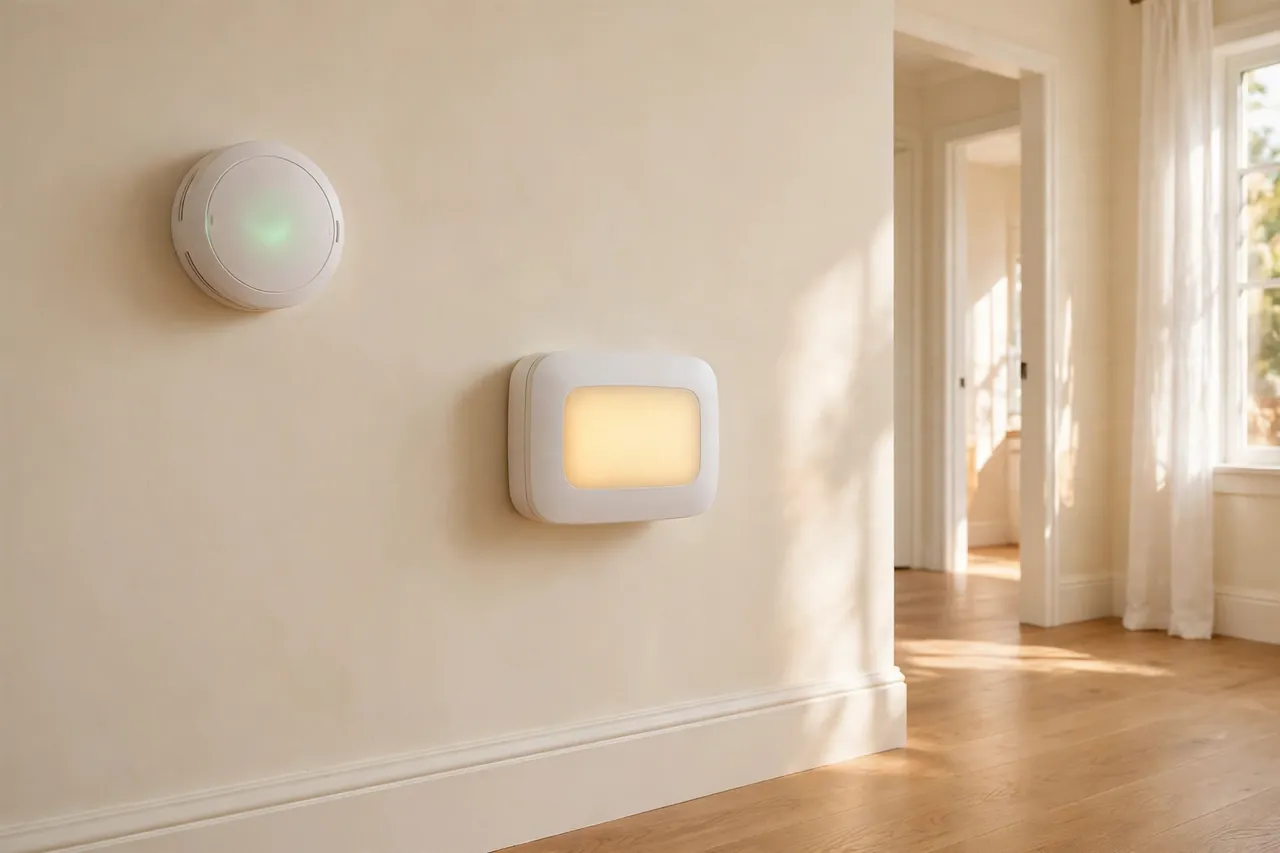
Yes, sometimes. A real fire makes smoke and carbon monoxide at the same time, because both come from burning material. In that case, your smoke alarm sounds for the smoke, and your CO alarm may sound for the gas too. That is normal, and it is one more reason to have both.
The reverse does not work. A carbon monoxide leak with no fire makes gas but no smoke, so a smoke-only alarm stays quiet. That is the dangerous gap. A cracked furnace heat exchanger or a blocked flue can fill a home with carbon monoxide while every smoke alarm in the house stays silent. Only a CO sensor can catch that leak.
How to Tell What You Have
Walk to the nearest alarm in your home and look at it. You can find out what it does in about a minute.
- Read the words on the front. A combination unit says something like “Smoke and Carbon Monoxide Alarm” right on the cover. If it says only “Smoke Alarm,” it is smoke-only.
- Look for the letters CO. The chemical symbol CO on the front or back means the unit has a carbon monoxide sensor. No CO marking usually means no CO protection.
- Check the back for the model number and the UL listing. A combination alarm lists two standards: UL 217 for smoke and UL 2034 for carbon monoxide. A smoke-only alarm lists UL 217 alone.
- Search the model number on the maker’s website. The product page states plainly whether the unit detects smoke, carbon monoxide, or both.
- Press the test button and listen. Many combination alarms run through both sounds, and newer models with voice alerts say out loud which hazard they test, such as “Fire” or “Carbon Monoxide.”
If you still cannot tell, treat the unit as smoke-only and add a CO alarm. Guessing wrong is the one mistake that leaves your home unprotected, and a separate CO alarm costs far less than the risk.
The beep pattern also tells you which alarm is sounding. A smoke alarm uses three beeps, then a pause. A CO alarm uses four beeps, then a pause. Learn the pattern for each alarm in your home, and if you want to know more about what each sound means, read our guide on what a carbon monoxide alarm sounds like.
Combination Smoke and CO Alarms: The One-Device Fix
A combination alarm packs two sensors into one housing: a smoke sensor and a carbon monoxide sensor. It watches for both threats at once, and it uses a different sound for each one so you know which problem you face.
Combination alarms make sense in most homes. You get both kinds of protection from one device, one mount, and one battery to check. They work well in bedrooms and hallways, where the NFPA wants both smoke and CO coverage anyway.
Buy one that is listed by a qualified testing lab for both jobs. The box should name UL 217 and UL 2034. Skip cheap unlisted detectors sold online. The U.S. Consumer Product Safety Commission has warned buyers to stop using certain unlisted plug-in “4 in 1” gas and CO detectors after 91 reports of the devices failing to sound an alarm. A listed alarm from a known maker is the safe buy.
Expect to pay a bit more than a smoke-only alarm. For example, the Kidde hardwired smart smoke and CO detector with Ring app support (model RGCUAR-RW) sold for $74.97 at The Home Depot, checked on 5 Nov 2026. Battery-powered combination alarms usually cost less, and hardwired models with voice alerts cost more. Prices change by store and by model, so check the listing before you buy.
One placement note causes confusion, so here it is plainly. Some guides say CO detectors belong near the floor because carbon monoxide is heavy. That is a myth. Carbon monoxide mixes evenly with the air in a room, so a CO alarm works at any height. A combination unit goes on the ceiling or high on a wall, just like a smoke alarm, because that is where its smoke sensor needs to be. If you want the full picture on where CO sits in a room, see our guide on whether carbon monoxide rises or falls.

Do You Need Both Alarms in Every Room?
No, and that is good news for your budget. You need both kinds of protection in the home, not two devices in every room.
Start with the NFPA map. Smoke alarms go inside every bedroom, outside each sleeping area, and on every level. CO alarms go outside each sleeping area and on every level. The hallway outside the bedrooms is where the two maps overlap, and that is the perfect spot for a combination alarm: one device covers both jobs where both are needed.
Inside a bedroom, a combination alarm also works well, and it keeps things simple. In rooms with a fuel-burning appliance, such as a furnace room or a kitchen with a gas stove, add a standalone CO alarm placed at least 10 feet from the appliance. That gives you a dedicated CO sensor close to the most likely source, plus the combination units guarding the sleeping areas.
If your home is all-electric, with no gas appliances, no fireplace, and no attached garage, your carbon monoxide risk is much lower. You still need smoke alarms everywhere the NFPA lists, and a CO alarm is still cheap insurance, but a single combination alarm outside the sleeping area may be all the CO protection you need. Check your local code before you decide, because some states and cities require CO alarms in every home no matter the fuel type.
Where to Put Each Alarm
Placement follows the same simple rule for both devices: put them where they can wake you and warn you early.
The NFPA recommends smoke alarms inside every bedroom, outside each sleeping area, and on every level of your home, including the basement. Mount them on the ceiling or high on a wall, at least 10 feet from the stove so cooking smoke does not set them off.
For carbon monoxide, the NFPA recommends an alarm outside each sleeping area and on every level of the home. First Alert adds that you should also place one near an attached garage, in case a car is left running. Keep CO alarms at least 10 feet from fuel-burning appliances, and follow the maker’s instructions for your model.
Interconnected alarms give the best protection. When one sounds, they all sound, so a basement alarm wakes the bedrooms upstairs. The CPSC recommends interconnected alarms for the same reason.
What to Do If a CO Alarm Sounds
Do not ignore a CO alarm, and do not try to find the leak yourself. Get everyone out of the house into fresh air right away, then call 911 or your local fire department from outside. The CPSC gives the same advice: get outside immediately, then call 911. Stay out until responders say it is safe to go back in.
That is the whole plan, and it is worth knowing before you ever need it. For the full step-by-step version, including what to tell the dispatcher and what happens after the fire department arrives, read our guide on what to do if your carbon monoxide alarm goes off.
Mistakes That Leave Homes Unprotected
Most CO gaps come from honest mistakes, not carelessness. Watch for these four.
- Assuming the alarm on the ceiling covers everything. A smoke-only alarm on the ceiling covers fire only. Check the label before you assume it covers CO too.
- Keeping an alarm past its life. Sensors wear out. Replace smoke alarms at 10 years, and replace CO alarms on the date the maker prints on the unit. A chirp that continues after a fresh battery means the unit has reached the end of its life.
- Never testing. Press the test button once a month. The NFPA says a test takes seconds, and a silent alarm is a broken alarm.
- Buying the cheapest detector online. An unlisted detector may look the same and cost half as much, but it may never sound. Buy a listed alarm from a known maker and keep the box until you have checked the UL numbers.
One more habit helps. When you change the clocks for daylight saving time, test every alarm in the house. It takes five minutes, and it turns a chore you might forget into one you never miss.
A Short Note Before You Go
This guide explains how smoke detectors and carbon monoxide alarms work so you can check your own home. It is general home-safety information, not a substitute for your local fire code or the instructions that came with your alarms. Homes, fuel-burning appliances, and local rules vary, so follow the maker’s instructions for your model and ask your local fire department if your layout is unclear. For any hardwired alarm work, hire a qualified electrician. If a CO alarm sounds, leave the house and call 911 from outside.
Related Guides
What Does a Carbon Monoxide Alarm Sound Like? — Learn the four-beep pattern, the low-battery chirp, and the end-of-life signal so you know what each sound means.
What to Do If Your Carbon Monoxide Alarm Goes Off — The step-by-step plan for getting out safely and what to tell the fire department.
Does CO Rise or Fall? — Where carbon monoxide actually goes in a room, and what that means for where you mount your alarms.
Frequently Asked Questions
How do I know if my smoke detector is also a carbon monoxide detector?
Read the front of the unit. A combination alarm says “Smoke and Carbon Monoxide Alarm” and shows the letters CO. On the back, look for the model number and two UL listings: UL 217 for smoke and UL 2034 for carbon monoxide. If it lists only UL 217, it is smoke-only. When in doubt, search the model number on the maker’s website.
Do smoke alarms go off for carbon monoxide?
No. A standard smoke alarm does not go off for carbon monoxide because it has no gas sensor. It reacts to smoke particles from a fire, and carbon monoxide is an invisible gas with no particles to catch. Only a CO alarm or a combination smoke and CO alarm will sound for carbon monoxide.
Can a combination smoke and carbon monoxide alarm do both jobs well?
Yes, if it is listed for both jobs. A good combination alarm has two separate sensors inside: a smoke sensor and an electrochemical CO sensor. It uses three beeps for smoke and four beeps for CO, so you can tell which hazard it found. Look for both UL 217 and UL 2034 on the label.
How often should I replace smoke and carbon monoxide detectors?
Replace smoke alarms every 10 years from the manufacture date printed on the back of the unit, or sooner if they fail a monthly test. Replace a CO alarm on the end-of-life date the maker prints on it, which varies by model. Test both types once a month and change batteries when they chirp.
What is the difference between a smoke detector and a carbon monoxide detector?
A smoke detector senses smoke particles from a fire using an ionization or photoelectric sensor. A carbon monoxide detector senses an invisible, odorless gas using an electrochemical sensor. Each one misses what the other catches, so a home needs both kinds of protection, either as separate units or as a combination alarm.
Now you know the answer, so take five minutes today and check the alarms in your home. Read the label on each one, and if none of them says carbon monoxide, pick up a listed combination alarm or a standalone CO alarm this week. That one small check closes the most common safety gap in American homes.


