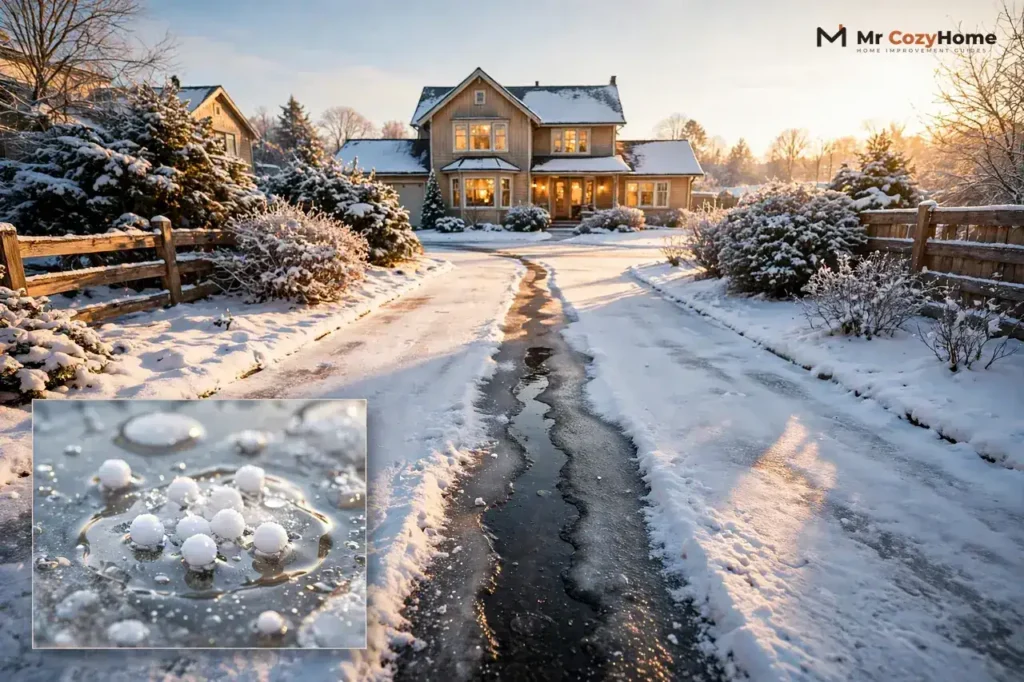
The fastest way to melt ice on a driveway is calcium chloride. It starts working in minutes and keeps melting ice down to about -25°F. Rock salt costs less, but it stops working when the temperature drops to about 15°F to 20°F. Before you spread anything, shovel the snow off the ice and check the temperature first. That one check tells you which product will work today.
This guide walks you through every method that works, from rock salt to rubbing alcohol spray. It also shows you what each one costs your driveway, your plants, and your pets. You will learn what to skip, too, so you do not damage new concrete or waste money on a product that cannot work in your cold.
Start Here: Clear the Snow First
No ice melt works well under a pile of snow. The granules sit on top of the snow, melt a little hole, and never reach the ice below. So grab your shovel first, even when you are in a hurry.
Push the snow off the driveway and down to the ice layer. You do not need a perfect job. Get the loose snow out of the way, then break up any slush with the edge of the shovel. A flat metal shovel or an ice scraper works best for this part.
Next, check the temperature. Look at a thermometer or your weather app, and check the pavement, not just the air. Pavement can sit colder than the air on a clear night. If the pavement is colder than your product can handle, the granules will just sit there. That is your cue to switch products, or to use sand for grip instead.
Finally, lay down sand or grit where you plan to stand while you work. You need safe footing before you start spreading chemicals on a slippery surface. Keep your phone in your pocket and wear boots with good grip. Falls happen fast on black ice.
How Ice Melt Actually Works
Ice melt does not work like a heater. It works by lowering the freezing point of water. Pure water freezes at 32°F. When salt dissolves into the thin film of water on top of the ice, that water can stay liquid at a much lower temperature. The ice then turns back into water, and the bond between the ice and the pavement breaks.
That is why temperature matters so much. Every de-icer has a floor. Above that floor, it melts ice. Below it, it does almost nothing, no matter how much you spread. More product does not push past the floor. It only adds damage to your driveway and your lawn.
Some products also give off heat as they dissolve. Calcium chloride does this, which is one reason it works so fast. Lowe’s buying guide notes that calcium chloride absorbs moisture and creates heat as it turns to liquid, so it melts snow faster than rock salt. Rock salt, on the other hand, needs liquid water to start dissolving, so it slows down badly in deep cold.
Which Ice Melt Works at Your Temperature?
Pick your product by the pavement temperature, not by the picture on the bag. The table below gives the working range for each common de-icer. Exact numbers vary a little between sources, so treat these as a guide and always check the label on your bag.
Table: Working temperature range for common driveway de-icers
| De-icer | Works down to about | Best for | Watch out for |
|---|---|---|---|
| Calcium chloride | -25°F | Deep cold, fast melting | Burns skin, harms pets, slippery residue |
| Magnesium chloride | -13°F to 5°F | Pets, plants, concrete | Costs more, needs a bigger dose |
| Rock salt (sodium chloride) | 15°F to 20°F | Mild cold, low cost | Damages concrete, kills grass, rusts metal |
| Potassium chloride | 12°F to 20°F | Gentler on plants | Slow, weak, costs more than rock salt |
| Calcium magnesium acetate (CMA) | About 20°F | Concrete, pets, plants | Pricey, best before ice forms |
| Urea | About 15°F to 20°F | Gentle on concrete | Slow, can harm plants if overused |
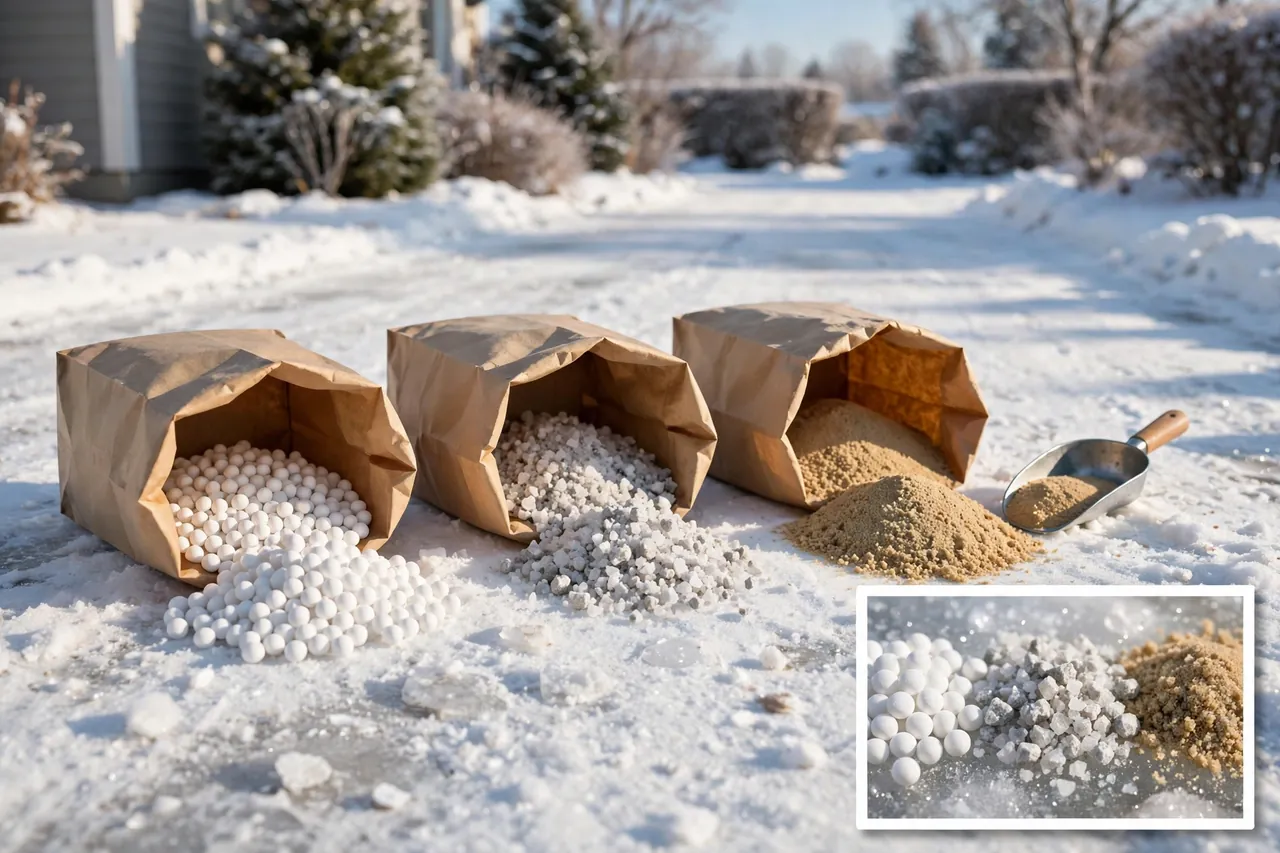
| Sand or grit | No limit | Grip in any cold | Melts nothing, needs spring cleanup |
The temperature ranges in this table come from Kansas State University Extension and The Spruce, with the magnesium chloride range reflecting the spread between extension sources. Kansas State Extension puts calcium chloride at -25°F, magnesium chloride at 5°F, potassium chloride at 20°F, and rock salt at 12°F or higher. The Spruce lists rock salt at 20°F and potassium chloride at 12°F. When sources disagree by a few degrees, the safe move is to buy for the colder number.
One more warning about labels: many bags sold as premium ice melt are mostly rock salt with a little calcium chloride mixed in. Check the ingredients panel, not just the front of the bag. If the first ingredient is sodium chloride, you bought rock salt at a premium price.
How to Melt Ice on a Driveway With Rock Salt
Rock salt is the cheapest and most common way to melt ice on a driveway. It works well in mild cold, and a bag is easy to find at any hardware store. Follow these steps and it will do its job without wrecking your driveway.
- Shovel the snow off the ice first. Salt cannot reach ice that sits under snow.
- Spread a thin, even layer of rock salt over the ice. About 4 pounds per 1,000 square feet is enough for a normal driveway. Use a cup or a handheld spreader so you do not dump piles in one spot.
- Wait about 30 minutes. Thin ice starts to soften in minutes, but a thick sheet needs time for the salt to bite through it.
- Scrape up the slush with a metal shovel and push it off to the side. Leaving slush on the driveway lets it refreeze overnight.
- Spread a light second layer only on the spots that are still icy. More salt will not melt ice faster once you have covered the surface.
Rock salt works best when the temperature is above 20°F. As it gets colder, it slows down fast. Below about 15°F, it mostly stops working, and piling on more salt will not help. Switch to calcium chloride or sand on those days.
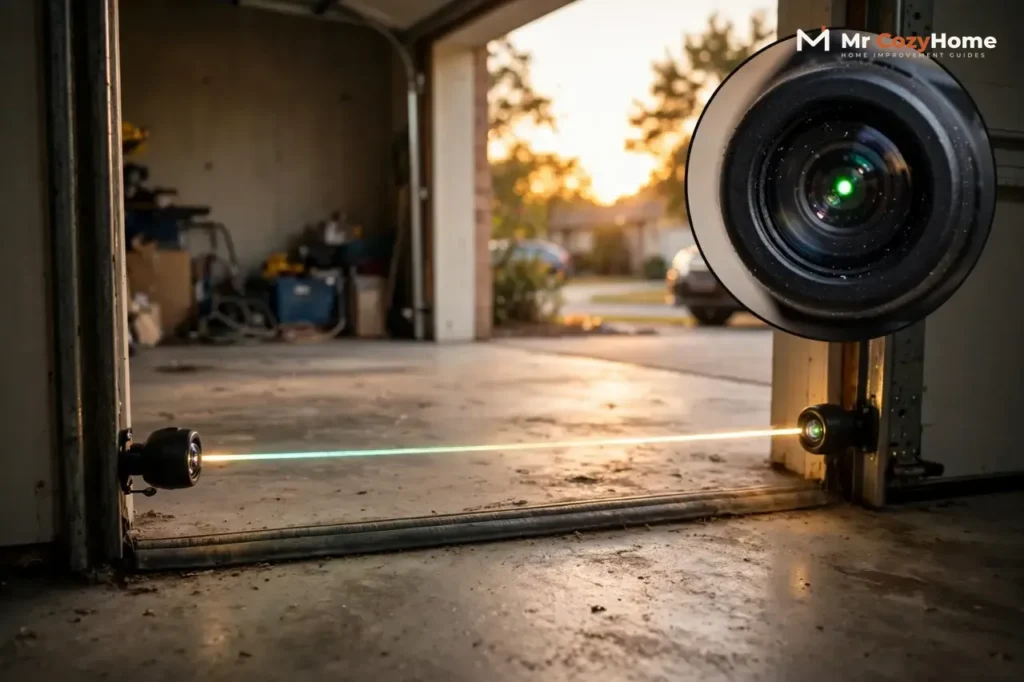
Keep rock salt off your lawn and garden beds. It kills grass and harms plants where the meltwater runs. It also rusts metal, so keep it away from garage door tracks and railings, and sweep up what you do not need.
How to Melt Ice on a Driveway With Calcium Chloride
Calcium chloride is the fastest common de-icer, and it is the one to reach for in real cold. It gives off heat as it dissolves, so it bores into the ice within minutes instead of waiting for the ice to melt on its own. It keeps working down to about -25°F, which is far colder than rock salt can handle.
- Shovel the snow and loose slush off the ice, just as you would for rock salt.
- Put on gloves. Calcium chloride can burn skin and irritate your hands, so do not spread it bare-handed.
- Scatter the pellets thinly and evenly. You need about half as much as rock salt, because it works harder per scoop.
- Wait 10 to 15 minutes, then scrape up the softened ice and slush. The pellets will have cut through the sheet and broken its grip on the pavement.
- Sweep up any leftover pellets once the ice is gone. Leftover granules can leave a slimy residue that stays slippery.
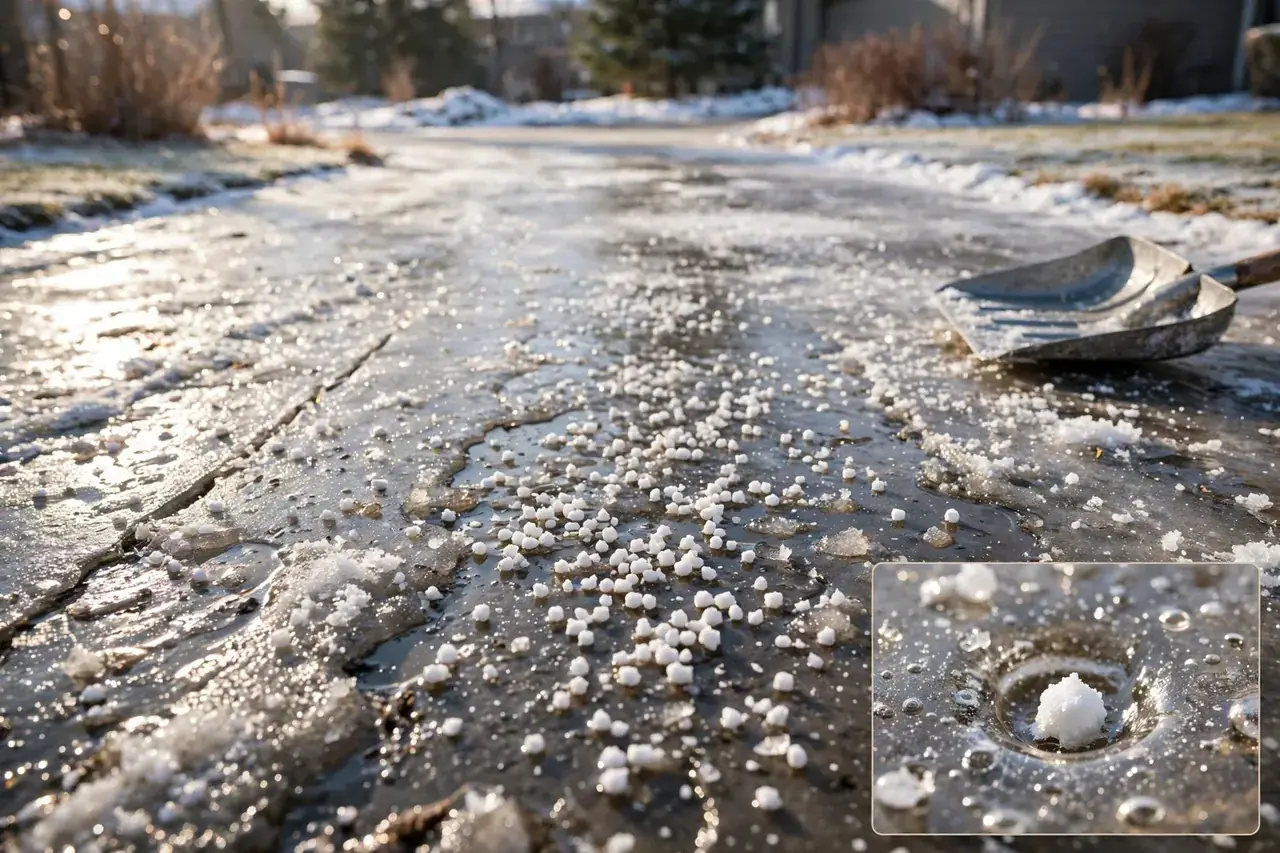
Calcium chloride costs more per bag than rock salt, but you use less of it, so the gap is smaller than it looks on the shelf. It is also less harsh on concrete than rock salt, though it still corrodes metal, so keep it off railings and tracks.
Do not use calcium chloride on new concrete. Concrete that is less than a year old has not fully cured, and no chloride de-icer belongs on it. Use sand and a shovel for the first winter, and let the concrete cure.
How to Melt Ice on a Driveway Without Salt
Sometimes salt is the wrong tool. You may have new concrete, a dog that walks the driveway, or plants right beside it. These methods melt ice or make it safe without a bag of salt.
Rubbing Alcohol Spray
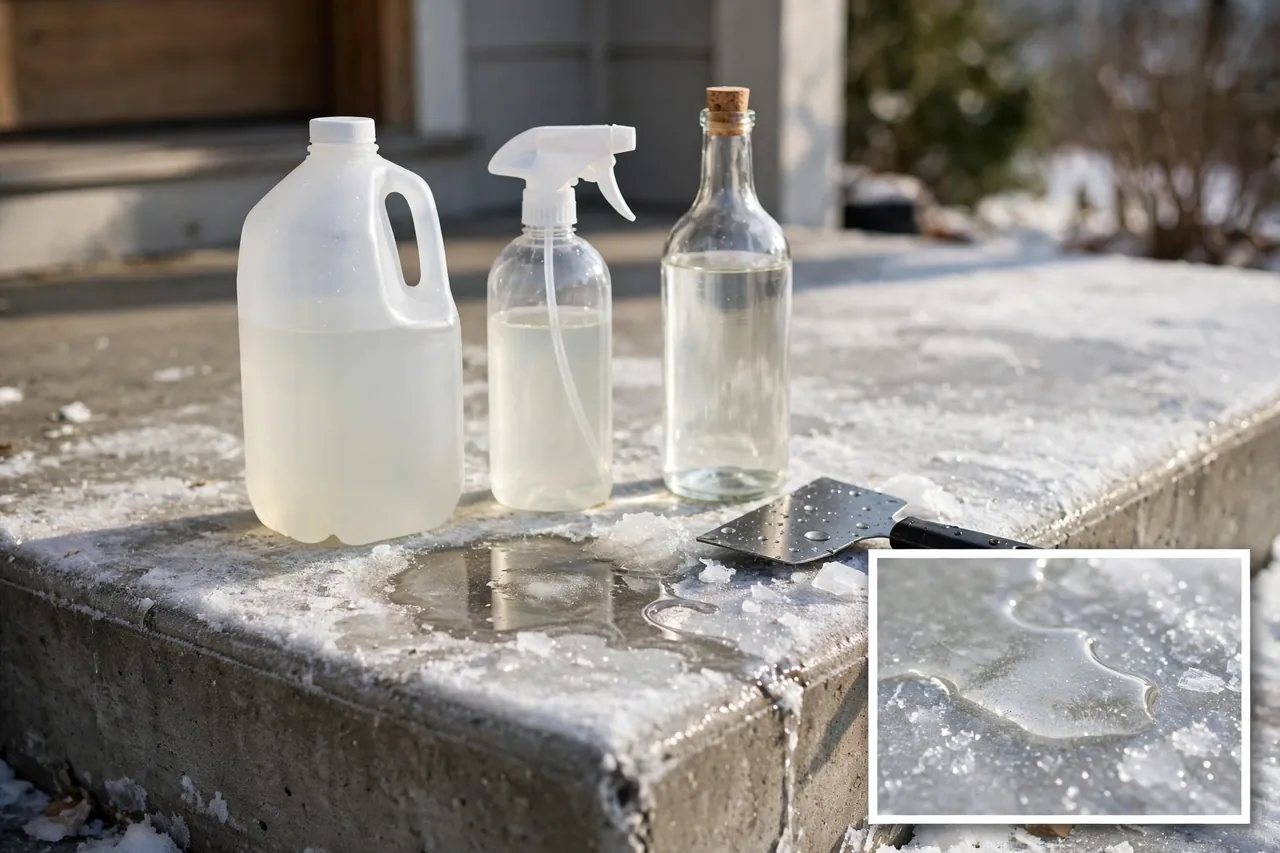
Rubbing alcohol is one of the best salt-free ways to melt thin ice. Isopropyl alcohol freezes at about -128°F, far below any winter temperature you will see, so it melts ice on contact and stops it from refreezing right away.
Mix 2 parts 70% isopropyl alcohol with 1 part warm water in a spray bottle. Spray it straight onto the ice and wait a few minutes. Then scrape up the loosened ice with a shovel. This works best on thin ice, frost, and icy patches. For a thick sheet, scrape first, then spray what is left.
Keep the mix away from open flames, and store the bottle out of reach of children. Rubbing alcohol is flammable, so never use it near a heater or a lit grill.
Sand and Other Traction Helpers
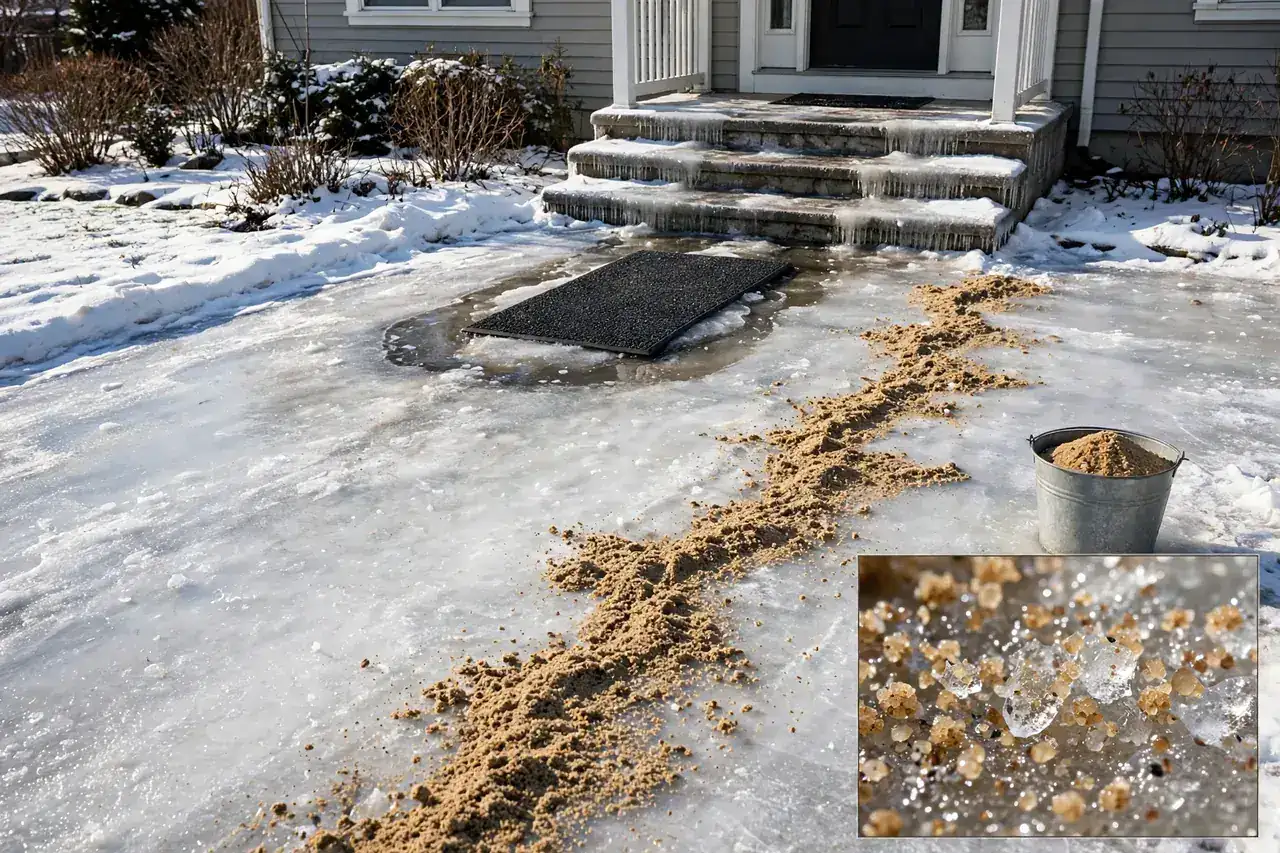
Sand melts nothing — This Old House puts it plainly: sand provides no melting, just friction — but it may be the smartest choice on the coldest days. When the temperature drops below every de-icer on the shelf, grip is all you have left. Spread coarse sand, grit, or non-clumping clay litter over the ice, and you can walk and drive safely right away.
Sand works at any temperature, it cannot damage concrete, and it is cheap. The trade-off is cleanup: sweep it up in spring before it washes into storm drains. Skip clumping kitty litter, which turns to mush, and skip ashes, which stain and make a mess.
Heated Mats and Liquid De-Icers
Heated snow-melt mats plug in and warm the surface under them, so ice melts without chemicals. They work well on steps and the strip of driveway where you walk to the car. They cost more up front and use electricity, so most people use them for small trouble spots, not the whole driveway.
Liquid de-icers, usually sold in jugs with a sprayer, start working on contact and double as a pre-treatment before a storm. Lowe’s buying guide notes that liquid formulas often make a concrete-safe and pet-safe choice. They cover small areas well, but a whole driveway would take many jugs.
Homemade Ice Melt: What Works and What Does Not
When the store is closed or the shelves are empty, the kitchen cabinet looks tempting. Some homemade mixes work. Others waste your time or make things worse.
The rubbing alcohol mix above works, and so does a bucket mix of half a gallon of hot water, a quarter cup of rubbing alcohol, and a few drops of dish soap. Pour it over the ice, wait a few minutes, then scrape. The alcohol does the melting. But go easy on the dish soap, because soap can leave the driveway slippery even after the ice is gone.
Vinegar is the homemade remedy that disappoints most people. Household vinegar is only about 5% acetic acid, and it freezes near 28°F, barely below water. Mixed half and half with warm water, it can soften light frost, but it will not chew through a real sheet of ice. It can also etch stone and damage concrete if you use it often. Skip it for driveways.
Epsom salt is another idea that sounds better than it works. It is a different chemical from rock salt, and it melts ice slowly at best. If you want the full story on it, read our guide on whether Epsom salt melts ice, which covers where it helps and where it falls short.
Baking soda and table salt will melt a little ice, but only in mild cold, and only in small amounts. They are fine for a single icy step when you have nothing else. They are not a plan for a whole driveway.
What Ice Melt Does to Concrete, Plants, and Pets
Every de-icer has a cost beyond the price on the bag. The damage shows up slowly, so it is easy to miss until the driveway starts flaking or the grass along the edge turns brown in spring.
Concrete suffers most from the freeze-thaw cycle that salt creates. Salt lowers the freezing point of water, so meltwater seeps into the tiny pores of the concrete, then refreezes and expands when the temperature drops again. That cycle flakes the surface, a problem called scaling, and it can crack the slab over time. New concrete is the most at risk, which is why no chloride de-icer should touch concrete in its first year. Sealing your driveway before winter helps, because a sealed surface takes in less water.
Plants take damage where salty meltwater runs off the driveway. Grass turns brown along the edge, shrubs lose leaves, and the salt builds up in the soil. Use the smallest amount that works, and keep the runoff away from garden beds. Magnesium chloride and calcium magnesium acetate are gentler on plants than rock salt, though neither is harmless.
Pets feel ice melt on their paws. Rock salt and calcium chloride can burn paw pads and upset a dog’s stomach if licked off. Wipe your dog’s paws after a winter walk, and keep pets off a freshly treated driveway until you have swept up the extra granules. Magnesium chloride is the usual pick for homes with dogs, because it is gentler on paws, but it still deserves a wipe-down after.
Metal rusts wherever chloride lands. Garage door tracks, railings, and car parts all corrode faster when salt spray reaches them. Hose down metal near the driveway when the thaw comes, and sweep extra granules off the concrete instead of leaving them to wash away.
What NOT to Do on an Icy Driveway
A few popular tricks cause more harm than the ice itself. Skip these, even when a neighbor swears by them.
- Do not pour boiling water on the ice. It can crack concrete from the sudden temperature shock, burn you badly if it splashes, and refreeze into black ice within minutes on a cold day.
- Do not use hot water from a hose as your main plan. It melts the top layer fast, then refreezes into a smooth, invisible sheet that is more dangerous than the ice you started with.
- Do not use fertilizer as a de-icer. Urea-based fertilizer does lower the freezing point, but overuse burns plants and pollutes runoff, and it is slow.
- Do not chip thick ice with a metal pick or an axe. You will gouge the concrete and still leave ice behind. A flat shovel and a de-icer work better and spare the surface.
- Do not spread salt before you shovel. Salt under snow never reaches the ice, so you waste the whole bag.
- Do not mix de-icers and guess at the dose. Follow the label on the bag you bought. More is not faster, and mixing chemicals can leave a slippery residue.
What Ice Melt Costs
Rock salt is the cheapest bag on the shelf, and calcium chloride costs more per bag but needs a smaller dose. That trade-off matters more than the sticker price. A bag of rock salt treats a smaller area in mild cold, while a bag of calcium chloride treats a similar area in much colder weather.
As one checked example, a 50-pound bag of calcium chloride pellets was listed at $24.00 at 1st State Seed on 5 Nov 2026, though it showed as sold out that day. Home Depot shoppers have also reported paying around $40 for a 50-pound bag of calcium chloride pellets. Prices change by store, region, and season, so check your local store before you buy, and buy early in the season before the shelves empty.
Blends sit in the middle on price. Read the ingredients before you pay a premium: a blend that is mostly rock salt should cost close to rock salt, not close to pure calcium chloride.
How to Keep Ice From Coming Back
Melting today’s ice is only half the job. The other half is stopping tomorrow’s ice from bonding to the driveway in the first place.
Pre-treat before the storm when you can. Spread a thin layer of de-icer or spray a liquid de-icer before the snow starts, and the ice will not grip the pavement as hard. It is far easier to shovel snow that never bonded than to melt a sheet that did.
Clear slush the same day it forms. Slush left overnight freezes into a hard sheet by morning, and that sheet takes twice the work to remove. A quick scrape after each snowfall saves a long battle later.
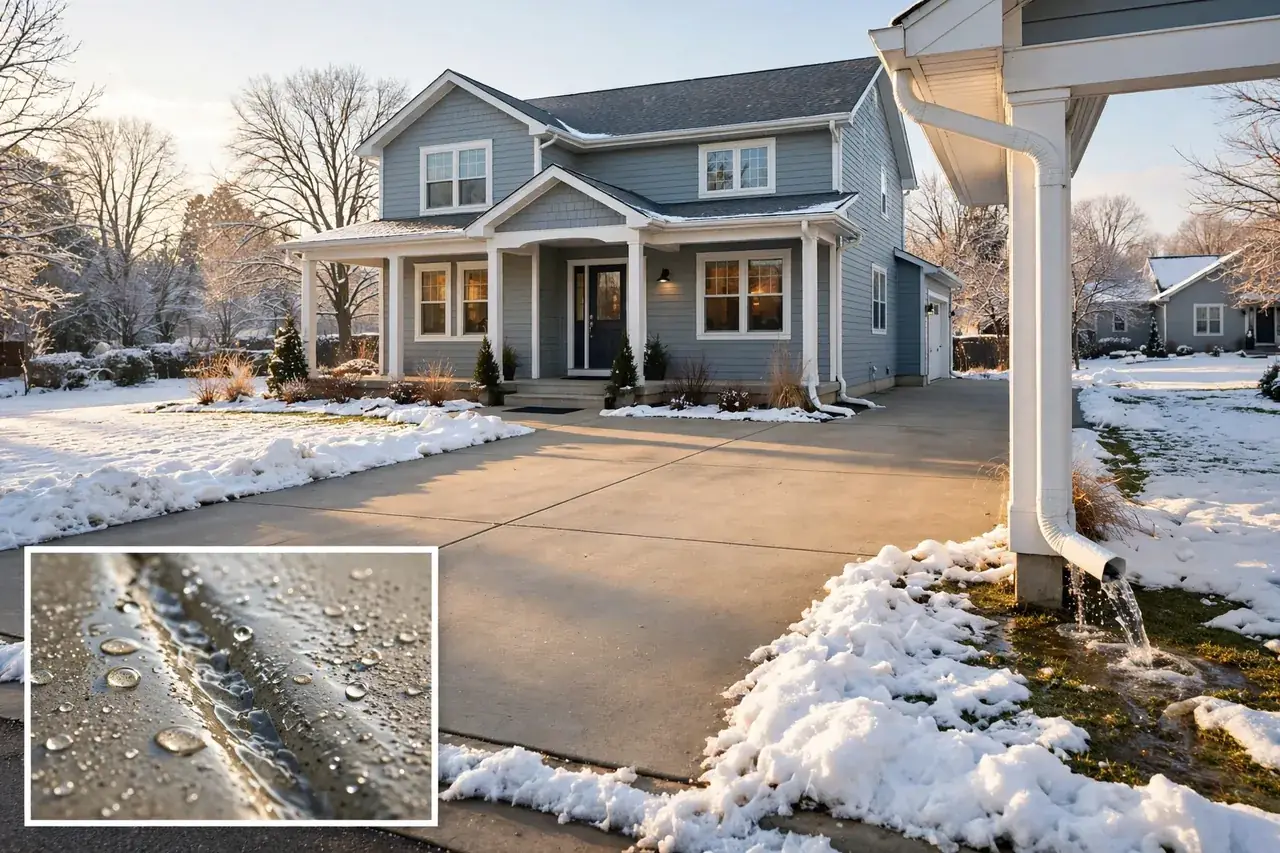
Fix drainage if water keeps pooling in the same spot. Ice forms where water sits, so a low patch or a downspout that dumps onto the driveway will freeze again and again. Redirect the water, and the ice problem shrinks with it.
Seal your concrete every few years. A sealed driveway absorbs less water, so it suffers less freeze-thaw damage and the ice comes off more easily. Seal in dry weather, well before winter sets in.
For a long-term fix, heated driveway systems melt snow as it falls, but they cost far more than bags of salt and need professional installation. For most homes, a good shovel, the right de-icer, and a pre-treatment habit are enough.
A Quick Safety Note
Ice melt products are chemicals, so treat them with respect. Wear gloves when you spread them, keep them away from children and pets, and read the label on the bag before you use a new product. If you have a health condition, a breathing problem, or a driveway with structural damage, ask a professional for help instead of tackling it alone. Homes, driveways, and winters vary, so use your judgment and call a pro when a job feels unsafe.
Related Guides
If you want a gentler de-icer for steps and small patches, read our guide on whether Epsom salt melts ice. And when the snow piles up faster than a shovel can handle, our one-stage snow blower vs two-stage comparison will help you pick the right machine for your driveway.
Frequently Asked Questions
What is the fastest way to melt ice on a driveway?
Calcium chloride is the fastest way. It gives off heat as it dissolves, starts working within minutes, and keeps melting ice down to about -25°F. Shovel the snow off first, spread the pellets thinly, wait 10 to 15 minutes, then scrape up the slush.
Does vinegar melt ice on a driveway?
Vinegar melts light frost a little, but it is a poor de-icer for a driveway. Household vinegar is only about 5% acetic acid and freezes near 28°F, barely below water. It will not cut through a thick sheet of ice, and repeated use can etch stone and damage concrete.
Does table salt melt ice?
Yes, table salt melts ice the same way rock salt does, because both are sodium chloride. It lowers the freezing point of water, so ice turns back into liquid. But it only works in mild cold, above about 15°F to 20°F, and it is too pricey in small boxes for a whole driveway.
What melts ice without damaging concrete?
Calcium magnesium acetate is the gentlest de-icer on concrete, and magnesium chloride is gentler than rock salt. Sand melts nothing but gives safe grip without any chemical damage. Never use any chloride de-icer on concrete less than a year old, and seal older concrete to cut freeze-thaw damage.
At what temperature does road salt stop working?
Yes, but only down to the salt’s limit. Rock salt works from 32°F down to about 15°F to 20°F. Below that, it stops melting ice, and adding more salt will not help. In deeper cold, switch to calcium chloride, which works down to about -25°F, or spread sand for grip.
Is regular rock salt dangerous for dogs?
Yes, it can. Rock salt and calcium chloride can burn paw pads and upset a dog’s stomach if licked off. Magnesium chloride is gentler on paws and is the usual pick for homes with dogs. Wipe your dog’s paws after every winter walk, and sweep up extra granules from the driveway.
Start with the shovel, check the temperature, and pick the product that can actually work today. And for the rest of your winter prep, run through our home winterization checklist. Calcium chloride wins in deep cold, rock salt wins on price in mild cold, and sand wins when nothing else can melt the ice. Clear the slush before it refreezes, and your driveway will stay safe all winter.