
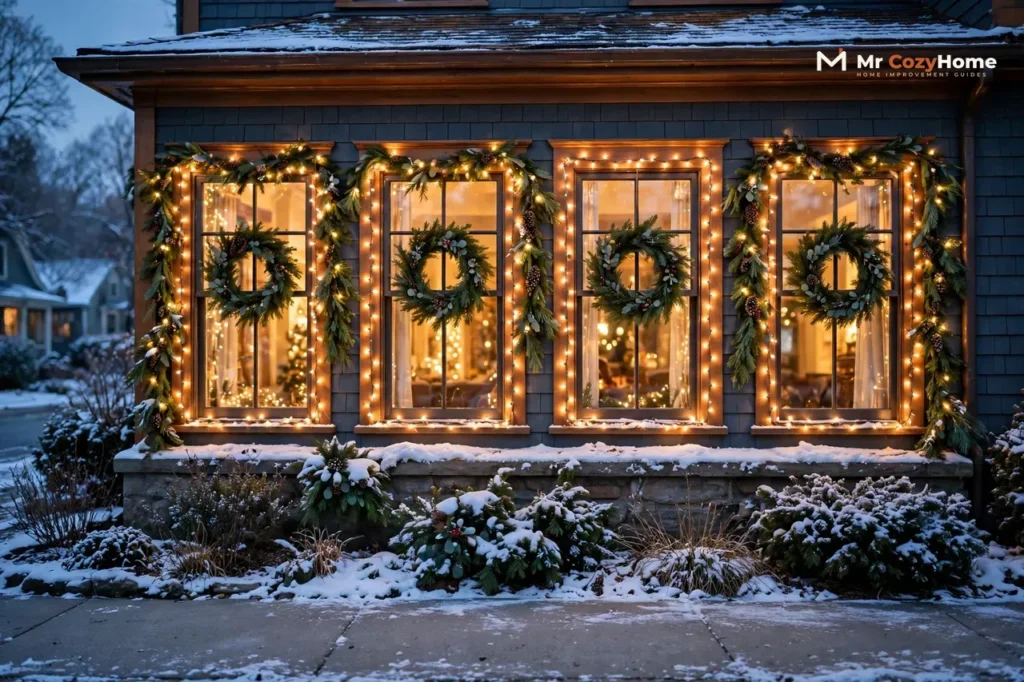
Outdoor Christmas window decorations work when you design them for the person standing on the sidewalk, not the person sitting on the sofa. Pick one bold focal point per window, frame it with warm outdoor-rated light, and hang it so wind, rain, and cold glass cannot bring it down. That is the whole trick, and it turns plain windows into the brightest part of your street at dusk.
Most window decorating advice starts indoors, with the view from the living room. This guide flips that around. Here, every idea gets judged from the yard: does it read from twenty feet away, does it survive a December storm, and does it still look good when the glass fogs up? If an idea fails any of those tests, it does not belong on the outside of your window. For the indoor side of the story, our guide to decorating a Christmas window already covers sills, sheer curtains, and the view from the sofa.
Start From the Sidewalk, Not the Sofa
Before you buy anything, walk out to the street at dusk and look at your house the way a neighbor sees it. You will spot the truth fast. One window glows while the rest sit dark. A tiny wreath disappears on a big pane. A cord dangles down the glass and ruins the whole picture.
Distance changes everything when decorating outdoor windows for Christmas. Details that charm you from two feet away turn into a blur from fifty feet away, so outdoor window Christmas decor needs big, simple shapes and strong contrast. A large wreath, a clean frame of lights, or a bold silhouette beats a dozen small ornaments every time. Step back often while you hang things, and check the view from the sidewalk, not just from the ladder.
Pick one color story for the whole front of the house, and repeat it on every street-facing window. Warm white lights with red ribbon on every window look planned. Warm white on one window, cool white on the next, and multicolor on the third look accidental. Repetition is what makes a house look like it hired a decorator, even when you did it yourself on a Saturday afternoon.
Lighted Window Frames That Read From the Street
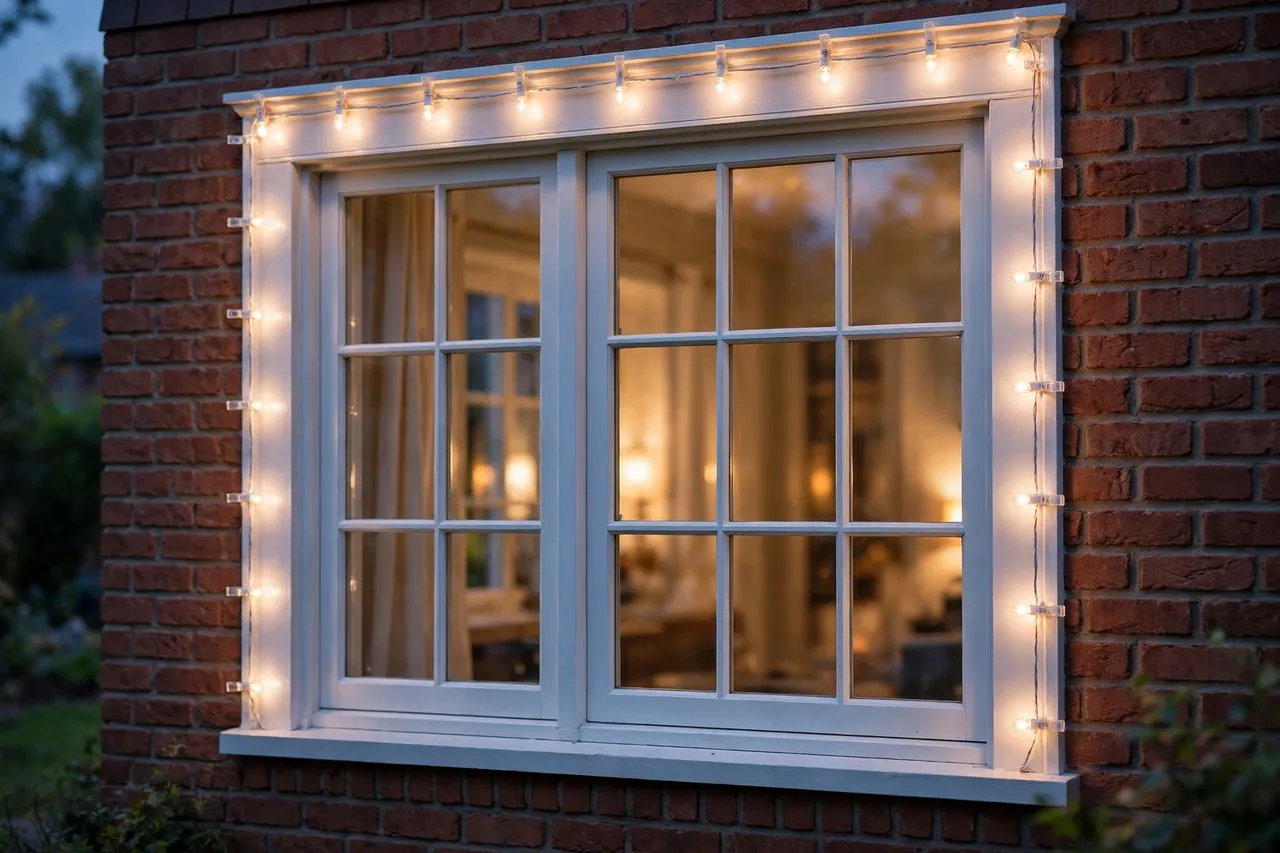
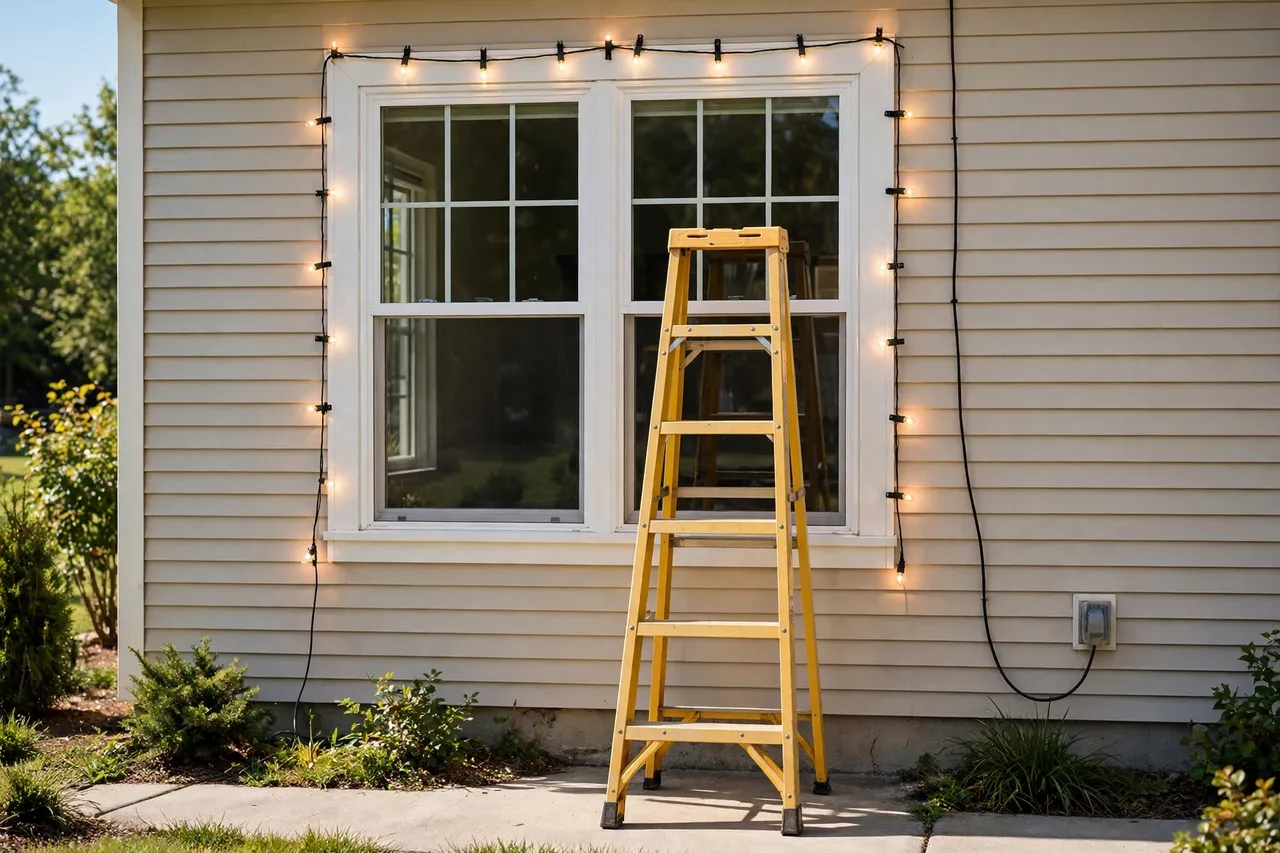
A frame of lights is the fastest way to make a window read from the street. Run one strand down each side and across the top, and stop there. A full loop around the sill collects dirt, blocks the window, and gives you a cord to trip over. The top-and-sides frame draws the eye up and outlines the window like a picture frame.
Stick to one bulb color on the whole front of the house. Warm white flatters brick, siding, and greenery, and it matches the glow spilling from inside. Cool white can look crisp on a modern home, but never mix the two on the same side of the house. Mixed color temperatures are the first thing that makes a display look messy from the road.
Use lights rated for outdoor use, and check the label on the box before you hang them. Outdoor sets handle cold and damp in ways indoor sets do not, and the difference matters most right at the window, where condensation and driving rain meet the cord. Clip the strand to the trim with plastic light clips, and never staple through a cord. A staple nick you cannot see can become a short you cannot explain.
Put every window on the same timer so the whole front wakes up together at dusk and switches off together before bed. Windows that light up at different times look like forgotten strands, not a display. If you want the full setup, our guide to Christmas light ideas walks through planning the whole front of the house as one show.
Window Silhouettes: The Cheapest Showstopper
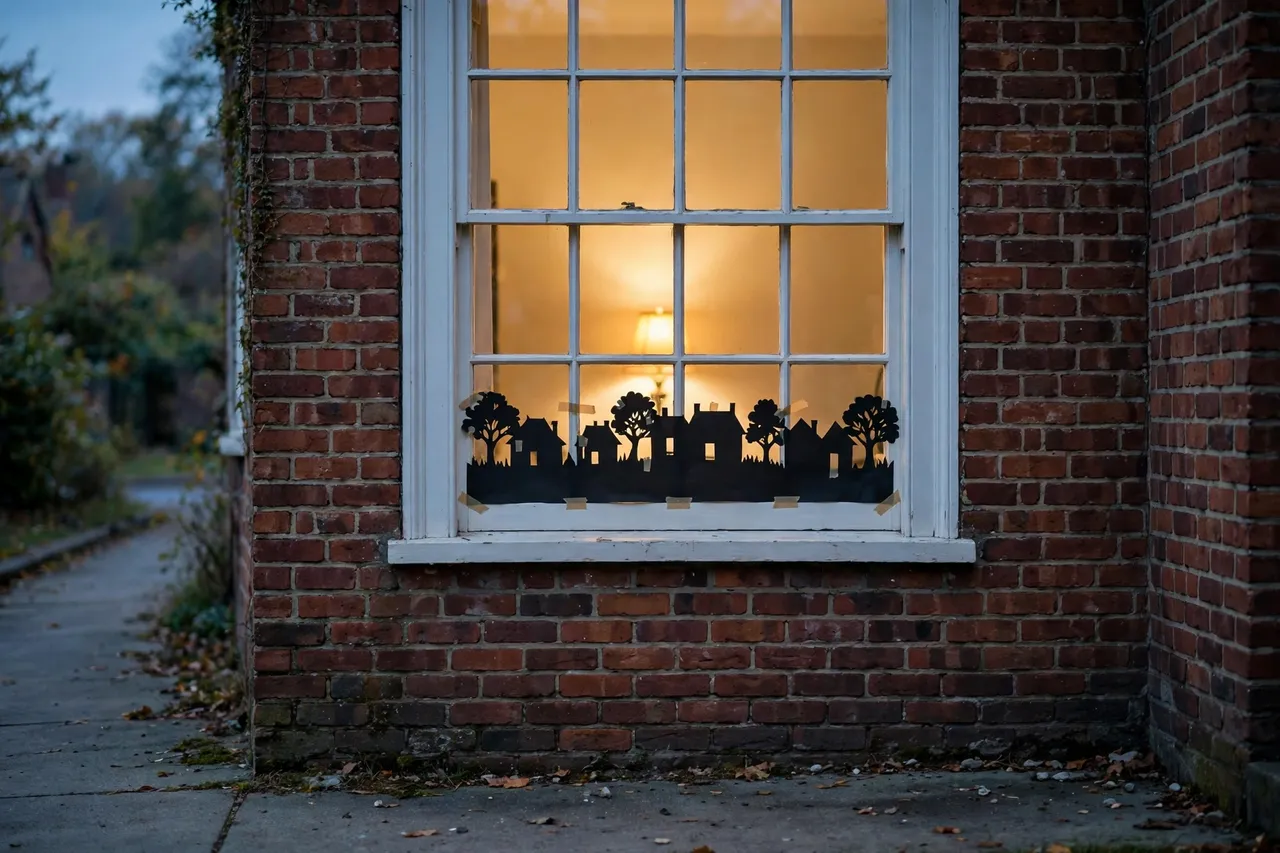
Nothing beats a silhouette for street impact per dollar. Cut a village skyline, a row of trees, or a nativity scene from black or white cardstock, tape it low across the glass, and let the room light behind it do the work. From the sidewalk, the lit window turns into a glowing picture, and passersby stop to look.
Scale the shapes to the window, not to your ambition. The tallest building should stand about as tall as one pane, and the smallest about a quarter of that height. When the skyline grows bigger than the glazing bars, it stops reading as a faraway village and starts reading as a mural pasted on the glass. Keep the baseline level, too, because the eye catches a wandering ground line at once.
Cut the whole skyline from one long strip when you can, instead of cutting separate houses and taping them one by one. A single strip keeps every roofline on the same baseline, and the offcut becomes your stencil for next year. It stores flat behind a picture frame, and next December takes minutes, not an afternoon.
Backlighting makes or breaks a silhouette. A lamp or a strand of fairy lights inside the room, placed a few feet back from the glass, gives an even glow. A bare bulb pressed right against the pane creates a hot spot and hides the shapes. Test it at dusk from the sidewalk before you tape the whole skyline down, because the street view is the only view that counts here.
Wreaths on the Outside of the Glass
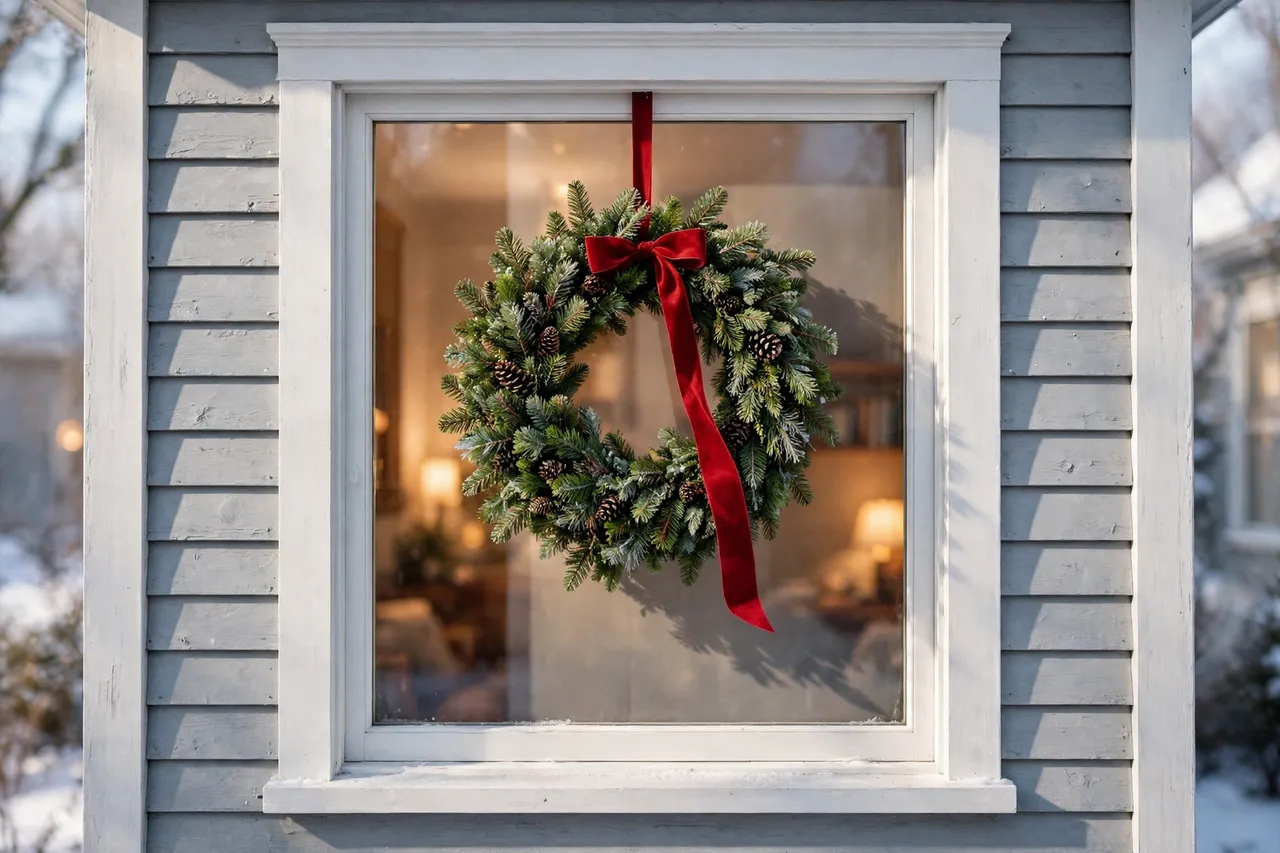
A wreath hung on the outside of the window reads completely differently from one hung inside. It catches real daylight, it casts a shadow on the glass, and it frames the glow coming from the room behind it. It also faces wind, rain, and cold, so the hanging method matters more than the wreath itself.
Start by weighing the wreath. A light grapevine, felt, or faux-greenery wreath hangs safely on glass, while a heavy fresh evergreen wreath can strain a hook and slide down the pane overnight. Match the hanger to the weight on the package, and never trust a hook you have not tested. Hang the wreath, then check it the next morning before you add ribbon or ornaments.
Suction cup hooks work well on clean, flat glass for light wreaths. Wash the spot, dry it, and wipe it with rubbing alcohol so no grime breaks the seal. Press the cup firmly in the center, give it a gentle tug, and leave it empty for a few hours before you trust it with the wreath. Cold stiffens suction cups, so install them on a milder day when you can, and recheck them after the first hard frost.
Magnetic wreath hangers suit single-pane glass, with one magnet outside and its partner inside. They fail on thick double-paned or insulated glass, because the magnets cannot grip through it, so test yours before you commit. For double-hung windows, the classic ribbon trick still wins: loop ribbon through the wreath, knot the ends, and close the top sash over the knot so the window itself holds the weight.
For heavier wreaths, use an outdoor-rated adhesive hook on the trim, not on the glass, and wait the full curing time on the package before you hang anything. Cold slows the bond, so a hook hung in a rush on a freezing morning may let go by nightfall. In windy spots, add a second anchor: tie fishing line from the bottom of the wreath to the trim so a gust cannot swing it against the glass again and again.
Window Clings, Markers, and Spray Snow: What Survives Outside
Window clings look made for this job, but the outside of the glass is a harder home than the inside. Clings grip smooth, clean, flat glass, and they fail on textured glass, old putty, or dirty panes. Wash and dry the glass first, press each cling flat from the center out, and keep the design inside the edge of the pane so the latch and weather seal stay clear.
Cold is the real enemy of clings outdoors. Adhesive softens and stiffens with temperature swings, and a cling that holds fine in November can peel and flap by January. Static-cling film holds up better than sticky vinyl, because it grips without glue and peels off clean. Still, check your clings after the first freeze, and press down any lifting corners before wind gets under them.
Window markers made for glass give you a hand-drawn look that reads well from the street, because bold lines survive distance better than fine detail. Draw big shapes: stars, trees, snowflakes, and short words like JOY or NOEL. Fine lettering turns into a smudge from the sidewalk, so keep words short and letters at least four inches tall. Test the marker on a corner first, and confirm it washes off your glass before you draw the whole window.
Spray snow works best as a border, not a blizzard. A frosted edge along the bottom or the corners of the pane frames the glass and makes lights and silhouettes pop, while a fully frosted window blocks the glow you worked to create. Spray it on a dry, calm day, keep it off the weather seal and the frame, and remember that wind can carry the spray onto siding and cars, so mask what you do not want frosted.
Whatever you stick, draw, or spray on the outside, plan the removal now. Peel clings slowly from one corner, wash the glass with warm soapy water to clear any haze, and pull adhesive strips in the direction the maker shows. A display that takes an hour to remove in January was not a good display in December.
Garlands, Window Boxes, and Hanging Ornaments Around the Frame
The frame around the window gives you decorating space that never touches the glass at all. Drape a garland around the outside of the frame, swag it across the top, or run it down both sides like a curtain. Fresh cedar and pine smell wonderful, but faux greenery holds its shape through storms and needs no watering, so many homeowners mix the two: faux as the base, fresh sprigs tucked in for scent.
Anchor garland at several points, not just at the ends. A garland held only at the top corners sags in the middle after the first rain, and a sagging garland looks tired from the street. Use removable outdoor hooks or clips on the trim, space them evenly, and wire the garland to each one. Our guide to Christmas garland ideas covers swags, bows, and layering if you want to dress the whole front this way.
Window boxes earn their keep in winter, too. Fill a weatherproof box with evergreen branches, pinecones, and oversized shatterproof ornaments, and let trailing cedar spill over the edge. Add a few battery fairy lights with a timer tucked into the greenery, and the box glows without a cord running anywhere. Skip glass ornaments outside: one hard frost or one gust can turn them into shards on the walk below.
Hanging ornaments in front of the glass adds depth, because they move a little in the breeze and catch light at different angles. String two or three shatterproof ornaments at different heights from a short rod or a line across the top of the frame, and keep them clear of the glass so they do not tap against it all night. One ornament per pane reads elegant from the street; a crowded cluster reads cluttered.

A Quick Word on Window Projection
You may wonder about shining moving pictures onto your windows instead of dressing them. It can work as a single accent, but it is a different project from window dressing, with its own gear, placement, and brightness trade-offs, and it deserves its own guide. If that idea excites you, our guide to animated Christmas outdoor decorations covers projectors and moving displays in full.
Weatherproofing Checklist: Cold, Rain, Wind, and Ice
Every outdoor window display faces the same four enemies, and each one needs a different answer. Run through this table before you hang anything, and you will fix most failures before they happen.
Table: Outdoor window display weather fixes
| Weather problem | What goes wrong | Fix that works |
|---|---|---|
| Cold glass | Suction cups and adhesives lose their grip | Install on a milder day, clean with rubbing alcohol, recheck after the first frost |
| Rain and condensation | Moisture gets under clings and into cords | Use outdoor-rated lights, keep plugs dry, and keep clings off the weather seal |
| Wind | Wreaths swing, garlands sag, ornaments tap the glass | Anchor at several points and tether wreath bottoms with fishing line |
| Ice and frost | Clings peel, paper silhouettes wrinkle, glass ornaments break | Use static-cling film, cardstock indoors-side silhouettes, and shatterproof ornaments |
One more weather habit pays off all season: check the display after the first storm, not at the end of the season. A lifted corner, a sagging strand, or a tipped wreath takes two minutes to fix in week one and looks neglected by week four. Walk the front of the house after wind and ice, the same way you would check the roof.
Stay Safe on Ladders and With Outdoor Power
Upper windows tempt you to stretch, and stretching is how falls happen. Use a sturdy ladder on level ground, keep your body centered between the rails, and never lean out to reach one more clip. Work with a spotter on the ground who holds the ladder steady and hands you things, so you never climb with both hands full. If a window sits above a roofline or a slope you cannot stand on safely, decorate that window from inside the glass instead, or hire the job out. No display is worth a fall.
Pick a fiberglass or wooden ladder when you work near lights and cords, because metal ladders conduct electricity. Keep the ladder clear of overhead power lines, and never carry a light strand up the ladder in your teeth or draped around your neck. Hang the lights first, then step down and check the view from the ground before you climb again.
Outdoor power deserves the same respect. Plug exterior displays only into ground-fault circuit interrupter (GFCI) protected outlets, which shut off power fast if current leaks through water or damaged wire. The U.S. Consumer Product Safety Commission advises exactly that: use only lights certified for outdoor use, check labels, and plug them into a GFCI-protected receptacle or a portable GFCI. Inspect every strand before you hang it, and throw out any set with cracked sockets, frayed wires, or loose connections.
Keep cords off walking paths, out of closing window sashes, and away from rugs, where damage hides unseen. Switch the display off before bed and when you leave the house, and let a timer run the routine for you. If an outlet sparks, a cord feels hot, or a breaker keeps tripping, stop and call a qualified electrician. This guide covers decorating, not electrical repair, and a tripping breaker is a warning, not an inconvenience.
Pick a Look for the Whole Front
Once you know the techniques, the last decision is the look, and the simplest rule wins: one idea, repeated. Matching wreaths at the same height on every front window, the same light frame on every pane, or the same silhouette theme across the house reads as one deliberate display. Different ideas on every window read as leftovers.
Measure the hanging height on the first window, then copy it exactly on the rest. A wreath centered on one window and riding high on the next breaks the line your eye follows across the front of the house. A laser level or a simple string line stretched across the front keeps every wreath honest, and the ten minutes it takes pay off every evening at dusk.
Match your windows to the rest of the front, too. If the door wears a big wreath and the porch glows, a bare window beside it looks unfinished. If the yard stays quiet, one glowing window can carry the whole house. Our guide to decorated Xmas houses shows how windows, doors, and yards work together as one picture, and our LED outdoor Christmas decorations guide helps you pick efficient lights for the whole front.
Take It Down Without Damage
Plan the takedown while you hang, and January-you will be grateful. Label each box by window, coil light strands loosely so they do not tangle, and store wreaths in a bag on a hook instead of crushed in a box. When you pack, note which window needs a new strand or a stronger hook before next November, and toss any light set that failed your inspection instead of storing a hazard for next year. Our guide to storing Christmas lights keeps the whole kit ready for next December.
Disclaimer: this guide covers decorating only. If you face damaged wiring, a sparking outlet, a tripping breaker, or a window you cannot reach safely from a stable ladder, stop and call a qualified electrician or a professional installer instead of pushing ahead.
Related Guides
Decorating a Christmas Window: Ideas That Glow Inside and Out · Christmas Light Ideas for a Home That Glows All Season · Decorated Xmas Houses: Ideas for a Whole House That Feels Like Christmas · Christmas Garland Ideas
Frequently Asked Questions
How do you hang a wreath on the outside of a window without damage?
Use a suction cup hook on clean, flat glass for a light wreath, a magnetic hanger for single-pane glass, or an outdoor-rated adhesive hook on the trim for a heavier one. On double-hung windows, loop ribbon through the wreath and close the top sash over the knot. Always check the weight rating, and recheck the hanger the next morning.
Do window clings work on the outside of windows in winter?
They can, but cold and moisture test them hard. Static-cling film holds up better outdoors than sticky vinyl, because it grips without glue and peels off clean. Wash and dry smooth glass first, keep clings off the weather seal, and press down any lifting corners after the first frost before wind gets underneath them.
Can you use indoor Christmas lights on the outside of a window?
No, and the label on the box tells you why. Indoor sets are not built for cold, rain, and condensation, and they can short or fail outdoors. Use lights certified for outdoor use, plug them into a GFCI-protected outlet, and inspect every strand for cracked sockets or frayed wires before you hang it.
How do you make window silhouettes read from the street?
Keep the shapes big and simple, scale the tallest building to about one pane high, and cut the whole skyline from one strip so the baseline stays level. Backlight it with a lamp or fairy lights set back from the glass, not a bare bulb pressed against it. Then step outside at dusk and check the view from the sidewalk.
How do you keep outdoor window decorations from falling in wind?
Anchor everything at several points instead of one. Wire garlands to hooks along the trim, tether the bottom of a wreath with fishing line, and keep hanging ornaments clear of the glass so they cannot swing and tap it. After the first storm, walk the front of the house and fix any lifted corner or sagging strand right away.
Your windows are ready for their close-up. Pick one bold idea per window, hang it for weather, step out to the sidewalk at dusk, and enjoy the view you made. Start with the front window everyone sees first, and let the rest of the house follow its lead.


