
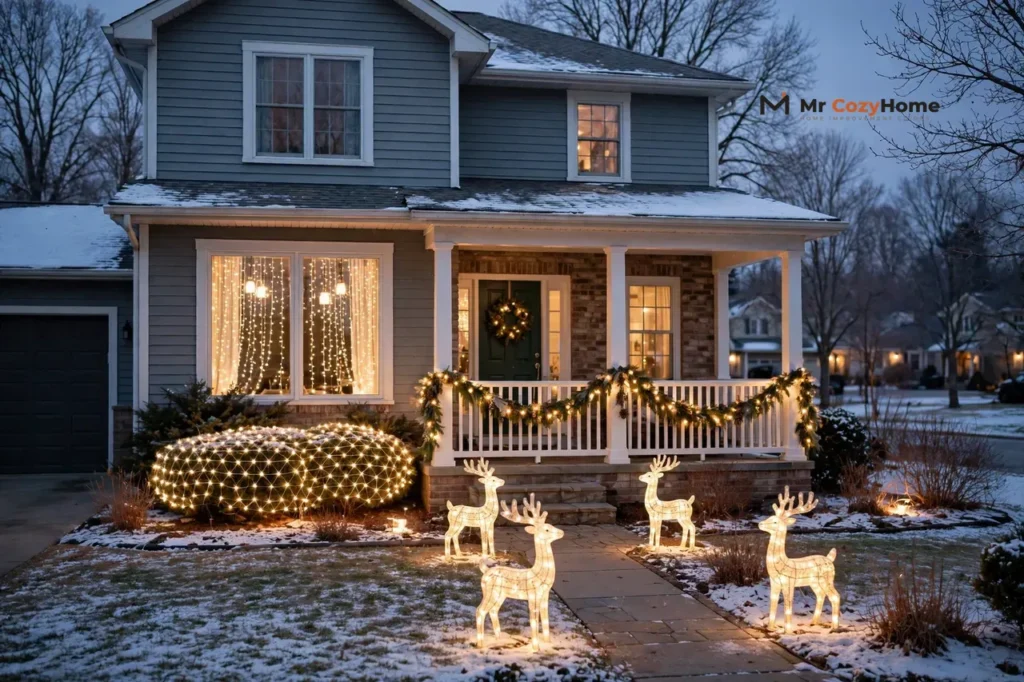
Lighted Christmas decorations are ready-made decorations with lights already built in, such as a garland that glows, a net of lights that drapes over a bush, or a lighted star for the window. Instead of buying plain greenery and wrapping it with separate strings, you buy one finished piece, hang it up, and plug it in or switch it on. This guide covers the main types of lighted Christmas decorations and how to choose between them, so you buy the right piece for the right spot the first time.
If you already know the look you want and just need fresh placement ideas, our Christmas light ideas guide covers that side of decorating. This article stays on the buying side: think of it as a field guide to lighted Christmas decor, not a gallery of looks. It covers what each type is, where it works best, and what to check before you pay.
What Counts as a Lighted Christmas Decoration?
A lighted decoration is any decoration where the lights are part of the piece itself. A pre-lit garland, a lighted branch, a net light, a curtain light, a wireframe star, and a lighted pathway figure all count. A plain string of lights does not quite count on its own, because it is a light set, not a finished decoration. That difference matters when you shop, because a finished piece brings its own shape, size, and power needs.
Most shoppers run into the same problem in the store aisle. Every box glows, every box looks good, and none of them say clearly where the piece belongs. The fix is simple: pick the spot first, then pick the type that fits that spot. A window, a bush, a porch rail, and a walkway each suit a different type, and buying in that order saves you returns and tangled evenings.
The Main Types of Lighted Christmas Decorations
These six types cover almost everything you will find in stores. Learn what each one does well, and the rest of the aisle starts to make sense. Retail buying guides match the same spots to the same types: small lights for trees and greenery, mid-size bulbs for windows, and nets for shrubs, as Ace Hardware’s types guide shows.
Pre-Lit Garlands
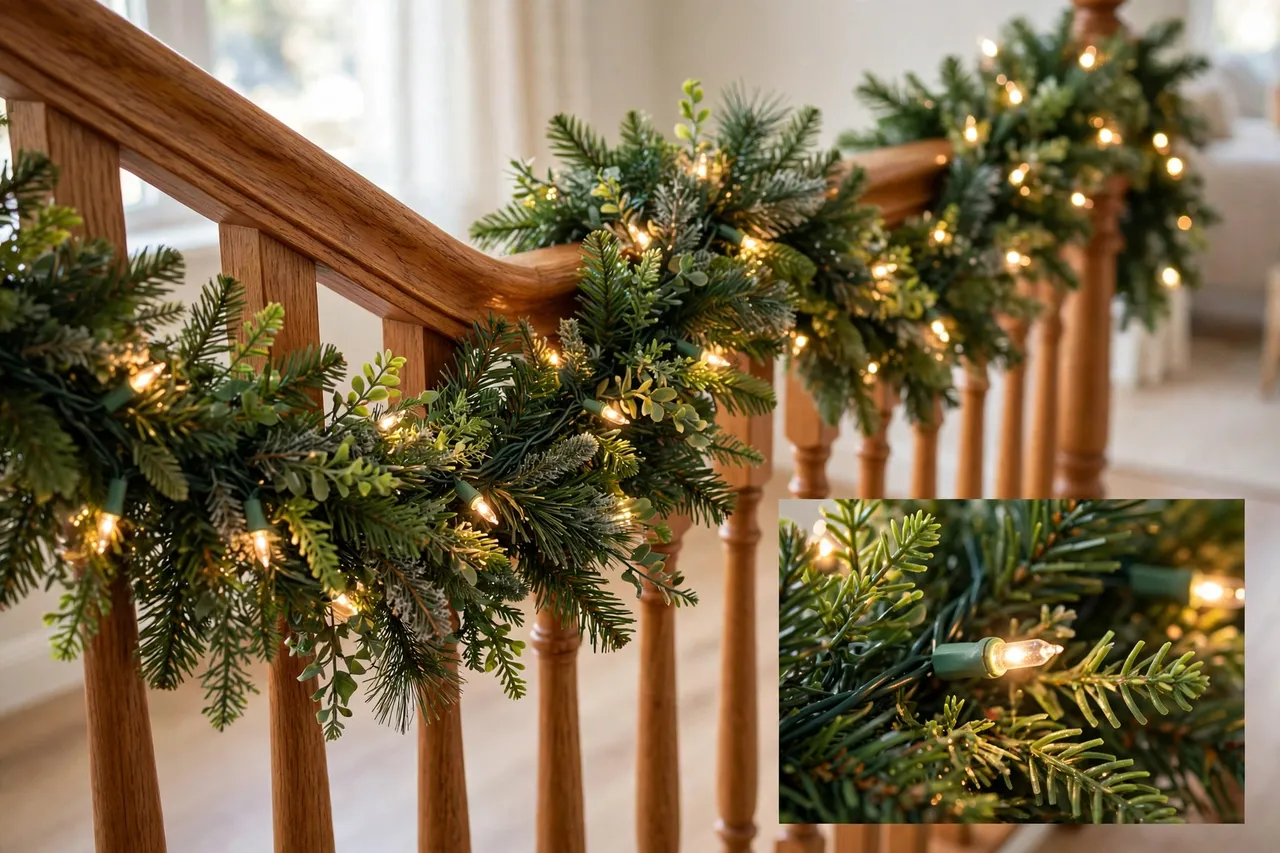
A pre-lit garland is a long rope of artificial greenery with lights woven through it. You drape it along a mantel, a stair rail, a doorway, or a porch rail, and the lights glow through the branches. It gives you greenery and light in one step, which makes it a favorite first buy for beginners.
Check the length before you buy, and measure the rail or mantel first. A garland that falls short looks unfinished, and joining two short ones often leaves a visible gap in the middle. Also check how the lights are spaced. Widely spaced lights give a soft, calm glow, while closely spaced lights look bright and full. If you want help hanging one neatly, read our guide on how to hang garland before ladder day.
Lighted Branches
Lighted branches are single stems or small bundles of branches with lights built in. You stand them in a vase, tuck them into a planter by the front door, or use them to fill a bare corner indoors. They work well in small homes and apartments, because one branch can light a whole corner without a full tree.
Look at the base before you buy. A branch that stands in a vase needs a steady, weighted base, and a branch for a porch planter needs a stem long enough to anchor in soil or stones. Count the lights on the label too. A branch with very few lights looks bare once you bring it home, while a densely lit branch glows on its own and needs no extra ornaments.
Net Lights
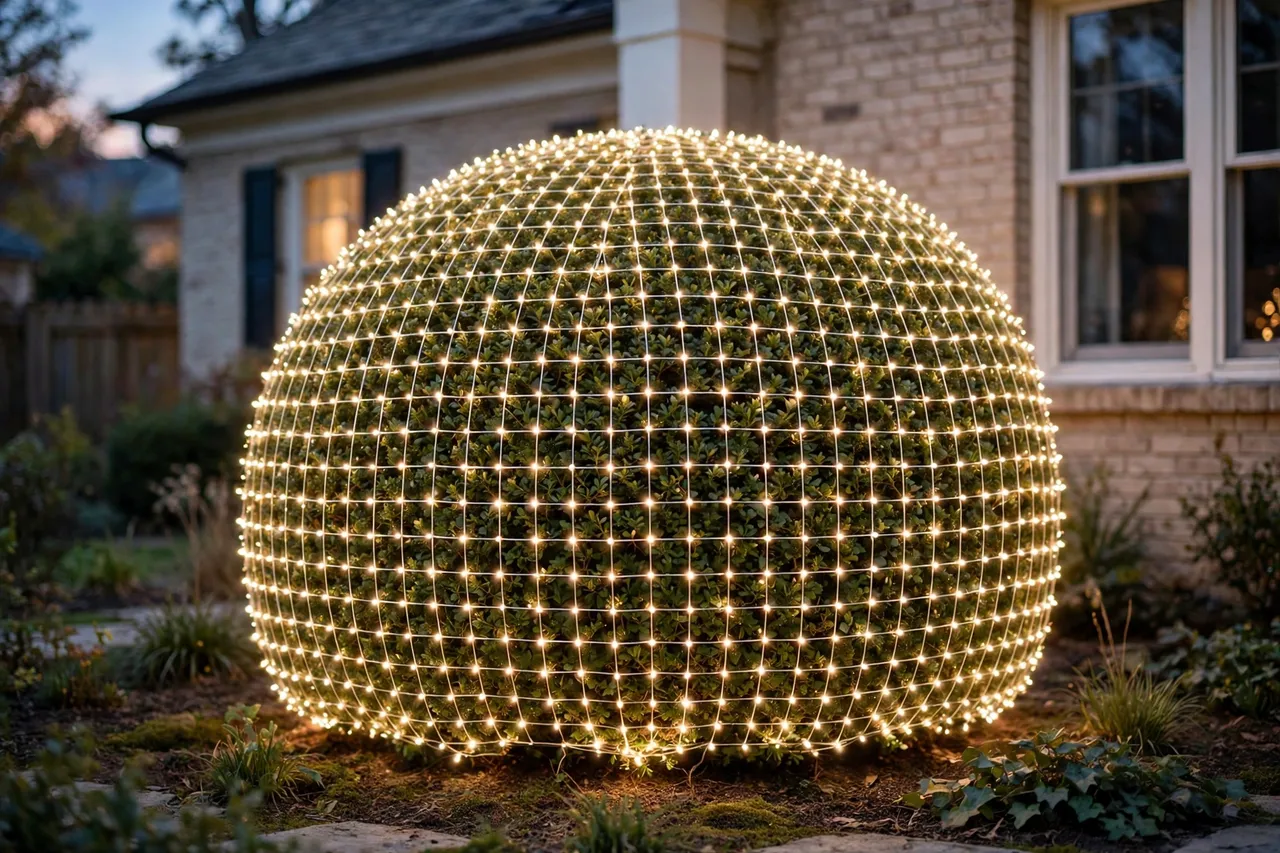
Net lights are bulbs woven into a grid, like a small fishing net made of light. You drape the whole net over a bush, a hedge, or a low shrub, and the bush glows evenly in minutes. No wrapping, no winding around each branch, and no bare patches where you ran out of string halfway round.
Net lights suit one job better than any other type: covering a bush fast. They suit it so well, in fact, that many homeowners answer the question “are net lights worth it” with a simple yes when the job is a shrub. Measure the bush first, though, because a net that is too small leaves the bottom dark, and a net that is too big bunches up and hides the shape of the plant. For a fuller picture of this trade-off, see the FAQ at the end of this guide.
Curtain Lights
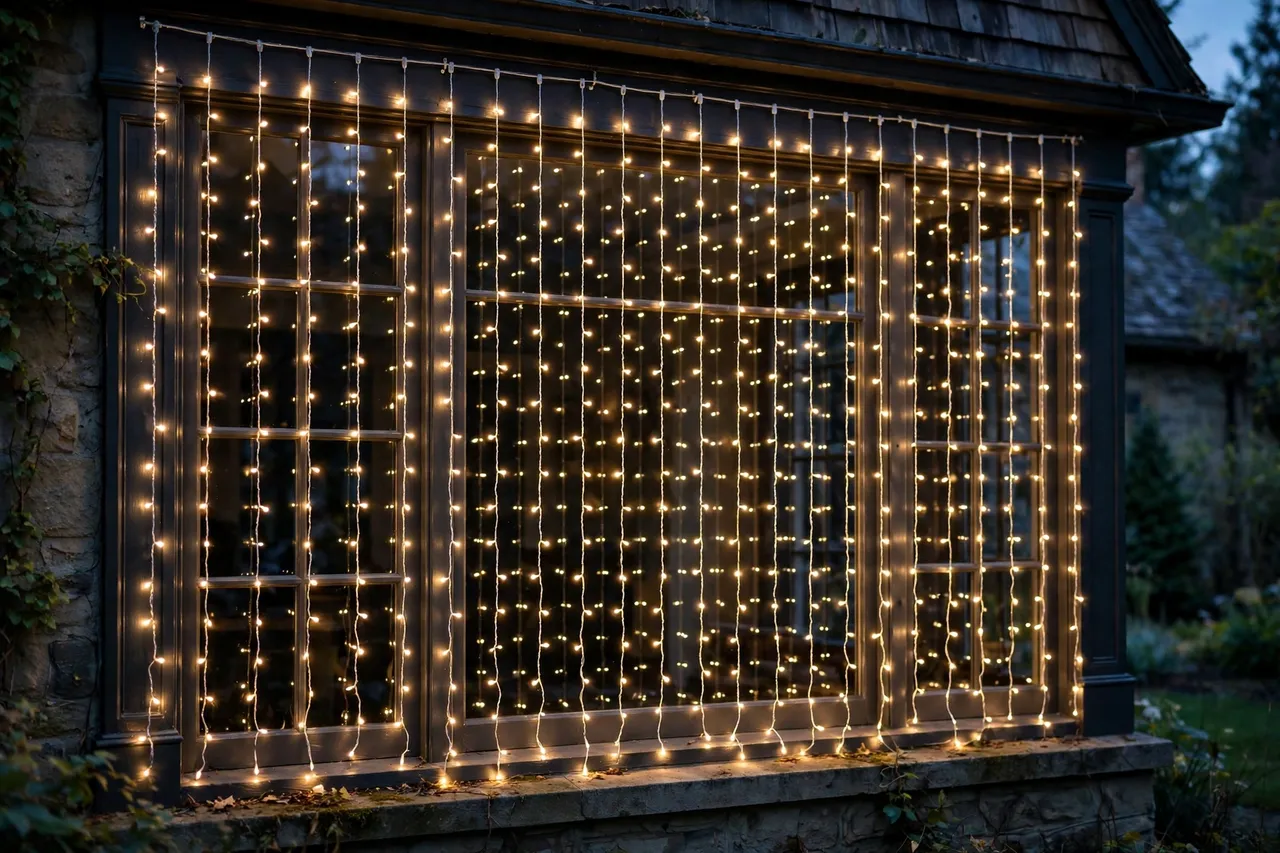
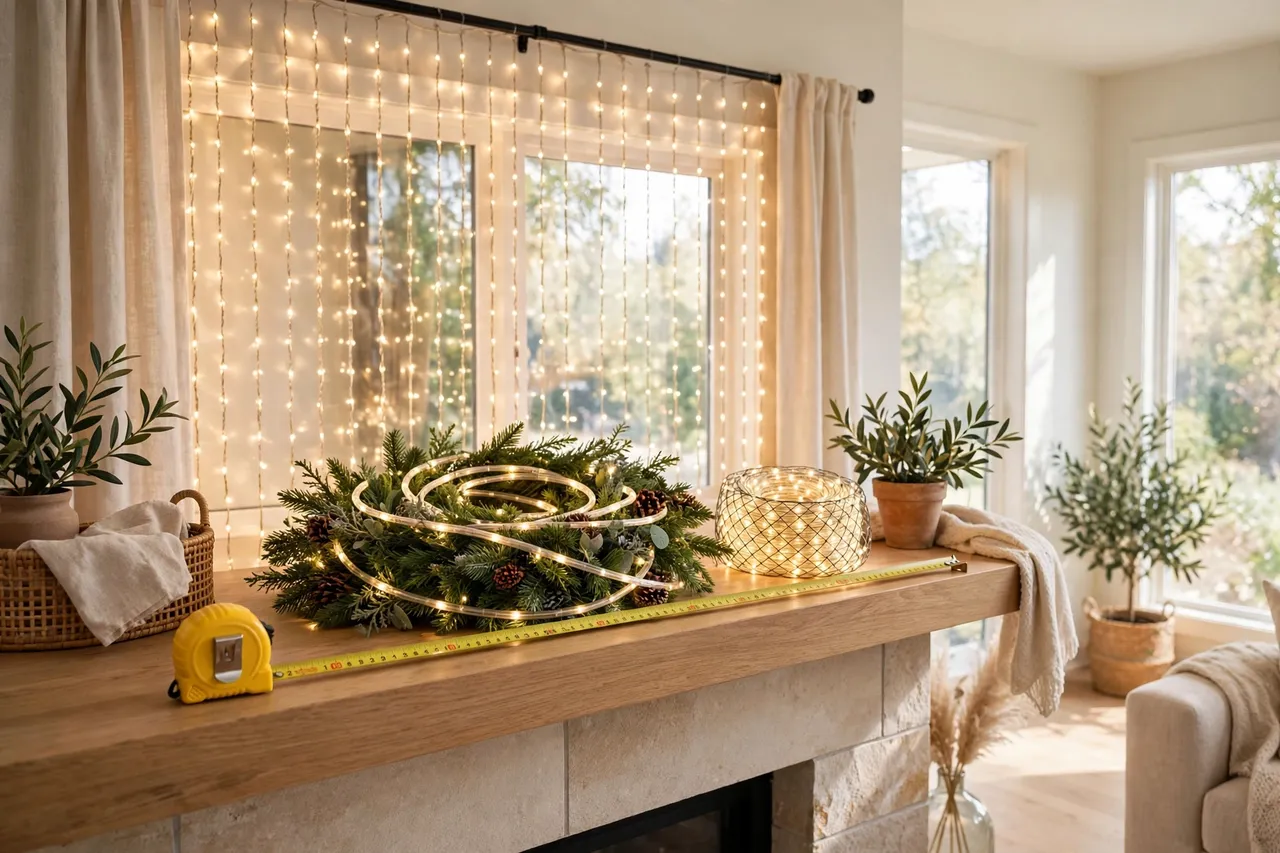
Curtain lights hang from one top wire like a glowing curtain, with vertical strands that drop down at different lengths. They suit windows, glass doors, and covered porches, where they turn a flat pane of glass into a wall of light. From the street, a window dressed with curtain lights reads as one bright, finished panel.
Measure both the width and the drop before you buy. Width decides whether the curtain covers the whole window, and drop decides whether it reaches the sill or stops halfway down. A curtain that is too narrow looks like a strip, not a curtain. If you want window ideas to pair with them, our guide to decorating a Christmas window shows how to layer lights with the rest of the window display.
Lighted Motifs
A lighted motif is a flat or wireframe shape outlined in lights: a star, a snowflake, a bell, a candy cane, or a simple tree shape. You hang it on a wall, a window, a fence, or the front of the house, and the shape itself becomes the decoration. Motifs work best as a single focal point, the one bright shape guests notice first.
Choose a motif by viewing distance. A small, detailed snowflake looks lovely up close on a porch wall, but it vanishes from the street. A large, simple star reads clearly from far away, which is why simple shapes win outdoors. Check the frame too. A sturdy wire or plastic frame holds its shape in wind, while a flimsy frame bends and turns your star into a wobble.
Pathway Figures
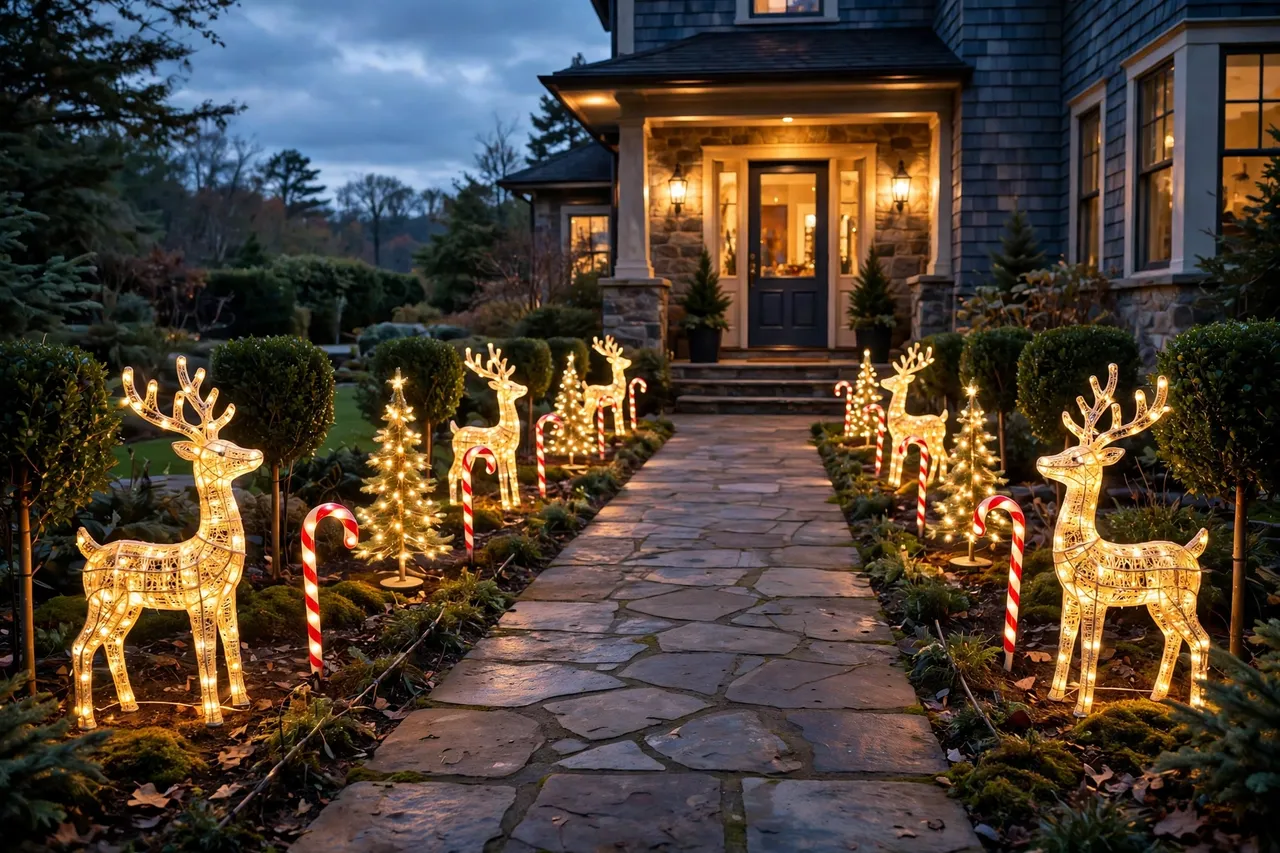
Pathway figures are lighted pieces that stand along a walkway, a driveway edge, or a garden path. They include stake lights with large bulbs, lighted candy canes, small lighted trees, and freestanding figures such as a reindeer or snowman that glow from within. Their job is twofold: they mark the path so guests can see where to walk, and they welcome people to the door.
Space matters more here than brightness. Figures set too close together crowd the path and trip the eye, while figures set too far apart leave dark gaps. Walk the path yourself after dark, if you can, and check that each figure is visible from the last one. Anchor every figure well, because a figure that tips in wind becomes a hazard on a walkway, not a welcome.
How to Choose the Right Lighted Decoration for Your Home
Work through these five choices in order, and the right type usually picks itself.
- Start with the spot. Name the exact place: mantel, stair rail, bush, window, wall, or walkway. Each spot matches one or two types from the list above, and that match narrows the aisle at once.
- Check indoor or outdoor use. Outdoor pieces must carry an outdoor rating on the box or tag. Indoor-only pieces must stay inside, even on a covered porch, because damp air and rain can damage them. Outdoor-rated pieces work fine indoors too.
- Measure, then buy. Measure the length, width, height, or drop of the spot, and buy a piece that fits those numbers. Guessing is the most common cause of returns, and a tape measure takes thirty seconds.
- Pick the power source. Plug-in pieces suit spots near an outlet and displays you run every evening. Battery-powered pieces suit spots with no outlet nearby, such as a table centerpiece or a far fence, but you must plan for fresh batteries through the season. Solar-powered pieces suit sunny outdoor spots, yet they glow weakest on short, cloudy winter days, so check the sun your spot truly gets.
- Pick one color and stick with it. Warm white gives a soft, candle-like glow. Bright white looks crisp and icy. Multicolor looks playful and bold. Mixing all three across one house usually looks messy, so choose one main color for the whole display and repeat it. If you want help settling a whole-house look, our themes for Christmas decoration guide walks through matching colors to a theme.
One more honest note on size: bigger is not always better. A large motif on a small porch overwhelms the house, and a tiny net on a large hedge looks lost. Match the piece to the space, not to the size of the box it came in. When you can, buy one piece first and test it at night before you buy the rest of the display. One glowing garland or one lit bush tells you more about your color and brightness than a whole cart of unopened boxes, and it keeps a wrong color choice to a single return.
Lighted Christmas Decorations at a Glance
Use this table to compare the six types side by side before you shop.
| Type | Best spot | Power source | Watch out for |
|---|---|---|---|
| Pre-lit garland | Mantel, stair rail, doorway | Plug-in or battery | Length that falls short of the rail |
| Lighted branch | Vase, planter, bare corner | Plug-in or battery | Weak base or too few lights |
| Net light | Bush, hedge, low shrub | Plug-in | Net too small for the bush |
| Curtain light | Window, glass door, porch | Plug-in | Width or drop that misses the window |
| Lighted motif | Wall, window, fence, house front | Plug-in | Small detail lost at street distance |
| Pathway figure | Walkway, driveway edge, garden path | Plug-in, battery, or solar | Poor anchoring and dark gaps |
5 Buying Mistakes to Avoid
Most lighted decoration regrets come from a short list of avoidable slips. Run through this list before you check out.
- Buying before measuring. A garland, net, or curtain that does not fit its spot is the top reason for a return trip.
- Using an indoor piece outdoors. Rain, snow, and damp air damage indoor-only wiring, so the outdoor rating on the box is not optional.
- Mixing too many colors. Warm white, bright white, and multicolor side by side fight each other. One main color keeps the house looking planned.
- Ignoring the power source. A plug-in piece with no outlet nearby, or a solar piece in deep shade, will disappoint no matter how pretty it looks in the store.
- Forgetting storage. Lighted figures and nets last for seasons when they store dry and untangled, but they break fast when they get crushed in a damp box. Our guide on how to store Christmas lights covers the habits that keep lights working year after year.
Stay Safe With Outdoor Lighted Decorations
Outdoor lighted decor brings real electrical risk if you cut corners, so treat safety as part of choosing, not an afterthought. Buy pieces that carry a recognized safety mark, such as UL, ETL, or CSA, and read the box for its outdoor rating and its limit on connected sets. The Electrical Safety Foundation International advises inspecting lights for damage, using outdoor-rated gear outside, and plugging outdoor displays into GFCI-protected outlets, which shut off power fast if a fault occurs. You can read their holiday safety guidance at ESFI holiday safety.
Before you hang anything, inspect every piece on the ground. Look for cracked sockets, frayed wires, and loose plugs, and retire any damaged piece instead of taping it up and hoping. Plug outdoor displays into a GFCI-protected outlet, keep plugs and connections off the ground and out of puddles, and use outdoor-rated extension cords. Never staple or nail through a wire, and never run a cord across a walkway where guests can trip. If you want them on at dusk without walking outside, a simple plug-in timer does the job. Switch the display off when you go to bed or leave the house, and call a qualified electrician if an outlet trips again and again or a cord feels hot.
Disclaimer: This guide gives general home decorating advice, not electrical advice. If your wiring, outlets, or breaker panel raise any doubt, ask a qualified electrician before you plug in a large outdoor display.
Related Guides
Giant Christmas Decorations: How to Go Big Without the Headaches · DIY Christmas Lighting: Build Your Own Glowing Displays · Solar Powered Christmas Tree With Lights: How It Works in Real Winter Weather
Frequently Asked Questions
What are the main types of lighted Christmas decorations?
The main types are pre-lit garlands, lighted branches, net lights, curtain lights, lighted motifs, and pathway figures. Garlands and branches suit rails, mantels, and planters, nets cover bushes, curtains dress windows, motifs act as focal points, and pathway figures line walks. Choose by spot first, then by size and power source.
Are net lights worth it?
Yes, when the job is a bush or hedge. A net drapes over a shrub in minutes and gives even coverage, while wrapping the same bush with separate strings takes far longer and often leaves bare patches. Measure the bush first, because a net that is too small leaves the bottom dark and one that is too big bunches up.
Can I use any Christmas lights outside?
No. Outdoor displays need pieces rated for outdoor use, with weather-resistant wiring and sockets. Indoor-only pieces can fail in rain, snow, or damp air, even on a covered porch. Outdoor-rated pieces work fine indoors too. Always plug outdoor displays into a GFCI-protected outlet and keep connections off the ground.
What is the difference between C7 and C9 Christmas lights?
C7 and C9 are bulb sizes. C7 bulbs are smaller, roughly 2 cm wide, and suit windows, small porches, and pathway stakes seen up close. C9 bulbs are larger, roughly 3 cm wide, and read clearly from the street, so they suit rooflines and large outdoor figures. Match the bulb size to how far away viewers will stand.
How many lights do I need for my Christmas tree?
A common rule is about 100 mini lights per vertical foot of tree, so a 6-foot tree needs around 600 lights for a balanced look, and double that for a dense glow. For a lighted branch or a pre-lit piece, check the light count on the label instead, since the maker has already matched the lights to the piece.
A Bright Finish, Without the Guesswork
Lighted Christmas decorations work best when you shop backwards: spot first, type second, size third, and color last. A pre-lit garland on the mantel, a net over the bush, a curtain in the window, and a row of figures along the path can give a whole house a finished glow, with no tangle of spare strings in between. Measure tonight, buy once, and enjoy the glow all season.


