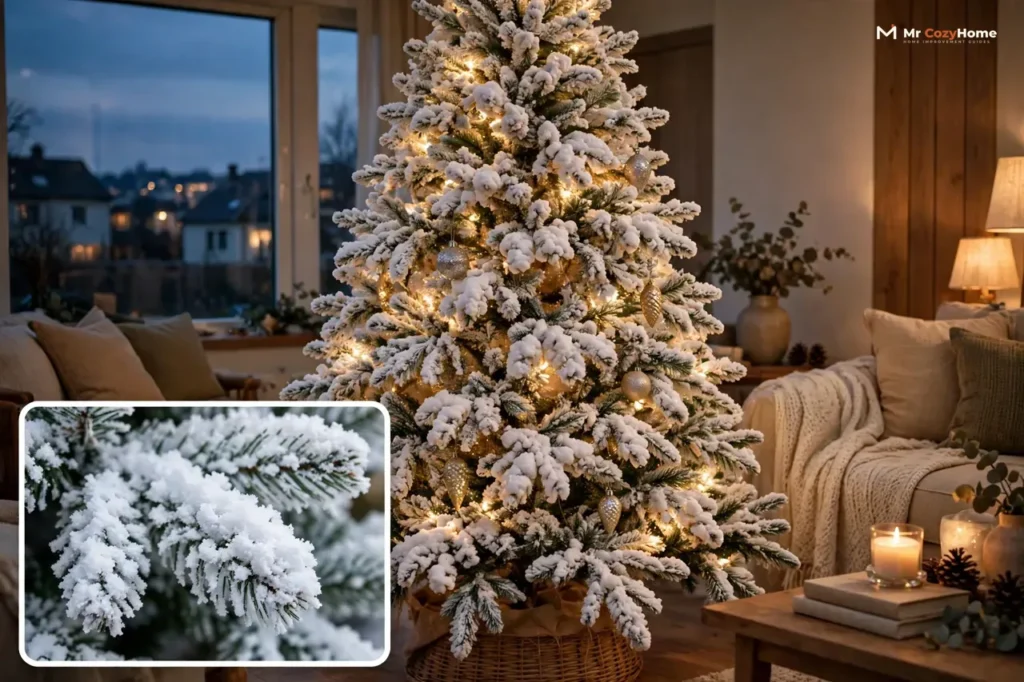
A flocked Christmas tree is a Christmas tree coated with artificial snow, so its branches look freshly dusted after a snowfall. Most flocked trees are artificial trees that arrive pre-flocked from the factory, but you can also flock a plain tree yourself at home. The snowy coating is called flocking, and it turns an ordinary green tree into a winter scene, even if you live somewhere that never sees real snow.
So what is a flocked tree, exactly? It is not a special species of pine. It is a regular artificial tree — or, less often, a real cut tree — with a soft, white, snow-like layer sprayed or dusted onto its branches. That layer is usually made from fine cellulose fibers held in place with adhesive, and it gives the tree its heavy, snow-covered look.
💡 Practical Home Tip: Before you buy, picture the tree in your own room, not in the store. A heavily flocked tree looks bigger and brighter than the same tree in green, because the white coating catches the light. If your room is small or dark, a lightly flocked or frosted tree may suit you better than the snowiest one on the shelf.
What Flocking Actually Is
Flocking is a decorative coating, not paint. Makers spray a mix of adhesive and tiny fibers onto the branches, and once it dries, the fibers sit on the needles like snow. The most common fiber is cellulose, a plant-based material, and some flocking mixes add synthetic fibers or a little glitter for sparkle.
You will meet flocked trees in two forms. The first is a pre-flocked tree, which leaves the factory already coated. The coating is even, the tree is ready to fluff out of the box, and this is what most shoppers buy. The second is a tree you flock yourself, and this is where the fun — and the mess — comes in.
Family Handyman describes two do-it-yourself methods. With flocking powder, you mist one section of branches with water from a spray bottle, shake the powder over the damp branches with a kitchen sifter, and mist again to lock it in place. You work section by section, and you let the whole tree dry for a few hours before you decorate it. The other method uses spray-on flocking straight from a can. Either way, flock outside or in a garage if you can, because loose powder gets everywhere. Read how to flock a Christmas tree yourself before you start, because the order — mist, powder, mist again — is what keeps the coating on the branches instead of on your floor.
Decorating guides trace flocking back to early attempts to make indoor trees look snow-covered, long before pre-flocked trees filled stores. Homemade versions used simple kitchen powders such as flour or starch, and the snowy look took off in the mid-20th century, when snow-covered trees in department-store displays and holiday films made a white Christmas feel glamorous even in warm states. Today’s factory flocking is far more even and durable than those early versions, but the idea never changed: bring the snowfall indoors.
Run your hand lightly over a flocked branch and you will feel what makes it different. The coating feels soft and slightly powdery, with a matte finish that soaks up light instead of sparkling. That soft, snowbank texture is the whole point, and it is also why a flocked tree behaves differently from a plain green tree when you decorate, clean, and store it.

Flocked vs. Frosted vs. Snow-Tipped: Spot the Difference
Shoppers mix these three up all the time, because all three look snowy in a store photo. The difference is how much white sits on the branches, and where it sits. Balsam Hill’s flocked vs. frosted comparison draws the line this way: flocked means heavy, uniform snow coverage, frosted means a light, translucent dusting, and snow-tipped means white accents concentrated mainly on the branch tips.
Table: Flocked, frosted, and snow-tipped trees at a glance
| Feature | Flocked | Frosted | Snow-Tipped |
|---|---|---|---|
| Snow coverage | Heavy and uniform, like fresh snowfall | Light dusting, like a cold morning frost | White mainly on the branch tips |
| Look | Bold and dramatic winter scene | Subtle and elegant icy finish | Natural, with selective highlights |
| Shedding risk | Moderate, especially at first setup | Lower, because less material is applied | Very low, because the finish is sparse |
| Care | Handle gently, dry-clean only, store with care | Dust lightly when needed | Standard tree care, gentle dusting |
| Best for | A snowy centerpiece that steals the show | A wintry look with less upkeep | A natural tree with a hint of snow |
That difference changes how you decorate. A flocked tree already carries the whole winter look on its branches, so it needs fewer ornaments. Warm white lights, a few metallic or glass ornaments, and restraint will beat a tree loaded down until the snow disappears. A frosted tree, with more green showing, takes bolder color and heavier ornamenting more easily.
If you love the snow-covered look but dread the mess, a frosted tree is the honest middle ground. You still get the wintry feel, with less loose material to vacuum up and less to damage in storage. But if you want guests to walk in and say “snow” before they say anything else, only a fully flocked tree delivers that.

How to Choose a Flocked Tree That Lasts
Not every flocked tree is worth its box. Flocking quality varies a lot between makers, and a cheap, patchy coat will frustrate you for years. Use this checklist in the store or while you read reviews, and you will spot the good ones fast.
- Check the fullness first. Fluff a branch and look through it. A good tree looks full even before ornaments, because the flocking sits on dense branches. A thin tree with heavy flocking looks like snow on sticks.
- Look for even coverage. The white should sit evenly across the branches, not in clumps with green bald patches between them. Uneven factory flocking will not fix itself at home.
- Expect a little shedding, not a snowstorm. Flocked trees shed most when you first set them up, and a small amount of loose flocking is normal. If handfuls come off when you touch a branch in the store, walk away.
- Decide pre-lit or unlit. Pre-lit flocked trees save you the job of stringing lights through snowy branches, which is fiddly work. If you buy unlit, warm white lights suit flocking best, because they make the white glow instead of glaring.
- Measure twice. A flocked tree reads wider than the same tree in green, because the white edge catches your eye. Measure your ceiling height and your floor space, and leave room to walk around the tree without brushing the branches.
- Look for fire-resistant labeling. Buying guides advise shoppers to prioritize fire-resistant materials when choosing a flocked tree, so check the label and the product description before you buy.
- Think about storage before you buy. A flocked tree needs a bag and a gentle hand at takedown time. If the tree comes with a good storage bag, that is a real plus, not a throw-in.
One more honest note: flocking color varies. Some trees wear a bright, clean white, while others wear a warmer, creamier white. Neither is better on its own, but bright white suits cool, icy decorating schemes, and warm white suits cozy, traditional rooms. Match the flocking to your room, not just to the store display.
How to Decorate a Flocked Tree Without Hiding the Snow
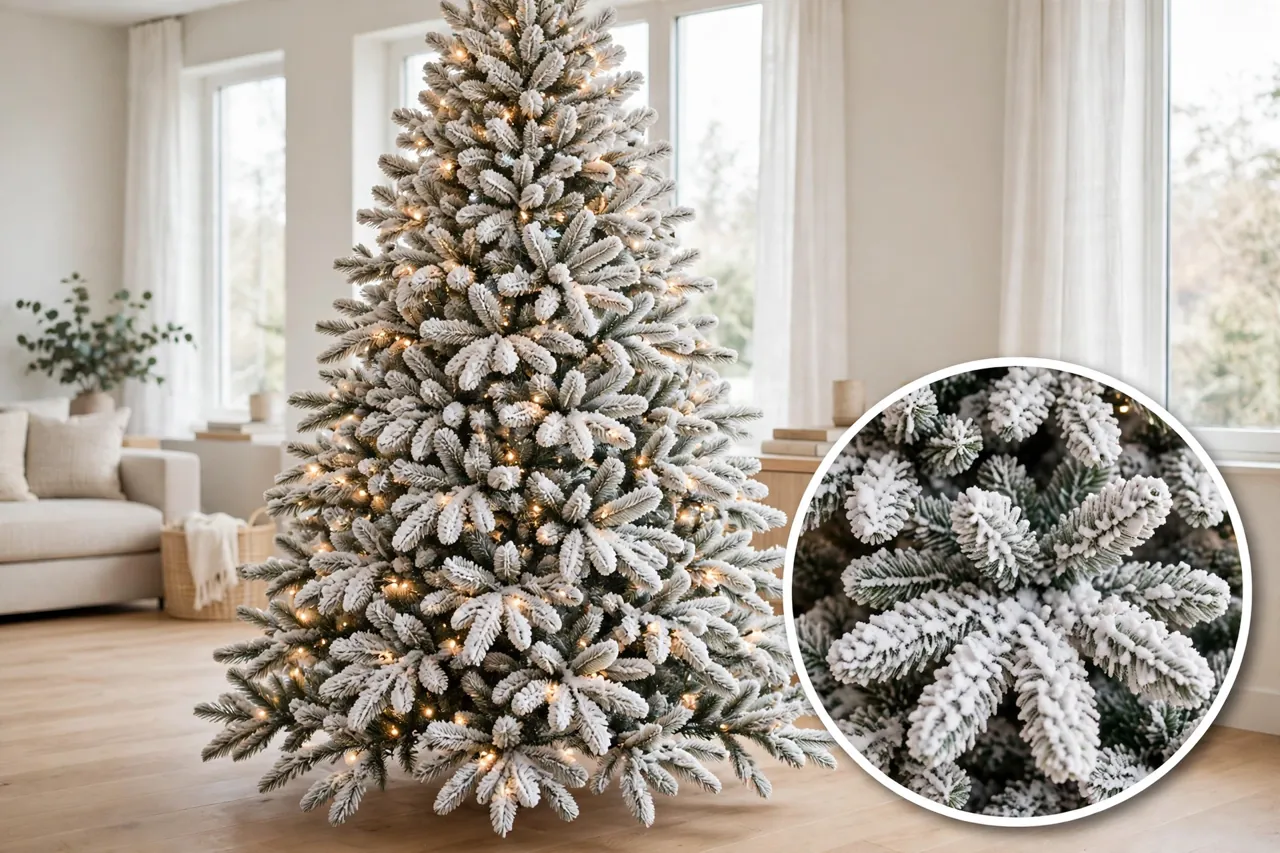
Here is the mistake most first-time flocked-tree owners make: they decorate it like a green tree, and the snow disappears under the weight. A flocked tree already wears its main decoration, so your job is to light it and accent it, not to cover it.
Start with lights, because light is what makes flocking glow. Warm white lights are the classic match, and they flatter both bright white and warm white flocking. If your tree is pre-lit, you are done with the hardest step. If it is not, wind the lights a little deeper into the branches than you would on a green tree, so the glow comes from inside the snow instead of sitting on top of it.
Then add ornaments with restraint. Metallic and glass ornaments in silver, gold, or champagne pop against the white, and a few bold red ornaments give the tree a focal point without a fight. Decorating guides consistently advise the same rule for flocked trees: less is more, and heavy garlands and dense ornament clusters work against you, because weight crushes the flocking and knocks it loose.
Finish with a light hand on top. A simple star or a soft bow suits a flocked tree better than a heavy topper that bends the top branch and sheds snow down the front. Step back after every layer, the way you would with a mantel, and stop when the tree looks like a snowfall with ornaments in it — not ornaments with snow behind them.
Caring for a Flocked Tree: Setup, Cleaning, and Storage
A flocked tree rewards a gentle hand and punishes rough handling. Treat the coating like fresh snow on a branch, because in practical terms, that is how it behaves. Here is the routine that keeps one looking good for years.
At setup, fluff the branches slowly and gently, and never shake the tree hard to open it up. Spread a sheet or a large tree skirt underneath while you work, because the first setup usually drops some loose flocking. Vacuum the skirt when you finish, and the mess is over in minutes.
For lights, warm white is the classic match, and a timer makes the whole season easier. Put your tree lights on a timer plug so they switch on at dusk and off at bedtime without you thinking about it, and read how to use a timer plug if you have never set one up. You are far less likely to leave the lights burning all night by accident, and your tree will greet you glowing every evening.
For cleaning, use dry methods only. A soft brush, a feather duster, or a handheld vacuum on a low setting will lift dust without disturbing the coating. Never wet-wipe the branches or spray them with water, because moisture can clump the flocking and leave marks. Tree-care guides are consistent on this point: water is the enemy of a flocked finish.
If you have pets, keep them from chewing the branches. Flocked trees are generally made from non-toxic materials, but one tree-care guide on flocked vs. unflocked trees warns against overly powdery trees, because a pet could inhale loose flocking material. Vacuum up fallen flocking promptly, and keep cats and dogs from treating the lower branches as a toy.
At takedown, work just as gently as you did at setup. Remove ornaments carefully, fold the branches without crushing them, and slide the tree into its storage bag. Store it in a cool, dry place away from direct sunlight, heat, and humidity, and keep it covered. Sunlight, heat, and humidity are what turn white flocking yellow over time, and wrapping the branch tips in tissue paper before bagging adds one more layer of protection.
With gentle handling and cool, dry storage, a good flocked tree lasts for many seasons. The coating thins slowly on the branch tips you touch most, and white can yellow after years in heat or sunlight. Treat both as signs to store it better next year, not as reasons to throw a good tree out.

Should You Get a Flocked Tree?
Here is the honest balance, because a flocked tree is wonderful for some homes and wrong for others.
On the plus side, you get an instant winter wonderland, even in a warm climate where real snow never falls. The tree needs fewer ornaments, so decorating takes less time and less money. The snowy backdrop makes metallic and glass ornaments pop, and the whole room feels softer and cozier. For vintage or nostalgic decorating, nothing else comes close.
On the minus side, you accept some mess. Flocking sheds, especially at first setup, and you will vacuum white bits off the floor and the tree skirt. The tree is heavier and bulkier to store than a plain green one, and it demands dry cleaning and gentle storage. Over several years, a flocked tree kept in a hot garage or near a sunny window can yellow, and heavy flocking can hide bold, multicolor ornament collections instead of showing them off.
So who should buy one? You will love a flocked tree if you want a snowy centerpiece, you decorate in a restrained style with lights and metallics, and you have cool, dry storage. Think twice if you hate any cleanup, if your heart belongs to a deep traditional green tree, or if your only storage is a hot, damp garage. And if you sit between the two, remember the middle option: a frosted tree gives you the wintry feel with less upkeep and less mess.
Flocking is a decorative finish, so treat it that way. Keep your tree away from open flames, candles, and heaters, follow your own tree’s safety labels, and keep loose flocking away from small children and pets. With that one habit and a gentle hand, a good flocked tree will earn its place in your living room for many Christmases.

Related Guides
Christmas Trees With Frost: How to Style a Snowy Tree That Glows · Tree Decorating Ideas for Christmas · How to Put Ribbon on a Christmas Tree
Frequently Asked Questions
What is a flocked Christmas tree?
A flocked Christmas tree is an artificial tree — sometimes a real one — coated with artificial snow made from fine cellulose fibers and adhesive. The coating gives the branches a heavy, fresh-snowfall look. Most flocked trees arrive pre-flocked from the factory, but you can also flock a plain tree yourself with powder or spray.
What is the difference between a flocked tree and a frosted tree?
A flocked tree wears a heavy, uniform coat of artificial snow that looks like fresh snowfall. A frosted tree wears a lighter, more subtle dusting that looks like icy frost, often concentrated on the branch tips. Flocked trees shed more and need more care, while frosted trees need less upkeep.
Are flocked Christmas trees better?
It depends on what you want. Flocked trees are better if you want a dramatic snowy look with fewer ornaments and instant winter charm. They are worse if you dislike mess, because they shed flocking, weigh more, and need careful storage. For a snowy look with less upkeep, a frosted tree is the better pick.
Are flocked Christmas trees safe for cats and dogs?
Flocked trees are generally made from non-toxic materials, so they are considered safe around cats and dogs. Still, avoid trees that look overly powdery, because pets could inhale loose flocking material. Keep pets from chewing the branches, and vacuum up fallen flocking promptly.
How do you prevent a flocked tree from yellowing?
Store the tree away from sunlight, heat, and humidity, because those three cause yellowing over time. Keep it covered in its storage bag in a cool, dry place, and wrap the branch tips in tissue paper before bagging. Dust it gently each season instead of wet-cleaning it.
Do flocked Christmas trees smell?
No, flocked Christmas trees normally have no scent. They are made from non-toxic materials without added fragrance, so the tree should smell like nothing at all. If a new tree carries a strong factory smell, let it air out before you decorate it.
Still deciding? Measure your space, pick your snow level — heavy flocked, light frosted, or plain green — and choose a tree whose flocking looks even and full. The right one will make your living room feel like a snow globe the moment the lights go on, and that is a feeling worth getting right.