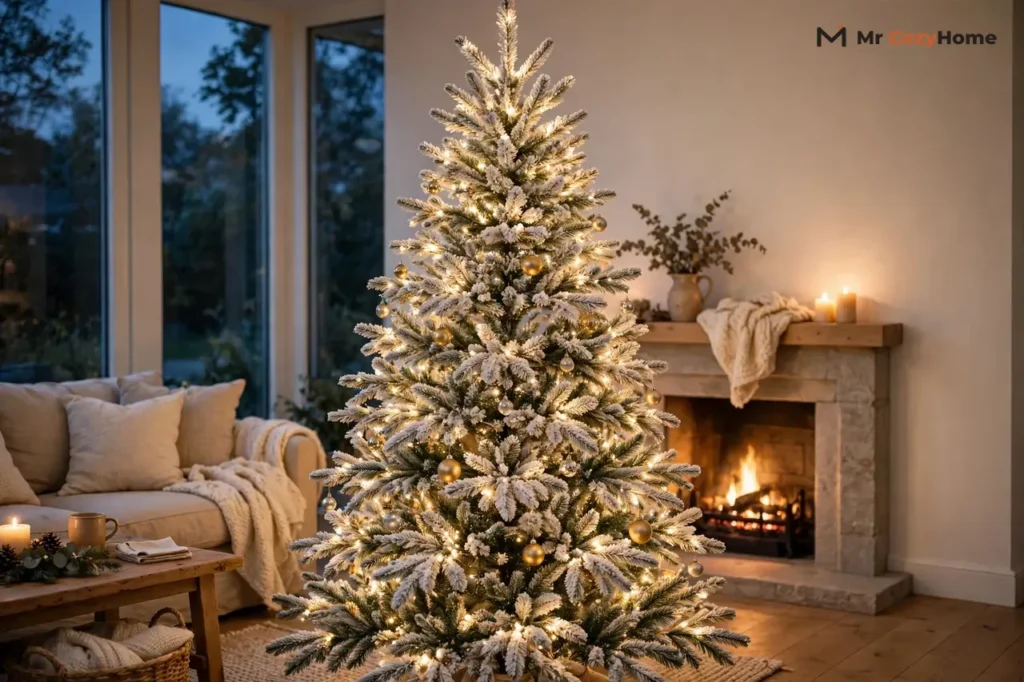
A Christmas tree with frost already does half the decorating for you. The snowy branches give you the winter wonderland look before you hang a single ornament, so your job is simple: add lights, pick two or three colors, and hang ornaments that let the frost stay the star. Keep the decorations light and a little sparse, and your frosted tree will glow instead of looking crowded.
💡 Practical Home Tip: Step back across the room after every layer — lights, then ribbon, then ornaments. A frosted tree is judged from the sofa, not from six inches away, and one step back catches a bare side or a heavy cluster before it becomes the look you live with all December.
First, Know What Kind of Frost You Have
Not every snowy tree wears its snow the same way, and the finish changes how you decorate it. A fake Christmas tree with snow can carry a heavy, even coating or just a whisper of white on the branch tips. Once you know which one you own, every other choice gets easier.
Flocked trees wear a thick, even layer of artificial snow that covers most of the branch. They look like they just came in from a heavy snowfall, and they already carry so much visual weight that they need fewer ornaments. Frosted trees wear a lighter, icy dusting, mostly near the tips, so more green shows through and the tree feels airy and elegant. Snow-tipped trees sit in between: the white gathers mainly on the branch tips, like a light snowfall that only touched the edges.
Here is how the three finishes compare, based on Balsam Hill’s flocked-versus-frosted guide:
Table: Frost finishes at a glance
| Finish | How the snow looks | How much decor it needs | What to watch for |
|---|---|---|---|
| Flocked | Heavy, uniform snow over most of the branch | Less — the snow is the show | Sheds more at setup; heavier branches |
| Frosted | Light, icy dusting, mostly near the tips | A normal amount, kept light | Sheds less; holds color well |
| Snow-tipped | White accents mainly on branch tips | Versatile — suits bold or simple looks | Very little loose material |
Why does this matter for styling? Because the frost is already a decoration. On a heavily flocked tree, a dozen more shiny things just fight the snow. On a lightly frosted tree, you have room to play with color, because the green still shows and the white acts like a frame. So before you open a single ornament box, look closely at your tree in daylight and name its finish. That one decision guides everything below.
One more thing to know: a white Christmas tree with snow is not quite the same as a green tree with frost. White trees glow from within once the lights go on, so they need even fewer ornaments to look finished. If yours is white, lean harder into the “less is more” advice in this guide.
Lights First: The Step That Makes or Breaks a Frosted Tree
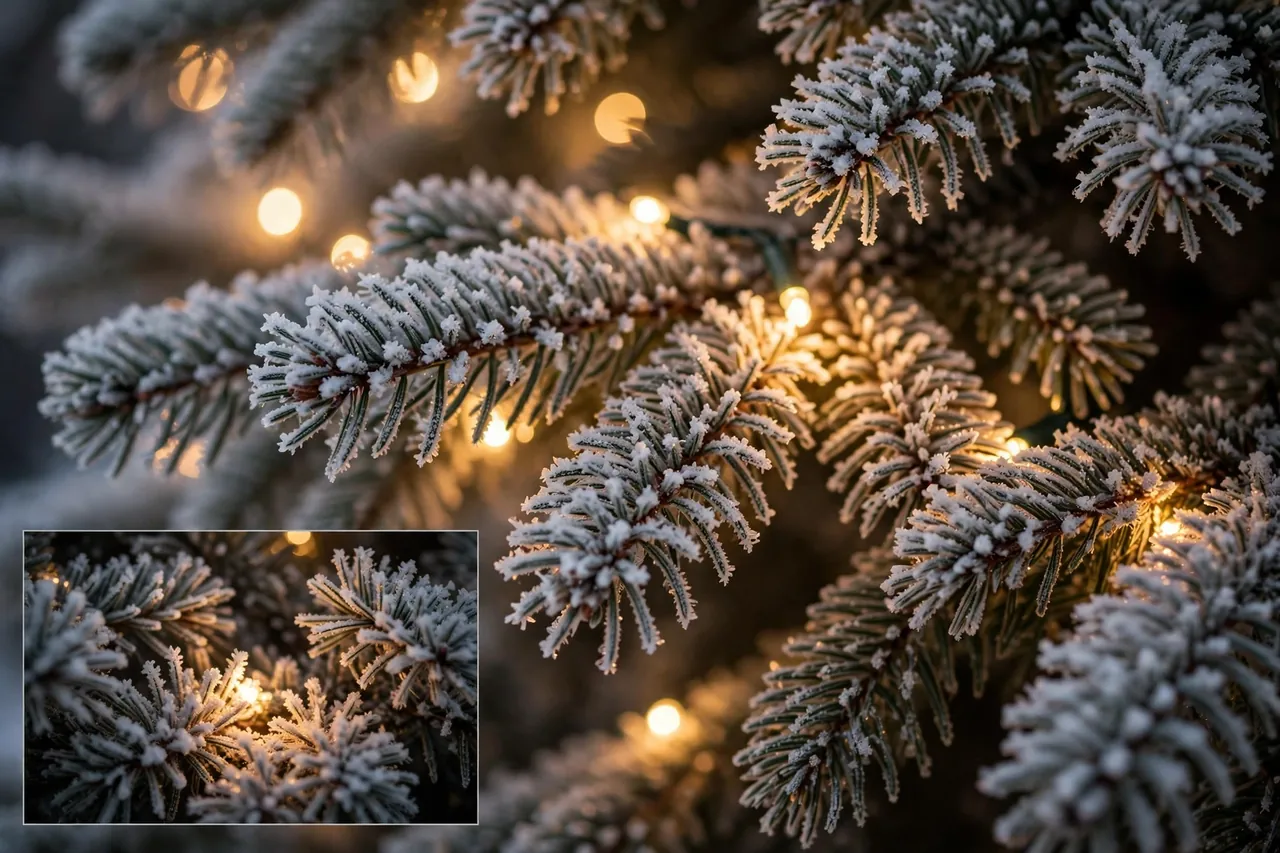
Hang your lights before anything else, and hang them from the inside out. The frost scatters light in a way plain green branches never do, so a Christmas tree with snow and lights glows softly even before the ornaments go on. If the lights look patchy now, no ornament will fix it later.
Warm white lights are the safest choice on frost. They melt into the snow and make the whole tree look like lamplight on a snowy evening. Cool white lights work too, but they push the tree toward an icy, blue-white mood — lovely for a midnight-frost theme, a little cold for a cozy family room. Pick one temperature and stick with it; mixing warm and cool strands on the same tree makes the frost look patchy.
Start at the trunk and work outward, weaving the strand deep into the branches first, then bringing it back toward the tips. This layering puts light behind the frost instead of only on top of it, and that depth is what makes a snowy tree look magical rather than flat. As a rough guide, plan on about 100 lights per foot of tree height, a rule of thumb shared by frosting guides such as Aosom’s. A 6-foot tree wants around 600 lights; a 7-foot tree wants around 700. Pre-lit trees already carry their lights, so check for dark sections before you decorate and push any loose bulbs back into their sockets.
Finally, turn the lights on and step back before you hang anything else. Look for dark holes in the middle and bright clumps at the edges, and shift a strand or two while the tree is still bare. This five-minute check saves you from taking ornaments down later.
Pick Your Palette: 3 Looks That Work on Snow
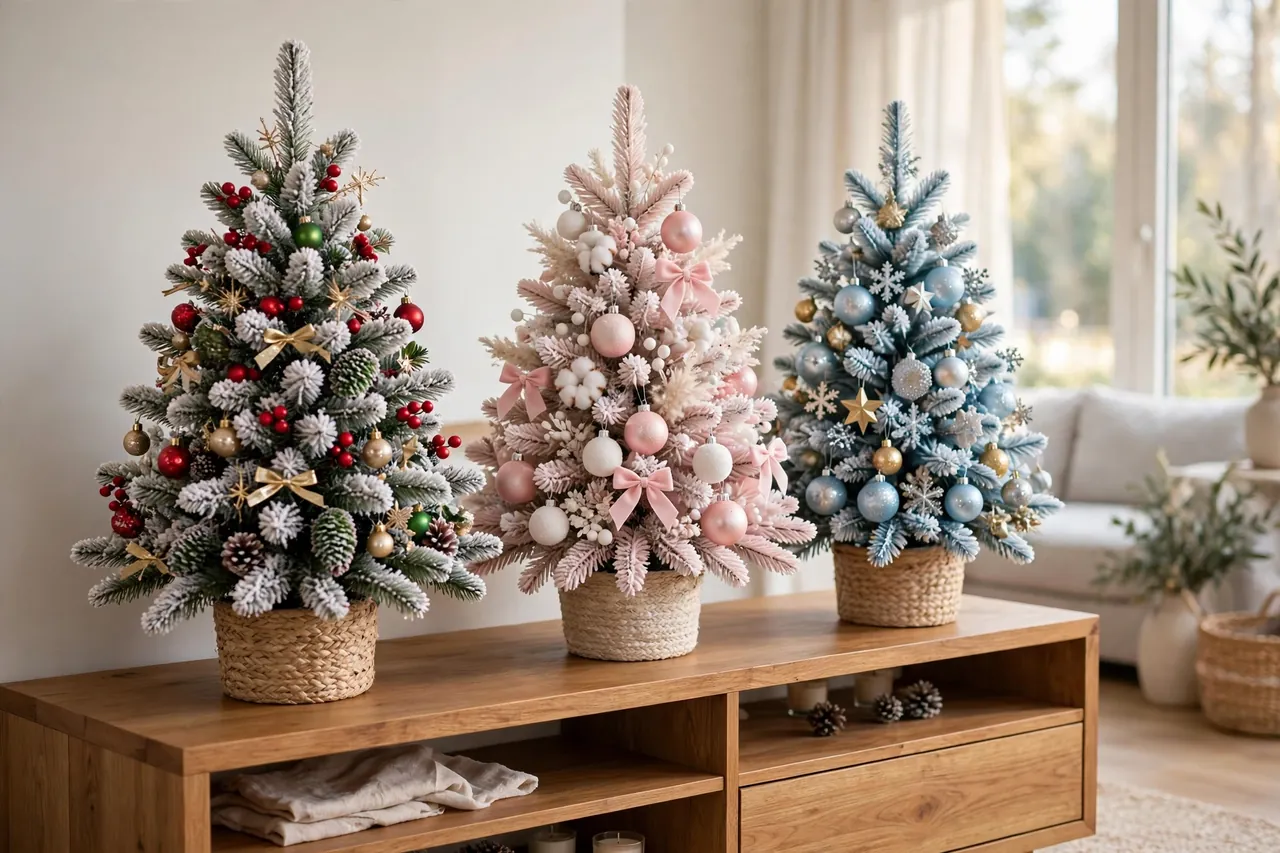
Frost is a neutral, so almost any color works on it — but the best frosted trees commit to just two or three colors and repeat them. Here are three palettes that never fail on snow, drawn from the classic looks in Balsam Hill’s frosted-tree decorating guide.
Traditional: red, green, and gold
Red berries, green garland touches, and gold baubles pop hard against white frost, and the look reads “Christmas” instantly. Tuck red berry picks deep into the branches first, then hang large ornaments near the trunk for depth and smaller ones toward the tips. Finish with a gold ribbon that billows in and out of the branches and a classic star on top. This is the palette to choose when the tree anchors a busy family room full of other red-and-green decor.
Vintage blush: pink, blush, and white
Pink and blush ornaments soften frost into something romantic and old-fashioned, especially when you mix in ornaments collected over the years. Hang pink baubles in different sizes, add blush and white pieces to balance them, and crown the tree with a snowflake topper instead of a star. Lay a white tree skirt at the base so the bottom melts into the room. This palette shines in a quieter corner or a bedroom tree, where the soft colors can breathe.
Midnight frost: icy blue, silver, and gold
Blue and silver lean into the ice in the frost, and a touch of gold keeps the tree from feeling cold. Hang frosted baubles in icy blue and silver evenly around the tree, add a neutral ribbon, and place a star topper on top. Group two or three baubles in different sizes and textures on the same branch for visual interest, and finish with a faux-fur skirt. This is the look for a formal living room or an entryway tree that greets guests.
Whichever palette you pick, repeat it beyond the tree. A frosted wreath on the mantel, a frosted garland on the stairs, or a small frosted tabletop tree on the console ties the room together, so the tree feels like part of a home, not a lone decoration.
Ornaments That Love Frost (and Ones That Fight It)
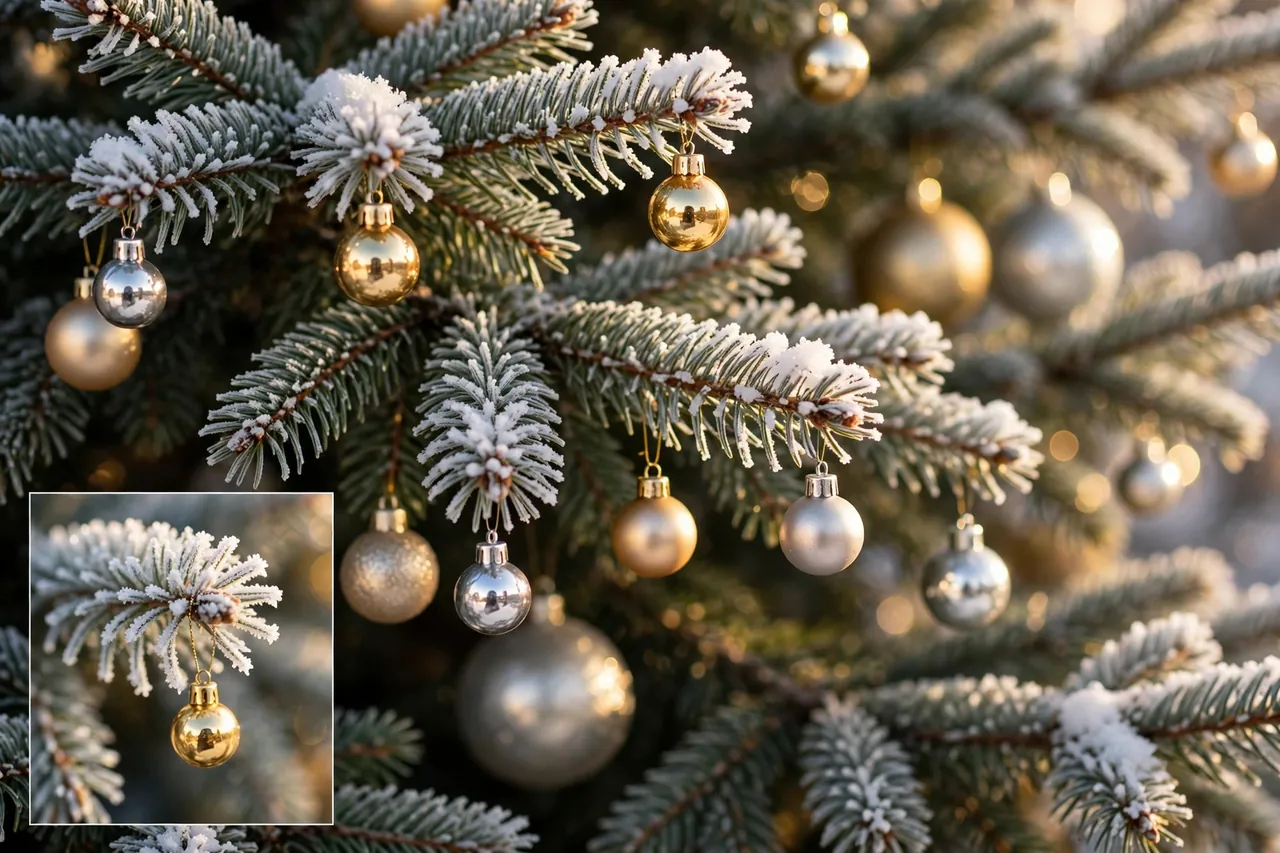
On a frosted tree, weight matters more than size. Heavy ornaments drag frosted branches down, and every time you adjust one, a little snow comes with it. Choose lightweight ornaments — thin glass, plastic, fabric, and foam — and save the heavy heirloom pieces for a sturdy green tree or a shelf display.
Metallics are frost’s best friend. Gold, silver, and champagne baubles catch the light and sparkle against the white, and a mix of shiny, matte, and glitter finishes keeps the tree from looking flat. Soft pastels like icy blue and blush pink also love frost, because they echo the snow instead of shouting over it. Natural touches — pinecones, wooden beads, dried orange slices — warm the look up and suit a woodland theme beautifully.
Place ornaments in zones for depth. Hang larger, plainer ornaments deep inside the tree near the trunk, where they create shadow and fullness. Hang medium ornaments through the middle branches, and save the smallest, prettiest pieces for the branch tips, where the light catches them. Leave some frosted tips bare on purpose. Those little white gaps are what make the tree look like snow, not like a wall of ornaments.
What fights frost? Dark, heavy clusters that hide the snow, and so many ornaments that the white disappears. If you step back and cannot see frost anymore, you have hung too much. Take five or six pieces off, step back again, and watch the tree breathe.
Ribbon, Picks, and the Finishing Touches
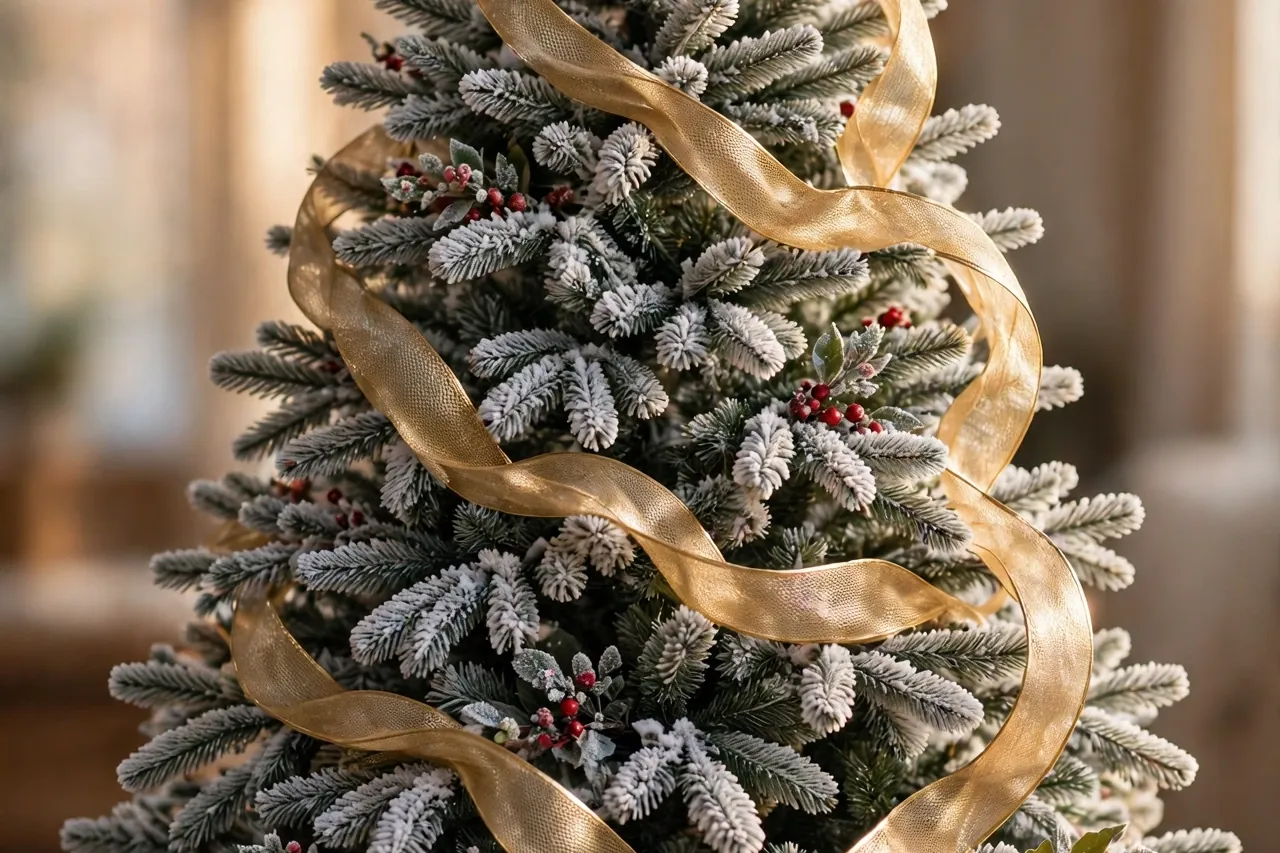
Ribbon is the piece most beginners skip, and it is the piece that makes a frosted tree look professionally done. Choose a wide, wired ribbon — about 2 to 4 inches — in one of your palette colors. Start at the top and cascade it down in loose billows, tucking it into the branches every foot or so so it weaves in and out instead of lying flat on the surface. Two shorter ribbon runs in different textures, such as velvet and sheer gold, add richness without clutter.
Berry picks and floral sprays do the detail work. Push a red berry pick or an ivory floral spray deep into a branch where a gap shows, and it reads like a little burst of color growing out of the snow. Use them sparingly — five or six picks on a 6-foot tree is plenty — and angle them outward so they catch the light.
Then finish the top and the base. A star topper suits traditional and midnight-frost trees; a snowflake or angel topper suits the vintage blush look. Keep the topper light and in scale — a heavy topper bends a frosted tip and sheds snow every time someone brushes past. At the base, a white faux-fur skirt melts into the frost, while a red collar gives a traditional tree a crisp, finished edge. Either one beats a bare stand, which breaks the winter spell at the very bottom of the tree.
Keep the Frost Beautiful All Season
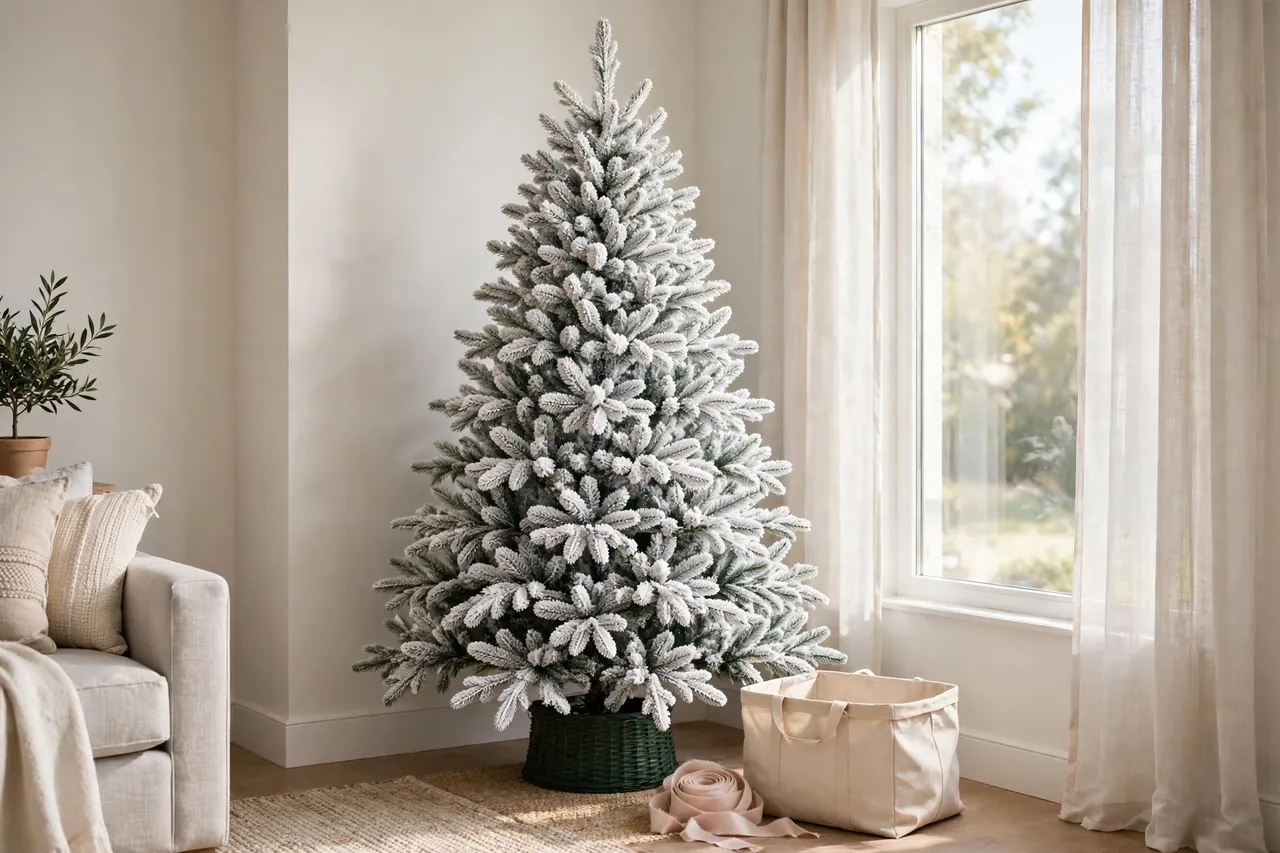
Frosted trees are easy keepers once they are decorated, but the snow coating does need a little respect. Most shedding happens at setup, when you fluff the branches for the first time. Fluff gently, keep a broom or vacuum nearby, and wear a dust mask if loose flocking bothers you. After that first day, the tree sheds very little — frosted finishes shed less than heavy flocked ones, because less material sits on the branches.
Keep the tree away from heat sources. Radiators, fireplaces, and sunny windows dry the coating out and, over time, can yellow it — Balsam Hill notes that sunlight, heat, and humidity can yellow flocking on both flocked and frosted trees. A spot a few feet from the window, out of direct sun, keeps the white bright all season. Keep real candles far from the tree, and use LED lights, which run cool and will not melt artificial snow.
When the season ends, store the tree like the snow matters, because it does. Detach the lights if your tree is not pre-lit, gently compress each branch section before you fold it, and tie a ribbon around each section so the branches do not rub each other in the bag. Store the bag in a cool, dry place, covered and out of sunlight, and your Christmas trees with snow will come out next December looking just as fresh as they did this year.
Troubleshooting: Quick Fixes When Something Looks Off
Even a good frosted tree can look wrong for a small, fixable reason. Run through this table before you redecorate from scratch.
Table: Frosted tree problems and quick fixes
| Problem | Likely cause | Quick fix |
|---|---|---|
| Bare patches with no frost | Fluffing knocked snow off one side | Turn the bare side toward the wall; dust the spot with spray snow if it still shows |
| Snow sheds every time you touch it | Heavy flocking or rough handling | Handle branches by the trunk side; switch to lightweight ornaments |
| Tree looks dull, not glowing | Lights only on the surface | Weave a strand deep near the trunk before adding more outside lights |
| Ornaments slide off the tips | Smooth frosted tips give hooks nothing to grip | Hang small ornaments one branch back, where the branch is thicker |
| Frost turns yellow | Sun, heat, or humidity over time | Move the tree out of direct sun; store it cool, dry, and covered |
A quick safety note before you plug everything in: check every light strand for frayed wires or cracked sockets, do not link more strands than the maker allows, and keep the tree away from open flames and heaters. A frosted tree is beautiful precisely because it looks like snow — and snow and heat do not mix.
Related Guides
What Is a Flocked Christmas Tree? · Tree Decorating Ideas for Christmas · How to Put Ribbon on a Christmas Tree
Frequently Asked Questions
What is the difference between a flocked tree and a frosted tree?
A flocked tree wears a heavy, even layer of artificial snow that covers most of each branch, while a frosted tree wears a lighter, icy dusting, mostly near the tips. Flocked trees look bold and snowy; frosted trees look airy and elegant, with more green showing through.
Are frosted Christmas trees still in style?
Yes. Frosted trees suit almost any decorating style, from traditional red and gold to modern minimal looks, because the snowy branches act as a neutral backdrop. If you want a fresh twist, pair the frost with sparse, slim branches or a vintage blush palette.
Should I get a frosted Christmas tree?
If you love the snowy look but want less upkeep, yes. Frosted trees shed less than heavily flocked trees, weigh less, and store more easily, while still giving you the full winter-wonderland effect once the lights go on.
Are flocked Christmas trees better?
Flocked trees give a bolder, more dramatic snow-covered look and need fewer ornaments, but they shed more at setup, weigh more, and need gentler storage. Neither finish is better for everyone — pick flocked for drama, frosted for elegance and easy care.
What decorations look best on a frosted or flocked Christmas tree?
Metallic baubles in gold, silver, or champagne look elegant on snow, while soft pastels like icy blue and blush pink enhance the frosty feel. Natural touches such as pinecones and wooden ornaments warm the look, and lightweight pieces protect the branches from drooping.
Should I decorate a frosted or flocked tree?
Absolutely. A frosted or flocked tree looks beautiful bare, but decorating it brings out its charm. Keep the look understated with delicate touches that let the snowy branches shine, or go rustic with woodland accents — either way, the frost stays the star.
Your frosted tree does not need much to be beautiful. It already carries the snow, the season, and the story. Give it warm light, a small palette, and ornaments light enough to let the frost breathe, and it will glow from the first evening you plug it in until the day you pack it away. Start with the lights tonight, and let the snow do the rest.