
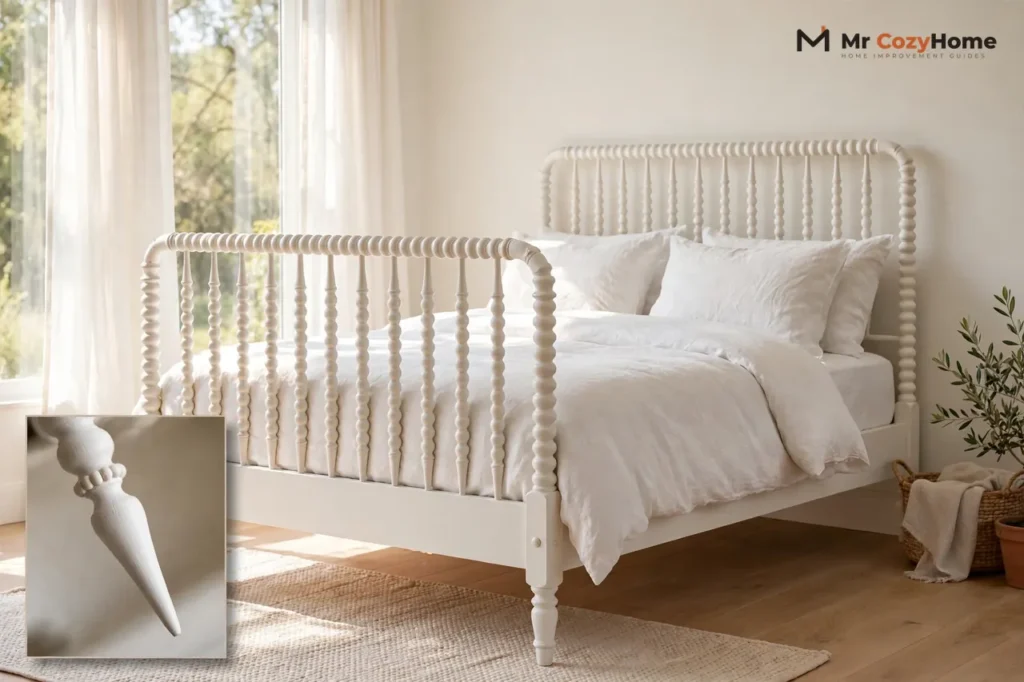
A spindle bed is a wooden bed frame whose headboard and footboard are built from turned spindles — slender, lathe-shaped rods that look like a row of sewing spools — and a good queen-size frame costs about $350 to $2,300, checked November 12, 2026. The style dates to the 1850s, when it was named for Swedish opera singer Jenny Lind, and it still suits farmhouse, coastal, cottage, and modern bedrooms alike.
The trap is not the style. It is the fit. Antique spindle beds were built before modern mattress sizes existed, so many need a custom mattress, and some new frames still need a low-profile box spring. Check the size, the slats, and the support before you fall for the spindles.
💡 Practical Home Tip: Before you order, measure the wall the bed will sit against and the doorway it must pass through — then check the frame’s full outside dimensions, not just the mattress size. A queen frame is usually 5 to 8 inches wider than the mattress, and tall spindle headboards do not bend around stair turns.
What Is a Spindle Bed?
A spindle bed is a bed frame whose headboard and footboard are made from turned spindles — slender wooden rods shaped on a lathe into beads and tapers like a row of sewing spools. The spindles sit between the frame’s rails and posts, so the headboard stays airy instead of one solid slab of wood.
The look comes from the lathe. A woodworker spins a square length of wood and cuts it into a repeating pattern of round beads and narrow waists, a technique called turning. Each spindle is one turned rod, and a headboard may hold a dozen or more of them side by side, framed by two taller corner posts. The posts often end in a small carved ball called a finial.
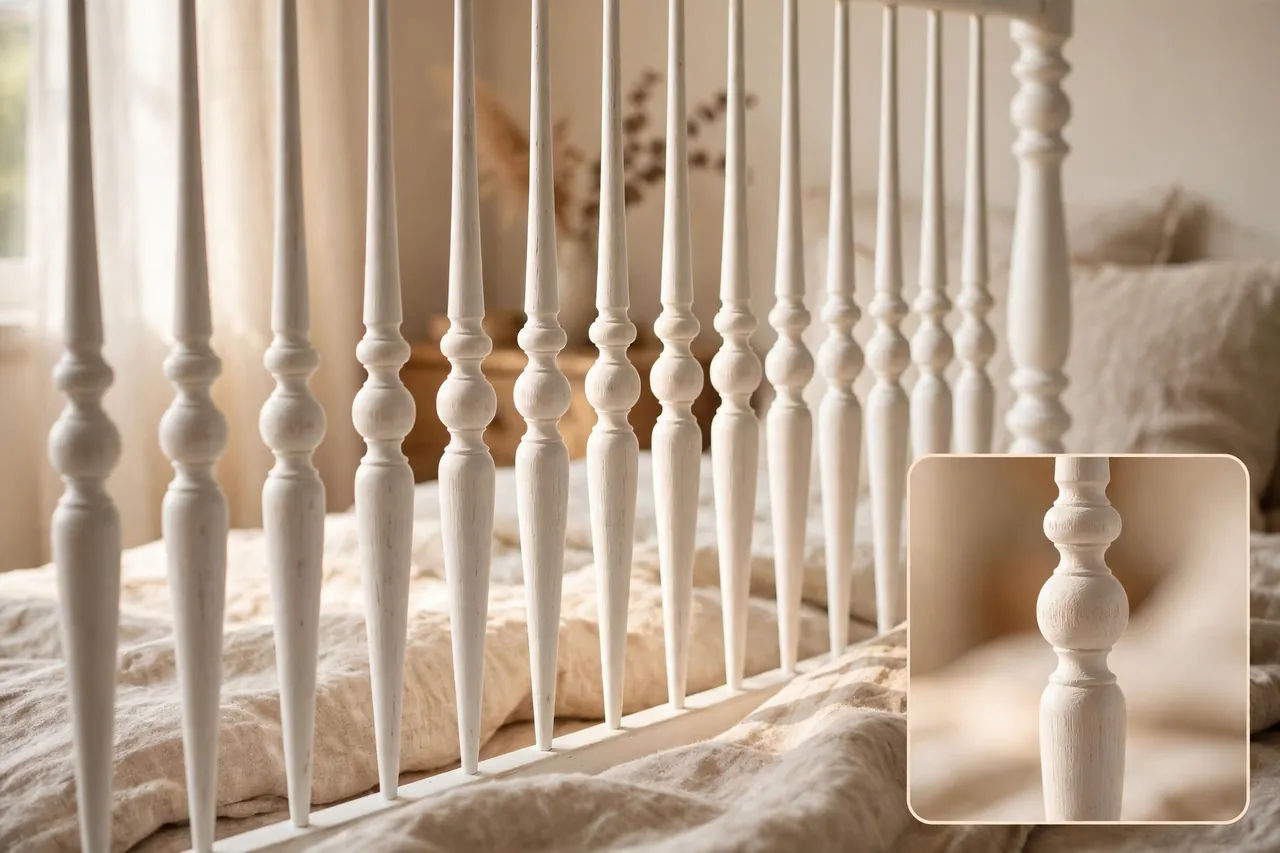
People also call this style a spool bed or a bobbin bed, because the turnings resemble the wooden spools and bobbins once used for sewing thread. The best-known version is the Jenny Lind bed, named for the Swedish singer whose 1850s American tour made her name a selling point for furniture makers. The Coastal Oak’s Jenny Lind history traces the craze back to 1851, when manufacturers began marketing turned-spindle beds under her name — and the style has never really gone away.
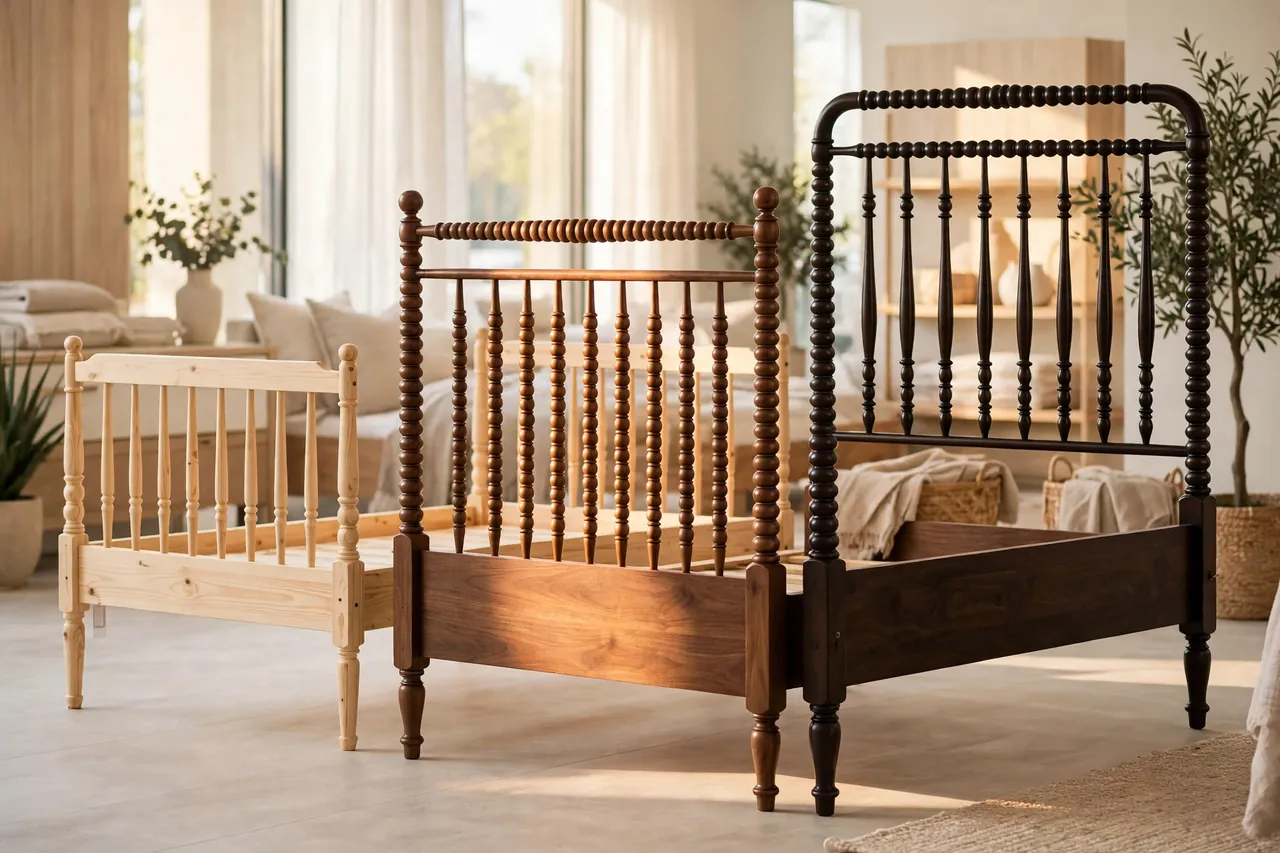
Most spindle beds sold today are platform beds. Wooden slats run across the frame and hold the mattress directly, so you usually need no box spring. The frame itself is usually solid wood — oak, maple, walnut, pine, or rubberwood — though budget frames often mix solid wood posts with plywood or MDF rails.
The style is not only for kids’ rooms, even though twin Jenny Lind beds are a nursery classic. Makers now sell spindle beds in twin, full, queen, and king sizes, in finishes from washed white to dark walnut.
Spindle Bed vs Bobbin Bed vs Spool Bed: What’s the Difference?
A spindle bed, a bobbin bed, and a spool bed are the same idea with different names, and most retailers use the three terms interchangeably. All three describe a wooden bed frame with lathe-turned rods across the headboard and footboard, and a shopper searching any of the three names will find the same beds.
The small difference is in the shape of the turning. A spool or bobbin bed traditionally has rounder, more pronounced turnings — fat beads that really do look like sewing spools or thread bobbins. A spindle bed may have slimmer, straighter posts with gentler turnings. In practice, though, no retailer enforces that line, and a bed listed as a bobbin bed can look identical to one listed as a spindle bed.
Jenny Lind is the one name with a stricter meaning. A true Jenny Lind bed follows the 19th-century pattern: repeating turned spindles, even symmetrical spacing, rounded bulb-style turnings, and — the detail collectors check first — square solid corners on the headboard and footboard. Round-cornered spool furniture came later, in the 1850s, but the authentic Jenny Lind design kept its square corners.
So shop by the bed in front of you, not the label on it. Look at the thickness of the turnings, the spacing between the spindles, and whether the posts are solid wood or a veneer over engineered wood. Those details decide how the bed looks and how long it lasts — the name on the listing does not.
How Much Does a Spindle Bed Cost?
A spindle bed costs about $350 to $2,300 for a queen-size frame, checked November 12, 2026, and the price follows the wood, not the spindles. Budget frames in pine or rubberwood with MDF rails start near $350, solid-wood mid-range frames run $800 to $1,500, and heirloom-style frames from premium brands pass $2,000.
| Bed | Size and material | Price |
|---|---|---|
| Harper & Bright spindle platform bed (Overstock) | Twin and full; pine, plywood, and MDF | $354.49 |
| Ophelia & Co. Spindle Bed (Wayfair) | Queen; antique white finish | $630.00 (was $1,089.00) |
| Madison Park Signature Beckett Bed (Wayfair) | Queen; solid wood, spindle headboard and footboard | $855.35 (was $939.99) |
| Pottery Barn Kyrie Platform Bed | Full and queen; solid rubberwood | $2,099–$2,299 |
The table shows the real spread. The Harper & Bright spindle platform bed on Overstock costs $354.49 and comes in twin and full with ten wooden slats and a 600-pound weight capacity on the full size. The Madison Park Beckett queen, a solid-wood frame with turned spindles on both headboard and footboard, costs $855.35 on Wayfair, down from $939.99, and buyers rate it 4.7 out of 5 stars from more than 1,300 reviews. At the top end, Pottery Barn lists its solid-rubberwood Kyrie platform bed at $2,099 to $2,299.
Those prices cover the frame only. A mattress, bedding, and delivery cost extra, and sale prices move fast, so check the listing on the day you buy. Candie Anderson’s 2026 spindle bed guide puts the same market into three bands — budget $400 to $700, mid-range $800 to $1,500, and luxury $2,000 and up — which matches the four prices in the table above.
Antique spindle beds are a separate market. A genuine 19th-century Jenny Lind bed can cost a few hundred dollars at a flea market or several thousand from a dealer, depending on the wood, the spindles, and whether the frame is complete. Budget for a custom mattress too — that cost is covered in the antique section below.
Spindle Bed Sizes and Room Fit
A spindle bed fits any standard mattress size, from twin to king, but the frame itself is always wider, longer, and taller than the mattress it holds. Measure the frame’s outside dimensions — not the mattress size — against your wall, your doorways, and the walking space around the bed before you order.
| Mattress size | Mattress | Typical frame footprint |
|---|---|---|
| Twin | 38 x 75 inches | About 44 inches wide, 80 inches long |
| Full | 54 x 75 inches | About 60 inches wide, 80 inches long |
| Queen | 60 x 80 inches | About 66 inches wide, 86 inches long |
| King | 76 x 80 inches | About 82 inches wide, 86 inches long |
Start with the wall. A queen frame needs about 66 inches of wall width, with at least 24 inches of clear space on each side for walking and making the bed. In a 10-by-12-foot bedroom, a queen spindle bed leaves room for two slim nightstands and a walkway; in a 9-by-10-foot room, the same bed eats the space, and a full or a low-profile frame fits better.
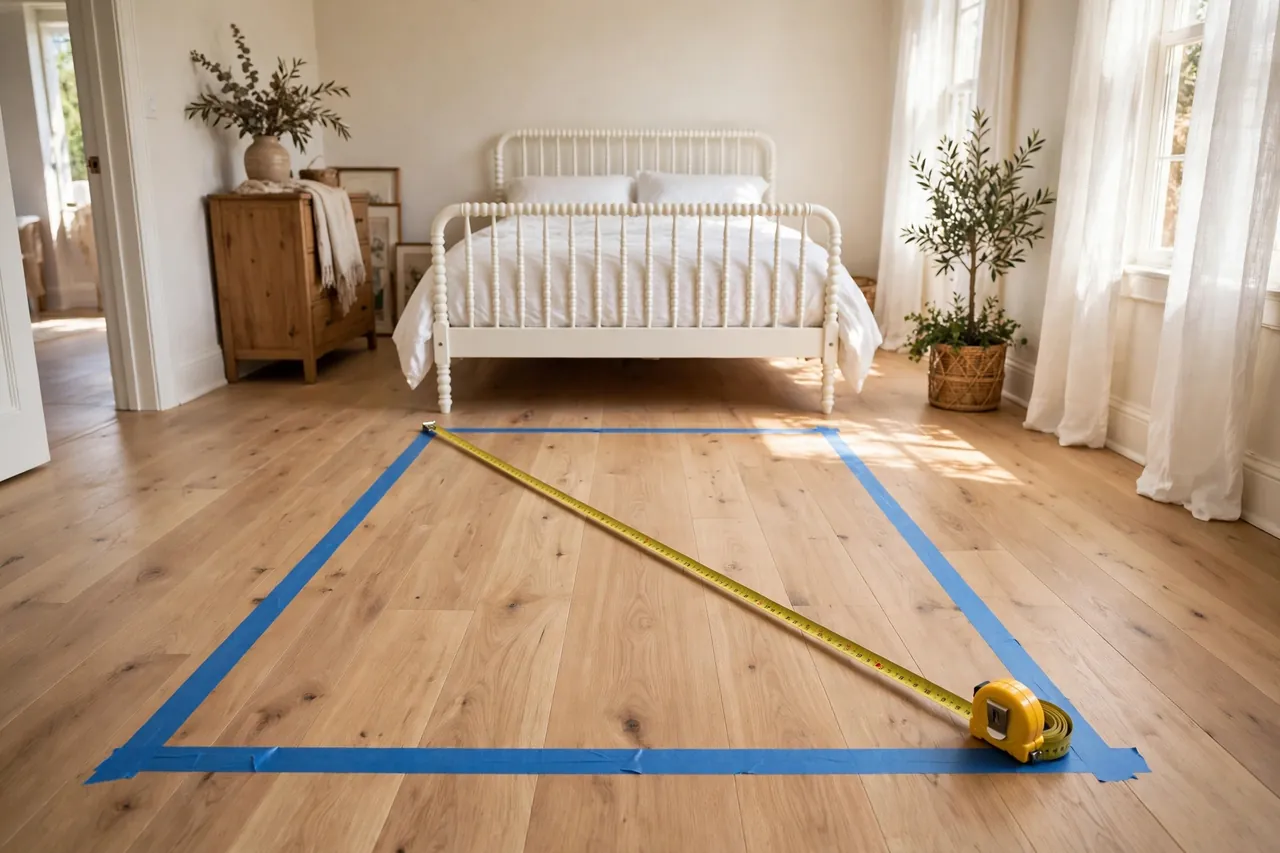
Then check the height. Spindle headboards run from about 42 inches on low-profile platform frames to 55 inches or more on traditional high-post designs, and a tall headboard needs a wall without a low window or a sloped ceiling in the way. The Madison Park Beckett, for example, leaves 8.75 inches of clearance underneath, which is enough for flat storage bins — useful in a small room, and our guide to best storage ideas for small rooms has more ways to use that space.
Finally, measure the delivery path. Most spindle beds ship flat-packed in boxes, but the assembled headboard is wide and rigid, so measure every doorway, hallway turn, and stair landing between the front door and the bedroom. A queen headboard panel is about 66 inches wide and will not bend around a tight stair turn — carry the boxes to the bedroom and build the bed in the room.
What to Check Before You Buy a Spindle Bed
Buy a spindle bed the way you would buy any piece of wooden furniture: check the wood, the joints, and the support system first, and let the pretty turnings come second. A bed that looks charming in a photo can still wobble, squeak, or sag if the frame underneath it is weak.
Wood and build quality
Solid wood lasts longest. Oak, maple, walnut, and rubberwood frames hold screws and joints for decades, while pine is lighter and cheaper but dents more easily. Budget frames often use solid wood only for the turned posts, with plywood or MDF rails — that mix is fine at $350, but check that the rails are thick and the joints are mortise-and-tenon or bolted, not just glued. Avoid a frame whose spindles feel loose when you twist them gently; each spindle should sit tight in its rail.
Slats and weight capacity
Count the slats and check the spacing. A queen platform frame should have at least 10 to 12 solid wooden slats, spaced no more than 3 inches apart, so a foam mattress cannot sag between them. Also check the weight capacity: the Harper & Bright full-size frame is rated for 600 pounds, the twin for 400 pounds, and most solid-wood queen frames support 400 to 600 pounds. If two adults and a heavy mattress will sleep on it, pick a frame rated above your combined weight with room to spare.
Box spring or platform?
Most modern spindle beds are platform beds, and the slats support the mattress directly — no box spring needed. Some traditional frames are different: Pottery Barn’s Kyrie, for example, requires a 5.5-inch low-profile box spring or foundation. Read the product details before you order, because buying the wrong support means a second purchase and a mattress that sits too high or too low.
Assembly and returns
Nearly every spindle bed ships flat-packed and needs assembly, usually with two people and about an hour. Check whether the tools are included and what the return policy covers — a 66-inch headboard is expensive to ship back. If you buy antique, ask the seller whether all the spindles, rails, bolts, and slats are present, because one missing turned spindle is hard to replace.
How to Style a Spindle Bed
Style a spindle bed by showing off the spindles, not hiding them. The turned posts are the whole point of the frame, so keep bedding low and simple at the headboard, pick slim nightstands that do not compete with the posts, and let the wood — or the painted finish — set the room’s tone.
Start with the bedding. Crisp white or light linen sheets keep the frame looking fresh, and a quilt or coverlet folded low on the bed leaves the headboard spindles visible. The classic mistake is stacking big square shams upright against the headboard: they cover the turnings and turn a spindle bed into a plain bed. Lay oversized shams flat at the foot of the bed instead, and use a small lumbar pillow for the accent.
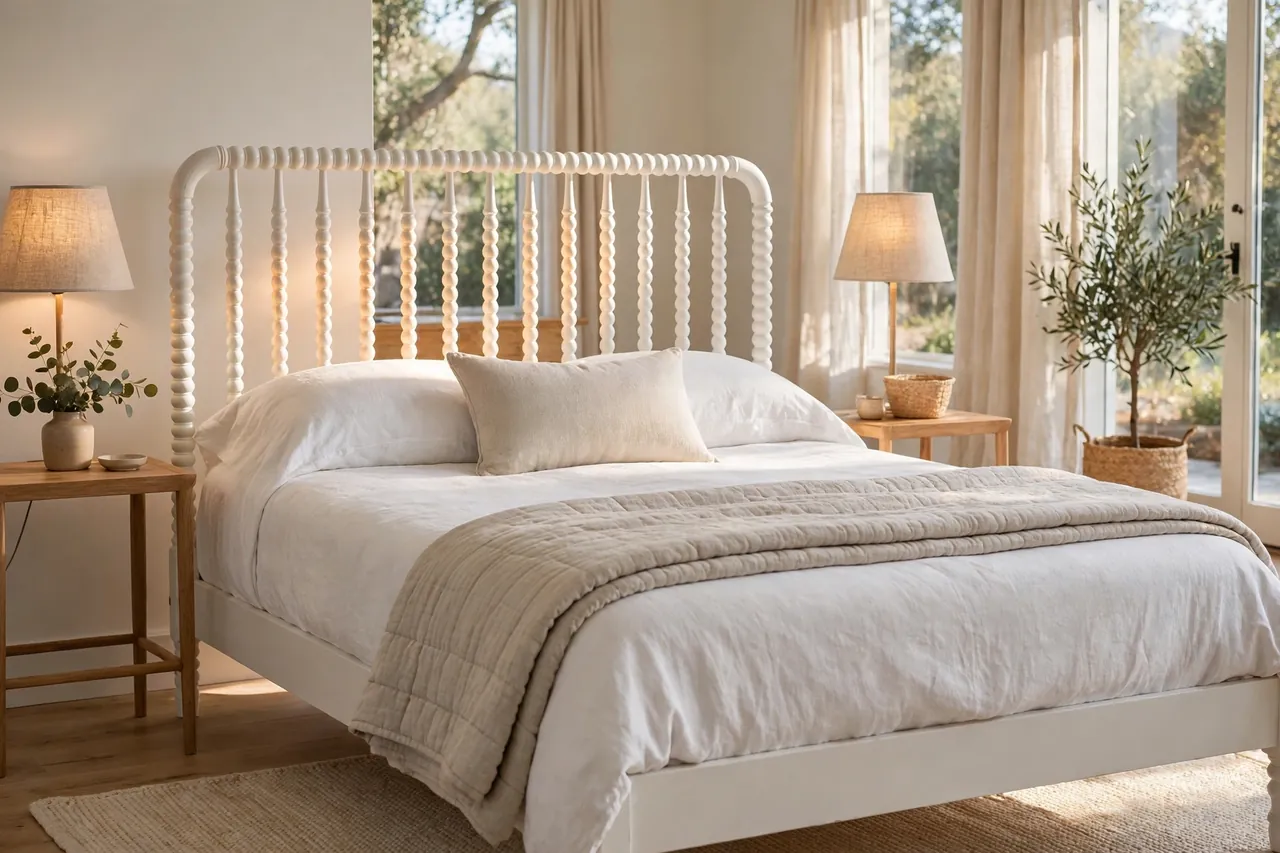
Then pick furniture that stays out of the spindles’ way. Slim nightstands, open-frame side tables, and linen-shaded lamps keep the room feeling open, while a chunky dresser jammed against the headboard crowds the posts. A rug under the bed grounds the frame — our Tumble Rugs vs Ruggable comparison covers washable rugs that survive bedroom traffic — and a small side table from our apothecary table guide works well beside a spindle frame without stealing attention from it.
The style itself is flexible. A white spindle bed with striped ticking bedding reads coastal or cottage; the same frame in dark walnut with plaid and leather reads traditional farmhouse; and a low-profile frame with plain white linens fits a modern bedroom. Change the bedding and the finish, and the bed changes with the room.
Antique Spindle Beds: Jenny Lind and What to Watch For
An antique spindle bed is usually a Jenny Lind bed, a 19th-century spool-turned frame named for the Swedish singer Jenny Lind, and the good ones are made of solid mahogany, walnut, maple, or cherry that has already lasted 150 years. Buy one for the wood and the craftsmanship, but check the size and the joints before you pay.
Start with the size, because it is the most common surprise. Antique beds were built before queen and king sizes became standard, and many Jenny Lind frames are smaller than a modern full — some need a three-quarter mattress, about 48 inches wide by 78 inches long. Measure the inside of the frame rail to rail, then price a custom mattress before you buy the bed, not after. A custom mattress is far cheaper than most buyers expect, but it is still an extra cost.
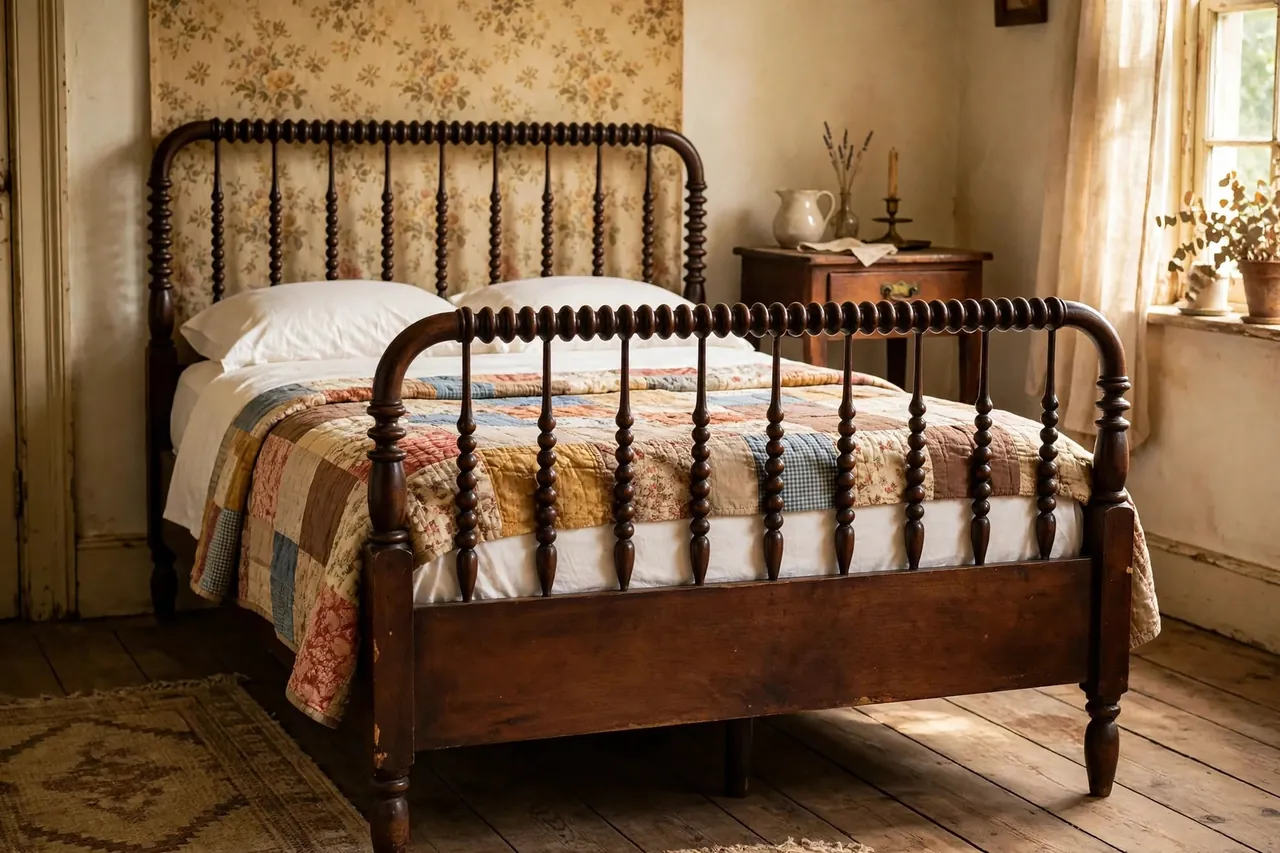
Then check the frame the way a woodworker would. Each spindle should be whole, with no cracks at the narrow turned waists where the wood is thinnest. The joints where the rails meet the posts should feel solid, with no wobble when you rock the frame gently. Look for square solid corners on the headboard — that is the mark of a true Jenny Lind design — and check that all the bolts, slats, and rails are present, since one missing turned spindle is hard to match.
Finish is a matter of taste, not value. Many owners paint an antique spindle bed white or strip it back to bare wood, and the solid timber takes paint, stain, or bleach well. If you paint, sand the spindles lightly first and use a brush — the turnings have many small curves. And if the bed came from a flea market, check for woodworm holes before you bring it into the bedroom.
How to Care for a Spindle Bed
Care for a spindle bed the way you would care for any solid-wood furniture: dust the turnings often, clean with a damp cloth and mild soap, and tighten the bolts once or twice a year. The spindles collect dust in their grooves, so a quick weekly pass keeps the frame looking new.
Dust first, because dust is what makes a spindle bed look tired. A feather duster or a dry microfiber cloth run between the spindles once a week reaches the grooves a flat cloth misses. For a deeper clean, wipe the frame with a barely damp cloth and a drop of mild soap, then dry it at once — never soak the wood, and never use a harsh cleaner or a silicone spray that builds up in the turnings.
Tighten the frame twice a year. Beds loosen with use, so check the rail-to-post bolts, the slat screws, and the center support leg if your frame has one. A loose bolt is the usual cause of a squeak, so check the bolts before you blame the mattress. Our how to clean your room guide and our deep cleaning house checklist cover the bedroom routine that keeps dust off the frame.
Touch up scratches with a furniture marker or a dab of matching stain, and refinish a worn frame rather than replacing it — solid wood sands back and takes a new finish, which is one reason these beds outlast cheaper frames. If a spindle cracks at its narrow waist, a woodworker can turn a replacement on a lathe, but that repair costs more than a new budget frame, so check the spindles carefully when you buy.
Who Should Buy a Spindle Bed — and Who Should Skip It
Buy a spindle bed if you want a wooden frame with real character, a headboard that stays light and airy, and a style that works in a farmhouse, coastal, cottage, or modern bedroom. Skip it if you need a storage bed, a fully upholstered look, or a frame you never want to dust.
It is a great fit for a guest room or a primary bedroom where the bed is the centerpiece. The turned posts give the room a finished, collected feel without a heavy solid headboard, and the style grows with the room — change the bedding and the bed looks new. It is also a good fit for a child’s room: twin Jenny Lind beds are a classic there, and the spindles give small hands something to hold onto.
It is a poor fit for a household that wants hidden storage under the bed, since most spindle frames sit low with little clearance, and for anyone who hates dusting — the turnings need a weekly pass that a flat headboard never asks for. If you want a tall upholstered headboard to lean against while reading, a spindle frame will feel hard and open by comparison.
And if you are buying antique, buy it for the right reason: the wood, the craft, and the history. If what you really want is a modern frame in a modern size with a warranty, buy new — the look is the same, and the mattress will fit the first time. Before you decide, read our guide to how to organize a bedroom so the room is ready, and our white label furniture guide so you can spot when the same bed frame sells under two brand names at two prices.
Related Guides
The bed is only the start of the bedroom. Organize the room around it with our how to organize a bedroom guide and our messy bedroom rescue plan, add storage without crowding the walls with our bedroom shelving ideas, and keep the frame dust-free with our how to clean your room guide. For small bedrooms, our best storage ideas for small rooms help you fit everything else around the bed.
Frequently Asked Questions
What is a spindle bed?
A spindle bed is a bed frame with turned wood posts or slats across its headboard and footboard, often called a bobbin or spool bed. The spindles are slender wooden rods shaped on a lathe into beads and tapers, which gives the frame its signature charm. The style dates to the 1800s and still suits farmhouse, coastal, and modern bedrooms.
What’s the difference between a spindle bed and a bobbin bed?
The terms are mostly interchangeable, and most retailers use them for the same beds. Traditionally, a spool or bobbin bed has rounder, more pronounced turnings that look like wooden spools or thread bobbins, while a spindle bed may have slimmer, straighter posts. Today, the names describe the same turned-wood style, so shop by the bed itself.
Are spindle beds sturdy?
Yes, when they are made from solid wood or engineered hardwood. A well-built spindle bed frame holds 400 to 600 pounds — the Harper & Bright full-size frame, for example, is rated for 600 pounds — and quality frames last for decades with basic care. Check the slat count, the joint construction, and the weight rating before you buy.
Do spindle beds work in modern interiors?
Yes. Modern makers have streamlined the look with thinner posts, slimmer profiles, and low-profile frames, so spindle beds now fit modern, transitional, and even minimalist bedrooms. Pair a low-profile frame with plain white linens and slim nightstands, and the turned posts read as quiet craftsmanship rather than antique clutter.
Do spindle beds require a box spring?
Not usually. Most modern spindle beds are platform beds with wooden slats that support the mattress directly, so no box spring is needed. Some traditional frames are different — Pottery Barn’s Kyrie, for example, requires a 5.5-inch low-profile box spring or foundation. Always check the manufacturer’s details for your specific frame.
Measure your wall, check the frame’s outside dimensions, and compare three prices before you order. If the spindles are solid, the slats are close together, and the size fits your room, a spindle bed is a frame you will keep for decades.


