
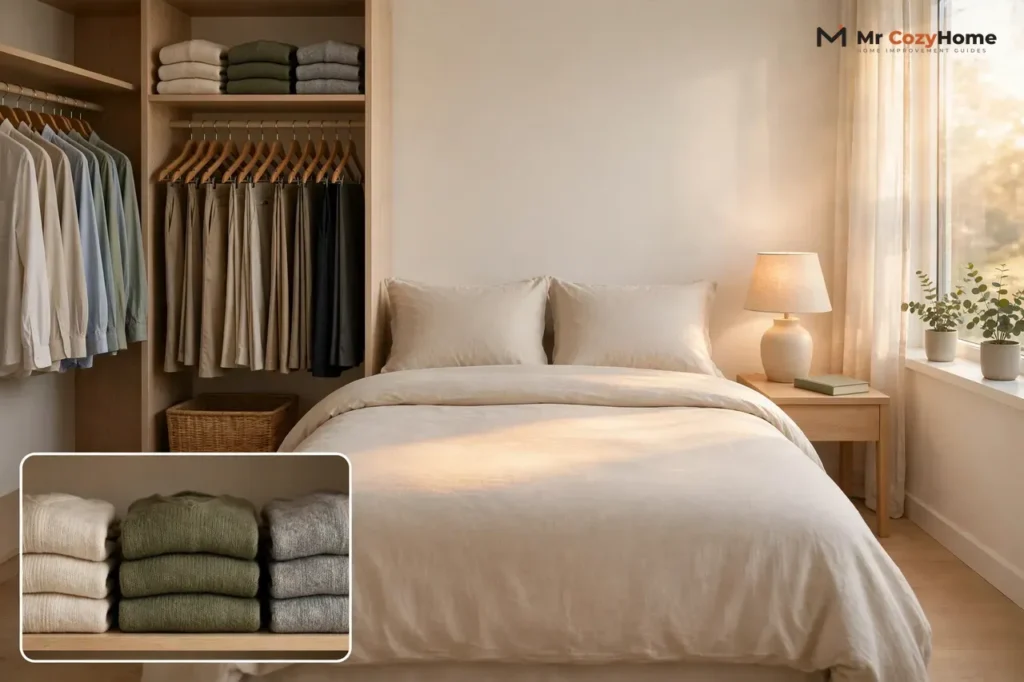
To organize a bedroom, work one zone at a time, give every item one clear home, and finish with a short weekly reset. Start with the bed area and the closet, because clothes and flat surfaces cause most bedroom mess. Then set up a sleep zone, a dress zone, and a work or reading zone, so nothing drifts back to the floor or the chair.
This guide shows you how to organize a bedroom step by step, without buying a pile of bins first. You will clear what you no longer need, set up your closet and drawers, tame your nightstand, use the space under your bed, and build a habit that keeps the room calm all week.
Start Before You Buy Anything
Most bedrooms do not stay messy because they lack storage. They stay messy because too many things have no home, and the easiest home becomes the bed, the dresser top, or the floor. Fix that first, and the rest gets much easier.
Grab a laundry basket, a bag for donations, and a trash bag. Then walk the room and pull out everything that belongs somewhere else: dishes, tools, mail, bags from other rooms, and laundry that never made it to the hamper. Put those items where they belong right away, instead of moving them to a new pile in the bedroom.
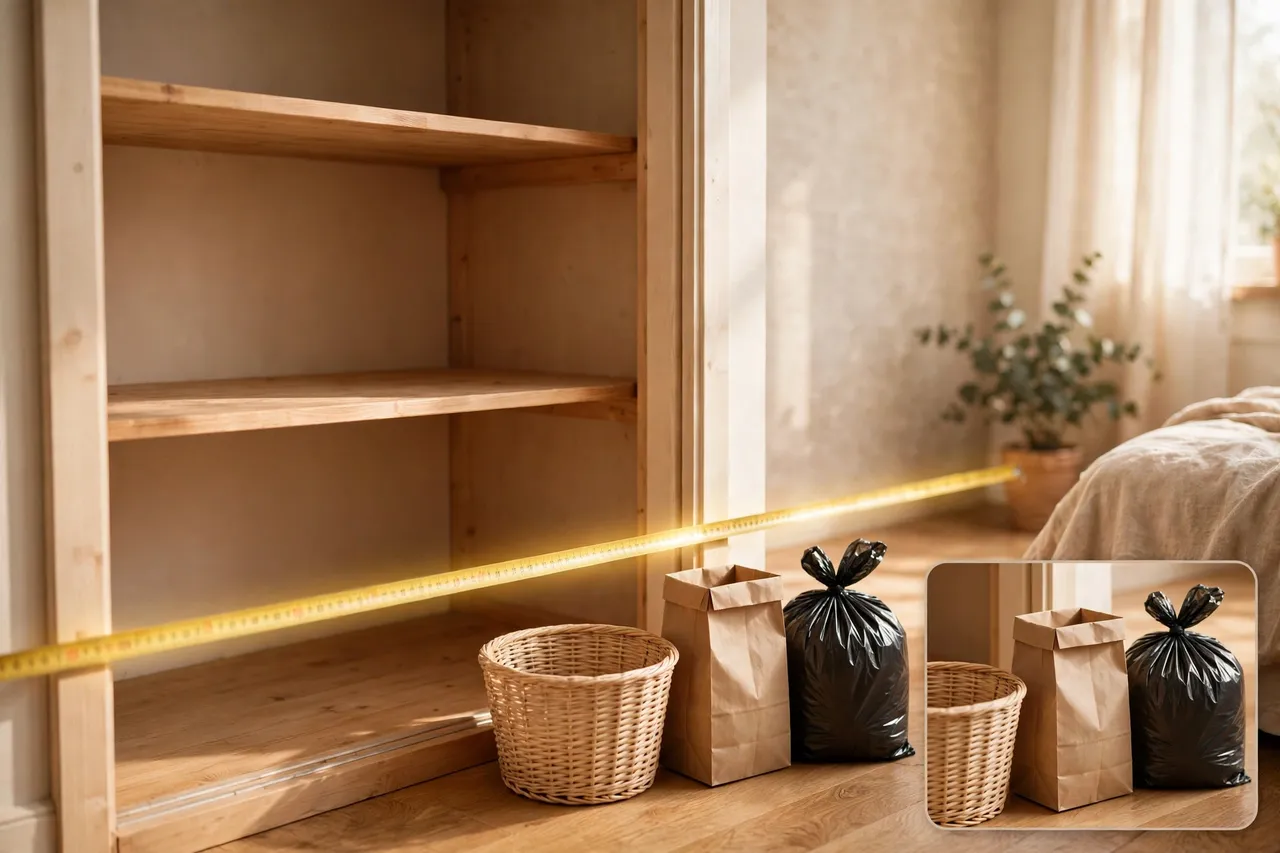
Next, measure before you shop. Measure your closet width, your drawer sizes, the space under your bed, and the top of your nightstand. A bin that does not fit is just another thing to store, and a drawer divider that is too wide will sit unused in the closet. Buy organizers only after you know what you need to hold, and where it will live.
Clear the Room in One Simple Pass
You do not need to empty the whole bedroom at once. That only makes a big mess in the middle of the room and tempts you to quit halfway through. Work in one area at a time, and finish each area before you start the next one.
- Make the bed first. A made bed makes the whole room look calmer, and it stops the bed from becoming a sorting table.
- Clear the floor. Pick up laundry, shoes, bags, and anything that blocks the path to the door.
- Clear one flat surface, such as the dresser top or the nightstand. Put back only what you use every day.
- Open one drawer or one closet section. Sort it, put it back in order, and then move on to the next one.
- Bag donations and trash the same day. Bags that sit in the bedroom for a week tend to creep back into drawers.
As you sort, use four simple groups: keep, donate, trash, and move to another room. For clothes, ask one honest question: have I worn this in the last year? If the answer is no, and it is not a true special-occasion piece, it does not earn prime space in your closet or dresser. Seasonal clothes do not need to leave the house, but they do need to leave the daily rotation.
Divide Your Bedroom Into Zones
Zones are the secret to a bedroom that stays organized. Instead of asking where each random item goes, you ask which zone it belongs to. Every item gets one zone, and every zone has one job. Keep the number of zones small, so the system is easy to remember on a tired evening.
Zone Plan for a Bedroom
| Zone | What Lives There | What Stays Out |
|---|---|---|
| Sleep zone | Bed, nightstand, lamp, book you are reading now | Laundry, work papers, charging cables you never use |
| Dress zone | Closet, dresser, shoes, jewelry, hamper | Books, tools, bags from other rooms |
| Work or reading zone | Desk or chair, notebook, charger, reading light | Clean laundry, spare bedding, shopping bags |
| Landing spot | Hook or bin by the door for worn-once clothes | Dirty clothes, which go straight in the hamper |
Use this table when you feel stuck. If an item has no zone, it either needs a new home in another room, or it needs to leave the house. “Somewhere in the bedroom” is not a home. “Top dresser drawer” is.
Sleep Zone: Keep the Bed Area Calm
Your sleep zone should hold only what you need at night and first thing in the morning. That usually means a lamp, a glass of water, the book you are reading now, glasses, and a phone charger. Everything else moves to its own zone.
Make the bed every morning if you can. It takes two minutes, and it sets a clear rule for the room: the bed is for sleeping, not for storage. When clean laundry lands on the bed, put it away the same day, or it will still sit there at bedtime.
Dress Zone: Keep Clothes Near the Closet
Your dress zone works best when the closet, the dresser, the mirror, and the hamper sit close together. That short path matters. When putting clothes away takes ten steps, you will do it. When it takes a trip across the room, the chair takes over.
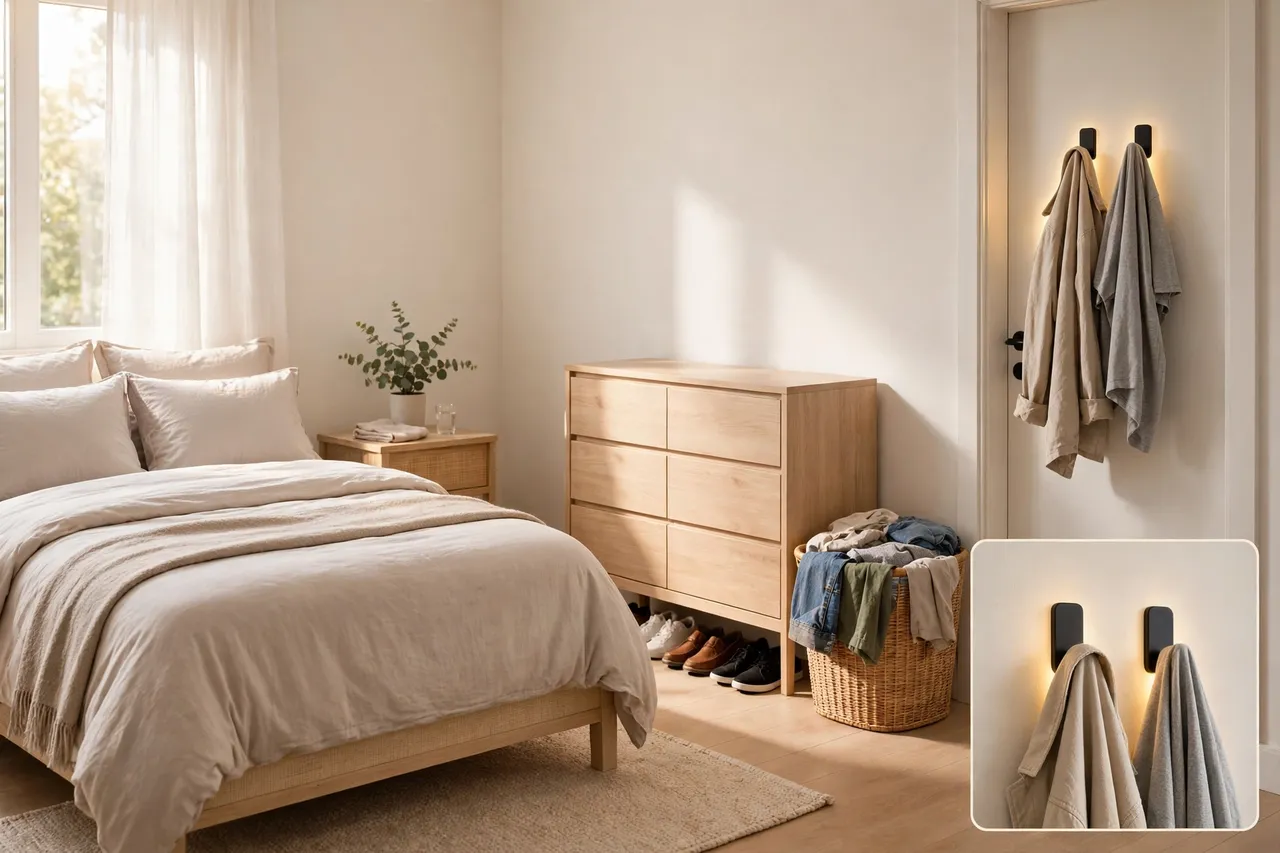
Give worn-once clothes a real home, too. A hook inside the closet door or a small basket near the dresser beats the chair every time. Dirty clothes go straight in the hamper, and worn-once clothes go on the hook. When the hook fills up, that is your sign to wear those items again or wash them.
Work or Reading Zone: Keep Work in One Corner
If you work, study, or read in your bedroom, give that activity one corner, not the whole room. A small desk or a reading chair with a basket for supplies works well. At the end of the work session, close the notebook, put pens back in the basket, and coil the charger. That small close-down step keeps work from spreading across the bed and the dresser.
Keep this zone near an outlet and good light, so you do not drag chargers and lamps across the room. One charger that lives at the desk beats three chargers that wander from nightstand to dresser to floor.
Organize Your Closet Around What You Actually Wear
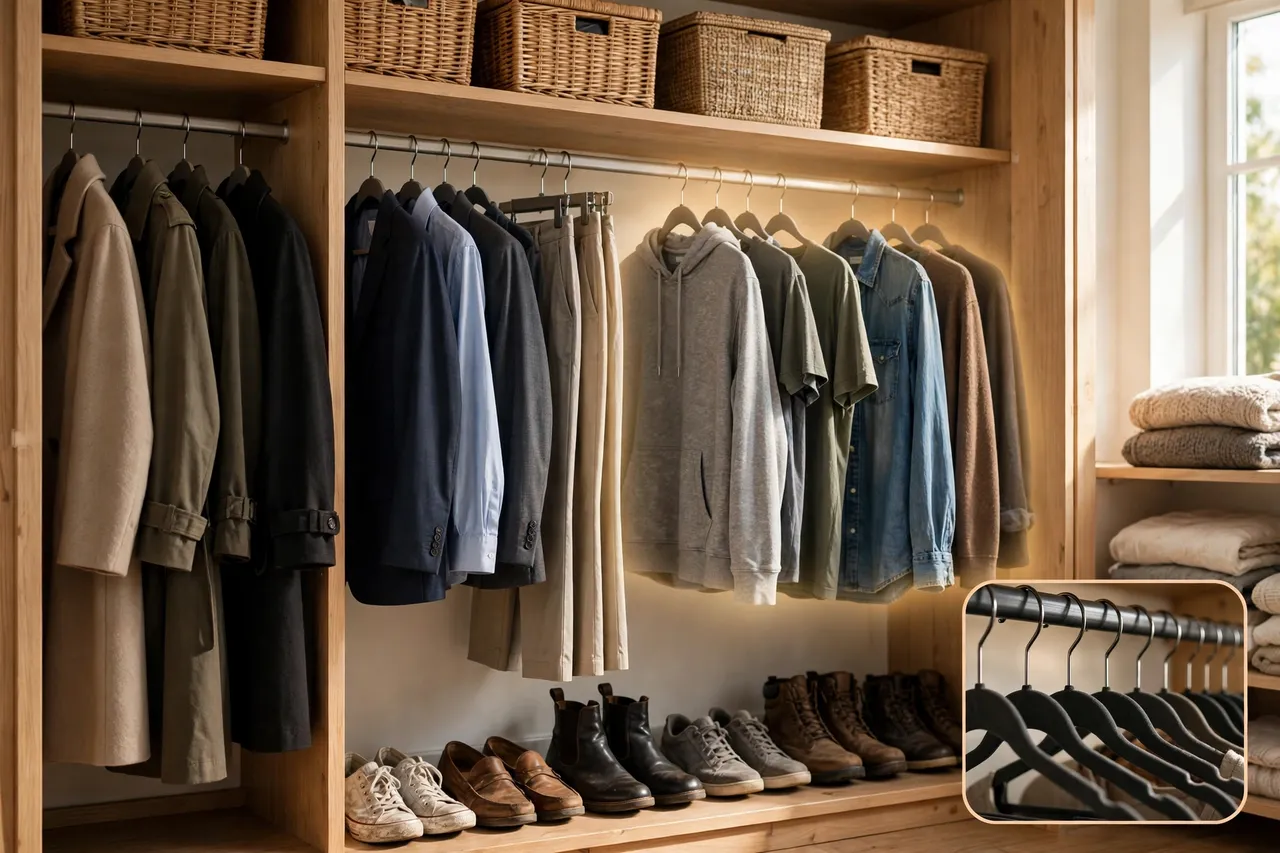
Start at the top of the closet and work down. Take out off-season clothes and store them in labeled bins on a high shelf or under the bed. Keep the clothes you wear most at eye level, where you can reach them without digging.
Group clothes the way you get dressed: work clothes together, casual clothes together, and dressy clothes together. Within each group, hang longer items on one side and shorter items on the other, so you can see what you own at a glance. Matching slim hangers help, because bulky mixed hangers eat rod space and make the closet look full even when it is not.
Use the floor of the closet for shoes, not for loose piles. A low rack, a row of bins, or a shoe shelf keeps pairs together and keeps the closet floor clear. Put the shoes you wear most at the front, and move rarely worn pairs to the back or into a bin.
Check the top shelf last, because that is where forgotten items hide. If you find a box you have not opened in a year, open it before you put it back. Keep what you still want, and let the rest go. A closet only stays organized when everything inside it earns its place.
Make Your Drawers Easy to Use
Drawers fail when they hold a mixed pile. You open a drawer, dig for one shirt, and the whole drawer turns into a mess again. Dividers fix that, because they turn one big space into small homes for small groups.
Sort each drawer by one idea: socks in one section, underwear in another, workout clothes in another. Fold clothes so you can see each item from above, instead of stacking them in a tall pile where the bottom items never get worn. Roll soft items like T-shirts if that helps you see them better, and keep the fold style the same within a drawer so it stays neat.
Give the top dresser drawer to the items you reach for every day, and give lower drawers to items you use less often. Keep one small tray or section for accessories you wear daily, such as a watch or a favorite pair of earrings, so they never scatter across the dresser top.
Once a month, pull out one drawer and do a fast check. Toss socks with no match, retire worn-out underwear, and move any item that drifted into the wrong drawer back to its home. A five-minute drawer check beats a full drawer rescue every time.
Tame Your Nightstand in Ten Minutes
The nightstand is the smallest surface in the bedroom, and it collects the most clutter. It sits right where you drop things when you are tired, so it needs the strictest rule in the room: only nightly essentials stay on top.
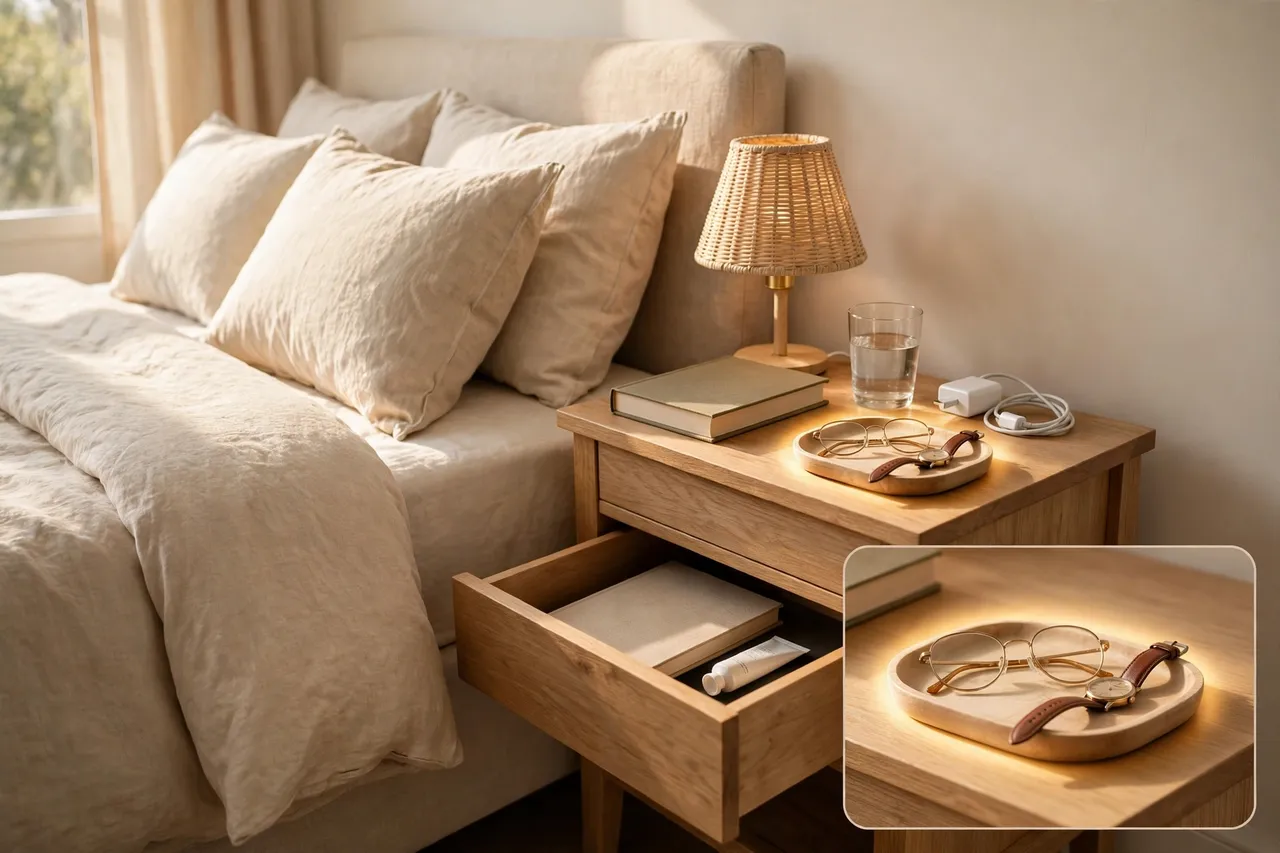
Empty the surface and the drawer completely. Wipe both down, then put back only what you truly use at night. A good nightstand top holds a lamp, a book, a glass of water, and a phone charger. A small tray can hold glasses, lip balm, and a watch without letting them spread.
Use the drawer for the next tier of items: chargers you use often, a notebook, hand cream, and any medicine you need at night. Put old receipts, dead cables, dried-out pens, and random gadgets in the trash or in their real homes. If your nightstand has no drawer, a small basket beside the bed can hold the same items.
End with a one-in, one-out rule for the nightstand. When a new book, gadget, or bottle arrives, an old one leaves. That single rule stops the nightstand from slowly turning back into a junk drawer with a lamp on top.
Use Hidden and Vertical Space
After the closet, drawers, and nightstand are in order, look for space you already own but never use. The best bedroom storage is often hiding in plain sight: under the bed, on the walls, and behind the door.
Under the Bed: Store the Bulky, Rarely Used Items
Under-bed space suits flat, labeled bins for spare bedding, off-season clothes, and extra pillows. Choose low bins that slide out easily, and label each one, so you never have to pull out four bins to find one blanket. Keep daily clothes out of under-bed bins, because items you need every day should never hide in the hardest spot to reach.
Before you load bins under the bed, check the space first. Measure the clearance, keep bins off damp floors, and leave room to slide each bin out without moving the whole bed. If your bed sits too low for bins, bed risers can add clearance, but check that the bed still feels steady and safe before you sleep on it.
Small-Bedroom Tricks: Go Up, Not Out
In a small bedroom, the same system still works, but the walls do more of the work. Add hooks behind the door for robes and bags, a shelf above the dresser for books, and a tall, slim dresser instead of a wide one. A storage bench at the foot of the bed can hold extra blankets and give you a place to sit while you put on shoes. For more renter-friendly small-space ideas, see our guide to Christmas decor for an apartment, which uses the same small-room thinking for a different season.
Keep walkways clear, even when space feels tight. Leave a path to the door and to the closet, and do not block a window you might need in an emergency. The U.S. Fire Administration advises every home to have an escape plan with two ways out of each room, so never let storage block a door or a window.
Move Heavy Furniture Safely
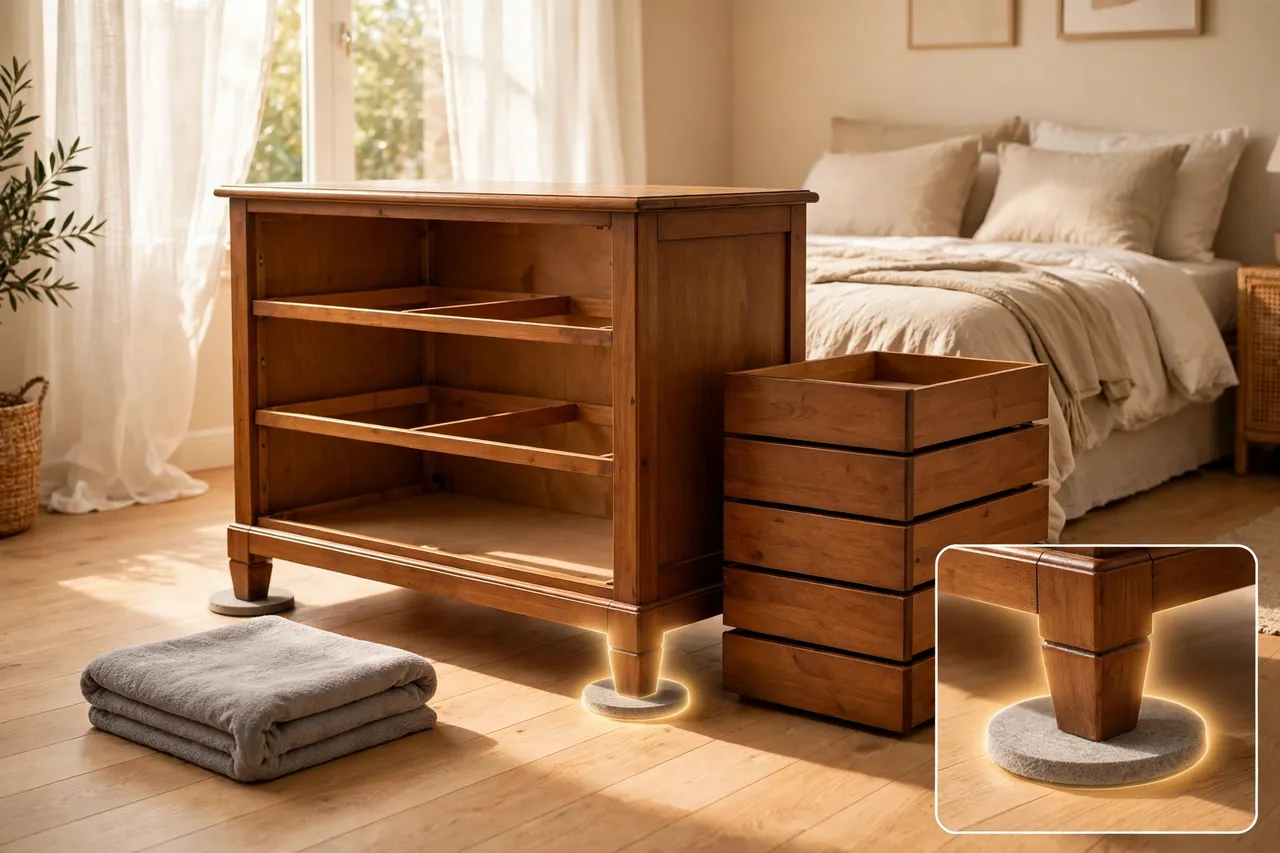
Organizing sometimes means moving a dresser, a bed frame, or a bookshelf to a better spot. Stop before you lift anything heavy, and plan the move first. Clear the path, remove drawers and loose items to make the piece lighter, and ask another adult to help with anything you cannot move on your own.
Slide heavy pieces instead of lifting them when you can, and protect your floors with sliders or a folded towel. Never climb on a dresser or a bookshelf to reach a high shelf, and never let a child climb on furniture while you work. If a piece feels unstable, top-heavy, or too heavy to control, leave it in place and ask a qualified person for help.
Before you mount a shelf, a wall hook rail, or a wall-mounted desk, check what sits behind the wall and use hardware rated for the weight. If you are unsure about studs, wall material, or the weight limit, ask a qualified handyperson instead of guessing. A shelf that falls at night is worse than a shelf you never hung.
The U.S. Consumer Product Safety Commission (CPSC) advises anchoring furniture such as dressers and bookcases to the wall, because a piece a child climbs on can tip forward. Anchor tall dressers and bookshelves, keep heavy items in low drawers, and keep tempting items such as toys and remotes off high shelves where a child might climb to reach them.
Build a Weekly Reset That Takes Ten Minutes
A bedroom does not stay organized on its own. It stays organized because someone resets it on a regular rhythm. The good news: that rhythm can be short, if you do it every week instead of waiting for a full rescue.
Pick one day each week for your reset, and set a ten-minute timer. Work in the same order every time, so you never have to think about where to start. A simple weekly reset looks like this:
- Put dirty clothes in the hamper and hang worn-once clothes on their hook.
- Clear the nightstand and the dresser top, and return stray items to their zones.
- Put shoes away, and clear the floor and the path to the door.
- Fold or hang any clean clothes that landed on the bed or the chair.
- Check one drawer or one closet section, and fix anything that drifted.
- Change the bedding if it is laundry day, and straighten the bed.
Pair the weekly reset with a monthly and seasonal check. Once a month, scan the closet for clothes you stopped wearing, and check under the bed for bins you no longer need. Once a season, swap off-season clothes and bedding, and use that swap as a natural moment to declutter. Seasonal items need good storage of their own: our guide to Christmas ornament storage boxes and our guide on how to store Christmas lights show the same label-and-bin habit applied to holiday items that only come out once a year.
Mistakes That Make Bedrooms Messy Again
Most bedrooms slide back into mess for the same few reasons. Watch for these mistakes, and fix the system behind them instead of just cleaning up after them.
- Buying bins before decluttering. Bins store clutter; they do not remove it. Declutter first, then buy only the bins your sorted items actually need.
- Skipping the landing spot. Without a hook or bin for worn-once clothes, the chair becomes the landing spot by default.
- Storing daily items in hard-to-reach places. If you must move three bins to reach your favorite sweater, you will stop putting it away.
- Letting flat surfaces fill up. The bed, the dresser top, and the nightstand need a clear rule: only daily items stay, and everything else moves on.
- Waiting for a big clean. A ten-minute weekly reset beats a three-hour rescue, because small messes are easy and big messes feel hopeless.
- Keeping clothes you never wear in prime space. Prime closet and drawer space belongs to clothes you wear now, not to clothes you might wear someday.
When a system keeps failing, change the system, not yourself. Move the hamper closer to where you undress. Swap a closed bin for an open basket if you never open the lid. Move the charger to the spot where you actually charge your phone. The best system is the one you will use on a tired night, not the one that looks best in a photo.
Related Guides
If you want to keep the habit going beyond the bedroom, these guides use the same store-it-right thinking for the rest of the year: Christmas ornament storage boxes, how to store Christmas lights, and Christmas decor for an apartment.
Frequently Asked Questions
Where should I start when organizing a bedroom?
Start with one small, visible area, such as the nightstand or the dresser top, and set a short timer. Clear it completely, put back only daily items, and then move to the floor and the closet. Small wins build momentum, and a clear surface makes the whole room feel easier to finish.
How do I organize a bedroom without buying a lot of storage?
Declutter first, then use the storage you already own: closet shelves, dresser drawers, and the space under the bed. Measure each space before you buy anything, and add only one organizer at a time for a real problem, such as drawer dividers for mixed-up clothes.
What is the best storage for a small bedroom?
The best storage for a small bedroom uses walls and hidden space: hooks behind the door, shelves above the dresser, a tall slim dresser, and flat labeled bins under the bed. Keep daily items easy to reach, and move off-season clothes and spare bedding to the hardest-to-reach spots.
How do I keep my bedroom organized after I clean it?
Run a ten-minute weekly reset in the same order every week: hamper, surfaces, floor, clean laundry, and one drawer or closet section. Add a monthly drawer check and a seasonal swap for off-season clothes. A short, regular rhythm beats waiting until the room needs a full rescue again.
What should I do if I do not have a closet?
Be pickier about what stays in the room, and build a small dress zone from what you own: a clothing rack, a dresser, under-bed bins, and wall hooks. Keep daily clothes at easy reach, move off-season items under the bed, and give worn-once clothes a hook so they never land on a chair.
A Calmer Bedroom Starts With One Zone
You do not need a perfect bedroom, and you do not need a full weekend to get one. Pick one zone today, give everything in it a home, and run your ten-minute reset each week. That is how a bedroom stays organized: not by one big clean, but by small, steady habits that make tidying the easy choice.
Start tonight with the nightstand. Clear it, keep only what you use at night, and notice how much calmer the room feels in the morning. Then take the same simple habit to the next zone, one zone at a time.


