
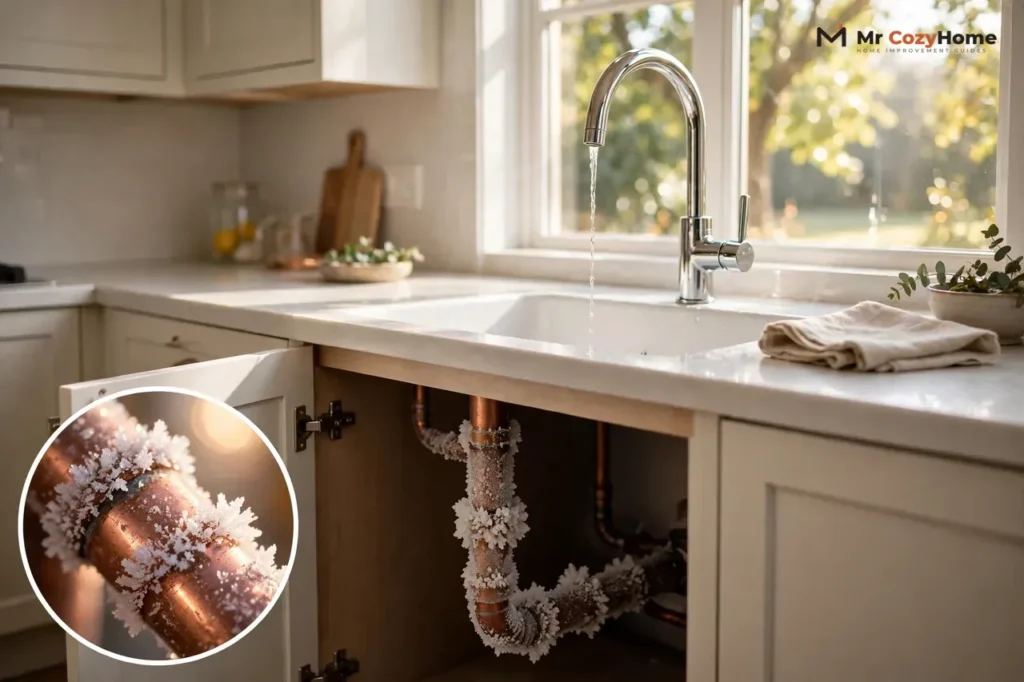
You know your pipes are frozen when you turn on a faucet in freezing weather and get little or no water, while other faucets in the house still work. Frost or a bulge on a visible pipe, banging or gurgling sounds, a bad smell from a drain, and a toilet that will not refill all point the same way. If you spot one of these signs after a cold night, treat the pipe as frozen until you prove otherwise, because a frozen pipe can burst as it thaws.
So how do you know if pipes are frozen for sure, and not just acting up for some other reason? Work through the signs below one at a time, then run the five-minute faucet test. By the end, you will know whether you have a frozen pipe, where it most likely sits, and what to do next. Once you have confirmed it, here is how to unfreeze frozen pipes.
The 7 Signs Your Pipes Are Frozen
No single sign proves a freeze on its own. Two or three signs together, on a morning after freezing weather, make a frozen pipe very likely. Read each sign, then check your own home against it.
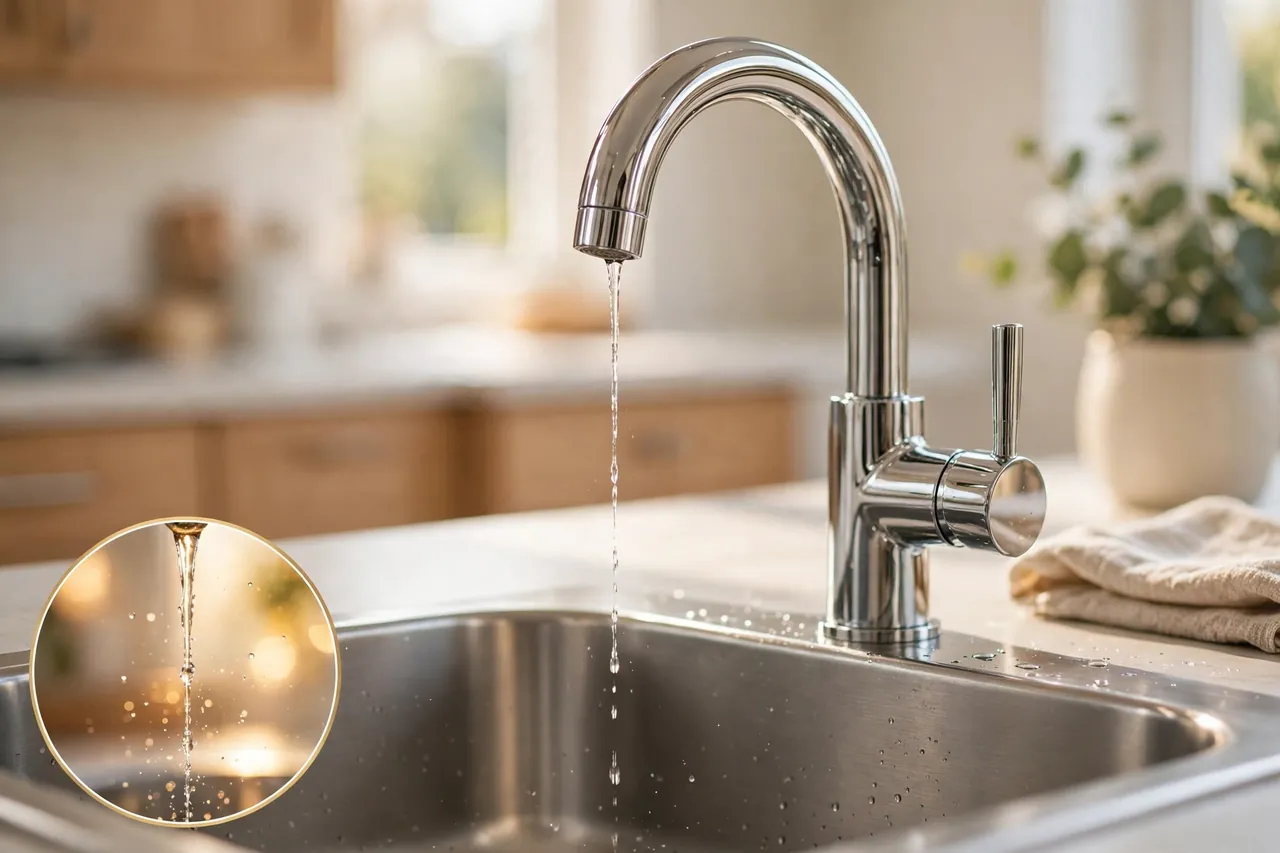
1. Little or No Water From a Faucet
This is the sign most people notice first. You turn on the kitchen faucet to make coffee, and nothing comes out.
Or the shower gives you a weak dribble instead of a normal stream. Ice inside the pipe blocks the water, so only a trickle gets through, or nothing at all.
The American Red Cross puts it plainly in its frozen-pipe guidance: if you turn on a faucet and only a trickle comes out, suspect a frozen pipe. The likeliest spots are pipes that run against exterior walls and the place where your water service enters your home through the foundation. That single check, a trickle on a freezing morning, is the strongest clue you will get.
2. Frost on an Exposed Pipe
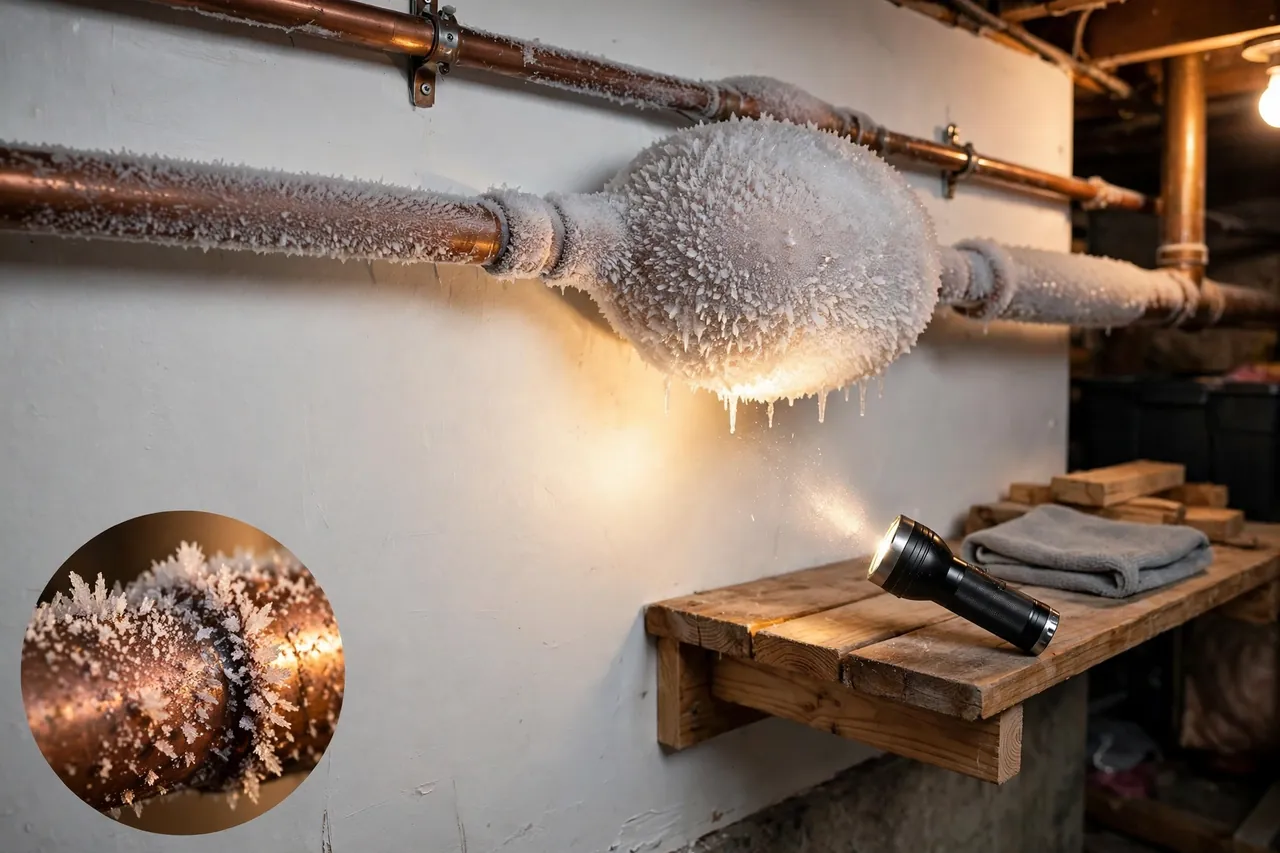
Walk to the pipes you can see, under sinks, in the basement, in the crawl space, or in the garage. If you spot frost or a thin coat of ice on the outside of a pipe, ice is almost certainly inside it too. You may also see condensation, small drops of water that gather on a cold pipe, or a little pool of water on the floor below it.
Frost is a direct, visible sign, and it tells you exactly where the freeze sits. Feel along the pipe with your hand as well. A frozen section feels far colder than the pipe around it, and the cold spot often marks the edge of the ice blockage.
3. A Bulge, Crack, or Warped Section
Water grows as it freezes, and that growth pushes hard against the pipe walls. When the pressure gets too high, the pipe can swell into a visible bulge, bend out of shape, or split open with a small crack. A bulge looks a little like a snake that just swallowed a meal, wider in one spot than everywhere else.
Treat a bulge or a crack as urgent. The pipe may already be split, and the leak may only show itself once the ice melts and water starts moving again.
If you see a bulge or a crack, or water leaking from a pipe, skip the rest of the checks and shut off your main water valve. Then read what happens when pipes freeze so you know what damage to look for next.
4. Banging, Gurgling, or Whistling Sounds
Turn on a faucet and listen. If the pipes bang, clank, gurgle, or whistle while water runs, ice may be moving inside them, or water may be forcing its way past a partial blockage. A partial freeze still lets some water through, so do not dismiss the noise just because water still flows.
These sounds matter because a partial freeze can turn into a full blockage within hours. If the noise started on a freezing night and you have never heard it before, count it as a real sign, not background plumbing noise.
5. A Bad Smell From a Drain or Faucet
Ice can block more than water. When a pipe freezes, smells from food, waste, and grease that would normally drain away get trapped, and they can push back up through a sink, a toilet, or a faucet. A sewage smell from a faucet often points to a freezing exterior sewer line.
A smell on its own does not prove a freeze, since a dry drain trap can smell too. But a new bad smell that shows up with cold weather and low water flow is a strong supporting clue.
Run water in the smelly fixture for a few seconds. If the smell stays and the flow is weak, the two signs together point to ice.
6. A Toilet That Will Not Refill or Flush Right
Flush the toilet and watch the tank. If the tank refills very slowly, or not at all, the cold-water line that feeds it may be frozen. A weak flush on a freezing morning is the same clue in a different fixture.
Check the toilet together with a nearby sink. If the sink also trickles, the freeze most likely sits in a pipe that serves that whole bathroom. If the sink runs fine and only the toilet struggles, the frozen section is probably in the short line that feeds the toilet itself.
7. Cold Spots, Damp Patches, or Stains on a Wall or Ceiling
A frozen pipe inside a wall leaves marks you can read from the room. Press your palm against the wall where pipes run, usually along an exterior wall or below a bathroom. A patch that feels much colder than the wall around it can mark the frozen section behind the drywall.
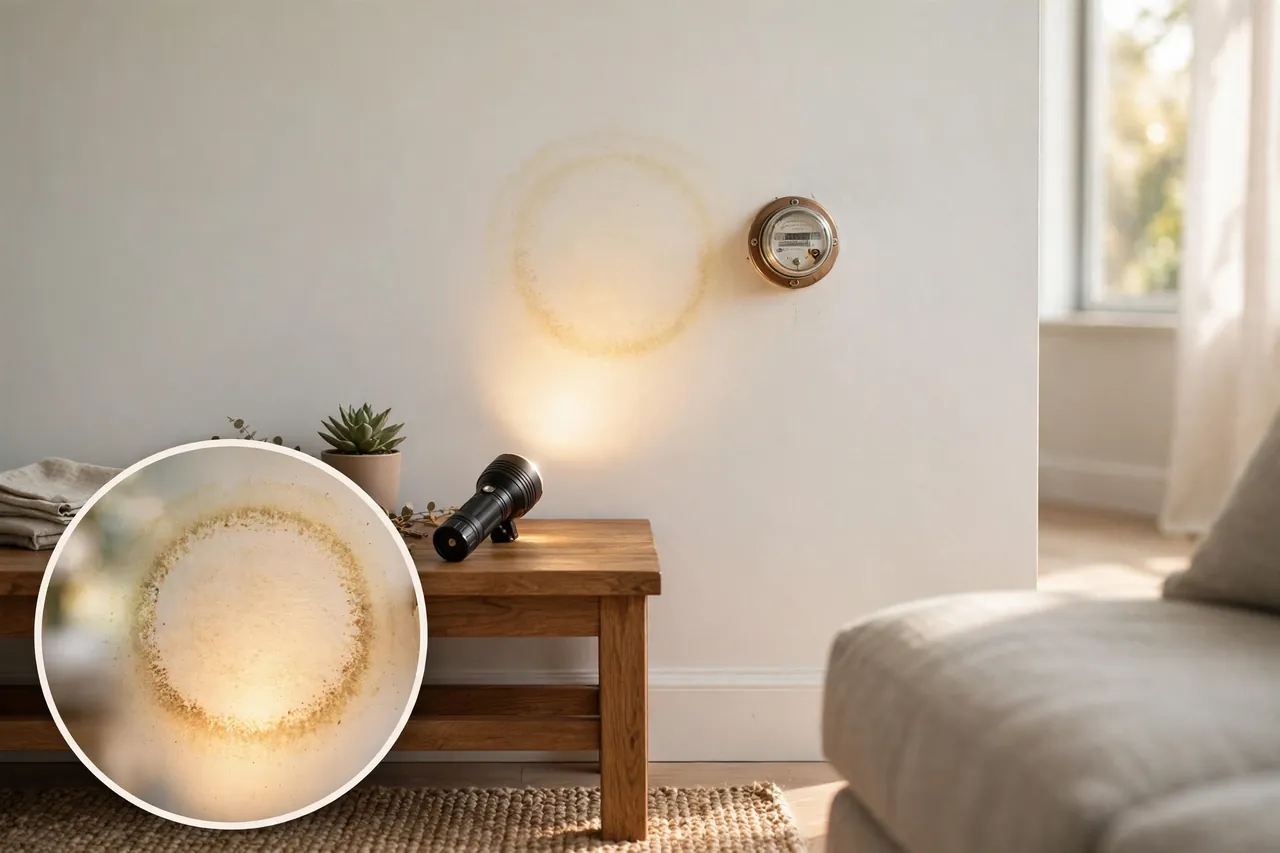
Look for damp patches, bubbling paint, sagging drywall, or yellow-brown rings on a wall or ceiling. These marks can mean a pipe has already cracked and water is leaking behind the surface.
A stain may show up several feet below the actual break, because water runs down before it soaks through. If you find a new stain on a freezing morning, treat it as urgent and call a plumber.
Check Faucet by Faucet: A 5-Minute Test
The fastest way to confirm frozen pipes is to test every faucet in the house, one at a time. The pattern tells you where the freeze sits before you ever look at a pipe. Grab a notepad and work through these steps.
- Turn on the cold water at the kitchen sink first. Note whether the flow is normal, a trickle, or nothing at all.
- Test the bathroom sink, the bathtub or shower, and the toilet in the same bathroom. Write down which ones run and which ones do not.
- Test the fixtures on the other side of the house, and on each floor if you have more than one. Note the same thing for each one.
- Test the hot water at one faucet that still runs cold. If the cold water flows but the hot water does not, the freeze sits in the hot-water line, often near the water heater.
- Compare your notes. If only one fixture is dead, the freeze sits in the pipe that feeds that fixture. If a whole bathroom or a whole side of the house is dead, the freeze sits farther back, near the point where the main line splits off to that area. If no faucet in the house works at all, the frozen section is most likely near your main water line, where it enters the home.
This test also rules out the most common false alarm. If every faucet in the house is dead, the cause may be a frozen main line, but it may also be a shut water main or a problem with your water supply.
Check with a neighbor. If their water runs fine and yours does not, the problem sits inside your home, and a frozen pipe is the likeliest cause on a freezing day.
Signs Checklist: What Each Sign Means and What to Do Next
Use this table as a quick reference while you check your home. Find the sign you spotted, read what it usually means, and follow the next step beside it.
| Sign you spotted | What it usually means | Your next step |
|---|---|---|
| Little or no water from a faucet | Ice blocks the pipe that feeds that faucet | Test the other faucets to find how far the freeze reaches |
| Only a trickle when the tap is wide open | A partial freeze still lets some water through | Keep the faucet open and check for other signs |
| Frost or condensation on a pipe | Ice is inside that section of pipe | Feel along the pipe to find the coldest spot |
| Bulge, crack, or warped pipe | Ice pressure has bent or split the pipe | Shut off the main water valve and call a plumber |
| Banging, gurgling, or whistling | Water forces its way past a partial ice blockage | Check the flow at nearby faucets right away |
| Bad smell from a drain or faucet | Ice traps odors that would normally drain away | Check the water flow at that fixture |
| Toilet will not refill or flush right | The cold-water line to the toilet is blocked | Test the sink in the same bathroom |
| Cold spot, damp patch, or stain on a wall | A pipe may be frozen or already leaking inside the wall | Call a plumber and watch for spreading dampness |
Two or more rows that match your home mean you should act now, not wait for warmer weather. A single weak sign, such as a faint smell with normal water flow, is worth a recheck in an hour, but do not ignore it if the cold continues.
How to Tell a Frozen Pipe From Other Problems
Not every water problem in winter is a frozen pipe. A frozen pipe looks a lot like several other problems, and the wrong guess can waste a day. Use these checks to rule out the other causes before you settle on a freeze.
No Water Anywhere in the House
If every faucet is dead, first check whether your main water valve is open. Someone may have shut it during earlier work, or a lever may have been bumped. Next, ask a neighbor whether their water works.
If the whole street is dry, the cause is a municipal outage or a frozen main in the street, not your indoor pipes. If your neighbors have water and you do not, and the night was below freezing, a frozen service line where it enters your home is the likeliest cause.
Low Pressure at Every Faucet
Low pressure everywhere, on a mild day as well as a cold one, points away from a freeze. A freeze usually hits one line or one area, not the whole house at once.
Whole-house low pressure more often means a partly closed main valve, a failing pressure regulator, or sediment in the main line. But if the pressure dropped suddenly overnight, when the temperature fell below freezing, ice is still a strong suspect.
Only the Hot Water Is Gone
Cold water that flows fine while hot water gives nothing usually means the freeze sits in the hot-water line, often in the attic or along the run to the water heater, where hot lines cool fast once the heater stops pushing water through them. It can also mean a water heater problem, so check the heater first. If the heater runs, shows no error, and feels warm, the line feeding it or leaving it has most likely frozen.
One Fixture Acts Up on a Warm Day
A single slow faucet in mild weather is rarely a freeze. Unscrew the aerator, the small screen at the tip of the faucet, and clean out any grit.
A clogged aerator, a worn washer, or a partly closed shutoff valve under the sink causes the same trickle without any ice. If the problem appears only when the temperature drops below freezing, though, ice is back at the top of the list.
Where Frozen Pipes Hide
Knowing where to look saves you from tearing the house apart. The American Red Cross notes that the pipes that freeze most often are outdoor lines, pipes in unheated interior areas such as basements, crawl spaces, attics, and garages, pipes inside kitchen cabinets, and pipes that run against exterior walls with little or no insulation. Start your search in those places.
Pipes You Can See and Touch
Open the cabinet doors under kitchen and bathroom sinks on exterior walls and look at the pipes inside. Check the basement and the crawl space with a flashlight, and look at the pipes in the attic and the garage.
Feel along each pipe with your hand. A frozen section feels sharply colder than the rest, and you may feel frost, a bulge, or a rough patch of ice on the outside.
Do not climb into a tight attic or crawl space if you feel unsure on a ladder or in the dark. A flashlight check from the opening, plus the faucet test, already tells you a lot. If you cannot reach a pipe safely, that alone is a good reason to call a plumber.
Pipes You Cannot See, Inside Walls
Most frozen pipes hide inside walls, where you cannot see frost or feel the pipe. Read the wall instead.
Press your palm along exterior walls, below bathrooms, and around the spot where the main line enters the house. A cold patch, a faint whistling sound behind the drywall when all faucets are closed, or the sound of running water when nothing runs can all point to a hidden freeze or a hidden leak.
Try your water meter as a second check. Turn off every faucet and every water-using appliance, then look at the meter.
If the dial still moves, water is escaping somewhere, and a pipe may have cracked as it froze. Note the reading, wait fifteen minutes without using any water, and look again. A higher reading confirms a leak, and that is a call-a-plumber moment.
What to Do the Moment You Confirm Frozen Pipes
Once the signs line up, act in this order. These first steps protect your home while you decide whether you can thaw the pipe yourself or need a plumber.
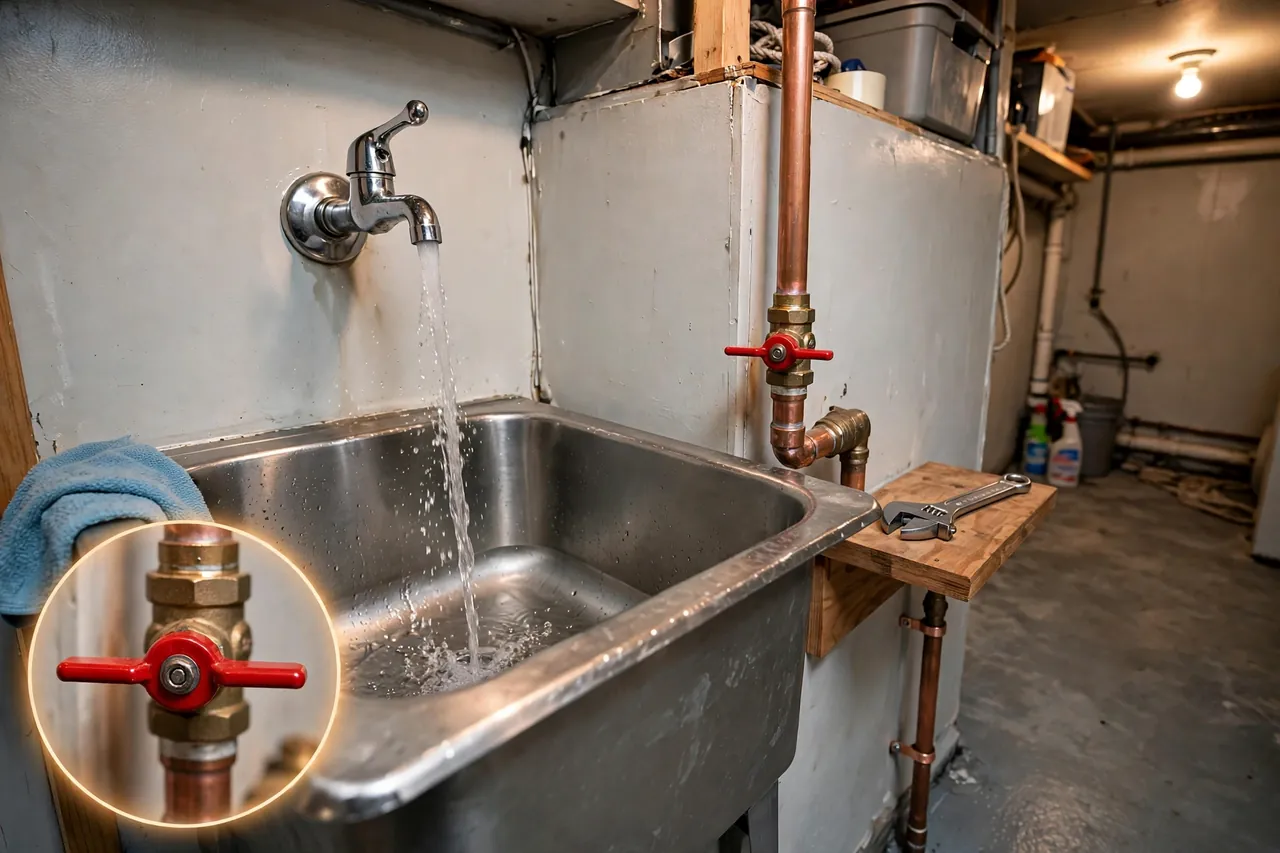
- Open the faucet that the frozen pipe feeds, and leave it open. As the ice melts, water will start to flow, and the open faucet gives that water somewhere to go. The American Red Cross gives this as its first thawing step, because running water through the pipe helps melt the ice, and an open faucet relieves pressure that can split the pipe.
- Find your main water shutoff valve now, before you need it in a hurry, and make sure you know how to turn it. If you spot a bulge, a crack, or any leaking water, shut the water off at once. Shutting off the main valve limits how much water can escape if a pipe bursts while it thaws.
- Look for damage before you add any heat. Check the frozen section and the pipes near it for bulges, cracks, and puddles. If you find any, stop here and call a licensed plumber. Do not try to thaw a pipe that already looks split.
- If the frozen section is visible, reachable, and undamaged, you can warm it gently. The American Red Cross lists safe options: an electric heating pad wrapped around the pipe, an electric hair dryer, a portable space heater kept away from anything flammable, or towels soaked in hot water wrapped around the pipe. Start at the faucet end and work back toward the blockage, and keep warming until full water pressure returns.
- Stay with the pipe while you warm it, and check the other faucets fed by the same line. If you cannot find the frozen section, cannot reach it, or the pipe will not thaw, stop and call a licensed plumber, as the American Red Cross advises.
Never use an open flame to thaw a pipe. The American Red Cross warns against a blowtorch, a kerosene or propane heater, a charcoal stove, or any other open-flame device, because a blowtorch can make the water in a frozen pipe boil and cause the pipe to explode, and any open flame in a home can start a fire. This warning comes first for a reason: never warm a pipe with a flame, and never leave a space heater running unattended.
Some plumbers take a more cautious line than the Red Cross and advise letting pipes thaw on their own as the temperature rises, since rushing water through a thawing pipe can also break it. If you feel unsure at any point, waiting with the faucet open and the shutoff valve located, then calling a plumber, is the safer choice. To plan that wait, read whether frozen pipes thaw on their own and how long it takes for pipes to unfreeze.
When to Call a Plumber Right Away
Most frozen pipes give you time to check and act. These signs do not. Call a licensed plumber at once if you notice any of them.
- You see a bulge, a crack, or water leaking from any pipe.
- You hear a pop or a bang, then water starts running where it should not.
- Water pools on a floor, drips from a ceiling, or soaks into a wall.
- You cannot find the frozen section, or you cannot reach it safely.
- You warmed a visible pipe and full water pressure still does not return.
- Your water meter keeps moving with every faucet turned off.
- The freeze sits inside a wall, and you would need to open the wall to reach it.
Plumbers get very busy during a cold snap, so get on a waiting list as soon as you can if you need one. While you wait, keep the affected faucet open, keep the area clear of anything water could ruin, and know where your main shutoff valve sits.
Related Guides
What Happens When Pipes Freeze · How Long Does It Take for Pipes to Unfreeze? · Will Frozen Pipes Thaw on Their Own?
- Flood Sensors: Catch a Leak Before It Becomes a Flood — place sensors near pipes that freeze, so a burst alerts you before the water spreads.
- WiFi Water Leak Detector: Phone Alerts, Smart Home Control, and What Happens When the WiFi Drops — a detector that warns your phone the moment water appears under a sink or near a pipe.
Frequently Asked Questions
How do I know if my pipes are frozen?
The clearest signs are little or no water from a faucet while others still work, frost or a bulge on a visible pipe, banging or whistling noises when you run water, and odd odors from a drain. One or two of these signs after a cold night means you should treat the pipe as frozen and run the faucet test.
At what temperature do pipes actually freeze?
Water freezes at 32 degrees Fahrenheit, but indoor pipes usually need colder air to freeze. Pipes can freeze in as little as six to eight hours, and indoor pipes typically need 20 degrees Fahrenheit or lower, according to the International Code Council. Unprotected pipes freeze first, so check them after any night below freezing.
Can I thaw a frozen pipe myself?
Often yes, if you can see and reach the frozen section and it shows no bulge or crack. Keep the faucet open, then warm the pipe with a hair dryer, a heating pad, or hot towels, starting at the faucet end.
Never use an open flame. If you cannot find or reach it, stop and call a plumber.
Is a frozen pipe about to burst?
Not necessarily, but the risk is real. Ice expanding inside a pipe builds pressure that can crack it, and that crack often does not leak until the ice starts to melt. If you hear a pop, see water, or notice a bulge, shut off your main water valve at once and call a plumber.
Do frozen pipes always burst?
No, frozen pipes do not always burst. Ice blocks water from flowing, but a pipe only breaks when the pressure from the expanding ice passes what the pipe can hold.
Copper pipes break most easily when frozen, while PEX and PVC pipes often survive without bursting. Still, act fast, because you cannot tell from outside whether a pipe will hold.
A frozen pipe is a warning, not yet a disaster. Check your faucets one by one, look at the pipes you can reach, and act on what you find.
If the signs point to a freeze, open the faucet, find your shutoff valve, and warm the pipe gently or call a plumber. Catching it tonight beats mopping up a burst pipe tomorrow.
This guide helps you spot a frozen pipe, but it cannot replace a licensed plumber. If you see a bulge, a crack, or water where it should not be, shut off your main water valve and call a plumber. Homes, pipes, and local codes vary, so follow a professional’s advice for your own home.


