
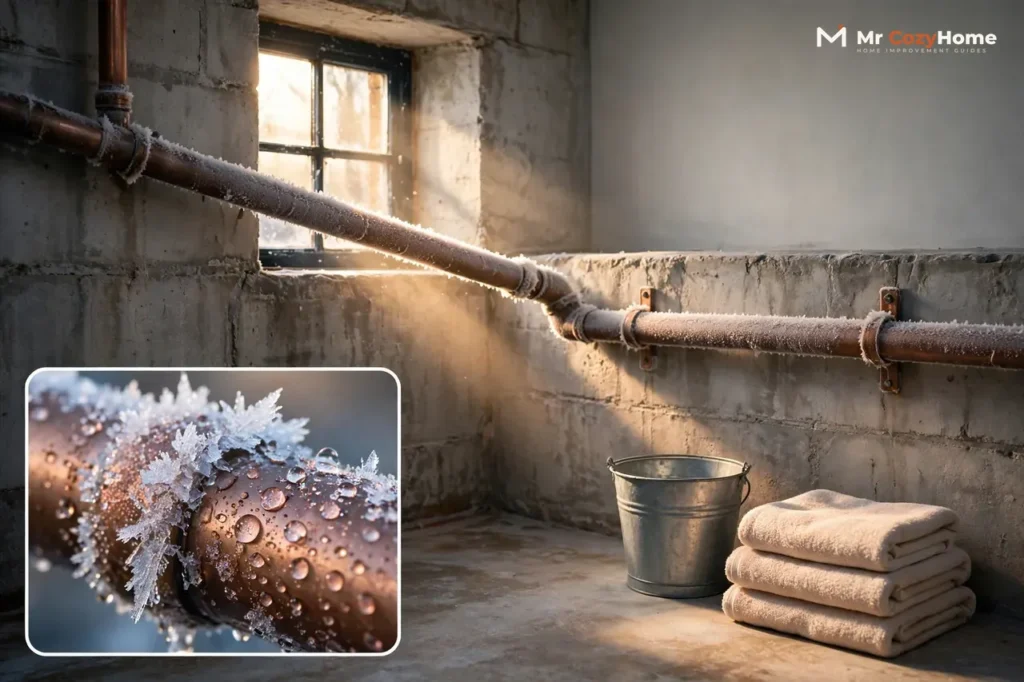
Yes, frozen pipes will thaw on their own once the air around them warms above freezing and stays there long enough for the heat to reach the ice. A frozen pipe can thaw on its own, and so can a single frozen pipe in one wall. But waiting is a gamble, because the thaw is when most burst pipes start to leak, and you cannot see the damage until the water starts to flow again.
So the real question is not whether your pipes will thaw. It is whether you can afford to wait for them to do it. If you decide not to wait, here is how to unfreeze frozen pipes safely. This guide walks you through that choice, step by step, so you can decide with confidence instead of guessing.
Will Frozen Pipes Thaw on Their Own?
Yes, they will, once the temperature rises above 32 degrees Fahrenheit and stays there. Ice melts when heat reaches it, and your pipes are no different. Warm air from your home, warmer weather outside, and water sitting on the warm side of the ice plug all work together to melt the blockage.
But “on their own” does not mean “soon” or “safely.” A pipe in a warm kitchen wall may start to thaw within hours of you turning the heat up. A pipe buried under a snowy yard may stay frozen for days or weeks, even after the air feels mild. Liberty Comfort Systems, a Minnesota plumbing and heating company, notes that frozen pipes left alone can take anywhere from a few hours to several days to thaw, and in a long cold snap, weeks or even months in a cold climate like Anoka, Minnesota.
The key point is simple: thawing needs steady warmth, not just one warm afternoon. If the temperature climbs above freezing for an hour and then drops again at night, the ice barely melts.
That slow, uneven thaw is also what makes waiting risky. Ice often melts first near a faucet or a warm room, while a second plug of ice still blocks the pipe further along. Water gets trapped between the two spots, pressure builds, and a weak joint or a cracked section gives way. Many homeowners first learn a pipe burst at the exact moment the thaw finishes.
What Has to Happen Before a Frozen Pipe Thaws
Three things must line up before a frozen pipe thaws on its own. If any one of them is missing, the ice stays put.
First, the air around the pipe must rise above 32 degrees Fahrenheit and stay there. A short warm spell is not enough. The warmth must last for several hours so it can soak through walls, floors, and insulation to reach the pipe.
Second, heat must be able to reach the ice. Pipes in open, heated rooms thaw fastest because warm air touches them directly. Pipes inside exterior walls, in crawl spaces, in attics, and in garages thaw much more slowly. The same insulation that shields a pipe from cold also slows warm air from reaching the ice, so a well-insulated wall can keep a pipe frozen long after the weather turns mild.
Third, the pipe needs a path for water to move. The American Red Cross advises keeping the faucet open while a pipe thaws, because running water helps melt the ice and gives the melting water somewhere to go. A closed faucet traps water behind the ice, and trapped water builds pressure.
Put together, this is why two homes on the same street can have very different waits. One home has a frozen pipe under a kitchen sink, with warm air all around it. The other has a frozen pipe in an unheated crawl space, wrapped in insulation, under a foot of snow. The first may thaw by dinner. The second may wait for spring.
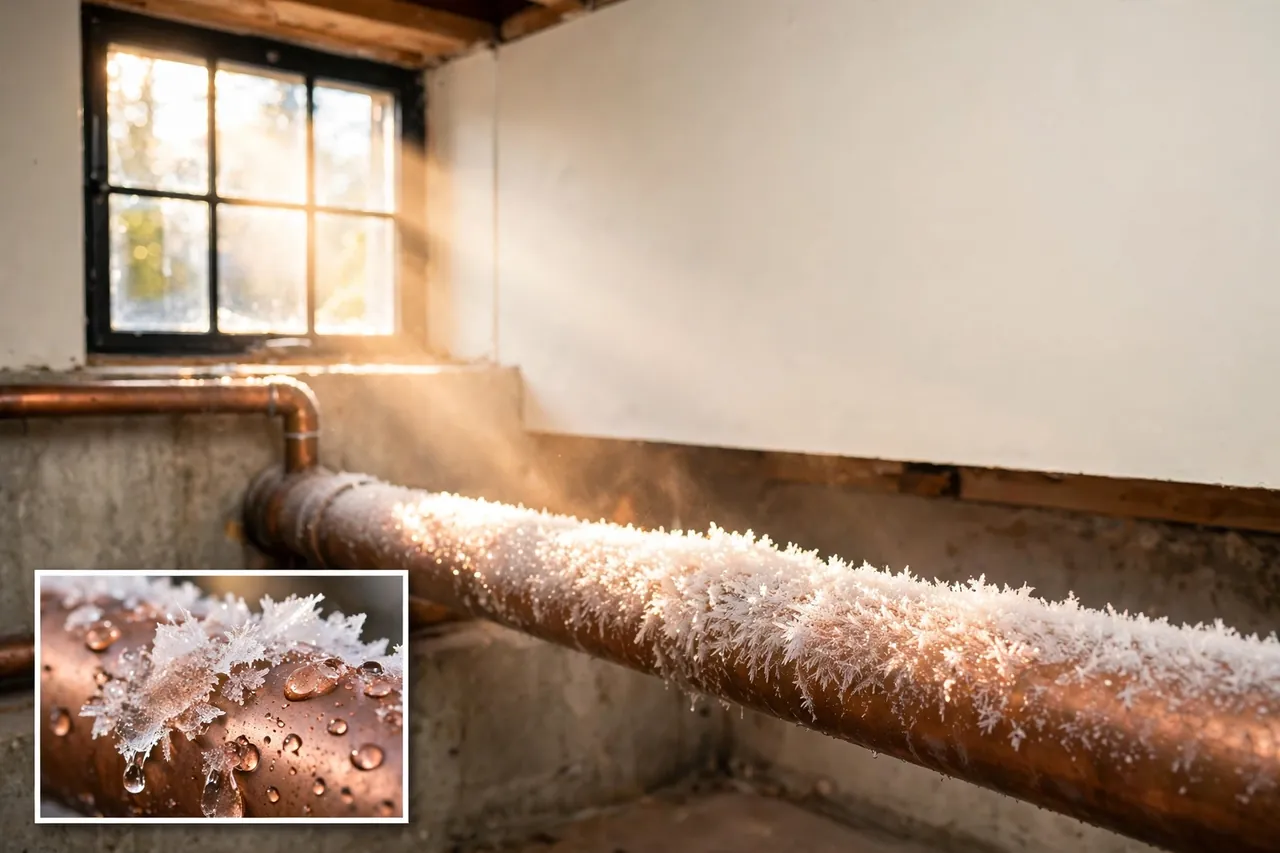
How Long Will You Wait?
There is no fixed clock for a natural thaw. The wait depends on where the pipe sits, how cold it got, and how long the warm weather lasts. The table below gives you a realistic sense of what to expect, based on guidance from plumbing companies that thaw pipes every winter.
Pipe location and what to expect
| Where the frozen pipe is | Natural thaw, roughly | What slows it down |
|---|---|---|
| Exposed pipe in a heated room | Hours, once you turn the heat up | Very cold snap, thick ice plug |
| Pipe in an interior wall | Hours to a day or two | Insulation, cold wall cavity |
| Pipe in an exterior wall | A day to several days | Cold air on the outside wall |
| Pipe in a crawl space, attic, or garage | Several days | Unheated space, drafts, insulation |
| Underground pipe under snow or ice | Days to weeks, sometimes longer | Frozen ground, snow cover, deep frost |
These are rough ranges, not promises. Mr. Rooter Plumbing puts it plainly: if you wait for your pipes to thaw naturally, it can take hours, days, or even weeks before the temperature outside rises enough to fully unfreeze them. And if the cold snap holds, the wait stretches longer with every freezing night.
Compare that with gentle, direct heat. ServPro notes that a frozen pipe warmed directly with a safe heat source can thaw in as little as 30 to 45 minutes, though hard-to-reach pipes can take several hours. That gap, minutes with help versus days without it, is the heart of the wait-or-act decision.
If you want the full timing picture, including what changes the clock most, read our guide on how long it takes for pipes to unfreeze.
Why Waiting Is Risky: What Can Go Wrong While You Wait
Waiting feels like the safe, hands-off choice. In truth, it is often the riskiest choice, because the danger grows quietly while nothing seems to happen. Here is what can go wrong.
The pipe bursts during the thaw, not during the freeze
Most people picture a pipe bursting the moment water freezes. That can happen, but the bigger danger comes as the ice melts. Water expands by about 9 percent when it turns to ice, and that ice plugs the pipe and traps liquid water between the plug and the nearest closed faucet. Pressure builds in that trapped pocket, and it can climb far past what a normal pipe can hold. Liberty Comfort Systems notes that the pressure from fully frozen water can reach as high as 40,000 PSI, which is far more than any home pipe is built to take.
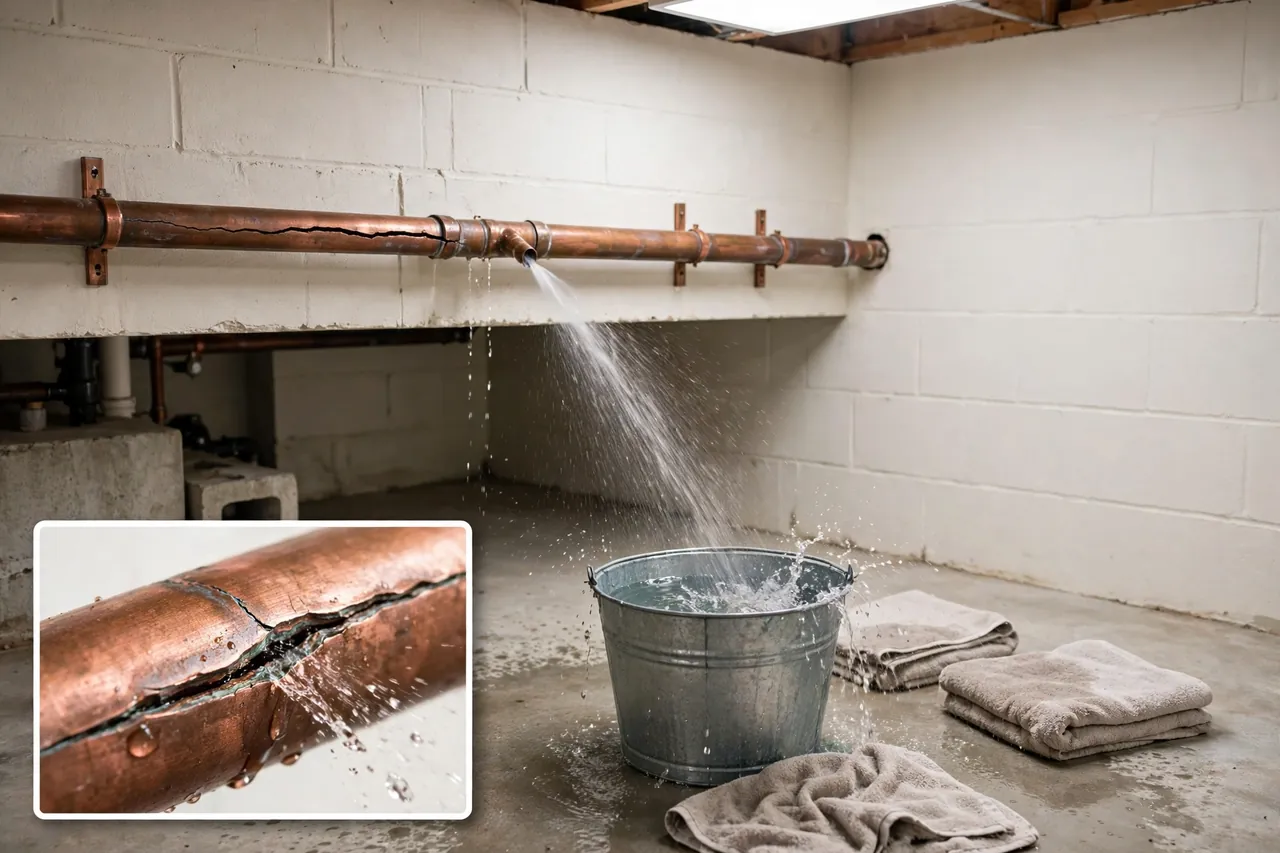
When the ice finally gives way, full water pressure rushes back into a pipe that ice has already stressed. A crack that the ice itself sealed shut now opens, and water pours out. A burst pipe can release hundreds of gallons of water into your home within hours, soaking walls, floors, insulation, and your belongings.
A hidden leak runs while you are not looking
A burst pipe does not always spray water where you can see it. It may leak inside a wall, above a ceiling, or under a floor. You may not notice it until a stain appears, a ceiling sags, or a musty smell shows up days later. By then, the water has already done its damage, and damp wood and drywall can grow mold.
This is the cruel part of waiting: the pipe looks fine while it is frozen, because the ice blocks the leak. The leak only shows itself after the thaw.
You live without water the whole time
While you wait, the tap stays dry. You cannot shower, wash dishes, flush properly, or run the washing machine. A wait of a few hours is an annoyance. A wait of several days is a real disruption, and it can force you to buy bottled water, eat out, or even leave the house.
The freeze can spread to other pipes
The American Red Cross warns that if one pipe freezes, others may freeze too, so you should check all the other faucets in your home. While you wait on one frozen pipe, a second pipe in a colder spot may freeze as well.
For a fuller picture of the damage a freeze can cause, see our guide on what happens when pipes freeze.
Wait or Act? Your Decision Guide
Use this guide to make the call. Find your situation in the table, then follow the advice in the last column. When in doubt, act.
Wait or act decision guide
| Your situation | Wait or act | Why |
|---|---|---|
| Warm weather is back, pipe is in a heated room, no leaks | Wait, but watch it | Heat reaches the pipe fast, risk is low |
| Pipe is in an exterior wall or cold space | Act | Thaw will take days, risk climbs daily |
| Temperature stays below freezing | Act | Nothing will thaw until the weather changes |
| You see frost, a bulge, or a crack on a pipe | Act now | The pipe may already be damaged |
| You see or hear any water leaking | Act now, shut off water | A burst is already happening |
| No water at any faucet in the house | Act now, call a plumber | The freeze may be at the main line |
| You cannot find or reach the frozen section | Act, call a plumber | Hidden pipes need pro tools |
| You will be away from home | Act, do not leave it | A burst while you are gone floods unseen |
The short version of the rule is this: wait only when the thaw is close, the pipe is easy to reach and watch, and you see no sign of damage. In every other case, act. Waiting saves you nothing if the pipe bursts on day three of a five-day wait.
Also weigh the cost. Angi reports that repairing a burst pipe costs $200 to $3,000, based on its cost data updated July 9, 2026. A plumber visit to thaw a pipe safely is usually far cheaper than the low end of that range, and it buys you back your water the same day.
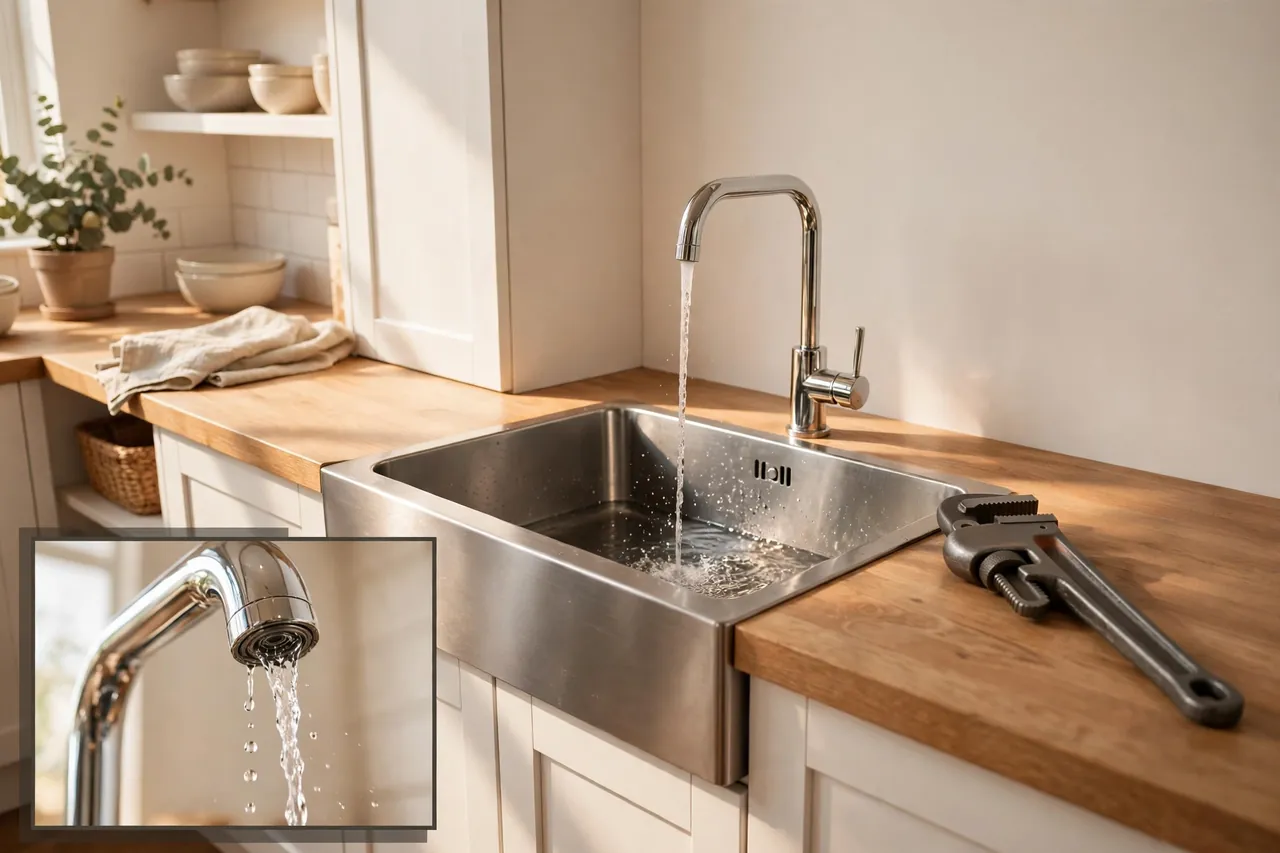
Signs You Should Stop Waiting and Act Now
Stop waiting and take action right away if you notice any of these signs. Each one means the risk has moved past the point where waiting makes sense.
- You see water leaking, dripping, or pooling anywhere, even a small amount.
- You see a crack, split, or bulge on an exposed pipe, or frost that keeps growing.
- You hear running water inside a wall or ceiling when no tap is open.
- You smell a musty or damp odor near a wall, or you see a new stain on a wall or ceiling.
- No water comes from any faucet in the house, not just one.
- The temperature is still below freezing, or the forecast shows more freezing nights ahead.
- The pipe has been frozen for more than a day and the water still has not returned.
- You cannot find the frozen section, or it sits behind a wall or under a floor you cannot reach.
First, confirm the pipes are actually frozen before you act on a thaw plan. A dry tap can have other causes, and our guide on how do you know if pipes are frozen walks you through the checks.
What to Do While You Wait
If your situation falls in the “wait, but watch it” row, you still have useful work to do. These steps protect your home while the thaw runs its course, and they speed the thaw along without risky shortcuts.
Open the faucet and keep it open
Turn on the faucet served by the frozen pipe and leave it open. The American Red Cross gives this as the first step in thawing a frozen pipe: as the ice melts, water will begin to flow, and running water through the pipe helps melt the rest of the ice. An open faucet also gives trapped water a way out, which eases the pressure that causes bursts.
Turn the heat up and open the cabinets
Raise your thermostat a few degrees and keep it steady day and night. Open the cabinet doors under sinks on exterior walls so warm air can reach the pipes inside. The American Red Cross advises keeping the heat on and set to no lower than 55 degrees Fahrenheit if you leave the house during cold weather.
Check the other faucets
Walk through the house and turn on each faucet, one at a time. If one pipe froze, others may have frozen too, and the American Red Cross advises checking all other faucets for that very reason.
Find your main water shut-off valve now
Before anything leaks, find your main shut-off valve and make sure it turns. It is often in the basement, a crawl space, a utility room, or near the water heater. If a pipe bursts during the thaw, shutting off the water in the first minute can save you thousands of dollars in damage.
Watch the thaw, do not walk away from it
Check the pipe and the rooms around it often while it thaws. Look for drips, listen for hissing or running water inside walls, and watch ceilings below the pipe for new stains. If you must leave the house, shut off the main water supply first, so a burst cannot flood an empty home.
Warm an exposed pipe gently, if you can reach it safely
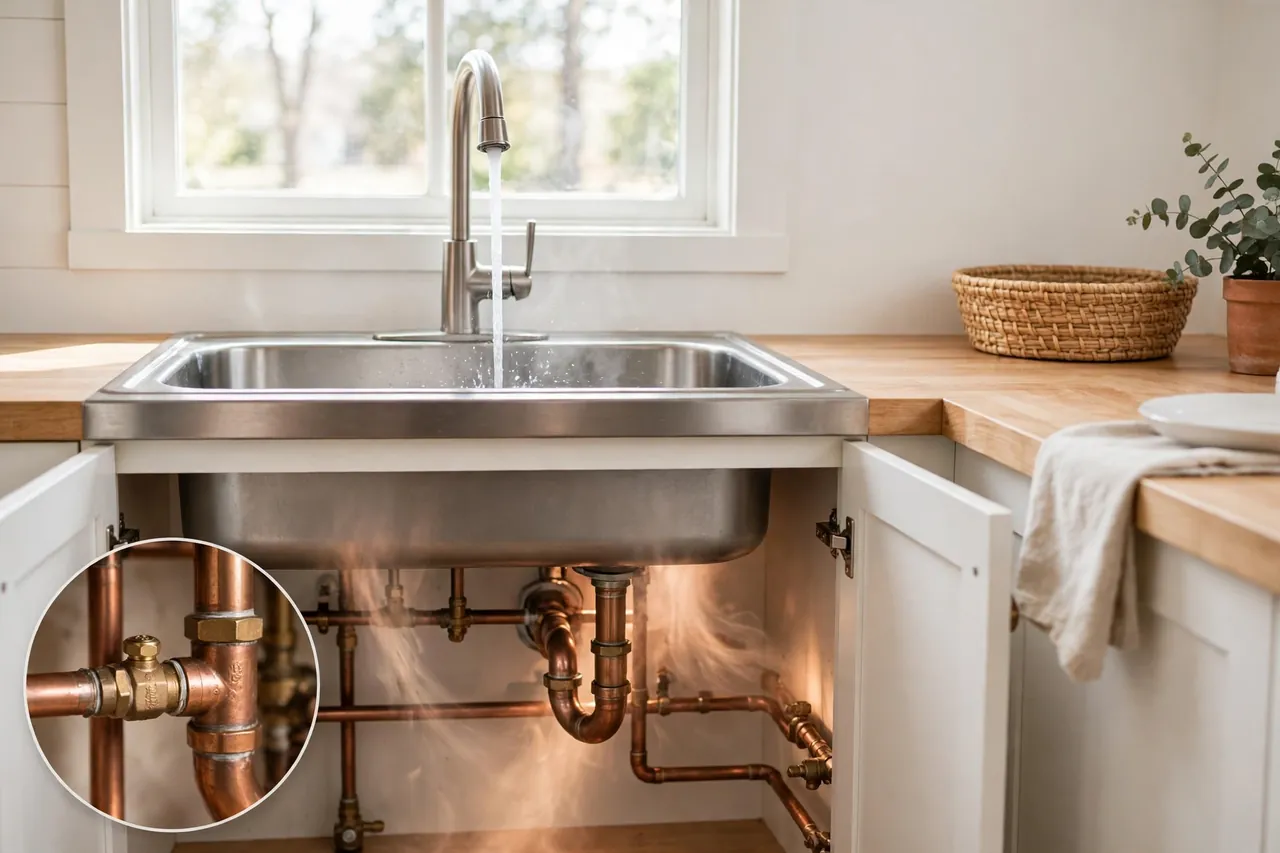
Caution: never use an open flame on a pipe. The American Red Cross is clear on this point: never use a blowtorch, a kerosene or propane heater, a charcoal stove, or any other open-flame device to thaw a pipe, because it can start a fire or damage the pipe. Use only gentle heat, such as an electric heating pad wrapped around the pipe, an electric hair dryer, a portable space heater kept away from anything that can burn, or towels soaked in hot water wrapped around the pipe. Keep warming the pipe until full water pressure returns, and call a licensed plumber if you cannot find the frozen area, cannot reach it, or cannot thaw it.
What NOT to Do While Waiting
A few common mistakes turn a frozen pipe into a burst pipe. Avoid all of them.
- Do not use a blowtorch, propane heater, or any open flame. The intense heat can crack the pipe, boil the water inside it, or start a fire.
- Do not pour boiling water straight onto a frozen pipe. Sudden, extreme heat shocks the pipe and can crack it.
- Do not leave a space heater running unattended next to a pipe. Keep it clear of anything flammable and stay in the room.
- Do not ignore a pipe you cannot see. A hidden pipe in a wall or crawl space can burst without warning, so if you cannot find the freeze, call a plumber instead of waiting blind.
- Do not keep the faucet closed. A closed faucet traps pressure behind the ice, which is exactly what splits pipes.
- Do not assume the danger is over once the water flows again. Check the pipe and the rooms around it for leaks for at least a day after the thaw.
After the Thaw: How to Check for Damage
When the water comes back, your job is not done. A pipe can thaw without bursting, but it can also thaw with a crack that only shows up under full pressure. Give your home a careful check before you relax.
First, run each faucet and watch the water. It should flow at full pressure with no sputtering, no brown color, and no strange smell. Low pressure at one tap can mean a leak or a second ice plug further along the line.
Next, look at every exposed pipe you can reach. Check for drips at joints and valves, damp spots, and any bulge or crack that was not there before. Run a dry hand or a paper towel along the pipe if you want to catch a slow drip.
Then check the rooms around the pipe. Look at the wall, the ceiling below, and the floor for new stains, peeling paint, or soft spots. Sniff for a musty smell. A small stain today can mean a slow leak that will grow into mold and rot if you miss it.
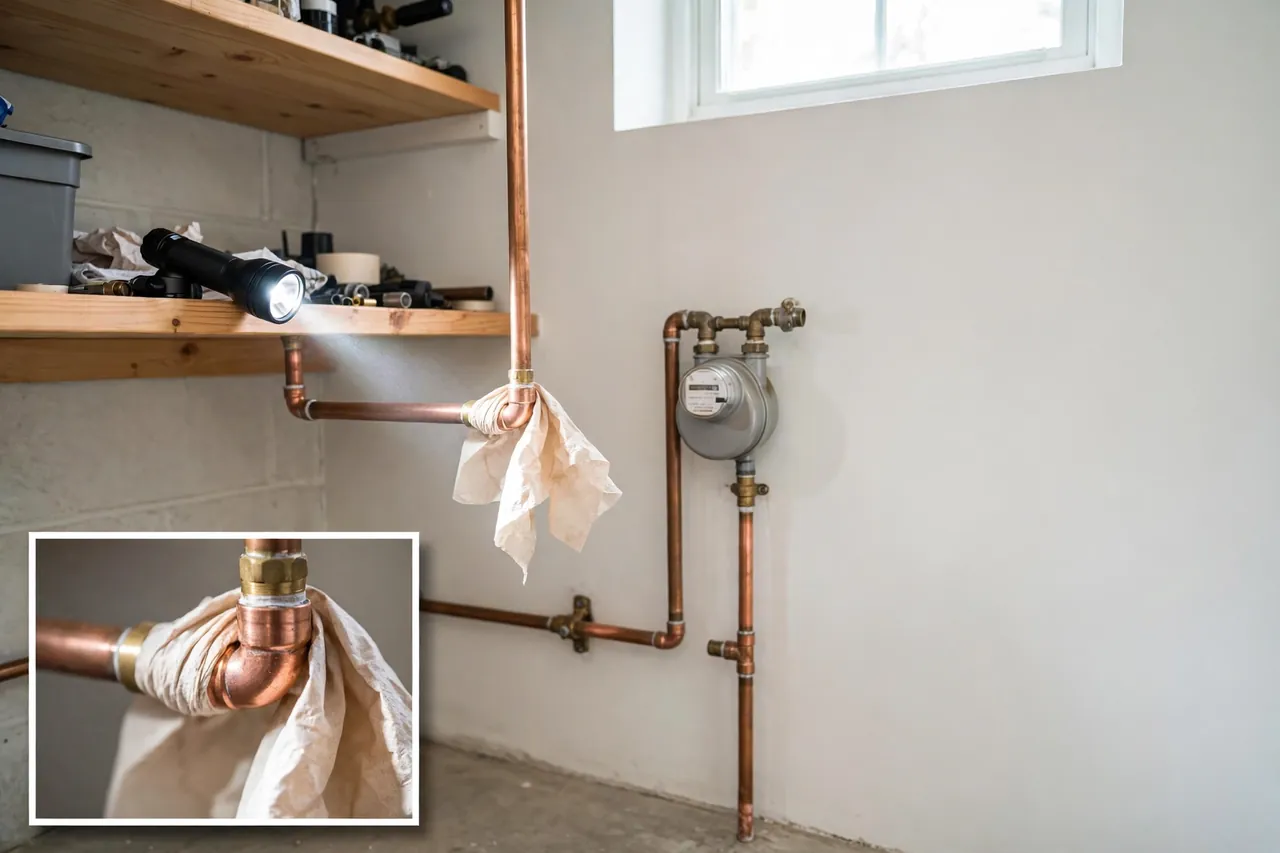
Finally, check your water meter if you know where it is. Turn off every tap and water-using appliance, then watch the meter. If it still moves, water is going somewhere it should not go, and you likely have a hidden leak. Call a plumber and shut off the main water supply until they arrive.
If you spot any leak, no matter how small, shut off the main water supply and call a licensed plumber. A drip that looks harmless can soak a wall cavity for days before you see the damage.
When to Call a Plumber
Call a licensed plumber right away if any of these apply. You do not need to wait for the thaw to finish first.
- You cannot find the frozen section, or it sits behind a wall, under a floor, or underground.
- You see a leak, a crack, or a bulge, or water is already pooling.
- No water comes from any faucet in the house.
- The pipe will not thaw even after you have warmed it gently for a few hours.
- You have already had a burst pipe, or the same pipe freezes every winter.
- You are not sure where your main shut-off valve is, or it will not turn.
A plumber can find a hidden freeze with pro tools, thaw it without cracking the pipe, and check for damage you cannot see. Plumbers also have methods homeowners do not, such as electric-current thawing, which Liberty Comfort Systems says can restore full flow in copper and iron pipes within minutes.
If the same pipe freezes every winter, ask the plumber about a lasting fix, such as insulation, heat tape, or moving the pipe away from the cold wall. A pipe that freezes once will usually freeze again.
One last note: frozen pipes can cause serious water damage, and this guide is general home advice, not a substitute for a licensed plumber. If you see a leak, smell gas, or see water near electrical outlets or panels, shut off the water and the power to the area if you can do so safely, and call a plumber or your utility right away. When in doubt, get professional help instead of taking a risk.
Related Guides
If you want to go deeper, these guides from MrCozyHome cover the next steps. Our guide on how long it takes for pipes to unfreeze covers thaw timing in detail, our guide on what happens when pipes freeze explains the damage a freeze can cause, and our guide on how do you know if pipes are frozen helps you confirm the freeze before you act. A Wi-Fi water leak detector can alert you the moment a thawing pipe starts to leak, and flood sensors placed near at-risk pipes give you an early warning while you wait.
Frequently Asked Questions
Will frozen pipes thaw on their own?
Yes, frozen pipes will thaw on their own once temperatures rise above freezing and stay there. A pipe in a heated room may thaw within hours, while one underground or in a cold space can take days or weeks. Waiting is risky, because the thaw is when burst pipes usually start to leak.
Is it safe to let frozen pipes thaw on their own?
No, it is not safe to let them thaw unattended. As the ice melts, trapped water can build pressure and split the pipe, and a hidden leak may run inside a wall before you notice it. Watch the thaw closely, keep the faucet open, and act fast if you see any leak, crack, or bulge.
How long does it take for frozen pipes to thaw naturally?
It depends on the pipe and the weather. Exposed pipes in heated rooms may thaw within hours of turning the heat up, while pipes in exterior walls or crawl spaces can take days. Underground pipes under snow can take weeks. If freezing weather holds, the pipe will not thaw at all until temperatures rise.
Can frozen pipes thaw without bursting?
Yes, many frozen pipes thaw without bursting, especially if the freeze was short and the pipe is in good shape. The key is to release the pressure by opening the faucet and to let the pipe thaw slowly with gentle warmth. Even so, check the pipe and nearby walls for leaks for a day after the thaw.
How quickly can a frozen pipe burst?
A pipe can rupture within several hours of freezing, and the risk stays high through the whole thaw. Pressure builds as water freezes and expands, and the burst often shows itself only when the ice melts and full water pressure returns. That is why fast action matters even when you see no leak yet.
So, will a frozen pipe thaw on its own? Yes, it will, when the warmth finally reaches it. But now you know the real cost of waiting: days without water, a burst that hides until the thaw, and a repair bill that Angi puts at $200 to $3,000. Check your situation against the decision guide above, and if anything points to acting, act today.


