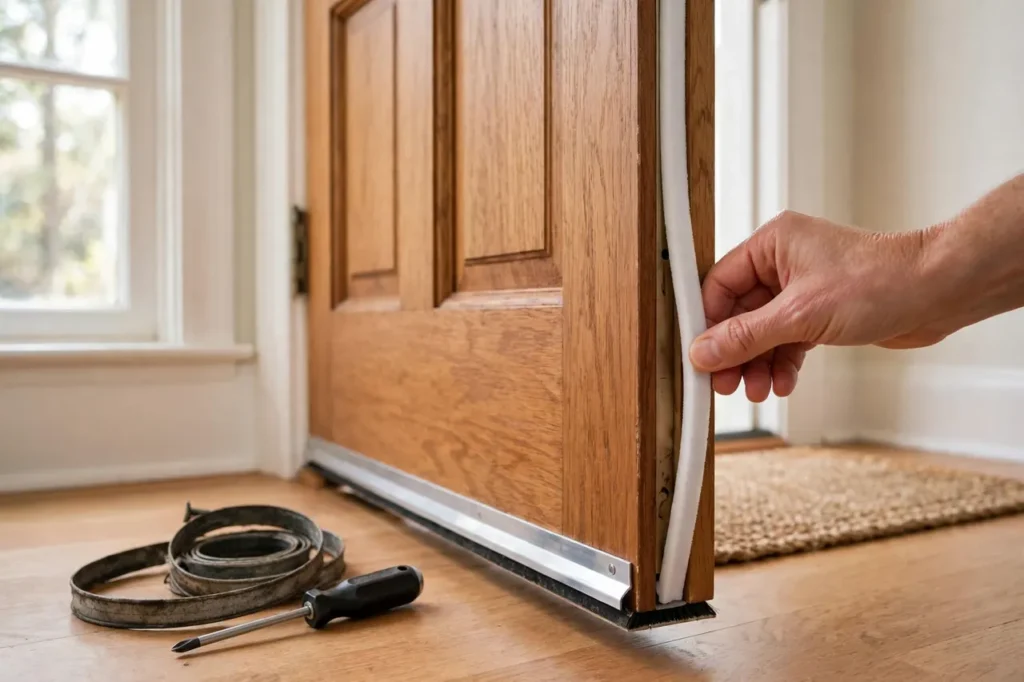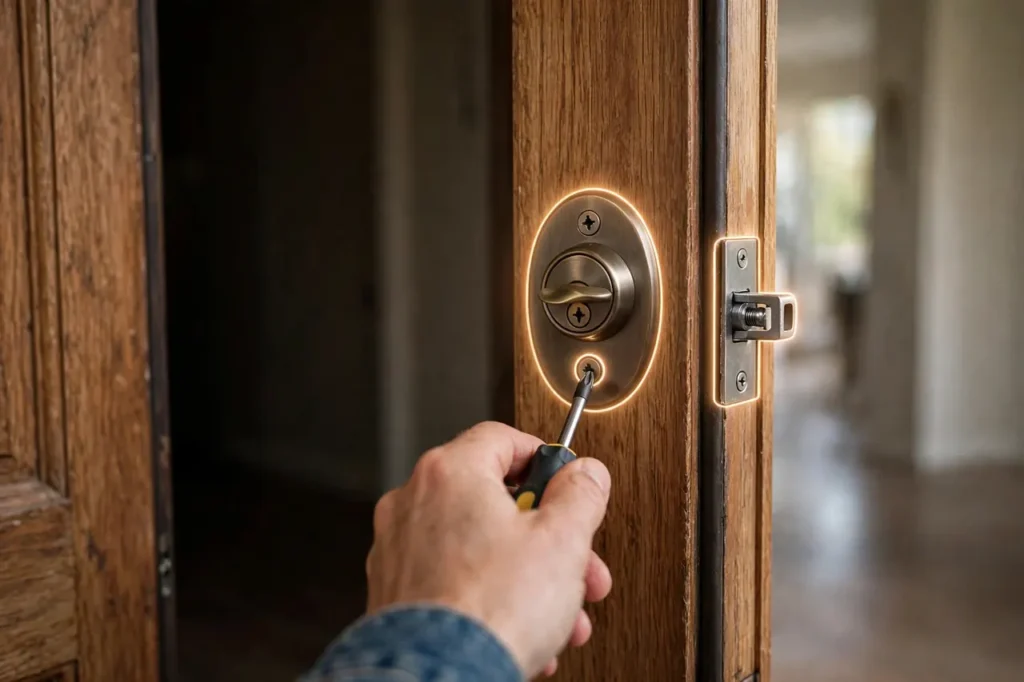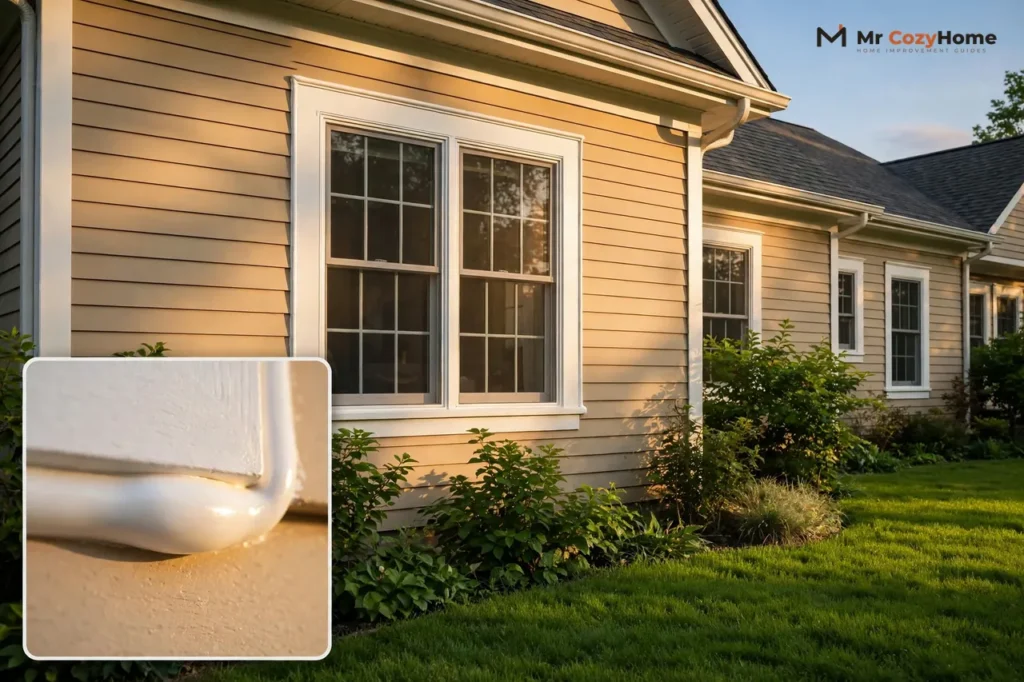
There is no single best exterior caulk for every job. The right tube depends on three things: whether you need to paint over it, how much the joint moves, and what surface you seal. For most painted trim, siding, and window frames, DAP Dynaflex 230 is the safest all-around pick because it paints in 2 hours, flexes with the joint, and costs $15.62 for a 10.1 oz tube at Target (checked on 5 Nov 2026). For glass, metal, and joints you will never paint, a 100 percent silicone sealant lasts longer.
This guide compares the five strongest exterior caulks by the facts that decide whether a seal holds or fails: material type, paintability, joint movement, weather resistance, and verified price per tube. Every price below comes from a named US retailer and carries its check date, so you can see what the tube really costs before you drive to the store.
The Short Answer: Which Exterior Caulk Should You Buy?
Start with the surface, not the brand. Painted wood trim, siding, and window frames need a paintable sealant, so choose DAP Dynaflex 230 or OSI Quad Max. Glass, metal, and joints that stay unpainted need pure silicone, so choose GE Advanced Silicone 2. Joints that open and close a lot with the seasons, such as log siding or wide trim gaps, need Sashco Big Stretch. Small, sheltered gaps on a tight budget need DAP Alex Plus.
If you only buy one tube for a whole-house touch-up, buy Dynaflex 230. It handles the most common exterior joints, paints fast, and cleans up with water. Keep a tube of GE Advanced Silicone 2 beside it for the glass and metal joints you will never paint.
The 4 Types of Exterior Caulk, Compared
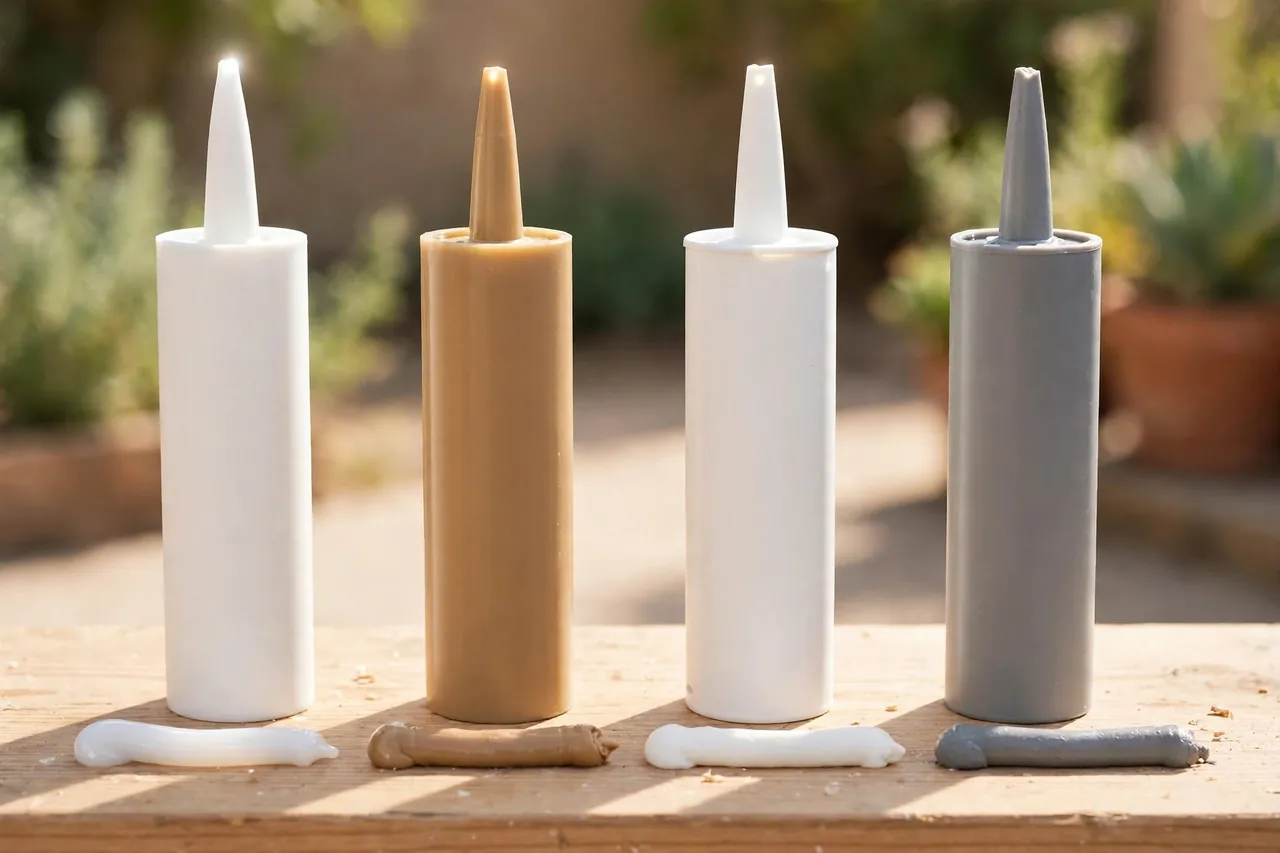
Exterior caulk falls into four material families. Each one wins on some joints and fails on others, so the type matters more than the brand name on the tube.
| Type | Paintable | Best for | Watch out for |
|---|---|---|---|
| Siliconized acrylic latex | Yes | Painted trim, siding, windows | Less stretch than silicone |
| 100% silicone | No | Glass, metal, wet joints | Paint will not stick to it |
| Polyurethane and hybrid | Yes, most | Siding, masonry, wide gaps | Sticky, harder to tool |
| Elastomeric acrylic | Yes | Joints that move a lot | Not for standing water |
Siliconized acrylic latex blends acrylic latex with silicone for toughness. It paints well, cleans up with water, and suits most painted exterior joints. Pure silicone stays flexible for decades, resists sun and rain better than any other type, and never takes paint. Polyurethane and hybrid sealants grip concrete, brick, and wood with great strength and paint over well, but they feel sticky and need mineral spirits for cleanup. Elastomeric acrylic stretches the farthest of all, which makes it the pick for joints that move.
A newer hybrid deserves a mention too. GE Supreme Paintable Silicone blends silicone performance with paintability, meets ASTM C-920 Class 50 for 50 percent joint movement, turns water-ready in 30 minutes, and takes paint in 60 minutes, according to the GE Sealants technical data sheet. It costs more than basic latex, but it solves the old silicone problem: you no longer have to choose between long life and a painted finish.
How We Picked These 5
We judged every product on five stated criteria, and we dropped any product whose price or specs we could not verify from a real retailer or manufacturer page.
- Material type and honest exterior use, stated by the manufacturer, not by a roundup.
- Paintability and paint-ready time, because a sealant you cannot paint limits where you can use it.
- Joint movement rating, such as ASTM C-920 class, which tells you how much the joint can move without cracking.
- Weather resistance, including rain-ready time and mold resistance where the maker states it.
- Verified US price per tube from a named retailer, checked on 5 Nov 2026.
Two well-known polyurethane sealants, Sikaflex-1a and Loctite PL S30, did not make the priced list. Both are strong products, and Sika states that Sikaflex-1a is a premium-grade, moisture-cured polyurethane sealant for exterior gaps and joints. We could not verify a current single-tube US price for either one, so we left them out rather than guess a number. If your job is a concrete expansion joint or a roof flashing, ask your local supplier for their price on one of these two before you buy.
Prices below vary by store and region, and Target’s online caulk prices ran higher than typical big-box shelf prices when we checked. Treat each figure as the verified price at the named retailer on the check date, and compare it with your local store before you buy.
The 5 Best Exterior Caulks
Each pick below names its best job, its verified price, and its honest limit. No one tube wins for everyone, and the limit matters as much as the strength.
DAP Dynaflex 230 Premium Elastomeric Sealant
Best all-around paintable exterior caulk. Price: $15.62 for a 10.1 oz tube, clear, at Target, checked on 5 Nov 2026.
Dynaflex 230 is a premium elastomeric latex sealant with what DAP calls silicone-like toughness. It paints in 2 hours, seals joints up to 2 inches wide with a backer rod, and meets ASTM C-920 Class 25, which means it handles 25 percent joint movement in either direction. It is 100 percent waterproof and weatherproof, resists mold and mildew, and cleans up with water. Bob Vila’s hands-on test named it best overall for easy application, crack resistance, and strong performance across building materials.
Choose it for painted window and door frames, siding laps, and exterior trim. Skip it where the joint stays wet or where you need the decades-long life of pure silicone. It needs 24 hours before rain hits it, so check the forecast before you start.
GE Advanced Silicone 2 Window and Door Sealant
Best 100 percent silicone sealant. Price: $20.10 for a 10.1 oz tube, white, at Target, checked on 5 Nov 2026.
GE Advanced Silicone 2 is a 100 percent silicone, 100 percent waterproof sealant. GE Sealants states that it turns rain-ready in 30 minutes, carries 10-year mold-free product protection, and meets ASTM C-920 Class 35, which gives it 40 percent more flexibility than a Class 25 sealant and 5 times stronger adhesion than GE Silicone 1. It resists freezing, sun, shrinking, and cracking, and it bonds to vinyl, masonry, metal, glass, and wood.
Choose it for glass-to-frame joints, metal flashing, and any exterior joint you will never paint. Do not choose it for painted trim, because paint will not stick to cured silicone. Buy it in clear for glass and white or gray for frames, since the color you pick is the color you keep. For a paintable silicone option, GE’s own comparison page lists Supreme Paintable Silicone alongside this product, and that hybrid takes paint while keeping silicone weather resistance.

Sashco Big Stretch Elastomeric Sealant
Best for joints that move a lot. Price: $10.38 for a 10.5 oz tube, clear, at Dunn Lumber, checked on 5 Nov 2026.
Big Stretch is a water-based elastomeric acrylic latex sealant. Sashco states that it stretches up to 500 percent of the original joint size without cracking, spans gaps up to 2 inches wide, and paints with exterior latex paint after 4 hours. One 10.5 oz tube covers about 26 linear feet with a quarter-inch bead. It meets ASTM C-920 Class 25 and sticks to wood, vinyl, fiber cement, brick, and most other exterior surfaces.
Choose it for log homes, wide siding gaps, and trim joints that open and close with the seasons. Do not use it where water stands, on roofs, or in tubs and showers, because Sashco states it is not made for submersion or prolonged puddling. It costs less per tube than the silicone picks here, and its stretch is the reason pros reach for it on moving joints.
OSI Quad Max Window, Door and Siding Sealant
Best hybrid sealant for siding. Price: $11.48 for a 9.5 oz tube, white, at Amazon, checked on 5 Nov 2026.
Quad Max is an elastomeric polymer sealant built for siding, windows, and doors. The maker lists 5 times the stretch and 50 percent joint movement, which puts it ahead of standard latex caulks on joints that shift with heat and cold. It is paintable, waterproof, UV resistant, and made for interior and exterior use. It comes in colors matched to common siding, so the bead blends in even before you paint.
Choose it for fiber cement and vinyl siding seams, window and door frames, and trim that needs a color-matched seal. It costs a little more per ounce than basic latex, because the tube holds 9.5 oz instead of 10.1 oz, so compare price per tube with that size in mind. It is the strongest siding pick in this list when you want paintability plus serious movement.
DAP Alex Plus Acrylic Latex Caulk Plus Silicone
Best budget exterior caulk. Price: $3.99 for a 10.1 oz tube, white, at Harbor Freight, checked on 5 Nov 2026.
Alex Plus is an acrylic latex caulk with silicone added. It paints well, tools smooth, cleans up with water, and seals windows, doors, trim, siding, and molding. At $3.99 a tube, it costs about a quarter of the premium picks here, which makes it the right choice when you have many small, sheltered gaps to seal.
DAP itself states that Alex Plus is a trim and molding sealant, and that joints with real movement need a more flexible product such as Dynaflex 230. So use Alex Plus for small, stable gaps on painted trim, and step up to Dynaflex 230 or Big Stretch where the joint moves. Do not use it as your only sealant on a fully exposed, high-movement joint, because it will crack sooner than the products above.
Pick by Surface: Windows, Siding, Brick, Concrete, and Roof
The surface decides the product. Match the sealant to the material and the movement, and the seal lasts years instead of months.
- Windows and doors: Dynaflex 230 for painted frames, GE Advanced Silicone 2 for glass and unpainted metal frames.
- Vinyl and fiber cement siding: OSI Quad Max for seams and laps, because it stretches and matches siding colors.
- Wood trim and fascia: Dynaflex 230 or Big Stretch, both paintable, with Big Stretch winning where gaps open wide.
- Brick and masonry: a polyurethane or hybrid sealant such as OSI Quad Max, which grips porous masonry and paints over.
- Concrete cracks and driveways: a concrete-rated sealant, not a general window caulk, and never Big Stretch, which Sashco rules out for driveways and patios.
- Roof flashing and gutters: a polyurethane roof sealant such as Loctite PL S30, and never a standard latex caulk, which cannot take standing water and heat.
Never caulk over a weep hole at the bottom of a window frame. Those small slots drain water out of the frame, and blocking them traps water against the wall and causes rot. Caulk seals the fixed edge where the frame meets the wall; moving sashes need weatherstripping, not caulk.
How Much Caulk Do You Need, and What Will the Job Cost?
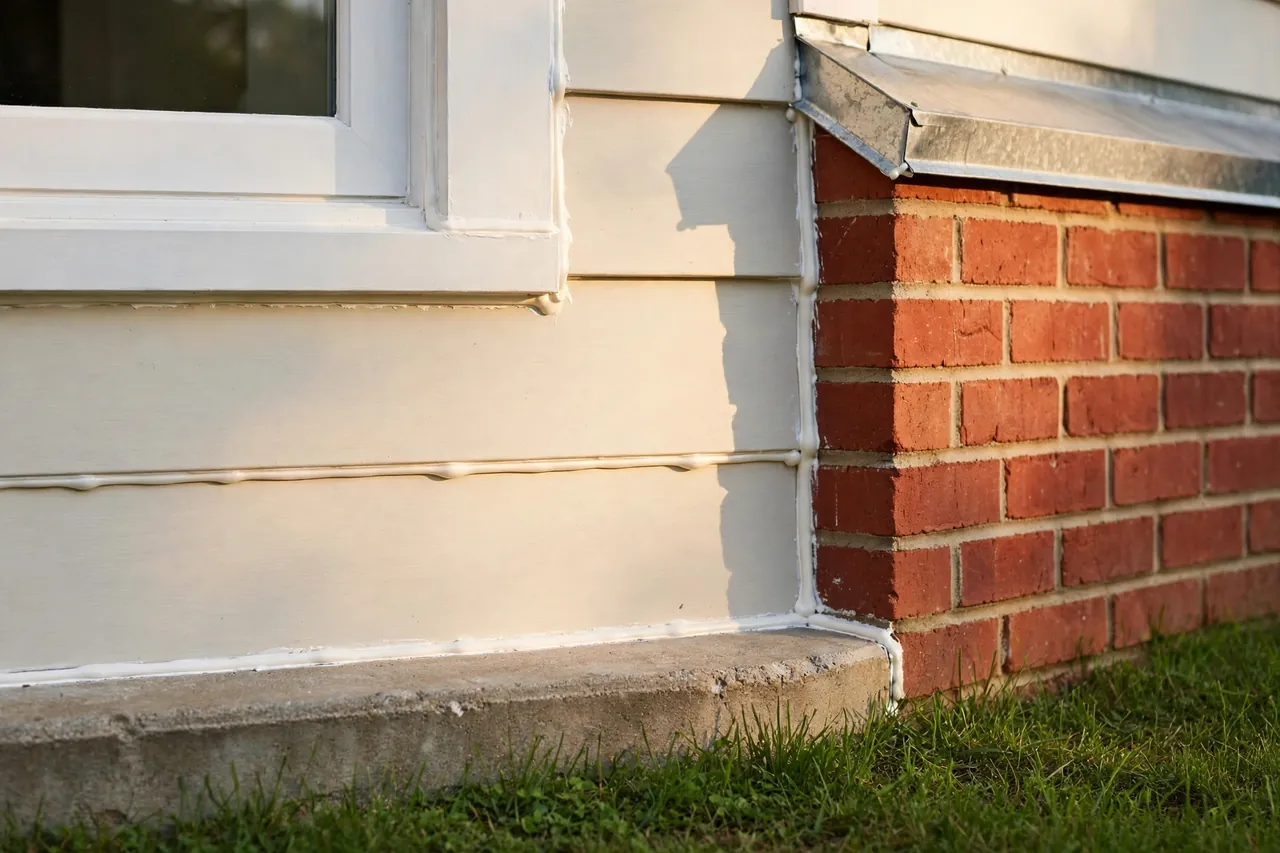
A 10.1 oz tube goes further than most people expect. GE Sealants states that one 10.1 oz cartridge lays about 51 feet of bead at three-sixteenths of an inch wide, and about 14 feet at three-eighths of an inch wide. Sashco states that a 10.5 oz tube of Big Stretch covers about 26 linear feet with a quarter-inch bead. Measure your gaps, add one spare tube, and you will not run out halfway around the house.
At the verified prices above, sealing a typical home’s windows and doors takes about 4 to 6 tubes. That puts the sealant cost near $16 to $24 with DAP Alex Plus, near $46 to $69 with OSI Quad Max, and near $62 to $94 with DAP Dynaflex 230 at the Target prices we verified. Prices vary by store, so your local total may run lower. You also need a caulk gun if you do not own one, plus a utility knife and painter’s tape, which are separate one-time buys, not part of the per-tube price.
7 Mistakes That Make Exterior Caulk Fail Early
Most failed exterior caulk fails because of the job, not the tube. Avoid these seven mistakes and even a budget tube lasts far longer.
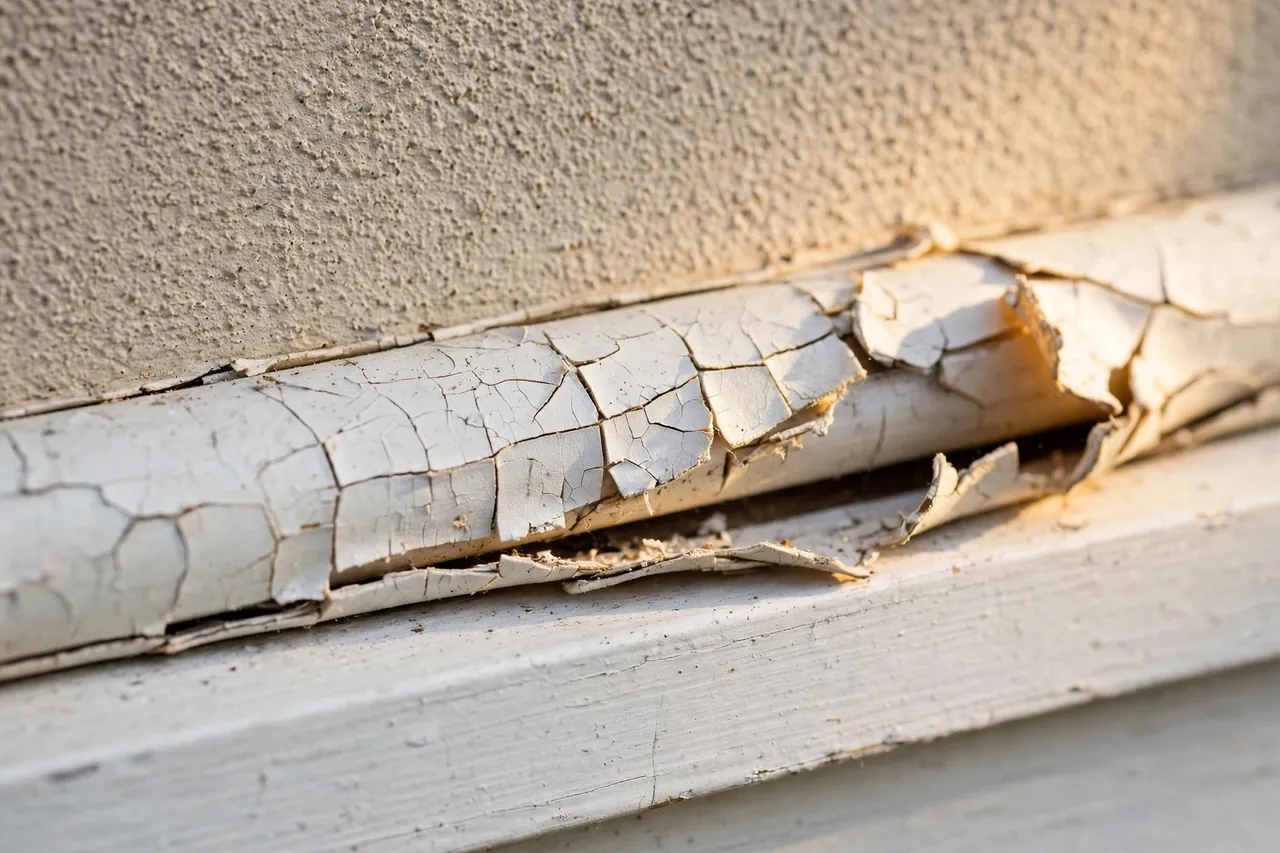
- Caulking over old, cracked caulk instead of cutting it out first. The new bead bonds to the old failure, not to the house.
- Sealing a dirty or wet joint. Dust, mildew, and moisture stop the sealant from sticking, so clean and dry the gap first.
- Picking a non-paintable silicone for trim you plan to paint. Paint beads up and peels off cured silicone.
- Using plain latex caulk on a joint that moves. It hardens, cracks, and opens within a season or two.
- Filling a gap wider than half an inch with caulk alone. Push a foam backer rod into deep gaps first so the bead has the right shape.
- Caulking in cold or rainy weather. Most sealants need the surface above 40 degrees Fahrenheit and dry for a day, so check the label and the forecast.
- Skipping the tooling step. A bead you never smooth with a wet finger or tool leaves gaps at the edges where water gets in.
How to Apply Exterior Caulk So It Lasts
Good application takes about ten minutes to learn and adds years to the seal. Work on a dry day when the temperature sits above 40 degrees Fahrenheit.
- Cut out the old caulk with a utility knife and pull it free.
- Scrub the joint clean, let it dry fully, and wipe away dust.
- Cut the tube tip small, at a 45-degree angle, and load it in the gun.
- Push a foam backer rod into any gap deeper than half an inch.
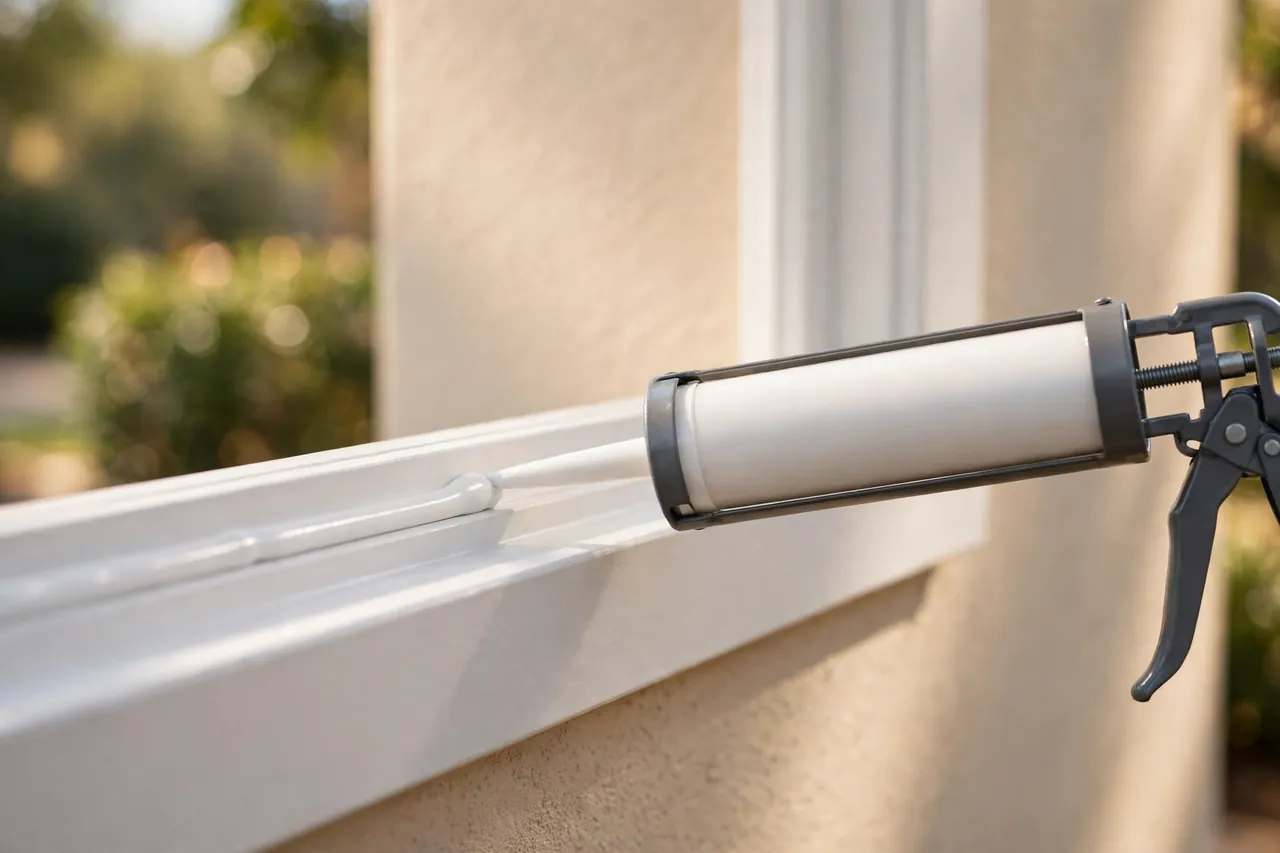
- Run one steady bead along the joint, pushing the caulk into the gap.
- Smooth the bead at once with a wet finger or a caulk tool.
- Peel the painter’s tape while the bead is still wet, then leave the seal alone until it cures.
Check the label for paint-ready and rain-ready times before you paint or walk away. Dynaflex 230 paints in 2 hours but needs 24 hours before rain, while GE Advanced Silicone 2 turns rain-ready in 30 minutes but never takes paint.
Sealing gaps before winter keeps meltwater out — and once ice forms on the driveway, here is how to melt it.
Related Guides
Sealing gaps is only one half of stopping drafts. Learn how to insulate windows to seal the whole window, including the glass, the frame, and the moving sash. Then read how to improve home insulation to find the other gaps and thin spots where warm air escapes your home.
Frequently Asked Questions
What is the best caulk for exterior use?
For most homes, DAP Dynaflex 230 is the best all-around exterior caulk because it paints in 2 hours, flexes with the joint, and seals painted trim, siding, and window frames. For glass, metal, and joints you will never paint, GE Advanced Silicone 2 lasts longer. Match the product to the surface instead of buying one tube for every joint.
What is the best exterior caulk for windows and doors?
Use DAP Dynaflex 230 on painted window and door frames because it paints fast and flexes with the frame. Use GE Advanced Silicone 2 on glass-to-frame joints and unpainted metal frames because pure silicone resists water and sun for decades. Never caulk a moving sash, since sashes need weatherstripping, not caulk.
Should I use silicone or caulk outside?
Use silicone outside on glass, metal, and joints you will never paint, because it stays flexible for decades and resists sun and rain better than latex. Use a paintable caulk, such as Dynaflex 230 or OSI Quad Max, on painted wood, siding, and trim. The surface and the paint plan decide, not the word on the tube.
What is the best caulk for exterior wood trim?
A paintable sealant wins on exterior wood trim. DAP Dynaflex 230 is the safest pick for most trim because it paints in 2 hours and handles joint movement. Sashco Big Stretch is the better pick where trim gaps open wide with the seasons, because it stretches up to 500 percent without cracking.
How long does exterior caulk last?
Silicone and polyurethane sealants often last 20 years or more outdoors, while acrylic latex sealants often last 10 to 15 years before they harden and crack. Sun, movement, and bad application shorten that life. Check your seals each fall, and replace any bead that has cracked, pulled away, or gone hard.
Pick your sealant by surface and paint plan, buy one spare tube, and seal on a dry day above 40 degrees Fahrenheit. Start with the windows and doors, where drafts and leaks cost you the most, and work your way around the house one side at a time.