
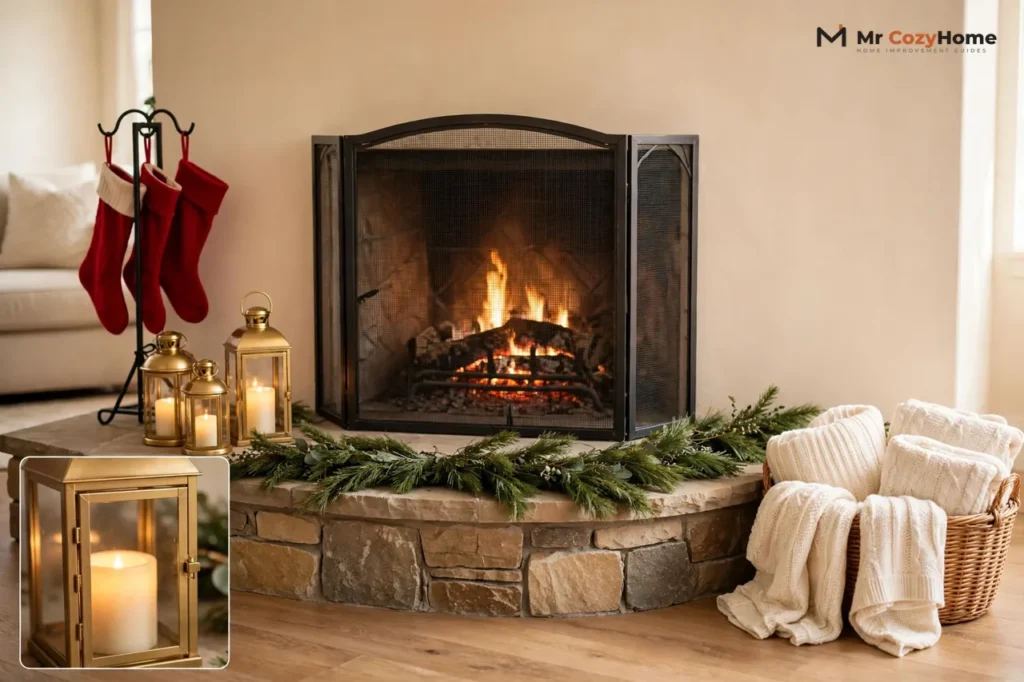
Hearth decorations for Christmas turn the floor area in front of your fireplace into the coziest spot in the room. Think lanterns with a soft glow, a basket of pinecones tucked to one side, and a garland that hugs the edge of the hearth. The one rule that shapes every choice in this guide is simple: when a live fire burns, nothing that can catch fire belongs on the hearth itself.
That rule sounds strict, but it still leaves you plenty of room to decorate. You can build a full, festive look with non-flammable pieces on the hearth, flameless candles for glow, and softer pieces like stockings and baskets placed safely beside it. This guide shows you how to do each part, step by step, so your hearth looks finished and stays safe all season.
What Is a Hearth, and How Is It Different From a Mantel?
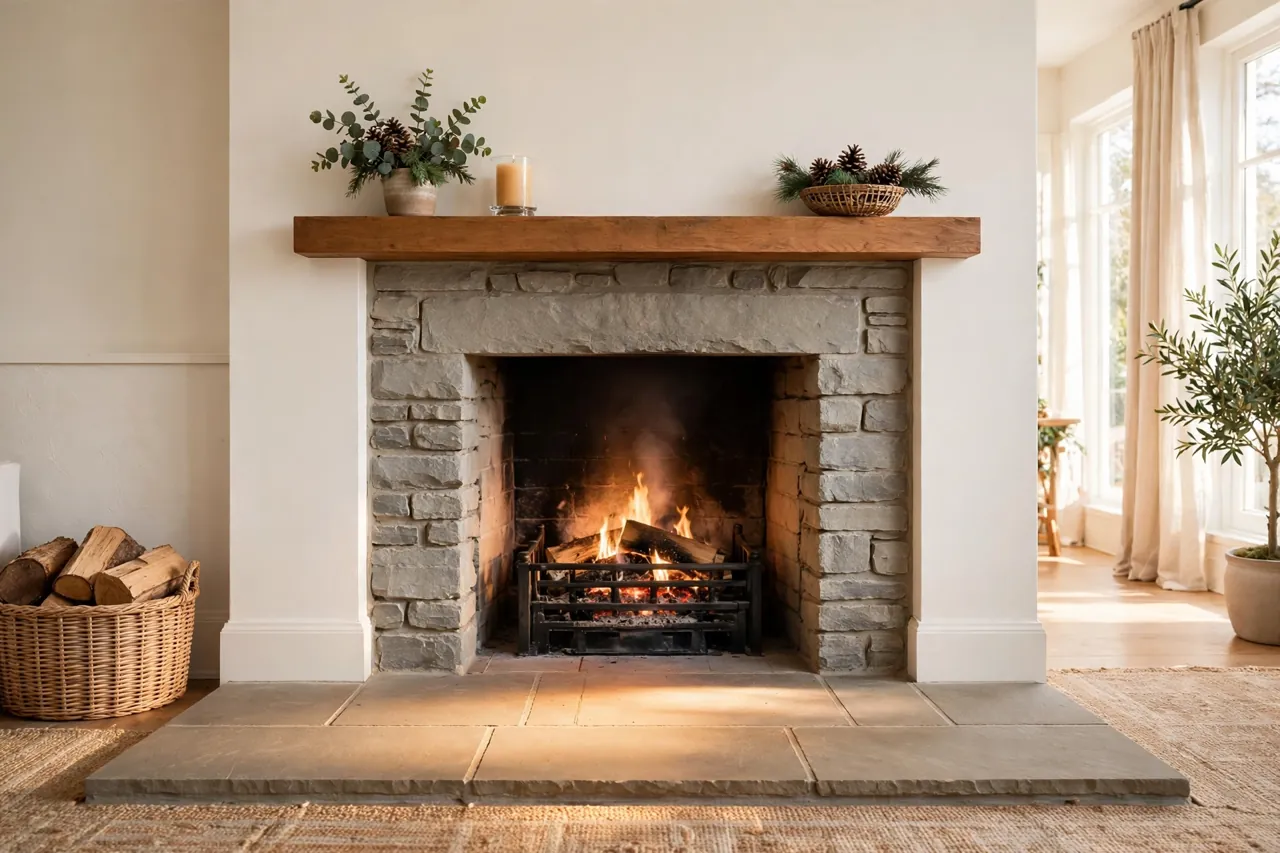
The hearth is the flat, fire-resistant floor area that extends out from the front of your fireplace. It usually sits at floor level, or just a step above it, and its job is to catch sparks and protect your floor from heat. The mantel, by contrast, is the shelf above the fireplace opening. The chimney breast is the wall section that runs up around the flue, above and beside the opening.
Why does the difference matter? Because each part has its own safety rules and its own decorating job. The mantel holds lighter pieces up high, away from the firebox. The hearth sits right where heat, sparks, and foot traffic meet, so it needs sturdier, safer choices. When you shop or search for ideas, keep the three parts separate in your mind, and your display will look better and last longer.
A quick way to check your plan is to stand back and name each piece by where it sits. If it rests on the floor in front of the firebox, it is hearth decor. If it hangs or stands on the shelf above, it belongs to the mantel. If it climbs the wall, it belongs to the chimney breast. This guide covers only the hearth, with notes on how the pieces beside it connect to the rest of the fireplace.
Safety First: The Fire Rules You Check Before You Decorate
Before you place a single decoration, decide how you will use your fireplace this season. A hearth you decorate for a fireplace that never burns is a very different project from a hearth in front of a wood fire you light every night. Your fire habits decide which materials you can use, and where each piece can sit.
The National Fire Protection Association (NFPA) heating safety guidance says to keep anything that can burn at least three feet away from heating equipment, including fireplaces. The U.S. Fire Administration heating fire safety guidance gives the same three-foot rule and adds a sturdy screen in front of the fireplace to stop sparks. Treat three feet as your starting line for anything soft, dry, or paper-based, and check your fireplace manual for any stricter distance it sets.
For the hearth itself, the practical rule is even clearer. The hearth is a non-flammable safety surface, not a shelf for fabric, paper, dried greenery, or wrapped gifts. Keep those pieces off the hearth whenever a fire burns, and move them back only when the fire is fully out and the hearth is cool. If you have a gas or electric fireplace, follow the clearance distances in its manual, because vents and glass fronts get hot too.
Use this quick-reference table whenever you are unsure about a piece. It covers the most common hearth items, and you can run through it in under a minute before you light a fire.
Quick-reference: where each hearth piece belongs when a fire burns
| Piece | On the hearth with a live fire? | Safer spot |
|---|---|---|
| Metal or glass lantern with a flameless candle | Yes, if it sits flat and cannot tip | On the hearth, away from the opening |
| Real candle with a flame | No | On a side table, away from heat and drafts |
| Fabric stockings | No | On a wall hook or stocking stand beside the fireplace |
| Dried greenery, pinecones, and paper gifts | No | Beside the hearth, at least three feet from the opening |
| Basket of blankets or throws | No | Beside the hearth, out of the walkway |
| Stone, ceramic, or metal figures | Yes, if they stay cool enough to touch | On the hearth, away from the opening |
Two more habits keep the whole season safe. First, never leave a fire burning when you leave the house or go to bed, and never leave real candles burning without someone in the room. Second, keep a clear path in front of the hearth. Guests step back from a fire without looking down, so a basket or lantern in the walkway can trip someone in seconds.
Plan Your Hearth Look Before You Buy Anything
A good hearth display starts with measuring, not shopping. Measure the width of your hearth and how far it extends into the room. Then note anything that limits your space, like a fireplace screen, a door that swings nearby, or a vent on a gas fireplace. Write those numbers down, because they stop you from buying a lantern trio that crowds the screen or a basket that blocks the walkway.
Next, pick one style and one color palette, and let them guide every piece. A classic look pairs deep red, forest green, and gold. A rustic look leans on wood tones, pinecones, and warm cream. A modern look keeps things calm with white, silver, and one strong accent, like matte black lanterns. When every piece shares the same palette, even a small display looks planned rather than piled up.
Finally, choose a focal point. A hearth looks best with one piece that draws the eye first, and smaller pieces that support it. A tall lantern on one side, a low garland along the edge, or a pair of matching figures can each play that role. If two pieces fight for attention, move one to the side or swap it out. A quiet hearth beats a busy one every time.
How to Decorate Your Hearth for Christmas, Step by Step
Work in this order, and you will avoid the most common mistake: placing pretty pieces first and then moving them all when safety gets in the way. Safety comes first, then the big pieces, then the small details.
Before you start, clear the hearth completely and wipe it clean. A clean stone or tile surface shows you the true size of your display area, and it keeps soot and dust from dulling your decorations. Check that your fireplace screen sits flat and covers the full opening, and move any old pieces that have dried out or frayed.
- Mark your safe zone. Stand three feet back from the fireplace opening and note where that line falls. Anything that can burn stays behind that line when a fire burns.
- Place your focal piece first. Set your tallest lantern, figure, or pair of figures on the hearth, off to one side of the opening rather than dead center, so the firebox stays the star.
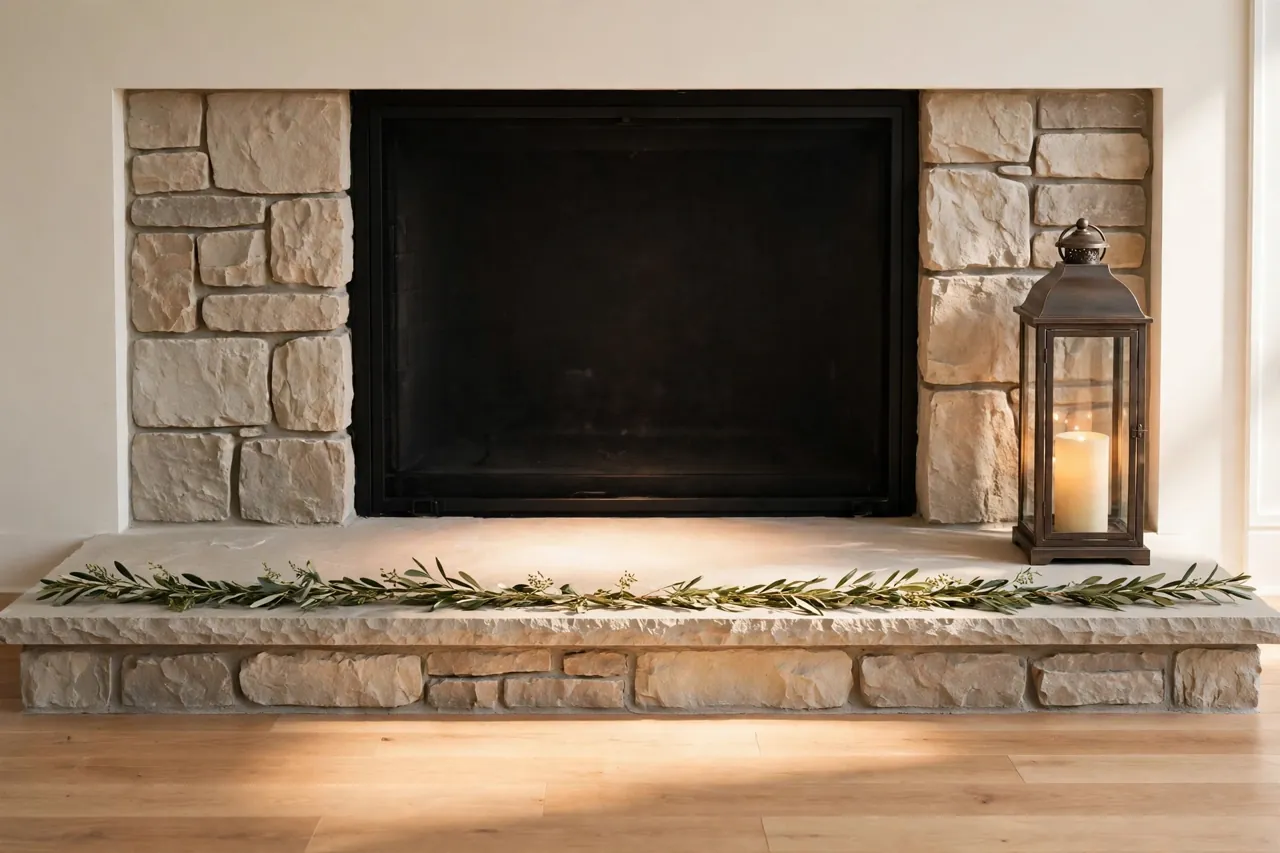
- Add a low layer along the edge. Lay a short garland or a row of small, non-flammable pieces along the front edge of the hearth, and keep them flat and stable.
- Bring in glow with flameless candles. Place battery candles inside lanterns or glass hurricanes, and test their timers so they switch on at dusk without you thinking about them.
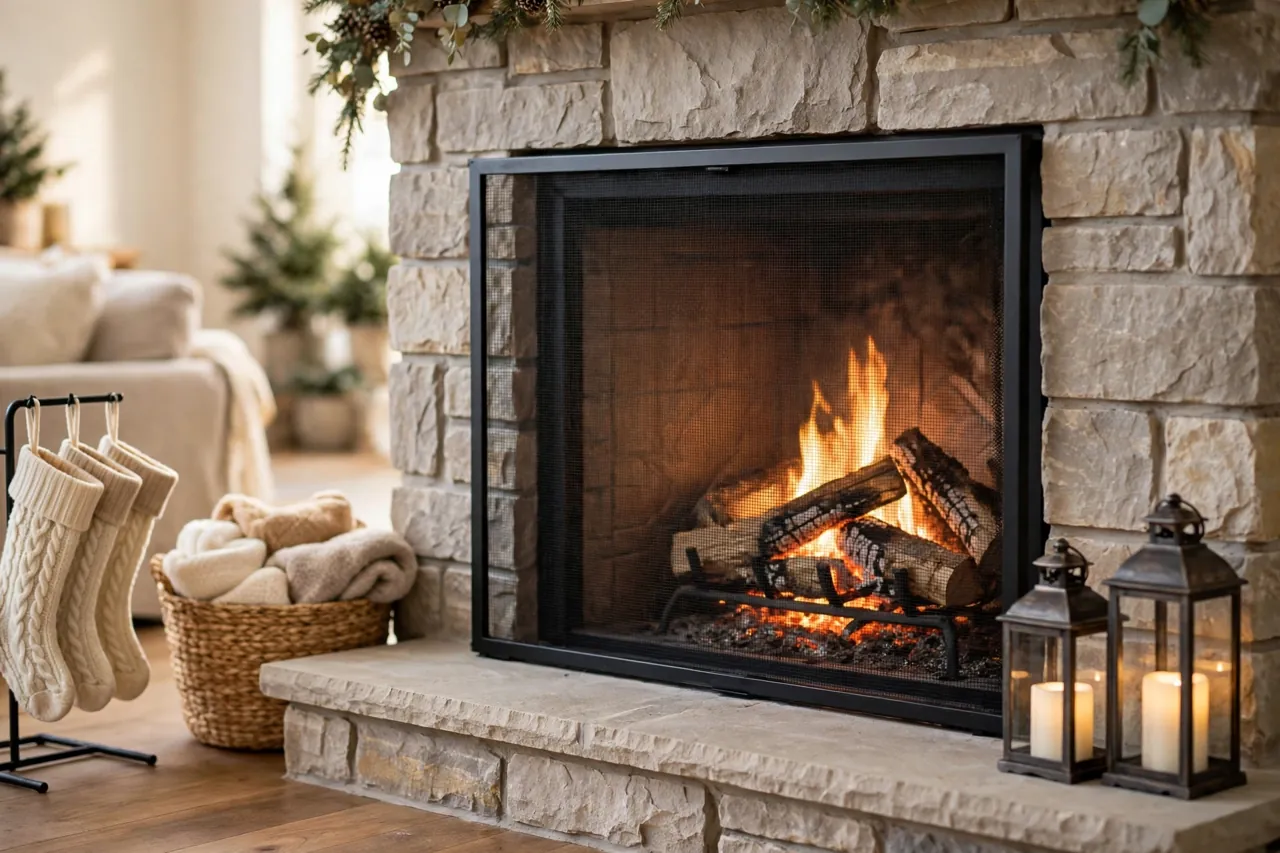
- Style the sides, not the middle. Set baskets, blankets, and stocking stands beside the hearth, where they frame the display without sitting on the safety surface.
- Step back and check the walkway. Walk past the hearth the way a guest would, and move anything that catches your foot, blocks the screen, or leans toward the fire.
- Do a fire-night test. Before your first fire of the season, remove every soft or dry piece from the hearth, light the fire, and check that nothing left behind gets hot, tips over, or sits too close to the opening.
Keep this order each time you refresh the display. When you add a new piece mid-season, run the same checks: does it sit flat, does it stay out of the walkway, and does it belong on the hearth at all when a fire burns? That habit takes a minute, and it keeps a pretty display safe.
Lanterns and Flameless Candles: The Glow Without the Flame
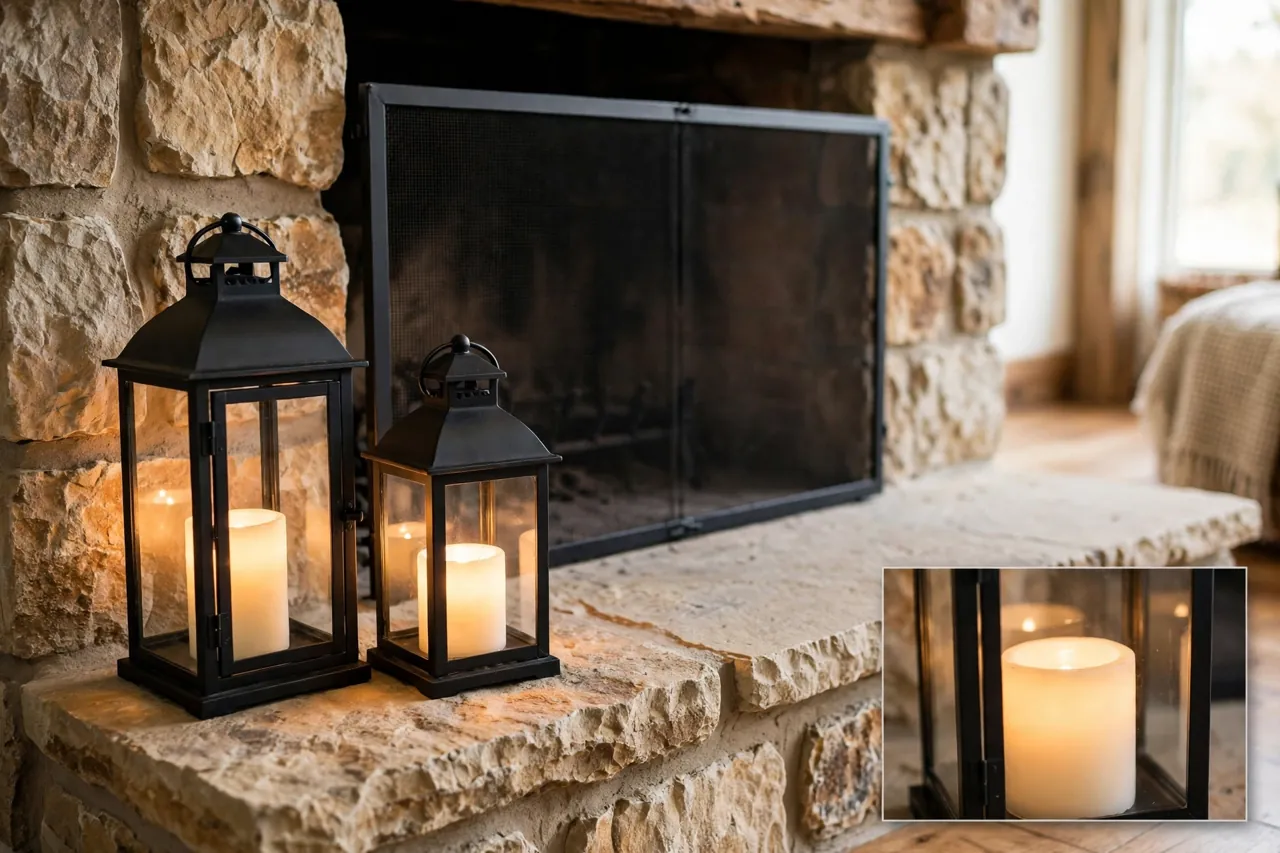
Lanterns are the easiest win on a hearth. They give you height, they read as Christmas from across the room, and they hold your glow safely inside glass or metal. Choose lanterns with flat, heavy bases that will not tip when someone brushes past them, and pick two or three sizes rather than five small ones that look scattered.
Before you place a lantern that holds a real candle, stop and switch it to a flameless candle instead. A real flame on the hearth sits close to drafts, pets, and passing feet, and it adds a fire risk right where sparks already fly. Battery candles solve that problem at once: they glow warmly, many come with timers and remotes, and they stay cool to the touch. For more on choosing safe candle styles, see our guide to Christmas window candles, timers, and safe placement.
Group lanterns in odd numbers, usually one tall and one short, on one side of the hearth. That uneven grouping looks natural and leaves the other side open for a basket or a small tree. If your hearth is narrow, use a single tall lantern instead of a group, and let the garland along the edge do the rest of the work. Check the batteries early in December, so your glow never fades on the nights you want it most.
Baskets, Blankets, and Pinecones Beside the Hearth
Baskets bring the cozy feeling that a bare hearth lacks, but they need the right spot. A basket of rolled blankets, a basket of pinecones, or a basket of firewood-look logs all read as warm and lived-in. The catch is that blankets, pinecones, and wicker all burn, so they belong beside the hearth, not on it, whenever a fire burns. Set the basket on the floor next to the hearth, where it frames the fireplace without sitting on the safety surface.
Choose one basket, not three, and fill it with one thing. A basket of cream blankets looks soft and calm. A basket of pinecones and a few faux berry stems looks woodsy and neat. When you mix blankets, pinecones, ornaments, and ribbon in one basket, the result looks cluttered instead of cozy. Pick the fill that matches your palette, and leave a little space at the top so the basket looks full without overflowing.
If your fireplace never burns, you have more freedom. An unused fireplace lets you place a basket on the hearth itself, since no heat or sparks reach it. Still, keep the walkway clear and choose a basket that sits flat. For an unused firebox, you can also carry the same idea inside the opening, but that is a separate project from the hearth display, so keep the two zones distinct.
Stockings Hung Safely Near the Hearth
Stockings are the classic Christmas touch, and they cause the most confusion at the hearth. Tradition hangs them from the mantel, but many homes hang them lower, near the hearth, when the mantel is short or full. Either way, the safety rule stays the same: never leave fabric stockings hanging near a burning fire.
Before you hang stockings anywhere near the fireplace, pick a plan for fire nights. The simplest plan is a stocking stand that sits beside the hearth, away from the opening. You enjoy the stockings all day, and when you light a fire, the stand stays where it is because it already sits outside the heat zone. Another good plan is wall hooks on the chimney breast or the side wall, again at least three feet from the opening. Both plans beat hanging stockings from the mantel and moving them every single night, because a plan you forget is a plan that fails.
Hang stockings at different heights if you have more than two, and keep them light. Heavy stockings pull hooks down and swing into walkways, and a stocking full of small gifts can tip a light stand. Fill them on Christmas Eve, not weeks early, so they hang flat and neat for most of the season. If children or pets reach the stockings, hang them a little higher and keep small items out until the big night.
Garland Along the Hearth Edge
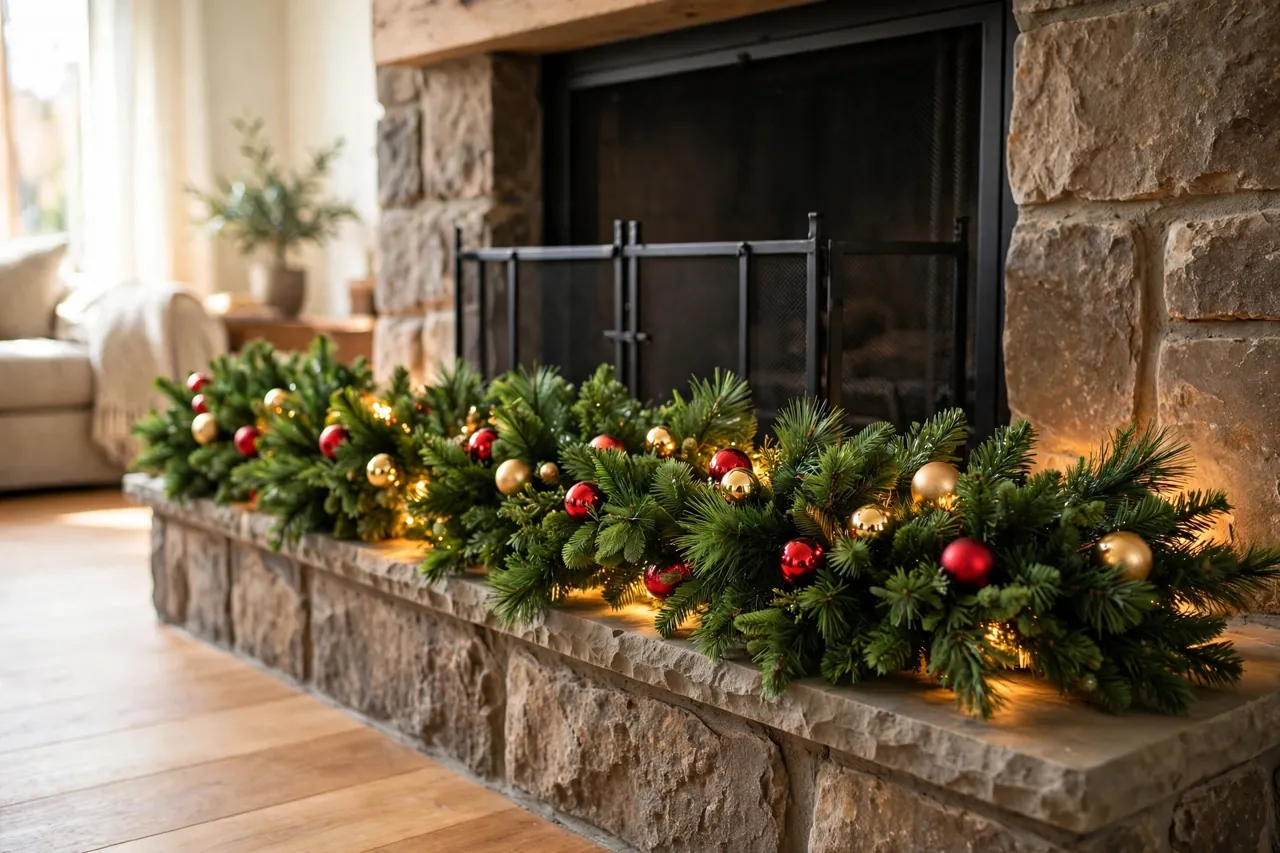
A garland along the front edge of the hearth ties the whole fireplace together. It softens the hard line of stone or tile, it echoes the greenery on the mantel and tree, and it gives you a base to tuck small ornaments into. Lay it flat along the edge rather than letting it drape down onto the floor, where feet catch it and pets pull it.
Before you lay a real garland on or near the hearth, check whether your fireplace will burn. Fresh greenery dries out fast near heat, and dry greenery catches fire far more easily than fresh greenery does. If you light fires, use a good-quality faux garland on the hearth edge, and save fresh greenery for spots well away from heat. If your fireplace never burns, fresh greenery works beautifully, but check it every few days and replace it when needles start to drop. Our guide on how to hang garland on a Christmas tree shares the same layering tricks, and they work just as well along a hearth edge.
Layer the garland in two steps for a full look. First, lay your main garland along the edge and fluff its branches outward. Next, tuck in a few short stems of berries, pinecones on wire picks, or small ornaments, and space them evenly so no section looks bare or overloaded. Keep ornaments shatterproof near the floor, because anything at foot level eventually gets knocked. A garland that stays put and stays tidy beats a lush garland that sheds all over your floor.
Four Hearth Styles That Always Work
If you feel stuck, start from a style instead of a shopping list. Each style below uses the same safe structure, and each one changes only the colors and textures. Pick the one that matches your room, and you will make faster, better choices.
Classic red and green suits a traditional living room with wood furniture and warm lighting. Use deep red stockings beside the hearth, a green garland along the edge, gold lanterns, and cream candles. It feels familiar at once, and guests read it as Christmas without thinking about it.
Rustic woodland suits a cabin feel or a room full of natural textures. Use wooden lanterns or black metal ones, a basket of pinecones beside the hearth, plaid stockings, and a garland with bare twigs tucked in. Keep colors muted and let texture do the work, because rustic style looks best when it feels gathered, not bought all at once.
Modern calm suits a bright room with clean lines and little clutter. Use white and silver, one tall black lantern, a slim faux garland, and no more than three pieces on the hearth itself. Leave empty space on purpose, because in a modern display the empty space is part of the look.
Cozy cottage suits a small room where the fireplace is the heart of the home. Use knit stockings, a basket of soft blankets beside the hearth, warm white flameless candles, and a garland with small wooden ornaments. This style invites people to sit down, so keep the walkway wide and the seating close.
Compare the four styles at a glance before you commit to one.
Style comparison: colors, key pieces, and best rooms
| Style | Colors | Key hearth pieces |
|---|---|---|
| Classic | Red, green, gold | Gold lanterns, green garland, red stockings nearby |
| Rustic woodland | Wood tones, cream, plaid | Metal lanterns, pinecone basket, twig garland |
| Modern calm | White, silver, black | One tall lantern, slim garland, few pieces |
| Cozy cottage | Cream, soft red, wood | Knit stockings, blanket basket, warm candles |
Decorating by Fireplace Type
Your fireplace type changes the rules more than any style choice does, so match your display to it. A wood-burning fireplace gives you real flames, real sparks, and real heat, so it needs the strictest version of every rule in this guide. Keep the hearth to non-flammable pieces only, keep soft pieces at least three feet away, and use the screen every time you burn.
A gas fireplace looks simpler, but its glass front and vents get very hot, and its manual sets its own clearances. Read that manual before you place anything, and never drape garland over vents or rest pieces against the glass. Flameless candles and metal lanterns work well here too, as long as they sit clear of the glass and the vents.
An electric fireplace gives you the most freedom, because it produces no real flame or sparks. You still need to keep garland, stockings, and throws away from heater vents, and you should never drape anything over the unit. Check the manual for vent locations, then decorate around them with the same care you would use elsewhere. For a fuller fireplace decorating plan, see our guide to fireplace Christmas decorations.
An unused or decorative fireplace gives you the most freedom of all. With no heat and no sparks, you can place baskets, stockings, and fresh greenery right on the hearth. Keep the display tidy and the walkway clear, and remember to strip it back if you ever decide to light a fire again. A display built for an unused fireplace is not automatically safe for a burning one.
Mistakes That Spoil a Hearth Display
Most hearth displays fail for small, fixable reasons. The first is crowding: too many small pieces make the hearth look like a shelf that spilled. Fix it by removing half the small pieces and keeping only the ones that earn their spot. The second is blocking the screen: a tall piece in front of the opening hides the fire and tempts someone to move it mid-evening. Fix it by keeping the center of the hearth open.
The third mistake is mixing too many colors. A hearth with red, gold, silver, blue, and plaid all at once looks noisy, even when each piece is pretty on its own. Fix it by picking one palette and moving the odd pieces to another room. The fourth mistake is forgetting the floor: a garland that trails onto the floor, a basket that juts into the walkway, or a lantern with a cord across the path all cause trips. Fix it by hiding cords behind the hearth and pulling every piece back to the edge.
Finally, check your display at night, not just in daylight. Flameless candles look different after dark, and a garland that looks full by day can look flat under warm lights. Switch your candles on, dim the room lights, and step back. If the hearth glows softly and the focal piece still stands out, your display works. If one corner goes dark, move a lantern there instead of adding more pieces.
Keep Your Hearth Looking Good All Season
A hearth display needs little care, but it does need a weekly check. Dust the lanterns and wipe the hearth edge, because soot and dust settle fast near a fireplace. Replace flameless candle batteries before they fade, and straighten the garland after pets or children brush past it. Fresh greenery needs a closer eye: replace any branch that feels dry or drops needles, and never let dry greenery sit near a fireplace you still use.
Plan your takedown before the season ends, too. Pack ornaments and small pieces in labeled boxes, coil garlands loosely so they keep their shape, and store stockings flat. Note what worked and what did not, while you still remember it. Next December, that short note saves you an hour of guessing, and your hearth will come together even faster.
For the rest of the room, carry the same palette outward. Match your tree skirt and your entry display to the hearth colors, so the whole room feels like one plan. Our ideas for Christmas tree skirt styles and lighted Christmas decorations help you extend the look without starting from scratch. Small bows tie the pieces together, and our guide to Christmas bow decor shows sizes and placements that look polished rather than fussy.
Related Guides
Christmas Decor for Chimney: A Safe, Beautiful Guide for Inside and Out · Winter Mantel Decor After Christmas: A Calm, Cozy Reset · Christmas Floor Decorations: Warm Holiday Style That Starts at Ground Level
- Fireplace Christmas Decorations: A Warm, Safe, Beautiful Mantel
- Best Christmas Window Candles: Timers, Sensors, and Safe Placement
- DIY Christmas Lighting: Build Your Own Glowing Displays
- Lighted Christmas Decorations: A Simple Guide to the Types and How to Choose
- How to Hang Garland on a Christmas Tree: Easy Steps for a Full, Even Look
- How to Tie a Christmas Ribbon: Bows That Actually Hold Their Shape
Frequently Asked Questions
Can I put decorations on the hearth when a fire is burning?
Yes, but only pieces that cannot catch fire, like metal lanterns with flameless candles, stone figures, and ceramic pieces. Keep fabric, paper, dried greenery, baskets, and wrapped gifts off the hearth while a fire burns, and move them at least three feet from the opening.
Are flameless candles safe on the hearth?
Yes, flameless candles are the safest glow for a hearth, because they give you candlelight with no flame, no heat, and no wax near sparks. Place them inside lanterns or glass hurricanes with flat, stable bases, and use timers so they switch off on their own at night.
Can I hang stockings near the fireplace?
Yes, but never leave fabric stockings hanging near a burning fire, since sparks and heat can reach them fast. Use a stocking stand or wall hooks beside the fireplace, at least three feet from the opening, so the stockings stay in place on fire nights too.
Is it safe to decorate around an electric fireplace?
Yes, when you follow the manual’s clearance distances and keep garland, stockings, throws, and paper well away from heater vents. Never drape anything over the unit, and choose flameless candles and battery lights anywhere near a heat source or vent.
What can I put on the hearth of a fireplace I never use?
An unused fireplace gives you the most freedom, so baskets, stockings, fresh greenery, and wrapped gifts can all sit on the hearth. Keep the walkway clear and the display tidy, and strip soft pieces back before you ever light a fire in it again.
A Short Safety Note
This guide shares general decorating ideas, not professional fire-safety advice for your specific fireplace. Fireplace models, local codes, and manufacturer manuals differ, so follow your manual first and ask a qualified chimney professional or your local fire department when you are unsure. If any piece feels too close to heat, move it farther away: a slightly plainer hearth is always better than a risky one.
Your Next Step for a Cozy Hearth
Start tonight with the simplest version of this guide. Clear the hearth, set one lantern with a flameless candle to one side, lay a short garland along the edge, and place a basket beside the hearth. Step back, switch the candle on, and see how the room changes. Then add one piece at a time, check the walkway and the three-foot line each time, and stop when the hearth feels warm and finished. That is the whole secret: a few good pieces, placed safely, beat a crowded hearth every single time.


