
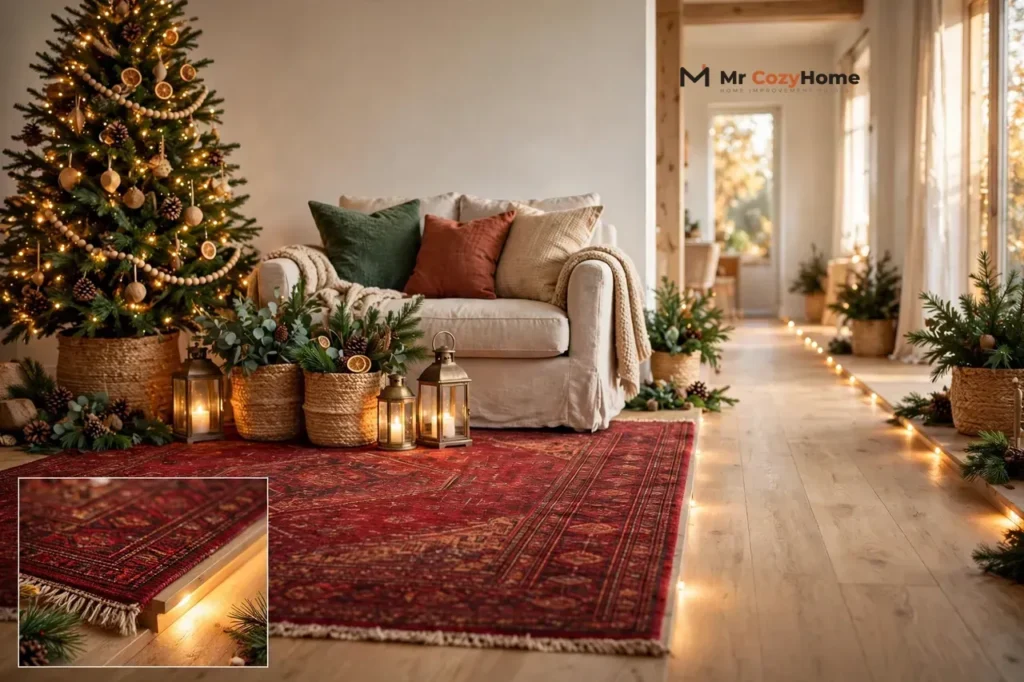
Christmas floor decorations turn the floor itself into part of your holiday display. You use rugs, runners, floor-level trees, baskets, lanterns, and pathway lights to make a room feel warm and festive from the ground up, while you keep every walkway clear, every cord off the path, and every rug firmly in place.
That last part matters as much as the look. A beautiful floor display should never make you step over a cord, dodge a basket, or slide on a loose rug. When you plan the safe path first and then add the pretty pieces around it, you get a home that feels magical and still works for real life, guests, kids, and pets included.
What Christmas Floor Decorations Mean for Your Home
Most people decorate from eye level up. They hang garlands, trim the tree, and dress the mantel. The floor gets whatever is left over, and that is a missed chance.
Your floor is the largest flat surface in every room. It sets the color, the warmth, and the mood before anyone looks up. A deep red rug under the coffee table, a basket of greenery by the door, and a soft glow along the hallway can make a whole house feel like Christmas, even before you add a single ornament.
Floor decorating also suits homes of every size. A small apartment may not have room for a tall tree, but it has room for a rug, a runner, and a small floor tree in a basket. A large living room may need a big piece on the floor to balance a tall tree and high ceilings. Either way, you start with what the floor already gives you, and you build from there.
Think of your floor display in three layers. The base layer is rugs and runners. The middle layer is the pieces that sit on the floor, like baskets, lanterns, and small trees. The top layer is light, from pathway lights to the glow of a lantern. When those three layers work together, the room feels finished instead of cluttered.
First, Keep Every Walkway Safe and Clear
Before you place a single decoration, walk the path people actually use. Start at the front door and walk to the kitchen, the living room, and the bathroom, just as a guest would. Notice where feet naturally land, where doors swing, and where someone might carry a plate of food or hold a child’s hand.
Keep that path clear. Do not place baskets, trees, lanterns, or gift piles in the middle of it. Push floor pieces against walls, into corners, or beside furniture, where they add charm without blocking a step. Leave enough room for two people to pass in a hallway, and never block a doorway or an exit.
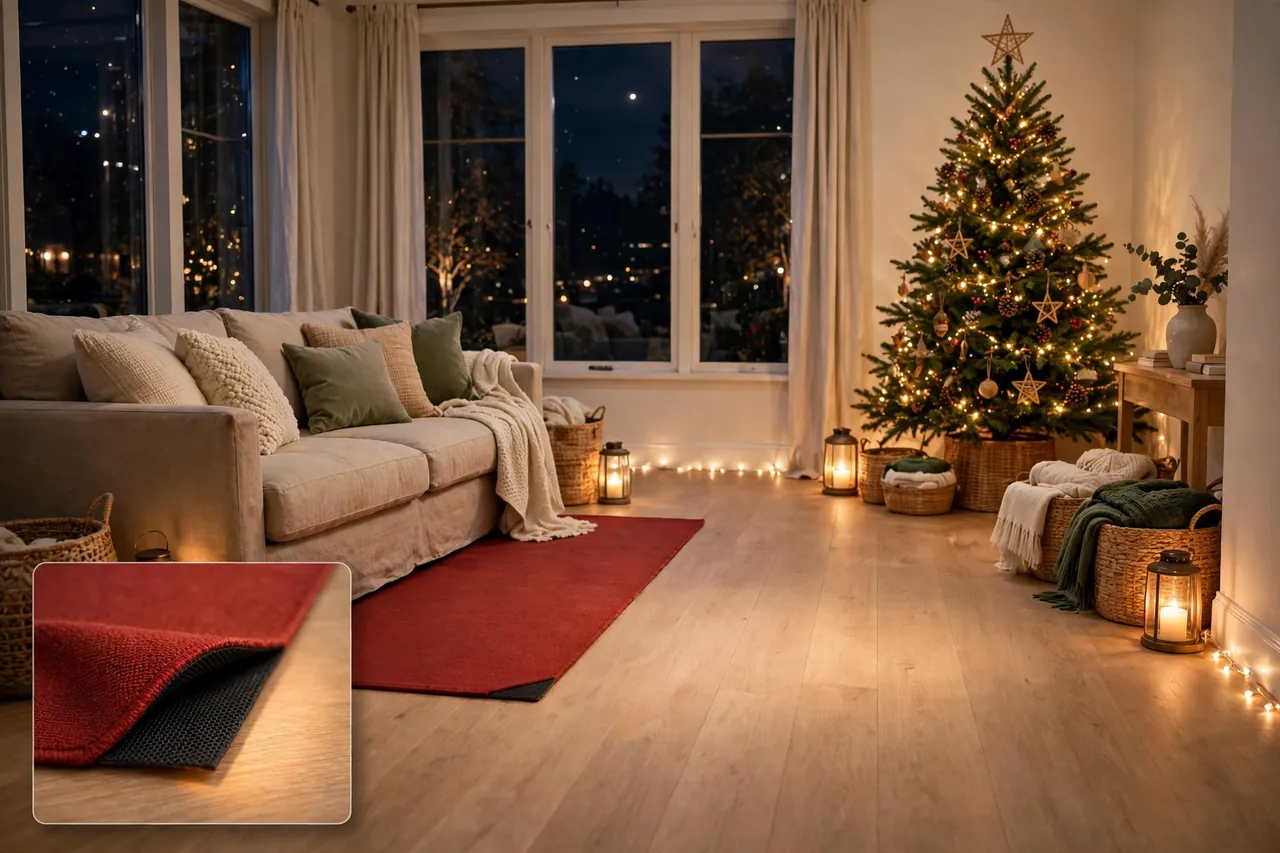
Secure every rug. A rug that slides is a fall waiting to happen, and the holidays bring extra foot traffic, excited kids, and pets racing through the house. Use a non-slip rug pad made for your floor type, and check that the pad itself grips well. Tape or pads made for hard floors can damage some finishes, so test a small spot first if you are unsure.
Keep cords off walkways completely. Run light cords along baseboards, behind furniture, or under a proper cord cover, and never run them under a rug, where heat can build up and damage can hide. If a cord must cross a path, use a low, flat cord cover that sits flush with the floor, and place it where people can see it. Battery lights solve this problem in many spots, because they need no cord at all.
Check your lights before you plug them in. Look for frayed wires, cracked sockets, and loose connections, and throw out any damaged set instead of trying to fix it. The U.S. Consumer Product Safety Commission (CPSC) gives this same advice in its holiday decorating safety guidance, and it also warns against using more than three standard-size sets of lights on a single extension cord. Use lights that carry the mark of a recognized testing lab, and switch them off when you leave the house or go to bed.
Keep real flames away from the floor display. A lantern with a real candle can tip over, and a curious pet or a small child can reach it. Battery candles give you the same warm glow with far less risk, and they work well inside floor lanterns, baskets, and window displays. If you do use a real candle anywhere, keep it in sight, keep it away from anything that can burn, and put it out before you leave the room.
Floor-Level Trees and Large Pieces That Anchor a Room
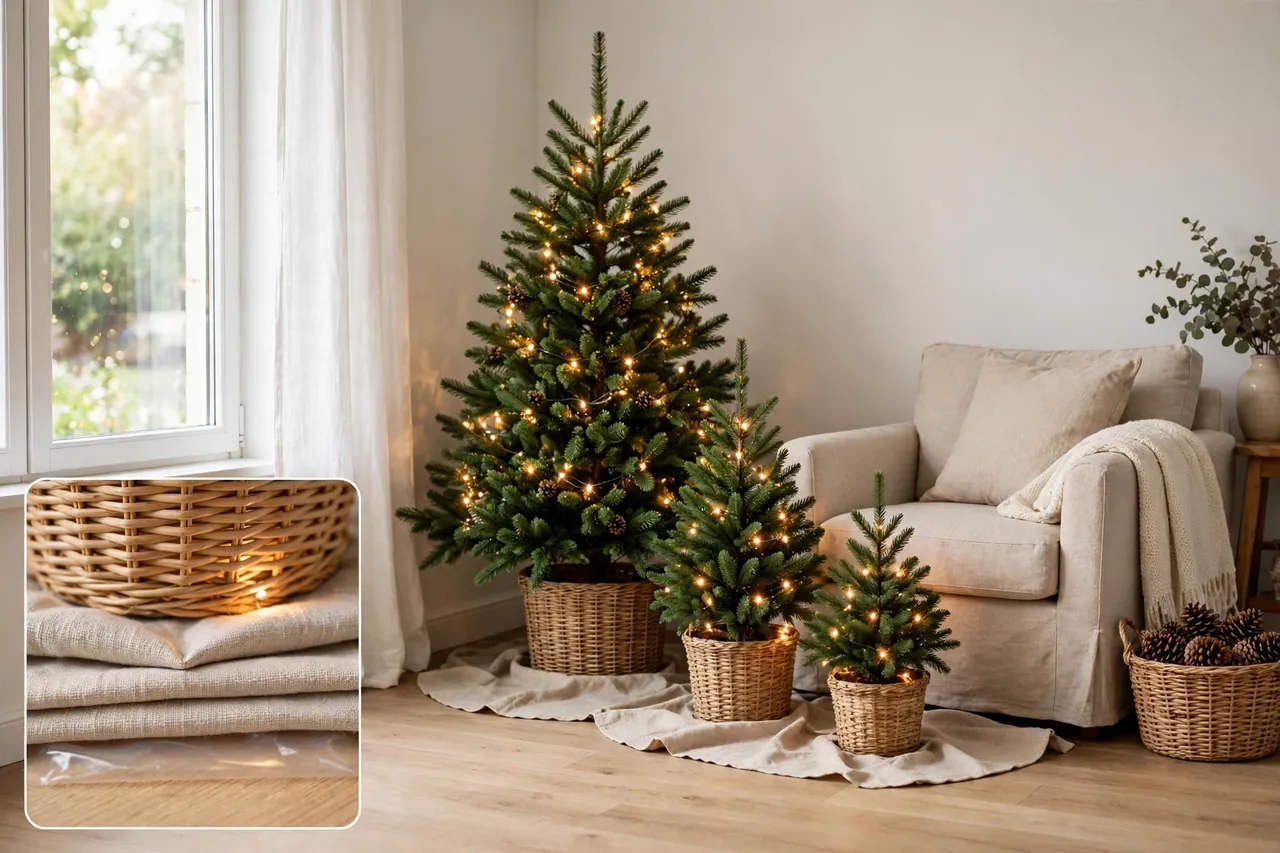
A floor-level tree is any tree that stands on the floor, from a full-size tree in a living room to a small potted evergreen by the front door. It anchors the room because the eye lands on it first, and everything else on the floor should support it, not fight it.
Start with the tree base. A tree skirt hides the stand, catches fallen needles, and protects the floor from water and scratches. A tree skirt also sets the color story for the whole room, so pick one that matches your rug and your ornaments instead of treating it as an afterthought. For a fresh tree, place a waterproof layer under the stand first, then lay the skirt over it, so a spill never reaches hardwood or carpet.
Small trees work hard in small spaces. A two- or three-foot tree in a woven basket fits beside a chair, in an entryway corner, or on a landing. A group of three small trees at different heights makes a charming floor scene in a corner that would otherwise sit empty. Keep each tree out of the door swing and away from heat vents, radiators, and fireplaces, because heat dries a live tree out fast.
Large floor pieces need the same care as trees. Oversized decorations can make a room feel grand, but a big piece also eats floor space fast. Measure the spot before you buy or build, and leave a clear border around the piece so people can walk past it without squeezing. A heavy piece needs a stable base, and a tall piece needs a spot where it cannot tip onto a walkway.
Baskets pull a floor display together. A basket of pinecones by the fireplace, a basket of rolled blankets by the sofa, and a basket holding a small tree by the door all share one idea: they gather loose things into one neat shape. That neatness is what keeps a floor display from looking like clutter. Choose baskets with flat, stable bottoms, and keep them against a wall or beside furniture.
Rugs, Runners, and Layered Mats
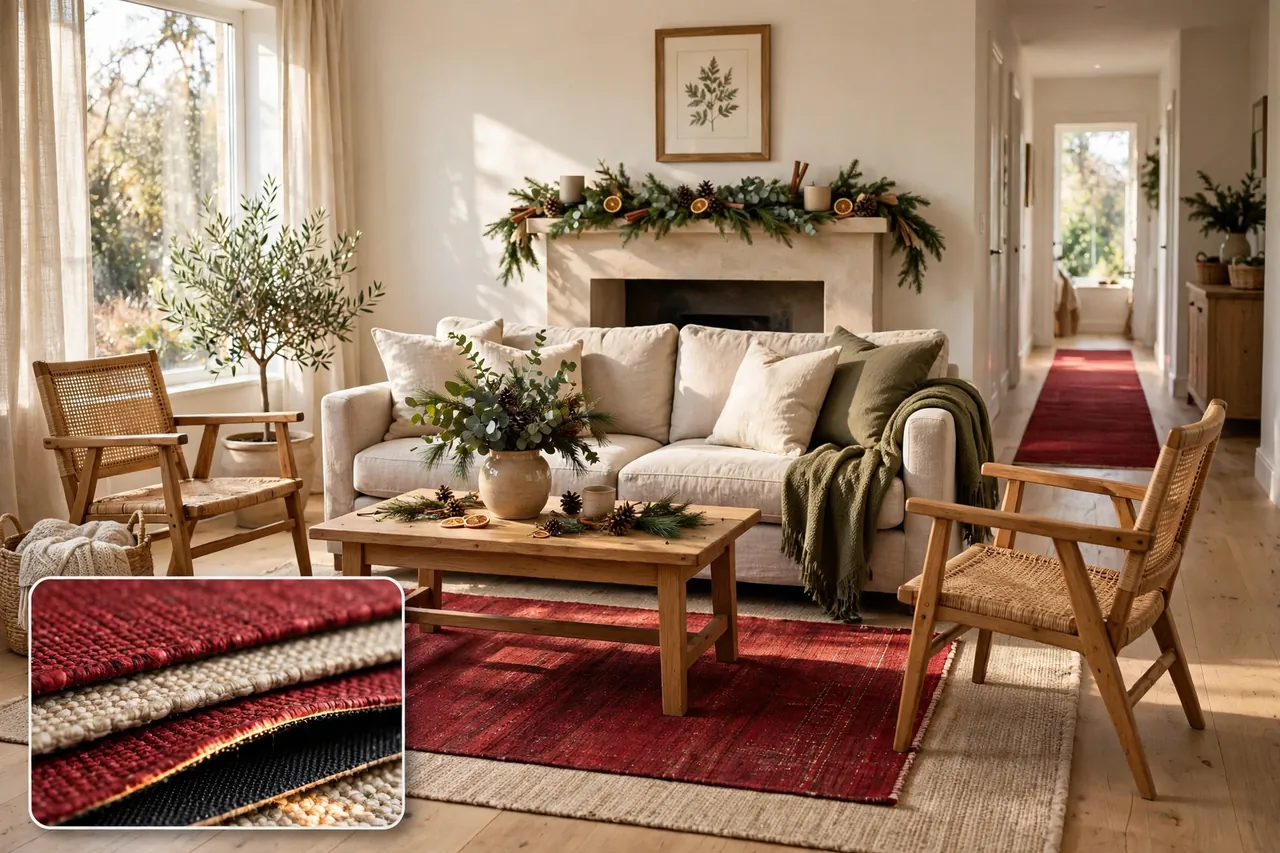
Rugs do more for Christmas floor decorations than any other single piece. They add color, warmth, and softness, and they define where people gather. A rug under the sofa and chairs turns scattered furniture into one cozy seating area. A runner down a hallway turns a plain passage into a welcoming path.
Pick the right size first, and the pattern second. In a seating area, a rug should sit under at least the front legs of the sofa and chairs, so the furniture feels connected instead of floating. Around a dining table, the rug should stretch far enough that chairs stay on it when you pull them out. In a hallway, a runner should leave a visible margin of bare floor on each side, and it should never cover a floor vent or a change in floor level.
Layering adds holiday color without buying a whole new rug. Lay a festive flatweave rug or a seasonal runner over your everyday rug, or layer a doormat over a larger plain mat at the door. Keep the top layer thin and flat, so it does not curl at the edges or catch a toe. Thick, shaggy layers look cozy in photos, but they trip people in real life.
Choose low, dense pile for busy holiday rooms. Low pile is easier to vacuum, it holds up under extra guests, and it lets chairs and feet move freely. Save deep, plush pile for a quiet bedroom corner, where few people walk. If pets or kids will play on the floor, pick a pattern that hides a little mess, and keep a handheld vacuum nearby for needles and crumbs.
Match the rug to the floor under it. A warm red or cranberry rug glows on pale wood, while a deep green or ivory rug calms a dark floor. On carpet, a flatweave rug or a thin runner adds color without bunching. On hardwood or tile, a rug pad protects the finish and stops sliding, and it also adds a little cushion underfoot.
Pathway Lights That Guide Feet Without Tripping Them
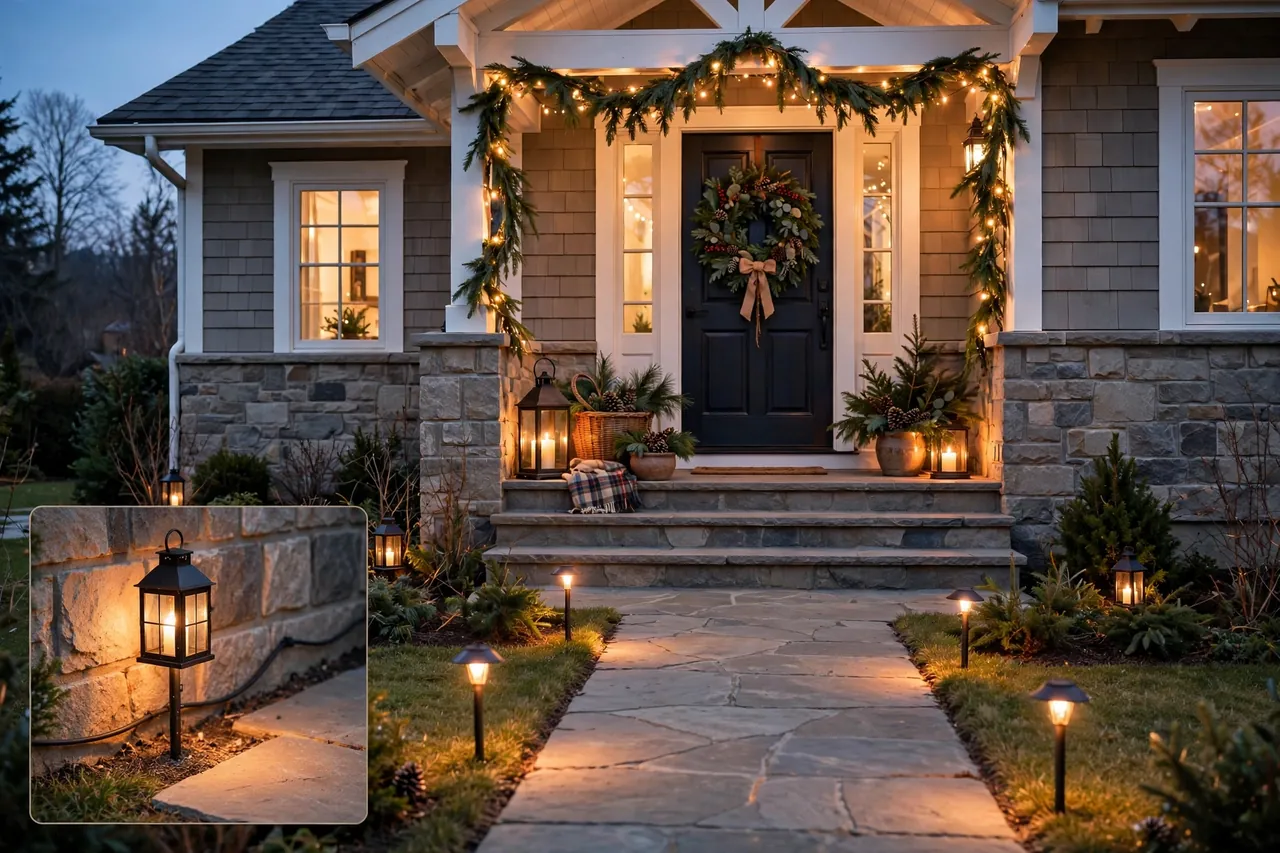
Pathway lights do two jobs at once. They look magical, and they show people where to step after dark. That second job is the one that matters most, so place them to light the path, not to decorate the middle of it.
Inside, use low light along the edges of a room or hallway. Battery string lights tucked behind furniture, a row of battery lanterns along a wall, or a lighted garland on a stair rail all guide feet without adding cords to the floor. Keep the light soft and steady, so it helps eyes adjust instead of dazzling them.
Outside, line the edges of the walk, never the center. Stake lights or lanterns sit best just off the path, where they mark the border without narrowing it. If you light a porch or a patio, keep the entry steps fully clear, and make sure the brightest light falls on the steps themselves, where a missed step hurts most. For more ideas on outdoor lighting, see our guide to DIY Christmas lighting before you run a single cord.
Watch the cords as carefully as the lights. Outdoor lights need outdoor-rated cords and lights, and every connection needs protection from rain and melting snow. Never run a cord across a walkway, a driveway, or a porch step. If you cannot reach an outlet without crossing a path, move the display, add a battery light, or use a different outlet. A display that needs a cord across a walk is a display in the wrong spot.
Check the ground, too. A light stake that wobbles, a lantern that tips in wind, and a cord cover that lifts at the edge can all trip someone. Push stakes firmly into soil, weigh down lanterns, and walk the path yourself after dark to see it the way a guest will. Fix anything that moves, lifts, or hides in shadow before the first party.
Entryways, Hallways, and Small Rooms
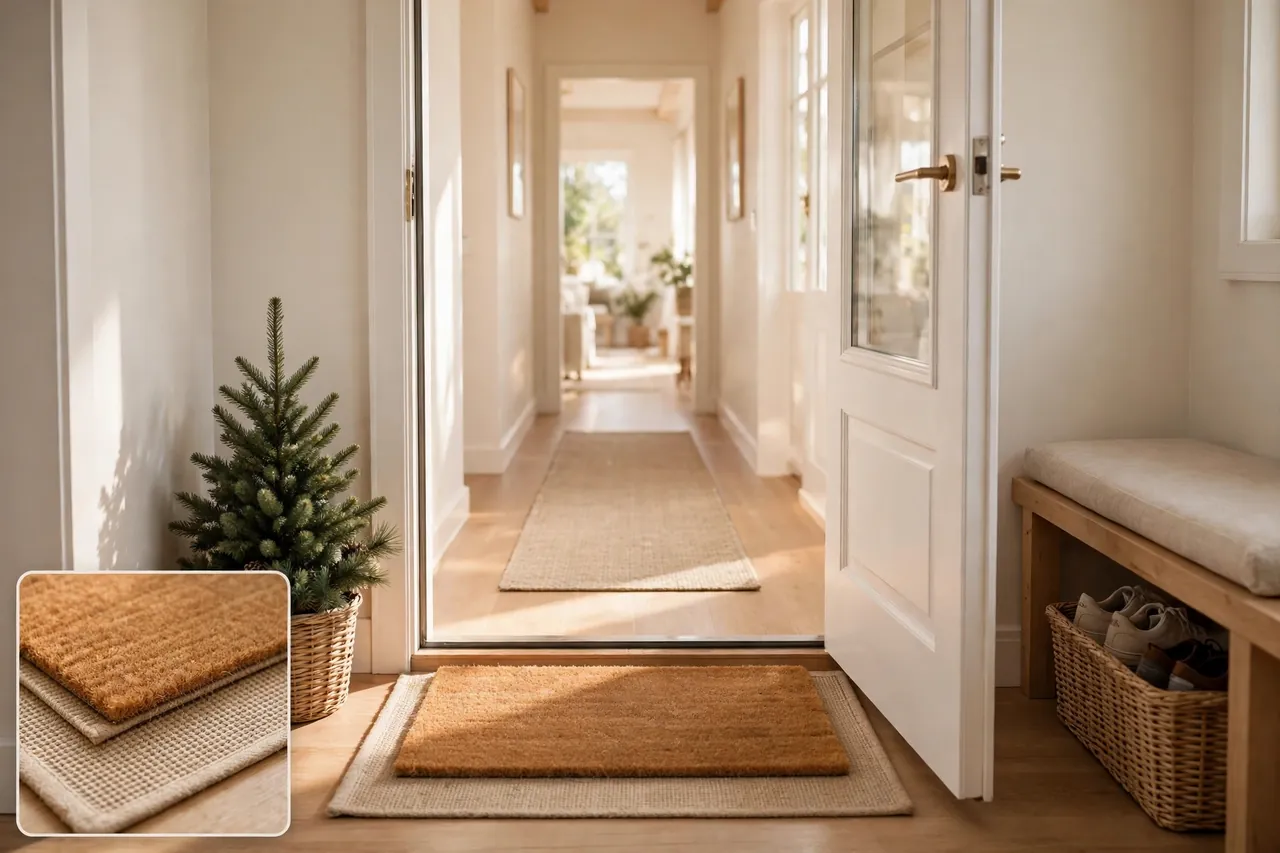
Entryways set the tone for the whole house, and they also take the most abuse. Wet boots, shopping bags, coats, and guests all arrive here first. The best entryway floor display is simple: one good mat, one neat piece beside the door, and a clear path through.
Layer a doormat over a larger plain mat for a finished look, and keep both layers flat and thin. Place a basket or a small tree beside the door, never in front of it, and keep it clear of the full door swing. A bench with a basket underneath gives guests a place to sit and a place to stash shoes, which keeps the floor clear all season.
Hallways follow one rule above all: the floor belongs to people. In a narrow hall, decorate the walls and keep the floor bare, except for a flat runner with a non-slip pad. If you want a floor piece in a hallway, choose one slim item against the wall, like a tall lantern or a slim basket, and leave the rest of the width open.
Small rooms need the same discipline. A small space can still feel fully decorated for Christmas when you pick a few floor pieces that earn their space. One rug, one small tree, and one basket often beat five small pieces that crowd the floor. When every piece has a clear job, a small room feels cozy instead of cramped.
Do not forget the hearth and the fireplace wall. The floor in front of a fireplace draws the eye, and it also sits near heat. Keep rugs, baskets, and trees a safe distance from the firebox, use flame-resistant materials near the hearth, and never place a live tree beside a working fireplace. Our guide to fireplace Christmas decorations shows how to dress that wall without crowding the floor in front of it.
A Simple Step-by-Step Floor Decorating Plan
You do not need a big budget or a whole weekend to decorate your floors for Christmas. Follow these steps in order, and the room will come together without rework.
- Walk every path in the room and mark the space that must stay clear, including door swings and exits.
- Clean the floors, then place rugs and runners with non-slip pads, and test each one by walking across it.
- Place the largest piece first, usually the tree or a large floor decoration, in a corner or against a wall.
- Add baskets and lanterns beside furniture, never in the middle of a walkway.
- Run lights along walls and baseboards, or switch to battery lights where a cord would cross a path.
- Step back, then walk the room again at night with the lights on, and move anything that blocks, slides, or trips you.
This order saves time because it stops the most common mistake: decorating first and discovering the safety problem last. When the path is clear and the rugs are secure, every pretty piece you add after that is a bonus, not a hazard.
Quick Reference: Where Each Floor Piece Works Best
Use this table when you shop or rearrange, so each piece lands where it helps most.
| Floor piece | Best spot | Watch out for |
|---|---|---|
| Rug or runner | Seating area, hallway, entry | Sliding, curling edges, covered vents |
| Floor tree in a basket | Corner, beside a chair, entry corner | Door swing, heat vents, tipping |
| Tree skirt | Under the tree, over a waterproof layer | Water spills, tripping on bunched fabric |
| Basket of greenery or blankets | Beside the sofa or fireplace wall | Blocking a path, shedding needles |
| Floor lantern | Against a wall, beside the door | Real flames, tipping, cords |
| Pathway lights | Edges of walks, porch, and patio | Cords across paths, loose stakes |
The table also works as a shopping check. If a piece has no clear spot on this list, it probably does not belong on your floor this year. That is a kind choice, not a strict one: a room with breathing space feels more festive than a room packed edge to edge.
Common Floor Decorating Mistakes to Avoid
The first mistake is too many floor pieces. A room needs open floor to feel calm, and guests need open floor to move. Pick your favorite pieces, and store the rest for another room or another year.
The second mistake is a rug that is too small. A tiny rug floating under a coffee table makes a room look unfinished, and it slides more easily than a larger rug. Go bigger when you can, and let the rug anchor the furniture.
The third mistake is hiding cords under rugs. It looks tidy, but it hides damage, traps heat, and creates a soft bump that trips people. Route cords where you can see them, along a wall, or remove the cord problem with battery lights.
The fourth mistake is placing decorations near heat. Trees, baskets, and fabric near fireplaces, radiators, and heat vents dry out and become a fire risk. The National Fire Protection Association (NFPA) reports, as summarized by State Farm’s holiday fire safety tips, that Christmas trees start an average of 143 home fires a year in recent data, and that heat sources placed too close play a major role. Keep a clear gap between heat and anything that can burn.
The fifth mistake is forgetting the floor after the holidays start. Needles pile up, rugs shift, and cords creep back onto paths as people move furniture for parties. Spend five minutes each week walking your paths, straightening rugs, and checking cords, and your display will stay safe all season.
Related Guides
If you enjoyed planning your floors, these guides take the next step. Read about Christmas tree skirt ideas to finish the base of your tree, browse giant Christmas decorations for large-scale floor pieces, and explore lighted Christmas decorations for glow that works indoors and out.
Frequently Asked Questions
Can I use a rug to hide the tree base?
Yes, if you choose a flat, low-pile rug with a non-slip pad underneath. Let the rug stretch past the tree’s outer branches, keep it flat so no edge curls up, and place a waterproof layer under a fresh tree stand first. Avoid thick, shaggy rugs here, because they trap moisture and make cleanup harder.
How do you decorate a narrow hallway for Christmas?
Keep the floor clear and decorate the walls instead. Use a flat runner with a non-slip pad, a garland on the wall, or small wreaths hung high, and keep every floor piece tight against the wall. In a narrow hall, the floor belongs to people, so one slim lantern or basket is plenty.
Where should I put a Christmas tree so it does not block the room?
Place it in a corner or against a wall, clear of door swings, exits, and heat sources like fireplaces and radiators. Leave a full walking path around it, hide the stand with a skirt, and route its light cord along the wall, never across the floor. A corner tree still shines, and the room stays easy to walk through.
Are pathway lights safe on indoor floors?
Yes, when you keep them along walls and out of walkways. Battery lights work best indoors, because they need no cord at all. If you use plug-in lights, run cords along baseboards, use a flat cord cover only where people can see it, and never run a cord under a rug or across a path.
How do I keep rugs from sliding on hardwood floors?
Use a non-slip rug pad made for hardwood, sized just smaller than the rug itself. Clean the floor first, lay the pad flat, and press the rug down over it. Check the rug after a few days of foot traffic, and replace a worn pad, because an old pad loses grip and lets the rug creep.
Before you plug in any light or place any candle, remember this short safety note. This guide shares general decorating ideas, not professional electrical or fire safety advice. If a cord looks damaged, an outlet feels warm, or a display sits close to heat, stop and fix the problem first, or ask a qualified professional for help. A safe floor is the foundation of a happy holiday.
Start tonight with one room. Walk its paths, lay one good rug, and place one floor piece you love in a corner that needs it. Then step back and enjoy the glow. Your floors carry the whole holiday, so give them the same care you give the tree, and they will give it right back, every time you walk through the door.


