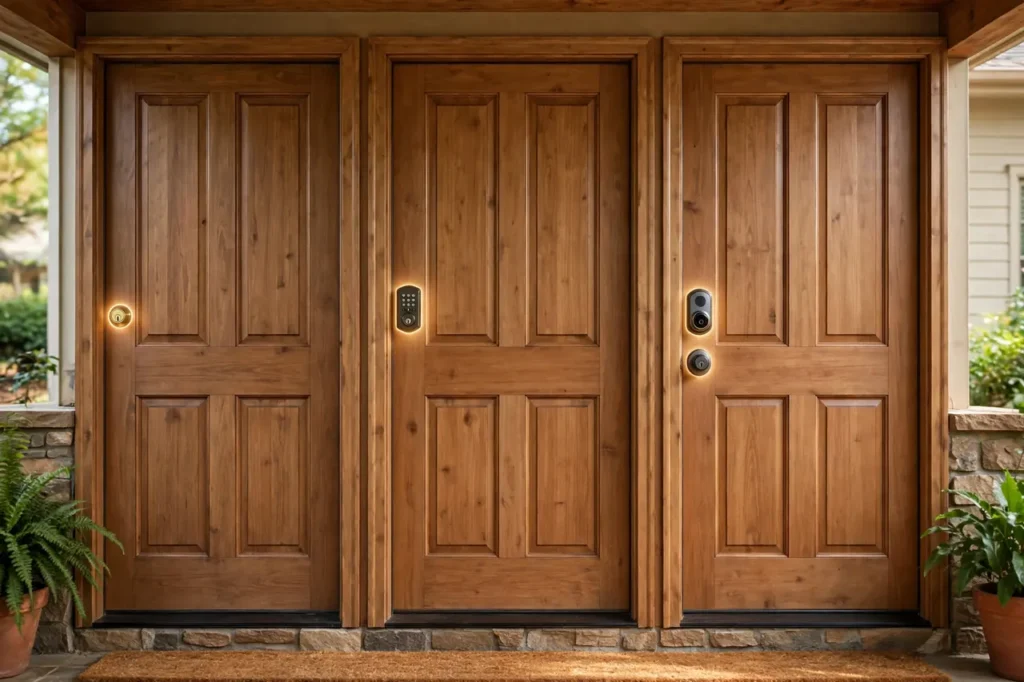
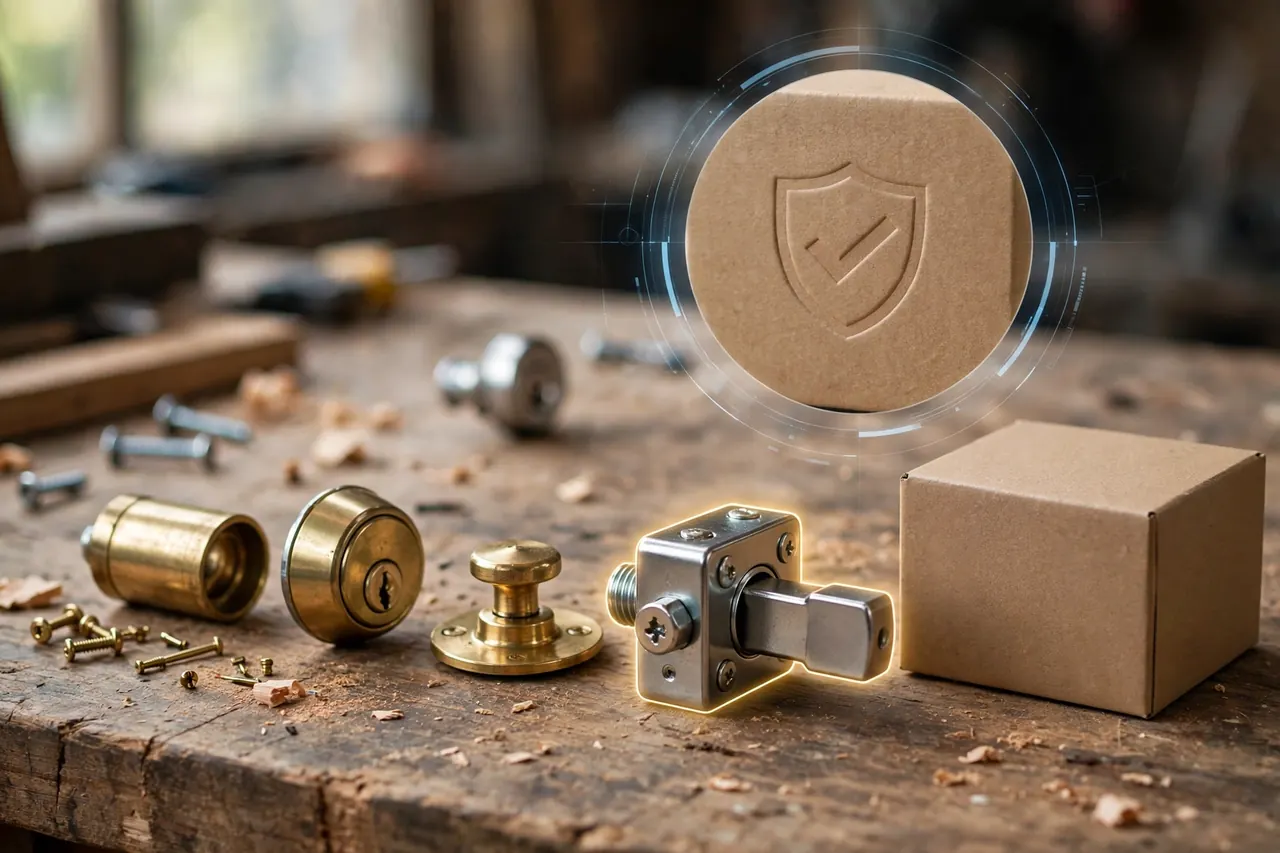
High security door locks are not locks with a scary name or a high price. A lock truly earns the label when it has a tested top grade — ANSI/BHMA Grade 1 or a BHMA Certified AAA rating — a cylinder built to resist picking, bumping, and drilling, a hardened steel bolt, and keys that cannot be copied at a mall kiosk. One more piece matters just as much: the lock has to sit in a reinforced door and frame.
Here is the honest limit. No lock is burglar-proof. What a real high security lock buys you is time, noise, and effort — and that matters, because most break-ins involve force. In the FBI’s Uniform Crime Reporting data, 59.2% of burglaries involved forcible entry, while 34.3% were unlawful entries with no force at all, such as walking through an unlocked door or using a copied key. A strong door system makes the force slow and loud. Key control handles the quiet kind of entry.
What “High Security” Actually Means
“High security” is not an official label that any agency stamps on a box. Any brand can print it. So ignore the words on the front of the package and check four things instead:
- A certified grade. An independent lab has tested the lock’s strength and durability against a written standard.
- A protected cylinder. The cylinder (the part your key turns) resists picking, bumping, and drilling, not just a firm twist.
- A hardened bolt. The deadbolt itself resists sawing, prying, and hammer blows.
- Controlled keys. Extra keys can only be made with your permission, by an authorized dealer.
A lock that has all four is a high security lock in the real sense. A lock that has only a big price tag is just an expensive lock. The sections below explain each piece in plain words, then show you the door hardware around the lock — because that is where most “secure” doors actually fail.
The Grade on the Box: Grade 1 and BHMA AAA in Plain Words
Two grading systems appear on lock packaging in the United States, and they confuse almost everyone. Here is the simple version.
ANSI/BHMA grades: 1, 2, or 3
BHMA (the Builders Hardware Manufacturers Association) writes the test standards, and ANSI adopts them. Deadbolts are tested under the ANSI/BHMA A156.36 standard and graded 1, 2, or 3. Grade 1 is the highest. To earn it, a deadbolt must survive 10 strikes of 75 foot-pounds of force — think of repeated hard blows in a test rig — and still work after 250,000 open-and-close cycles. Grade 2 drops to 5 strikes and 150,000 cycles. Grade 3, the basic builder grade in many homes, is tested to only 2 strikes and 100,000 cycles.
For a front or back door, Grade 1 is the grade to look for. It was designed for busy commercial doors, which is exactly why it holds up so well on a house.
BHMA Certified letters: the AAA rating
For home locks, BHMA also runs a Certified Products program with letter grades that are easier to read. Each lock is scored in three areas — Security, Durability, and Finish — and each area gets a letter: C means good, B means better, A means best. A lock marked AAA earned the top mark in all three. BHMA explains the system in its homeowner guide to certified locks.
One honest warning about grades: they mostly test strength and wear. They do not, by themselves, prove a cylinder is hard to pick. Pick and drill resistance is covered by a separate listing, UL 437, which is why the strongest locks carry both a Grade 1 rating and a UL 437 listing. When you shop, look for the pair.
Inside the Cylinder: Pick, Bump, and Drill Resistance
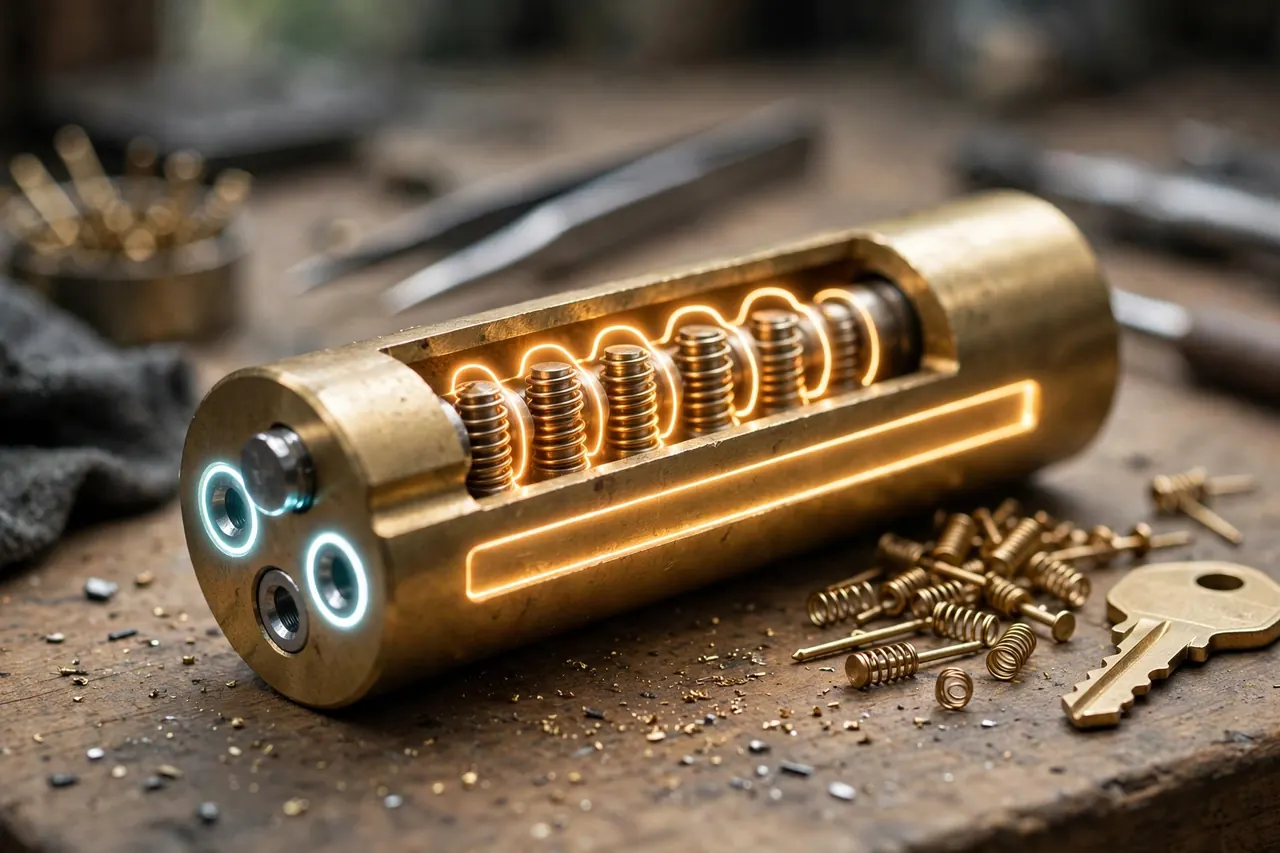
The cylinder is where quiet attacks happen. A standard builder-grade cylinder can be opened with simple tools in ways that leave almost no trace. High security cylinders are built to slow down or stop three attacks:
- Picking. A picker lifts each pin inside the cylinder with a thin tool until the lock opens. High security cylinders fight back with shaped pins — spool, mushroom, and serrated pins — that catch and jam when a tool lifts them. Better designs add a sidebar, a second locking bar that must also line up before the plug can turn. Medeco’s M4 cylinder, for example, uses side pins, a lift pin, and a moving element in the key that must all align before the sidebar releases.
- Bumping. A bump key is a specially cut key that is tapped once to bounce the pins open. It is fast and quiet, which is why bump resistance matters. Sidebars, telescoping pins (a pin inside a pin, used by Mul-T-Lock), and tight manufacturing tolerances make bumping far harder, because a single jolt cannot line everything up at once.
- Drilling. A drill attacks the pins or the screws that hold the cylinder. High security cylinders place hardened steel pins and inserts exactly where a drill bit wants to go, and some add a free-spinning guard in front of the cylinder that turns with the bit instead of letting it bite.
This is the one area where price and protection really do connect. A certified grade tells you the lock body is strong. These cylinder details tell you it is also smart.
Keys You Control: Restricted Keyways
Remember the FBI numbers from the top of this guide: about a third of burglaries involved no force at all. One way that happens is a key you do not know exists — a copy made in two minutes at a hardware store by a guest, a contractor, or a former tenant.
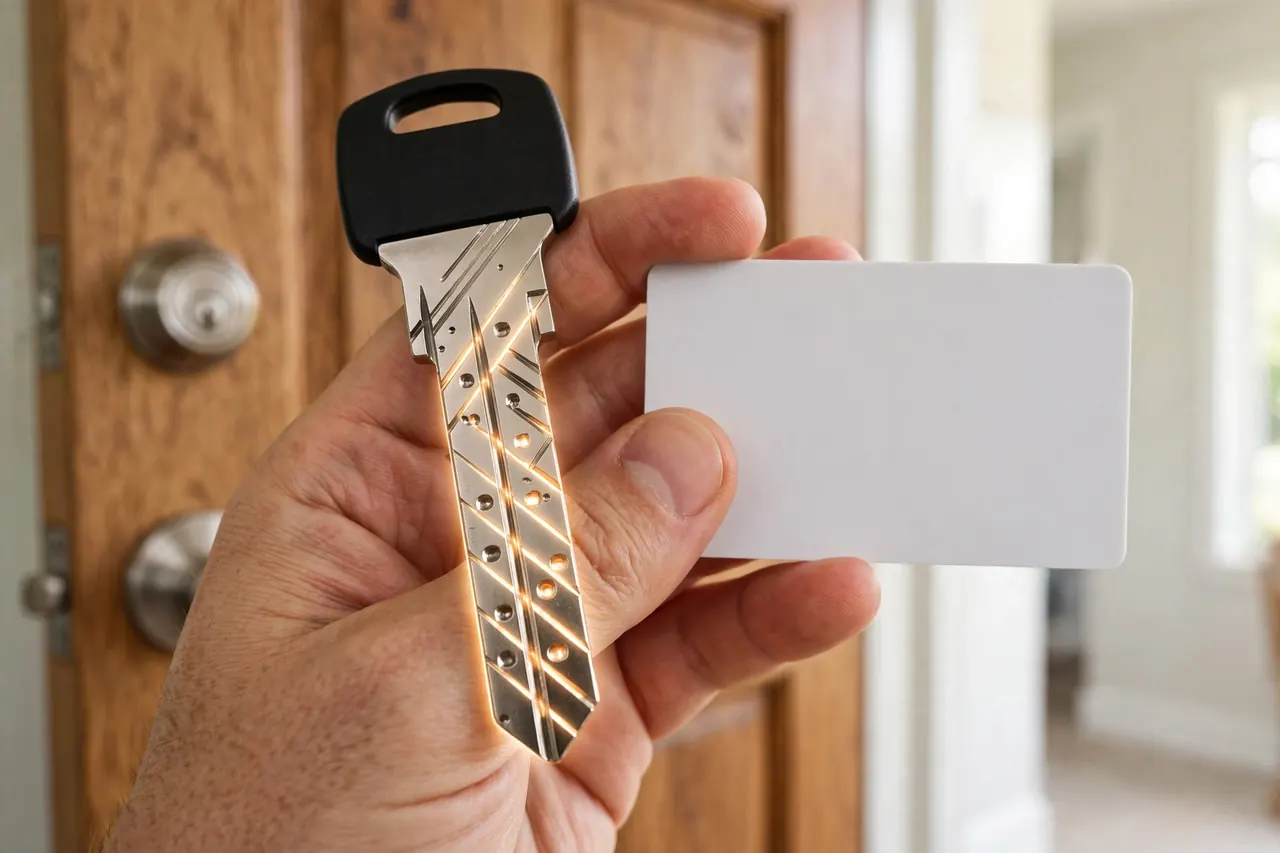
Restricted keyways solve this. On systems like Medeco and Mul-T-Lock, the key blank itself is patented, so blanks are not sold openly. Copies can only be cut by an authorized dealer, and only when you present your key card or authorization. Mul-T-Lock supplies a coded key card with its MTL600 locks for exactly this purpose. No card, no copy.
If you have just moved into a home, treat the keys as unknown no matter what lock is fitted. Rekey it or replace it on day one, and choose a restricted system if other people — cleaners, dog walkers, short-term guests — will ever hold a key.
The Bolt Itself: Hardened Steel and a Full 1-Inch Throw
The deadbolt is the bar that slides from your door into the frame. For real security it should be:
- Long enough. A full 1-inch throw (the length the bolt extends into the frame) is the standard to look for on quality deadbolts.
- Hardened steel. A hardened bolt resists a saw blade. Some bolts include a hardened pin or roller inside that spins when a saw touches it, so the blade cannot get a clean cut.
- Driven by a strong lock body. The bolt only helps if the housing and tailpiece do not twist apart under a wrench attack — part of what Grade 1 testing checks.
A short, soft bolt in a fancy cylinder is still a weak point. Check the throw and the material, not just the brand.
The Part Most People Miss: The Door Around the Lock
Here is the uncomfortable truth locksmiths repeat for a reason: most forced entries do not defeat the lock. The door frame splits, the strike plate tears out, or the door itself cracks. The lock is left hanging in a broken frame, still locked.
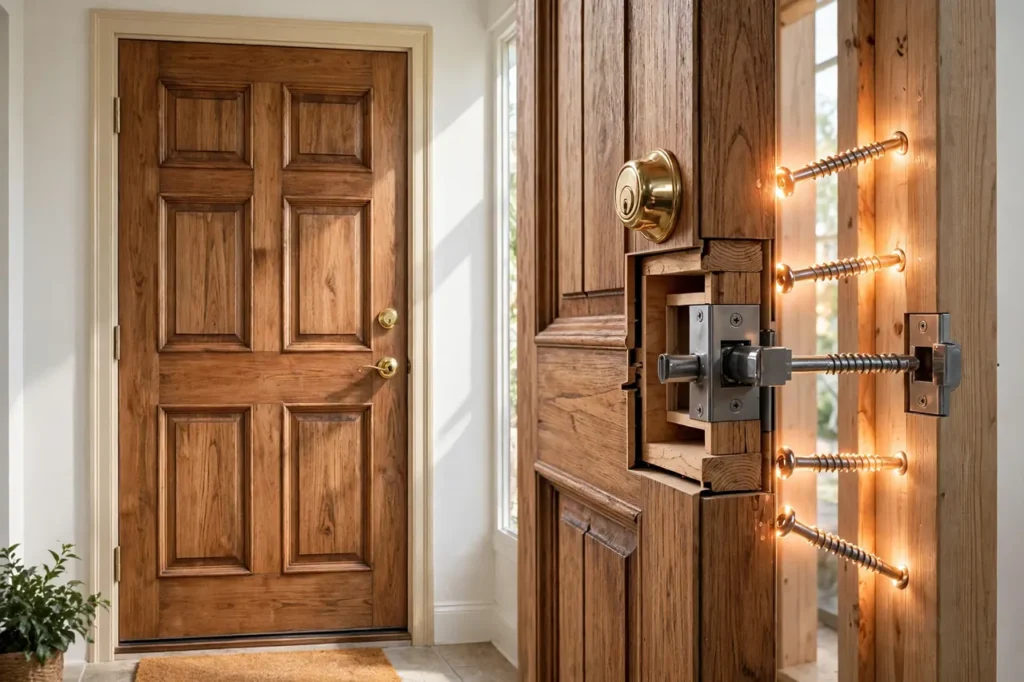
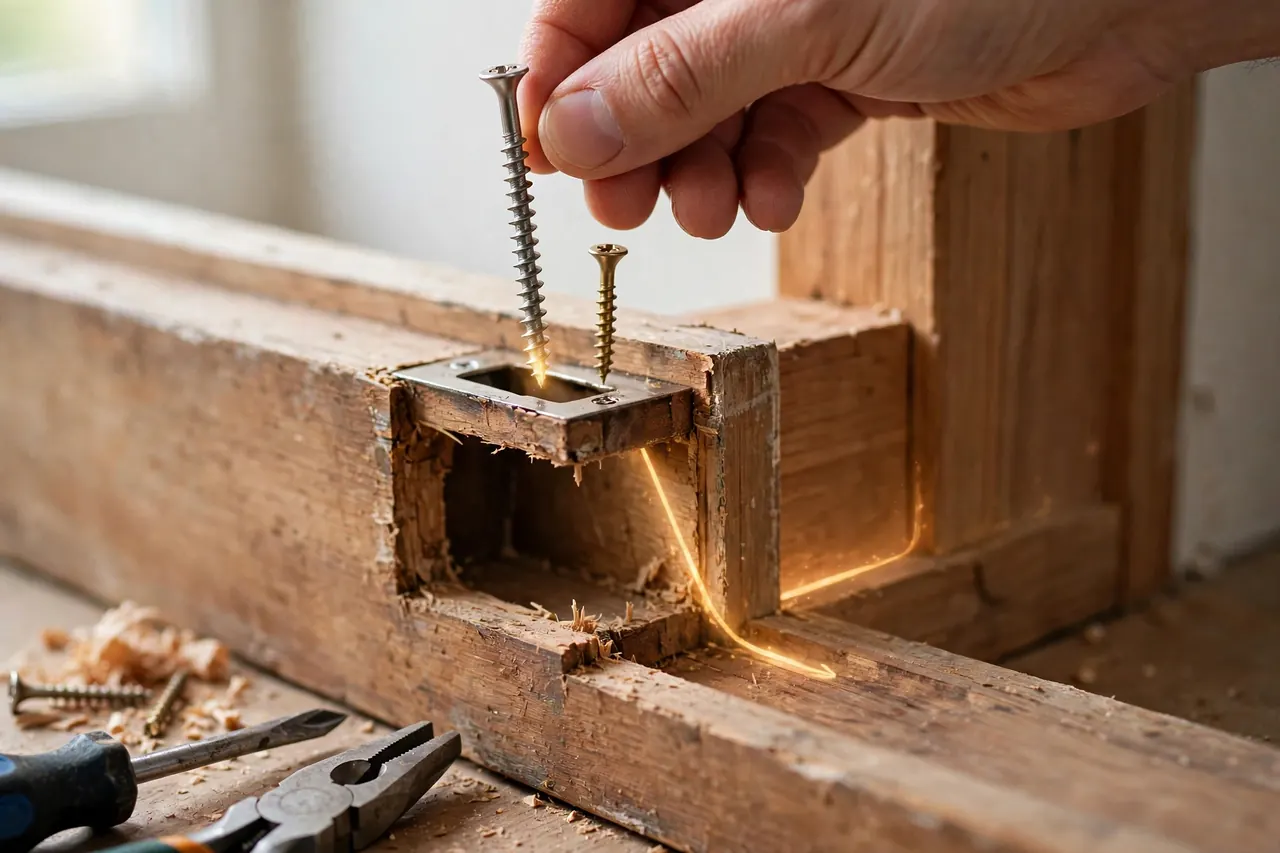
The strike plate is the small metal plate on the frame that the bolt slides into. On many homes it is held by short screws, about 3/4 inch long, that bite only into the soft frame trim. A kick concentrates all its force on that plate. A reinforced strike — a larger, heavier plate, ideally a full box strike that cups the bolt — spreads the force out. The key detail is the screws: 3-inch screws pass through the frame and anchor into the wall stud behind it. That one change turns the weakest point of the door into one of the strongest.
Do the same check on the hinges. Hinge screws on many doors are just as short. Swapping them for 3-inch screws ties the door to the stud on that side too.
Finally, the door and its fit matter. A solid-core or metal-clad exterior door resists splitting far better than a hollow-core door. And the door has to close true: a door that sags or binds never lets the bolt seat fully, which quietly weakens everything above. If your door rubs, gaps unevenly, or leaks air around the edges, fix the fit first — our door weatherstripping guide walks through the alignment and gap checks that show whether a door is closing straight.
💡 Practical Home Tip: Before you spend anything on a new lock, spend a few dollars on screws. Remove one screw from your strike plate and one from a hinge. If they are under an inch long, replace every screw in both with 3-inch screws that reach the wall stud. It takes about fifteen minutes, costs very little, and it is the single biggest kick-in upgrade most doors can get.
How Burglars Actually Get In — and What That Buys You
The FBI’s burglary data (Uniform Crime Reporting, 2013, the breakdown published on the FBI burglary page) found 59.2% of burglaries involved forcible entry, 34.3% were unlawful entries with no force, and 6.4% were attempted forcible entries. Homes accounted for 74.0% of all burglaries.
Read that the way a burglar would. Force is the common route, so the goal of a high security door is not to be impossible to open. The goal is to make force take longer and make more noise than the intruder is willing to risk. A Grade 1 deadbolt in a reinforced frame does exactly that: kicks that would split a standard frame in seconds instead thump, hold, and draw attention.
The no-force third points the other way. Locks only work when they are used, and keys only protect you when you control the copies. Lock the door every time, and treat key control as part of the lock, not an extra.
Myths vs. Real Protection
Myth: A higher price means a more secure lock. Real protection: Price follows finish, brand, and electronics as much as strength. A plain Grade 1 deadbolt for under $60 can out-test a decorative lock costing three times more. Buy the grade and the cylinder design, not the look.
Myth: A “pick-proof” lock exists. Real protection: No cylinder is pick-proof. Skilled people with time and the right tools can open almost anything. High security cylinders raise the skill, time, and tool level so high that picking stops being a realistic entry method for a home.
Myth: Smart locks are always weaker than keyed locks. Real protection: A smart lock is only as strong as its deadbolt and cylinder underneath the electronics. Some carry the same Grade 1 hardware as the locks in this guide. If you want app or keypad access without giving up tested strength, our smart key lock guide explains what to check before you buy.
Myth: Double-cylinder deadbolts are always safer. Real protection: A double-cylinder lock needs a key on the inside too, which stops a hand reaching through broken glass — but it can also trap your family in a fire if the key is not in the lock. Many local fire codes restrict them on main exits. For most homes, a single-cylinder deadbolt plus laminated glass or a relocated thumbturn is the safer balance. Check your local code before fitting one.
Myth: One great lock secures the house. Real protection: Burglars choose the easiest door, not the best-defended one. The back door, the garage entry door, and ground-floor windows need the same thinking as the front door, even if the hardware there is simpler.
Verified High-Security Deadbolts Worth Your Money
Every lock below was checked against a manufacturer or retailer source on October 19, 2026, and every price is the price that source showed on that date. Medeco and Mul-T-Lock sell through authorized dealers and locksmiths, so their figures are manufacturer list prices; expect dealer quotes to vary, and budget for installation on top. The Schlage is a standard retail product you can install yourself with a screwdriver.
High-security deadbolts compared
| Lock | Rating | Key control | Price checked Oct 19, 2026 | Best for |
|---|---|---|---|---|
| Schlage B60N single-cylinder deadbolt | ANSI/BHMA Grade 1, BHMA AAA certified | Standard keys — copies anywhere | $58.92 at Target | Grade 1 strength on a budget; easy DIY install |
| Medeco Maxum (M4) single-cylinder deadbolt | ANSI/BHMA A156.36 Grade 1, UL 437 listed | Patented — copies only through authorized Medeco dealers | $307 list, Medeco price book | Maximum pick and drill resistance with strict key control |
| Mul-T-Lock Hercular (MTL600) single-cylinder deadbolt | Grade 1 (manufacturer rating) | Key card required for copies at authorized dealers | $281.94 list, Mul-T-Lock USA price book | Telescoping-pin cylinder and card-controlled keys |
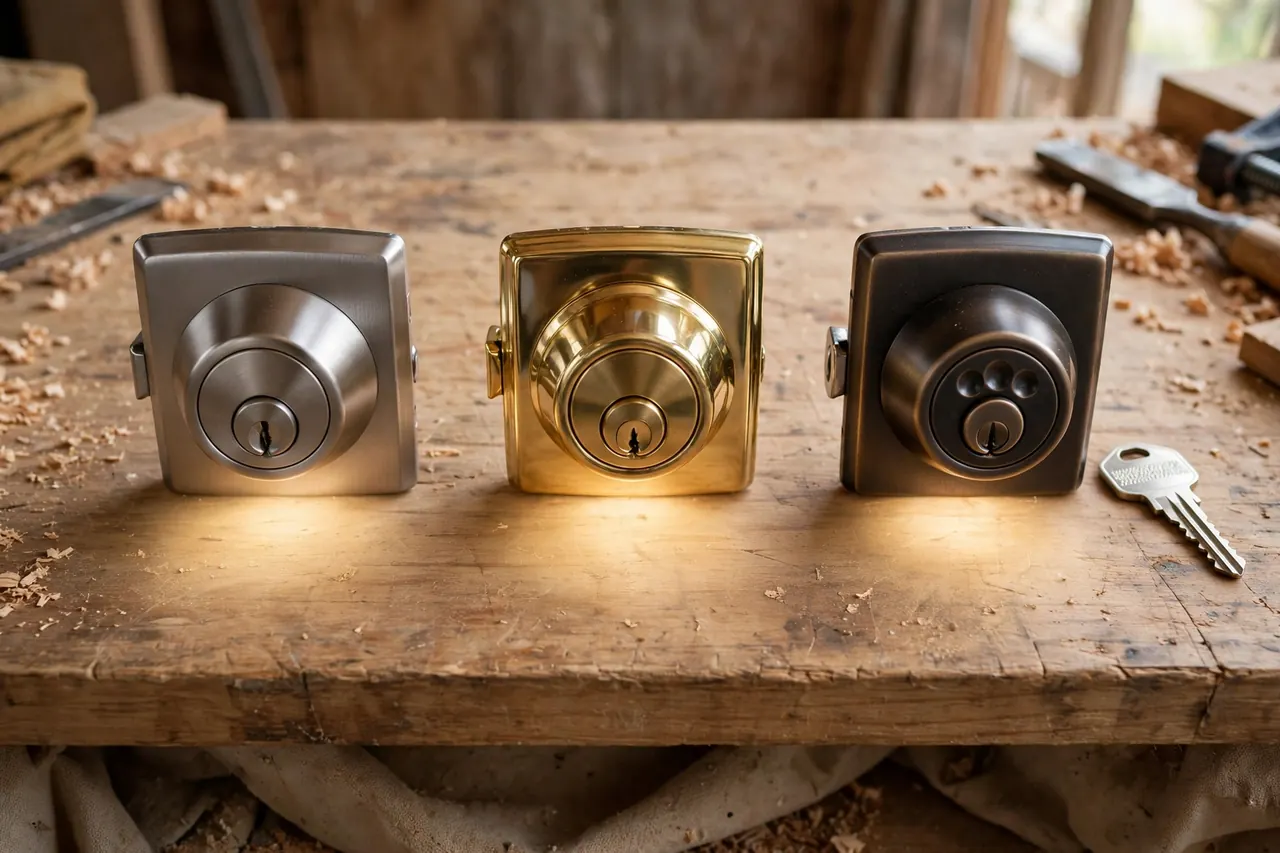
Schlage B60N. The value pick. It carries the same Grade 1 / AAA certification as locks costing far more, with anti-pick pins and a hardened bolt, in a plain package you can buy at a big retailer. Its weakness is key control: Schlage keys can be copied anywhere, so pair it with the discipline of knowing who holds your keys.
Medeco Maxum. The maximum-security pick. Medeco’s own catalog describes the Maxum as ANSI/BHMA A156.36 Grade 1 and UL 437 listed, with solid-brass construction and hardened drill pins (full details in the Medeco Maxum deadbolt catalog). Its sidebar cylinder design is built to defeat picking and bumping, and its patented keys cannot be duplicated without authorization. Consumer Reports’ lab testing has also rated a Maxum deadbolt at the top for resisting kick-ins, drilling, and picking, as reported by locksmith reviewers of those results.
Mul-T-Lock Hercular MTL600. The key-control pick. Its telescopic pin-within-a-pin cylinder is a genuinely different mechanism from standard pin tumblers, and the MTL600 platform adds a patented floating element. Keys are cut only by authorized dealers against your key card. Like the Medeco, plan on a locksmith for supply and fitting.
Whichever you choose, order it with the reinforced strike fitted the same day. A lock installed into a weak frame is a job half done.
How to Check the Lock You Already Have
You may already own a decent lock. Five quick checks tell you where you stand:
- Find the grade. Look for “Grade 1”, “Grade 2”, or a BHMA Certified letter mark on the packaging, the lock’s paperwork, or the brand’s product page for your model.
- Measure the bolt. Lock the door open and turn the key. The bolt should extend about 1 inch from the door edge.
- Pull one strike screw. If the strike plate screws are under 1 inch, that is your first fix (see the Practical Home Tip above).
- Count your keys. If you cannot name every person who holds a copy — or you never rekeyed after moving in — treat the keying as compromised.
- Test the fit. The bolt should throw fully with the door pulled normally closed, not only when you lean on the door. A bolt that barely reaches the strike is barely locking.
When to Call a Locksmith
Fitting a standard deadbolt like the Schlage B60N is a normal DIY job. Call a qualified locksmith instead when you choose a restricted-key system such as Medeco or Mul-T-Lock (dealers cut and register the keys), when the door or frame is damaged or badly misaligned, when you want several doors keyed alike on a controlled system, or when an older mortise lock is involved. A good locksmith will also tell you honestly when the door itself — not the lock — is the part that needs replacing.
Frequently Asked Questions
What is a Grade 1 lock?
A Grade 1 lock is the highest-rated lock in the ANSI/BHMA grading system. Grade 1 deadbolts are tested to survive 10 strikes of 75 foot-pounds of force and 250,000 open-and-close cycles. The grade was designed for heavy commercial use, which is why it is the strongest choice for a home’s exterior doors.
What is an AAA lock?
An AAA lock has earned the top letter in all three parts of BHMA’s Certified Products program for home hardware: Security, Durability, and Finish. Each area is graded C (good), B (better), or A (best) after lab testing. AAA is the best combination a residential lock or deadbolt can carry.
What is the highest security grade for a door deadbolt?
For deadbolts, the highest grade is ANSI/BHMA Grade 1 under the A156.36 standard. Above plain grades, the strongest deadbolts add a UL 437 listing, which tests the cylinder itself against picking, drilling, and other direct attacks. A Grade 1 deadbolt with a UL 437 listed cylinder is the top tier for a home.
Can burglars pick a deadbolt?
A standard builder-grade deadbolt can be picked or bumped by someone with basic tools and practice, sometimes quickly. That is exactly what high security cylinders are built to prevent: shaped security pins, sidebars, and telescoping pins raise the skill and time needed so high that picking stops being a practical way in.
What is the best deadbolt lock you can buy?
There is no single best for every home. For maximum tested resistance, the Medeco Maxum pairs a Grade 1 rating with a UL 437 listed, patented-key cylinder. For most families, a Grade 1 deadbolt like the Schlage B60N, fitted with a reinforced strike and 3-inch screws, delivers most of the real-world protection for far less money.
The short version: pick a Grade 1 or BHMA AAA deadbolt with a protected cylinder and controlled keys, then spend your next fifteen minutes on 3-inch strike and hinge screws. Do those two things and your front door stops being the easy way in. Start with the lock you have: pull one strike screw tonight and see what your door is really held by.
Disclaimer: This guide explains lock grades and hardware features for general home use. No lock or door can guarantee protection against a determined intruder, and crime patterns vary by area. Follow local fire and building codes — especially before fitting double-cylinder deadbolts — and use a qualified locksmith for restricted-key systems, damaged frames, or any door you are unsure about.