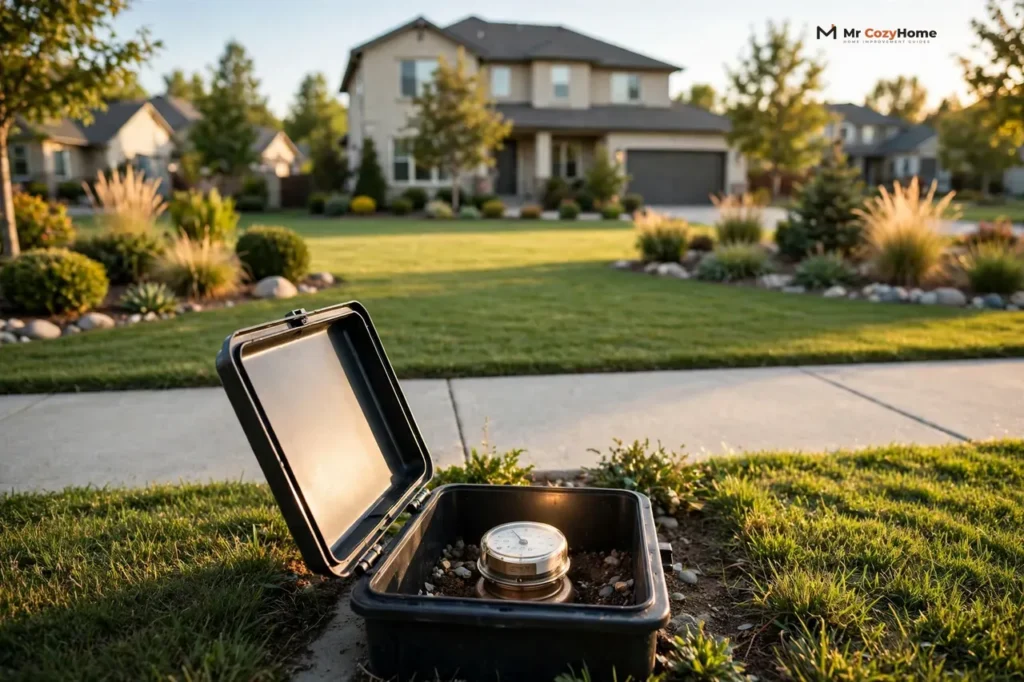
A water meter leak detector is not a gadget you have to buy. It is your home’s water meter, used as a simple test. Turn off every tap and water-using appliance in your home, then watch the meter. If nothing is running but the meter still moves, water is going somewhere it should not be, and you probably have a leak.
This free test takes 30 minutes to two hours, and it works on almost every home with a metered water supply. It will not tell you exactly where the leak is, but it will tell you whether you have one at all, and whether it is inside your home or in the line outside. That answer alone can save you a high water bill and a lot of water damage.
What a Water Meter Leak Detector Actually Means
When people search for a water meter leak detector, they usually mean one of two things. The first is the method in this article: reading your existing water meter to check for a leak. The second is a device that attaches to your meter or your main water line and watches for flow all the time.
This article covers the first one, because it costs nothing and you can do it today. You do not need to buy anything or install anything. If your meter test shows a leak, you can then decide whether a permanent sensor or a plumber is the right next step. The test itself is the same logic those devices use: water moving when nothing should be using it means a leak.
One important limit, stated up front: the meter test proves water is moving, not where it is going. A moving meter could mean a running toilet, a dripping outdoor tap, a cracked irrigation pipe, or a break in the underground line. The steps below help you narrow that list down before you call anyone.
Find Your Water Meter
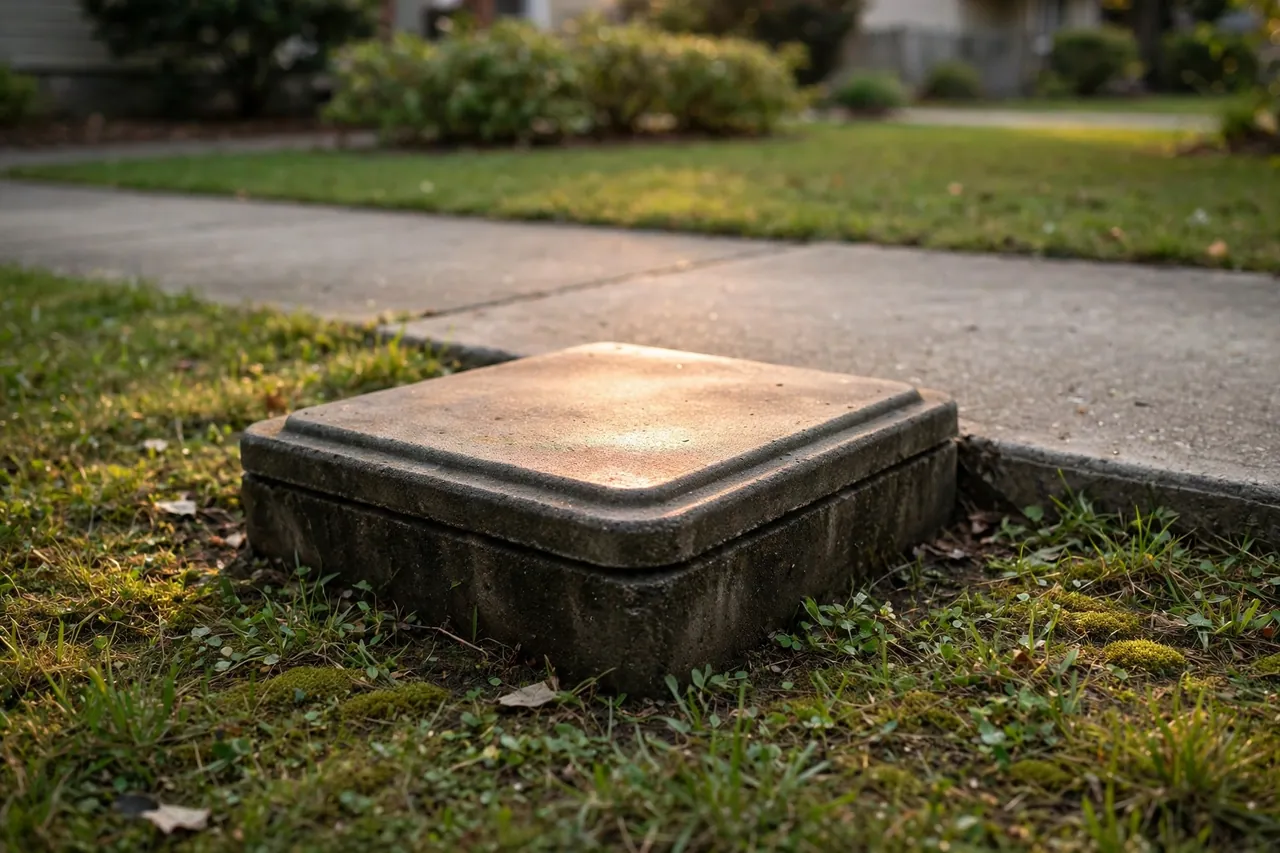
Before you can run the test, you need to find the meter. In warmer parts of the United States, the meter usually sits in a concrete or plastic box near the street or sidewalk at the front of your property, often marked with the word “Water.” In colder areas, it is more often indoors, in a basement, garage, or utility room, where it is protected from freezing.
If you cannot find it, your water bill or your water utility can help. Some utilities print the meter location on the bill, and all of them can tell you where to look. Do not guess and do not open a neighbor’s box by mistake.
Outdoor meter boxes have heavy lids. Use a long screwdriver or a similar tool to pry the lid up, and lift with care. The box may hold dirt, standing water, insects, or small animals, so gloves are a good idea and children should stay clear. If the lid is stuck, rusted shut, or buried, call your utility rather than forcing it, because forcing it can crack the box or damage the meter.
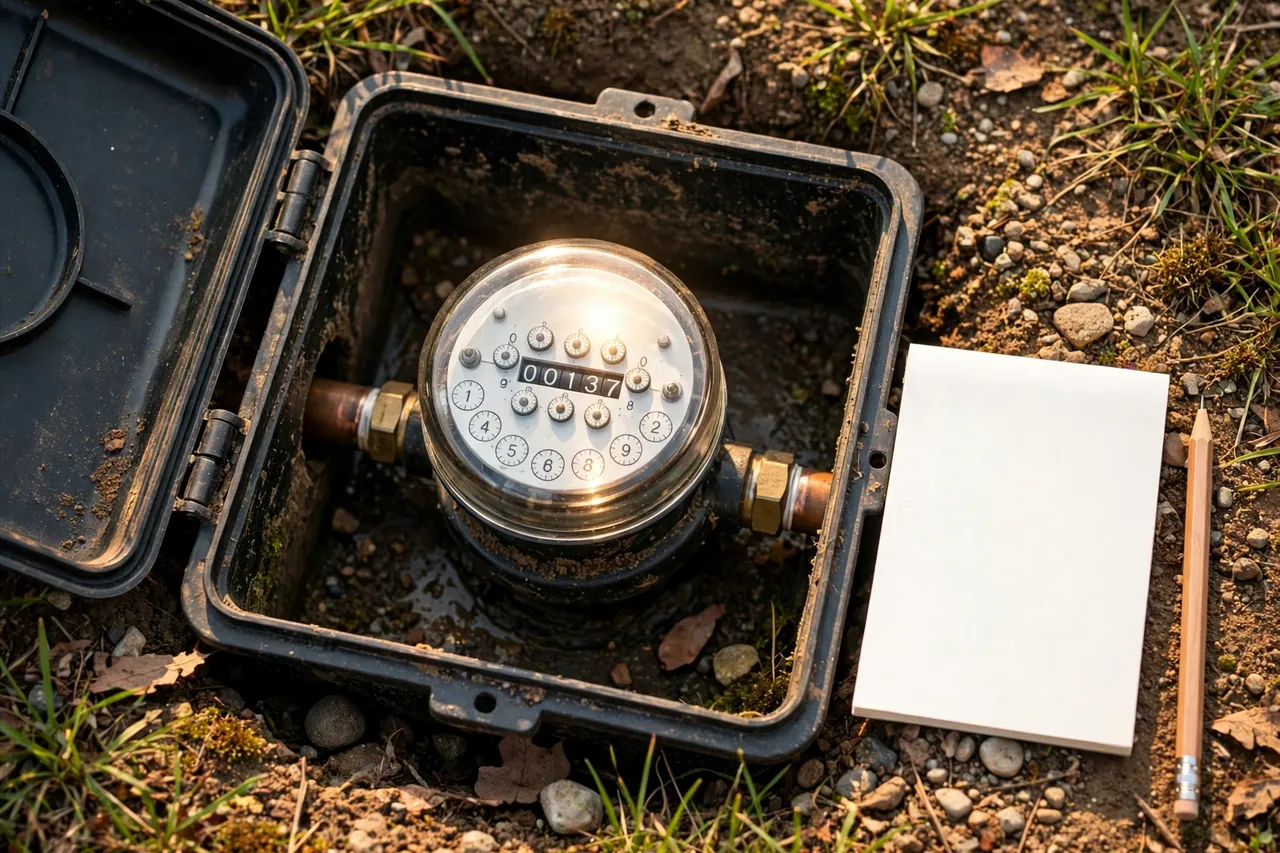
Once the lid is off, you may need to wipe dirt or water off the meter face to read it. A rag and a flashlight are usually enough. On a digital meter, shining a flashlight or your phone light at the face often wakes the display.
How to Read Your Water Meter
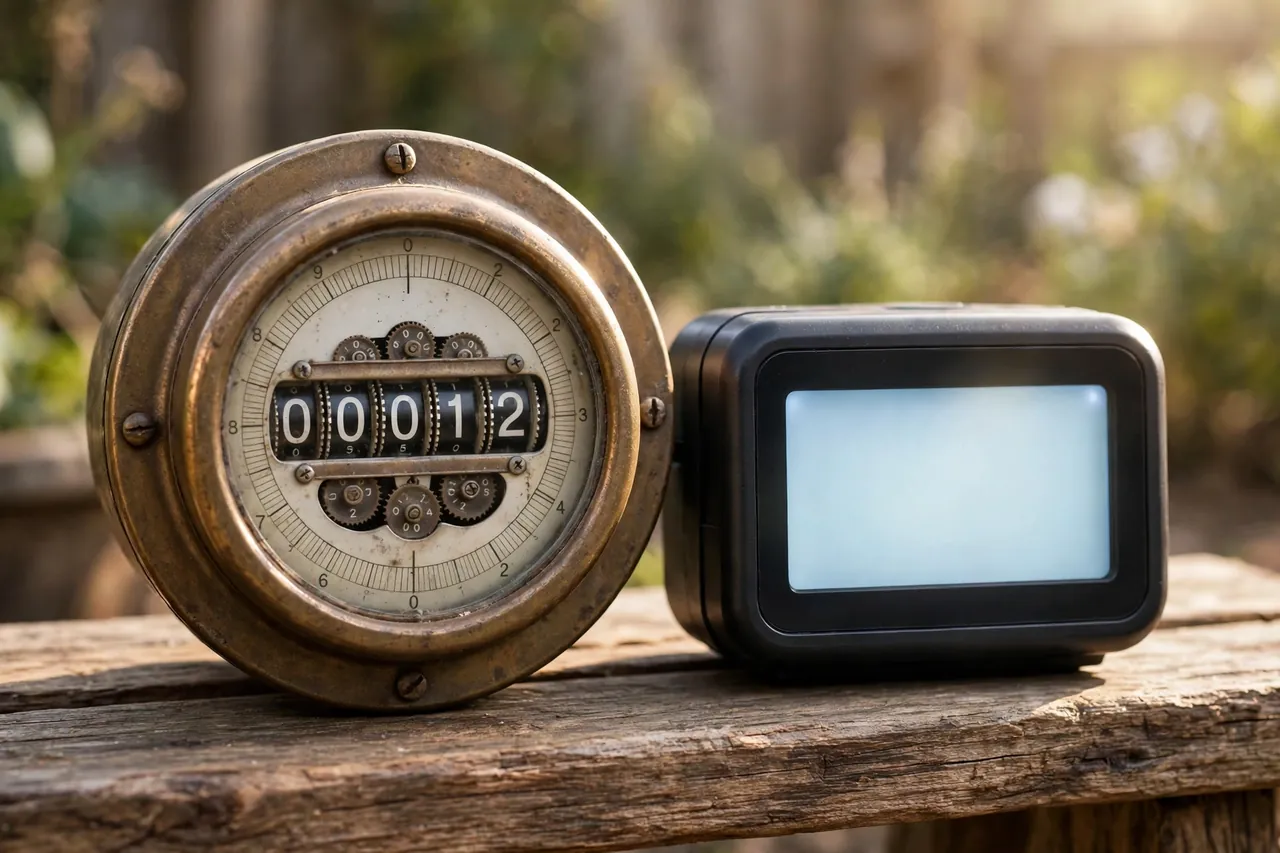
Every water meter measures the same thing: the total amount of water that has passed into your home since the meter was installed. What differs is how that number is shown. Most homes in the United States have one of two types, analog or digital, and reading each one for a leak test is a little different.
Reading an analog meter
An analog meter looks like a row of number wheels, similar to a car odometer, plus one or two moving parts. Read the number wheels from left to right and write the full number down. The unit is printed on the meter face, usually gallons or cubic feet. One cubic foot equals 7.48 gallons, which matters if you want to turn a reading change into gallons later.
For a leak test, the most useful part is the low-flow indicator. It is a small triangle, star, or wheel near the center of the face, and it is built to spin on even a tiny trickle of water. If it is moving while nothing in your home is using water, water is flowing through the meter. Some analog meters also have a larger sweep hand. Each full turn of that hand usually equals 10 gallons or 10 cubic feet, depending on the unit on the face, so even a small move is meaningful.
Reading a digital or smart meter
A digital meter shows numbers on a small screen instead of wheels. Wake the display with a flashlight or by opening the lid, then wait a few seconds for it to fully light up. The screen usually alternates between the total reading and the current flow rate, shown in gallons per minute.
For a leak test, the flow rate is your best friend. If it reads anything above zero while everything in your home is off, water is flowing. Many digital meters also show a leak symbol, often a tap or a water drop. On some models, a flashing symbol means water flowed during most of the last day, while a solid symbol means water flowed without stopping for 24 hours, which points strongly to a leak. The exact symbols vary by meter brand, so if yours is unclear, your utility’s guide for your meter model is the right reference.
Whether your meter is analog or digital, write the reading down exactly, including the time. A photo of the meter face works well too, because it removes any doubt about what you saw.

The Water Meter Leak Test, Step by Step
This is the core test. Follow the steps in order, and do not skip the preparation, because a forgotten water user is the most common reason for a false result.
- Turn off everything that uses water. That means every tap, shower, toilet fill, washing machine, dishwasher, and outdoor tap. Turn off the irrigation controller too, and shut the irrigation valves if you have them. If you have a pool with an automatic fill, turn that off as well.
- Wait for automatic cycles to finish. Ice makers, water softeners, and water heaters refill on their own schedules. If a softener is in the middle of a regeneration cycle, or an ice maker has just dumped a tray, the meter will move for a normal reason. Wait until those cycles are done before you start.
- Tell everyone in the home. The test fails if someone flushes, showers, or runs a tap in the middle of it. Pick a quiet window, such as early morning or while everyone is out, and make sure no one uses water until you say the test is done.
- Record your starting reading. Go to the meter, note the full reading and the exact time, and take a photo of the face. On an analog meter, also note the position of the low-flow indicator. On a digital meter, note the flow rate.
- Watch the low-flow indicator for a few minutes. If the triangle, star, or wheel is clearly spinning, or the digital flow rate is above zero, you already have your answer: water is flowing, and you likely have a leak. You can still run the longer reading test below to confirm and to measure how much water is being lost.
- Wait, then read again. Leave all water off and come back after at least 30 minutes. For a slow leak, two hours is better, because a very small leak may not move the numbers enough to notice in half an hour. The U.S. Environmental Protection Agency (EPA) recommends the two-hour version for exactly this reason. Do not use any water during the wait.
- Compare the two readings. If the reading is exactly the same, you do not have a leak in your pressurized water system. If it has changed at all, even by a small amount, water moved while nothing was running, and you likely have a leak.
If the test shows no leak but your bill is still high, run it again overnight or over a longer window. Some leaks only happen at certain times, for example when an irrigation zone runs, and a short daytime test can miss them.
What the Results Mean
The table below is your quick reference for reading the test. It covers the three results you are most likely to see, and what each one means.
Water meter leak test results at a glance
| What you see | What it usually means | What to do next |
|---|---|---|
| Low-flow indicator spinning, or digital flow rate above zero | Water is flowing right now while nothing should be running | Run the reading test to confirm, then narrow down the source |
| Reading changed after 30 minutes to 2 hours | A leak, even a slow one, is letting water through | Use the shut-off test below to split inside from outside |
| Reading exactly the same | No leak in the pressurized system during the test window | Repeat overnight if the bill is still high, or check for intermittent causes |
Once you know you have a leak, the next question is where it is. The shut-off test answers that. Find your home’s main shut-off valve, usually near the water heater, in the basement, or in the garage, and turn it off. Then check the meter again. Seattle Public Utilities uses the same comparison: if the dial has moved, you have a leak, and the shut-off test shows which side of the valve it sits on.
If the meter stops moving, the leak is inside your home, somewhere past the shut-off valve. Check running toilets, dripping taps, and appliances first. If the meter keeps moving with the house shut off, the leak is outside, in the line between the meter and your home. That is often an underground service-line leak, and it usually needs a professional.
Before you trust the shut-off test, confirm the valve actually worked. Turn on a tap inside the home after closing the valve. If water still flows after a few seconds, the valve is not sealing, and the test cannot tell you whether the leak is inside or outside. A faulty shut-off valve is itself a repair worth making. The City of Portland’s leak guide uses this same tap check before trusting the result.
Analog vs Digital (Smart) Meters: Which Test Works
Both meter types work for the leak test, but each has a strength. Analog meters give you the low-flow indicator, which catches tiny flows in real time. You can watch it spin and know within minutes. Their weakness is precision: a very slow leak may only show up in the longer reading test.
Digital and smart meters give you a flow rate number, which is easier to read and harder to misjudge. A flow rate above zero is a clear answer, and many record flow over the past 24 hours, so they can catch a leak that only runs at night. Their weakness is that the display sleeps, so you must wake it, and leak symbols differ by brand.
Neither type makes the other obsolete for this test. If your meter is analog, trust the low-flow indicator and the two-hour reading. If it is digital, trust the flow rate and the 24-hour flow history. If your utility recently replaced your meter, check its reading guide for your model before you conclude anything.
Common Reasons for a False Alarm
A moving meter does not always mean a broken pipe. Before you worry, rule out these common causes, because each one is a normal water use that people forget during the test.
- An appliance mid-cycle. A dishwasher, washing machine, ice maker, or water softener that started before your test will move the meter until its cycle ends.
- Irrigation. A sprinkler controller on a schedule, or a stuck irrigation valve, is one of the biggest hidden water users. Turn the controller off and isolate the irrigation valves for the test.
- A running toilet. Toilets are the most common indoor leak source. A worn flapper can let water trickle from the tank into the bowl all day without a sound.
- Pool or humidifier fills. Automatic pool fills and whole-home humidifiers use water quietly and on their own schedules.
- Tiny pressure wobble. On an analog meter, the low-flow indicator may rock slightly back and forth as water pressure changes. That is normal. A leak shows as steady forward movement, even if it is slow.
If you find and fix a forgotten cause, run the test again from the start. A clean second test is worth more than arguing about the first one.
What to Do Next If the Meter Says Leak
A positive test is the start of the job, not the end. Work through the likely sources from cheapest and easiest to hardest, and stop as soon as you find the cause.
- Check the toilets first. Put a few drops of food coloring in the toilet tank, wait about 10 minutes without flushing, and look in the bowl. If color shows up in the bowl, the flapper is leaking and needs replacing. You can also shut off each toilet’s supply valve one at a time and repeat the meter test to find the guilty one.
- Walk the taps and appliances. Look under sinks, around the water heater, behind the washing machine, and at outdoor taps for drips, damp spots, or stains. A small drip can waste a surprising amount of water over a month.
- Check the irrigation system. Look for soggy patches, unusually green grass in one area, or a valve box full of water. If you suspect irrigation, shut the irrigation valves and repeat the meter test.
- Use the shut-off test. As described above, closing the main valve tells you whether the leak is inside or outside. That single answer decides whether you keep searching indoors or call for help with the service line.
- Call your utility about the meter itself. If the meter looks damaged, is leaking at the box, or gives readings that make no sense, report it. The meter belongs to the utility, and repairs to it are their job, not yours.
- Call a plumber for what you cannot find or reach. A leak inside a wall, under a slab, or in the underground service line is professional work. Tell the plumber your meter test result and how much the reading changed, because that helps them judge the size of the leak.
Also call your utility about your bill. Many utilities have a leak adjustment policy that can reduce a bill inflated by a leak, but the rules and deadlines vary, so ask early and keep your meter readings as proof.
When the Meter Test Is Not Enough
The meter test is a great first check, but it has honest limits. It cannot tell you which pipe is leaking, how deep a leak is, or whether a leak is under a slab or behind a wall. It can also miss a leak that only runs sometimes, such as a valve that sticks open once a day, and a very slow leak may sit below what your meter can register in a short test.
Homes on a private well do not have a utility meter in the same way, so this test does not apply directly. For a well system, a pump that turns on and off while no water is being used is the equivalent warning sign, and a well professional is the right call.
If your test is positive but you cannot find the source after the steps above, do not start digging up your yard or opening walls on a guess. That is the point where professional leak detection earns its cost, because it locates the leak before any repair begins.
Related Guides
For how every detection method compares, see how leak detection works, and for the full finding toolkit, our water leak detector tool guide.
Frequently Asked Questions
How do I check my water meter for a leak?
Turn off all water in and around your home, including appliances and irrigation. Record the meter reading and the time, then wait at least 30 minutes without using any water. Read the meter again. If the reading has changed, you likely have a leak. For slow leaks, waiting two hours gives a clearer result.
What does it mean if my water meter is moving when no water is running?
It means water is flowing through the meter into your plumbing while nothing should be using it. That is the basic sign of a leak. First rule out forgotten uses such as an ice maker, a softener cycle, or irrigation. If none of those explains it, the flow is almost certainly a leak somewhere in your system.
How do I tell if the leak is inside or outside my house?
Close your home’s main shut-off valve and check the meter again. If the meter stops moving, the leak is inside your home. If it keeps moving with the house shut off, the leak is outside, in the line between the meter and your home. Confirm the valve works first by opening an indoor tap after closing it.
How do I read an analog water meter?
Read the number wheels from left to right, like a car odometer, and write the full number down. The unit, usually gallons or cubic feet, is printed on the meter face. For leak checking, watch the small low-flow indicator, a triangle, star, or wheel. If it spins while nothing is running, water is flowing.
How do I read a digital water meter?
Wake the display with a flashlight or by opening the lid, then wait for it to light up. The screen alternates between the total reading and the current flow rate in gallons per minute. A flow rate above zero while everything is off means water is flowing. Many digital meters show a tap or drop symbol for continuous flow.
How long should I wait between meter readings?
At least 30 minutes is the common minimum, and it catches most leaks. Two hours is better for slow leaks, and it is the version the EPA recommends. The longer you wait without using water, the smaller the leak you can catch, because even a tiny flow adds up to a visible reading change over time.
Your water meter is already installed, already paid for, and already watching every gallon that enters your home. The leak test in this article turns it into a free early warning system. Run it when your bill jumps, when you hear water running that nobody is using, or once a year as a routine check. If the meter says there is a leak, work the steps in order, and get professional help for anything underground or inside a wall.
Please note: this article is general home guidance, not professional plumbing advice. Water damage can spread fast and get expensive, so if you see active leaking, buckling floors, or a soaked wall, shut off your water and call a qualified plumber right away rather than waiting for a test result. Homes, plumbing, and local rules vary, so follow your utility’s guidance for your meter and your area.